Water Sports List: What Each One Involves and How to Start (2026)
From bodyboarding at the beach to whitewater rafting and scuba diving, water sports fall into a handful of families. Here's what each one involves, how hard it is to start, what gear it needs and where to read more.
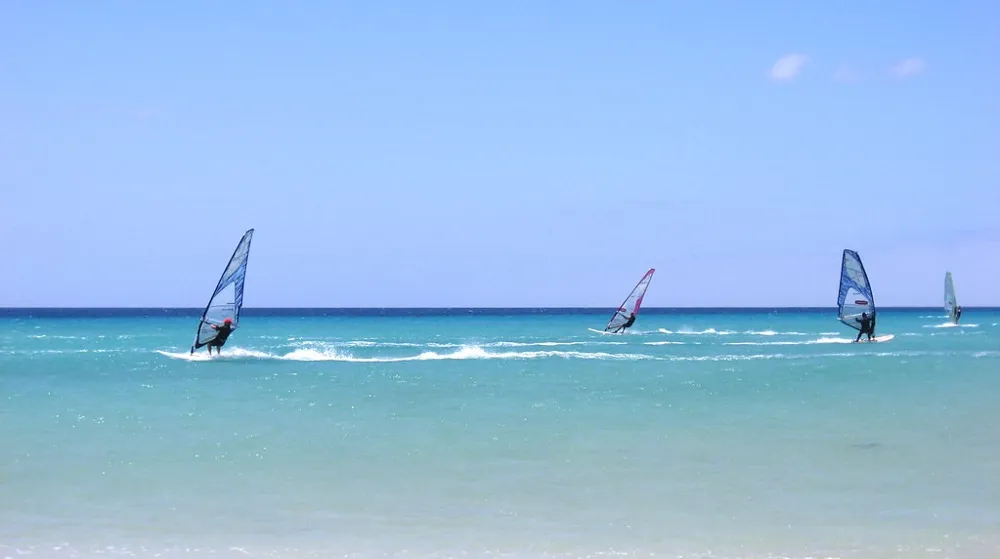
What Counts as a Water Sport?
A water sport is any sport or recreational activity done in, on or under water. That covers a huge range, from floating face down over a reef to racing a foiling kite at speed. Encyclopedic lists often sort them by how immersed you are: on the surface, in the water or fully underwater. That works for a reference list, but it doesn't tell you much about what each sport is like to learn.
This guide groups water sports by what powers you and where you do them, because that decides the gear you need, the skills you learn and how hard it is to start:
- Wave-riding board sports: waves push you.
- Towed sports: a boat or an overhead cable pulls you.
- Paddle sports: your own paddle strokes move you.
- Wind-powered sports: a sail, kite or wing catches the wind.
- Underwater sports: you swim beneath the surface.
- Motorized sports: an engine does the work.
- Swimming and pool sports: your body is the vessel.
- Adventure sports: rivers, canyons and cliffs supply the thrill.
Each sport below gets a short definition and, where we have one, a link to a full guide. Difficulty and cost are described in relative terms only; actual costs depend heavily on where you live and whether you rent, take lessons or buy.
Types of Water Sports at a Glance
Use this table to compare the most popular water sports side by side. "Skill to start" means how quickly a fit beginner can do the basics with a lesson, not how long it takes to master.
| Sport | Type | Skill to Start | Main Gear | Where | Season |
|---|---|---|---|---|---|
| Surfing | Wave-riding | Moderate | Surfboard, leash, wetsuit or rash guard | Ocean beach breaks, wave pools, some lakes | Year-round with the right wetsuit |
| Bodyboarding | Wave-riding | Easy | Bodyboard, fins, leash | Ocean beaches | Mostly summer; year-round in warm water |
| Skimboarding | Wave-riding | Easy to moderate | Skimboard | Sandy shorelines | Summer |
| Water skiing | Towed | Moderate | Skis, rope, life jacket, boat and crew | Lakes, calm rivers, cable parks | Summer |
| Wakeboarding | Towed | Moderate | Wakeboard, bindings, rope, life jacket | Lakes, cable parks | Summer |
| Tubing | Towed | Easy | Towable tube, rope, life jacket, boat | Lakes, wide rivers | Summer |
| Kayaking | Paddle | Easy on flat water | Kayak, paddle, PFD | Lakes, rivers, coast | Spring to fall; longer with cold-water gear |
| Canoeing | Paddle | Easy on flat water | Canoe, paddles, PFDs | Lakes, slow rivers | Spring to fall |
| Paddle boarding | Paddle | Easy | SUP, paddle, leash, PFD | Lakes, bays, calm coast | Spring to fall |
| Sailing | Wind | Moderate | Sailboat, PFD | Lakes, bays, open sea | Season varies by region |
| Windsurfing | Wind | Moderate to hard | Board, rig with sail, wetsuit | Lakes, bays, beaches with steady wind | Windy seasons |
| Kitesurfing | Wind | Hard; lessons essential | Kite, bar, harness, board | Open beaches, shallow lagoons | Windy seasons |
| Snorkeling | Underwater | Easy | Mask, snorkel, fins | Reefs, calm coves, clear lakes | Year-round in warm water |
| Scuba diving | Underwater | Certification required | Mask, fins, BCD, regulator, tank, wetsuit | Ocean, lakes, quarries | Year-round with the right exposure suit |
| Freediving | Underwater | Training strongly advised | Low-volume mask, long fins, wetsuit | Ocean, pools for training | Year-round with the right wetsuit |
| Jet skiing (PWC) | Motorized | Easy to ride; boating rules apply | Personal watercraft, life jacket, lanyard | Lakes, coast | Summer |
| Swimming | Swimming | Foundation skill | Swimsuit, goggles | Pools, lakes, ocean | Year-round indoors |
| Whitewater rafting | Adventure | Easy with a guide on gentle rapids | Raft, paddle, helmet, PFD (outfitters supply) | Rivers with rapids | Spring and summer flows |
Wave-Riding Board Sports
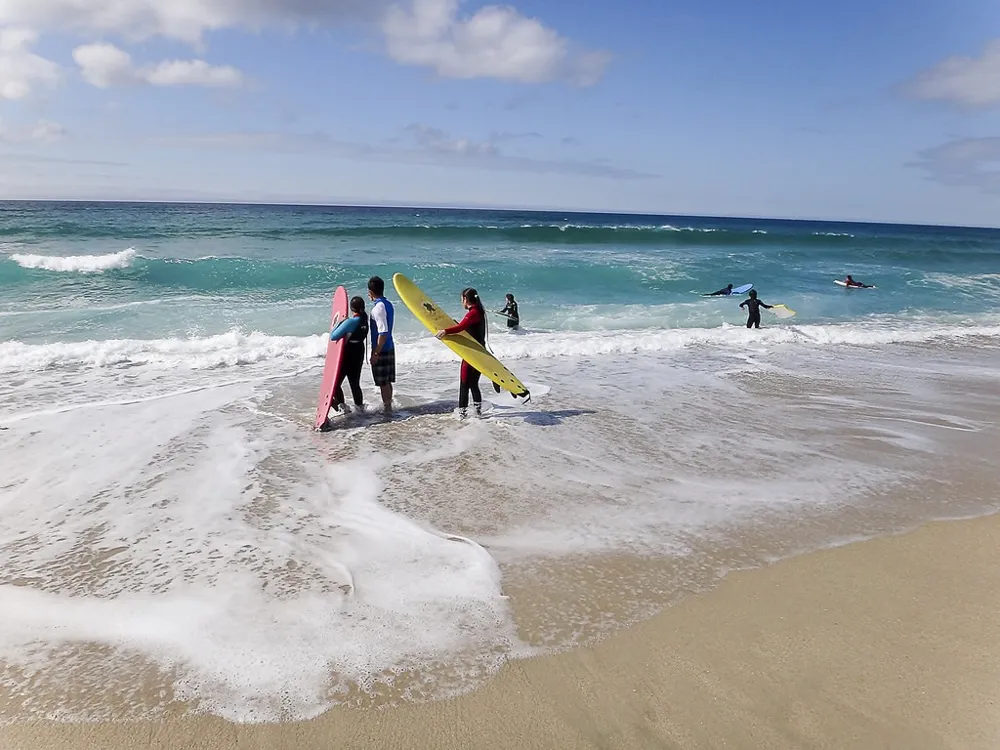
Wave-riding sports use the energy of a breaking wave to move you. They need a beach with suitable waves (or a wave pool), and the ocean itself is the main thing you learn to read.
Surfing
Surfing means paddling into a breaking wave, standing up on a board and riding along its face. Beginners start on big, buoyant soft-tops or longboards in small whitewater, and learning to read waves, currents and the lineup takes time. Gear is modest once you own a board and wetsuit. Start with how to surf, then see surfboard types and the surfing hub.
Bodyboarding
Bodyboarders ride waves lying on a short foam board, kicking with swim fins to catch waves. It's one of the cheapest and fastest ways into wave riding, and skilled riders do spins and aerials in powerful surf. See how to bodyboard and bodyboards.
Skimboarding
Skimboarders run along the sand, drop a thin, finless board onto the backwash and glide across the shallows, and advanced riders skim out to meet a breaking wave and ride it back to shore. It needs only a board and a sandy beach. Learn the basics in how to skimboard.
Bodysurfing, SUP Surfing and Wave Pools
Bodysurfing uses no board at all, often just swim fins. SUP surfing rides waves on a stand-up paddle board, paddling into them standing up. Surf parks and wave pools now let people surf far from the ocean; see surf parks and wave pools. Freshwater surfers also ride wind-driven waves on big lakes, covered in surfing the Great Lakes.
Towed Water Sports
Towed sports put you behind a boat or an overhead cable that does the pulling. They're social, need a driver and an observer when boat-towed, and most are learned in a single afternoon to the "getting up and riding" stage.
Water Skiing
Water skiers ride one or two skis behind a boat, starting from deep water. Two combo skis are the usual beginner setup; dropping to a single slalom ski is the classic next step. Competitive water skiing includes slalom, tricks and jumping. Our how to water ski guide covers the start, boat speeds and hand signals.
Wakeboarding
Wakeboarders stand sideways on a single board with bindings, like a snowboard, and use the boat's wake as a ramp for jumps and tricks. Read how to wakeboard, then compare wakeboards.
Wakesurfing
Wakesurfers start on a short rope, then let go and ride the wave a specially weighted boat makes behind it, staying close to the stern. It needs an inboard or approved forward-facing drive boat, never a conventional outboard or sterndrive with an exposed propeller where the rider surfs. See how to wakesurf and wakeboarding vs wakesurfing.
Kneeboarding and Tubing
Kneeboarders kneel on a short, padded board strapped across the thighs, which makes getting up easier than on skis. Tubing is the gentlest towed sport: riders sit or lie on an inflatable tube and hang on. Both are popular with families; see towable tubes.
Cable Parks
Cable parks tow riders around a lake on an overhead cable instead of behind a boat, so you don't need a boat or a driver. They're a common place to learn wakeboarding and kneeboarding; see cable park wakeboarding.
Parasailing
In parasailing, a passenger wears a harness attached to a parachute-like canopy and is towed into the air behind a boat. It's a guided ride run by commercial operators rather than a skill you learn, so the main choice is a reputable operator that checks the weather.
Paddle Sports
Paddle sports run on your own strokes. They're the easiest water sports to try on calm water, rentals are widely available, and they scale from a relaxed hour on a pond to multi-day expeditions and whitewater.
Kayaking
Kayakers sit low in a narrow boat and use a double-bladed paddle. Recreational, sit-on-top, touring, fishing and whitewater kayaks suit very different water, so the first step is matching the boat to where you'll paddle. See types of kayaks, beginner kayaks and the kayaking hub.
Canoeing
Canoeists kneel or sit in an open boat and use a single-bladed paddle. Canoes carry more gear and people than most kayaks, which suits family trips and wilderness travel. Compare them in canoe vs kayak and learn the strokes in how to paddle a canoe.
Stand-Up Paddle Boarding
Paddle boarders stand on a large, stable board and use a long single-bladed paddle. It's quick to learn on calm water, works as a full-body workout, and branches into SUP yoga, touring, fishing and surfing. Start with how to paddle board or the paddle boarding hub.
Rowing, Dragon Boating and Outrigger
Rowers face backward and pull oars fixed to the boat, either sculling with two oars each or sweep rowing with one. Dragon boat crews paddle long, narrow boats in time to a drummer. Outrigger canoes have a float on one side for stability and are often raced by teams. All three are mainly club and team sports.
Whitewater Kayaking and Canoe Slalom
Whitewater paddlers run rapids in short, maneuverable boats, and slalom racers weave through hanging gates on a whitewater course. This needs training in rolling and rescue; see whitewater kayaks, how to roll a kayak and Olympic canoe and kayak.
Wind-Powered Water Sports
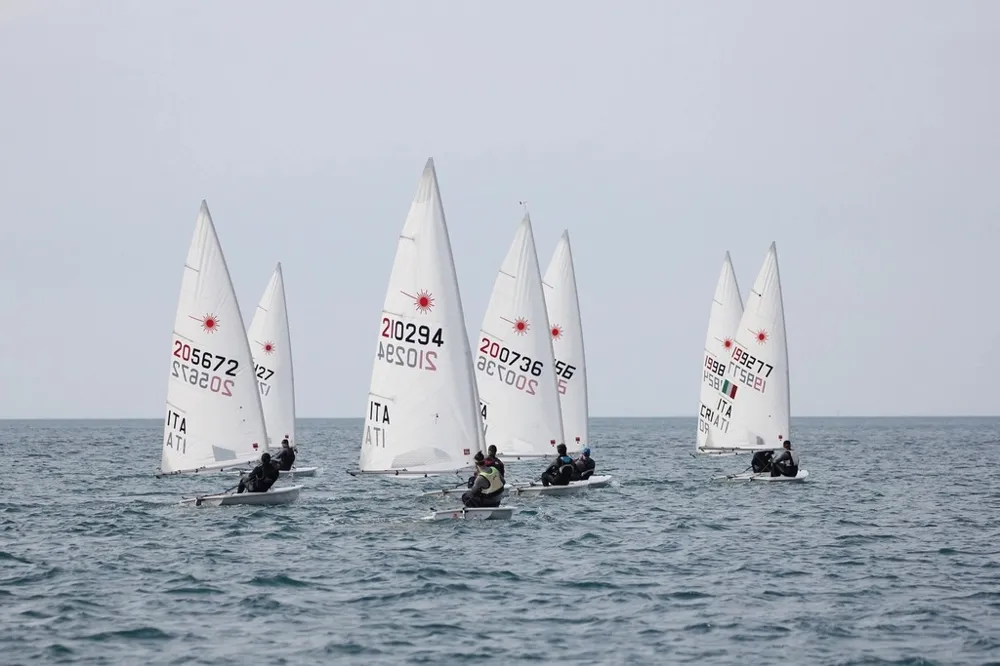
Wind sports trade an engine or paddle for a sail, kite or wing. They need steady wind, an understanding of wind direction and a plan for getting back if the wind drops or builds. They're the hardest group to self-teach, and lessons are the norm.
Sailing
Sailing ranges from small one- or two-person dinghies and catamarans to keelboats and cruising yachts. Dinghy sailing at a club or sailing school is the usual way in. At the Paris 2024 Olympics, sailing included dinghy, skiff and foiling catamaran events alongside windsurfing and kiteboarding.
Windsurfing
Windsurfers stand on a board and hold a sail mounted on a mast that pivots at a joint on the deck. Beginners learn on wide, stable boards with small sails in light wind. Competitive windsurfing has moved toward hydrofoil boards: the Olympic windsurfing events at Paris 2024 used the iQFoil class.
Kitesurfing (Kiteboarding)
Kitesurfers stand on a board and are pulled by a large kite flown on long lines and attached to a harness. The kite can generate a lot of power, so lessons with a certified school are essential before riding alone. Kiteboarding made its Olympic debut at Paris 2024 with the Formula Kite class. Our how to kitesurf guide covers the wind window, safety systems and the learning stages.
Wing Foiling
Wing foilers hold an inflatable, hand-held wing and ride a board on a hydrofoil, a wing-shaped fin that lifts the board above the water once it has enough speed. There are no lines or harness to manage, but balancing on a foil takes practice, so most riders start with lessons or prior board-sport experience.
Underwater Sports
Underwater sports take you beneath the surface, either on a breath hold or with a breathing gas supply. They range from the easiest water activity on this list, snorkeling, to some of the most training-heavy.
Snorkeling
Snorkelers float face down at the surface, breathing through a snorkel and watching the reef or lake bed below. It needs only a mask, snorkel and fins, plus comfort in the water. See how to snorkel and snorkeling safety tips.
Scuba Diving
Scuba divers carry a tank of breathing gas and descend to explore reefs, wrecks and walls. Reputable dive operators require a recognized certification or a supervised introductory program. Read what is scuba diving, how to get scuba certified and types of scuba diving, which covers wreck, night, drift and cave diving.
Freediving
Freedivers explore underwater on a single breath, recreationally or in depth and distance disciplines. Breath-hold diving carries a risk of shallow water blackout, so training and a trained buddy are essential. See how to freedive and scuba diving vs freediving.
Spearfishing and Underwater Photography
Spearfishers hunt fish on a breath hold with a pole spear or speargun, under local fishing regulations; see how to spearfish. Underwater photographers shoot on snorkel or scuba, from action cameras to housed cameras; see underwater cameras.
Underwater Team Sports
Underwater hockey, underwater rugby and finswimming are niche competitive sports played in pools by clubs, usually with mask, snorkel and fins. They're a good way to build breath-hold and finning skills in a supervised setting.
Motorized Water Sports
Motorized water sports use an engine for speed or lift. They're easy to start physically, but they come with boating rules, registration and more responsibility for other people on the water.
Jet Skiing (Personal Watercraft)
Personal watercraft (PWC), often called jet skis after one maker's brand name, are sit-down or stand-up machines driven by a water jet. Rentals are common at lakes and beaches. Operators should wear a life jacket and the engine cut-off lanyard, and rules on minimum operator age and boater education vary by state, so check your state's boating agency before you ride.
Powerboating
Powerboating covers recreational motorboats, which also tow skiers, wakeboarders and tubers, and powerboat racing. Registration and boater education requirements vary by state, so check your state's rules before you drive.
Flyboarding and Electric Foiling
Flyboard riders stand on a board lifted above the water by thrust sent up a hose from a personal watercraft, usually on a guided session; see real flying hoverboards for how these boards compare with free-flying ones. eFoils are electric hydrofoil boards that lift above the water without waves, wind or a tow.
Swimming, Diving and Pool Sports
Swimming is the foundation for every other sport on this page, and it's a full sport family in its own right.
- Swimming: pool racing, lap swimming for fitness, and open-water swimming in lakes and the sea. Lap swimmers often train with a center-mount swim snorkel.
- Diving: acrobatic dives from springboards and platforms into a pool, judged on execution and difficulty.
- Artistic swimming: also called synchronized swimming, a routine set to music performed solo, in duets or in teams.
- Water polo: a team ball game in deep water, played by treading water and passing toward a goal.
- Water aerobics and aqua jogging: low-impact fitness classes and running in deep water, often with a flotation belt.
- Triathlon: a swim, bike and run race, so swimming is one-third of the event.
Adventure Water Sports
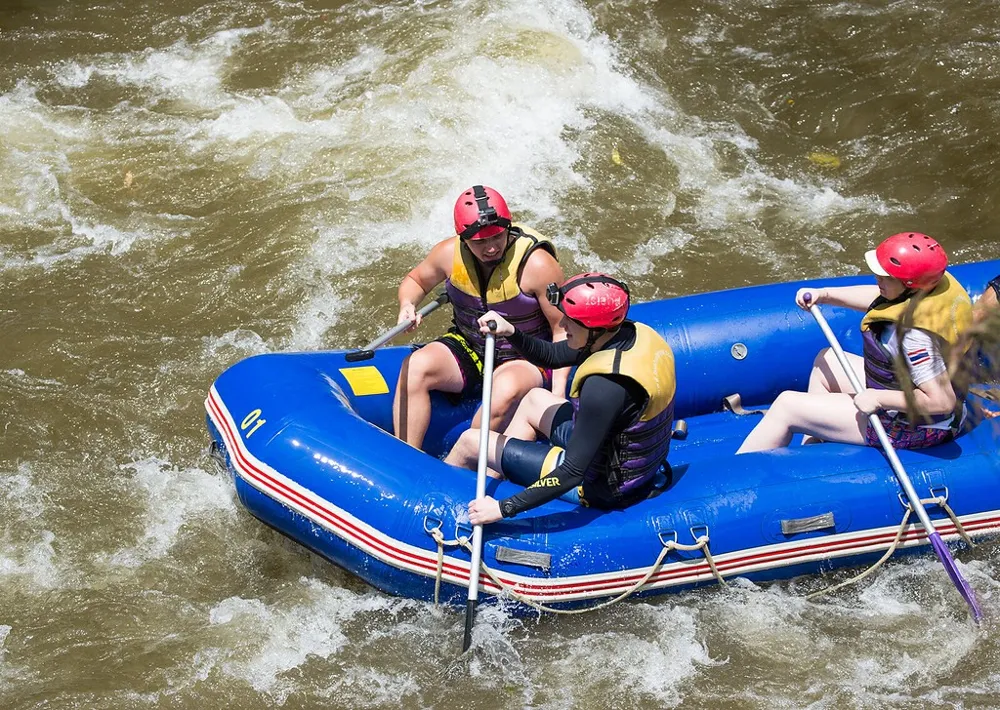
Adventure water sports trade predictable conditions for rivers, canyons and cliffs. Most beginners do them with a licensed guide or outfitter who supplies the gear.
Whitewater Rafting
Rafters paddle an inflatable raft through river rapids as a crew, usually with a guide steering from the back. Outfitters typically supply the raft, paddles, helmets and life jackets. Rivers are rated on the International Scale of River Difficulty, created by American Whitewater:
| Class | What It Means |
|---|---|
| I (Easy) | Moving water with riffles and small waves; few obstacles |
| II (Novice) | Straightforward rapids with wide, clear channels |
| III (Intermediate) | Moderate, irregular waves that need complex maneuvers; scouting may be needed |
| IV (Advanced) | Intense but predictable rapids that demand precise boat handling |
| V (Expert) | Long, obstructed or violent rapids with high risk |
| VI (Extreme) | Rarely attempted runs with severe consequences, for expert teams only |
First-timers usually start on Class II or III trips; ask your outfitter what the trip involves and what fitness it expects.
Canyoning
Canyoning (called canyoneering in parts of the US) means traveling down a canyon by walking, scrambling, swimming, jumping into pools and rappelling down waterfalls. Typical gear includes a helmet, harness, ropes and a wetsuit. Flash floods are the big danger, so go with a guide and check the weather upstream.
Cliff Diving and High Diving
Cliff diving means jumping or diving into water from natural cliffs, and it is extremely dangerous without trained divers, known water depth and safety cover. Its competitive form, high diving, uses platforms: at the World Aquatics Championships, men dive from 27 meters and women from 20 meters. High diving joined the championships in 2013 and is not an Olympic event.
River Tubing, Coasteering and Packrafting
River tubing means floating down a gentle river on an inner tube. Coasteering combines swimming, scrambling and jumping along a rocky coastline, usually with a guide. Packrafters carry a small, light inflatable boat on hikes and paddle the rivers they reach.
Water Sports at the Olympics
Water sports make up a large share of the Summer Olympic program. Aquatics covers swimming, marathon (open-water) swimming, diving, artistic swimming and water polo. Paddling and rowing events are held on flat water and whitewater; our Olympic canoe and kayak guide explains sprint, slalom and kayak cross. Surfing joined at Tokyo 2020 (see Olympic surfing). At Paris 2024, the sailing program included windsurfing on the iQFoil and kiteboarding on the Formula Kite, both new that year.
Which Water Sport Should You Try?
| If You Want... | Try |
|---|---|
| The lowest-cost start | Snorkeling, bodyboarding or skimboarding |
| Something relaxing on calm water | Kayaking, canoeing or paddle boarding |
| A workout | Swimming, paddle boarding, surfing or rowing |
| A family day on the lake | Tubing, kneeboarding or two-ski water skiing |
| Speed and tricks | Wakeboarding, water skiing or kitesurfing |
| To see marine life | Snorkeling, then scuba diving |
| An adrenaline day with a guide | Whitewater rafting, canyoning or parasailing |
| A team sport | Water polo, rowing, dragon boat or outrigger |
| No boat or roof rack | An inflatable paddle board or kayak, or a cable park |
Whatever you pick, rent or take a lesson first. Outfitters, surf schools, dive shops and cable parks let you try a sport before you buy, and they teach the safety basics that matter most in your first sessions. Then see the water sports hub for gear guides.
Water Safety for Every Water Sport
- Know how to swim. Every sport here assumes basic swimming ability, even with a life jacket.
- Wear a life jacket where it's required, and where it's sensible. In the US, federal rules require a Coast Guard approved life jacket for each person on kayaks, canoes and other boats, and paddle boards used outside designated swimming or surfing areas count as vessels. Many states add rules for towed riders and PWC operators. Last checked November 2026; this is not legal advice, so check your state's boating agency. See kayak PFDs and wakeboard life vests.
- Dress for the water temperature, not the air. Cold water is dangerous even on a warm day; see wetsuit vs drysuit and what to wear kayaking.
- Check wind, tide, current and weather before you go, and tell someone your plan.
- Learn to spot rip currents at surf beaches, and swim at lifeguarded beaches when you can; see rip currents.
- Never dive or freedive alone, and get certified before scuba diving.
- Behind a boat, use an observer and agreed hand signals, and keep riders well away from the propeller.
For sport-specific risks, read is surfing dangerous, kayak safety and is scuba diving dangerous.
Keep Exploring
Ready to go deeper? These hubs collect every guide on the site for each family: surfing, kayaking and canoeing, paddle boarding, snorkeling and scuba and the main water sports hub. For winter, our types of skiing guide does the same job on snow.
Frequently Asked Questions
What are the main types of water sports?
Most water sports fit into eight families: wave-riding board sports, towed sports, paddle sports, wind-powered sports, underwater sports, motorized sports, swimming and pool sports, and adventure sports such as whitewater rafting and canyoning.
What is the easiest water sport for beginners?
Snorkeling in calm water, bodyboarding small waves, and paddling a kayak or paddle board on a sheltered lake are the usual easiest starts. They need little gear and can be learned in one session, ideally with a lesson or guide.
What are the most extreme water sports?
Big-wave surfing, cliff diving, Class V whitewater kayaking, cave diving and kitesurfing in strong wind sit at the extreme end. They carry serious risk and are learned over years with training, not tried on a whim.
Which water sports can you do without a boat?
Swimming, surfing, bodyboarding, skimboarding, snorkeling, shore diving, kayaking, paddle boarding, windsurfing, kitesurfing and wing foiling can all start from a beach or shore. Cable parks let you wakeboard and water ski without a boat.
What water sports are in the Olympics?
The Summer Olympics include swimming, marathon swimming, diving, artistic swimming, water polo, canoe and kayak, rowing, sailing (which includes windsurfing and kitesurfing), surfing and the swim leg of triathlon.
Do you need a life jacket for water sports?
In the US, a Coast Guard approved life jacket is required for each person on kayaks, canoes and other boats, and paddle boards count as vessels outside designated swimming or surfing areas. Many states also require one for anyone being towed. Rules vary by state, so check locally.
What is the difference between team and individual water sports?
Team water sports such as water polo, rowing, rafting, dragon boat racing and underwater hockey rely on a crew or squad. Individual sports such as surfing, kayaking and freediving are done solo, though safety rules still call for a buddy or spotter.