Types of Surfboards: Which Shape Is Right for You? (2026)
Longboards, mid-lengths, funboards, fish, shortboards, guns and more, with the tails, fins and construction that change how each one rides.
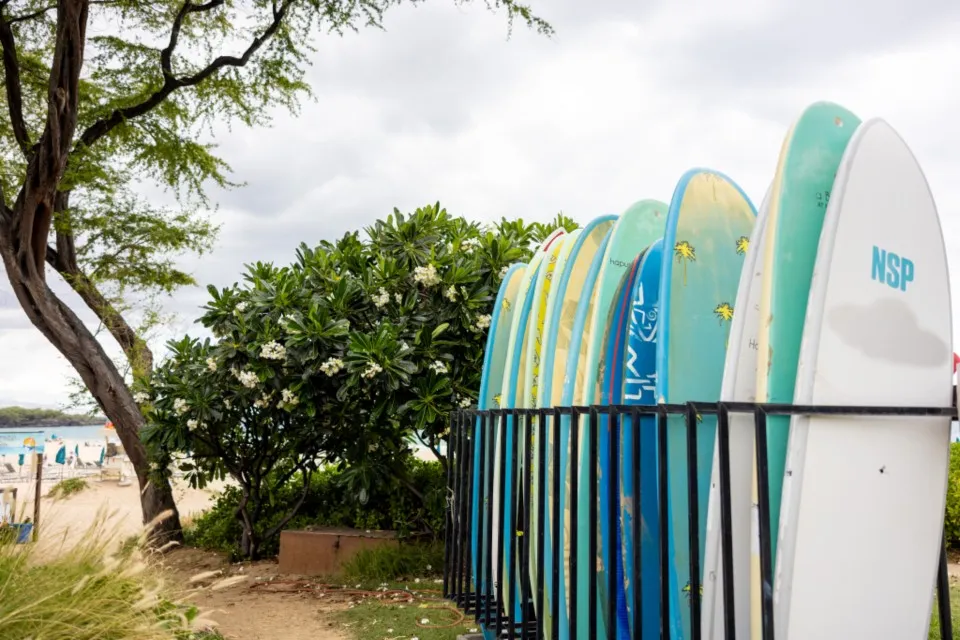
Surfboard Types at a Glance
Surfboards come in many shapes, but most fall into a handful of families. In general, longer, wider and thicker boards are more stable and catch waves more easily, while shorter, narrower and thinner boards turn sharply but are harder to paddle and ride.
| Type | Typical Length | Typical Volume | Best For | Skill |
|---|---|---|---|---|
| Soft-top (foamie) | About 7–9 ft for adults | High | Learning, small waves, fun | Beginner |
| Longboard | About 9 ft and up | About 60–100 L | Small, mellow waves; noseriding; cruising | All levels |
| Funboard / mini-mal | About 7–8 ft | About 40–50 L (7 ft) | Progressing beginners; small to medium waves | Beginner–intermediate |
| Mid-length | About 7.5–8.5 ft | Medium-high | Glide and flow in a range of waves | All levels |
| Fish | Shorter than a shortboard | More than a shortboard | Small, weak waves; speed | Intermediate+ |
| Hybrid / groveler | Short | Medium | Everyday small surf | Intermediate+ |
| Shortboard | About 5'6"–6'4" | About 25–35 L | Performance surfing in good waves | Intermediate–advanced |
| Step-up | A few inches longer than a shortboard | Slightly more | Bigger, more powerful days | Advanced |
| Gun | About 7–12 ft | High | Big waves | Expert |
Length and volume ranges vary by source and rider; they're typical, not rules. Find your size with our surfboard size chart.
Soft-Top (Foam) Surfboards
Soft-tops have a foam deck and usually a slick plastic bottom. They're forgiving, buoyant and much less likely to hurt you or others, which makes them the standard learner board and a popular choice for surf schools. They're also fun for experienced surfers on small days. See the best surfboards for beginners.
Longboards
Longboards are the classic surfboard, generally 9 feet or longer, with a rounded nose and lots of volume. They paddle easily, catch waves early and glide through flat sections. They suit beginners learning to stand and experienced surfers who enjoy traditional style: cross-stepping and noseriding. Many use a single fin or a 2+1 setup. Their size makes them harder to turn sharply and to duck dive.
Funboards and Mini-Mals
A funboard or mini-mal (mini-malibu) is a shorter version of a longboard, typically about 7 to 8 feet. It's easier to carry and turn than a longboard while still offering plenty of stability and paddle power. It's the most common next step after a beginner soft-top.
Mid-Lengths and Eggs
Mid-lengths sit between shortboards and longboards, often around 7.5 to 8.5 feet. They paddle well and draw smooth, flowing lines, which makes them popular for all ability levels. Eggs are rounded-outline mid-length boards with a wide middle and lots of volume, built for easy, smooth surfing.
Fish
A fish is short, wide and thick, usually with a swallow tail and a twin or quad fin setup. The extra width and volume help it generate speed and plane in small, weak waves. It can feel loose and harder to control in bigger surf.
Hybrids and Grovelers
Hybrids mix shortboard performance with fish-like width and volume. Grovelers are short, wide boards with relatively flat rocker, built to make the most of small, mushy days. Both are popular everyday boards for intermediate surfers.
Shortboards
Shortboards are the high-performance standard, typically about 5'6" to 6'4" for many adults, with pointed noses, narrow outlines, more rocker and low volume (often around 25–35 liters). They turn sharply and fit in steep, powerful waves, but they're hard to paddle and unforgiving for beginners. Most use a thruster fin setup.
Step-Ups and Guns
A step-up is a shortboard a few inches longer, with a bit more volume and a narrower tail, for bigger days. A gun is a big-wave board, often 7 to 12 feet or longer, long and narrow with a pointed nose and tail. Guns paddle fast enough to catch large waves and hold a stable line at high speed.
Other Types
- Simmons-style boards: wide, planing designs with broad tails and twin keel fins, fast in small waves.
- Alaia: a thin, finless wooden board inspired by ancient Hawaiian surfing; fast but very challenging.
- Tow boards: small, heavy boards with foot straps for being towed into huge waves by a personal watercraft.
- Foil boards: short boards mounted on a hydrofoil that lifts the board above the water.
- SUP surfboards: stand-up paddle boards for surfing; see paddle boarding.
Volume: The Number That Matters Most
Volume, measured in liters, describes how much a board floats. It depends on length, width and thickness together. A short but wide and thick fish can have more volume than a longer, thinner shortboard. More volume means easier paddling and wave catching; less volume means sharper turns and easier duck diving. Shortboards commonly sit around 25–35 liters, a 7-foot funboard around 40–50 liters, and longboards around 60–100 liters. Match volume to your weight and ability with the surfboard size chart.
Surfboard Tail Shapes
| Tail | Feel | Best For |
|---|---|---|
| Squash | Balanced: lively turns with some hold | Small to overhead waves; the most common shortboard tail |
| Round / rounded squash | Smooth, drawn-out turns with hold | Hollow and powerful waves |
| Pin / rounded pin | Maximum hold and control | Big waves and barrels; poor in small waves |
| Swallow | Loose with bite on each side | Small waves; popular on fish and some performance boards |
| Fish tail | Very loose and fast | Small, weak waves |
| Square | Pivoty, lots of area | Mushy waves; less common today |
| Thumb / diamond | Between squash and round | Versatile |
Rails, Rocker and Bottom Contours
Rails
Rails are the board's edges. Soft, rounded rails are forgiving and suit beginners and small waves. Hard, sharper rails release water cleanly for precise, responsive turns and suit experienced surfers.
Rocker
Rocker is the board's banana-shaped curve from nose to tail. More rocker makes a board more maneuverable and better in steep, powerful waves but slower to paddle. Less (flatter) rocker paddles faster, catches more waves and suits small, weak surf, but is harder to turn and more likely to nose-dive on steep takeoffs. Beginners usually do best on flatter boards.
Bottom Contours
Concave bottoms channel water for lift and speed. Vee and convex shapes help the board roll from rail to rail for control. Many boards combine contours from nose to tail.
Fin Setups
| Setup | Fins | Feel and Use |
|---|---|---|
| Single fin | 1 | Smooth, drawn-out turns; classic longboards and retro boards |
| 2+1 | 1 large center + 2 small sides | The standard on performance longboards and many mid-lengths |
| Twin | 2 | Loose and fast in small surf; popularized in the late 1970s and early 1980s |
| Thruster | 3 | The all-round standard since the early 1980s; drive, control and hold |
| Quad | 4 | Fast; good in small surf and in hollow waves |
| Five-fin | 5 boxes | Lets you ride the board as a thruster or quad |
More on fin systems, sizes and materials in our surfboard fins guide.
Surfboard Construction
| Construction | Pros | Cons |
|---|---|---|
| PU (polyurethane foam, polyester resin) | Traditional flex and feel; smooth in choppy water | Heavier; dings more easily |
| Epoxy (EPS foam, epoxy resin) | Lighter, more buoyant, often more durable | Can feel corky or bouncy in chop |
| Soft-top (foam deck) | Safe, durable, forgiving | Less performance |
| Wood and alternative materials | Durable, distinctive | Heavier; often pricier |
Because EPS is more buoyant, an epoxy board can be a little smaller in volume than a PU board for the same rider. Repair epoxy boards with epoxy resin only; polyester resin can damage EPS foam.
How to Choose a Surfboard Type
| You Are... | Try... |
|---|---|
| A complete beginner | Soft-top or longboard |
| Standing up and riding whitewater | Funboard or mid-length |
| Riding green waves and turning | Mid-length, fish or hybrid |
| Surfing small waves often | Fish, groveler or longboard |
| Surfing good waves with skill | Shortboard, plus a step-up |
| Chasing big waves | Gun |
Be honest about your ability and the waves you surf most. Most surfers progress faster by riding a board with a bit more volume than they think they need.
Caring for Any Surfboard
- Rinse with fresh water after surfing.
- Keep it out of direct sun and hot cars; heat can delaminate boards and melt wax.
- Store it in a board bag.
- Repair dings quickly so water doesn't soak into the foam.
Related Guides
See how boards evolved in the history of surfing. Learn how to surf, size your board with the surfboard size chart, explore the surfing hub, or look at wakesurf boards and surfskates.
Frequently Asked Questions
What are the main types of surfboards?
The main types are longboards, mid-lengths and funboards, fish, shortboards, step-ups and guns, plus soft-tops for learning. Others include grovelers, eggs, hybrids, Simmons-style boards, alaias, tow boards and foil boards.
Which type of surfboard is best for beginners?
A soft-top or longboard, or a high-volume funboard, because they're stable, float well and catch waves easily.
What's the difference between a fish and a shortboard?
A fish is shorter, wider and thicker, often with a swallow tail and twin or quad fins, built for speed in small waves. A shortboard is narrower with more rocker, built for performance turns in better waves.
What is a mid-length surfboard?
A board roughly between a shortboard and a longboard in length, often around 7 to 8.5 feet, that paddles well and glides smoothly while still turning.
What is a gun surfboard used for?
Big waves. Guns are long and narrow with pointed noses and tails, so they paddle fast enough to catch large waves and hold a line at speed.
Is epoxy or polyurethane better?
Neither is better overall. Epoxy (EPS) boards are lighter, more buoyant and often more durable. Traditional polyurethane (PU) boards feel more flexible and damp in choppy water.
What fin setup should I ride?
Single fins suit longboards and smooth, flowing turns. Twins are loose and fast in small waves. Thrusters (three fins) are the all-round standard. Quads are fast and drive well in small and hollow waves.
What does the tail shape of a surfboard do?
Wider, squarer tails give lift and looseness in small waves; narrower, rounder and pin tails give hold and control in bigger, more powerful waves.