Best Surfboards for Beginners Who Want to Stand Up Fast (2026)
Big, soft, stable boards make learning to surf faster and safer. Here are the best beginner boards and how to size one for you.
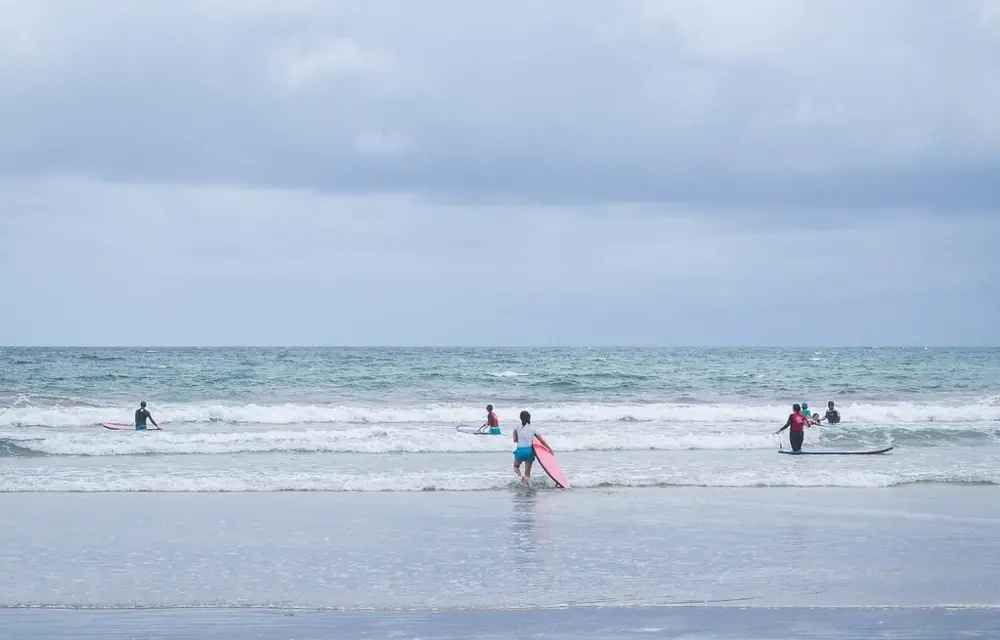
What Makes a Good Beginner Surfboard?
Learning to surf is all about catching waves and standing up, and the board makes a huge difference. Beginner boards are long, wide and thick, which gives them lots of volume so they float you easily, paddle fast and feel stable when you pop up. A soft-top (foam) board is also much safer than a hard fiberglass board when you fall (compare more foamies in our best soft top surfboards guide). Start big; you can move to smaller boards as your skills grow.
Wavestorm 8ft Classic
Best overall
- Soft foam construction
- EPS core, 3-stringer system
- Classic learner's board
Wavestorm 7ft Classic
Best for smaller adults and teens
- 7' x 22" x 3"
- Listed 70 liters, 10.2 lb
- Triple stringers
Rock-It Alberto 5'6"
Best for kids
- Soft foam for safety
- Kids 6–12
- Listed for riders up to 175 lb
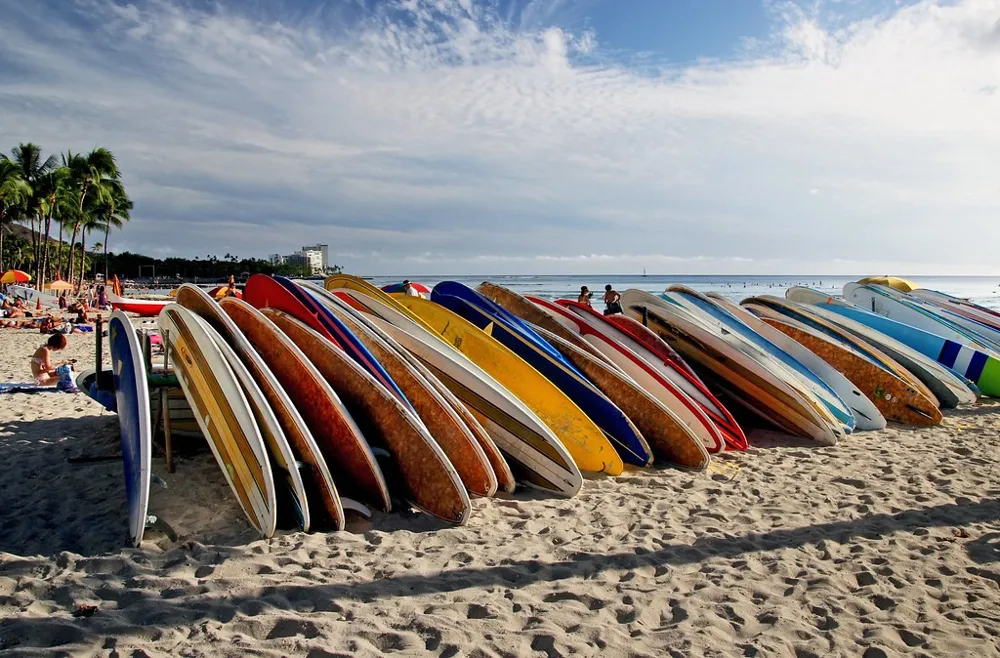
Beginner Surfboards Compared
| Board | Length | Construction | Best For |
|---|---|---|---|
| Wavestorm 8ft Classic | 8' | Soft foam, EPS core, 3 stringers | Most adult beginners |
| Wavestorm 7ft Classic | 7' x 22" x 3" (70 L) | Soft foam, triple stringers | Smaller adults, teens |
| Rock-It Alberto | 5'6" | Soft foam | Kids 6–12 |
| Thurso Surf Soft Top | 7' or 8' options | EPS foam | Beginners |
The Best Surfboards for Beginners
1. Wavestorm 8ft Classic
The Wavestorm 8' is one of the most common learner boards on any beach. It has soft foam construction with an EPS core and three-stringer system for rigidity. It's buoyant and forgiving, and it's tough enough for repeated beginner sessions.
Good to Know
- Very stable
- Safe soft deck
Watch Out For
- You'll outgrow it as you progress
2. Wavestorm 7ft Classic
A shorter Wavestorm listed at 7' x 22" x 3", 10.2 lb and 70 liters, with a triple-stringer foam core and UV-inhibiting soft graphics. Easier to carry and turn, for lighter riders and teens.
Check Price on Amazon3. Rock-It Alberto 5'6"
A soft-foam kids' surfboard for children 6 to 12 learning to surf, listed as strong enough for teens or adults up to 175 lb. For more grom-sized boards and kids' sizing, see our best surfboards for kids.
Check Price on Amazon4. Thurso Surf Soft Top
A beginner-friendly foam board designed as a stable, forgiving platform, available in 7- and 8-foot options.
Check Price on AmazonBeginner Board Size Guide
| Rider | Typical Starting Board |
|---|---|
| Kids | Soft top around 5'–7', sized to the child |
| Teens and lighter adults | Soft top around 7' |
| Most adults | Soft top around 8' |
| Heavier adults | 8'–9' with high volume |
These are starting points; check each brand's guidance on volume and weight.
Gear You Need
FCS Regular Classic Leash
A surf leash with a durable 7 mm polyurethane cord, stainless steel and brass swivels and a rotating cuff. A leash keeps your board from washing away and hitting others.
Check Price on Amazon- A wetsuit or rash guard for your water temperature.
- Reef-safe sunscreen.
- Wax if your board needs it.
Surf Etiquette

- Right of way: the surfer closest to the peak (where the wave starts breaking) has priority.
- Don't drop in: never take off on a wave someone is already riding.
- Paddle wide: go around the break, not through the path of riders.
- Hold your board: don't throw it when a wave comes; it can hit someone.
- Start in the whitewater: learn away from experienced surfers at the main peak.
Wax and Fins
Hard boards need wax for grip: a base coat followed by a top coat matched to the water temperature (cold, cool, warm or tropical). Many soft-tops have a textured deck and need little or no wax. Soft-tops usually come with flexible fins that are safer for beginners.
Tips for Your First Sessions
- Take a lesson if you can.
- Start in small, gentle whitewater waves.
- Learn surf etiquette: don't drop in on others.
- Stay away from rocks, piers and rip currents.
- Surf near lifeguards and never alone.
Next, learn how to surf, check the surfboard size chart and add a leash and wax. Practice on land with a surfskate, or try other wave toys like bodyboarding. Ride boat wakes instead? See wakesurf boards.
Frequently Asked Questions
What size surfboard should a beginner get?
Most adult beginners do best on a soft-top board around 8 feet or longer with plenty of volume. Lighter riders and teens can start a bit shorter.
Why are foam boards good for beginners?
They float well, are stable, and the soft deck is safer when you fall or get hit by the board.
How much volume does a beginner surfboard need?
Plenty. Beginners usually want much more volume than experienced surfers of the same weight. Brands list volume in liters to help compare.
Do I need wax on a soft-top surfboard?
Many soft tops are wax-free thanks to their textured deck, though some surfers add a little wax for grip.
What else do I need to start surfing?
A leash, sunscreen, a wetsuit or rash guard for your water temperature, and ideally a lesson.
Who has the right of way in surfing?
The surfer closest to the peak, where the wave starts breaking. Never drop in on someone already riding a wave.