The Best Soft Top Surfboards for Fun, Safer Surfing (2026)
Foam surfboards float well, forgive mistakes and hurt less when they hit you. Here's how the most popular soft tops compare and how to pick the right size and build.
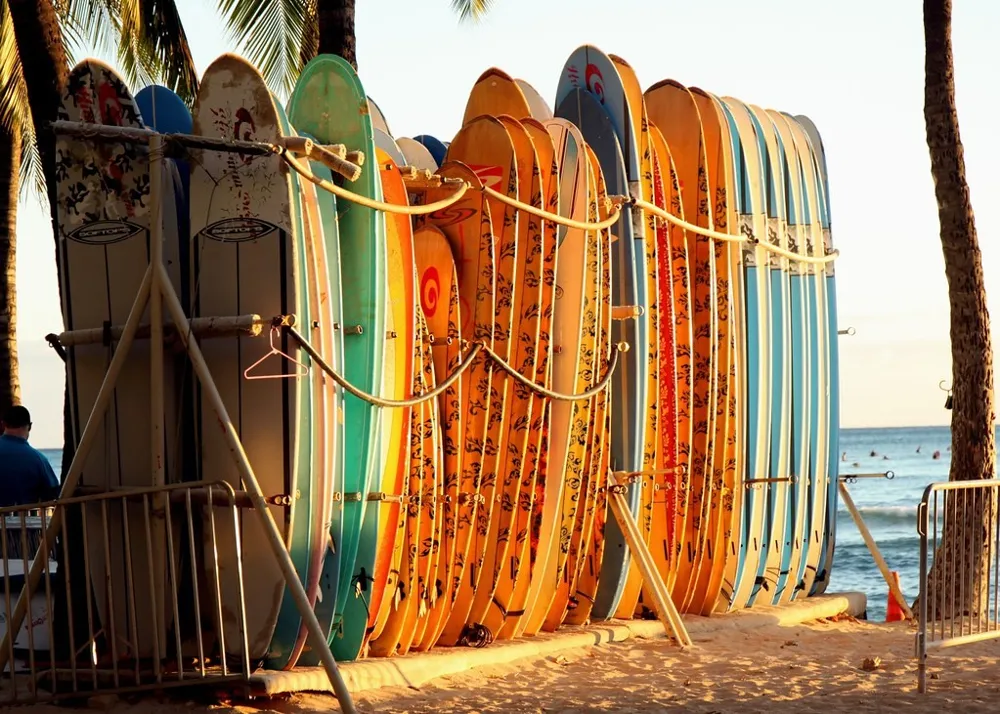
What Makes a Soft Top Surfboard Different?
A soft top surfboard (also called a foam surfboard or foamie) has a soft foam deck instead of a hard, glassy one. Most have an EPS foam core, one or more wooden stringers for stiffness, and a slick plastic bottom. That build gives you three things that matter when you're learning or just having fun: lots of float for easy paddling, a stable platform for popping up, and a forgiving surface that hurts much less when it hits you or someone else.
Soft tops used to mean one big learner board. Now you can buy foam longboards, mid-lengths, fish and twin-fin shapes, and hybrids with hard bottoms. If you just want the classic first board, our best surfboards for beginners guide covers that choice. This page is for anyone looking specifically for a soft top, whether it's your first board, a small-wave toy or a board to share with the family.
Wavestorm 8ft Classic
Best for most new surfers
- 8' x 22.4" x 3.25", about 86 L
- EPS core, three stringers, slick bottom
- Fins and leash included
Boardworks Froth
Best size range
- Sold in sizes from 5 to 9 feet
- Soft top that also works as a wakesurf board
- Three colors
Wavestorm 5'6" Swallowtail
Best short fish-style foamie
- 5'6" swallowtail shape
- Soft foam deck
- For lighter riders or small waves
Soft Top Surfboards Compared
Specs come from each brand's listing. Volume tells you how much the board floats; more volume is easier to paddle and stand up on.
| Board | Size Shown | Volume | Build | Fins | Best For |
|---|---|---|---|---|---|
| Wavestorm 8ft Classic | 8' x 22.4" x 3.25" | About 86 L | True foamie, EPS core, 3 stringers | Screw-through thruster | First board, rentals, family board |
| South Bay Board Co. 8' Verve | 8' x 23" x 3" | Not consistently listed | Foam, EPS core, wax-free IXPE deck, heat-release valve | Screw-through thruster | Beginners who want no wax |
| Catch Surf Odysea Log 8'0" | 8'0" x 23" x 3.375" | 86 L | Foamie, dual-composite core, 3 maple stringers | Thruster (brand system) | Progressing beyond whitewater |
| Wavestorm 7ft Classic | 7' x 22" x 3" | 70 L | True foamie, 3 stringers | Screw-through thruster | Lighter adults and teens |
| Wavestorm 5'6" Swallowtail | 5'6" x 21" x 2.75" | About 42 L (listed) | Foamie, 3 stringers, HDPE bottom | Bolt-through thruster | Small-wave fun, light riders |
| Boardworks Froth! | 5' to 9' | About 30 L to 87 L | Soft top with EPS core | Thruster, Futures fins | Surf and wakesurf |
| South Bay Board Co. Hybrid | 4'10" to 9'6" | Varies by size | Soft deck, hard epoxy bottom | Varies by model | Surfers moving toward hard boards |
The Best Soft Top Surfboards
1. Wavestorm 8ft Classic
The Wavestorm Classic is the foamie you see stacked outside surf schools and on beaches across the country. The 8' version measures about 8' x 22.4" x 3.25" with roughly 86 liters of volume. It's a true foamie: an EPS core with three wooden stringers, a waterproof foam skin, a slick HDPE bottom and three flexible fins that screw through the board. A leash comes in the box. It's also sold in 7' and 9' sizes.
Good to Know
- Lots of float for easy paddling and pop-ups
- Fins and leash included
- Easy to find and replace
Watch Out For
- Screw-through fins don't take FCS or Futures fins
- The included leash is basic; many surfers upgrade it
2. South Bay Board Co. 8' Verve
The Verve is South Bay's 8' beginner board, listed at 96" x 23" x 3" for riders up to 200 lb. It has a lightweight EPS core with a triple stringer system (two wooden stringers and a fiberglass rod), a fingerprint-textured IXPE deck that's designed to be ridden without wax, and a diamond-weave HDPE bottom. A heat-release valve helps protect the board from heat damage. It comes with three screw-through thruster fins and a leash, plus a rubber tail bumper and carry handle.
Good to Know
- No wax needed on the textured deck
- Heat-release valve and bumper tail
- Rounded nose and wide tail for stability
Watch Out For
- South Bay's listed volume varies between pages, so compare dimensions too
Not sold new on Amazon when we checked; see the maker's site or a surf shop.
3. Catch Surf Odysea Log 8'0"
The Odysea Log is Catch Surf's high-float foam longboard, and it's popular with beginners and experienced surfers who just want more waves. The 8'0" is listed at 23" x 3.375" and 86 liters. It's built on a stiff dual-composite core with triple maple stringers, has an updated foam deck, and a slick HDPE bottom with a bumper tail. The brand's own fin system and fins are included. The Log comes in 6'0" to 10'0" sizes, so you can match it to your weight, and there are many pro-model graphics.
Good to Know
- Wide size range, from 57 L to 125 L
- Stiff core for a foamie
- Fin system is designed to be easy to replace or repair
Watch Out For
- Uses the brand's own fin system rather than FCS or Futures boxes
- Popular sizes and colors often sell out
Not sold new on Amazon when we checked; see the maker's site or a surf shop.
4. Wavestorm 7ft Classic
A shorter Wavestorm listed at 7' x 22" x 3", 70 liters and about 10.2 lb, with the same triple-stringer foam build. It's easier to carry and turn than the 8', and it suits teens, lighter adults and surfers who have outgrown the bigger board.
Good to Know
- Lighter and easier to carry
- Fins and leash included
Watch Out For
- Less float than the 8' for heavier adult beginners
5. Wavestorm 5'6" Swallowtail
A small foam fish with a swallowtail, listed at 66" x 21" x 2.75" and about 42 liters. It has a skin over a triple-stringer core, an HDPE bottom and three bolt-through fins, and it comes with a leash. It's built for playful turns in small waves, so it's a fun second board or a board for lighter riders, not a first board for an adult learner.
Good to Know
- Short and light for small, weak waves
- Fins and leash included
Watch Out For
- Far too little float for most adult beginners
6. Boardworks Froth!
The Froth! is a soft top with an EPS core, a rounded tail and a thruster setup using Futures fins. Retail listings show sizes from 5' (about 30 L) to 9' (about 87 L), and the range is sold for both ocean surfing and wakesurfing. The short sizes suit kids, small riders and boat wakes, while the 8' and 9' work as learner boards.
Good to Know
- Standard Futures fins are easy to swap
- Wide size range for surf or wake
Watch Out For
- Check the exact size in the listing; volume changes a lot between lengths
7. South Bay Board Co. Hybrid
South Bay's Hybrid range pairs a wax-free soft deck with a hard epoxy bottom, a wooden I-beam stringer and the brand's heat-release system. Shapes run from 4'10" to 9'6", covering short boards and longboards. A hard bottom is faster and holds a line better than a plastic slick, so a hybrid suits surfers who want more performance while keeping a softer deck.
Good to Know
- Hard bottom for more speed and control
- Shortboard to longboard sizes
Watch Out For
- A hard bottom and rails are less forgiving in a collision than a full foamie
Not sold new on Amazon when we checked; see the maker's site or a surf shop.
Soft Top vs Hard Surfboard
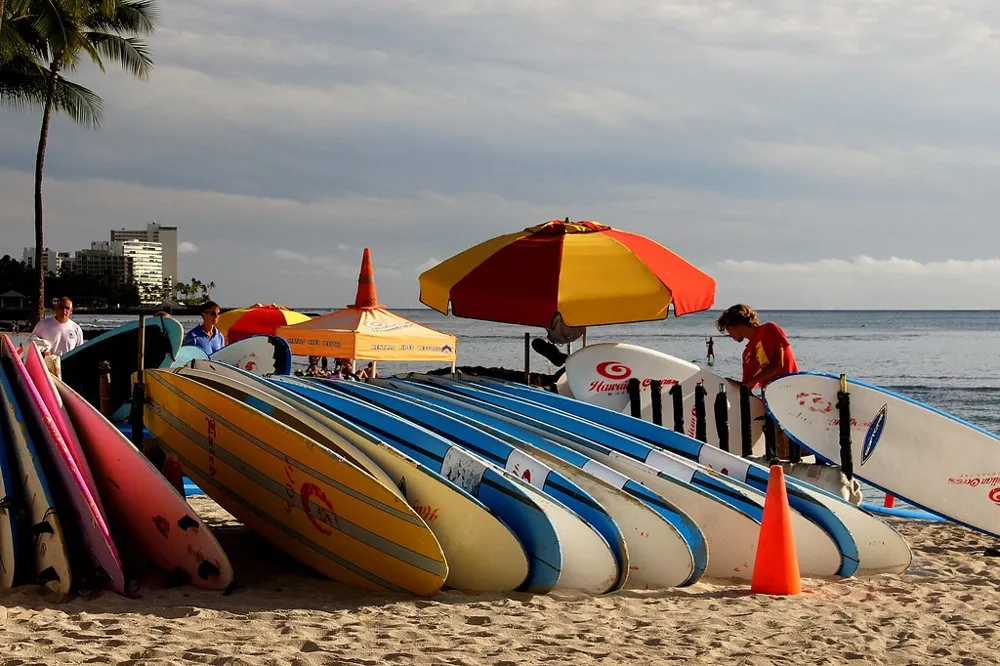
Hard surfboards are made from a foam blank (PU or EPS) wrapped in fiberglass and resin. They're lighter for their size, stiffer and more responsive, which is why most experienced surfers ride them in good waves. Soft tops trade some of that performance for float, safety and toughness.
| Factor | Soft Top | Hard Board |
|---|---|---|
| Wave catching | Easy, thanks to high volume | Depends on size; shortboards are harder |
| Safety | Soft deck and flexible fins hurt less | Hard rails, nose and sharp fins |
| Durability | Shrugs off knocks; damaged by heat and sun | Dings easily; dings need sealing before surfing |
| Performance | Flexes; best in small, gentle waves | Responsive, holds steep and powerful waves |
| Wax | Optional on many decks | Needed (or a traction pad) |
| Cost to replace | Usually lower | Usually higher |
Most surfers learn on a soft top and move to a hard board once they can paddle into unbroken waves, angle down the line and control their speed. Many keep the foamie for small days. For more on shapes and materials, see types of surfboards and epoxy vs PU surfboards.
True Foamie, Soft-Top Epoxy or Hybrid?
All foamies are soft tops, but not all soft tops are foamies. There are three main builds:
- True foamie: foam all the way through, usually an EPS core with wooden stringers, a soft foam skin on the deck and rails, and a slick HDPE plastic bottom. They flex, float and forgive, which makes them the default learner board. Most use screw-through fins. Examples: Wavestorm Classic and Catch Surf Odysea.
- Soft-top epoxy: a hard epoxy board with a soft foam layer over the deck and rails. The solid core makes it stiffer and quicker, and it usually has real fin boxes, but the padding offers less protection than a full foamie.
- Hybrid: a soft deck with a hard epoxy or resin bottom, such as the South Bay Hybrid. It's a middle ground for surfers who want more speed and rail control.
Two common deck foams are EVA (a smooth, rubbery foam) and IXPE (a closed-cell foam that's often heat-laminated and textured). Some brands now also use recyclable co-polymer foam instead of EPS.
How to Choose a Soft Top Surfboard
- Volume first: volume (in liters) combines length, width and thickness. Beginners want much more than experienced surfers of the same weight. If you're between sizes, go bigger.
- Length and width: longer and wider boards paddle faster and feel steadier. Shorter boards turn more easily but are harder to catch waves on.
- Rider weight: many brands list a maximum rider weight. Stay well under it if you're learning.
- Stringers: wooden or fiberglass stringers stop a foam board from bending or snapping. Two or three stringers are common on adult boards.
- Bottom: a slick HDPE bottom is faster and tougher than bare foam. A hard epoxy bottom (hybrid) is faster still.
- Fins: screw-through soft fins are safest for learning. Boards with FCS or Futures boxes let you fit stiffer fins later; see surfboard fins.
- Heat protection: a heat-release valve or vent lets trapped air escape when the board gets hot, which helps prevent bubbling.
- Deck grip: a textured wax-free deck saves a step; a smoother deck needs wax or a traction pad.
- What's in the box: many soft tops include fins and a leash. Upgrading to a better surfboard leash is common.
Who Should Ride a Soft Top?
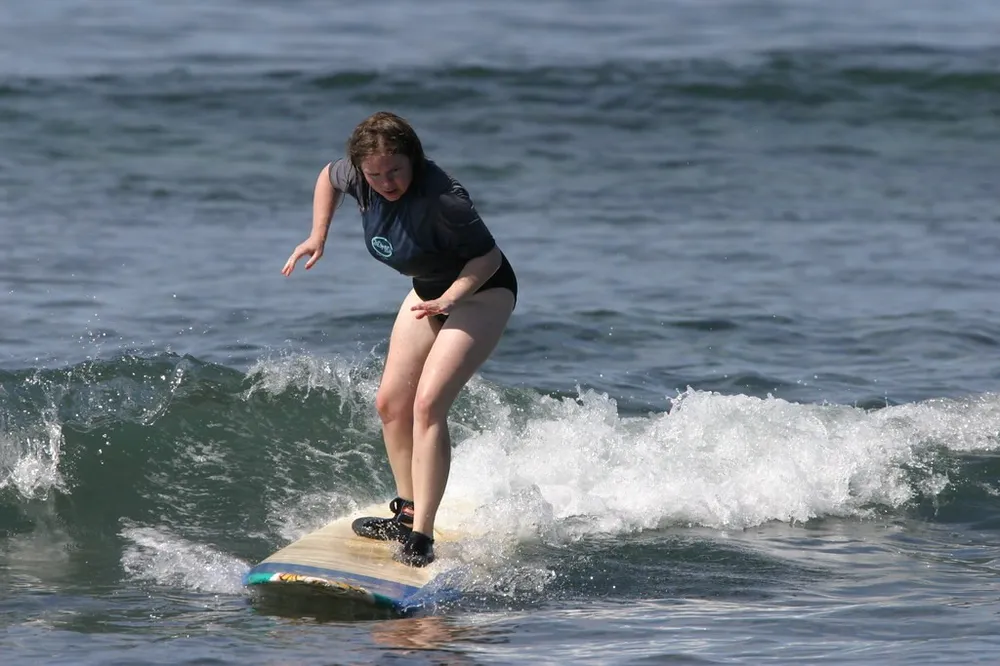
- Beginners: a big foamie is the standard first board, and it's what many surf schools use. Pair it with our how to surf guide.
- Kids: short, light soft tops are safer for young surfers. See best surfboards for kids for youth sizes.
- Intermediate and experienced surfers: foam logs, fish and twin fins are fun in small or mushy waves, and some surfers take foamies into heavier surf just for laughs. Expect a flexy, loose ride.
- Families and shared boards: a tough foamie handles being dropped, sat on and used by several people.
- Travel and wave pools: some surfers bring foamies to surf parks and wave pools, though many parks rent boards too.
- Wakesurfing: some soft tops are sold for boat wakes, but a dedicated wakesurf board is usually better behind a boat.
Soft Top Size Guide
Use this as a starting point, then check each brand's volume and weight guidance. One common rule for novices is a board about one to two feet taller than you.
| Board Length | Typical Volume | Who It Suits |
|---|---|---|
| Under 6' | About 30–45 L | Kids, small teens, or experienced surfers wanting a small-wave toy |
| 6' to 7' | About 55–72 L | Lighter adults and teens, or intermediates |
| 7'6" to 8' | About 70–86 L | Most adult beginners |
| 9' and up | About 87–125 L | Heavier adults, older beginners, noseriding and tiny waves |
Volume ranges are taken from the boards on this page. For a full chart by weight and skill, see our surfboard size chart.
Soft Tops in the Lineup: Safety and Etiquette
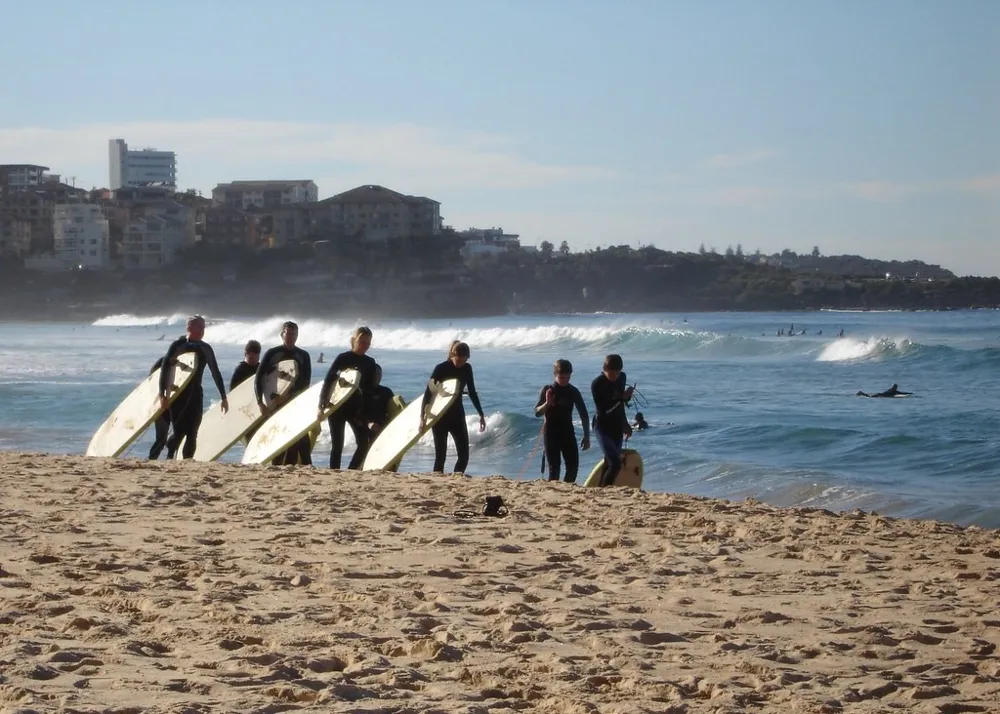
A soft board hurts less, but it's still a long, heavy object in moving water. The same rules apply to every surfer:
- Wear a leash so your board doesn't wash into other people.
- Don't drop in: the surfer closest to the peak has the wave.
- Hold onto your board instead of throwing it when a wave comes. Big foamies are hard to duck dive, so learn the turtle roll; see how to duck dive.
- Start away from the crowd in small whitewater, and stay clear of rocks, piers and rip currents.
Read our full surf etiquette guide before your first sessions at a busy break.
Care, Storage and Repair
Soft tops shrug off bumps, but heat and UV are their biggest enemies. Heat can make the foam skin bubble or delaminate from the core, and sun fades and weakens the deck.
- Rinse the board with fresh water after each session and wipe off sand.
- Keep it in the shade at the beach, and never leave it in a hot car or on a hot roof rack all day.
- Store it indoors, out of direct sun, flat or on its rail. A board bag helps with storage and travel.
- Transport it on padded racks with straps that aren't so tight they dent the foam; see surfboard car racks.
- Check fins and screws now and then, since screw-through fins can loosen.
For repairs, follow the brand's instructions first. Many standard ding kits and solar resins are made for hard boards and can damage soft foam. Small tears in the skin are often fixed with a foam-safe glue, and duct tape or wax can seal a crack temporarily. Hard-bottom hybrids are fixed like any epoxy board; see surfboard ding repair.
Should You Wax a Soft Top?
It depends on the deck. Boards with a textured, wax-free deck (like the South Bay Verve) grip on their own. Smoother foam decks usually need a light coat of wax, especially when you're wet. Many surfers rub a little wax where their feet land on any board.
- Pick a wax for your water temperature; see surfboard wax.
- Start with a clean, dry deck.
- Apply a thin base coat in crosshatch or circles over the standing area and where your hands go when you pop up.
- Add a top coat and touch it up before each session.
To remove old wax, soften it in the sun for a few minutes or with a hair dryer on a warm setting (keep it moving so you don't overheat the foam), then lift it with a plastic scraper or old card. Clean any residue with mild soap and water.
Frequently Asked Questions
Are soft top surfboards good for beginners?
Yes. Soft tops have lots of volume, so they paddle easily and feel stable, and the foam deck is far less likely to injure you or someone nearby when you fall. Many surf schools teach on them.
Can experienced surfers ride soft tops?
Yes. Many experienced surfers ride foamies in small or crowded surf, and shorter soft tops such as twin fins and fish shapes are made for turning rather than learning. A foamie flexes more than a hard board, so it won't hold a line as well in steep, powerful waves.
What size soft top surfboard should I get?
Most adult beginners start on a soft top around 8 feet, and heavier adults often go to 9 feet. Lighter adults and teens can start around 7 feet. Check the brand's listed volume and rider weight before you buy.
Do soft top surfboards need wax?
Some do and some don't. Boards with a textured, wax-free deck grip without it, while smoother foam decks work better with a thin coat of wax. Many surfers add a little wax where their feet land even on wax-free decks.
How long does a soft top surfboard last?
It depends on care. Heat and direct sun are the main threats because they can make the foam skin bubble or peel away from the core. Rinsing, storing the board in the shade and keeping it out of hot cars help it last much longer.
What is the difference between a foamie and a soft top?
Foamie usually means a board that is foam all the way through, with a slick plastic bottom and a flexible core. Soft top covers any board with a soft deck, including hybrids that have a hard epoxy or fiberglass bottom for more speed and control.
Can you use a soft top surfboard for wakesurfing?
Some soft tops are sold for both surfing and wakesurfing, such as the Boardworks Froth! range. Smaller sizes suit the wake best. Check that the brand approves the board for wake use.