Surf Parks and Wave Pools: Surfing Without the Ocean (2026)
Inland surf parks now serve up waves on demand from Texas to Virginia Beach. Here's which US wave pools are open, how the technology works and how to plan your first session.
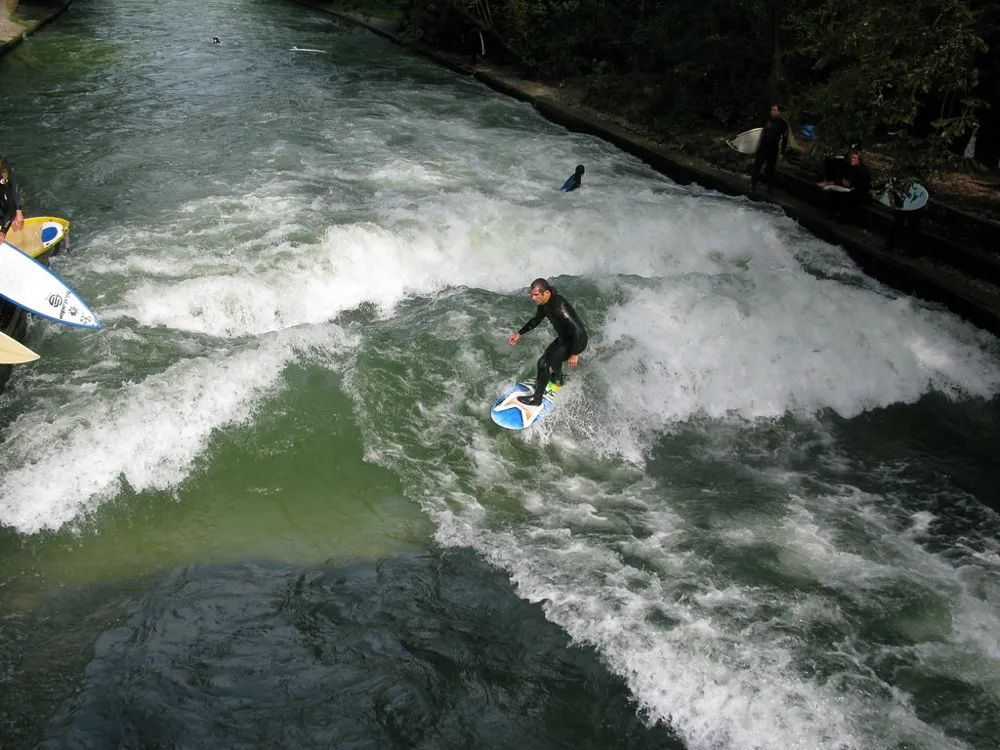
What Is a Surf Park?
A surf park is a facility built around a wave pool (often called a surf lagoon) that makes surfable waves on demand. Instead of waiting for swell, wind and tide to line up, you book a session, paddle out and get a set number of waves at a chosen size and shape. Most parks split sessions by level, from waist-deep whitewater for first-timers to barrels and air sections for experts, and add rentals, coaching, food and pools for non-surfers.
Wave pools have existed in water parks since the 1960s, but modern surf parks are a different thing: their waves peel along a reef-like bottom so you can ride across the face, just like a point or reef break. The US now has several public surf parks, a famous private one and many more in the works. Facilities open, close and change owners often, so the details below are as of November 2026. Always check the park's own website before you travel.
US Surf Parks and Wave Pools at a Glance
| Surf Park | Location | Wave Technology | Status (November 2026) |
|---|---|---|---|
| Waco Surf | Waco, Texas | PerfectSwell lagoon, plus a stationary wave | Open to the public |
| Revel Surf | Mesa, Arizona | SwellMFG lagoon, plus UNIT standing wave | Open to the public |
| Palm Springs Surf Club | Palm Springs, California | SurfLoch | Open to the public |
| DSRT Surf | Palm Desert, California | Wavegarden Cove | Opened to the public in September 2026 (phased opening) |
| Atlantic Park Surf | Virginia Beach, Virginia | Wavegarden Cove | Open since August 2025 |
| Disney's Typhoon Lagoon | Orlando, Florida | Water-park wave pool with surf programs | Park closed for refurbishment, scheduled to reopen January 27, 2027 |
| Skudin Surf at American Dream | East Rutherford, New Jersey | PerfectSwell (indoor) | Listed as temporarily closed by Surf Park Guide; check before booking |
| Surf Ranch | Lemoore, California | Kelly Slater Wave Co. | Private; events and full-facility bookings |
Standing-wave venues and river waves are covered further down.
Open Wave Pools in the US
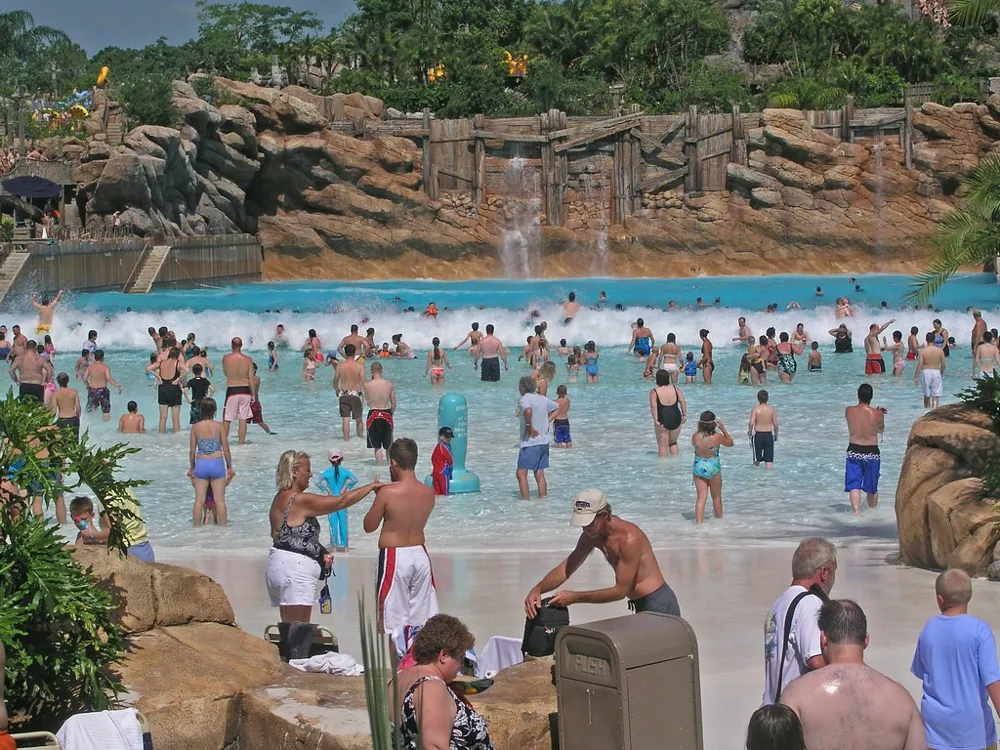
These are the main surf parks where the public can book a session. Pricing, session lengths and wave menus change by season, so we don't list prices here.
Waco Surf, Texas
Waco Surf uses PerfectSwell technology from American Wave Machines, which fires air chambers in patterns to build waves that vary like ocean swell. The resort offers learn-to-surf instruction, specialty wave sessions and a stationary wave it calls the "Shredmill," plus a seasonal water park and other resort activities. It was previously known as BSR Surf Resort.
Revel Surf, Arizona
Revel Surf opened at the Cannon Beach development in Mesa in late 2024. Its lagoon is built by SwellMFG, which uses 21 mechanical "wave-boards" sequenced by software to create a split peak with lefts and rights. A separate UNIT Surf Pool makes a deepwater standing wave for lessons and practice. Sessions are sold by level, from waist-deep whitewater upward.
Palm Springs Surf Club, California
Palm Springs Surf Club sits on the site of a former water park and opened in 2024 after years of delays. Its SurfLoch pool is pneumatic and offers beginner, A-frame, right and left wave settings, with private sessions for experts. The early months included shutdowns and restarts, but WavePoolMag reported in 2025 that the pool was operating fully, with public and private sessions. The 21-acre site also has a lazy river, slides, pools and restaurants for non-surfers.
DSRT Surf, California
DSRT Surf, at the Desert Willow Golf Resort in Palm Desert, opened its 5.5-acre Wavegarden Cove lagoon to the public in late September 2026 as a phased opening. Wavegarden says it can produce up to 1,000 waves per hour, and local reporting says the lagoon holds up to 70 surfers at once, with beginner waves of one to two feet and advanced waves up to about head high. A hotel and villas are planned as later phases. The park is about 10 miles from Palm Springs Surf Club, so the Coachella Valley now has two surf parks.
Atlantic Park Surf, Virginia
Atlantic Park in Virginia Beach opened North America's first Wavegarden Cove on August 16, 2025, a couple of blocks from the ocean. Wavegarden lists a 46-module Cove with more than 25 wave types, up to 1,000 waves per hour and room for up to 40 surfers, with 55-minute sessions year-round.
Disney's Typhoon Lagoon, Florida
Typhoon Lagoon's big wave pool has hosted surf sessions for many years. Disney runs Open Surf and Private Surf programs before the park opens and after it closes, and surfers must bring their own boards. Guests under 18 need a parent or guardian present. Disney's site says the water park is closed for refurbishment and scheduled to reopen on January 27, 2027, so check the surf program's status before planning.
Skudin Surf at American Dream, New Jersey
Inside the American Dream mall near New York City, Skudin Surf runs what it calls the world's largest indoor surfing wave pool, using PerfectSwell technology in warm water. In late 2026 Surf Park Guide listed it as temporarily closed, so contact Skudin Surf directly before you make plans.
Surf Ranch, California
Kelly Slater's Surf Ranch in Lemoore drags a huge hydrofoil along a long, man-made lake to make a long, barreling wave. It was the first wave pool to host a Championship Tour event, in 2018. It isn't open for regular public sessions; access is through events and full-facility bookings. In 2026 the World Surf League sold Kelly Slater Wave Company to a real estate fund in partnership with Slater, according to Stab, so access options may change.
Surf Parks Under Construction and Planned
Dozens of US projects have been announced, and plenty of announced surf parks never get built. These are some that trackers list as under construction or in development as of late 2026. Treat every date as a target, not a promise.
| Project | Location | Technology | Reported Status |
|---|---|---|---|
| The Point Surf Park | Fellsmere, Florida | Endless Surf | Under construction |
| Cannon Beach | McKinney, Texas | SwellMFG | Under construction |
| Austin Surf Club | Del Valle, Texas | Kelly Slater Wave Co. | Members only; construction reported paused in 2026 |
| Crest Surf Clubs | Shirley, New York | Premier Surf Systems | Members only; under construction |
| Zion Shores | Washington, Utah | PerfectSwell and UNIT | Members only; under construction |
| Peak Surf Park | Wesley Chapel, Florida | Surf Lakes | In development |
| Jacksonville, Houston (HTX Surf) and Middleborough, Massachusetts | Various | Wavegarden Cove | In development |
Status from Surf Park Guide and Wavegarden; members-only clubs may not offer public sessions.
How Wave Pools Work: The Main Technologies
Every surf park uses one of a handful of wave-making systems. The technology decides the wave's shape, how many surfers can ride at once and how often waves come.
| System | How It Makes Waves | US Examples |
|---|---|---|
| Wavegarden Cove | Rows of electromechanical paddles along a central pier fire in sequence, sending peeling waves to both sides | DSRT Surf, Atlantic Park |
| PerfectSwell (American Wave Machines) | Pneumatic chambers fire in patterns that combine like ocean swell, so waves vary | Waco Surf, Skudin Surf American Dream |
| Endless Surf | Pneumatic chambers (caissons) controlled independently; models are named by chamber count | The Point (planned) |
| SurfLoch | Pneumatic system, also used to retrofit existing pools | Palm Springs Surf Club |
| SwellMFG | 21 mechanical wave-boards sequenced by software to create an A-frame peak | Revel Surf |
| Kelly Slater Wave Co. | A hydrofoil pulled along a rail in a long lake, making one long, consistent wave per pass | Surf Ranch |
| Surf Lakes | A central plunger sends swells outward across a circular lake, breaking on several reefs at once | Peak Surf Park (planned) |
Pneumatic and paddle systems can usually run many wave types and serve more surfers per hour, while the foil-driven Surf Ranch wave is famous for its long, repeatable barrel but runs fewer waves.
River Surfing in the US
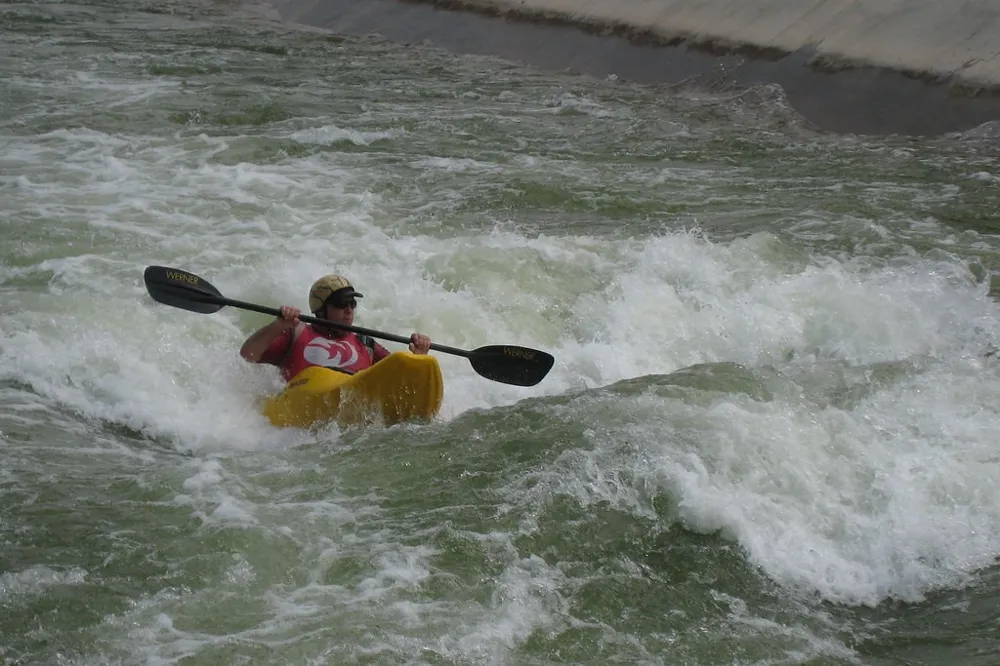
River surfers ride standing waves that form where fast water pours over rocks, ledges or built features. The wave stays in place while the water moves, so you surf in one spot instead of riding toward shore. Many US whitewater parks now include adjustable features built partly for surfers, and they share the water with kayakers.
- Boise Whitewater Park, Idaho: the city's park on the Boise River has mechanically shaped wave features. The city calls the Phase 2 wave an expert-only feature and says leashes shouldn't be used there because of entrapment risk. Wave size depends on river flow and irrigation needs, and modifications to that wave were completed in February 2026.
- Other river waves: SurferToday lists US river breaks including Bend Whitewater Park in Oregon, Kelly's Whitewater Park in Cascade, Idaho, and Wave-O-Saurus in Holyoke, Massachusetts. Conditions depend on flow and season.
River surfing has its own hazards: shallow rocks, strong currents, cold water and features that can hold you under. Follow posted rules, scout first and start only if you're a confident swimmer.
Standing Waves, FlowRider and Surf Simulators
Not every artificial wave is a wave pool. Standing-wave machines pump water over a shaped surface so the wave stays in place and you ride it like a river wave.
- FlowRider: a sheet wave invented by Tom Lochtefeld. Water is pumped up a padded, inclined surface, and you ride on a short flowboard or a bodyboard. The first FlowRider opened at Schlitterbahn in New Braunfels, Texas, in 1991, and Royal Caribbean has fitted them on its cruise ships since 2006. They're common in water parks and resorts. Flowboards look more like small wakeboards than surfboards.
- Deepwater standing waves: systems like Citywave and UNIT make deeper standing waves aimed at surfers. US examples include The LineUp at Wai Kai on Oahu, Lakeside Surf in Chelan, Washington, The Surf Lounge at PopStroke in The Colony, Texas, and the UNIT wave at Revel Surf.
Standing waves are a good way to practice balance and turns in a small space, and many are open year-round. They won't teach you to paddle, read waves or pop up the way a lagoon does.
Notable Surf Parks Around the World
The US isn't the only place betting on artificial waves. A few well-known facilities, with the technology each uses:
| Facility | Location | Technology |
|---|---|---|
| The Wave | Bristol, England | Wavegarden Cove |
| Lost Shore | Scotland | Wavegarden Cove |
| Alaïa Bay | Sion, Switzerland | Wavegarden Cove |
| URBNSURF | Melbourne and Sydney, Australia | Wavegarden Cove |
| Wave Park | Siheung, South Korea | Wavegarden Cove |
| Surf Abu Dhabi | Abu Dhabi, UAE | Kelly Slater Wave Co. |
| O2 SurfTown | Munich, Germany | Endless Surf |
| Shizunami Surf Stadium | Shizuoka, Japan | PerfectSwell |
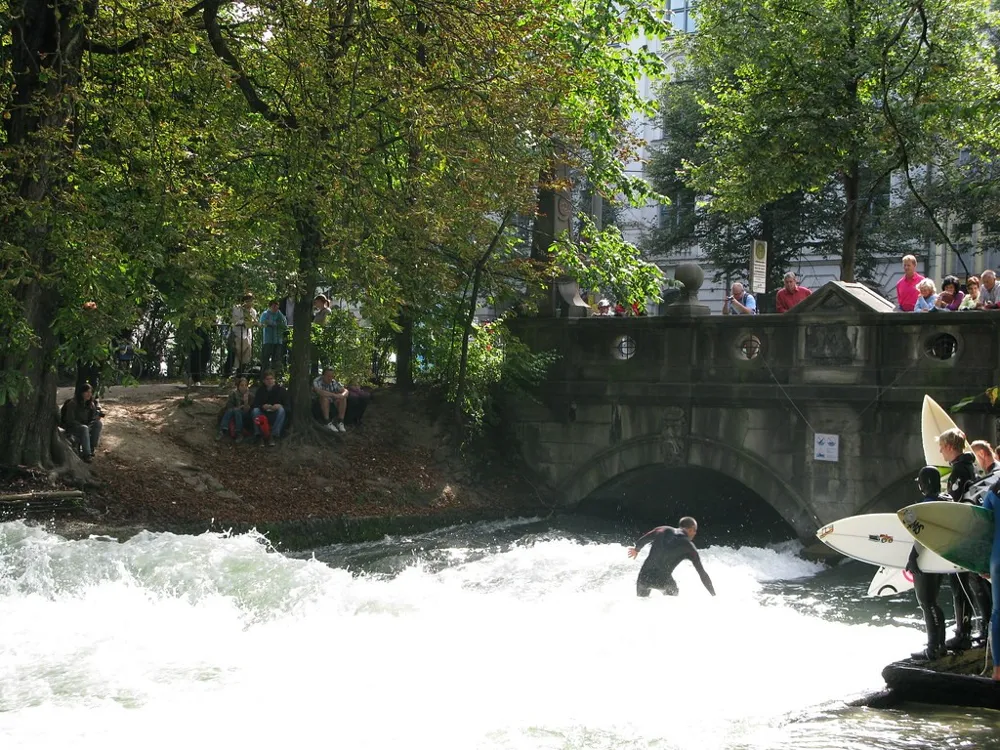
Munich is also home to the world's most famous river wave, the Eisbach, in the city center. It was closed for much of 2025 after a fatal accident, and the city allowed surfing again in May 2026 under new rules that include a mandatory self-releasing leash. The city says the wave is for experienced surfers, and rules can change.
A Short History of Wave Pools
| Year | Milestone |
|---|---|
| 1969 | Big Surf opens in Tempe, Arizona, one of the earliest US wave pools; surfing sessions ran there for years |
| 1991 | The first FlowRider opens at Schlitterbahn in New Braunfels, Texas |
| 2006 | Royal Caribbean begins putting FlowRiders on its ships |
| 2018 | Surf Ranch in Lemoore hosts the first Championship Tour event in a wave pool |
| 2019 | Big Surf closes after its last season; its equipment is auctioned in 2022 |
| 2024 | Palm Springs Surf Club opens, and Revel Surf opens in Mesa |
| 2025 | Atlantic Park opens North America's first Wavegarden Cove in Virginia Beach |
| 2026 | DSRT Surf opens in Palm Desert; Kelly Slater Wave Company is sold by the WSL |
For the bigger story of the sport, read our history of surfing.
Planning Your First Wave Pool Session
- Pick the right level. Sessions are named by wave type or skill. Be honest: a wave that's too big wastes an expensive session and gets in other surfers' way. First-timers should book a lesson or learn-to-surf session.
- Book early. Popular parks fill up, especially on weekends and holidays. Read the cancellation and weather policies.
- Know how sessions work. Sessions are often about an hour, with surfers split between the left and right sides and taking waves in turn. Wave counts vary by park and session type.
- Sort out your board. Many parks rent boards and wetsuits; some require your own. Many surfers ride a slightly shorter, wider board in pools than in the ocean. A soft top surfboard is a common choice in beginner sessions.
- Dress for the water. Desert pools can be warm, while outdoor East Coast pools change with the seasons. Bring a wetsuit or rash guard as needed, and reef-safe sunscreen for outdoor parks.
- Use a leash and follow the staff. One surfer per wave, paddle back along the marked channel and kick out before the shallows. The same surf etiquette applies as in the ocean.
- Check age and swimming rules. Parks set their own minimum ages, guardian rules and waivers.
Wave Pool vs Ocean Surfing
| Factor | Wave Pool | Ocean |
|---|---|---|
| Consistency | Same wave on demand; ideal for repeating a maneuver | Depends on swell, wind and tide |
| Crowds | Capped numbers per session | Can be crowded and competitive |
| Cost | Paid sessions | Free, apart from gear and travel |
| Skills learned | Riding and maneuvers | Riding, plus reading waves, positioning and paddling |
| Hazards | Shallow bottoms, other surfers | Rips, reefs, marine life, changing conditions |
| Access | Inland, often year-round | Coasts and Great Lakes |
A pool is a great way to get lots of waves quickly, but ocean surfing teaches skills a pool can't. Many surfers use both. When you're ready for the real thing, start with our how to surf guide and the best surf spots in the US.
Frequently Asked Questions
What is a surf park?
A surf park is a facility built around a wave pool or surf lagoon that makes surfable waves on demand. Most sell timed sessions by skill level and add rentals, lessons, food and other amenities.
Where can I surf a wave pool in the US?
As of November 2026, public surf parks open in the US include Waco Surf in Texas, Revel Surf in Arizona, Palm Springs Surf Club and DSRT Surf in California, and Atlantic Park Surf in Virginia. Schedules and status change, so check each park's website before you plan a trip.
Can beginners surf in a wave pool?
Yes. Most surf parks run beginner or learn-to-surf sessions in small whitewater or gentle waves, often with coaching. Advanced settings with barrels and air sections are separate sessions.
Can the public surf Kelly Slater's Surf Ranch?
Not in the usual way. The Surf Ranch in Lemoore, California, is reported to operate as a private facility used for events and full-facility bookings, not individual walk-in sessions.
Do I need my own surfboard for a wave pool?
Usually not. Many surf parks rent boards and wetsuits, while some, such as Disney's Typhoon Lagoon surf programs, require you to bring your own. Check the rules when you book.
Is a FlowRider the same as a wave pool?
No. A FlowRider pumps a thin sheet of water up a padded slope to make a stationary wave that you ride in place, usually on a short flowboard or bodyboard. A wave pool makes moving waves that you paddle into and ride across the pool.
What happened to Big Surf in Arizona?
Big Surf in Tempe opened in 1969 and was one of the earliest US wave pools. It closed after the 2019 season, did not reopen, and its equipment was auctioned in 2022.
Can you surf on a river?
Yes. River surfing uses standing waves that form over rocks, ledges or built features in fast-flowing rivers. Many river waves are for experienced surfers only and have their own safety rules.