How to Surf: Your First Waves, Step by Step (2026)
From choosing a big soft-top to standing up on your first whitewater wave, here's how to learn to surf safely and progress faster.
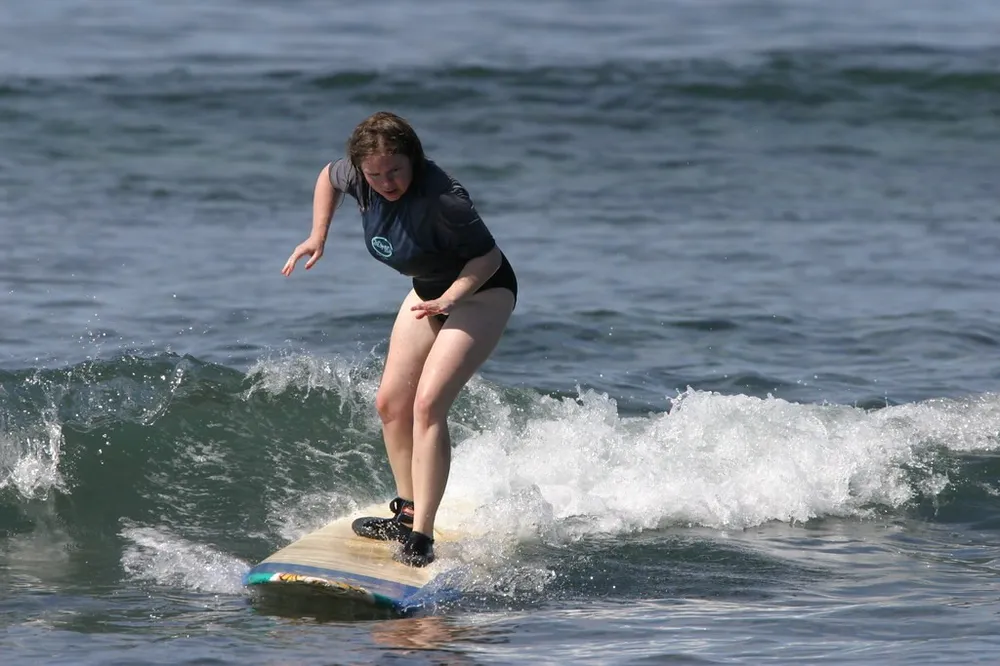
Before You Paddle Out
Learning to surf is mostly about setting yourself up to succeed: the right board, the right beach, the right waves and a few minutes of practice on the sand. Get those right and most people stand up on whitewater in their first session or two.
| Step | What to Do |
|---|---|
| 1. Get a big board | A soft-top around 7–9 ft with lots of volume |
| 2. Pick a gentle beach | A sandy-bottom beach break with small waves and lifeguards |
| 3. Practice on land | Find your stance and drill the pop-up |
| 4. Ride whitewater | Stand in waist- to chest-deep water and catch broken waves |
| 5. Learn to paddle out | Get past the whitewater with a turtle roll |
| 6. Move to green waves | Once you can pop up reliably and steer |
Step 1: Choose the Right Board
Beginners need a long, wide, thick board with plenty of volume. It floats you higher, paddles faster, catches waves earlier and is far more stable when you stand. A soft-top (foam) board around 7 to 9 feet is the usual starting point, and its foam deck reduces the chance of injury if it hits you. Heavier and taller surfers go toward the longer end.
Resist the urge to buy a short, sleek board too early; it'll make learning much harder. See our surfboard size chart, types of surfboards and best surfboards for beginners.
Step 2: Get the Right Gear
- Leash: attaches the board to your back ankle so it doesn't wash away or hit others. See surfboard leashes.
- Wax or traction: soft-tops usually have grippy decks; hard boards need surf wax.
- Wetsuit: in cold water, a 4/3mm wetsuit is common; in warmer water, a 3/2mm or a shorty. Add boots and gloves in very cold water. See wetsuits.
- Rash guard and sunscreen: in warm water, a rash guard prevents chafing and sunburn. Use a water-resistant, reef-friendly sunscreen.
Step 3: Pick the Right Beach and Conditions
- Beach breaks over a sandy bottom are best for learning. Avoid reef and rocky breaks, where falls can be dangerous.
- Small, gently breaking waves: look for slow, rolling whitewater, not steep waves that dump onto the sand (shorebreak).
- Lifeguarded and uncrowded: learn near lifeguards and away from experienced surfers in the main lineup.
- Light or offshore wind usually means cleaner waves; strong onshore wind makes conditions choppy.
- Tide: some beaches work better at certain tides. Ask a lifeguard, surf school or surf shop.
If in doubt, don't go out. Check the local surf forecast and talk to lifeguards about conditions.
Reading the Waves
- Whitewater vs green waves: whitewater is broken foam rolling toward shore, slow and predictable; green waves are unbroken faces, faster and steeper. Learn on whitewater first.
- Sets: waves often arrive in groups called sets, with lulls in between. Watch from the beach for 10–15 minutes to see the rhythm before paddling out.
- Peaks vs closeouts: a peak breaks from one point and peels left or right, giving a ride; a closeout breaks all at once along its length and is hard to ride.
- Left and right: waves are named from the surfer's view looking toward the beach: a "right" breaks to the surfer's right.
- Size and power: start in waves below waist height; even small waves can be powerful at low tide or over shallow sandbars.
Step 4: Find Your Stance (Regular or Goofy)
Regular surfers ride with the left foot forward; goofy surfers ride with the right foot forward. Most surfers are regular, but plenty are goofy. To find yours:
- Push test: have a friend give you a gentle, unexpected push from behind. The foot you step forward with usually goes at the front.
- Slide test: run and slide in socks on a smooth floor. The foot that leads is your front foot.
When standing, your feet should be about shoulder-width apart, roughly across the board's center line, with knees bent, a little more weight on the back foot, and your eyes looking ahead, not down. If you skateboard or snowboard, use the same stance.
Step 5: Practice the Pop-Up on Land
The pop-up is the move from lying down to standing. Practice it 10–20 times on the sand (remove the fins first):
- Lie on the board with your chest up and hands flat on the deck beside your chest, not gripping the rails.
- Push your upper body up, like a fast push-up, keeping your hips light.
- In one motion, swing your back foot across the tail and bring your front foot forward between your hands.
- Land low with knees bent, arms out for balance, head up.
Avoid getting up via your knees; it slows the pop-up and becomes a hard habit to break. If a full pop-up is difficult, a "step-up" (bringing the back knee up first) is a common stepping stone.
Step 6: Learn to Paddle
- Position: lie so the board's nose sits just above the water. Too far forward and the nose dives ("pearling"); too far back and the board drags.
- Chest up, back slightly arched, feet together on the tail.
- Long, alternating strokes, hands cupped and reaching forward, about shoulder-width apart.
- Keep the board centered and pointing straight.
Paddling is tiring at first. It's the biggest fitness demand in surfing and improves quickly with practice.
Step 7: Catch Your First Whitewater Waves
Whitewater (broken foam) is your best friend as a beginner: it's slower, more predictable and pushes you along in shallow water where you can stand.
- Wade out to waist- to chest-deep water, holding the board beside you so it doesn't get thrown into you.
- Turn the board so the nose points straight at the beach.
- When a wave of whitewater is a few seconds away, lie down and start paddling, building speed before it reaches you.
- When you feel the wave push the board, take two or three more strong strokes.
- Pop up, stay low and look toward the beach.
- To finish, step or fall off to the side or back, never in front of the board, and protect your head with your arms.
Start by riding waves lying down, then try popping up. Surf camps often suggest you should be able to catch most whitewater waves and pop up within a couple of seconds before moving on.
Step 8: Paddle Out and Get Past the Waves
To reach unbroken waves, you'll need to get through the whitewater:
- Use the channel: paddle out where waves aren't breaking, often next to the main peak. Ask locals or lifeguards.
- Turtle roll (for longboards and soft-tops): just before the whitewater hits, grip the rails, roll upside down under the board, hold on as the wave passes, then roll back and keep paddling.
- Duck dive (for smaller, lower-volume boards): push the nose underwater and sink the tail with your knee or foot so the board dives under the wave. Big beginner boards have too much volume to duck dive.
- Never throw your board to get under a wave; it can hit someone behind you.
Step 9: Catch Green (Unbroken) Waves
Green waves are faster and steeper. Sit a little outside the breaking point, watch for a wave that's lifting and forming a peak, turn early, paddle hard and pop up as the board starts to tilt down the face. Angle slightly along the wave rather than straight to shore. Expect lots of misses at first; timing comes with practice.
Basic Turns
To turn, look where you want to go and shift your weight: press on your toes for a frontside turn, on your heels for a backside turn. Turning comes once you're comfortable standing and riding straight.
Common Beginner Mistakes
| Problem | Likely Cause | Fix |
|---|---|---|
| Nose dives (pearling) | Lying too far forward or popping up late on a steep wave | Slide back slightly; pop up earlier; angle the takeoff |
| Wave passes underneath you | Paddling too late or too slowly; lying too far back | Start paddling earlier; move forward a little |
| Board turns sideways in whitewater | Nose not pointing at shore | Line the board up straight before the wave hits |
| Falling right after standing | Standing too tall, looking down, feet too close | Stay low, look ahead, widen your stance |
| Getting up on your knees | Habit from slow pop-ups | Drill the pop-up on land |
| Exhausted quickly | Bad paddling position, fighting waves | Use the channel; rest; build paddle fitness |
Surf Safety
Rip Currents
Rip currents are fast channels of water flowing away from shore. NOAA reports that rip currents account for about 80% of beach rescues. Learn to spot them before you paddle out. Signs, per the US Lifesaving Association, include:
- A channel of churning, choppy water.
- A noticeable difference in water color.
- A line of foam, seaweed or debris moving steadily seaward.
- A break in the incoming wave pattern.
If you're caught: stay calm and keep hold of your board. Rip currents pull you out, not under. Don't paddle or swim straight against it; go parallel to the shore until you're out of the current, then angle back to the beach. If you can't, float, face the shore and wave or call for help. Surfers sometimes use rips to paddle out, but beginners should stay well away from them.
Other Safety Rules
- Never surf alone as a beginner; surf near lifeguards.
- Always wear a leash, and keep control of your board.
- When you fall, fall away from the board and cover your head as you surface.
- Don't dive headfirst; the water may be shallow.
- Know your limits; stay in the whitewater until you're ready.
- Learn the beach's warning flags and follow lifeguard instructions.
Surf Etiquette for Beginners
The surfer closest to the breaking part of the wave has priority, and only one surfer rides each wave. Paddle wide around people who are riding, don't let your board go, and apologize if you get in someone's way. Our surf etiquette guide covers the full set of rules.
Should You Take a Lesson?
A lesson from a certified instructor is the fastest, safest way to start: you'll get the right board, the right spot, help timing waves and instant feedback on your pop-up. Many schools run group lessons and multi-day camps. After a few lessons, many people continue on their own or with friends.
Get Surf-Fit
- Paddle fitness: swimming is the best cross-training for paddling.
- Pop-up strength: push-ups, burpees and planks.
- Balance and mobility: squats, lunges, yoga and balance boards. Surfskates are another popular way to practice; see how to surfskate.
- Warm up for five minutes on the beach before you paddle out.
How Long Does It Take to Learn?
It varies. Many beginners stand up on whitewater in their first day or two. Catching green waves consistently and turning usually takes weeks to months of regular sessions, and surfing keeps rewarding practice for years. Surfing often, on the right board, in small waves, is the fastest way to progress.
Your First Session Plan
- Check the forecast and talk to a lifeguard about conditions and rips.
- Warm up and practice 10 pop-ups on the sand.
- Catch 5–10 whitewater waves lying down to feel the push.
- Try popping up; aim for a few short rides.
- Rest, drink water and get out before you're exhausted.
Related Guides
Explore our surfing hub, find a beach in the best surf spots in the US, try bodyboarding or skimboarding, and check wetsuit vs drysuit for cold water.
Frequently Asked Questions
Can you teach yourself to surf?
Yes, many people do, but a lesson or two speeds things up and teaches safety, wave selection and etiquette. If you go it alone, start on a big soft-top in small whitewater at a lifeguarded beach break.
How long does it take to learn to surf?
Many beginners stand up on whitewater in their first session or two. Catching unbroken green waves and turning usually takes weeks to months of regular surfing, and surfers keep improving for years.
What is the hardest part of learning to surf?
Most beginners find paddling, timing the pop-up and balancing the hardest. Paddling fitness improves quickly with time in the water.
What size surfboard should a beginner use?
A long, wide, high-volume board, usually a soft-top around 7 to 9 feet depending on your weight. See our surfboard size chart for details.
Am I regular or goofy?
Regular surfers ride with the left foot forward; goofy surfers ride with the right foot forward. Have someone gently push you from behind; the foot you step forward with usually goes at the front.
Is there an age limit for surfing?
No. People learn as kids and as adults. Being comfortable swimming in the ocean and reasonably fit makes learning easier.
Do I need to be a strong swimmer to surf?
You should be a confident swimmer and comfortable in waves, even though you'll have a board and leash. Never rely on the board to keep you afloat.
What should I wear to surf?
A wetsuit sized for the water temperature, or a rash guard and boardshorts or swimsuit in warm water, plus reef-safe sunscreen.