Surfing Tricks and Maneuvers in Progression Order (2026)
Every major surf maneuver, from your first trim line to tube rides and airs, plus the longboard classics, with a short how-to, the usual mistakes and a difficulty table.
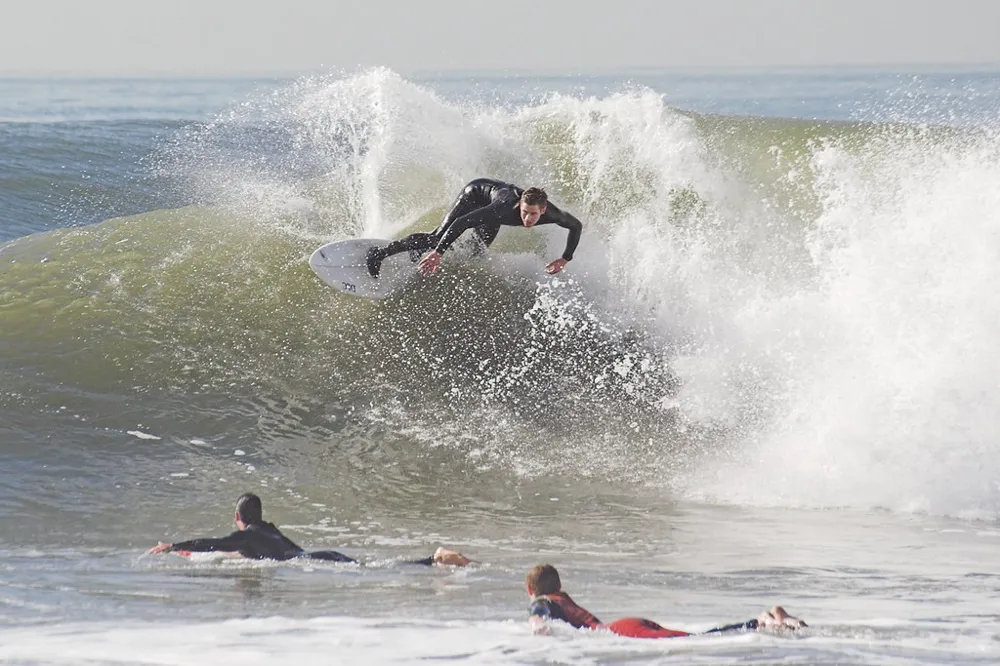
How Surf Maneuvers Build on Each Other
Surfing tricks are not a random menu. Each maneuver uses skills from the one before it: you can't do a clean cutback without speed from a bottom turn, and you can't do an air without the speed and timing of a strong top turn. That's why this guide is arranged as a progression rather than an alphabetical list.
It starts where our how to surf guide ends, once you can pop up, angle along a green wave and ride the face. If you're still working on standing up, go back to that guide first. Wave names used below (face, pocket, lip, shoulder, flats) are explained in the next sections and in our surf slang glossary.
Two terms come up in every trick: frontside means you're facing the wave as you ride (a regular-foot surfer going right), and backside means your back is to the wave. Most maneuvers can be done both ways, and backside versions usually feel harder at first because you can't see the wave as easily.
Surfing Tricks at a Glance
Use this table to see where each maneuver sits. Difficulty levels follow the beginner, intermediate and advanced tiers that surf schools and guides commonly use; your own order may vary with your board and local waves.
| Maneuver | Level | Where on the Wave | Main Skill It Teaches |
|---|---|---|---|
| Trim and pumping | Beginner | Upper to middle face | Holding and building speed |
| Bottom turn | Beginner to intermediate | Base of the wave | Turning speed into power |
| Top turn | Intermediate | Upper face, below the lip | Redirecting back down |
| Carve | Intermediate | Open face | Full-rail arcs |
| Cutback (and roundhouse) | Intermediate | Shoulder back to the pocket | Returning to the power source |
| Foam climb | Intermediate | Whitewater section | Getting past broken sections |
| Floater | Intermediate | On top of a crumbling lip | Riding over a section |
| Snap | Intermediate to advanced | Pocket, near the lip | Tight pivot and fin release |
| Re-entry (off the lip) | Intermediate to advanced | Lip | Vertical surfing |
| Closeout re-entry | Intermediate to advanced | Final closing section | Finishing a ride |
| Tail slide | Advanced | Lip or upper face | Controlled fin release |
| Tube ride (barrel) | Advanced | Inside the curl | Speed control and positioning |
| Air and rotations | Advanced to pro | Above the lip | Launch, flight and landing |
| Cross-step | Longboard intermediate | Upper face in trim | Moving along the board |
| Hang five and hang ten | Longboard intermediate to advanced | Upper third, near the curl | Noseriding |
| Drop knee turn | Longboard intermediate | Base or shoulder | Turning a long board |
Wave Anatomy: Where Each Maneuver Happens
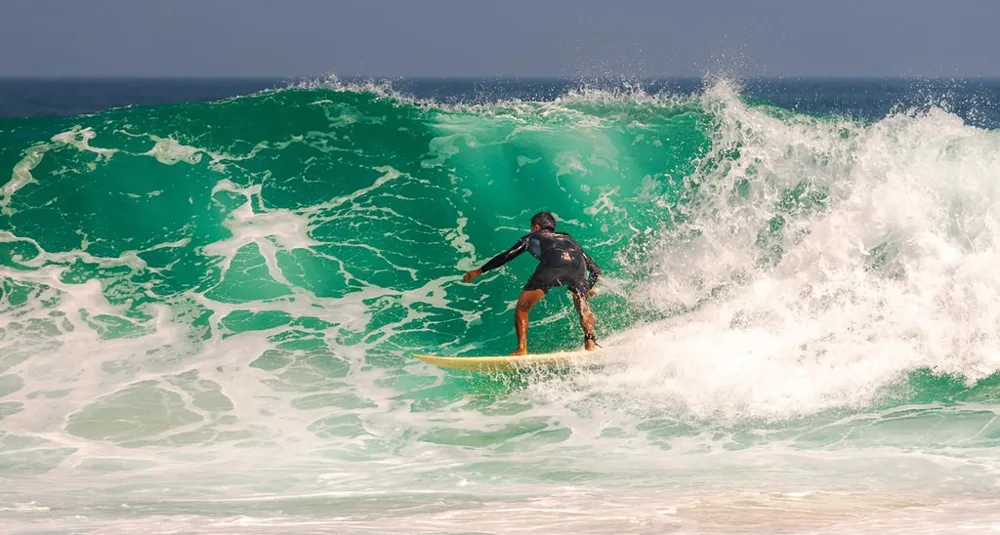
Every maneuver is defined by where it happens on the wave, so it helps to know the parts:
- Pocket (curl): the steep part of the face just ahead of where the wave is breaking. It has the most energy, and most power maneuvers happen here.
- Lip: the top edge of the wave that pitches forward as it breaks. Re-entries, snaps and airs use it.
- Face: the unbroken slope you ride along. The upper face is faster; the lower face sets up turns.
- Shoulder and flats: the gentler, slower part of the wave away from the pocket. Cutbacks bring you back from here.
- Section: a part of the wave that breaks ahead of you. You can go around it, over it (floater) or through it (foam climb).
Good surfing is mostly about staying near the pocket. The maneuvers below are different ways to keep doing that while adding speed, power and style.
Beginner Maneuvers: Trim, Speed and the Bottom Turn
1. Trim
Trim is riding across the face at a steady line, with the board planing in the fastest part of the wave. It's the first thing to master after angling your takeoff.
How: after the pop-up, set your line along the upper half of the face, keep your knees soft and shift weight slightly forward to speed up or back to slow down. Look down the line, not at your feet.
Common mistakes: riding too low on the face, where the wave has less push; standing tall and stiff; staring at the board.
2. Pumping and Rail to Rail
Pumping generates speed when trim alone isn't enough, especially on soft or small waves. It's a rhythm of compressing and extending while rocking gently from rail to rail along the upper face.
How: rise up the face, then compress and drive the board down, pushing through your front foot; extend as you come back up. Keep the arcs small and smooth, and stay close to the pocket.
Common mistakes: bouncing up and down without engaging the rails; pumping too far out onto the shoulder; flapping your arms instead of moving from the legs and hips. A surfskate is a common land tool for learning this rhythm.
3. Bottom Turn
The bottom turn is the first turn after the drop, made at the base of the wave. It converts the speed of the takeoff into power and sets up almost everything else, which is why most guides treat it as the most important maneuver in surfing.
How: as you reach the bottom, compress low, look up at the section of the wave you want to hit, and lean onto the rail: toes for a frontside bottom turn, heels for backside. Weight the back foot slightly over the fins and let your head and shoulders lead the board around. The deeper and more drawn-out the turn, the more speed you carry up the face.
Common mistakes: turning too far out in front of the wave (on the flats), so you lose the push; standing up straight instead of compressing; looking down rather than at your target; turning too early, before you reach the bottom.
Intermediate Maneuvers: Turns That Use the Whole Wave
4. Top Turn
The top turn redirects you at the top of the wave back down toward the pocket. It links naturally with the bottom turn into the basic "up and down the face" pattern.
How: come off your bottom turn aiming up the face, then, just below the lip, shift weight to the back foot, open your shoulders toward the beach (frontside) or toward the wave behind you (backside), and push the tail around. Extend through the turn, then compress again as you head back down.
Common mistakes: turning before you reach the upper face; not rotating the upper body; stopping dead at the top because there was no speed from the bottom turn.
5. Carve
A carve is a long, full-rail arc on the open face. The board is laid on its rail and draws a smooth curve, often throwing a fan of spray.
How: with good speed, sink low, lean the board onto its rail and keep the pressure even through the turn. Your arms and shoulders set the arc; your eyes lead it.
Common mistakes: trying it on small, weak waves without enough energy; sliding the tail instead of holding the rail; leaning only from the waist instead of the whole body.
6. Cutback and Roundhouse Cutback
When you outrun the breaking part of the wave and drift onto the shoulder, a cutback turns you back toward the pocket. The roundhouse cutback is a bigger, figure-eight version: you carve all the way back to the whitewater, rebound off it and turn again to head down the line.
How: from speed on the shoulder, set a high line, then lean into the turn on your heels (frontside) or toes (backside), looking back over your shoulder toward the curl. For a roundhouse, keep turning until you face the foam, bounce lightly off it and redirect back down the line.
Common mistakes: starting without speed, so the board stalls halfway; turning too tight and stopping; not looking back at the pocket; leaving the cutback so late that the wave has already moved away.
7. Foam Climb
The foam climb uses a section of whitewater as a platform: you ride up onto the broken foam and come back down to rejoin the open face. It's how you get through small sections without kicking out.
How: aim at the foam with moderate speed, unweight slightly as you ride up onto it, keep your weight centered, then steer back down to the clean face.
Common mistakes: hitting the foam with too little speed and stalling in it; leaning back so the foam pushes the nose up and you fall off the tail.
8. Floater
A floater means riding along the top of a crumbling lip and dropping back onto the clean face beyond it, going over a section instead of around it.
How: as a section starts to break ahead, carry speed and aim up toward the lip at a shallow angle. Unweight as the board rises onto the top, keep your weight centered, ride along the lip, then shift slightly forward and drop down, landing with bent knees to absorb the impact.
Common mistakes: going up too steep so you fall back down the face; leaning back on the landing, which often ends in a fall or a snapped fin; trying it on sections that are pitching hard rather than crumbling.
9. Snap
A snap (also called a slash) is a quick, sharp change of direction in the pocket or near the lip, usually throwing spray. It's tighter and more aggressive than a carve.
How: start from a solid bottom turn, come up the face steeply, then drive hard off the back foot and twist your upper body to whip the tail around. Let the fins briefly release, then bring the board back under you and compress to land.
Common mistakes: trying without a solid bottom turn or on a wave that isn't steep; hesitating at the top; throwing the arms without turning the hips.
10. Re-Entry (Off the Lip)
The re-entry, often called an off-the-lip, is a vertical turn that hits the breaking lip and rides back down with it. It's the move most people picture when they think of high-performance surfing.
How: time your bottom turn so you arrive at the lip just as it pitches. Aim up the face steeply, hit the lip, rotate your shoulders and push the tail around so the nose comes back down, then let the falling lip carry you down. Compress to absorb the landing.
Common mistakes: arriving late, after the lip has already broken; not going vertical enough; staying stiff at the landing.
11. Closeout Re-Entry
When the wave ahead is about to close out, the closeout re-entry is a last powerful turn into the closing section, used to finish a ride strongly rather than straightening out.
How: set a strong bottom turn toward the closing section, hit it as it breaks and ride down with the whitewater, compressing hard to absorb the impact.
Common mistakes: hesitating and getting buried by the whitewater; landing with straight legs; trying it in shallow water over reef or rocks.
12. Tail Slide
A tail slide lets the fins and tail release so the board slides sideways for a moment, often at the lip or high on the face, before you bring it back under control.
How: from a steep bottom turn, hit the top of the wave and push the tail out while shifting weight toward the front foot, so the fins break free. Keep your center of gravity low and over the board, then re-engage the rail.
Common mistakes: putting all your weight on the back foot so the board shoots out; not having enough board control yet; getting stuck in the release and never reconnecting.
Advanced Maneuvers: Tube Riding and Airs
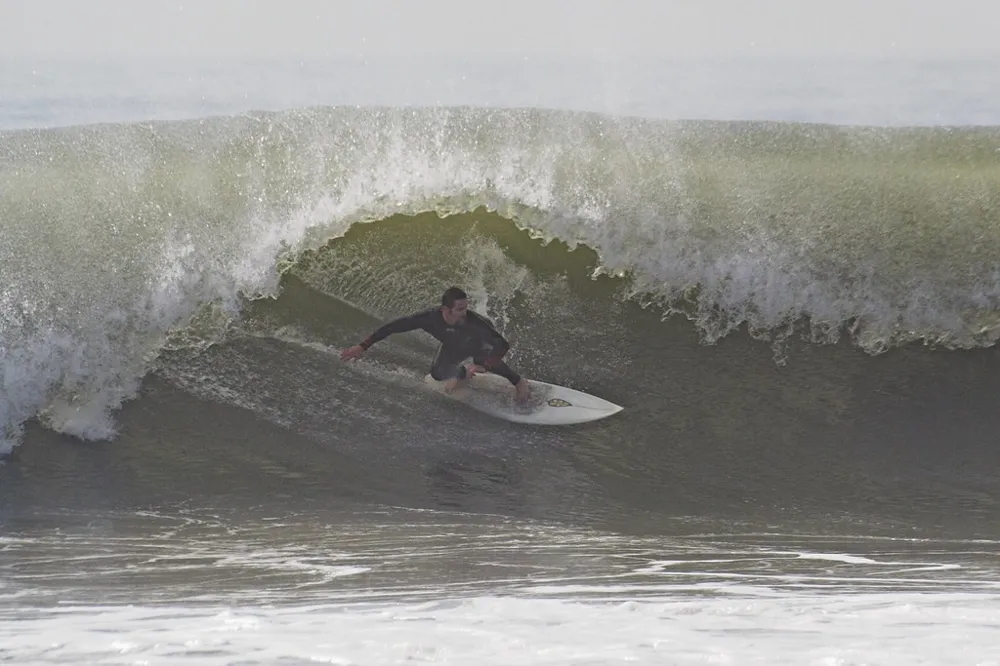
13. Tube Riding (Getting Barreled)
Tube riding, or riding inside the wave, is when the lip throws over you and you ride through the hollow space under it. Many surfers see it as the ultimate maneuver. It needs hollow waves, which often break over shallow reef or sandbars.
How: take off and set a high line toward the hollow section. If you're too far ahead, slow down ("stall") by dragging your back hand or trailing arm in the face or shifting weight to the tail. Crouch low and compact, keep your eyes on the exit, and pump or move forward on the board to speed up as the tube closes behind you.
Common mistakes: riding too low on the face; looking at the lip instead of the exit; standing up too early; over-stalling so the wave closes on you. Learn in small, forgiving waves and be honest about reef and depth.
14. Air (Aerial)
An air means launching off the lip, flying above the wave and landing back on the face or flats. Basic airs are now common in high-level surfing, and judges reward them when they're landed cleanly.
How: build maximum speed and look for a section that ramps up ahead. Drive up the face at an angle, extend and pop off the lip with your back foot, then pull your knees up to keep the board under your feet (a grab can help). Spot your landing, put the board back on the wave and compress hard to absorb the impact.
Common mistakes: not enough speed; launching off a section that isn't ramping; leaning back in the air; landing with straight legs or on the flats where there's no wave to cushion you.
15. Air Reverse, Rotations and Flips
Once a basic air is consistent, surfers add rotation. An air reverse rotates in the air and lands going briefly backward before spinning the board straight. An alley-oop rotates backward relative to the direction of travel. Beyond that come grabbed and flipped airs such as the Superman (kicking the board out in the air and grabbing the rail) and the rodeo flip (a spin combined with a flip, borrowed from snowboarding). These are mostly pro-level moves that need specific ramp sections, and many surfers spend years on standard airs first.
Longboard Maneuvers: Cross-Step, Noseriding and Drop Knee
Longboard surfing has its own skills, built around moving along a long, stable board in trim. The same bottom turn and cutback still matter; these maneuvers add style. If you're choosing a board, see the longboard and mid-length options in types of surfboards.
16. Cross-Step (Walking the Board)
Cross-stepping is walking toward the nose by crossing one foot over the other, instead of shuffling. It's the classic way to get to the nose.
How: set a high trim line, then cross your back foot in front of your front foot, then step the other foot forward, keeping your weight centered over the board's stringer. Small, smooth steps keep the board level. Walk back the same way.
Common mistakes: big, heavy steps that rock the board; looking at your feet; walking forward before the board is set in trim, so the nose catches.
17. Hang Five and Hang Ten
Both are noserides. Hang five means one foot at the nose with its toes over the edge. Hang ten means both feet there with all ten toes curled over. The trick works when the breaking curl holds down the tail, which counterbalances your weight at the front.
How: make a good bottom turn, aim for the upper third of the wave near the curl on an open face, cross-step quickly to the nose and shift your weight slightly toward the inside rail. When the board starts to sink or you run ahead of the curl, step back, trim and set up again.
Common mistakes: trying it on whitewater instead of an open face; walking up when the board is too far out on the shoulder, so the tail isn't held; staying on the nose too long as it sinks.
18. Drop Knee Turn
The drop knee turn helps turn a long, heavy board. You drop your back knee down toward the deck behind your front leg, which puts weight over the tail and lets the board pivot.
How: step your back foot to the tail, bend and drop the back knee toward (not onto) the deck, and lean into the turn with your upper body leading. Rise up and step forward again once the board has turned.
Common mistakes: not stepping back far enough, so the board won't pivot; dropping the knee all the way onto the deck; staying back after the turn and stalling.
Other Longboard Classics
Other style moves include the cheater five (a crouched noseride with one leg extended toward the nose), the soul arch (arching your back with arms out while trimming), switch stance (riding with the opposite foot forward) and the 360 (spinning the board a full rotation on the face).
Linking Maneuvers Into a Ride
A single trick is less important than how you connect them. Coaches often describe surfing as a chain: drop, bottom turn, top turn, bottom turn, cutback and so on, with each move setting up the next. A few principles help:
- Read the wave first. Before your first turn, look down the line to see where sections are forming. A ramping section suggests a re-entry or air; a crumbling one, a floater.
- Use compression and extension. Compress low before each turn and extend through it. That rhythm is what links turns without losing speed.
- Stay near the pocket. Every cutback, top turn or re-entry should bring you back toward the power.
- Do the simple version well. A clean, well-placed bottom turn and top turn will look and score better than a rushed big move.
How to Practice and Progress Faster
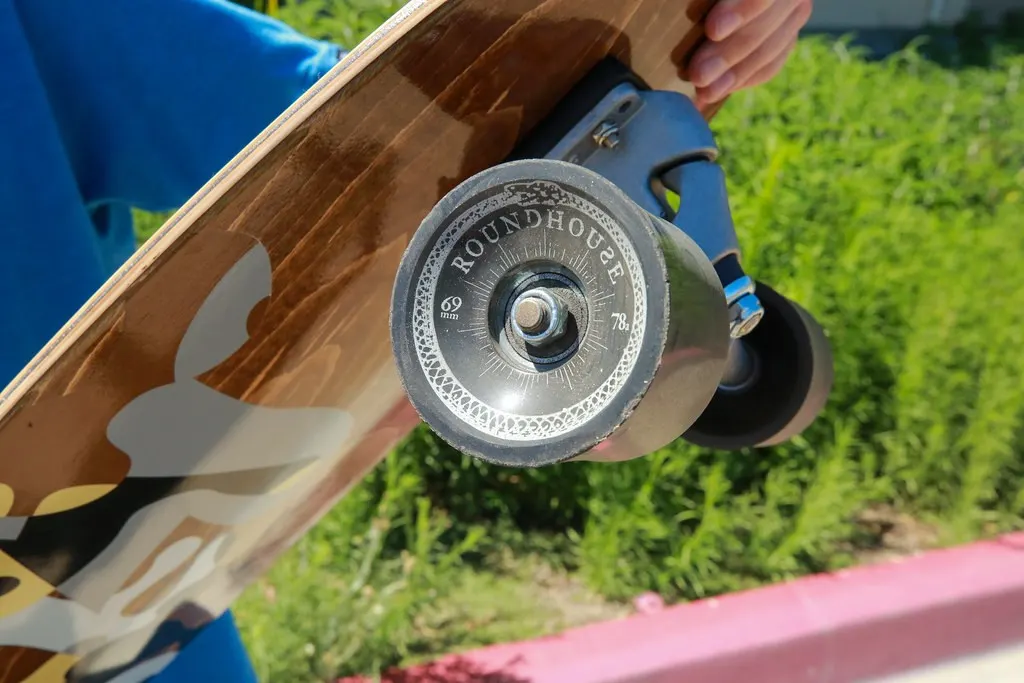
- Pick the right board. A board with too much volume is stable but hard to turn sharply; too little volume makes catching waves a struggle. Step down gradually with our surfboard size chart, and see surfboard fins for how fin setups change turning feel.
- Train on land. Surfskating lets you repeat bottom turns, cutbacks and pumping many times per session; see how to surfskate and the drills in our surfing workout.
- Film your surfing. Video shows things you can't feel, like riding too low on the face or not compressing.
- Surf consistent waves. A reliable point or reef break, or a session at a surf park or wave pool, lets you repeat the same section many times.
- Learn one move at a time. Work on one maneuver per session, frontside first, then backside.
- Check the conditions. Many maneuvers need a particular wave shape; our guide to reading a surf forecast helps you match the session to the skill.
How Surf Judges Score Maneuvers
In competitions, maneuvers are scored on the whole ride, not as a checklist. Judges score each wave out of 10, and the World Surf League and Olympic events use the same main criteria:
- Commitment and degree of difficulty.
- Innovative and progressive maneuvers.
- Variety of maneuvers.
- Combination of major maneuvers.
- Speed, power and flow.
The WSL notes that these are weighed against each day's conditions, and that surfers who perform on the most critical part of the wave and mix turns, airs and barrels tend to score higher than those repeating safe variations. Our guides to surf competitions and Olympic surfing explain heats, priority and scoring in detail.
Staying Safe While Pushing Your Surfing
Harder maneuvers mean harder falls, often in steeper, more powerful waves.
- Know the bottom. Tube rides and closeout re-entries often happen over shallow reef or sandbars. Fall flat and shallow, not headfirst, and protect your head with your arms.
- Watch your board. Fins, rails and the nose can cause cuts and impact injuries. Get away from the board when you fall and cover your head as you surface.
- Respect the lineup. A great wave doesn't change priority rules; see surf etiquette.
- Build up gradually. Move to bigger or hollower waves only when your skills and fitness match. For the risks in more detail, see is surfing dangerous.
Related Guides
Go back to basics with how to surf, learn the duck dive in how to duck dive, compare trick lists for bodyboarding and skateboarding, or explore everything in our surfing hub.
Frequently Asked Questions
What is the first surfing trick to learn?
After you can pop up and angle along the wave, learn to trim and then the bottom turn. Almost every other maneuver starts from a good bottom turn, because it turns the speed of the drop into power for the next move.
What is the hardest surfing trick?
Big, rotated airs and deep tube rides in powerful waves are generally treated as the hardest maneuvers. Flips and full rotations such as the rodeo flip are mostly done by professionals in the right ramp-like sections.
What is a cutback in surfing?
A cutback is a turn back toward the breaking part of the wave after you have run out onto the flatter shoulder. It keeps you near the wave's power instead of outrunning it.
What is it called when you surf inside a wave?
Riding inside the hollow part of a breaking wave is called tube riding or getting barreled. The surfer is covered by the curling lip and aims to come out the open end before the wave closes.
What is the difference between hang five and hang ten?
Both are noserides on a longboard. Hang five means one foot is at the nose with its toes over the edge; hang ten means both feet are at the nose with all ten toes over.
Can you learn surfing tricks on a soft top?
Yes for the basics. Trim, bottom turns, cutbacks and small floaters can all be practiced on a soft top, but sharp vertical turns and airs are easier on a smaller, lighter board with a harder rail.
How do surf judges score tricks?
Judges score each wave out of 10, looking at commitment and degree of difficulty, innovative and progressive maneuvers, variety, the combination of major maneuvers, and speed, power and flow.