How Surf Competitions Work, From Heats to Pipeline (2026)
From a local club contest to the Pipe Masters, every surf competition runs on the same basics: heats, priority and a 10-point score. Here's how it all fits together.
Surf Competitions at a Glance
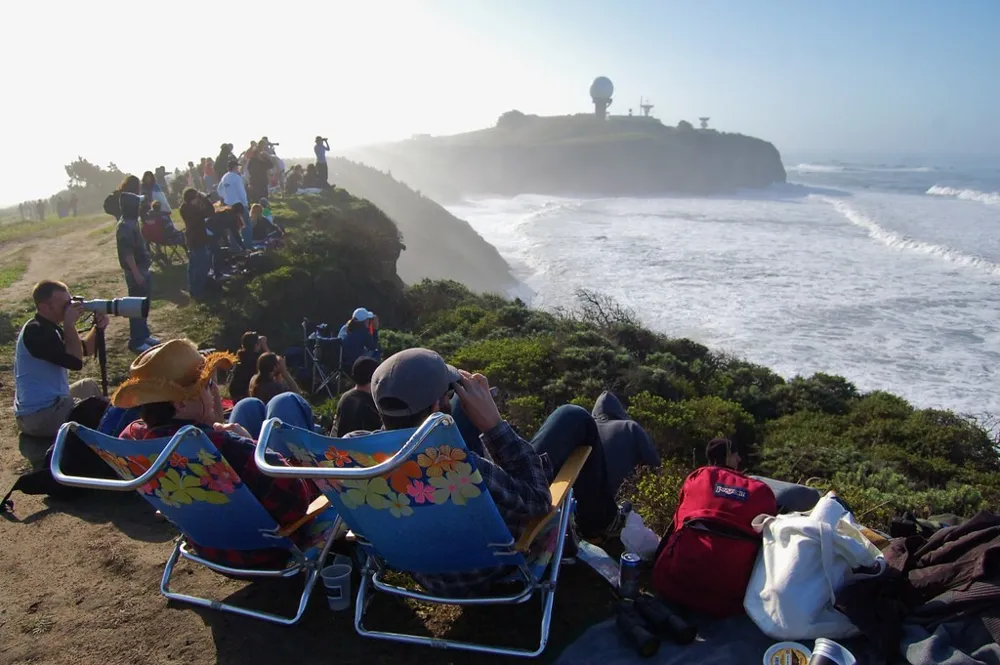
Competitive surfing is a ladder. Most surfers start at local club or school contests, move up through amateur associations and regional pro events, and only a few reach the World Surf League (WSL) Championship Tour. Alongside it sit big-wave invitationals, national team events run by the International Surfing Association (ISA) and the Olympics. Details below are current as of November 2026.
| Level | Run By | Who Competes | Where It Leads |
|---|---|---|---|
| Local and club contests | Surf clubs, shops, schools | Anyone, by age and board division | Amateur association events |
| US amateur circuits | NSSA, ESA, WSA, HSA, TGSA; USA Surfing | Juniors, adults, college surfers | USA Surfing Championships, national teams |
| Qualifying Series (QS) | WSL, in seven regions | Regional pros and top amateurs | Challenger Series |
| Challenger Series (CS) | WSL | Top regional qualifiers and CT surfers | Championship Tour |
| Championship Tour (CT) | WSL | 36 men and 24 women in 2026 | World titles |
| Longboard Tour | WSL | Invited and qualified longboarders | World longboard titles |
| Big-wave events | WSL and independent organizers | Invited big-wave surfers | Event titles |
| World Surfing Games and Olympics | ISA, IOC | National teams | World and Olympic medals |
How a Surf Contest Works
Every surf competition is built from heats. A heat puts two to four surfers in the water at the same time for a set period, usually about 20 to 35 minutes depending on the event and the conditions. The surfers with the highest scores advance to the next round, and the field narrows until the final decides the event winner.
Bigger events seed surfers into a draw. At WSL Championship Tour events, top seeds skip the opening round, while lower seeds and wildcards surf an early round to earn a place in the main draw. From 2026 the WSL removed its old non-elimination rounds, so every CT heat now knocks someone out.
Waiting Periods and the Daily Call
Because waves depend on swell, wind and tide, most contests have a waiting period, often about one to two weeks for pro events, and run only on the best days inside it. Each morning the contest director makes a call: on, off, or a later check. Days without competition are called lay days. Big-wave events take this further, with windows that last a whole winter.
If nobody catches a wave in the first 10 minutes of a heat, WSL rules allow the head judge to restart it (big-wave events excepted).
How Surfing Is Judged
Surfing is judged rather than timed or measured. At WSL events, five judges score every wave from 0 to 10. The highest and lowest scores are dropped and the remaining three are averaged. There is no limit on the number of waves a surfer can ride, but only the best two waves count, for a heat total out of 20.
The Scoring Scale
| Wave Score | WSL Description |
|---|---|
| 0.0–1.9 | Poor |
| 2.0–4.9 | Fair |
| 5.0–6.4 | Good |
| 6.5–7.9 | Very Good |
| 8.0–10.0 | Excellent |
A score of 10 is a "perfect 10." A surfer who needs a score to win late in a heat is said to be "chasing" it, and broadcasts show the exact number needed.
The Five Judging Criteria
- Commitment and degree of difficulty: how critical and risky the maneuvers are.
- Innovative and progressive maneuvers: new or rarely seen moves such as big aerials.
- Combination of major maneuvers: linking big moves together on one wave.
- Variety of maneuvers: using different moves rather than repeating one.
- Speed, power and flow: how fast, forceful and smooth the ride is.
Judges weigh these against the conditions on the day, so a 7 in small, weak waves can look different from a 7 at Pipeline. The WSL notes that these criteria do not apply to longboard and big-wave events, which are judged on their own criteria. For a guide to the moves themselves, see surfing tricks and maneuvers.
Priority and Interference
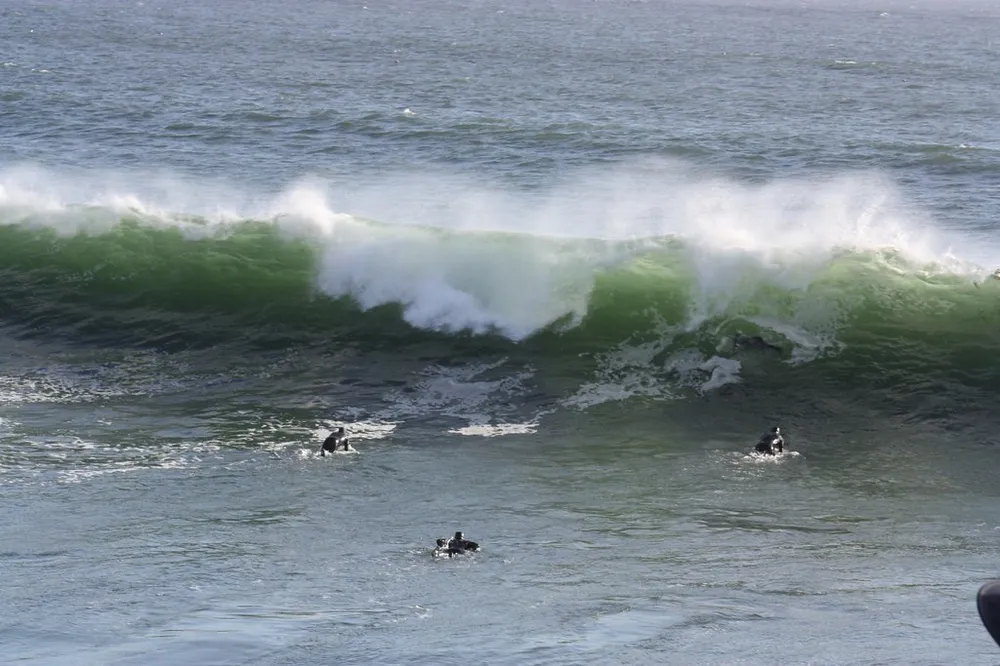
In a free surf, the unwritten rules of surf etiquette decide who gets a wave. In a contest, a priority system does it. The surfer with priority has the unconditional right of way to catch any wave they choose. Priority is lost after catching a wave or after paddling for one and missing it, and then passes to the next surfer. Contests show the order on a priority board or colored lights on the beach so surfers can check it from the water.
Surfers without priority can still paddle for the same wave, as long as they do not hinder the priority surfer's scoring chances. If they do, judges call interference. Under WSL rules, in most cases the offending surfer's heat total is then based on only one scoring wave, which usually ends their heat. Two interferences in one heat mean disqualification from that heat, except at big-wave events.
Priority turns heats into tactics. A surfer leading late may sit on priority to block an opponent from the best wave, while a trailing surfer may take a smaller wave just to move the priority order.
The WSL Tour Structure
The World Surf League runs professional surfing's main world tours. It grew out of International Professional Surfers (IPS), which began the first pro world circuit in 1976, and the Association of Surfing Professionals (ASP), which was renamed the WSL in 2015. The full story is in our history of surfing. The WSL has awarded equal prize money to men and women at all WSL-controlled events since 2019.
Championship Tour
The Championship Tour (CT) is the elite level and decides the shortboard world titles. In 2026 it fields 36 men and 24 women (the women's field grew from 18 to 24 that year). Qualifiers come from the previous season's CT rankings and Challenger Series, plus season and event wildcards.
The 2026 season, the WSL's 50th-anniversary year, brought the biggest format change in years:
- No mid-season cut and no non-elimination rounds.
- Nine regular-season events from Bells Beach in April to Lower Trestles in September.
- A postseason for the top 24 men and top 16 women (including wildcards), which in 2026 ran in Peniche, Portugal, and at Cloud 9 in the Philippines. A planned Surf Abu Dhabi event was removed from the 2026 calendar in September 2026.
- The Pipe Masters as the finale, with the full CT fields back in the draw and 1.5 times the points of a standard event.
- No Final 5. The one-day WSL Finals that decided the titles from 2021 through 2025 is gone. As of November 2026, the 2026 world champions will be the top-ranked man and woman after the Pipe Masters, December 8 to 20, 2026.
Challenger Series
The Challenger Series (CS) is the step between the regional tours and the CT. The 2026/27 Challenger Series has five events: Ballito (South Africa), Huntington Beach (USA), São Sebastião (Brazil), Ericeira (Portugal) and Newcastle (Australia), running from July 2026 to March 2027. The top 10 men and top 6 women earn Championship Tour spots for 2027.
Qualifying Series
The Qualifying Series (QS) runs in seven WSL regions: Australia/Oceania, Asia, Africa, Europe, Hawaii/Tahiti Nui, North America and South America. Regional rankings decide who moves up to the Challenger Series. New in 2026, higher-rated QS 6,000 international events, open to top seeds from every region, count toward both the CS and regional rankings.
Longboard, Junior and Big-Wave Tours
- Longboard Tour: the 2026/27 tour has four stops, from Huntington Beach in July 2026 to an El Salvador final in March 2027 for the top 12 men and 12 women.
- Junior: regional pro junior events lead to the WSL World Junior Championships.
- Big wave: as of late 2026, the Nazaré Big Wave Challenge in Portugal is the last remaining event of the WSL's big-wave tour.
Wave pools have entered the tour too: Kelly Slater's Surf Ranch hosted the first CT event in a pool in 2018. Learn more in our guide to surf parks and wave pools.
How Pro Surfing Rankings Work
Rankings are a running points table. Each finishing place at a CT event earns points: a standard event awards 10,000 points to the winner, and the 2026 Pipe Masters awards 15,000. Surfers' weakest results are dropped, and the top-ranked man and woman at the end of the season are world champions. The WSL rule book sets the exact number of counting results, which changed with the 2026 calendar, so check the official rankings page for the current table.
The same points model runs through the CS, QS and Longboard Tour, and the Longboard final in El Salvador is also worth extra points. Past champions and title counts are on our list of the greatest surfers of all time.
Major Surf Contests to Know
Pipe Masters
First held in 1971 at the Banzai Pipeline on Oahu's North Shore, the Pipe Masters is one of surfing's most famous contests. It closed the pro season through 2019, became the season opener from December 2020, and returns in 2026 as the title-deciding finale, now with a women's event as the season closer for the first time. Pipeline breaks over a shallow reef, which makes it as dangerous as it is prestigious; see the best surf spots in the US for more on the wave.
Triple Crown of Surfing
Founded by Fred Hemmings and Randy Rarick and held on the North Shore since 1983, the Triple Crown linked three winter events at Haleiwa, Sunset Beach and Pipeline, with an overall title for the best combined results. Vans owned the series from 1998. It went digital in 2020, and in the 2025/26 winter the classic series did not run; three regional Qualifying Series events at Haleiwa, Sunset and Pipeline took its slots. Check the WSL calendar for the current North Shore lineup.
US Open of Surfing
Huntington Beach has hosted the US Open of Surfing next to its pier since 1959, according to the city's tourism office. The 2026 edition ran from July 25 to August 2 and included both a Challenger Series stop and a Longboard Tour stop, and it is free to attend. Read our full guide to the US Open of Surfing.
Other CT Classics
Long-running CT stops include Bells Beach in Australia, Jeffreys Bay in South Africa, Teahupo'o in Tahiti, Cloudbreak in Fiji and Lower Trestles in California. Venues can change from year to year, so check the current WSL schedule.
Big-Wave Competitions
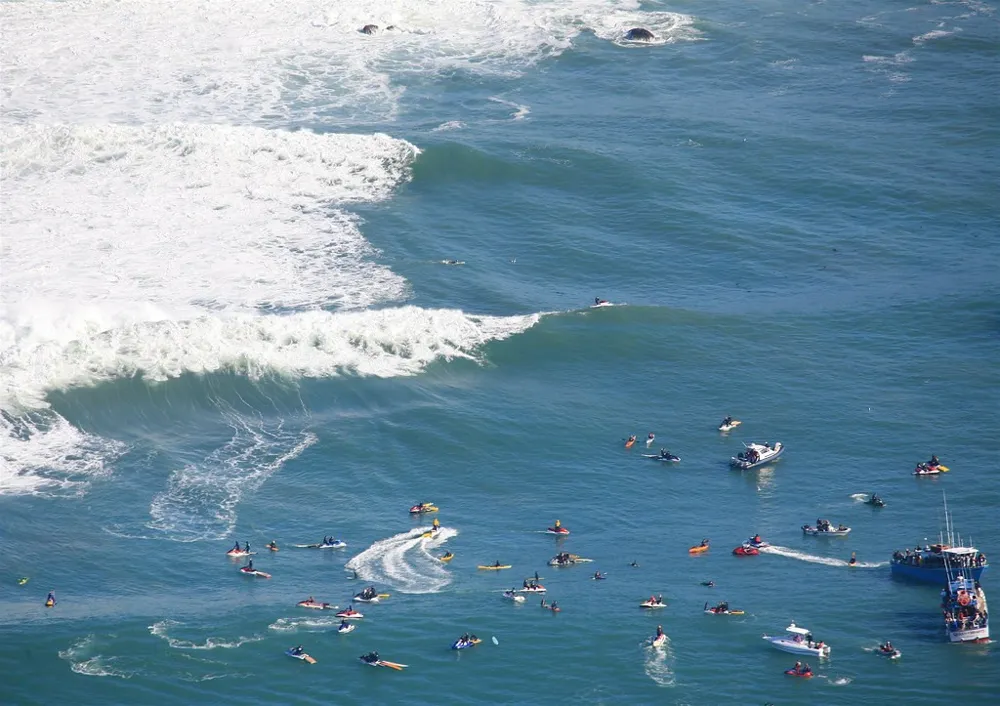
Big-wave events need rare swells, so they have long waiting periods and may not run at all in a given winter. For the history of tow-in surfing and the record waves, see our history of surfing.
| Event | Location | First Held | Status as of November 2026 |
|---|---|---|---|
| Eddie Aikau Big Wave Invitational | Waimea Bay, Oahu | 1985 | Held 11 times, most recently 2024; 2026/27 window December 6 to March 4 |
| Mavericks | Half Moon Bay, California | 1999 | Held 10 times through 2016; canceled indefinitely by the WSL in 2019 |
| Nazaré Big Wave Challenge | Praia do Norte, Nazaré, Portugal | 2020 (as a WSL tow event) | One-day tow event; window November 1 to March 31; last held December 2025 |
The Eddie
The Eddie honors Eddie Aikau, the Hawaiian big-wave surfer and Waimea Bay lifeguard. It runs only when open-ocean swells reach about 20 feet, which produces wave faces of roughly 30 to 40 feet at Waimea, and organizers want a full day of quality surf. That is why it has run only 11 times in 41 years. Rip Curl has sponsored it since 2024, and 32 surfers were invited for 2026/27. The 2025/26 window closed without a contest.
Mavericks
The Mavericks contest at Half Moon Bay ran only in winters with the right swell. After its organizing company went bankrupt, the WSL took over, then canceled it indefinitely in 2019. It has not run since February 2016.
Nazaré
At Nazaré, where the largest waves on record have been surfed, competition is a tow-in format: teams of a surfer and a jet ski driver. The men's event uses team heats and a final, the women's a single final, all on one day called when the swell arrives.
Olympic Surfing and the ISA World Surfing Games
The International Surfing Association is the IOC-recognized world governing body for surfing. Founded in 1964 (as the International Surfing Federation until 1973), it runs world championships for national teams. Its flagship, the ISA World Surfing Games, first held in 1964 at Manly, Australia, now has open men's, open women's and team competitions. Recent editions were held in Arecibo, Puerto Rico (2024), El Salvador (2025) and Punta Rocas, Peru (November 2026), where Australia was reported to have won team gold. The ISA also runs world championships for juniors, longboard, adaptive (para) surfing, bodyboard and SUP; see para surfing for the adaptive events.
The Games also feed the Olympics. Surfing debuted at Tokyo 2020 and heads to Lower Trestles for LA 2028, with places coming from the CT, the World Surfing Games and continental events. Format, judging, medalists and qualifying are covered in full on our Olympic surfing page.
Amateur Surfing Competitions in the US
USA Surfing is the ISA-recognized national governing body. It runs the annual USA Surfing Championships and Prime series events on both coasts, and selects the US teams for ISA championships and the Pan American Games. Five member associations feed surfers into its championships:
| Association | Region and Focus |
|---|---|
| National Scholastic Surfing Association (NSSA) | Founded in 1978; open, interscholastic and collegiate contests. Many well-known pros competed in the NSSA first. |
| Eastern Surfing Association (ESA) | Formed in 1967; amateur contests along the East Coast and the eastern Gulf Coast. |
| Western Surfing Association (WSA) | Amateur contests on the West Coast. |
| Hawaiian Surfing Association (HSA) | Amateur contests in Hawaii. |
| Texas Gulf Surfing Association (TGSA) | Amateur contests on the Texas coast. |
School teams have their own leagues too. In California, the Scholastic Surf Series runs middle school and high school team contests with state championships, and the NSSA runs interscholastic and college divisions.
How to Enter Your First Surf Contest
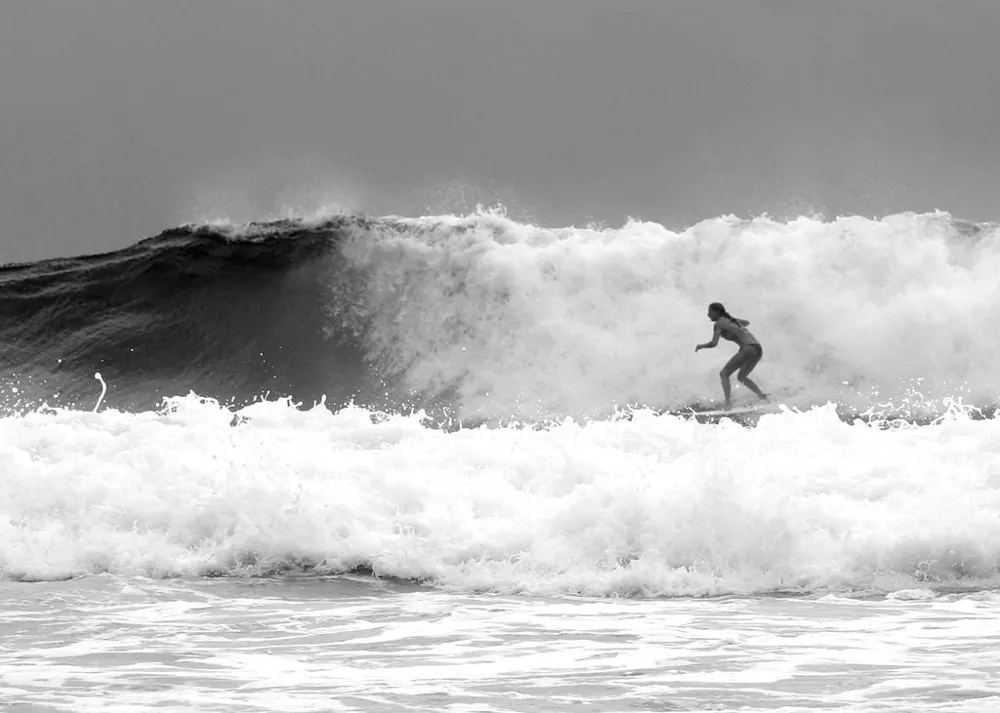
Local contests are welcoming, and most surfers who can paddle out, catch waves and ride along the face are ready for one. Here's how to get started:
- Find an event. Look for your local surf club, surf shop or regional association (NSSA, ESA, WSA, HSA or TGSA in the US). Many clubs run regular contests through the year.
- Join and register. Many associations require a membership before you can enter, and most take entries online before the event. Popular contests can fill up, so sign up early.
- Pick your division. Divisions are usually split by age and gender, and often by board: shortboard, longboard and bodyboard. Beginner or novice divisions are common at club level.
- Check the heat sheet. On the day, find your heat number, start time and jersey color. Heats can run early or late, so stay close to the beach.
- Know the signals. Horns and flags or lights mark the start and end of a heat. Ask what the system is at check-in.
- Surf smart. Get two solid scores early rather than waiting for one perfect wave, and avoid dropping in on anyone. Interference costs more than a missed wave.
Ride a board you know well (our types of surfboards guide explains the shapes), and only enter at breaks within your ability. Our guide to whether surfing is dangerous covers the main risks. If you're still learning, start with how to surf.
How to Watch Surf Competitions
The WSL streams its tour events live and free on WorldSurfLeague.com and the WSL app, with live streams and highlights on its YouTube channel. Because events run only on "on" days, check the call before tuning in; the app and site post it each morning. Broadcasts typically show live scores, priority and the score each surfer needs.
Watching in person is often free. Contests such as the US Open of Surfing charge no admission, and the beaches at Pipeline and Waimea Bay draw big crowds when events run. Parking fills early on big days, so plan to arrive before the first heat. For a night in, browse our list of the best surf movies.
Related Guides
Explore more in our surfing guides, including Olympic surfing, the greatest surfers of all time, famous female surfers and the best surf spots in Hawaii. Into other contests? See our guide to skateboarding competitions.
Frequently Asked Questions
How are surf competitions scored?
A panel of judges scores each wave from 0 to 10. At WSL events five judges score, the highest and lowest scores are dropped and the other three are averaged. Each surfer's best two waves are added for a heat total out of 20.
How long is a surfing heat?
Heats usually last about 20 to 35 minutes, depending on the event and the conditions. The contest director can change heat length on the day.
What is priority in surfing competitions?
Priority is the right of way to any wave. A surfer loses it after catching a wave or paddling for one and missing it. If another surfer gets in the way of the priority surfer, they are penalized for interference.
How is the 2026 WSL world champion decided?
As of November 2026, the WSL dropped its one-day Final 5 format. The world titles go to the top-ranked man and woman after the Pipe Masters at Pipeline, held December 8 to 20, 2026, which is worth 1.5 times the points of a standard event.
How do you qualify for the WSL Championship Tour?
Most surfers climb from their regional Qualifying Series into the Challenger Series. The top 10 men and top 6 women on the 2026/27 Challenger Series earn Championship Tour spots for 2027, alongside surfers who keep their place through the CT rankings and a few wildcards.
When is the Eddie Aikau surf contest?
Only when the waves are big enough. The 2026/27 waiting period runs from December 6, 2026, to March 4, 2027, and the event has run 11 times since 1985, most recently in 2024.
Can anyone enter a surf contest?
Yes, at the local and amateur level. Clubs and associations such as the NSSA and ESA run contests with age and board divisions, and many require a membership. Pro tours need qualifying results.
Where can I watch surf competitions?
The WSL streams its tour events live and free on WorldSurfLeague.com and the WSL app, with highlights on YouTube. Many contests are also free to watch from the beach.