How to Duck Dive Under Waves Instead of Getting Washed Back (2026)
A good duck dive lets you slip under a wave and come up behind it, still moving out to the lineup. Here's whether your board can do it, the steps, the timing and the drills that make it stick.
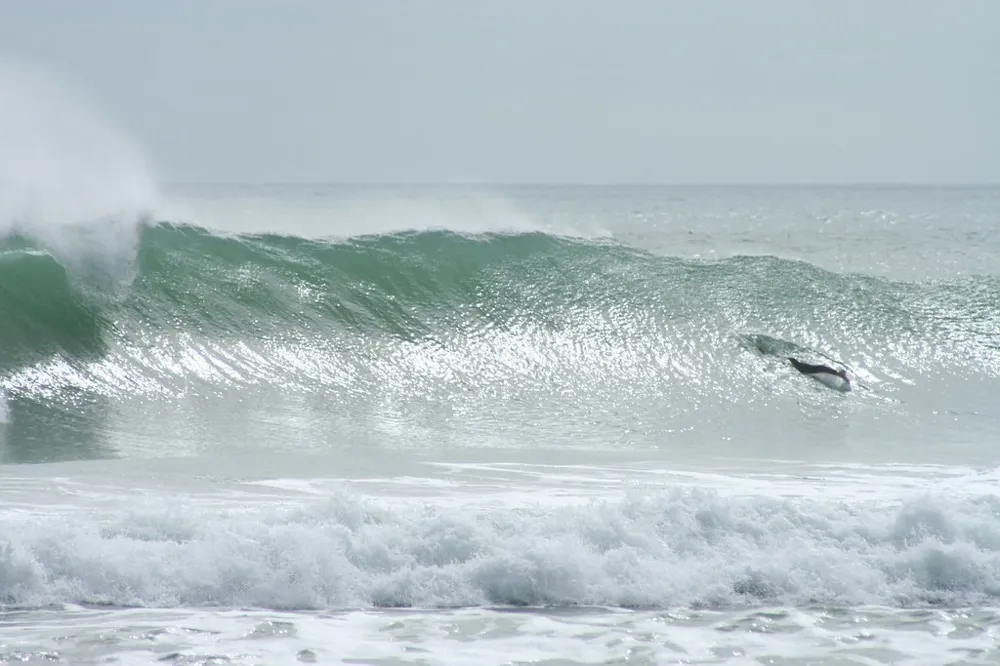
What Is a Duck Dive?
A duck dive is how surfers on smaller boards get under an oncoming wave or line of whitewater while paddling out. You push the nose of the board underwater, sink the tail with your knee or foot, let the wave pass over you, then let the board's buoyancy carry you back up behind it. Done well, you keep most of your forward momentum instead of being shoved back toward the beach, which saves a lot of energy on every paddle-out.
The move takes timing more than strength, and it only works on boards that are small enough to sink. If you're still on a big beginner board, the turtle roll (covered below) does the same job. For the bigger picture of getting out the back, see step 8 of our how to surf guide.
Can Your Board Duck Dive? Volume Comes First
Whether you can duck dive is decided mostly by volume, the amount of foam in the board measured in liters. The more volume, the more the board floats and the harder it fights you when you push it down. As our surfboard types guide explains, shortboards commonly sit around 25–35 liters, a 7-foot funboard around 40–50 liters and longboards around 60–100 liters.
Guides draw the line in slightly different places, so treat these as rough markers, not rules:
- Rapture Surfcamps says duck diving works on shortboards, fish and some mid-lengths up to roughly 7'0", depending on your weight and strength. It suggests that for a surfer around 75 kg, boards over about 40 liters get very difficult and over about 50 liters it's time to turtle roll.
- Surf Simply, cited in our surfboard size chart, puts the biggest board most people can duck dive at roughly 3.5–4 lb of body weight per liter.
- A heavier, stronger surfer can sink more foam than a lighter one, so the same board can be duck-diveable for one person and not another.
| Board | Typical Volume | Best Way Through Waves |
|---|---|---|
| Performance shortboard | Low | Duck dive |
| Fish, groveler, hybrid | Low to medium | Duck dive |
| Funboard or mid-length | Medium to high | Duck dive if light enough for you; otherwise turtle roll |
| Longboard | High | Turtle roll |
| Large soft-top / foamie | High | Turtle roll or push through small whitewater |
| Bodyboard | Very low | Duck dive |
Moving down to a board you can duck dive is a common reason surfers step down in size, but don't drop volume so fast that you stop catching waves. Our size chart covers how to step down gradually.
Duck Dive vs Turtle Roll: Which Should You Use?

Both techniques get you through waves without letting go of your board. The difference is direction: in a duck dive you go under the wave with the board; in a turtle roll you flip upside down beneath the board and let the wave wash over its bottom.
| Duck Dive | Turtle Roll | |
|---|---|---|
| Boards | Shortboards, fish, low-volume mid-lengths, bodyboards | Longboards, big soft-tops, high-volume boards |
| How it works | Sink the whole board below the turbulence | Roll under the board and hold on while the wave passes |
| Ground lost | Little when done well; you keep moving forward | Often more; you stop paddling while the wave passes |
| Difficulty | Harder; needs timing and repetition | Easier to learn |
| Big waves | Works if your board is small enough and you commit | Struggles; Ombe notes it won't work on big waves |
Small whitewater can often just be paddled over or pushed through; Rapture lists the push-through as an option for small to medium whitewater. A third option is to avoid waves entirely by paddling out through the channel, the deeper area beside the peak where waves don't break as much.
How to Duck Dive: Step by Step
Here is the full sequence. Practice it slowly first; speed comes later.
1. Paddle Toward the Wave With Speed
Momentum is what carries you through. Paddle straight at the wave with strong strokes (Rapture suggests at least 3–4 hard strokes) and keep the board pointed at it. The most common instinct is to stop and freeze as a wave approaches; that kills the speed you need and lets the wave push you back.
2. Grip the Rails and Push the Nose Down
About one board length, or roughly 2 meters, before the wave, place both hands on the rails around chest level (a little further forward on a longer board). Straighten your arms and press the nose underwater, leaning your body weight forward rather than relying on arm strength alone. If the board is hard to sink, one trick from Wetsuit Centre is to tilt it and push one rail down first, then the other.
3. Sink the Tail With Your Knee or Foot
Right after the nose goes under, press one knee or the top of one foot onto the tail pad and push down. The goal is to bring the tail down to the nose so the whole board travels roughly level under the water. Lifting your other leg in the air adds weight to the push. If the tail stays up, the turbulence grabs it and rips you backward.
4. Bring Your Body Down to the Board
Once the board is under, bend your arms and follow it down so your body lies close and flat over it, chin tucked, as compact as possible. Don't pull the board up toward your chest; that lifts it back toward the turbulence. Ombe suggests staying low and horizontal while the wave passes overhead.
5. Let the Wave Pass
Hold that compact position for the second or two it takes the wave to roll over. Keep your eyes open if you can: you'll see how far down the white, churning water reaches and when it clears.
6. Angle the Nose Up and Resurface
As the pull eases, tilt the nose up and push your weight back slightly. The board's buoyancy brings you up behind the wave, ideally still moving forward. Get straight back to paddling, since the next wave in the set may be close behind.
Don't go deeper than you need to. Extra depth costs energy and breath, and you'll want both for the next wave and the ride after it.
Knee or Foot? Two Ways to Sink the Tail
| Knee Method | Foot Method | |
|---|---|---|
| Best for | Beginners, smaller waves | Bigger waves, deeper dives |
| How | Press one knee on the tail pad | Press the top or ball of the back foot on the tail pad, other leg lifted |
| Pros | More stable, easier to coordinate | More leverage, deeper and faster tail push, more streamlined |
| Cons | Less leverage, slightly slower | Needs more balance and coordination |
Ombe recommends the knee for shallower dives and the foot for deeper ones. A sensible progression is to learn with the knee, then switch to the foot once the timing is automatic.
Timing by Wave Type and Size
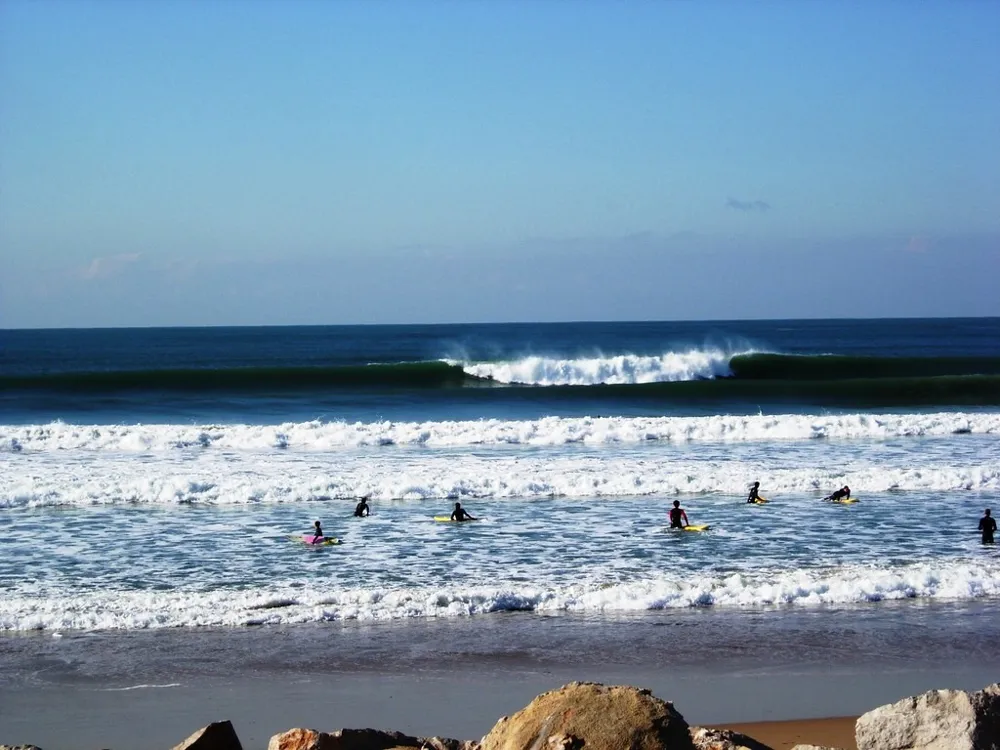
The same dive needs slightly different timing depending on whether the wave has broken.
| Situation | What Happens | How to Dive |
|---|---|---|
| Small whitewater | Weak, shallow foam | Often easier to push over it or do a shallow dive |
| Bigger whitewater wall | Aerated foam reaches deeper and gives little support or upward pull | Start a little earlier and push deeper to get below the turbulence |
| Unbroken (green) wave | The rolling wave tends to pull you up and through the back | Dive about 2 m before it, before the lip throws; less depth is needed |
| Wave about to break on you | The most powerful moment | Commit fully, go deep, tuck tight and expect to lose a little ground |
| Large, powerful surf | Long, heavy turbulence | Push deeper, stay compact, keep hold of your board; only paddle out in surf you can handle |
Good timing also means fewer dives. Watch the sets from the beach, paddle out during a lull, and use the channel or a current where it's safe. Our guide to reading a surf forecast helps you judge wave size and period before you go.
Common Duck Dive Mistakes
| Mistake | What Happens | Fix |
|---|---|---|
| Stopping or freezing before the wave | No momentum; the wave pushes you back | Keep paddling hard until the moment you push the nose down |
| Starting too late | The wave catches you while you're still going down | Begin about one board length (around 2 m) out |
| Starting too early | You run out of speed and pop up into the wave | Wait until the wave is close; dive into it, not before it |
| Nose under, tail up | Turbulence grabs the tail and flips you back | Follow the nose push immediately with knee or foot on the tail |
| Pulling the board toward your chest | The board rises back into the whitewater | Bring your body down to the board instead |
| Lifting your head | More drag; less depth | Tuck your chin and stay flat |
| Diving deeper than needed | Wasted energy and breath | Go just below the turbulence |
| Paddling at an angle | The wave twists the board sideways | Meet the wave square, nose first |
| Trying it on a board that's too big | The board won't sink no matter what | Turtle roll, or move to a lower-volume board |
Drills and Progression
Duck diving takes many sessions to learn, so build it in stages:
- Flat water first. In a calm lake, bay or pool (where boards are allowed), paddle 5–6 strokes, push the nose under, sink the tail, hold for 2–3 seconds and resurface. Rapture suggests about 10 repetitions; Wetsuit Centre also recommends flat water to build the movement and strength.
- Small whitewater. Move to knee- to waist-deep foam on a gentle sandy beach and dive under small broken waves.
- Bigger whitewater. Progress to chest-deep walls of whitewater once the move is reliable.
- The full paddle-out. Duck dive broken waves on the way through the impact zone to the lineup, then try diving green waves on calmer days.
- Switch to the foot once the knee version is automatic.
Repeated pushing loads the shoulders and arms. Paddling and push-up strength help; see our surfing workout for exercises that carry over.
How to Turtle Roll a Longboard
If your board is too big to duck dive, the turtle roll is your tool. It's easier to learn but costs a little more ground on each wave.
- Paddle straight at the whitewater so you meet it head-on.
- Just before it reaches you, take a breath and grip both rails firmly.
- Roll sideways so you hang upside down underneath the board, which is now bottom-up on the surface.
- Hold on tight and stay still, keeping your body under the board, while the wave passes over.
- Roll back on top, get flat and start paddling again straight away.
As with the duck dive, keep the board pointed straight at the wave so the whitewater hits the nose rather than the side of the board.
Duck Diving a Bodyboard
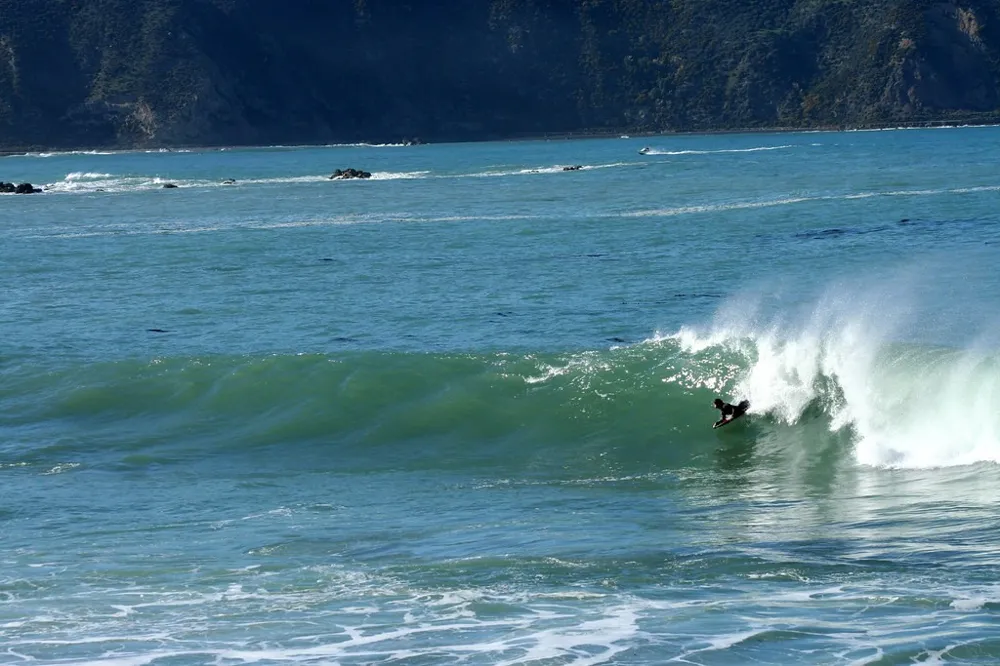
Bodyboards are small and thin, so they sink easily, and duck diving is the standard way to get out on one. The basic idea is the same, with a few differences:
- Grip: Surfer Today describes holding the rails about 30 cm (one foot) back from the nose.
- Dive: about 2 meters out, shift your weight forward, push the nose under, then put one knee on the tail and press the board as deep as you can.
- Keep kicking: unlike a surfer, you have fins. Keep kicking and pulling underwater so the wave's energy doesn't drag you back toward shore.
- Come up: lie flat on the board once the wave has passed, look up and let the board lift you to the surface.
Surfer Today also notes that on many reef and point breaks, a channel or current can carry you out with no need to dive, while beach breaks usually require it. For the rest of the basics, see how to bodyboard.
Safety: Leash, Crowds and Shallow Water
- Always wear a leash and check it before you paddle out. A surfboard leash keeps the board with you if a wave tears it out of your hands, and a snapped leash leaves you swimming.
- Never throw your board to get under a wave. A loose board can hit and seriously injure anyone behind you, and ditching is poor etiquette. Learning to duck dive or turtle roll is how you avoid it.
- Watch the depth. Don't drive the nose hard into shallow water over sand, reef or rocks. At reef breaks, keep your eyes open and know where the shallow spots are.
- Paddle wide of riders. Go around the peak, not through the path of someone riding a wave.
- Stay within your limits. If you can't get through the waves, the surf is probably bigger than you're ready for. Come in, and avoid paddling out into heavy sets you can't duck dive. Learn to spot rip currents, and read is surfing dangerous? for the wider risks.
This is general guidance, not professional instruction; a qualified surf coach can watch your technique and correct it in the water.
What to Learn Next
Once your duck dive gets you out the back with energy to spare, focus on positioning in the lineup, catching unbroken waves and your first turns, all covered in how to surf. Learn the lineup terms in our surf slang glossary, work toward maneuvers in surfing tricks and maneuvers, or explore everything in our surfing hub.
Frequently Asked Questions
Can you duck dive a longboard?
Not really. A longboard or big soft-top has far too much volume to push under, so longboarders use the turtle roll instead: flip upside down under the board and hold the rails while the wave passes.
Can you duck dive a soft-top surfboard?
Small, low-volume soft-tops can be pushed under with effort, but most beginner foam boards are too buoyant. Ombe calls soft-top longboards the hardest boards to duck dive, so turtle roll on them.
How far before the wave should I start a duck dive?
Most guides say about one board length, or roughly 2 meters (6 feet), before the wave reaches you. Go too early and you pop up into it; too late and the wave catches you on the way down.
Should I use my knee or my foot to sink the tail?
Start with the knee: it is more stable and easier to learn. Move to the foot once your timing is solid, because it gives more leverage and a deeper push.
Should I keep my eyes open when duck diving?
Many coaches suggest it. Open eyes help you see how deep the turbulence goes, judge when to come up and, at reef breaks, spot rocks or reef below you.
How long does it take to learn to duck dive?
It usually takes many sessions. Practicing the movement in flat water and small whitewater speeds it up, but expect plenty of failed dives before it feels natural.