Rip Currents: How to Spot Them and Get Out Alive (2026)
Rip currents cause most lifeguard rescues at surf beaches. Here's how they form, how to see them from the sand, and exactly what to do if one pulls you or someone else out.
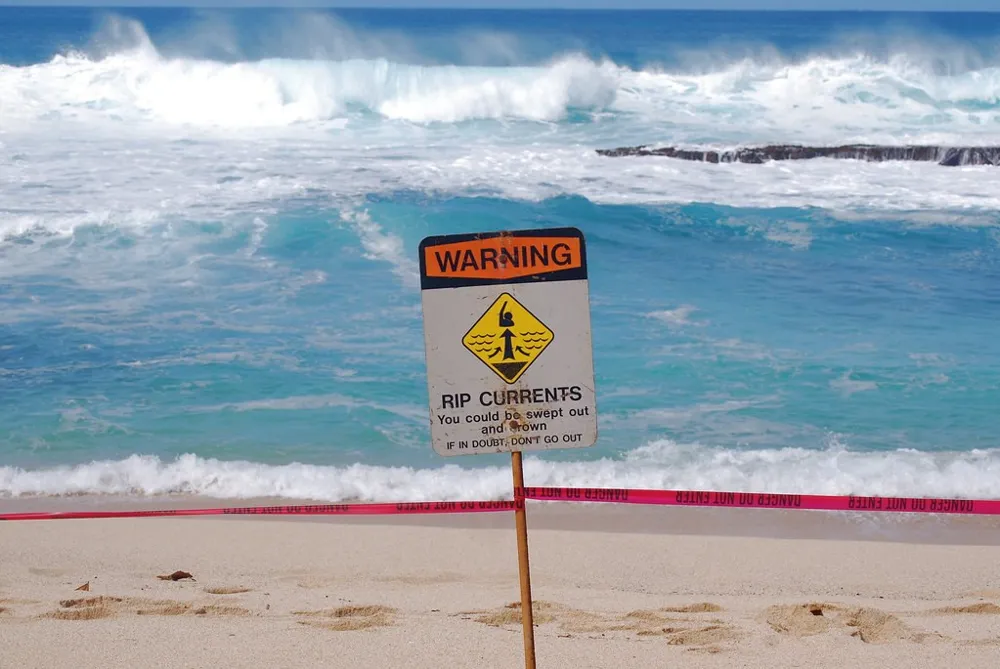
What Is a Rip Current?
A rip current is a strong, narrow flow of water running away from the beach. The National Weather Service (NWS) describes rips as seaward flows that run from close to the shoreline out past the surf zone, the area where waves break. They can carry a swimmer, sand and debris offshore quickly.
Rips are the biggest single hazard at most surf beaches. According to NOAA, at least 80% of lifeguard rescues are due to rip currents, more than 100 people die in rip-current drownings each year, and rips can move at up to 8 feet per second, faster than most people can swim. The NWS notes that a rip has reached speeds faster than an Olympic swimmer's 50-meter sprint.
The good news: a rip current pulls you out, not under, and the way out is simple once you know it. The key is staying calm, not fighting the current and going sideways. This page covers how rips work, how to spot them, how to escape one and how to help someone else without becoming a second victim. It is general safety information drawn from NOAA, the NWS and the US Lifesaving Association (USLA); always follow lifeguards and local warnings.
Rip Current Facts at a Glance
| Question | Short Answer | Source |
|---|---|---|
| How common are rip rescues? | At least 80% of lifeguard rescues are due to rip currents | NOAA |
| How many people die? | More than 100 a year in the US in rip-current drownings | NOAA |
| How fast are they? | Typically 1 to 2 feet per second; up to 8 feet per second | NWS, NOAA |
| How wide are they? | Some are only 10 to 20 feet wide; others are up to 10 times wider | NWS |
| How far out do they go? | They can extend hundreds of feet beyond the surf zone | NWS |
| Do they pull you under? | No. They pull you away from shore | NWS, NOAA |
| Where do they happen? | Any beach with breaking waves, including the Great Lakes | NWS |
| Safest place to swim? | Near a lifeguard; USLA puts the chance of drowning at a beach with USLA-affiliated lifeguards at about 1 in 18 million | NWS citing USLA |
How Rip Currents Form
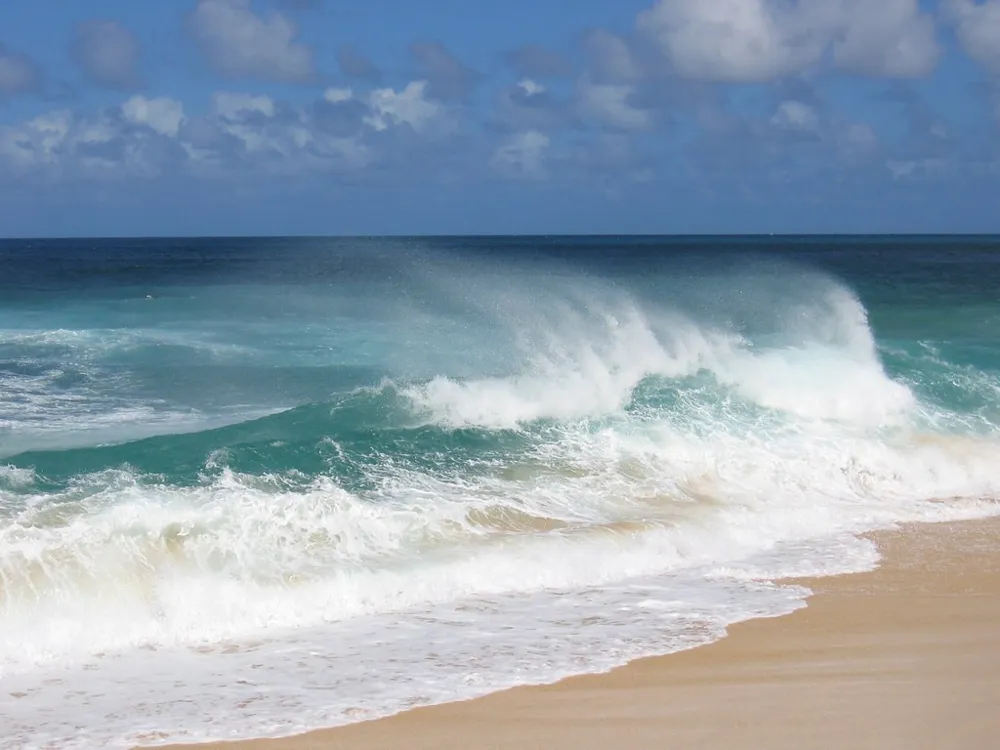
Breaking waves push water toward the beach. According to the NWS, this raises the water level close to shore, an effect called wave setup that is often about 10% of the breaking wave height. That extra water has to go somewhere.
Breaking waves alone don't create a rip. Rips form where wave breaking varies along the shore: stronger breaking in some places (over sandbars, for example) and weaker breaking in others (over a deeper gap or channel). Water piles up more where waves break hardest, flows along the beach toward the low spots, meets, and then turns and runs back out to sea as a rip.
A classic rip has three parts:
- Currents along the beach (often called feeder currents) that carry piled-up water toward the low spot.
- The neck, the narrow, fast part running out through the surf zone. The NWS says flow is fastest in the middle of the rip and just below the surface, and in a classic rip it peaks about halfway out in the neck.
- The head, beyond the breaking waves, where the current spreads out and slows.
Rip Pulses
Rips don't flow at a steady speed. The NWS describes rip pulses: sudden surges lasting 30 seconds to a minute, tied to groups of larger waves, during which the current's speed can more than double. Pulses can knock waist-deep waders off their feet, which is how people standing in "safe" shallow water end up in trouble.
Waves, Tides and Wind
- Bigger, longer-period waves generally mean stronger, faster rips. The NWS warns that long-period swell can create an elevated rip risk even when the ocean looks nearly flat.
- Low tide matters on many beaches. Where the tide range is under about 6 feet, the NWS says rips often run faster an hour or two either side of low tide and may stop near high tide. On beaches with large tides, rips shut off once sandbars are exposed and peak at mid-tide.
- Outgoing vs incoming tide makes no difference by itself. The NWS says rips aren't stronger on a falling tide; only the water level matters.
- Strong onshore winds can space rips farther apart and make them harder to find.
Types of Rip Currents
The NWS groups rips by what controls them. Knowing the type tells you where to look and how long a rip is likely to stick around.
| Type | What Causes It | Where and How Long |
|---|---|---|
| Channel (channelized) rips | Water flowing out through deeper gaps or channels in sandbars | The best-documented type; can stay in place for days, weeks or months |
| Focused rips | Offshore features such as submarine canyons, submerged ridges or reefs | Can occur even on flat beaches, as offshore plumes of turbulent, sandy water |
| Fixed or structural rips (shadow and deflection rips) | Piers, jetties, groins and headlands that block or redirect currents along the beach | Beside structures, often in the same spot; can occur even in small waves |
| Flash (transient) rips | Wave interactions on beaches with no bars or structures | Unpredictable in place and timing; last several minutes |
Channel Rips
Channel rips are the classic sandbar rip. The NWS says they're typically 5 to 100 yards wide, about 3 to 10 feet or more deep, and spaced roughly 50 to 500 yards apart along the beach, with wider spacing often seen in big waves. Because they can persist for weeks, lifeguards often know exactly where they are, which is one more reason to ask.
Fixed and Structural Rips
Near piers, jetties, groins and headlands, the NWS describes shadow rips on the sheltered, down-wave side of a structure and deflection rips on the exposed side, where currents running along the beach hit the structure and are pushed out to sea. These are why swimming close to a pier or jetty is a bad idea even on small days.
Flash Rips
Flash or transient rips pop up on featureless beaches when wave trains interact. According to the NWS, they show up as narrow bands of turbulent whitewater and sand, their location and timing can't be predicted precisely, and their speed and duration are less well understood. A beach that looked clear 10 minutes ago can have one now.
How to Spot a Rip Current
The NWS says rip currents can be hard to spot. Still, a few minutes of watching before you go in can show you where not to swim. Look for:
- A gap in the breaking waves: a narrow, darker, seemingly calmer patch of water between areas of whitewater. This "calm" spot is often the rip itself, and it's exactly where an unaware swimmer might choose to go in.
- A channel of churning, choppy water heading offshore.
- A difference in water color, often darker water or a sandy, murky plume.
- A line of foam, seaweed or debris moving steadily out to sea.
- A break in the incoming wave pattern.
- Plumes of sand or foam beyond the breakers, and scalloped, curved dips in the shoreline.
Tips for Seeing Rips From the Beach
- Get up high. The NWS suggests watching from a dune, parking lot or headland, where gaps in the breakers are easier to see.
- Watch for several minutes. Rips pulse with wave sets, so one quick look isn't enough.
- Wear polarized sunglasses. They cut glare and make darker channels easier to see.
- Ask a lifeguard whether rips are present today and where.
- Check near structures. Assume there's a current beside any pier, jetty or groin.
Surfers sometimes use rips as a ride out to the lineup, but that's for experienced surfers who know the spot. If you're learning, stay well clear; our how to surf guide explains where beginners should paddle out.
How to Escape a Rip Current, Step by Step
If you feel yourself being carried away from shore, the official NOAA and NWS advice comes down to a few steps:
- Relax and float. NOAA's guidance is blunt: rip currents don't pull you under; they pull you away from shore. Panic and fighting the current only tire you out. Float on your back or tread water calmly to save energy.
- Don't swim straight back to shore. Swimming against the current is how strong swimmers become exhausted. The NWS warns this can tire you out quickly.
- Swim parallel to the shoreline. Rips are usually narrow, so swimming sideways along the beach usually gets you out of the pull. Once you're free, swim back toward shore at an angle, letting the waves help push you in.
- If you can't get out, keep floating. NOAA notes the current weakens offshore, past the breaking waves. Float or tread water until it eases, then head in at an angle.
- Face the shore and signal for help. Wave your arms and yell. Lifeguards and other beachgoers can only help if they know you're in trouble.
Flip, Float, Follow
The NWS teaches a short version for the Great Lakes and beyond: flip on your back, float, and follow the current (or the safest path out of the water). It's a reminder that floating buys time and keeps your head above water while you work out which way to go.
On a Surfboard or Bodyboard
If you're on a board, keep hold of it; it floats you. Paddle parallel to the beach until you're out of the current, then catch whitewater or paddle in at an angle. A leash keeps your board with you if you fall; see our surfboard leash guide. Our is surfing dangerous? guide covers the other risks surfers face.
| Do | Don't |
|---|---|
| Stay calm and float | Panic or thrash |
| Swim parallel to the shore | Swim straight back against the current |
| Angle back toward shore once free, using the waves | Head straight in through the strongest flow |
| Face the shore, wave and yell for help | Wait silently until you're exhausted |
| Keep hold of your board or float | Let go of anything that keeps you afloat |
How to Help Someone Caught in a Rip Current
This is where many tragedies happen. NOAA's National Hurricane Center warns that many rip current fatalities occur when someone tries to rescue others. Don't become a second victim.
- Get a lifeguard. If there isn't one, call 911.
- Throw something that floats. The NWS suggests a life jacket, cooler, beach ball or other float. Anything buoyant helps them stay up.
- Shout instructions. Tell them to swim parallel to the shoreline until they're out of the pull.
- Keep your eyes on them and point them out to lifeguards or rescuers when they arrive.
- Don't swim out without flotation. Rescuers without a float are at serious risk of being caught by the same current.
NOAA and NWS safety advice also says never to swim alone, and to go with a friend who has a phone to call 911. Anyone pulled from the water after a near-drowning should get checked by medical professionals even if they seem fine; call emergency services and follow their advice. This is general safety information, not medical advice.
Rip Currents on the Great Lakes
The Great Lakes don't have tides, but they do have breaking waves, and the NWS says rip currents can occur at any beach with breaking waves. The NWS lists several dangerous current types on the lakes:
- Rip currents through gaps in sandbars, as on ocean beaches.
- Structural currents along piers and breakwalls, which are often too strong to swim against. The NWS advises staying at least 100 yards from piers, especially on the side with incoming waves, and warns against jumping off piers.
- Longshore currents that push you along the beach and can carry you into piers or rocks.
- Outlet currents where rivers and streams flow out into the lake.
According to the NWS, 80% of Great Lakes current incidents (drownings and rescues) happen with waves of 3 to 6 feet, and most Great Lakes beaches are unguarded. Near a pier, try to reach a ladder and signal for help. Our Great Lakes surfing guide covers lake waves and cold-water safety in more detail.
Beach Warning Flags and What They Mean
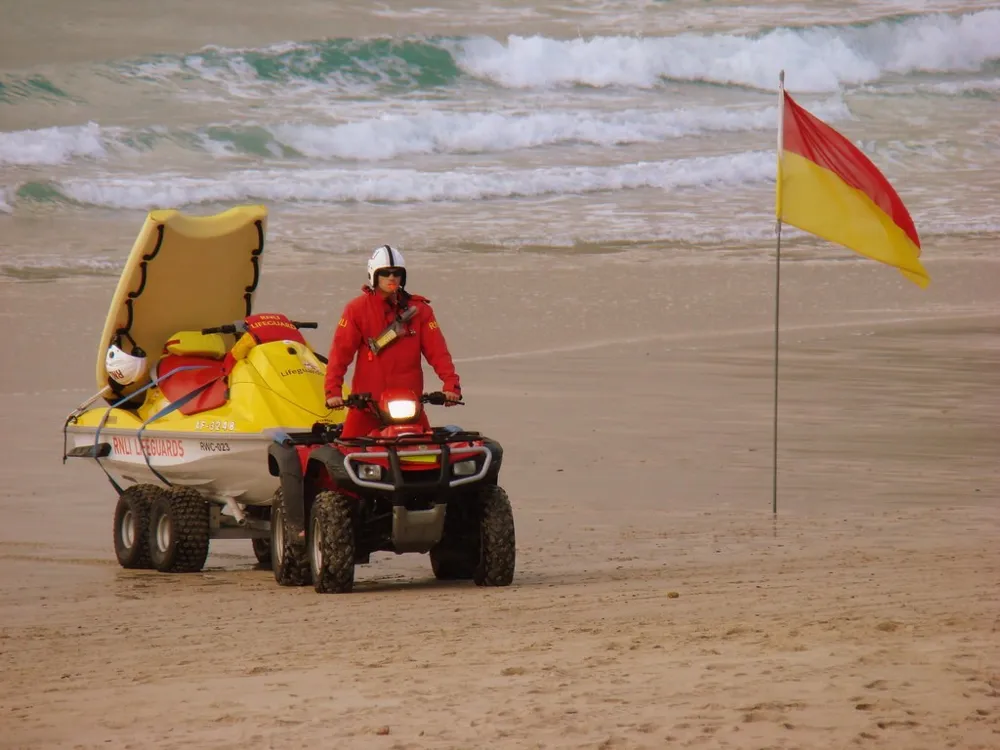
NOAA notes that beach patrols post surf hazard warning flags to match current surf conditions and local rip current activity. Many US lifeguarded beaches use the US Lifesaving Association's flag definitions:
| Flag | Meaning |
|---|---|
| Red and yellow halves | Lifeguard-protected swim area |
| Yellow | Medium hazard |
| Red | High hazard |
| Double red | Water closed to the public |
| Purple | Dangerous marine life |
| Black and white quartered | Designated area for surfboards and other non-powered craft |
| Yellow with a black ball | Surfboards and non-powered craft prohibited |
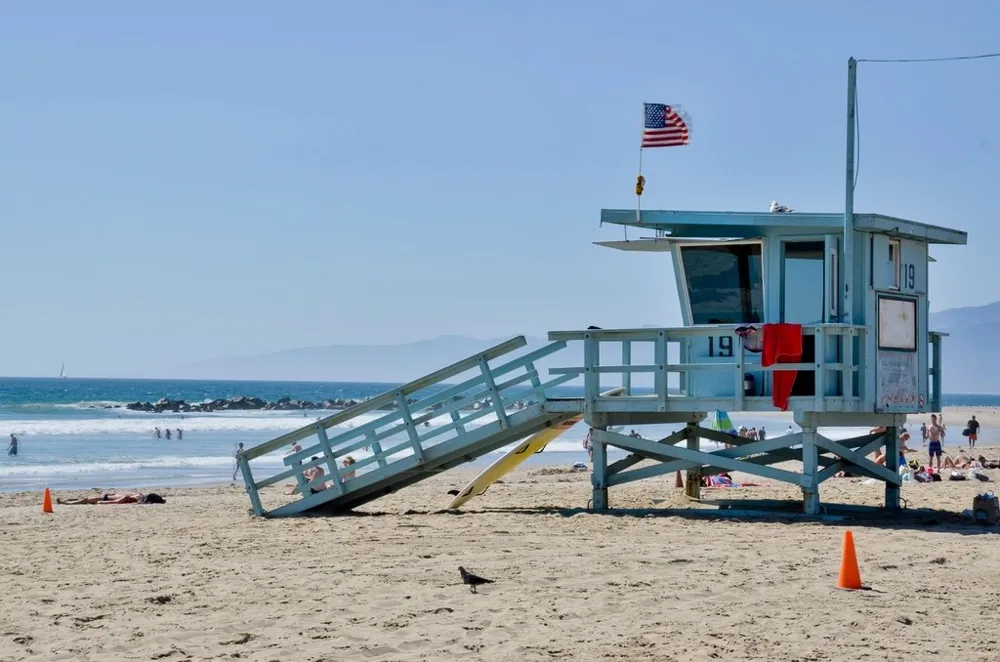
Flag meanings can vary from beach to beach, so check the posted flag key or ask a lifeguard. A missing flag doesn't mean safe water; it may just mean no one is on duty. Swimming between red and yellow flags where they're used keeps you in the area lifeguards are watching. For the surf-zone flags and lineup rules, see our surf etiquette guide.
Rip Current Forecasts and When Risk Is Highest
You can check the rip risk before you leave home. Many coastal NWS offices issue a Surf Zone Forecast, which rates the rip current risk for the day. According to the NWS, most coastal offices issue them from Memorial Day through Labor Day, and some for longer. The risk levels mean:
| Risk Level | NWS Definition | What It Means for You |
|---|---|---|
| Low | Rip currents are unlikely to be dangerous, but life-threatening rip currents often occur near groins, jetties, reefs and piers | Still swim near a lifeguard and away from structures |
| Moderate | Life-threatening rip currents are possible in the surf zone | Only confident swimmers, at a guarded beach, after checking with lifeguards |
| High | Life-threatening rip currents are likely in the surf zone | Stay out of the water |
Where to look:
- NWS beach forecasts (weather.gov/beach) collect surf height, rip current risk and hazard statements for many US coastal areas, including the Great Lakes.
- Where an office doesn't issue a Surf Zone Forecast, the NWS says to check its Hazardous Weather Outlook for a high rip current risk.
- Lifeguards use these forecasts too, NOAA says, along with what they see on the beach that day.
Watch for conditions that raise the risk: bigger and longer-period swell (including swell from distant storms and hurricanes), low tide on many beaches, and beaches with sandbars, piers or jetties. And remember the NWS warning that rips can form on calm, sunny days. Our how to read a surf forecast guide explains swell height and period.
Rip Current Myths: Undertow, Riptide and More
| Myth | Fact (per the NWS) |
|---|---|
| Rip currents pull you underwater | Neither rip currents nor undertow pull people under. Panic, exhaustion and breaking waves create that feeling |
| "Riptide" is the right word | Rip currents aren't tides. The NWS calls terms like riptide and runout incorrect; strong tidal currents at inlets and harbor mouths are a separate hazard |
| Undertow and rip currents are the same thing | Undertow usually refers to a slower offshore flow near the bottom. Scientists don't agree on a definition, and the word is often wrongly used for rips |
| Rips are strongest on an outgoing tide | Tide direction doesn't matter; water level does. Many rips are strongest around low tide |
| Sandbars can suddenly collapse | Sandbars don't collapse suddenly. Waders usually get into trouble when bigger waves raise the water level, often with a rip pulse |
| Calm-looking water is safe | The calm-looking gap between breaking waves is often the rip itself |
| Strong swimmers can swim against a rip | Rips can move up to 8 feet per second, faster than most people can swim |
The NWS also warns about backwash, water rushing back down the beach after a wave, which can knock people over, especially children and older adults, and carry them into deeper water. Never turn your back on the ocean.
How to Stay Safe From Rip Currents
- Swim near a lifeguard. The USLA figure of about 1 in 18 million for drowning at a beach with USLA-affiliated lifeguards is the strongest argument there is.
- Check the forecast and flags before you go, and ask lifeguards where the rips are.
- Watch the water for several minutes before going in, ideally from higher ground.
- Stay at least 100 yards from piers and jetties, especially on the Great Lakes.
- Never swim alone, and bring a friend with a phone.
- Know your limits. If you're not a confident swimmer, stay in shallow water near a lifeguard, and keep in mind that rip pulses can sweep waders off their feet.
- Watch kids constantly, within arm's reach in the surf.
- If in doubt, don't go out.
Snorkelers face currents too; see our snorkeling safety tips. Bodyboarders can start with how to bodyboard, and new surfers with how to surf. Browse more beach and ocean guides in our surfing hub and water sports guides.
Frequently Asked Questions
What should you do if you get caught in a rip current?
Stay calm and float; a rip pulls you away from shore, not under. Don't swim straight back against it. Swim parallel to the shoreline until you're out of the pull, then angle back to the beach, and if you can't, face the shore and wave and call for help.
Do rip currents pull you underwater?
No. The National Weather Service says neither rip currents nor undertow pull people under the water. The feeling of being pulled under comes from panic, exhaustion and breaking waves.
Is a riptide the same as a rip current?
People often use the words the same way, but the NWS says rip currents are not tides and calls terms like riptide and runout incorrect. Strong tidal currents at inlets and harbor mouths are a separate hazard.
How fast is a rip current?
Typical rip currents flow about 1 to 2 feet per second, but NOAA says they can reach up to 8 feet per second, faster than most people can swim. During short pulses tied to big wave sets, a rip's speed can more than double.
How long does a rip current last?
It depends on the type. Channel rips over sandbar gaps can stay in the same place for days, weeks or even months, while flash rips on featureless beaches may last only several minutes.
Can rip currents happen on calm, sunny days?
Yes. The NWS warns that rip currents can form on calm, sunny days, and long-period swell can raise the rip risk even when the ocean looks nearly flat.
Do rip currents happen in lakes?
Yes. They can occur at any beach with breaking waves, including the Great Lakes, where piers and breakwalls also create strong structural currents.
How do I help someone caught in a rip current?
Don't swim out after them. Alert a lifeguard or call 911, throw them something that floats, such as a life jacket, cooler or beach ball, and shout to them to swim parallel to the shore.