Epoxy vs PU Surfboards: How Foam and Resin Change the Ride (2026)
PU, EPS/epoxy and XPS boards can share the same shape and still ride, wear and repair differently. Here's what's inside each one and who should pick which.
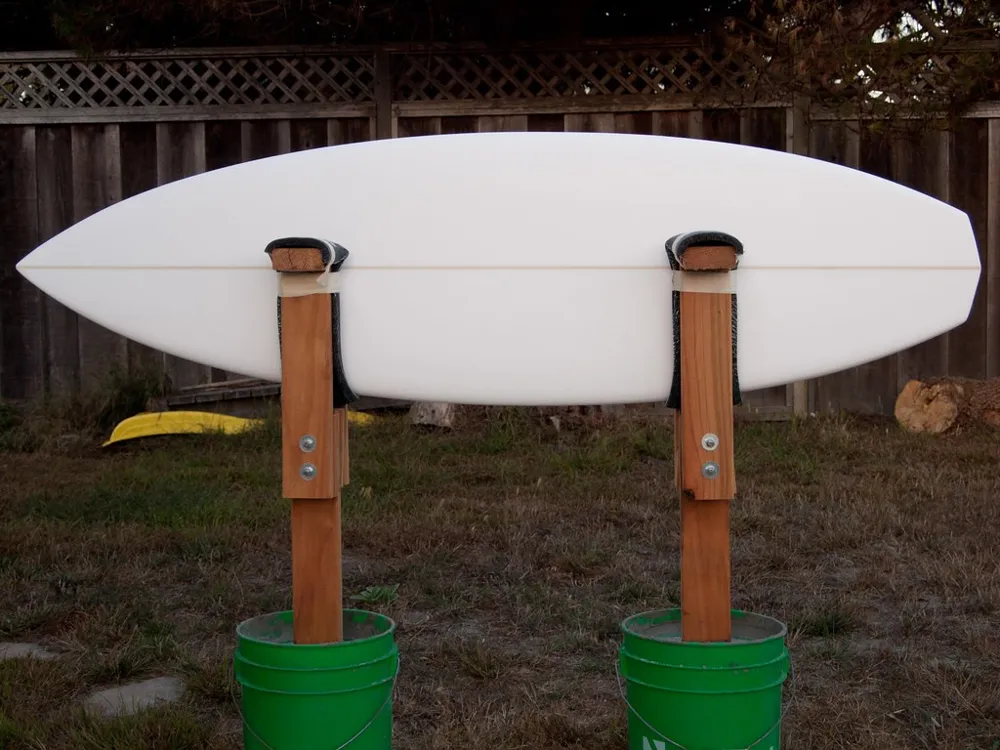
Epoxy vs PU: The Short Answer
Most hard surfboards are a foam core wrapped in fiberglass and resin. A PU board pairs a polyurethane foam blank with polyester resin, the build that has dominated surfing for decades. An epoxy board usually means an expanded polystyrene (EPS) core sealed with epoxy resin. A third, less common foam, extruded polystyrene (XPS), is also glassed with epoxy.
Neither is better overall. PU gives the traditional, damped flex many surfers love in good and choppy waves. EPS/epoxy is lighter, floats more and usually shrugs off dings better, which helps in small waves and for beginners. The table sums it up; the sections below explain why.
| Factor | PU (Polyurethane + Polyester) | EPS/Epoxy | XPS/Epoxy |
|---|---|---|---|
| Weight | Heaviest of the three for most shapes | Lightest | Similar to PU, a bit heavier than EPS |
| Buoyancy | Standard | Floats more at the same volume | Similar to PU |
| Flex and feel | Smooth, damped flex; sits lower in the water | Stiffer, livelier; can feel corky or bouncy in chop | Consistent flex |
| Ding resistance | Dents and cracks more easily | Tougher shell; resists pressure dings | Strong foam; delamination is the main risk |
| Water intake if dinged | Absorbs water slowly; can yellow and weaken | Water can spread through gaps between beads | Very low, but not zero |
| Repair resin | Polyester or epoxy | Epoxy only | Epoxy only |
| Cost and availability | Most common and usually most affordable | Usually costs more | Less common |
| Best for | Good to big waves, hollow surf, choppy days, traditional feel | Small to medium waves, beginners, paddle power, aerials | Surfers who want epoxy toughness with less water uptake |
What Are Surfboards Made Of?
Every glassed surfboard has the same basic layers:
- Core (blank): the foam the shaper carves into the board's outline, rocker and rails. On a traditional board the core makes up roughly two-thirds to three-quarters of the finished weight, according to Surf Simply's construction guide.
- Stringer: usually a thin strip of wood down the center that stops the board from snapping and shapes how it flexes. Some builds swap it for fiberglass, carbon fiber or PVC, move it out to the rails, or drop it altogether.
- Fiberglass cloth: layers laid over the deck and bottom. The cloth and resin together form the skin, which provides most of the board's strength.
- Resin: soaks the cloth and hardens into a shell. Polyester and epoxy are the two main types.
The naming causes most of the confusion. "Epoxy" describes the resin, while PU, EPS and XPS describe the foam. A PU blank can be glassed with epoxy, which some retailers label PE or PU/epoxy, but EPS and XPS can only be glassed with epoxy. When a shop lists an "epoxy surfboard," it usually means EPS foam with epoxy resin. For shapes, fins and the parts of a board, see our types of surfboards guide.
How PU Surfboards Are Built
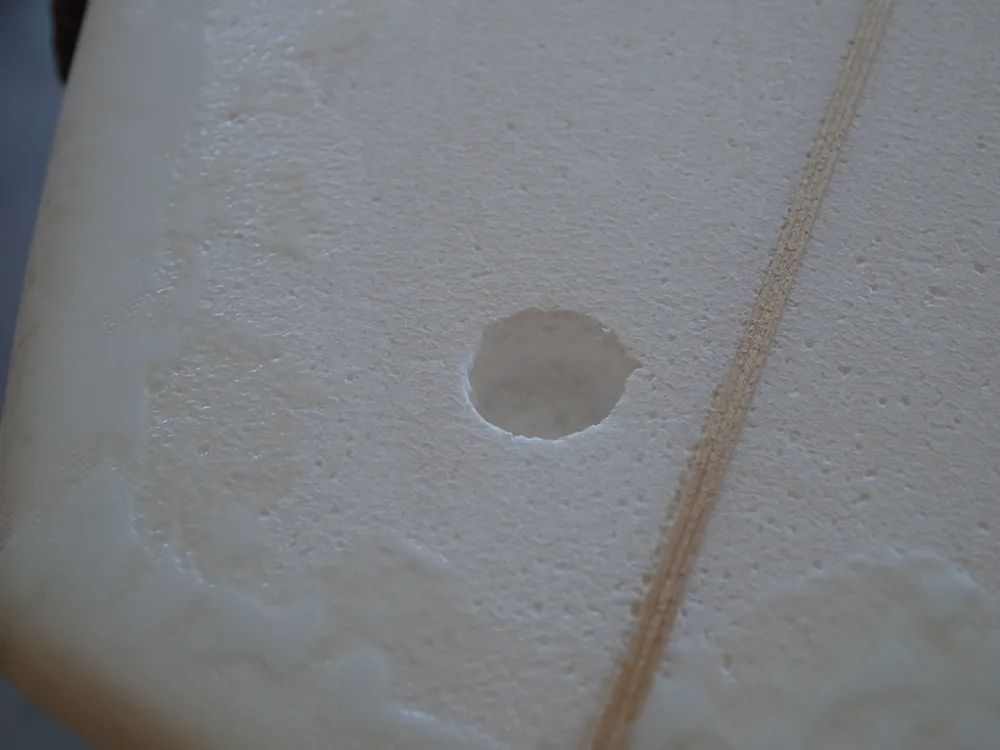
A PU board starts as a polyurethane blank, usually with a wooden stringer glued through the middle. The shaper cuts and sands it to shape by hand or finishes a machine-cut blank, then the glasser laminates it with fiberglass and polyester resin, adds a hot coat to fill the weave, and sands it smooth.
Standard PU blanks are about 3 lb per cubic foot, with lighter densities for performance boards and much denser blanks for tow-in boards, according to Surf Simply. PU is easy to shape and consistent, which is why it remains the default for custom, hand-shaped boards. Hobie Alter and Gordon "Grubby" Clark began experimenting with foam-and-fiberglass boards in the late 1950s, and PU soon replaced balsa; see the history of surfing for more.
How EPS/Epoxy Surfboards Are Built
EPS is made from polystyrene beads expanded and fused into a block. It's lighter than PU, around 1 to 2 lb per cubic foot, and stiffer, so a lower-density blank can match PU's strength. EPS must be laminated with epoxy resin; polyester resin attacks the foam (more on that under repairs).
EPS is harder to hand-shape because the beads can flake under sandpaper, so many EPS boards come from molds or machine shaping. That suits big factories: molded epoxy boards from labels such as Surftech, Torq and NSP are tough, identical and popular with surf schools and travelers. Custom shapers also build EPS boards, and some labels engineer the flex with alternatives to the center stringer. Firewire's Helium construction, for example, uses an EPS core with no central stringer. Carbon fiber strips laid into the skin are another common way to tune flex, which is what most "carbon fiber surfboards" are. See who builds what in our surfboard brands guide.
What About XPS?
XPS uses the same base material as EPS but is extruded into solid sheets instead of fused from beads. That gives it a more closed cell structure, so it absorbs very little water (sources say it reduces water intake rather than eliminating it). It shapes easily, has a consistent flex pattern and weighs about the same as PU, slightly more than EPS.
The catch: XPS is hydrophobic, so glue doesn't bond to it as well, and over time it can release gas under the skin, causing bubbles or delamination. It's much less common than PU or EPS, with one maker, XTR, supplying most XPS blanks, according to Surf Simply.
Weight, Buoyancy and Volume
EPS is the lightest foam and floats more for the same volume, so an EPS board sits higher in the water. That helps you paddle into waves, carry speed through flat sections and make the most of small, weak surf. Lighter boards also respond quickly, which is why some aerial-focused surfers prefer them.
PU's extra weight is not all bad. It lets the board sit lower, keeping the rail engaged in the wave face for a "knifey" feel and more hold in hollow, powerful waves. Because EPS floats more, some surfers ride an epoxy board slightly lower in volume than their PU board, while beginners can use the extra float to their advantage. Find your starting point with the surfboard size chart.
Flex and Feel in the Water
Feel is the main reason many experienced surfers stay with PU. A PU/polyester board has a smooth, lively flex and damps vibration, so it stays calmer when the water is choppy or the wind is up. EPS/epoxy boards are stiffer and lighter, and some surfers describe them as corky or bouncy in rough conditions. Others love that same liveliness in small, clean waves.
Builders work around this: many EPS boards add carbon strips, rail stringers or other flex patterns to bring back some of PU's spring. The shape, rocker and bottom contours matter as much as the foam, so two boards in the same construction can feel very different.
Durability and Ding Types
Ding resistance is the clearest win for epoxy. An epoxy laminate is generally tougher and less brittle than polyester, so it resists cracks and impacts better. PU blanks have poor compression strength, which leads to the common PU problems:
- Pressure dings: dents in the deck where your heels and knees push, plus dents from other impacts. EPS/epoxy decks hold their shape better.
- Cracks and spider cracks in the polyester shell from impacts.
- Rail, nose and tail dings that open the shell to water. These happen on any construction.
Epoxy boards still ding, snap and crack, especially when molded boards are poorly finished. Their typical problems are delamination (the skin lifting off the core), which heat and sun can trigger, and open dings that let water in. Store any board out of hot cars and direct sun and travel with a padded surfboard bag.
Water Intake and Waterlogging
Every foam takes on water when the shell is broken, but they behave differently:
- PU: soaks up water slowly through the ding. Waterlogged PU turns yellow or brown, gets heavier and becomes brittle.
- EPS: water can travel through the gaps between the fused beads, spreading quickly deeper into the blank. Some makers fuse the beads more tightly to reduce this.
- XPS: its closed cells limit water uptake, which is the main reason builders use it.
The rule is the same for all three: get out of the water when you find an open ding, let it dry fully and seal it before your next surf. With EPS, don't keep surfing on an open ding.
Repairs: Match the Resin to the Foam
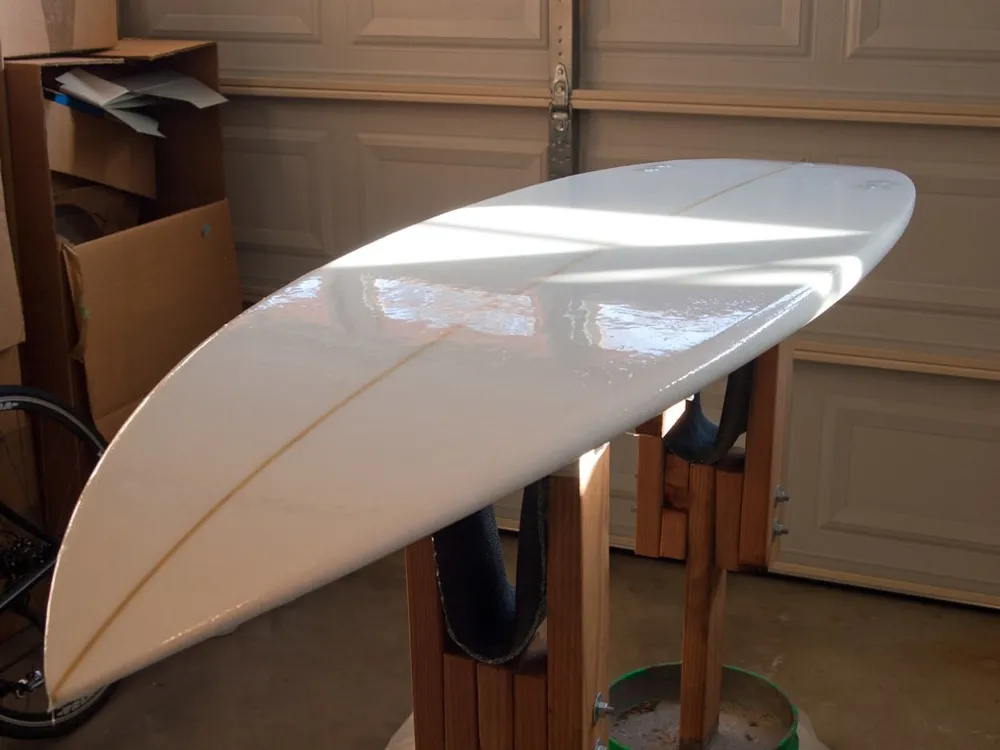
This is the most important practical difference. Polyester resin contains styrene, which dissolves EPS foam and will eat into the blank. Repair an EPS or XPS board with epoxy resin only. A PU board can be fixed with polyester or epoxy, and many quick-fix kits use UV-cure polyester that hardens in sunlight.
- Check the construction before you buy a repair kit: look at the board's label or the maker's spec page, because the same model may come in PU and epoxy.
- Allow more time: epoxy cures more slowly than polyester, so epoxy repairs take longer to finish.
- Wear gloves: uncured epoxy can be sensitizing with repeated skin contact, and polyester gives off a strong styrene smell, so work in a ventilated space.
- Ask the shop: most ding repair shops handle PU; confirm they also work on epoxy before dropping off an EPS board.
Step-by-step fixes for both builds are in our surfboard ding repair guide.
Cost and Availability
PU/polyester is the most widely available construction and usually the most affordable, since PU blanks are cheap and the glassing process is familiar to every shop. EPS/epoxy boards generally cost more from the same label because EPS costs manufacturers more and takes more work to shape and glass by hand. Supporters argue the longer life of an epoxy board offsets that.
Price also depends on how the board is made. A custom hand-shaped board costs more than a stock model, and molded epoxy boards made in large factories can be among the lower-cost hard boards. Specialty builds such as carbon-reinforced, wood-skinned or certified eco boards usually sit at the premium end.
Environmental Notes
For decades most US blanks came from Clark Foam, which closed abruptly on December 5, 2005, under pressure from state and federal environmental regulators. With no big PU supplier ready to fill the gap, many builders turned to EPS, which had been around since at least the 1970s, and it became a standard option.
No surfboard is green, but there are differences. PU production involves harmful chemicals and the foam breaks down slowly. EPS can be made with recycled content, and sources report that working with epoxy releases fewer volatile organic compounds (VOCs) than polyester. Eco builds often pair an EPS or recycled core with plant-based bio-resin and flax cloth.
To compare eco claims, look for the ECOBOARD label from Sustainable Surf, a US nonprofit. Its Level One requires a plant-based, low- to zero-VOC resin with at least 19% bio-carbon content and a core with at least 25% recycled or plant-based content (or at least 50% wood by weight). The Gold Level adds a third-party lifecycle assessment and stricter resin requirements.
Which Should You Choose?
| If You... | Lean Toward |
|---|---|
| Are learning or returning after a long break | A soft top or an EPS/epoxy board with plenty of volume |
| Are a heavier or older surfer who wants paddle power | EPS/epoxy |
| Mostly surf small, mushy or medium waves, or wave pools | EPS/epoxy (fish, groveler, hybrid) |
| Surf choppy, windy beach breaks often | PU |
| Surf hollow, powerful or bigger waves; need a step-up | PU |
| Want a traditional feel, a custom shape or easy repairs at any shop | PU |
| Are rough on boards, travel a lot or share boards | EPS/epoxy, especially molded builds |
| Want epoxy toughness with less water uptake | XPS/epoxy |
Many surfers end up with both: an epoxy board for small days and a PU shortboard or step-up for good waves. Size the board first, then pick the construction. If you're just starting, our best surfboards for beginners guide shows which learner boards to look at, and surf parks and wave pools are a good place to try different builds.
Other Constructions Worth Knowing
- Soft tops: usually an EPS core with stringers, a soft foam deck and a slick plastic or hard epoxy bottom. They're the safest learning boards; compare them in our best soft top surfboards guide.
- Wood: chambered balsa or hollow wooden boards built from thin strips over a frame and glassed with epoxy. They're durable and have a lower environmental footprint, but they're heavier, by about 30% compared with PU for hollow wooden builds, according to Surf Simply.
- Hollow and composite builds: very light boards with an air core need a pressure-release valve for temperature and altitude changes and a tougher skin, and they can sink if the skin is pierced.
Back to the surfing hub for more guides.
Frequently Asked Questions
Is epoxy or PU better for beginners?
Epoxy (EPS) boards usually suit beginners a little better because they're lighter, float more for their size and resist dings. A soft top is still the most common first board, and a PU board works fine if it has enough volume.
Do epoxy surfboards break less than PU boards?
An epoxy laminate generally resists cracks and pressure dents better than a polyester-glassed PU board, but it isn't indestructible. Any board can snap or crack in heavy surf or a bad fall.
Can I use polyester resin to fix an epoxy surfboard?
No. The styrene in polyester resin attacks EPS foam and can eat into the blank. Repair EPS boards with epoxy resin only; PU boards can be repaired with polyester or epoxy.
Is a PU board glassed with epoxy resin an epoxy board?
It's a hybrid. The core is still polyurethane foam, but the shell is epoxy, and some retailers label this build PE or PU/epoxy. When a shop says epoxy surfboard, it usually means an EPS core with epoxy resin, so check the specs.
Should an epoxy board have less volume than a PU board?
Often slightly less. EPS floats more for the same volume, so some surfers ride an epoxy board a touch smaller than their PU board. Start from the volume range in a size chart and adjust for construction.
Do pro surfers ride epoxy boards?
Many still ride PU most of the time, but some top surfers choose EPS/epoxy or XPS boards for particular waves, especially smaller surf and aerial-focused sessions.
Are epoxy surfboards more expensive?
Usually. PU/polyester is the most widely available and generally the most affordable build, while EPS/epoxy boards tend to cost more from the same label. Molded epoxy boards from large factories can be cheaper than a custom PU board, so compare like for like.