Surfboard Brands and Shapers Worth Knowing, by Type (2026)
Channel Islands, Bing, Wavestorm, Firewire and dozens more: here's who makes what, which kind of board each brand is known for, and how to choose between a label, a local shaper and a custom order.
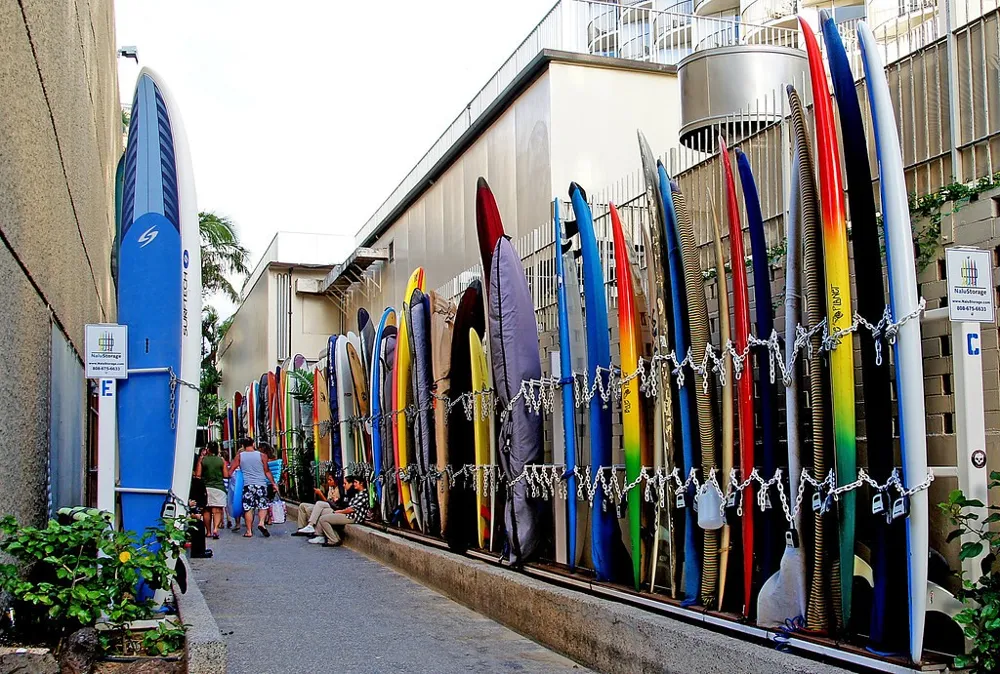
How to Use This Surfboard Brand Guide
Search for "surfboard brands" and you'll find lists that rank a dozen names with little explanation. The more useful question is which brands make the type of board you want. A world-class shortboard label is the wrong place to look for a first board, and a foam-board brand won't sell you a big-wave gun.
So this guide groups surfboard companies by what they're known for: performance shortboard shapers, longboard and heritage labels, soft-top and foam board brands, molded and pop-out brands, and eco and alternative construction. We list founding facts only where the brand or reputable surf media confirms them, and we don't rank brands against each other or quote prices, which change constantly. If you're still working out which shape you need, start with our guide to surfboard types and the surfboard size chart, then come back here to see who makes it.
Surfboard Brands at a Glance
| Brand | Category | Known For | Origin (Where Verified) |
|---|---|---|---|
| Channel Islands | Performance | Shortboards, grovelers and mid-lengths | Santa Barbara, California, 1969 |
| ...Lost | Performance | Shortboards and small-wave designs | Co-founded by shaper Matt Biolos, San Clemente |
| JS Industries | Performance | Shortboards and step-ups | Australian shaper Jason Stevenson |
| Pyzel | Performance | Shortboards and big-wave guns | North Shore of Oahu, building boards since 1996 |
| Sharp Eye | Performance | Contest-style shortboards | Brazilian-born shaper Marcio Zouvi |
| Haydenshapes | Performance | FutureFlex construction, Hypto Krypto | Sydney label of Hayden Cox |
| Rusty | Performance | Shortboards, plus apparel | Rusty Preisendorfer, shaping since 1969 |
| Bing | Longboard | Classic and modern longboards | Dates to 1959 and shaper Bing Copeland |
| Hobie | Longboard / heritage | Early foam boards | Dana Point shop opened 1954 |
| Gordon & Smith (G&S) | Longboard / heritage | Surfboards and skateboards | San Diego, 1959 |
| Lightning Bolt | Heritage | Hawaiian boards and apparel | Hawaii, 1971 |
| Hawaiian Island Creations (HIC) | Heritage | Hawaiian surf shop and boards | Kailua, Oahu, 1971 |
| Wavestorm | Soft top | The 8' Classic foamie | Long sold through Costco |
| Catch Surf | Soft top | Odysea foam boards | See the brand's site |
| South Bay Board Co. | Soft top | Wax-free decks and hybrids | Los Angeles South Bay area |
| Surftech | Molded | Molded epoxy boards, licensed designs | Founded by Randy French |
| Torq | Molded | TET epoxy construction | See the brand's site |
| NSP | Molded | Durable epoxy and soft boards | Founded 2001 by Bruce "Buzz" Hansen |
| Firewire | Eco / alt construction | Helium and Timbertek builds | Australia's Gold Coast, mid-2000s |
| Grain | Eco / alt construction | Hollow wooden boards and kits | York, Maine, 2005 |
| Notox | Eco / alt construction | Flax-fiber and bio-resin boards | France |
Origins come from each brand's own site or reputable surf media, checked November 2026. Ownership of surf labels changes over time, so check the brand's own "about" page for the current picture.
Shapers vs Labels: Who Actually Makes Your Board?
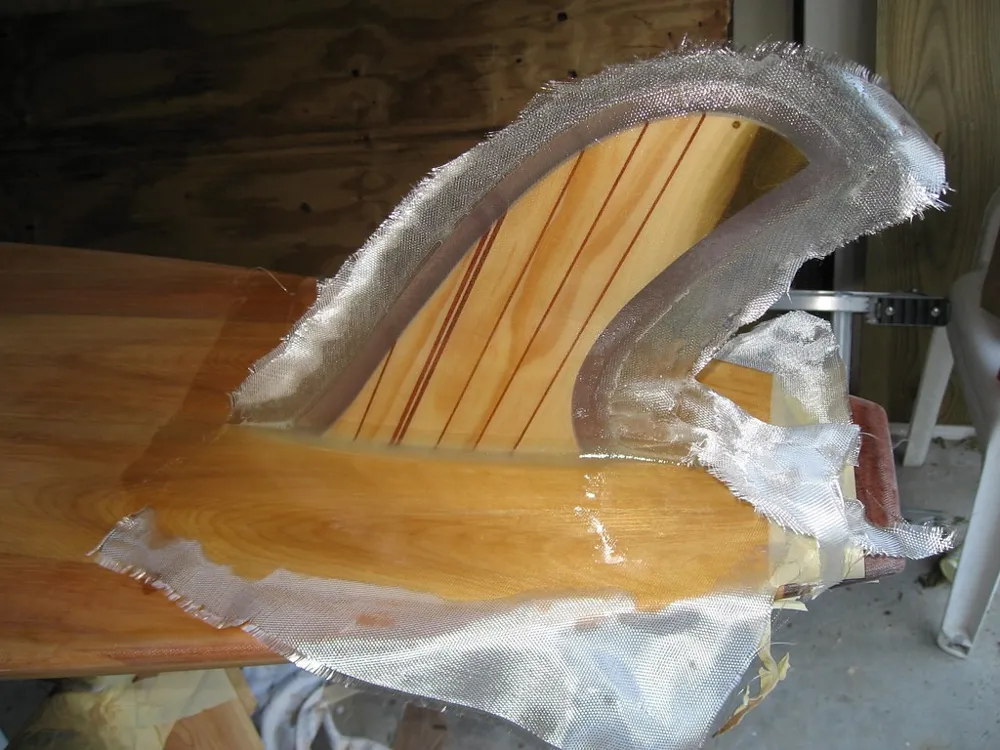
A surfboard has three "makers," and they aren't always the same person or company:
- The shaper designs the board's outline, rocker, rails and bottom. In a small operation the shaper also shapes your board by hand. At big labels, the design is usually cut by a computer-controlled shaping machine from the shaper's file, then hand-finished.
- The label is the brand name on the deck. Some labels are one shaper's name (Pyzel, Haydenshapes); others carry designs from a team of shapers or from pro surfers (Firewire, Channel Islands).
- The builder does the glassing and finishing. Many labels have their boards built under licence by a factory. Firewire, for example, builds Slater Designs boards, and Surftech builds and sells the Aipa range.
Behind all of them sit the blank makers that supply the foam a board is shaped from. For decades one company dominated: Clark Foam, founded by Gordon "Grubby" Clark in 1961, supplied about 90% of US blanks and around 60% worldwide before it shut down abruptly on December 5, 2005. Shapers scrambled for new suppliers, and the closure pushed more builders toward other foams and constructions. Today shapers use several blank suppliers, and many labels offer the same model in traditional PU and in EPS/epoxy. Our epoxy vs PU surfboards guide explains the trade-offs.
Why does this matter? Because two boards with the same model name can ride differently if one is a hand-shaped custom and the other a factory-built stock board in a different construction. Check the model, the construction and the dimensions, not just the logo.
Performance Shortboard Shapers and Labels
These labels are known for high-performance shortboards, step-ups and small-wave "groveler" designs ridden by competitive surfers, plus mid-lengths and fun shapes for everyone else. Their standard shortboards are built for intermediate and advanced surfers; if you can't yet catch and turn on unbroken waves, look at their high-volume models or the categories further down. Our guide to surfing maneuvers shows what these boards are designed to do.
Channel Islands
Al and Terry Merrick founded Channel Islands in Santa Barbara, California, in 1969. Burton Snowboards bought the company in 2006, and the Merrick family bought it back in a deal announced in November 2020 and completed in January 2021. The range runs from contest shortboards to approachable shapes such as the Happy Everyday and the CI Mid, and older "Al Merrick" boards are common on the used market.
...Lost
Lost, written "...Lost" on its boards, was co-founded by San Clemente shaper Matt Biolos and grew from a punk-influenced surfboard and surfwear brand into a major board builder. It's known for shortboards and small-wave performance designs.
JS Industries
JS is the label of Australian shaper Jason Stevenson and is known for performance shortboards and step-ups. It opened a North American headquarters in Oceanside, California, in 2021.
Pyzel
Pyzel Surfboards is the label of shaper Jon Pyzel, who moved to the North Shore of Oahu in 1992 and has been building boards there since 1996. Its range spans everyday shortboards to big-wave guns, including the Ghost family of boards.
Sharp Eye
Sharp Eye is the label of Brazilian-born shaper Marcio Zouvi and is known for contest-style shortboards. Surftech has partnered with Sharp Eye to build some of its models.
Haydenshapes
Haydenshapes is the Sydney label of shaper Hayden Cox. It's known for its FutureFlex construction, which uses a carbon-fiber frame around the rails in place of a central wooden stringer, and for its Hypto Krypto model, sold in several constructions.
Rusty
Rusty Preisendorfer began shaping in 1969. The Rusty name is also a clothing brand, added in 1985, but the label still makes surfboards.
Other performance names you'll see in surf shops include DHD, Chilli, Mayhem (Matt Biolos's shaping name) and Slater Designs. A local shaper near your break is often just as good a source for a shortboard as any big label, and may know your waves better.
Longboard and Heritage Brands
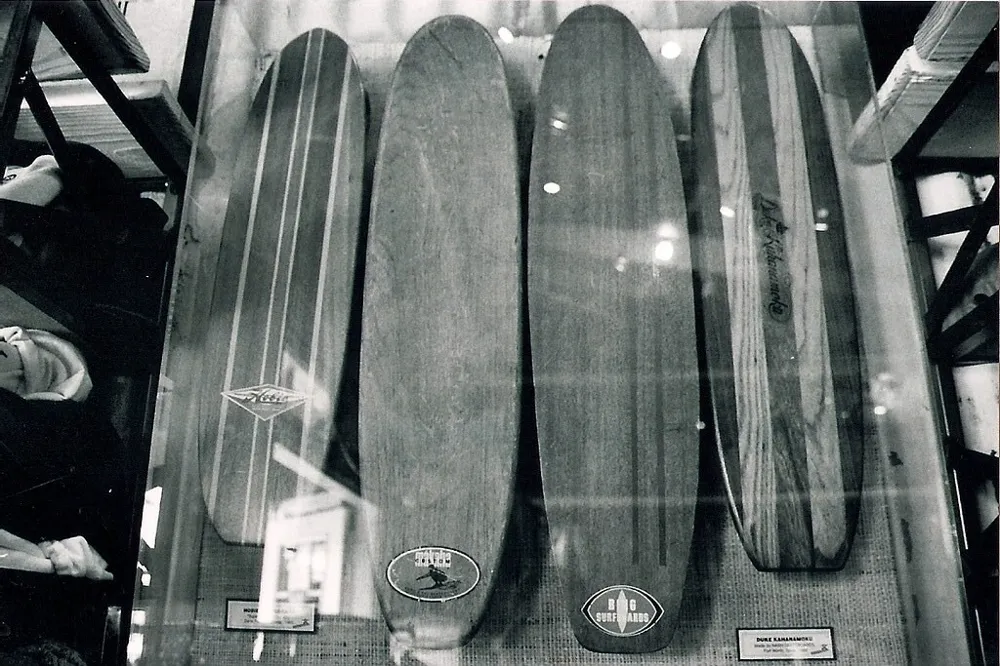
Many of the oldest names in surfboards grew up in the longboard era of the 1950s and 1960s, before the shortboard revolution. Several are now heritage labels that sell modern reissues of classic models alongside newer designs. If you're unsure whether a longboard suits you, our surfboard types guide compares longboards, mini-mals and mid-lengths.
Hobie
Hobie Alter began building balsawood boards for friends in 1950 and opened Hobie Surfboards in Dana Point, California, in February 1954. In 1958 he and Gordon "Grubby" Clark began experimenting with foam-and-fiberglass boards, the construction that replaced balsa. Alter later founded the Hobie Cat catamaran business, and the Hobie name still appears on surfboards and surf shops.
Bing
Bing Surfboards dates to 1959 and shaper Bing Copeland. The label is best known today for longboards and retro-inspired shapes, with modern takes on its classic models.
Gordon & Smith (G&S)
Larry Gordon and Floyd Smith founded G&S in San Diego in 1959. The family-run company makes both surfboards and skateboards, which ties it to the early history of skateboarding as well as surfing.
Lightning Bolt
Gerry Lopez and Jack Shipley founded Lightning Bolt in Hawaii in 1971. The brand now sells boards, apparel and accessories.
Hawaiian Island Creations and Town & Country
Two Oahu names from 1971: Hawaiian Island Creations (HIC) was founded in Kailua by brothers Stephen and Jimmy Tsukayama, and Town & Country was founded in Pearl City by Craig Sugihara.
Aipa
Hawaiian shaper Ben Aipa is credited with the "Sting," a design with "wings" that step the outline in near the tail. Aipa models, including the Big Boy Sting, are built and sold through Surftech as of November 2026.
McTavish and Other Longboard Specialists
McTavish is the Byron Bay, Australia, label of shaper Bob McTavish, a key figure in the late-1960s move to shorter boards that now builds plenty of longboards. Other specialist longboard and traditional names include Takayama / Hawaiian Pro Designs, Stewart, Harbour and CJ Nelson. Heritage labels often change owners or licensees over time, so check the brand's own site to see who builds a current board.
Soft-Top and Foam Board Brands
Foam boards are where most surfers start, and they've also become popular with experienced surfers in small or crowded waves. A true foamie has a foam deck and a slick plastic bottom; a soft-top hybrid pairs a soft deck with a hard epoxy bottom for more speed. Our best soft top surfboards guide compares specific models in detail; here is who makes them.
- Wavestorm makes the 8' Classic, a true foamie with an EPS core and three stringers that has long been sold through Costco and is a common sight at surf schools. Wavestorm also makes shorter fish shapes, bodyboards and skimboards.
- Catch Surf is behind the Odysea range, including the Log, sold in a wide size range with pro-model graphics and its own fin system.
- South Bay Board Co., from the Los Angeles South Bay area, makes soft tops with wax-free textured decks and heat-release valves, plus Hybrid boards with hard epoxy bottoms.
- Boardworks makes the Froth! soft top, sold in sizes from about 5 to 9 feet for both ocean surfing and wakesurfing.
- Liquid Shredder, Rock-It and Thurso Surf make soft tops in kids', teen and adult sizes. See our best kids' surfboards for the small sizes.
- Some hard-board labels have worked with foam-board brands on soft-top versions of their shapes, so a foamie doesn't always mean a beginner board.
Two foam boards that are easy to find online:
Wavestorm 8ft Classic
Listed at about 8' x 22.4" x 3.25" and roughly 86 liters, with an EPS core, three wooden stringers, a slick HDPE bottom, three screw-through fins and a leash in the box.
Good to Know
- Lots of float for paddling and pop-ups
- Fins and leash included
Watch Out For
- Screw-through fins don't take FCS or Futures fins
Boardworks Froth!
A soft top with an EPS core, a rounded tail and a thruster setup using Futures fins, sold in lengths from about 5 to 9 feet for surf and wake.
Good to Know
- Standard Futures fin boxes
- Short sizes suit kids and lighter riders
Watch Out For
- Volume changes a lot between lengths; check the exact size
Budget, Molded and Pop-Out Surfboard Brands
"Pop-out" is old surf slang for a mass-produced board made in a mold rather than shaped one at a time. Early pop-outs had a poor reputation, but modern molded boards are a different thing: identical, tough epoxy boards built in large factories, often to designs licensed from well-known shapers. They suit surf schools, rental fleets, travelers and anyone who wants a durable hard board at a lower cost than a custom.
- Surftech, founded by Randy French, built its name on molded epoxy constructions such as Tuflite and licenses designs from established shapers, including the Aipa range.
- Torq uses its TET epoxy construction across longboards, funboards, mini-mals and fish, and is stocked by many European surf shops.
- NSP, founded in 2001 by Australian surfer Bruce "Buzz" Hansen, makes epoxy and soft-deck boards built for durability.
The trade-off: molded boards are tough and consistent, but they are usually heavier or stiffer than a hand-built board of the same shape and can feel less lively. Many surfers ride one while learning and traveling, then move to a hand-shaped board. For your first board, a molded funboard or mini-mal is a sensible alternative to a foamie; see our best surfboards for beginners.
Eco and Alternative Construction Brands
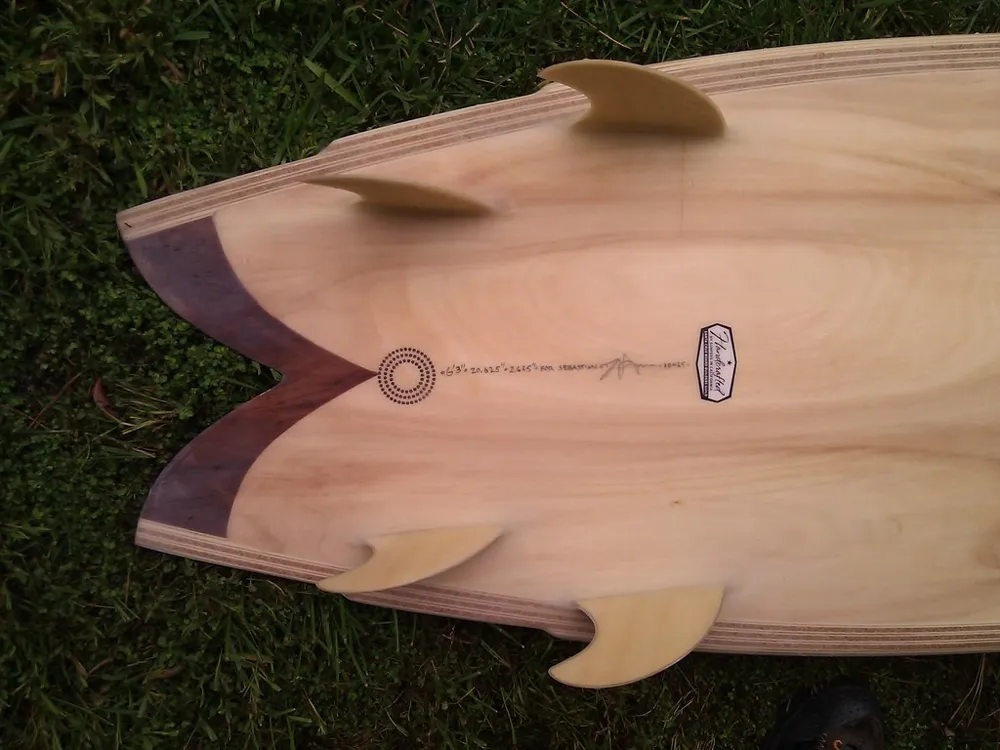
Standard boards use petroleum-based foam and resin, and builders have spent years looking for lower-impact alternatives: plant-based resins, recycled or recyclable foam, natural fibers and wood. These are the names most often linked with alternative construction.
Firewire
Firewire was founded on Australia's Gold Coast in the mid-2000s, with shaper Nev Hyman among its founders. Kelly Slater became its majority shareholder in 2015, and his own label, Slater Designs, launched in 2016, built by Firewire. Firewire's best-known constructions are Helium, an EPS core with no central stringer, and Timbertek, which adds a thin paulownia wood deck skin. Designs come from shapers including Dan Mann, Daniel "Tomo" Thomson and Rob Machado, and the boards are built in a factory the company runs in Thailand.
Grain Surfboards
Grain was founded in 2005 in York, Maine, by Rich Blundell, with co-founder Mike LaVecchia. It makes hollow wooden surfboards, mostly from northern white cedar, built on an internal wooden frame with planks glued over it and then shaped. Grain also sells kits and runs classes where surfers build their own boards.
Notox
Notox is a French builder that uses flax (linen) fiber and bio-based resin in place of standard fiberglass, and it has built boards for big waves as well as everyday surfing.
The ECOBOARD Label
Rather than a brand, ECOBOARD is a certification. It was started by the nonprofit Sustainable Surf and is now run under its SeaTrees program. Participating builders that meet set standards for materials, such as bio-based resin or recycled foam, can label boards as ECOBOARDs, with higher certification levels for more sustainable builds. Many mainstream labels offer certified models, so look for the ECOBOARD mark if this matters to you.
Wooden boards are heavier than standard boards and need different care, but they last a long time. Check repair guidance with the builder before using standard resin on any alternative construction; our surfboard ding repair guide covers resin compatibility.
Custom vs Stock Surfboards
Every brand above sells stock boards (set models in set sizes), and most hand-shaping labels and local shapers also take custom orders.
| Stock Board | Custom Board | |
|---|---|---|
| Fit | Closest standard size to your needs | Shaped to your weight, ability and waves |
| Availability | Buy off the rack or online | Usually a wait of several weeks; ask the shaper |
| Try Before You Buy | Often possible through demo or rental boards | Not possible; you rely on the shaper's judgment |
| Cost | Usually lower | Usually higher |
| Resale | Popular models resell easily | Unusual dimensions can be harder to sell |
| Best For | Most surfers, especially early on | Experienced surfers with specific needs |
A custom board pays off when you surf often, know what you like and have specific needs: an unusual height or weight, a particular local wave, or a board you want built in a certain construction. If you're still learning, a stock board you can demo first is usually the smarter buy. When ordering a custom, bring your current board's dimensions and volume, your weight, how often you surf and the waves you ride most. A good shaper will ask about all of these.
How to Choose a Surfboard Brand
- Pick the board type first. Decide on soft top, longboard, mid-length, fish or shortboard, then look at brands known for that category.
- Size by volume. Compare the listed liters on brand charts with our surfboard size chart. Volumes vary between brands for the same length.
- Choose a construction. PU, epoxy, molded and foam boards ride and wear differently.
- Check the fin system. Most hard boards use FCS or Futures boxes; some foam boards use their own or screw-through fins. See our surfboard fins guide.
- Try before you buy. Many shops rent or demo boards from the labels they stock.
- Consider a local shaper. Local shapers know the waves where you surf and can repair what they build.
Don't choose a board because a pro rides the same model. Pro surfers' boards are usually thinner and lower in volume than what most recreational surfers need.
Buying a Used Surfboard From a Big Brand
Popular labels resell well, so the used market is a good place to find a quality board. Check the dimensions written on the stringer or deck (often with the shaper's signature) rather than trusting the listing, and confirm the construction, since the same model may come in PU, epoxy or a brand-specific build. Press around the deck for soft spots, look for yellowing, cracks around the fin boxes and dings that have let water in, and make sure the fin system matches fins you own. Be cautious with "barely used" pro-model boards that are far thinner than you need. Once it's yours, protect it with one of the surfboard bags we cover.
Related Guides
Learn where these labels came from in the history of surfing, compare shapes in surfboard types, or start learning with how to surf. For other boards, see our guides to skateboard brands and snowboard brands, or head back to the surfing hub.
Frequently Asked Questions
What is the difference between a surfboard brand and a shaper?
A shaper designs and shapes boards, while a brand or label is the name the boards are sold under. Some labels are one shaper's name, some carry designs from several shapers, and many have their boards built in a factory under licence.
Which surfboard brand is best for beginners?
Brand matters less than the type of board. Most beginners do best on a large soft top or a high-volume longboard or funboard, and foam-board brands such as Wavestorm, Catch Surf, South Bay Board Co. and Boardworks all make learner sizes.
Are custom surfboards better than stock boards?
Not automatically. A custom board is shaped to your size, ability and local waves, which helps experienced surfers with specific needs. A stock model from a good label is often the easier choice for most surfers, especially if you can try or demo it first.
Are expensive surfboard brands worth it?
Premium labels usually offer proven designs, better quality control and more construction choices. For learning, a well-made foam board does the job; spend more once you know which shape and size you actually ride.
Where are most surfboards made?
Everywhere from one-person shaping bays to large factories. Many hand-shaped and custom boards are made close to where they are surfed, while many stock, molded and foam boards are built in large factories, often in Asia. Check each brand's own site for where a given model is made.
What happened to Clark Foam?
Clark Foam, which supplied most surfboard blanks in the United States, closed abruptly in December 2005. Shapers had to find new blank suppliers, and the closure sped up interest in other foams and constructions.