Best Surf Traction Pads: Kick, Arch and Grip Compared (2026)
Tail pads from Dakine, Creatures of Leisure, FCS and Octopus, plus a plain guide to pieces, kick height, arch bars, placement, installing and removing a pad.
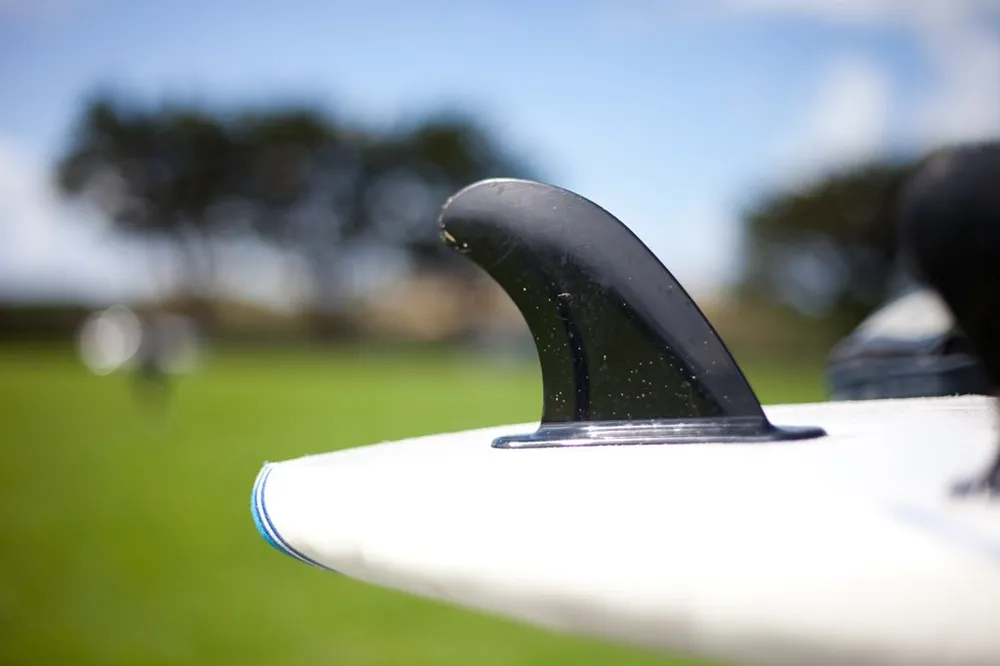
What a Traction Pad Does
A traction pad (also called a tail pad, deck grip or stomp pad) is a foam pad that sticks to the tail of a surfboard under your back foot. It does three things wax can't: it gives your foot a raised kick to push against in turns, it tells you where your foot is without looking down, and it never needs reapplying. Wax still covers the rest of the deck. The right pad comes down to piece count (to fit your tail width), kick height, the arch bar under your foot and the groove pattern you like.
Dakine Superlite
Best all-round tail pad
- 3-piece EVA pad with a 7mm center arch
- 25mm rolled-ramp tail kick
- 3M peel-and-stick adhesive
Dakine Team Mission
Best for a deep kick
- Deep wedge tail kick with beveled edges
- Two grid patterns plus cut-outs
- Wide, roughly 13 x 13 in footprint
Abahub 3 Piece
Best budget pad
- 3-piece EVA with a tail kicker
- Raised arch and diamond grooves
- Many color options
Surfboard Traction Pads Compared
Specs below are as listed by the maker or major retailers as of November 2026. Kick height and arch are the numbers that change how a pad feels most.
| Pad | Pieces | Kick | Arch | Grip Pattern | Best For |
|---|---|---|---|---|---|
| Dakine Superlite | 3 | 25mm rolled ramp | 7mm center arch | Grid with cut-outs | Everyday shortboards |
| Dakine Team Mission | Multi-piece (see listing) | Deep wedge (listed 25–30mm) | See listing | Two grid patterns | Wider tails, deep kick |
| Abahub 3 Piece | 3 | Kicker (reported about 25mm) | Raised arch | Diamond grooves | Budget, first pad |
| Creatures Griffin Colapinto | 3 | About 30mm, near vertical | 7mm teardrop arch | Stacked diamonds | Aggressive back-foot turns |
| FCS T-3 | 3 | Kicked tail | See listing | Directional grooves | Low-profile feel; Fish and Wide versions |
| Octopus Hobgood Hybrid | 2 | 25mm | None | Textured back, corduroy top | Surfers who dislike an arch |
| Stay Covered Decoy | 1 | 15mm contoured | Contoured | See listing | Simple one-piece fit |
| Octopus Front Deck | 3–4 (by version) | None (front pad) | None | Corduroy | Front foot on shortboards |
| RSPro Hexatraction | Clear hexagons | None | None | Hexagon tiles | A wax-free deck |
The Best Surfboard Traction Pads
1. Dakine Superlite
A classic three-piece tail pad molded from Dakine's lightweight EVA foam. Dakine lists a 7mm center arch, a 25mm rolled-ramp tail kick with beveled edges and its Posi-Traction grid pattern with cut-outs for board feel. It sticks with 3M peel-and-stick adhesive and covers about 12 x 12 inches, which suits most shortboard and step-up tails. Colorways change by season; the button goes to one current listing.
Good to Know
- Moderate arch and kick suit most surfers
- Three pieces adjust to tail width
- Grid pattern grips without being harsh on skin
Watch Out For
- Kick may feel low if you want a near-vertical wall
2. Dakine Team Mission
Dakine's wider pad, about 13 x 13 inches, with a deep wedge tail kick with beveled edges and both the Posi-Traction and Lineup grid patterns. It's EVA foam with 3M adhesive. Dakine's own page lists different piece counts, arch and kick heights (25mm and 30mm) in different places, so check the listing for the version you're buying.
Good to Know
- Large footprint for wider tails
- Deep kick for a positive back-foot stop
Watch Out For
- Maker specs are inconsistent; confirm before buying
3. Abahub 3 Piece
An affordable three-piece EVA pad with a tail kicker, a raised center arch and a diamond-groove surface, sold in many colors. Listings also describe it for skimboards and fish boards. It's a sensible first pad if you're not sure what kick and arch you like yet.
Good to Know
- Budget-friendly way to try a pad
- Diamond grooves drain water
Watch Out For
- Reported thickness and kick vary between listings
4. Creatures of Leisure Griffin Colapinto
A three-piece signature pad reported to have a tall, near-vertical kick (about 30mm), a 7mm teardrop arch and stacked diamond grooves that shrink toward the tail. It's built for surfers who stomp hard on the back foot in turns and airs. Buy from surf shops or Creatures stockists.
5. FCS T-3
FCS's everyday three-piece pad, described as thin with sanded surfaces and directional grooves that help lock your foot in place. FCS also sells T-3 versions shaped for fish, wide and mid-length tails, plus a T-3 Eco version, which makes it an easy pick when your tail isn't a standard shortboard shape. Check FCS or surf shops.
6. Octopus Hobgood Hybrid
A two-piece pad with no center arch, a 25mm kick, a textured back section and Octopus's softer corduroy grip on the front section. Good for surfers who find arch bars uncomfortable or want a flatter feel underfoot.
7. Stay Covered Decoy
A one-piece pad with a 15mm contoured kick, listed as easy to apply. One-piece pads are the simplest to line up, which helps on a first install, but they can't be spread to fit very wide tails.
8. Octopus Front Deck
A front-foot pad in Octopus's corduroy grip, sold in multi-piece versions (retailers list three- and four-piece models). It sits where your front foot lands, replacing wax in that spot. See the front pads section below for when it makes sense.
9. RSPro Hexatraction
A different approach: clear hexagon tiles that stick across the deck as a wax alternative. A kit is reported to include 18 full and four half hexagons, enough for about a 6-foot shortboard, plus an installation template. Longboards need more than one kit.
How Many Pieces? 1 to 5 Piece Pads
Piece count is mostly about fitting the pad to your tail and choosing how much your foot can feel the board.
| Pieces | Typical Layout | Suits |
|---|---|---|
| 1 | A single molded pad with kick and arch built in | Easy installs, standard tails |
| 2 | Split down the stringer, usually no arch | Narrow tails and a flatter feel |
| 3 | Center arch strip plus two side pieces with the kick | Most shortboards; the most common layout |
| 4–5 | Extra side or center sections that can be spaced out | Wide fish, swallow and wide-tail boards |
More pieces mean more ways to spread the pad, but also more edges that can lift if the install isn't careful. If your tail is a standard squash or round pin, a three-piece pad is the safe default.
Kick Height: Low vs High
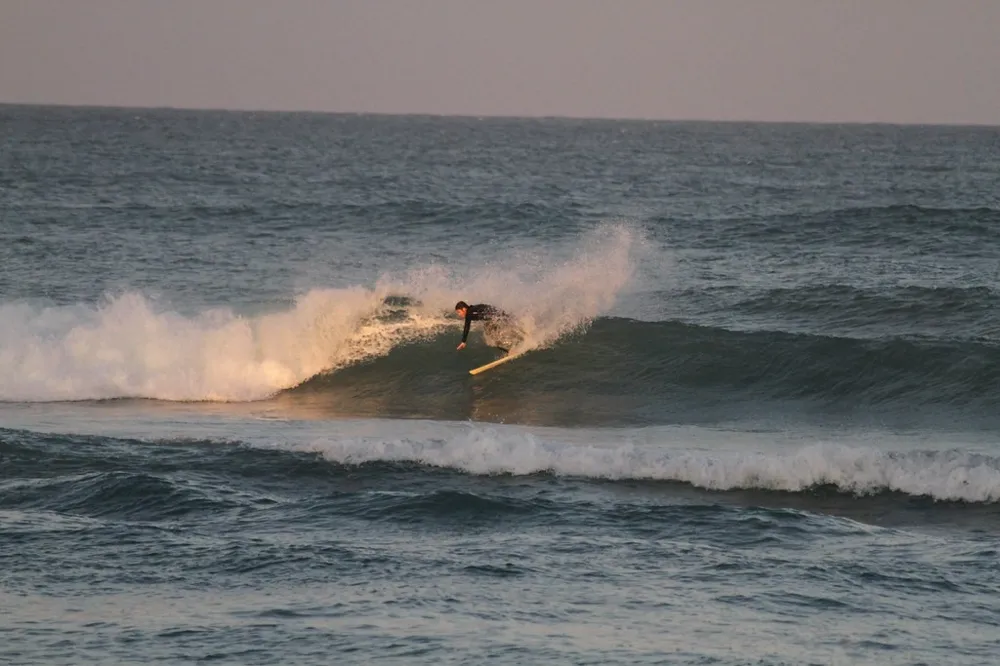
The kick (or kicktail) is the raised wedge at the back of the pad. It stops your back foot sliding off the tail and gives you something to push against when you snap a turn or pivot the board.
- Low kick (about 15mm or less, or flat): a subtle stop that's easy to step over. Suits relaxed surfing, fish and mid-lengths.
- Mid kick (about 25mm): the most common height. Enough to find by feel without catching your heel.
- High kick (about 30mm, near vertical): a firm wall for hard back-foot surfing and airs. It can feel intrusive if you move your feet a lot.
The kick's shape matters as much as its height. Rolled or ramped kicks feel smooth; wedge and "tabletop" kicks feel sharper and more defined.
Arch Bar: Raised, Flat or None
The arch bar is a raised strip along the center of the pad that sits under the arch of your back foot. It helps you feel that your foot is centered over the stringer without looking. Listed arch heights are often around 5–7mm, and shapes vary from straight bars to teardrops.
A raised arch suits most surfers. If you have flat feet, find arches uncomfortable or prefer to feel the board directly, choose a flat or no-arch pad, which is common on two-piece designs.
Groove Patterns and Materials
The surface pattern decides how the pad grips and how it feels on bare skin, knees and booties.
| Pattern | Feel |
|---|---|
| Diamond groove | The classic: sharp grip that drains water well |
| Grid or square | Even grip in every direction |
| Directional grooves | Grooves angled to stop the foot sliding back or sideways |
| Corduroy (ribbed) | Soft ribs that are gentler on knees and chest |
| Flat or sanded | Thin and low profile, with less bite |
Most pads are EVA foam, which is light, cushioned and waterproof. Some brands offer eco versions using recycled, plant-based or biodegradable materials (such as the FCS T-3 Eco and the Sympl range), and a few makers use cork. Look for 3M or similar marine-grade adhesive, since the bond matters more than any pattern.
Where to Put a Traction Pad on Shortboards, Fishes and Longboards
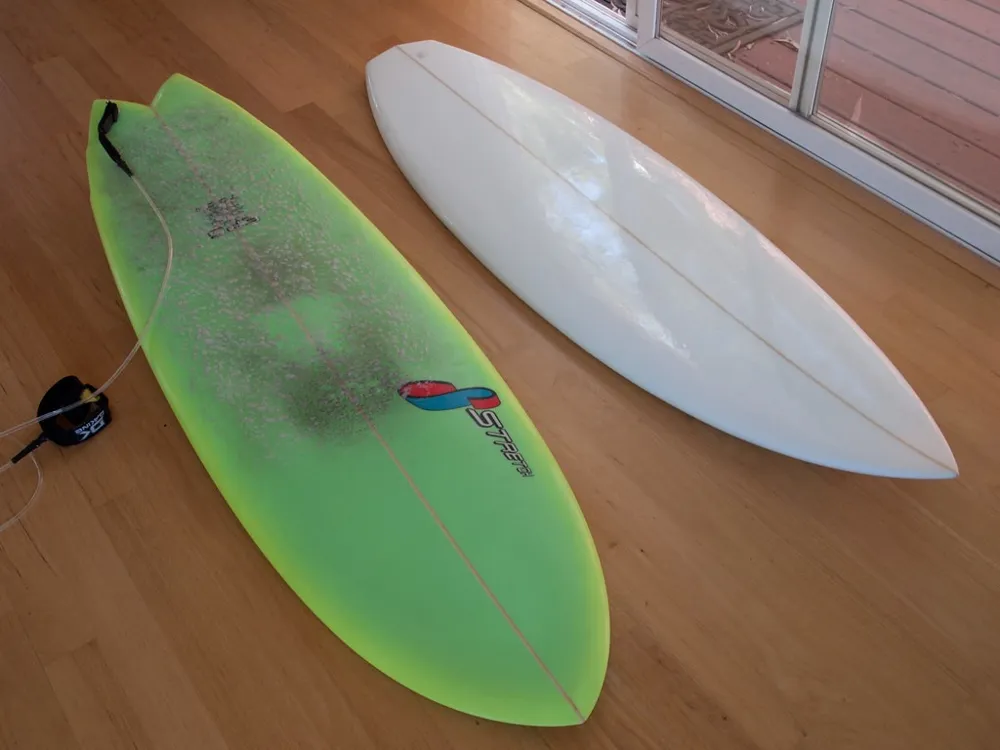
The usual rule: center the pad on the stringer and set the back edge of the kick just in front of the leash plug, so the plug sits behind the pad. That puts your back foot over the back fin or fins, where pressure turns the board best. Always stand on the board with the pad loosely in place before you peel anything; your stance should land naturally on the arch.
| Board | Pad Choice | Placement Notes |
|---|---|---|
| Shortboard / step-up | 3-piece with arch and 25–30mm kick | Kick just ahead of the leash plug, centered on the stringer |
| Fish / twin fin | Wide or fish-specific pad, or 4–5 pieces | Spread side pieces toward the rails to cover the wide tail; keep the kick clear of the swallow notch |
| Mid-length / funboard | Wide pad or wax only | Some add a pad if they surf off the tail; many just wax |
| Longboard | Usually wax only | Longboarders walk the board, so most skip a pad; a small tail pad is optional on performance longboards |
| Soft top | Usually none | Textured soft decks often grip without wax or a pad |
Fish tails are wider than shortboard tails, and pieces may need to angle out toward the rails. Check that the leash plug isn't covered and that the pad doesn't hang over a rail or into a swallow notch. For board shapes, see surfboard types; for fin layouts, see surfboard fins.
Front Pads and Full-Deck Grip
A front pad (front deck grip) sits where your front foot lands, roughly over the chest area when you lie down. It's thin and flat, with no kick, and is mainly used by shortboarders who want grip that won't wear off, especially for airs. Front pads have a trade-off: they're rougher on your chest when paddling than wax, and they fix your front-foot zone in place. Most surfers still wax the front of the deck and save the pad for the tail. Full-deck kits like clear hexagon tiles replace wax entirely and suit surfers who hate waxing.
How to Install a Traction Pad
- Strip all wax from the area. Soften it in the sun or with a hair dryer, scrape it off with a wax comb, then clean off residue (see surfboard wax for removal).
- Degrease and dry. Wipe the area clean as the pad maker directs and let the board dry completely. Any wax film, sand or moisture weakens the bond.
- Work at room temperature, out of the cold and away from direct, hot sun.
- Dry-fit the pad. Lay the pieces in place with the backing on, check the stringer and leash plug, then mark the edges lightly with masking tape or a soft pencil.
- Stick the center piece first, lined up with the stringer, pressing from the middle outward to push out air.
- Add the side pieces against your marks, keeping the gaps even.
- Press hard over every edge and corner. Some surfers stand on the pad or roll it with a firm roller.
- Let it cure. Many guides suggest about 24 hours before surfing; follow the instructions with your pad.
Don't install a pad over a ding or soft spot. Fix the board first; see surfboard ding repair.
How to Remove a Traction Pad
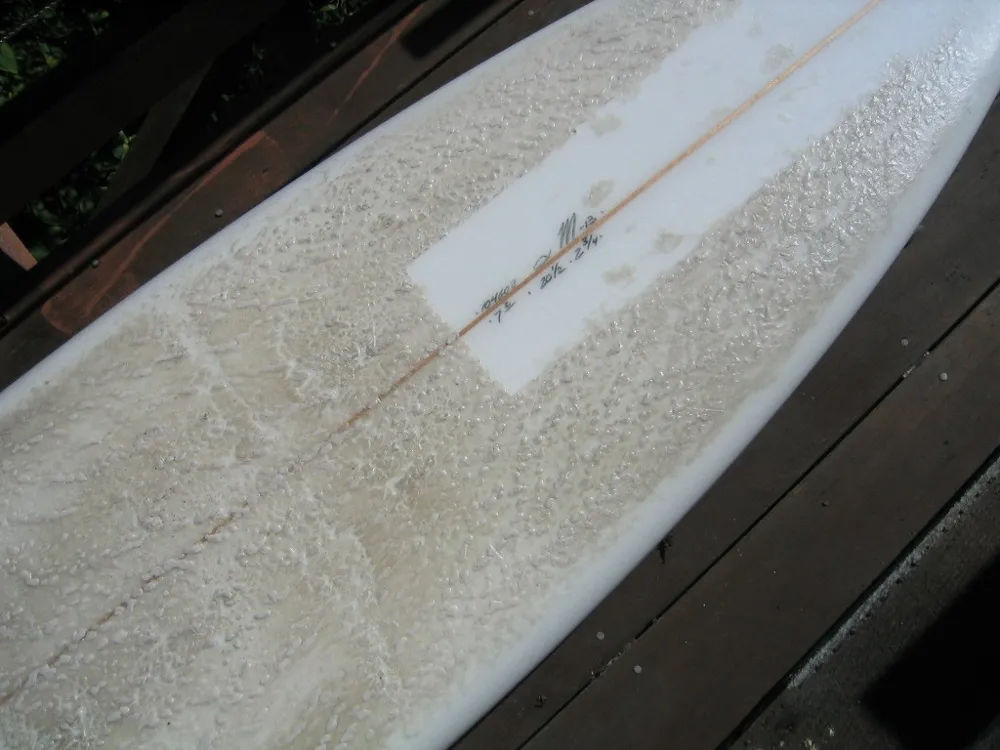
Old pads get compressed, torn or lift at the edges. To replace one:
- Warm the pad with a hair dryer on a low or medium setting, keeping it moving. Too much heat can damage the board or cause delamination.
- Lift a corner with a plastic scraper or old card. Avoid metal blades that can gouge the glass.
- Peel slowly at a low angle, warming again as you go.
- Clean the residue with an adhesive remover that is safe for your board's finish, then wash and dry the area. Test any solvent on a small spot first, especially on epoxy and soft-top boards.
Pads rarely survive removal in one piece, so plan on a new one for the new board.
Traction Pad vs Wax
| Traction Pad | Wax | |
|---|---|---|
| Kick to push against | Yes | No |
| Upkeep | None once fitted | Rub on before most sessions |
| Lifespan | Often lasts the life of the board | Needs stripping and redoing |
| Feel | Cushioned, fixed position | Thin, adjustable anywhere |
| Typical use | Back foot on shortboards and fish | Rest of the deck; whole deck on longboards |
For most shortboards the answer is both: a tail pad for the back foot and wax for the rest. The wax guide covers temperature grades and basecoat.
Skimboard, SUP and Bodyboard Traction
Traction pads aren't just for surfboards. Skimboarders use full-deck or multi-piece pads instead of wax on many boards; see skimboards and how to skimboard. Stand-up paddle boards usually come with a built-in deck pad, which matters if you paddle board with a dog. Bodyboards have their own textured decks; see bodyboards. Snowboarders use a similar idea for the back foot; see snowboard stomp pads.
Related Guides
Finish your setup with a surf leash, fins, wax and a board bag, or head back to the surfing hub. New to the sport? Start with how to surf.
Frequently Asked Questions
Where should a traction pad go on a surfboard?
Center it on the stringer, with the back edge of the kick just in front of the leash plug, so your back foot lands over the back fin or fins. Stand on the board with the pad loosely in place before you peel the backing.
Is a traction pad better than wax?
Neither is better; they do different jobs. A tail pad gives the back foot a kick to push against and never needs reapplying, while wax is still used on the rest of the deck. Many shortboarders use both, and most longboarders only wax.
How many pieces should a traction pad have?
Three-piece pads are the most common and fit most shortboards. One- and two-piece pads are simpler, while four- and five-piece pads can be spread out to cover wide fish and swallow tails.
How long should I wait to surf after putting on a traction pad?
Many makers and guides suggest waiting about 24 hours so the adhesive can bond fully. Check the instructions that come with your pad.
Can you reuse a traction pad?
Usually not. The adhesive is designed to bond once, and pads tend to stretch or tear when they are pulled off. Plan on a new pad when you move to a new board.
Do longboards need a traction pad?
Most longboarders don't use one, because they walk the board and wax the whole deck. A small tail pad is sometimes added to mid-lengths and performance longboards.
How do you remove a traction pad?
Warm the pad gently with a hair dryer, lift a corner with a plastic scraper and peel slowly at a low angle. Then clean any leftover adhesive with a remover that is safe for your board's finish.
Do soft-top surfboards need a traction pad?
Usually not. Many soft tops have a textured deck that grips on its own, and a pad may not stick well to some foam skins.