What Is Shallow Water Blackout? The Silent Breath-Hold Risk (2026)
Breath-holding underwater can switch off consciousness with little or no warning, even in a pool. Here's how it happens, who it hits and the rules that prevent it.
Shallow Water Blackout in Plain Terms
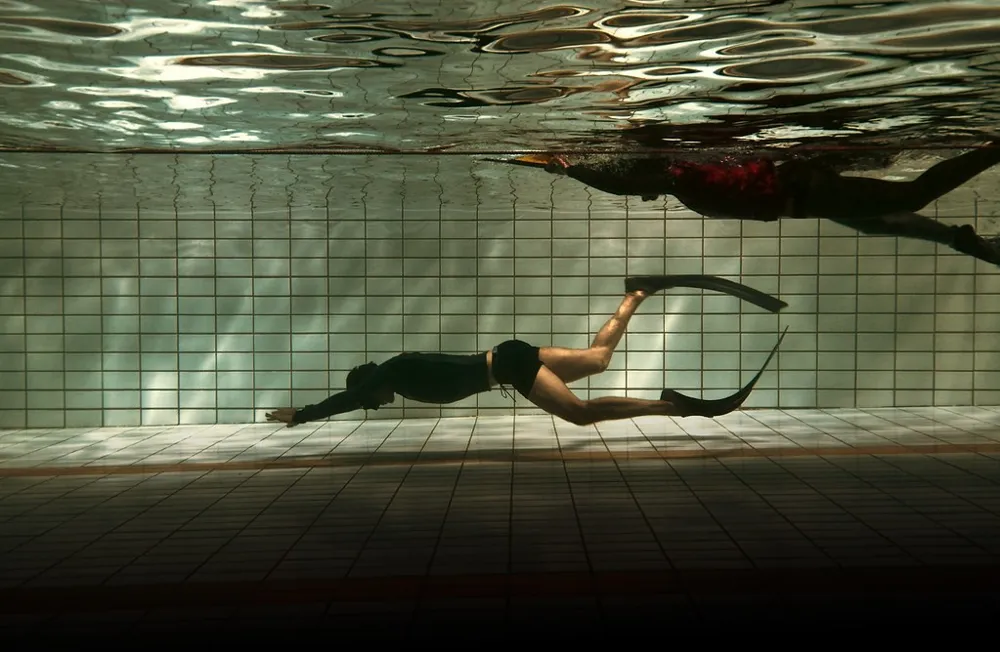
Shallow water blackout is a sudden loss of consciousness underwater caused by low oxygen in the brain during a breath-hold. It can happen to a freediver coming up from depth, a spearfisher on a reef, a swimmer doing underwater laps or a kid in a backyard pool playing "who can stay down longest." The person often feels fine right up until they pass out.
The loss of consciousness itself is not usually what kills. An unconscious person underwater can breathe in water and drown, often silently and without splashing or calling for help. That's why the prevention rules on this page all come back to the same idea: never hold your breath underwater unless someone trained is watching only you.
This guide is general safety information, not medical advice. Learn rescue and CPR in person, on a certified freediving course and a CPR class. If you have a heart, lung or seizure condition, talk to a doctor before any breath-hold activity.
Shallow, Deep or Hypoxic Blackout? The Terms Explained
The names are confusing because different groups use them in different ways. In a 2022 joint statement, the American Red Cross, YMCA of the USA and USA Swimming recommended the term hypoxic blackout for blackouts linked to hyperventilation and extended breath-holding, and called "shallow water blackout" misleading in those cases because water depth is not a factor. The same organizations describe voluntary hyperventilation before underwater swimming and extended breath-holding in the water as dangerous and potentially deadly.
| Term | How It's Usually Used |
|---|---|
| Hypoxic blackout | The broad term for losing consciousness from low oxygen during a breath-hold. Preferred by the Red Cross, YMCA and USA Swimming for pool and swim-training cases. |
| Shallow water blackout | Used two ways: for blackouts in shallow water, such as pools, usually after hyperventilating; and for blackouts in the shallow last stretch of an ascent from a deeper dive. The Red Cross uses it for the freediving ascent case. |
| Deep water blackout (ascent blackout) | A blackout on the way up from a deeper breath-hold dive, usually close to the surface. Some scuba courses use "deep" and "shallow" the other way round. |
| Surface blackout | A blackout just after surfacing, before the first fresh breaths reach the brain. |
| Samba or loss of motor control (LMC) | A milder low-oxygen episode: shaking, poor muscle control or confusion after surfacing. A warning that the diver went too far. |
Whatever the label, the cause and the cure are the same: too little oxygen reaching the brain, and a buddy who can keep the airway out of the water. This page uses "shallow water blackout" because it's the term most people search for.
Why It Happens: CO2, Oxygen and Pressure
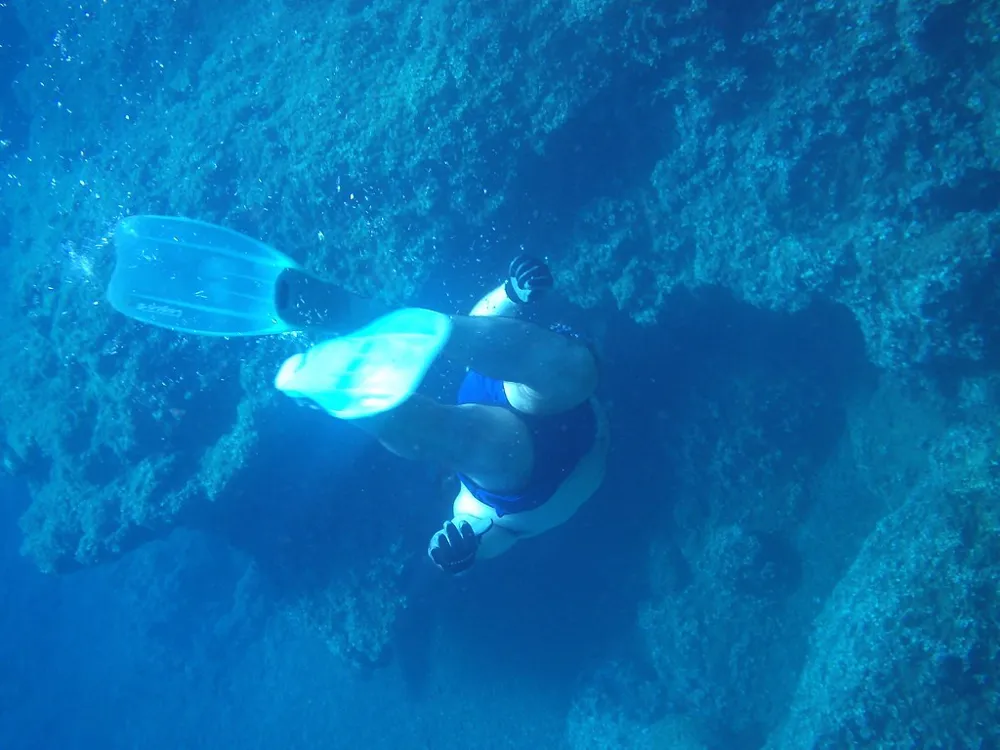
The Divers Alert Network (DAN) explains that the urge to breathe is driven mainly by the rise of carbon dioxide (CO2) in the blood, not by falling oxygen. Your body has no strong alarm for low oxygen. When oxygen drops far enough, the brain simply switches off. Three things push oxygen down faster or hide the warning:
- Time and effort. Every second of a breath-hold uses oxygen, and swimming, kicking or chasing fish uses it faster. DAN notes that physical activity during a breath-hold raises oxygen use.
- Hyperventilation. Over-breathing before a hold lowers CO2 and delays the urge to breathe, so oxygen can run out first. More on this below.
- Pressure change on ascent. Water pressure squeezes the lungs at depth, which keeps the oxygen in them at a higher pressure. On the way up the lungs expand, that pressure drops and oxygen delivery to the brain can fall below what's needed to stay conscious. A diver can feel fine at the bottom and black out near the top. DAN says blackouts are most likely in the final stage of the ascent or just after surfacing.
That last point is why freedivers and spearfishers are told the danger zone is the last few meters, and why the surface is not the finish line. For a closer look at the CO2 urge and safe dry training, see how to hold your breath longer.
Why Hyperventilation Is So Dangerous
Hyperventilation means breathing faster or deeper than your body needs. Divers sometimes call it "power breathing," "work-up breathing" or "cleansing breaths." DAN treats them as the same thing.
It feels like it helps because it really does delay the urge to breathe. But it does that by blowing off CO2, not by adding oxygen. DAN explains that extra breaths raise blood oxygen only slightly, while CO2 drops sharply. The result is a breath-hold where the warning signal comes late, or not at all, while oxygen keeps falling at the usual rate. DAN states that excessive hyperventilation on its own is enough to cause a blackout.
The rule: breathe normally and calmly before going under, then take one full breath. No rapid breathing, no series of big "power breaths." Swim instructors in Red Cross, YMCA and USA Swimming programs are taught to limit participants to a single inhalation before underwater activities.
Tingling fingers or light-headedness after over-breathing are signs you've lowered your CO2. Their absence does not mean you're safe.
Who Is at Risk?
Anyone who holds their breath underwater can black out. Fitness and swimming skill don't protect you, and can even raise the risk, because strong, motivated swimmers are better at ignoring the urge to breathe.
| Group | Why the Risk Is There |
|---|---|
| Competitive swimmers and lifeguard trainees | Underwater distance sets, "hypoxic" training and breath-hold challenges, sometimes with hyperventilation beforehand |
| Spearfishers | Hunting focus, exertion at depth and the urge to stay down "just a few more seconds" for a fish. See how to spearfish. |
| Freedivers | Deeper dives add the ascent risk; pushing for new depths or times raises it further. See how to freedive. |
| Snorkelers who dive down | Repeated duck dives with too little rest, often without a buddy watching. See snorkeling safety tips. |
| Kids and teens | Breath-hold games and "how far can you swim underwater" contests in pools |
What the CDC Data Shows
A CDC report (MMWR, 2015) looked at drownings linked to what it called dangerous underwater breath-holding behaviors in New York State from 1988 to 2011. It found:
- 16 cases, of which 4 were fatal and 12 nonfatal.
- Ages ranged from 7 to 47, with an average of 17. The four people who died were aged 17 to 22.
- 13 of the 16 were male.
- Half were advanced swimmers, and every intentional-hyperventilation case involved an advanced swimmer.
- 15 of the 16 incidents happened at pools, and in all but one of those a lifeguard was on duty.
- Static breath-holding, including breath-holding games, was the most common behavior.
The sample is small and covers one state, so it's not a national rate. It does show the pattern safety groups worry about: young, capable swimmers, in supervised pools, still being caught out. In response, New York City's Health Code has required pools since 2014 to post warnings that intentional hyperventilation and prolonged underwater swimming or breath-holding can be dangerous. Drowning more broadly is a major risk for young children: the American Heart Association, citing CDC data, notes that drowning is the leading cause of death for U.S. children aged 1 to 4.
Warning Signs: Often There Are None
The person blacking out usually gets no reliable warning. That's why the signs that matter are the ones a buddy can see. Watch for:
- A large release of bubbles from the mouth. DAN calls this the universal sign of a blackout.
- A swimmer who stops moving for no clear reason, starts to sink, or hangs limp at the surface or the bottom.
- Changes in technique, such as slower or jerky kicks, an odd body position or trembling hands on the way up.
- Blue or dark lips after surfacing.
- Loss of motor control (samba): shaking, head bobbing, a blank look, or trouble giving the OK signal or speaking after surfacing.
Anyone who has a samba or blackout often doesn't remember it. Lifeguards are trained to respond quickly to anyone motionless in the water, and you should too. Never assume a still swimmer is "just practicing."
Prevention Rules That Save Lives
The non-negotiables
- Never breath-hold in water alone. That includes pools, bathtubs, hot tubs, lakes and the ocean.
- One up, one down. One diver goes under while a trained buddy watches from the surface, close enough to reach them. Swap only after the diver has fully recovered.
- Get one-on-one supervision. DAN notes that a lifeguard's presence is not enough; you need someone whose only job is watching you.
- Never hyperventilate. Breathe normally, then take one full breath.
- Keep watching after surfacing. DAN advises close supervision for at least 30 seconds after a diver comes up.
- No breath-hold games or contests, and no underwater distance challenges in the pool.
Extra Rules for Freedivers and Spearfishers
- Take a course first. AIDA, PADI, SSI and Molchanovs courses teach buddy watching and blackout rescue, which you can't learn from an article. See how to freedive.
- Weight correctly. Too much weight makes the ascent harder and can sink an unconscious diver. Courses teach weighting so you float near the surface, and a quick-release belt lets you or your buddy drop weight fast.
- Turn early. Head up when you first feel the urge to breathe, not when you can't stand it.
- Do recovery breaths and rest. Breathe actively after every dive and rest at the surface; a common rule of thumb is at least two to three times your dive time, longer for deeper dives.
- Stay within both divers' limits. Your buddy has to be able to reach you at your deepest point.
- Use a float and dive flag in open water, and keep a pole spear or gun pointed away from your buddy.
Rules for Pools, Parents and Coaches
- Ban breath-hold games and "who can stay down longest" contests for kids.
- Coaches: the Red Cross, YMCA and USA Swimming ask coaches to teach proper breathing and to keep training within safety guidelines. Avoid unsupervised hypoxic or underwater distance sets.
- Lifeguards and pool staff: treat any motionless swimmer as an emergency.
- Talk about it. Many kids and teens have never heard that holding their breath too long can make them pass out.
What to Do If Someone Blacks Out
Rescue is a hands-on skill. These steps are an overview so you know what to expect, not a substitute for training.
- Get their airway out of the water. Bring them to the surface quickly and keep their face up and out of the water. In freediving courses, the rescuer also removes the diver's mask and drops their weights.
- Call for help. Shout for a lifeguard and have someone call 911 or the local emergency number right away.
- Try to wake them. Freediving courses teach a "blow, tap, talk" routine: blow across the eyes, tap the cheek and tell them to breathe. DAN notes that most agencies consider it the most effective way to restore consciousness. Many divers start breathing again on their own.
- If they're not breathing normally, start CPR once they're out of the water. The American Heart Association and American Academy of Pediatrics (2024) recommend CPR with rescue breaths and chest compressions for anyone in cardiac arrest after drowning, because the problem starts with a lack of oxygen. If you're untrained or unable to give breaths, do chest compressions only until help arrives. Rescue breathing in the water should only be done by rescuers trained in it.
- Use an AED if one is available, but don't let fetching it delay CPR.
- Get medical care. Anyone who lost consciousness or may have inhaled water should be checked by a medical professional, even if they seem fine.
After a blackout or samba, DAN's advice is to stop diving for the day and stay out of the water for at least 24 hours. A previous low-oxygen episode makes another more likely. Divers with questions after an incident can contact DAN. To learn CPR, look for an in-person class from the American Red Cross or American Heart Association.
Train Safely and Keep Learning
Breath-hold diving can be done safely. The divers who stay safe follow the same habits: no hyperventilation, no solo breath-holds, a trained buddy on every dive and a willingness to stop early.
- New to diving on a breath? Start with how to freedive for courses, buddy rules and technique.
- Want longer holds? How to hold your breath longer covers relaxation and dry training on land.
- Heading out to hunt? Read how to spearfish before you buy a spear.
- Choosing between tank and breath-hold diving? See scuba diving vs freediving.
Browse all our snorkeling and diving guides for gear and destinations.
Frequently Asked Questions
Can shallow water blackout happen in a swimming pool?
Yes. The American Red Cross, YMCA of the USA and USA Swimming stress that water depth is not a factor in hypoxic blackout. In a CDC review of New York State cases, 15 of 16 incidents happened at pools, and most of those had a lifeguard on duty.
Do you feel a warning before you black out?
Often not. The urge to breathe is driven mainly by rising carbon dioxide, not falling oxygen, so a person can lose consciousness from low oxygen before they feel a strong need to breathe, especially after hyperventilating.
Is it safe to take a few deep breaths before swimming underwater?
Fast or forced breathing is the main thing to avoid. Swim instructors in Red Cross, YMCA and USA Swimming programs are taught to limit swimmers to a single inhalation before underwater activities, and DAN advises normal, relaxed breathing up to the final breath.
When is a blackout most likely during a freedive?
DAN says it is most likely in the final stage of the ascent or just after surfacing, before fresh oxygen reaches the brain. That is why a buddy keeps watching for at least 30 seconds after the diver surfaces.
What should you do if someone blacks out underwater?
Get their face out of the water and call emergency services. If they are not breathing normally once out of the water, start CPR with rescue breaths and chest compressions if you are trained, or chest compressions only if you are not, and get medical care even if they recover.
Can you dive again after a blackout?
DAN advises ending the dive day after a blackout or loss of motor control and staying out of the water for at least 24 hours. Anyone who lost consciousness or inhaled water should be checked by a medical professional.
Is this medical advice?
No. This guide is general safety information. Take a certified freediving course and a CPR class for hands-on training, and talk to a doctor about any health questions.