How to Hold Your Breath Longer: A Safe Training Guide (2026)
Longer breath-holds come from relaxation, CO2 tolerance and good technique, not from gulping air. Here's how to train on land and why water practice needs a trained buddy.
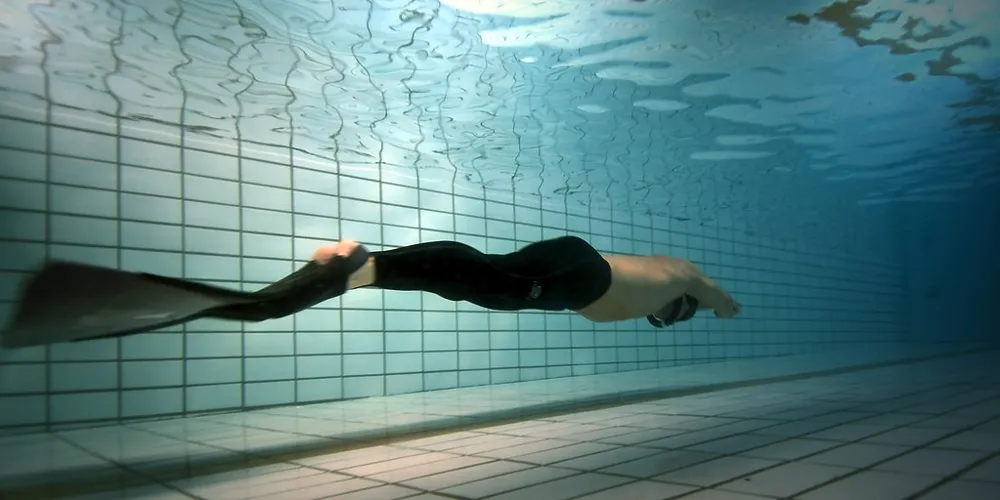
Why You Feel the Urge to Breathe: CO2 vs Oxygen
Most people think the burning feeling during a breath-hold means they're running out of air. It doesn't. The Divers Alert Network (DAN) explains that breathing is driven mainly by the rise of carbon dioxide (CO2) in your blood, not by falling oxygen. That's why the urge to breathe can feel strong long before your oxygen is actually low.
As a hold goes on, CO2 keeps rising and oxygen keeps falling. Many people then feel contractions: involuntary pulses of the diaphragm as your body tries to make you breathe. Contractions are uncomfortable but normal. The real limit is oxygen, and low oxygen gives very little warning. When it drops far enough, you lose consciousness.
That gives breath-hold training two goals:
- Tolerate CO2 calmly, so the urge to breathe doesn't push you into panic and wasted effort.
- Use less oxygen, by relaxing, staying still and breathing efficiently before the hold.
What training must never do is hide the CO2 warning. That's what hyperventilation does, and it's why it's so dangerous.
This guide is general information, not medical advice. Talk to a doctor before breath-hold training if you have a heart, lung or blood pressure condition, are pregnant, or have a history of fainting or seizures.
Safety First: Rules Before You Practice
Read this before you try any exercise on this page
- Never hyperventilate. Fast or forced deep breathing before a hold sharply lowers your CO2 but adds very little oxygen. DAN states that excessive hyperventilation alone is enough to cause a blackout, because you can run out of oxygen before you feel the urge to breathe.
- Never practice breath-holds in water alone. That includes pools, bathtubs, hot tubs and the ocean. The American Red Cross, YMCA of the USA and USA Swimming describe voluntary hyperventilation before underwater swimming and extended breath-holding in the water as dangerous and potentially deadly.
- Dry training happens on land only. Do breath-hold tables sitting or lying down somewhere safe, never in water, never standing and never while driving.
- In the water, one-on-one supervision is essential. DAN notes that a lifeguard's presence is not enough; you need a trained buddy whose only job is watching you, who keeps watching for at least 30 seconds after you surface.
- No breath-hold games or contests in the pool, and no "how far can you swim underwater" challenges.
A blackout in water is so dangerous because an unconscious person can breathe in water and drown, often silently. The organizations above now use the term hypoxic blackout for what many people call shallow water blackout. DAN notes that it's most likely in the final part of an ascent or just after surfacing, before fresh oxygen reaches the brain. A strong swimmer or fit athlete is not protected; training can actually make people more willing to push past their warning signs.
How Long Can the Average Person Hold Their Breath?
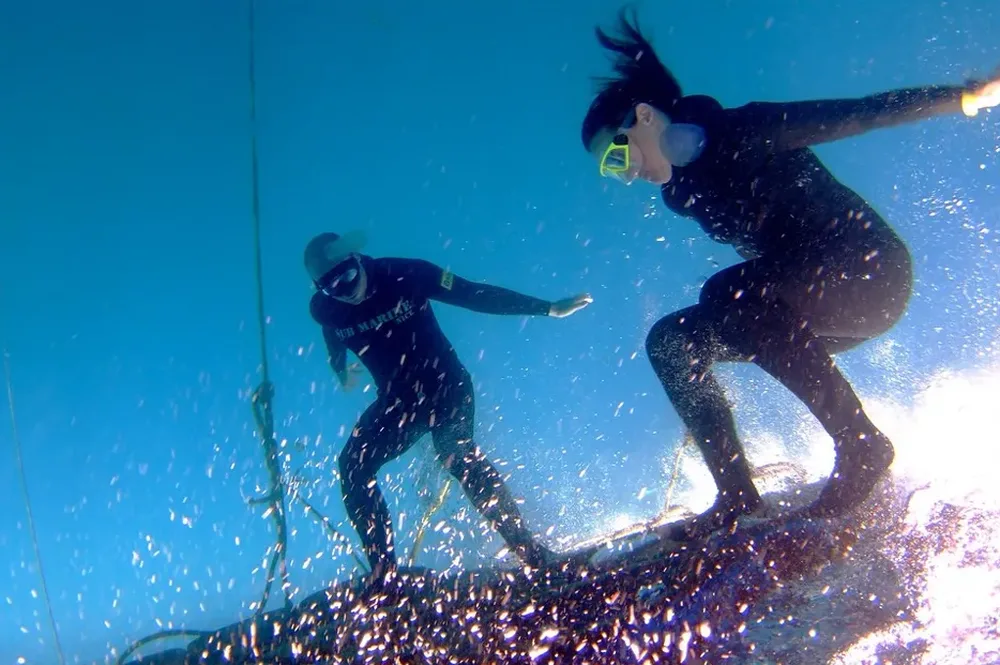
Healthline puts the typical range for most people at somewhere between about 30 seconds and 2 minutes. Where you fall depends on body size, fitness, how relaxed you are and how much practice you've had.
Freediving course targets give a realistic idea of what trained beginners work toward, always with an instructor watching:
| Course | Static Breath-Hold Target |
|---|---|
| PADI Freediver | 90 seconds |
| Molchanovs Wave 1 | 1:30 |
| AIDA 2 | 2:00 |
Course requirements change, so check the agency's site for current standards. Don't treat these as numbers to chase on your own; they're reached in supervised sessions with rescue-trained instructors. Our how to freedive guide compares the courses in more detail.
Your Body's Dive Response
Humans share a reflex with seals and dolphins called the diving reflex or mammalian dive response. According to physiology references, it's triggered mainly by wetting and cooling the face and nostrils while holding your breath. Holding your breath with your face out of the water causes only a mild version.
| Effect | What Happens |
|---|---|
| Slower heart rate (bradycardia) | Heart rate commonly drops by roughly 10 to 25 percent |
| Peripheral vasoconstriction | Blood flow to the skin, limbs and muscles is reduced |
| Blood shift | Blood is redirected toward the head and torso |
| Spleen contraction | The spleen releases extra red blood cells, raising the blood's oxygen-carrying capacity |
Together these effects help you use oxygen more slowly. It's one reason breath-holds often feel easier in the water than on land, and one reason dry times and wet times differ. It doesn't make water practice any safer: the dive response can't stop a blackout, so the buddy rules still apply every time.
Learn Diaphragmatic Breathing
Good breath-holds start with a relaxed, efficient breathing pattern. Diaphragmatic breathing, or belly breathing, uses the diaphragm to draw air low into the lungs instead of lifting the shoulders and upper chest.
- Lie on your back or sit comfortably with one hand on your belly and one on your chest.
- Inhale slowly through your nose and let your belly rise first. The hand on your chest should barely move.
- Exhale slowly and let your belly fall without forcing the air out.
- Practice for a few minutes a day until it feels natural.
Once belly breathing is easy, PADI's freediving instructors suggest two more drills: isolation drills, where you breathe for a couple of minutes using only the diaphragm or only the chest, and slow breathing, stretching each full breath cycle out while staying comfortable. These build control over each part of your breath, which you'll use for the final breath before a hold.
Relax First: The Breathe-Up

The breathe-up is the few minutes of calm breathing before a hold. Its goal is to relax and lower your heart rate, not to load up on air. DAN's guidance for breath-hold divers is to keep normal, relaxed breathing right up to the final breath.
- Breathe slowly from the belly. Many instructors teach exhales about twice as long as inhales, such as roughly 4 seconds in and 8 seconds out.
- Keep it quiet. If you can hear yourself breathing hard, you're drifting into hyperventilation. Slow down.
- Do a body scan. Work from your face and jaw down to your shoulders, hands and legs, releasing tension on each exhale.
- Give your mind one thing to do. Focus on a single sound, a count or a calm image. PADI's instructors point out that thinking about your breathing during a hold uses more oxygen.
Relaxation is a skill you can practice anywhere, and it pays off more than any trick. Stress and tension burn oxygen, and a racing mind makes contractions feel worse.
Take a Full Breath and Stay Still
When you're relaxed, exhale fully and passively, then take one complete breath: fill from the belly first, then let the ribs expand and finally the upper chest, without straining. Relax your shoulders and close your airway gently. Don't force extra air in; trying to cram in more than a comfortable full breath creates tension that costs you more than it gains.
During the hold:
- Stay as still as you can. Movement uses oxygen. On land, lie down or sit supported.
- Keep your face and hands relaxed. Clenching your jaw or fists is wasted effort.
- Let contractions come. Notice them without fighting them, and let them pass through a loose body.
- Stop well before your limit. Dizziness, tingling, tunnel vision or confusion mean stop and breathe normally right away.
After every hold, do a few recovery breaths: a quick, passive exhale followed by a full inhale, repeated several times until you feel normal.
CO2 and O2 Tables: Dry Training on Land
Breath-hold tables are timed schedules of holds and rests, borrowed from freediving training. Do them only on dry land, seated or lying down, with nothing around you that could hurt you if you felt faint.
CO2 Table
A CO2 table keeps the hold time the same and shortens the rest between holds. CO2 has less time to clear, so it builds up and trains you to stay calm with a growing urge to breathe. A common example in breath-hold guides uses a fixed hold with rests that start around 1:30 and drop by 15 seconds each round.
| Round | Rest (Breathing) | Hold |
|---|---|---|
| 1 | 1:30 | 1:00 |
| 2 | 1:15 | 1:00 |
| 3 | 1:00 | 1:00 |
| 4 | 0:45 | 1:00 |
| 5 | 0:30 | 1:00 |
| 6 | 0:15 | 1:00 |
O2 Table
An O2 table keeps the rest the same and lengthens the holds a little each round, so you spend more time at lower oxygen levels. Because it pushes toward low oxygen, it's the more demanding of the two.
| Round | Rest (Breathing) | Hold |
|---|---|---|
| 1 | 2:00 | 1:00 |
| 2 | 2:00 | 1:15 |
| 3 | 2:00 | 1:30 |
| 4 | 2:00 | 1:45 |
| 5 | 2:00 | 2:00 |
| 6 | 2:00 | 2:15 |
These numbers are only an illustration. Scale every hold to well within what's comfortable for you, not your maximum; if the 1:00 holds above are hard, shorten them. Ideally, have a freediving instructor set your times.
How Often to Train
- Start gently. Many instructors suggest one or two table sessions a week, not on the same day as other hard training. Some guides suggest more frequent sessions; if you do more, build up slowly.
- Don't do a CO2 and an O2 table back to back. Leave several hours between them, or use separate days.
- Beginners usually start with CO2 tables, since calm CO2 tolerance is the first hurdle for most people.
- Stop for the day if you feel lightheaded, get a headache or feel unwell.
Build Fitness and Lung Health

You don't need to be an elite athlete, but general fitness helps. Regular cardio such as swimming laps (breathing normally), running or cycling supports heart and lung fitness and helps you recover between efforts. Flexibility in the chest, shoulders and ribs, from yoga or stretching, makes a full, relaxed breath easier.
- Don't smoke or vape; both harm lung health.
- Sleep and recover. Tired, stressed bodies use more oxygen and relax less.
- Avoid a big meal right before practice; digestion makes it harder to relax.
- Stay warm. Being cold makes it much harder to relax.
If you snorkel, a relaxed surface breathing pattern carries over well; see our snorkeling safety tips for in-water basics.
Take a Freediving Course
The safest way to hold your breath longer in the water is a certified freediving course. Agencies such as AIDA, PADI (PADI Freediver), SSI and Molchanovs teach breathe-ups, static breath-holds, finning and equalizing, and, most importantly, buddy supervision and rescue. Pool sessions are run with an instructor watching every hold.
Expect a medical questionnaire before you start; some answers need a doctor's sign-off. For course levels, ages and targets, see how to freedive. If you're deciding between a breath-hold course and scuba, scuba diving vs freediving lays out the differences, and spearfishers should read how to spearfish for the hunting-specific risks.
Common Mistakes
- Hyperventilating or taking several big "power breaths" before a hold.
- Practicing in water alone, including in a bathtub or with a friend who isn't watching closely.
- Playing breath-hold games or underwater distance contests.
- Chasing a number instead of comfort, and going to your maximum every session.
- Fighting contractions with tension instead of relaxing through them.
- Forcing extra air in on the final breath.
- Moving or talking during the hold, which uses oxygen.
- Skipping recovery breaths after a hold.
- Ignoring warning signs like dizziness, tingling or confusion.
Breath-Hold World Records
Records show what trained specialists can do under strict supervision; they aren't targets. As of November 2026:
| Record | Holder | Time | Notes |
|---|---|---|---|
| Guinness: longest breath held voluntarily underwater (male) | Vitomir Maričić (Croatia) | 29:03 | 14 June 2025; pure oxygen breathed beforehand; monitored by a support team including AIDA judges |
| Previous Guinness record | Budimir Šobat (Croatia) | 24:37.36 | Set in 2021 |
| AIDA static apnea, men | Stéphane Mifsud | 11:35 | 2009; no oxygen pre-breathing (per AIDA records as listed by Wikipedia) |
| AIDA static apnea, women | Heike Schwerdtner | Over 9:30 | Set at the 2026 AIDA Pool World Championships in Budapest, per Molchanovs; AIDA ratified her earlier 9:22 in 2025. Check AIDA for the current figure. No oxygen pre-breathing |
The oxygen-assisted Guinness category allows breathing pure oxygen before the hold, so it isn't comparable to competition static apnea, and it isn't part of formal freediving competitions. Records change, so check Guinness World Records and AIDA International for the latest. For more, see diving world records.
Ready for more? Learn the basics of diving on a breath in how to freedive, or browse all our snorkeling and diving guides.
Frequently Asked Questions
How long can the average person hold their breath?
Most people can hold their breath for somewhere between about 30 seconds and 2 minutes. Freediving course targets give a sense of trained beginner levels, such as 90 seconds for PADI Freediver and 2 minutes for AIDA 2, done with an instructor watching.
Does hyperventilating help you hold your breath longer?
It may delay the urge to breathe, but that is exactly why it is dangerous. Fast, deep breathing lowers carbon dioxide without adding much oxygen, so you can run out of oxygen and black out before you feel the need to breathe.
Is it safe to practice holding your breath in a pool or bathtub?
Not on your own. The American Red Cross, YMCA and USA Swimming call extended breath-holding in the water dangerous and potentially deadly. Do dry tables on land, and practice in water only with a trained buddy or on a supervised course.
How long does it take to improve your breath-hold?
It varies from person to person. Many people notice changes within a few weeks of regular relaxation and dry table practice, but progress should be gradual, and numbers are less important than staying safe and relaxed.
What is a CO2 table?
A CO2 table is a set of land-based breath-holds where the hold time stays the same and the rest between holds gets shorter. It trains you to stay calm as carbon dioxide builds up.
What is the longest anyone has held their breath?
The Guinness World Records record is 29 minutes 3 seconds by Vitomir Maričić in 2025, after breathing pure oxygen beforehand. The AIDA static apnea record without oxygen is 11 minutes 35 seconds by Stéphane Mifsud (2009), as of November 2026.
Is this medical advice?
No. This guide is general information. If you have a heart, lung or blood pressure condition, are pregnant, or have a history of fainting or seizures, talk to a doctor before any breath-hold training.