Best Whitewater Kayaks and Essential River Gear (2026)
Whitewater boats are specialized, and most are sold through paddling shops. Here's how to choose a type, an inflatable option and the gear you need.
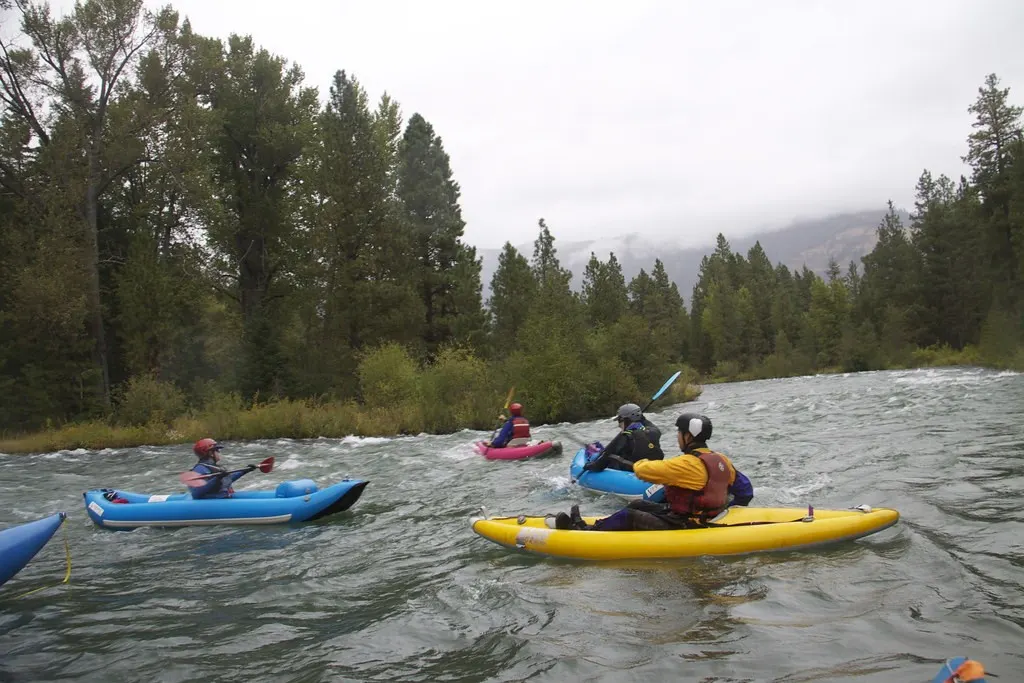
Whitewater Kayak Types
| Type | Shape | Best For |
|---|---|---|
| River runner | Balanced length and volume | All-round river paddling, learning |
| Creek boat | High volume, rounded | Steep rivers, drops; forgiving |
| Playboat | Short, low volume | Surfing waves and tricks |
| Crossover | Longer with a skeg | Mixed flatwater and easy rapids |
| Inflatable (IK) | Inflatable tubes | Portable river trips |
River Classes Explained
Rapids are rated on the International Scale of River Difficulty. Classes can change with water level, so check current guidebooks and local paddlers.
| Class | What It Means |
|---|---|
| I | Easy: moving water, small waves, few obstructions |
| II | Novice: straightforward rapids with clear channels |
| III | Intermediate: irregular waves, maneuvering needed |
| IV | Advanced: powerful, precise boat handling required |
| V | Expert: long, violent rapids with serious risk |
| VI | Extreme: rarely run, very dangerous |
Most beginners learn on Class I and II water with an instructor before moving up.
Design Terms to Know
| Term | What It Affects |
|---|---|
| Volume | More volume floats higher and resurfaces faster after drops |
| Rocker | More rocker turns easily and rides over waves; less tracks straighter |
| Chines | Hard chines carve and surf; soft chines are more forgiving |
| Planing hull | Flat bottom that spins and surfs; common on river runners and playboats |
| Displacement hull | Rounder bottom that is faster and tracks better; common on longer boats |
Sizing a Whitewater Kayak
Most whitewater models come in several sizes (often small, medium and large), each with a recommended paddler weight range. Check the maker's chart, and sit in the boat if you can: your knees and thighs should brace snugly under the deck, and your feet should reach the foot pegs or bulkhead. Adjustable outfitting (seat, hip pads, thigh braces) fine-tunes the fit.
Where to Buy
Most hard-shell whitewater kayaks (from brands like Dagger, Pyranha, Jackson and Wavesport) are sold through paddling shops and outfitters rather than Amazon. Shops can fit you to the right size, and demo days let you try boats. Below are an inflatable option and the core gear you'll need.
NRS Star Viper
Best inflatable river kayak
- Top-deck profile makes rolling possible
- Secure, comfortable cockpit
- D-rings and bow and stern handles
Dagger Inertia Spray Skirt
Best whitewater skirt
- Kevlar-reinforced neoprene
- Heavy-duty rubber rand
- Multiple waist and cockpit sizes
Sweet Protection Strutter
Best paddling helmet
- Low-volume kayak helmet
- Carbon reinforced
- Occigrip fit and EVA liner
Inflatable Option
1. NRS Star Viper
NRS's Star Viper is an inflatable kayak with a top-deck profile that makes rolling possible, a secure cockpit, D-rings for rigging and bow and stern handles.
Good to Know
- Portable
- Designed for rolling
Watch Out For
- Check the size options on the listing
Spray Skirts
2. Dagger Inertia Spray Skirt
Kevlar-reinforced neoprene with a heavy-duty rubber rand that grips the cockpit rim more tightly than shock cord, a choice for advanced paddlers. Comes in several waist and cockpit sizes.
Check Price on Amazon3. NRS Drylander Sprayskirt
A shock-cord spray skirt from NRS. Check the listing for sizing.
Check Price on AmazonHelmet
4. Sweet Protection Strutter
A low-volume, carbon-reinforced paddling helmet with an Occigrip fit system and EVA liner.
Check Price on AmazonWhitewater Gear Checklist
| Gear | Why |
|---|---|
| PFD | Worn every time; see kayak PFDs |
| Helmet | Protects against rocks after a capsize |
| Spray skirt | Keeps water out so you can roll |
| Whitewater paddle | Usually shorter and sturdier than touring paddles |
| Drysuit or wetsuit | Cold water is a major risk; see wetsuit vs drysuit |
| Throw bag and whistle | Basic rescue and signaling |
| River shoes | For scouting and walking out |
New or Used?
Used whitewater boats are common, since paddlers change boats as their skills grow. Check for cracks, deep gouges, a warped or dented hull, and that the seat, foot pegs and thigh braces are intact and adjustable. Older designs can still work well for learning.
Safety First
- Take a whitewater course and learn self-rescue and rolling.
- Paddle with experienced people.
- Wear a helmet and a PFD every time.
- Check river levels and conditions.
More: how to paddle a kayak, kayak paddles and drysuits.
Frequently Asked Questions
What type of whitewater kayak should a beginner get?
Many beginners start in a river runner or a forgiving creek boat, ideally after a lesson. A paddling shop or club can help with fit.
Where can I buy a whitewater kayak?
Most hard-shell whitewater kayaks from brands like Dagger, Pyranha, Jackson and Wavesport are sold through paddling shops and outfitters. Demo days help you try boats.
Can you take an inflatable kayak in whitewater?
Some inflatables are designed for whitewater. Check the boat's intended use and your skill level.
What gear do I need for whitewater kayaking?
A helmet, a PFD, a spray skirt, a paddle and clothing suited to the water temperature. Take a course and paddle with experienced people.
Do I need to learn to roll?
A roll is a key whitewater skill. Learn it with instruction in a pool or calm water.
What class of rapids should beginners paddle?
Class I and II, ideally with an instructor or experienced group, before progressing to Class III.
What size whitewater kayak do I need?
Use the maker's paddler weight range for each size, then check that your knees and feet fit snugly in the cockpit.