Types of Scuba Diving: From Reefs and Wrecks to Ice and Caves (2026)
Once you're certified, scuba opens up into a dozen or more styles of diving. Here's what each one involves, which training course covers it and the main risk to respect before you try it.
Types of Scuba Diving at a Glance
"Scuba diving" isn't one activity. After your first certification, you can dive from boats or beaches, over reefs or inside wrecks, by day or at night, in tropical seas or under a sheet of lake ice. Each style has its own skills, gear and hazards, and most have a matching specialty course from training agencies such as PADI and SSI.
New to the sport? Start with what scuba diving is and how to get scuba certified. This guide picks up where those leave off.
| Type | What It Means | Training to Look For | Main Risk |
|---|---|---|---|
| Boat diving | Entering from a dive boat | Open Water; PADI Boat Diver | Getting separated from the boat; seasickness |
| Shore diving | Walking in from a beach, dock or rocks | Open Water; local briefing | Surf, entries and exits, navigation |
| Reef diving | Exploring coral or rocky reefs | Open Water | Buoyancy errors that damage reef or cause fast ascents |
| Wreck diving | Exploring sunken ships, planes and other structures | PADI Wreck Diver; SSI Wreck Diving | Sharp metal, entanglement, silt; overhead if you go inside |
| Drift diving | Riding a current along a reef or wall | PADI Drift Diver; SSI Waves, Tides and Currents | Separation from group and boat |
| Night diving | Diving after dark with lights | PADI Night Diver; SSI Night Diving and Limited Visibility | Disorientation and lost buddies |
| Deep diving | Going below 18 m (60 ft), up to 40 m (130 ft) | Advanced Open Water; Deep Diver | Narcosis, fast gas use, short no-stop times |
| Muck diving | Hunting small animals on sand and silt | Open Water; buoyancy training helps | Silt-outs; touching venomous animals |
| Ice diving | Diving under ice through a cut hole | PADI Ice Diver; SSI Ice Diving | Cold and an ice ceiling; losing the line or the hole |
| Altitude diving | Diving in lakes above 300 m (1,000 ft) | PADI Altitude Diver | Decompression errors if you plan as if at sea level |
| Cavern and cave diving | Diving into flooded caves | Cavern course, then cave courses | No direct ascent; silt, darkness and gas |
| Technical diving | Beyond recreational limits, with planned stops | TecRec, TDI, IANTD, GUE, SSI Extended Range | Decompression, gas switching, equipment failure |
| Sidemount diving | Cylinders worn at the sides | PADI Sidemount Rec Diver | Equipment handling and gas management |
| Rebreather diving | Recycling exhaled gas | PADI Rebreather Diver; SSI CCR Diving | Gas mix problems you can't feel |
Course names come from PADI's and SSI's own course pages, checked November 2026. Other agencies, such as NAUI, run similar programs under their own names.
How Scuba Diving Types Are Grouped
Divers sort the sport in a few overlapping ways, so the same dive can belong to more than one "type":
- By purpose: recreational (for fun), technical (beyond recreational limits) and professional (commercial, scientific, public safety and military). Our what is scuba diving guide explains that split.
- By how you get in: boat or shore.
- By the site: reef, wreck, kelp, freshwater lake, quarry, river, cavern or cave.
- By conditions: drift, night, deep, ice or altitude.
- By equipment: open circuit, sidemount or rebreather.
Recreational diving stays within no-decompression limits and a maximum depth of 40 meters (130 feet), where you can always make a direct ascent to the surface. Anything that removes that direct ascent, whether depth that requires decompression stops or a ceiling of rock, steel or ice, raises the training bar. The PADI Advanced Open Water course is the usual next step after your first card: it includes two core specialty dives plus three adventure dives you choose, so it's a good way to sample several of the types below.
Boat Diving and Shore Diving
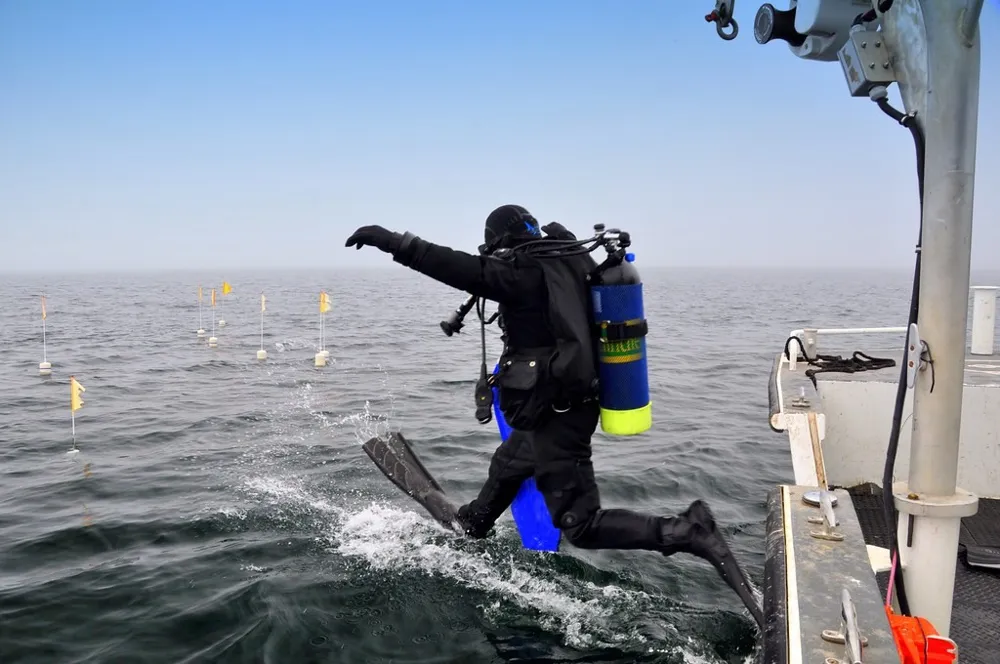
Every dive starts with an entry, and the two basic options shape the whole day.
Boat Diving
Boats reach offshore reefs, walls and wrecks that you can't swim to. Most entries are a giant stride off the stern or a back roll from a small boat, and you climb back up a ladder at the end. Boat dives usually come with a briefing, a guide and a crew watching the surface, which makes them the standard format for vacation diving and liveaboards.
Training: an Open Water certification is enough for guided boat dives. PADI's Boat Diver specialty covers boat etiquette, entries, exits and terminology. Risk notes: surfacing away from the boat is the classic problem, so carry a surface marker buoy and a whistle or other signal. Plan for seasickness, and stay clear of the propeller area.
Shore Diving
Shore divers walk in from a beach, step off a dock or climb down rocks. It gives you freedom to dive on your own schedule with a buddy, and many lakes, quarries and coastal sites can only be reached this way.
Training: no specialty course is required, but get a local briefing first. Risk notes: surf, slippery rocks and currents near shore make entries and exits the hardest part. You also navigate yourself, so a compass and a clear plan for finding the exit matter. Check local rules, since some sites need permits or tags.
Reef Diving
Reef diving is what most people picture: swimming over coral or rocky reefs full of fish, turtles and invertebrates. Tropical coral reefs are the classic vacation dive, and cooler coasts have rocky reefs and kelp forests, like those in our guide to the best scuba diving in California.
Training: Open Water is enough for most reef dives within its 18-meter (60-foot) limit. Buoyancy is the skill that matters most, and PADI's Peak Performance Buoyancy specialty targets it. Risk notes: reef dives are among the gentlest, but poor buoyancy can damage coral, stir up the bottom or trigger an uncontrolled ascent. Don't touch or stand on coral. For trip ideas, see the best scuba diving destinations for beginners.
Wreck Diving
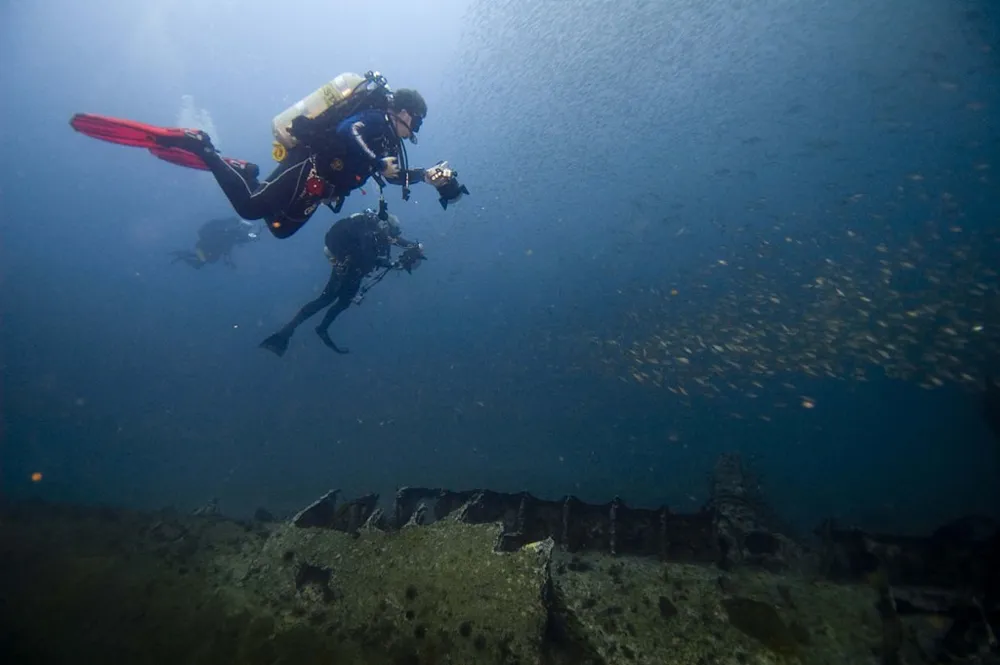
Wreck divers explore sunken ships, aircraft and other structures. Some wrecks are historic; others were sunk on purpose as artificial reefs and dive attractions. Wrecks attract marine life, and many divers come for the history as much as the fish. SSI lists Truk (Chuuk) Lagoon, Scapa Flow in Scotland and Malta among well-known wreck destinations.
Outside vs Inside a Wreck
Swimming around and over a wreck is ordinary open water diving. Going inside it, called penetration, puts steel overhead and turns it into an overhead environment much like a cave. Tight spaces, silt, collapsing structure and confusing passages can trap divers who don't have the training, a guideline and redundant gas.
Wreck Diving Training
- PADI Wreck Diver: minimum age 15, PADI Adventure Diver or a qualifying certification, and four dives over at least two days. You learn to survey a wreck and use lines and reels, and the dives may use penetration lines.
- SSI Wreck Diving: covers non-penetration wreck dives to 30 meters (98 feet), plus buoyancy, navigation and reels.
- Technical wreck courses from technical agencies cover deeper and full-penetration wreck diving.
Risk notes: sharp metal, fishing line and nets, and silt are the common hazards even outside the hull. Many wrecks are also deep, so depth limits and gas planning apply. Leave artifacts in place: historic wrecks are often legally protected, and some are war graves.
Great Lakes and Lake Superior Wrecks
The Great Lakes are one of North America's best-known wreck diving regions. DAN's Alert Diver says thousands of shipwrecks lie on the bottom, with visibility at some sites that can exceed 100 feet (30 meters). Cold fresh water is the catch: water temperatures average about 39°F (3.9°C) at depth, a drysuit is a must, and DAN names June through September as the best months to dive.
Protected areas include NOAA's Thunder Bay National Marine Sanctuary in Lake Huron, Michigan's state underwater preserves and the wrecks of Isle Royale National Park in Lake Superior, which has its own scuba rules from the National Park Service. Some famous wrecks are off limits. The Edmund Fitzgerald, in more than 530 feet (162 meters) of water in Lake Superior, lies in Canadian waters and, according to DAN, is a restricted site under the Ontario Heritage Act where diving is not permitted. Check site rules and permits before you go (last checked November 2026).
Drift Diving
On a drift dive, you let a current carry you along a reef, wall or channel instead of swimming against it. It can feel like flying, and it covers far more ground than a normal dive. SSI points to Cozumel, the Maldives and Indonesia as popular drift destinations.
A boat usually drops the group up-current and follows the bubbles or a surface marker, then picks everyone up where they surface. Divers descend together, stay close, and avoid grabbing the reef to slow down.
Training: PADI Drift Diver or SSI Waves, Tides and Currents. Strong buoyancy control and comfort with fast descents help. Risk notes: the big danger is separation, either underwater from the group or at the surface from the boat. Carry and know how to deploy a surface marker buoy (SMB) and a signaling device, follow the guide's plan, and don't attempt strong currents beyond your experience.
Night Diving
A familiar reef looks completely different after dark. Many animals that hide by day come out to hunt, corals extend their polyps, and some areas show bioluminescence when you cover your light. SSI mentions Bonaire, Hawaii and the Red Sea as popular night diving spots.
Night divers carry a primary light and a backup, plus a marker light so the group and boat can see them. Teams agree on light signals before the dive and usually dive sites they've seen in daylight.
Training: PADI Night Diver or SSI Night Diving and Limited Visibility. Guided night dives are also offered to Open Water divers in many places. Risk notes: disorientation, losing a buddy and navigation errors. Never shine your light in another diver's eyes, and keep an eye on depth and gas, which are easy to forget in the dark. Our dive lights guide covers primary and backup lights.
Deep Diving
Recreational divers call anything below 18 meters (60 feet) "deep," up to the recreational limit of 40 meters (130 feet). Deep dives reach walls, pinnacles and wrecks you can't see from the shallows.
Training: Advanced Open Water raises your limit to 30 meters (100 feet), and a Deep Diver specialty (PADI Deep Diver, SSI Deep Diving or NAUI's deep course) trains you to 40 meters. Risk notes: nitrogen narcosis, faster gas use, much shorter no-decompression limits and a higher risk of decompression sickness. We cover the physics and the limits by certification in how deep can you scuba dive, so we won't repeat them here.
Muck Diving
Muck diving swaps colorful reefs for sandy and silty bottoms. According to PADI, the name comes from the sediment that covers many of these sites. Divers move slowly and search the sand and debris for camouflaged critters such as frogfish, ghost pipefish, blue-ringed octopus, nudibranchs, mantis shrimp and stonefish, which makes it a favorite with macro photographers.
Indonesia's Lembeh Strait, nicknamed the "Critter Capital of the World," is the best-known muck destination. PADI also lists Anilao and Dumaguete in the Philippines, Bali's coasts, Ambon Bay and Milne Bay in Papua New Guinea, plus muck-style sites in California, the Caribbean, Hawaii and Norway.
Training: no dedicated course is required; PADI suggests its Peak Performance Buoyancy specialty, and photographers often add Digital Underwater Photographer. Risk notes: poor buoyancy stirs up silt and ruins visibility, and several muck animals are venomous (stonefish, scorpionfish and blue-ringed octopus among them). PADI recommends frog-style kicks with fins raised and looking closely before you put a hand or fin anywhere.
Ice Diving
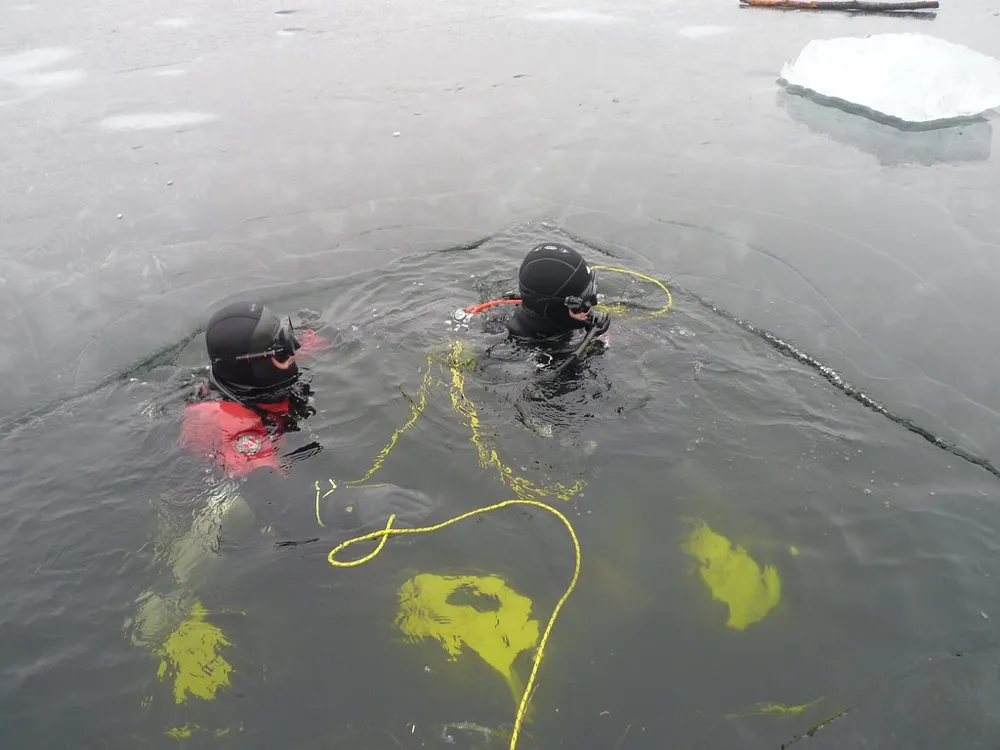
Ice divers enter through a hole cut in a frozen lake and dive beneath the ice, where the light filtering through can be striking. SSI names Canada, Scandinavia and alpine lakes as ice diving regions and notes water temperatures near 0°C (32°F).
It's a team activity. Each diver is attached to a safety line run by a line tender on the surface, communicates with line signals, and a ready safety diver stands by. The hole is the only exit, so the line is what gets you back to it.
Training: PADI Ice Diver requires Advanced Open Water certification and a minimum age of 18, and includes three closely supervised ice dives covering support crew roles, line tending and signals, site preparation, cold-water effects and emergencies. PADI strongly advises a drysuit, so many divers take Dry Suit Diver first; SSI offers Ice Diving with Dry Suit Diving as useful preparation. Risk notes: the ice is an overhead with a single exit, and near-freezing water brings a real risk of hypothermia and cold-related equipment problems, which is why the course spends time on handling equipment failures. See our drysuit guide and wetsuit vs drysuit for the exposure-protection side.
Altitude Diving and Freshwater Diving
PADI defines altitude diving as diving at a site more than 300 meters (1,000 feet) above sea level, such as a mountain lake. The air pressure at the surface is lower there, which changes how dive computers and tables calculate no-decompression limits and safety stops.
Training: PADI Altitude Diver has a minimum age of 10, requires (Junior) Open Water certification and includes two dives. You learn to set a dive computer for altitude or work out altitude profiles with PADI's tables. Risk notes: planning a mountain-lake dive as if it were at sea level can underestimate decompression stress. Driving over high passes or flying after diving also adds altitude exposure, which is covered in flying after scuba diving.
Lakes, quarries, springs and rivers at any altitude are also popular, especially for training and local diving. Expect colder water and thermoclines, variable visibility and, in rivers, strong currents that call for drift-diving skills.
Cavern and Cave Diving
A cavern is the part of a cave where daylight from the entrance is still visible; past that point, in total darkness, you're cave diving. Both are overhead environments with no direct route to the surface, and Florida's springs and Mexico's cenotes are the best-known destinations.
Training: it is staged: a cavern course first (PADI's Cavern Diver needs Advanced Open Water and a minimum age of 18), then intro or basic cave, then full cave through agencies such as NSS-CDS, NACD, IANTD, TDI and GUE. In Mexico, certified open water divers can join guided cavern tours within the daylight zone. Risk notes: cave diving has a long fatality record, much of it among divers with no cave training. Never go beyond the cavern zone, or past posted warning signs, without cave certification.
Our full guide to cave diving covers the five safety rules, gear, training levels and site access rules.
Technical Diving
Technical diving goes beyond recreational limits: deeper than 40 meters, with required decompression stops, or into overhead environments such as caves and wreck interiors. Tech divers carry redundant gas and equipment, switch between gas mixes during the dive and may breathe trimix, which adds helium to reduce narcosis at depth.
Training: PADI's TecRec courses step up from Tec 45 and Tec 50 to trimix and rebreather levels; SSI calls its pathway Extended Range, and TDI, IANTD and GUE are dedicated technical agencies. Expect prerequisites such as logged experience and nitrox and deep training; check each course's current requirements. Risk notes: a missed decompression stop or a wrong gas at the wrong depth can be fatal, so procedures, checklists and team discipline are central. Depth steps by course are in our depth guide.
Sidemount Diving
Sidemount divers clip their cylinders along each side of the body instead of wearing one tank on the back. Each cylinder has its own regulator, which gives two independent gas supplies. Sidemount is widely used in cave diving because it suits low passages and makes the valves easy to see and reach, and many recreational divers now use it for comfort on land and better trim in the water.
Training: PADI's current specialty is Sidemount Rec Diver, and technical agencies teach sidemount for cave and decompression diving. Risk notes: you must manage two cylinders, switching regulators during the dive so gas stays balanced, and a poorly trimmed rig can snag or throw off your position. Learn it with an instructor before diving it on your own.
Rebreather Diving
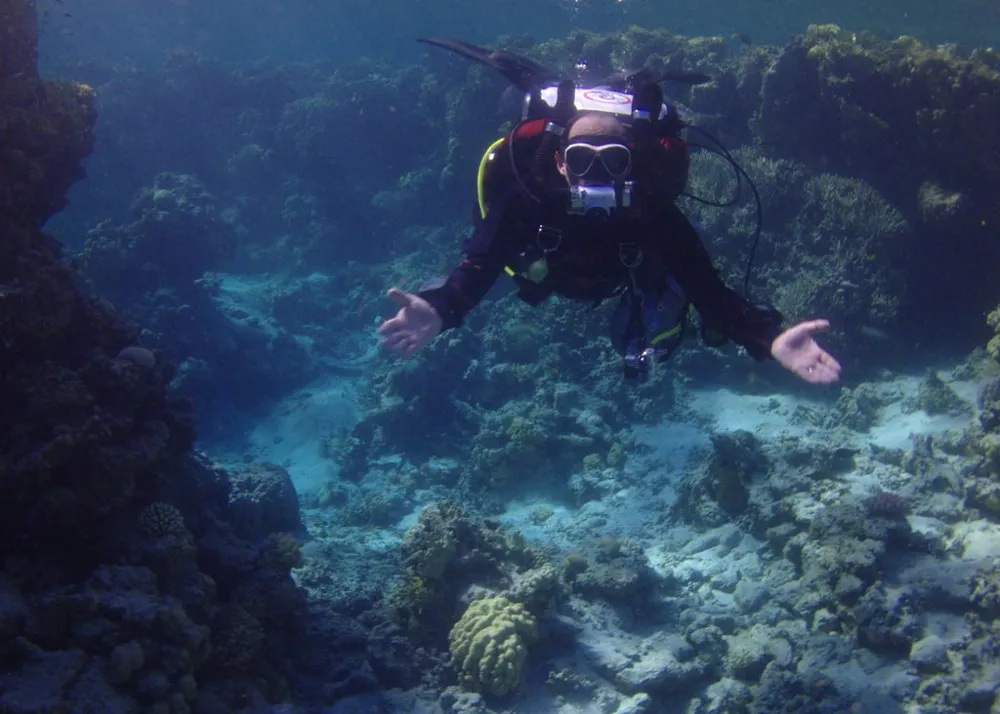
Rebreathers recycle your exhaled breath: a scrubber removes carbon dioxide and the unit adds oxygen back. Closed-circuit rebreathers (CCR) produce few or no bubbles, which lets photographers get closer to shy animals, and they use gas efficiently enough to allow long dives. SSI describes rebreather diving as demanding constant monitoring, bailout planning and detailed pre-dive checks.
Training: PADI Rebreather Diver covers recreational-level rebreather diving, SSI teaches CCR Diving, and technical rebreather courses (such as PADI's Tec CCR levels) go deeper. Training is specific to the rebreather model you use. Risk notes: too little or too much oxygen, or a failing scrubber, can cause problems with little or no warning, so the unit's displays, checklists and an open-circuit bailout plan are non-negotiable.
Skill-Based Specialties That Support Every Type
Some courses aren't a "type" of diving so much as a skill you add to all of them. These PADI specialties appear on its current course list:
| Specialty | What It Adds |
|---|---|
| Enriched Air Diver | Diving on nitrox for longer no-stop time at moderate depths |
| Dry Suit Diver | Staying warm and controlling buoyancy in a drysuit for cold-water, ice and Great Lakes diving |
| Peak Performance Buoyancy | Fine buoyancy control for reefs, muck and photography |
| Underwater Navigator | Compass and natural navigation, useful for shore and night dives |
| Digital Underwater Photographer | Shooting photos and video underwater |
| Search and Recovery Diver | Search patterns and lifting objects with lift bags |
| Self-Reliant Diver | Planning and carrying redundant gear for diving without a buddy |
| Diver Propulsion Vehicle (DPV) | Using an underwater scooter |
Underwater photography deserves a special mention because it changes how you dive. SSI notes that photographers often stay shallower than 30 meters (98 feet) for light and color, and a camera adds task load, so buoyancy has to be second nature. See our underwater cameras for scuba diving guide.
Where Freediving Fits
Freediving is often listed alongside scuba "types," but it isn't scuba at all: freedivers dive on one held breath, with no tank or regulator. It has its own training, physiology and risks, especially shallow water blackout, so it's taught through separate freediving courses rather than scuba specialties.
For the full comparison, read scuba diving vs freediving, and if you want to learn, start with how to freedive. Snorkeling is different again; see snorkeling vs scuba diving.
Which Type of Diving Should You Try First?
A sensible progression builds one skill at a time and adds a new hazard only once the last one feels routine:
- Reef, boat and shore dives in calm, warm water right after Open Water. Log dives and work on buoyancy.
- Advanced Open Water, which combines two core dives (including a training dive deeper than 18 meters) with three adventure dives you choose, such as night, wreck, drift or boat.
- Full specialties for the styles you liked: Night Diver, Wreck Diver, Drift Diver, Deep Diver, Enriched Air Diver and Dry Suit Diver are common choices.
- Environment-specific courses such as Ice Diver, Altitude Diver or Cavern Diver, once you have the prerequisites and the dives.
- Technical, cave, sidemount or rebreather training if you want to go beyond recreational limits. Ask instructors what experience they expect before you sign up.
Rescue Diver is also worth adding early; it changes how you watch out for yourself and your buddy on every type of dive. For the full course ladder, see scuba certification levels, and for skills to work on between courses, see scuba diving tips for beginners.
Safety Rules That Apply to Every Type of Diving
- Dive within your training and experience. A card for a specialty is a starting point, not a license to push limits.
- Never enter an overhead environment untrained. Wreck interiors, caverns, caves and ice all remove the direct ascent.
- Plan gas and depth and watch your dive computer. Turn the dive with plenty of gas left.
- Breathe continuously and ascend slowly, with a safety stop when your training calls for it.
- Dive with a buddy or team and agree on signals and lost-buddy procedures.
- Carry surface signals such as an SMB and a whistle on boat, drift and open-ocean dives.
- Use the right exposure protection, from a wetsuit in warm water to a drysuit in cold.
Course requirements change, so check the agency's current standards before you book. This page is general information, not medical or safety training. For an honest look at accident causes, read is scuba diving dangerous?, and browse all our snorkeling and diving guides for gear and destinations.
Frequently Asked Questions
What are the main types of scuba diving?
The broad split is recreational, technical and professional diving. Within recreational diving, common styles include boat, shore, reef, wreck, drift, night, deep, muck, ice, altitude and cavern diving, while cave, sidemount and rebreather diving often lead into technical training.
What is the most common type of scuba diving?
Recreational diving for fun, usually on reefs from a boat or from shore, within no-decompression limits. Most vacation dives fall into this group.
Do you need a special certification for wreck or night diving?
An Open Water card lets you join guided dives in many conditions, but specialty courses such as PADI Wreck Diver or Night Diver teach the extra skills. Going inside a wreck (penetration) should only be done after wreck training, and many operators ask for it.
What type of scuba diving is the most dangerous?
Overhead environments, where you cannot swim straight up, carry the highest stakes. Cave diving has a long fatality record among untrained divers, and ice and wreck penetration diving have similar no-direct-ascent hazards.
What is the easiest type of scuba diving for beginners?
Calm, shallow reef or shore dives in warm water with good visibility are the gentlest start. Boat dives with a guide are also beginner friendly once you have your Open Water certification.
Is freediving a type of scuba diving?
No. Freediving is done on a single held breath with no tank, so it is a separate discipline with its own courses. Many people do both.