12 Easy Places to Learn to Dive or Log Your First Dives (2026)
Calm water, shallow reefs, good visibility and plenty of dive schools. Here's where new divers feel at home, when to go and how to fit a course into the trip.
What Makes a Dive Destination Beginner-Friendly?
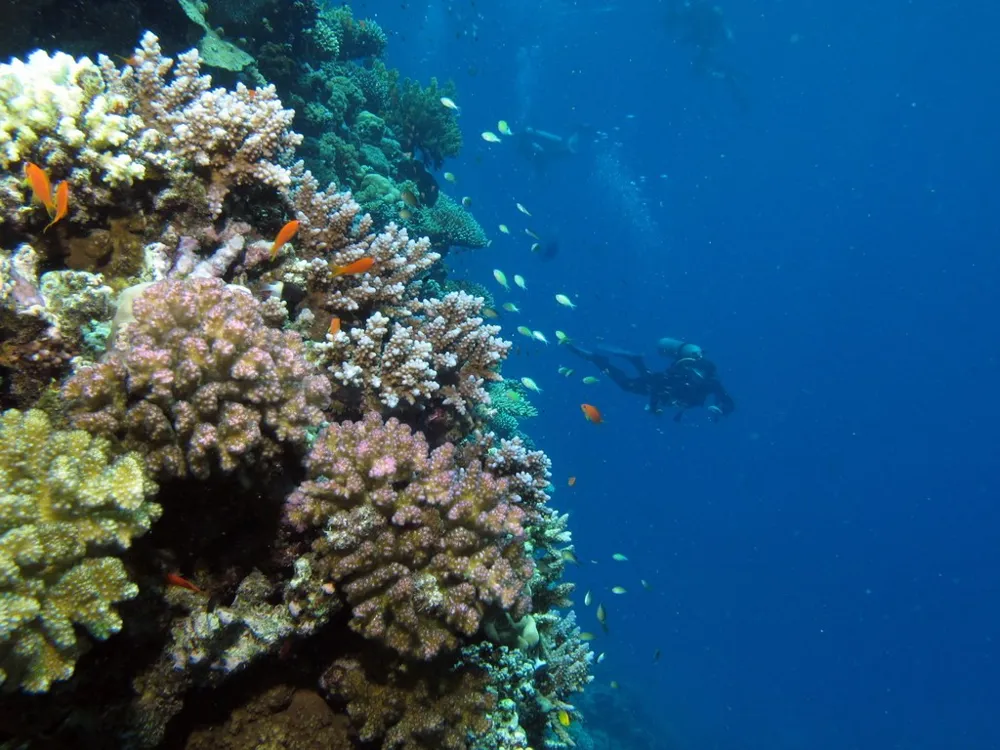
A great first dive trip isn't about the most famous site. It's about conditions that let you relax, breathe slowly and practice the skills you just learned. The best places for new divers share a few traits. Our guide to the best scuba diving destinations in the world covers bucket-list sites such as Chuuk, Palau and the Galápagos; this page sticks to places where the easy dives come first.
| Trait | Why It Matters for New Divers |
|---|---|
| Calm water, little current | You can hover, look around and control buoyancy without fighting a current or surge |
| Shallow reefs | Plenty to see within the 18 m (60 ft) Open Water limit, and more bottom time on each tank |
| Good visibility | Seeing your buddy, the guide and the surface keeps nerves down |
| Warm water | Thinner wetsuits, less weight and more comfort while you learn |
| Shore entry | Walk in at your own pace, no seasickness or boat-entry stress, and easy repeat dives |
| Many dive operators | A wide choice of instructors, courses, rental gear and refresher dives |
No destination is easy every day. Wind, swell and tides change conditions, so let the local dive center pick sites that suit your level. Not certified yet? Start with how to get scuba certified, or try snorkeling on the same reefs first.
Beginner Dive Destinations at a Glance
| Destination | Why It Suits Beginners | Main Entry | Best Time |
|---|---|---|---|
| Bonaire | Sheltered west-coast reefs, marked shore sites | Shore | Year-round; SSI favors November to April |
| Grand Cayman | Reef close to shore in calm, shallow water | Shore and boat | Year-round; drier December to April |
| Cozumel, Mexico | Very clear, warm water; gentle drifts | Boat | Year-round; SSI favors December to April |
| Roatán and Utila, Honduras | Easy reef sites and many dive schools | Boat and shore | Year-round; avoid peak hurricane months |
| Florida Keys and Palm Beach | Shallow reefs, wrecks and a famous bridge dive | Boat and shore | Year-round |
| Maui, Hawaii | Sheltered sites inside Molokini Crater | Boat | Year-round; whales about November to March |
| Koh Tao, Thailand | Shallow, low-current training sites | Boat | About March to September |
| Red Sea, Egypt | Calm, shallow reefs and clear water | Shore and boat | March to May, September to November |
| Tulamben, Bali | A WWII-era wreck reached from the beach | Shore | Year-round; check local seasons |
| Gili Islands, Indonesia | Turtles and reefs a short boat ride away | Boat | Year-round; many avoid November to April rains |
| Great Barrier Reef, Australia | Gently sloping reefs, minimal current at many sites | Boat or liveaboard | SSI names June and October |
| Maldives | Calm, lagoon-like water and resort house reefs | Boat and house reef | Calmest around January to April |
1. Bonaire
Bonaire is the classic answer for new divers. The whole coastline is part of the Bonaire National Marine Park, and you can drive between roadside sites, gear up at the water's edge and swim out to the reef. PADI notes that the island's sites are sheltered from currents and count more than 470 fish species. SSI points beginners to Bari Reef and Something Special, both shallow with gentle conditions.
- Good for: building confidence with lots of easy, self-paced shore dives once you have a buddy and some experience.
- Know before you go: the marine park nature fee is mandatory for divers, you do an orientation dive on arrival, and gloves are banned. Bonaire also banned oxybenzone and octinoxate sunscreens in 2021.
- Save for later: the Hilma Hooker wreck at about 30 meters (100 feet) calls for Advanced Open Water, and the rough east coast is for advanced divers with a guide.
Site-by-site detail is in our Caribbean scuba diving guide.
2. Grand Cayman
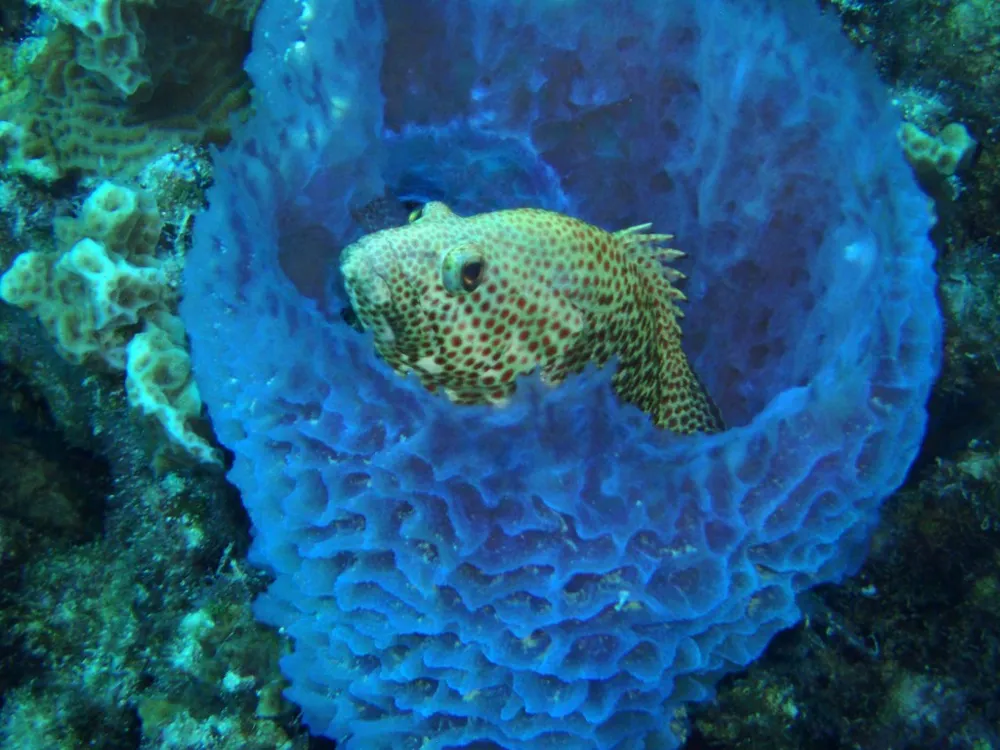
Grand Cayman's west side, around Seven Mile Beach, is one of the easiest places in the region to learn. National Geographic notes that the reef starts about 100 feet from shore in calm, shallow water, and PADI highlights warm water, clear conditions and frequent turtle sightings. The USS Kittiwake, a former U.S. Navy ship sunk as an artificial reef, rests at about 19 meters (64 feet) with its top about 4 meters (15 feet) below the surface, so new divers can explore the upper decks without going deep. Stingray City, a shallow sandbar where stingrays gather, works for divers and snorkelers alike.
Little Cayman's Bloody Bay Wall drops far past recreational limits, so stay on the shallow lip until you have more experience.
3. Cozumel, Mexico
Cozumel sits on the Mesoamerican Reef, and its southern reefs are protected as a marine park. The water is warm year-round and famously clear, and SSI names Paradise Reef and Chankanaab Park as beginner-friendly sites with mild currents. Expect turtles, nurse sharks, eagle rays and moray eels.
The caveat: most Cozumel dives are drift dives. The boat drops you up-current, you ride the flow along the reef and the boat collects you at the end. That is relaxing once you are used to it, but it is a skill. Tell the operator you are new, ask for gentler sites first and stay close to the guide. SSI suggests December to April for the best visibility and eagle ray season.
4. Roatán and Utila, Honduras
Honduras's Bay Islands sit on the southern end of the Mesoamerican Reef and are some of the region's busiest places to learn. On Roatán, PADI highlights Hole in the Wall as a site that suits beginners, while the El Aguila wreck is better left for later. Utila is known for good-value dive courses, and Lonely Planet notes that whale sharks can be seen around March to April and September to December. It also notes that overfishing has thinned marine life around Utila and that Roatán may have the better diving.
Both islands are in the Atlantic hurricane zone (June to November), so build flexibility into late-summer and fall trips.
5. Florida Keys and Palm Beach
For U.S. divers, Florida is the easiest first dive trip without a passport. In Key Largo, the bronze Christ of the Abyss statue sits in about 25 feet of water at Key Largo Dry Rocks, and the Benwood wreck lies in about 25 to 45 feet. Off Palm Beach County, Blue Heron Bridge is one of the best-known shore dives in the country: Divers Alert Network describes average depths of about 15 feet and a maximum of about 25 feet. Dive it around slack high tide, when current is weakest and visibility is best.
Florida can be dived year-round, though winter cold fronts can bring wind and cooler water to the Keys. See the region-by-region Florida scuba diving guide and our Florida Keys snorkeling guide for the reefs non-divers in your group can enjoy.
6. Maui, Hawaii
Molokini, a crescent-shaped volcanic crater off Maui, has been a protected reserve since 1977. PADI lists eight dive sites there for all levels. Two inside the crater, Tako Flats and Enenue, stay within an 18-meter limit with little to no current, which makes them good first ocean dives. The outside of the back wall is a different story: a sheer drop with possible currents and surface waves, best left to experienced drift divers.
- Getting there: dive boats leave from Maalaea Harbour, about 45 minutes away, and usually depart early, around 7 a.m., to beat the swell that tends to build later in the morning.
- Bonus: from about November to March you may hear humpback whales singing during your dives.
- Sunscreen: Hawaii bans the sale of sunscreens containing oxybenzone and octinoxate. A rash guard cuts down on how much you need.
Hawaii is also a great snorkeling destination for the rest of the family; see snorkeling in Hawaii.
7. Koh Tao, Thailand
Koh Tao, off Thailand's east coast, has built its reputation on training new divers. Its beginner sites are shallow and sheltered. SSI lists Japanese Gardens at 5 to 15 meters (16 to 50 feet) and Twins, near Koh Nang Yuan, at 6 to 18 meters (20 to 60 feet) with little current and resident clownfish. Visibility often exceeds 20 meters (66 feet).
- When to go: diving runs year-round, but SSI says conditions are best from about March to September. The October-to-December monsoon can bring rain and rough seas, and some dive centers close in November and December.
- Wildlife: whale sharks are seen most often in March and April, along with turtles, reef sharks and barracuda.
- Next step: Sail Rock and Shark Island have shallow sections but go deeper, so they make good dives once you have a few logged.
8. Red Sea, Egypt
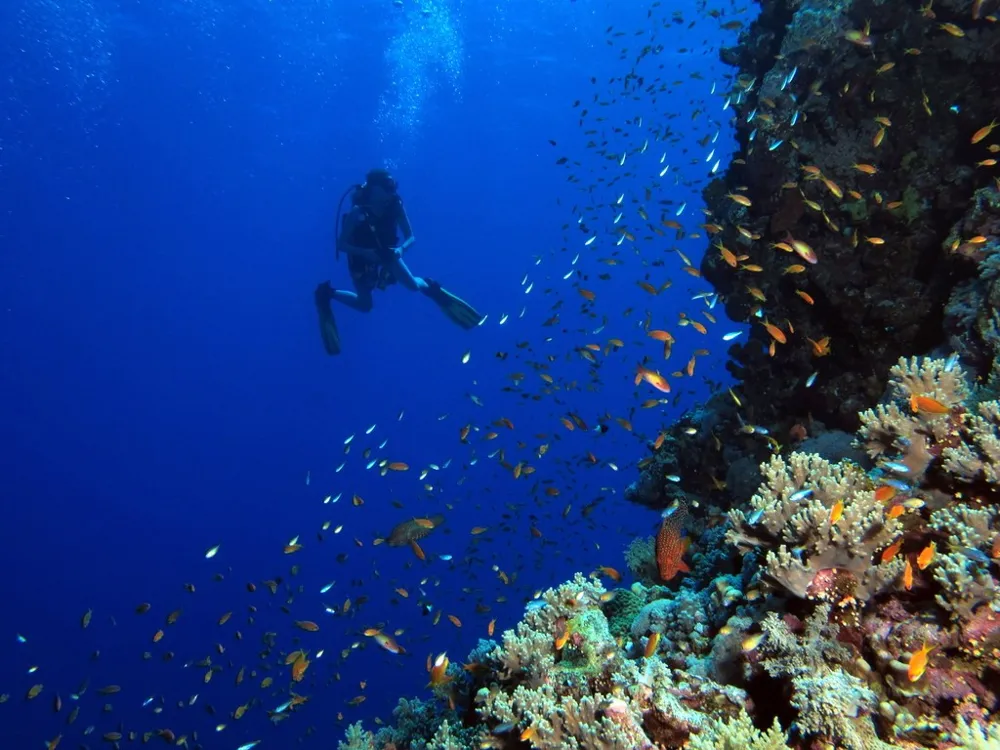
Egypt's Red Sea coast pairs warm water with reefs that start right at the shoreline. SSI points beginners to shallow reefs near Sharm El Sheikh and Hurghada, where beginner areas have little or no current and visibility can reach about 30 meters (100 feet). Ras Mohammed National Park, near Sharm, is a highlight once you are comfortable on boat dives.
Dahab, about 90 km north of Sharm, is a quieter base with reefs you reach from shore. Its famous Blue Hole is a different matter: SSI puts it at more than 100 meters (328 feet) deep, and it is a site for advanced divers. SSI recommends March to May or September to November for warm water and fewer crowds, and Lonely Planet warns that May to September is very hot on land. Check your government's travel advice for Egypt before booking.
9. Tulamben, Bali
Tulamben, in Bali, is home to one of the world's most accessible wrecks. The USAT Liberty, a U.S. Army transport torpedoed by a Japanese submarine in 1942, was towed to the beach for salvage, then pushed into the water by the 1963 eruption of Mount Agung. Today it lies roughly 25 meters from shore, with its highest point about 5 meters from the surface and its deepest parts at about 30 meters.
You walk in from the beach and make a short swim out, so new divers can tour the shallow, coral-covered upper sections and let deeper areas wait for Advanced Open Water. It is considered suitable for all certification levels, but up to 100 divers a day may visit in high season, so ask about an early-morning dive. A small underwater temple at about 15 meters is another nearby site.
10. Gili Islands, Indonesia
The Gili Islands off Lombok, especially Gili Trawangan, are a laid-back place to learn. Lonely Planet notes turtles, reef sharks, pygmy seahorses and colorful corals, and says competition among the many dive operators keeps courses good value. Diving runs year-round, though many visitors avoid the November-to-April rainy season. Combine a Gili course with Tulamben on Bali for a two-stop trip.
11. Great Barrier Reef, Australia
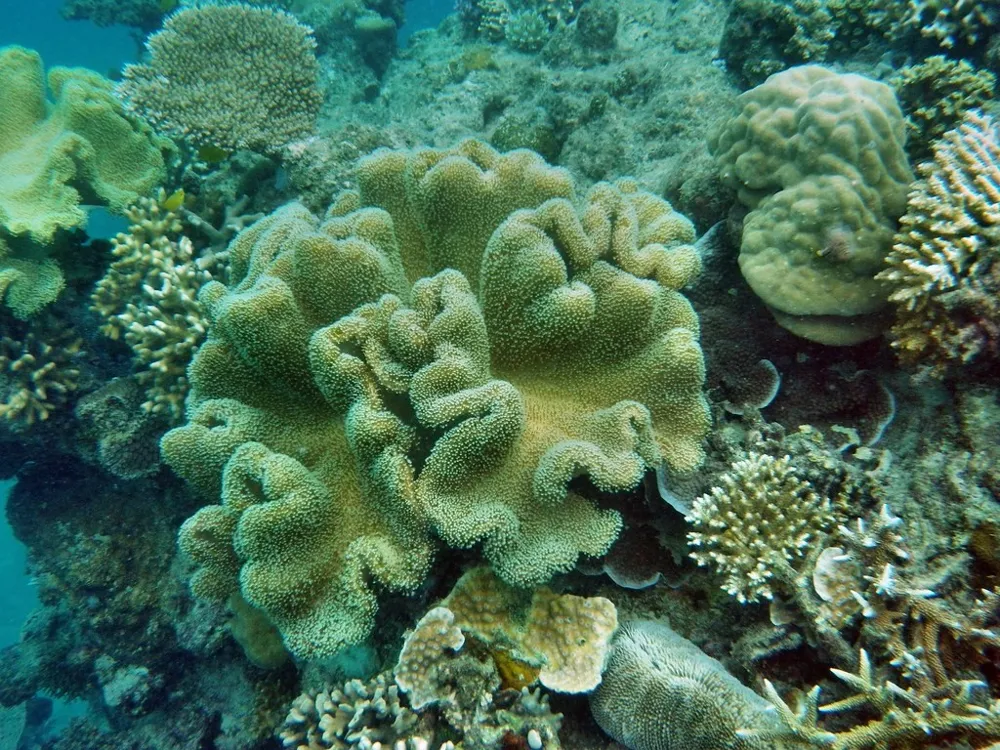
The world's largest coral reef system stretches along the Queensland coast. PADI puts it at about 2,250 km (1,400 miles) long with about 3,000 reefs. SSI notes that many sites have warm, clear water with minimal current and gently sloping reefs rather than steep drop-offs, with shallow coral gardens home to clownfish, turtles and reef sharks. SSI singles out June and October for the best visibility and calm water.
Day boats suit most beginners. A short liveaboard trip lets you log several dives a day and reach outer reefs, which is a great way to build experience quickly once you are certified.
12. Maldives
The Maldives is made up of more than 1,100 small coral islands, and most visitors arrive in Malé and travel on by boat to a resort island or atoll. PADI notes that most resorts have a vivid house reef right off the beach, and that calm, warm water makes diving easy. SSI describes lagoon-like conditions with shallow atoll sites, plus manta rays, whale sharks and reef sharks, with the calmest conditions around January to April. Lonely Planet favors November to April for North Malé Atoll's calm seas and manta rays.
Some atoll sites are channels with stronger water movement, so ask your resort's dive center which sites fit your level. The Maldives is also a common place to try a first liveaboard.
Learning to Dive on Vacation vs at Home
You have three main ways to fit diving into a trip:
| Option | What It Is | Best For |
|---|---|---|
| Try dive (PADI Discover Scuba Diving and similar) | An instructor-led introductory dive in a pool or calm water; not a certification | Testing whether you like scuba before committing |
| Full Open Water course at the destination | Theory, confined-water practice and four open water training dives | Travelers with several free days |
| Referral | Theory and pool training at home, then the four open water dives with an instructor on your trip | Short trips; more time on the reef, less in the classroom |
PADI says you can learn in as little as 2 to 4 days, and its destination guide suggests planning for about 4 to 7 days if you do the whole course on vacation. Learning at home lets you go at a slower pace in familiar water; learning on vacation means your training dives happen on a tropical reef. Once certified, PADI Open Water Divers can dive to 18 meters (60 feet), and junior divers aged 10 and 11 to 12 meters (40 feet). Many resorts also run the Advanced Open Water course, which covers deep and navigation dives plus specialty dives you choose, a good fit for a second trip. Agency rules and course names differ slightly; see scuba certification levels and how deep you can scuba dive.
How to Choose a Dive Center
The operator matters as much as the destination, especially for your first dives.
- Check its agency affiliation (PADI, SSI, NAUI or others) and instructor credentials.
- Ask about group size and the ratio of students or divers to each instructor or guide.
- Look at the condition of the rental gear and the boat's safety equipment, such as emergency oxygen.
- Be honest about your experience and when you last dived. A good shop will suggest a refresher or easy check-out dive.
- Ask which sites it uses for beginners and what happens if conditions turn rough.
- Favor shops that brief on marine park rules and don't let divers touch coral or wildlife.
Best Time to Go: Seasons at a Glance
| Region | Good Months | Watch Out For |
|---|---|---|
| Caribbean and Mexico (Bonaire, Cayman, Cozumel, Bay Islands) | Year-round; drier roughly December to April | Atlantic hurricane season, June to November |
| Florida | Year-round | Hurricane season June 1 to November 30; winter cold fronts in the Keys |
| Hawaii | Year-round | Morning swell building at exposed sites |
| Koh Tao | About March to September | October to December monsoon |
| Red Sea | March to May, September to November | Very hot May to September on land |
| Indonesia (Bali, Gilis) | Year-round | November to April rainy season |
| Great Barrier Reef | SSI names June and October | Check local conditions and advice before booking |
| Maldives | About November to April | Rougher seas outside the calm season |
Seasons shift year to year, so confirm water temperature and conditions with your dive operator before you book.
Safety Tips for Your First Dive Trip
- Dive within your training. Respect your certification's depth limit, even at a famous site.
- Do a check-out dive first. An easy first dive lets you sort out weighting and gear before anything more demanding.
- Stay with your buddy and guide, especially on drift dives, and agree on hand signals before you descend.
- Equalize early and often and never force it. Our guide to equalizing your ears explains how.
- Get dive insurance and know where the nearest hyperbaric chamber is.
- Plan your flight home. DAN recommends at least 12 hours after a single no-decompression dive and at least 18 hours after multiple dives or multiple days. See flying after scuba diving.
- Look after the reef. Don't touch coral or wildlife, keep fins off the bottom and follow local sunscreen rules. "Reef safe" is not a regulated label, so check ingredients or cover up with a rash guard.
Read whether scuba diving is dangerous and our scuba diving tips for beginners before you go. This guide is general information, not medical advice; talk to a doctor if you have a health condition that could affect diving.
What to Pack
Most dive centers rent the big items (BCD, regulator, tank and weights), so new divers usually bring just a well-fitting dive mask, fins and a rash guard or wetsuit. A dive computer is a smart early buy, and an underwater camera can wait until your buoyancy is steady. The full rundown is in our scuba diving equipment list.
Frequently Asked Questions
Where is the best place to learn to scuba dive?
Places with calm, warm, clear and shallow water and many dive schools work best. Bonaire, Grand Cayman, Koh Tao, the Red Sea resorts and Tulamben in Bali are popular choices.
What is the easiest place to scuba dive?
Bonaire is often named because you can walk in from shore to reefs that start in shallow water, at your own pace. Grand Cayman's west side and Blue Heron Bridge in Florida are also gentle shore dives.
Is Cozumel good for beginner divers?
Yes, with a caveat. The water is warm and clear, but most Cozumel dives are drift dives, so tell the operator you are new and stay close to the guide.
Can I get certified on vacation?
Yes. Many dive resorts run full Open Water courses, or you can do the theory and pool sessions at home and finish the open water dives on your trip as a referral.
How deep can a beginner diver go?
PADI Open Water Divers are trained to 18 meters (60 feet). Junior divers aged 10 and 11 are limited to 12 meters (40 feet).
Do I need a wetsuit in warm water?
Usually yes. Even warm tropical water draws heat from your body over an hour-long dive, and a suit also protects your skin. Ask the dive shop which thickness it recommends for the season.
How soon can I fly after diving?
Divers Alert Network recommends waiting at least 12 hours after a single no-decompression dive and at least 18 hours after multiple dives or multiple days of diving.