Scuba Diving Equipment List: Everything You Need to Dive (2026)
Every piece of scuba gear explained, what each one does and which items new divers usually buy first versus rent.
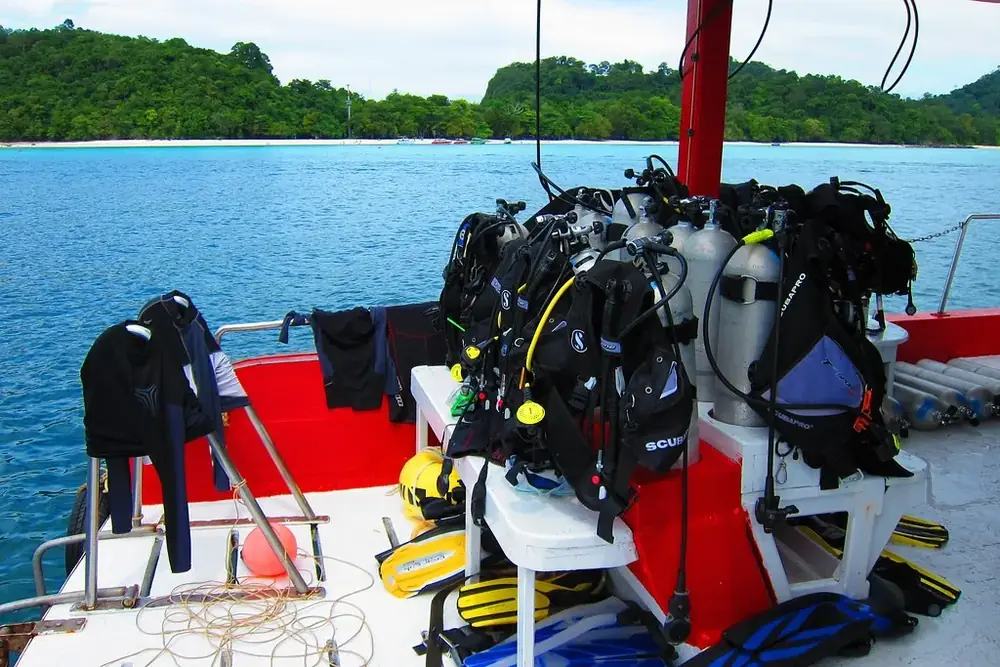
The Gear That Makes Diving Possible
Scuba diving needs more equipment than most sports, because the gear keeps you breathing, warm and in control underwater. The essentials fall into a few groups: personal gear (mask, snorkel, fins), life support (regulator, tank, BCD), instruments (dive computer, gauges) and exposure protection (wetsuit or drysuit). Most new divers buy personal gear first and rent the rest. Here's the full list. Not certified yet? Read how to get scuba certified.
The Complete Scuba Equipment List
| Item | What It Does | Buy or Rent First? |
|---|---|---|
| Mask | Lets you see underwater | Buy |
| Snorkel | Breathe at the surface | Buy |
| Fins | Propel you efficiently | Buy |
| Dive computer | Tracks depth, time and limits | Buy soon |
| Wetsuit or drysuit | Keeps you warm | Buy if diving often |
| Boots and gloves | Protection and warmth | Buy |
| BCD | Controls buoyancy | Rent at first |
| Regulator | Delivers air from the tank | Rent at first |
| Tank (cylinder) | Holds compressed air | Rent |
| Weights | Offset buoyancy | Rent |
| Dive light, knife or cutter, surface marker buoy | Safety and convenience | Buy as needed |
Personal Gear
Mask
A good-fitting mask is the most important purchase. Look for a soft silicone skirt and tempered glass.
Cressi F1 Mask
The F1 is a frameless mask with a wide view that folds flat, making it easy to pack for dive trips.
Check Price on AmazonSnorkel
Useful at the surface. Many divers choose a dry snorkel with a flexible lower tube; see dry vs semi-dry snorkels.
Scubapro Spectra Dry
The Spectra Dry seals when submerged, has a purge valve and a flexible lower tube that drops away when you use your regulator.
Check Price on AmazonFins
Open-heel fins with boots are the most common choice for scuba diving. See scuba diving fins.
Mares Avanti Quattro Plus
One of the most widely used dive fins, with a channeled blade for thrust and a bungee strap for easy on and off.
Check Price on AmazonDive Computers
A dive computer tracks your depth and time and calculates no-decompression limits as you dive, and many show ascent rate warnings and nitrox settings.
Shearwater Peregrine
The Peregrine is Shearwater's recreational dive computer, with a simple two-button interface and 316 stainless steel buttons.
Check Price on AmazonMares Puck Pro Ultra
An affordable wrist computer with a high-contrast screen that supports air and nitrox and shows depth and decompression information.
Check Price on AmazonSuunto D5
The D5 is a color-screen dive computer rated to 100m water resistance, with optional wireless tank pressure.
Check Price on AmazonLife Support Equipment
- Regulator: reduces high-pressure air from the tank to a breathable pressure. Includes a first stage, second stage, backup "octopus" and pressure gauge.
- BCD: a jacket or wing you inflate and deflate to control buoyancy.
- Tank: aluminum or steel cylinders, usually rented and filled at dive shops.
- Weights: belts or integrated pockets that offset your buoyancy and wetsuit.
These items need regular servicing by trained technicians.
Exposure Protection
| Water Temperature | Typical Protection |
|---|---|
| Warm (about 80°F / 27°C and up) | Rash guard or 3mm wetsuit |
| Mild (about 70–80°F / 21–27°C) | 3–5mm wetsuit |
| Cool (about 60–70°F / 16–21°C) | 5–7mm wetsuit, hood, gloves |
| Cold (below about 60°F / 16°C) | 7mm wetsuit or drysuit |
People feel cold differently; these are rough guides.
Safety Accessories
- Surface marker buoy (SMB) to signal boats.
- Whistle or audible signaling device.
- Dive light for low visibility and night dives.
- Line cutter or knife.
Packing Checklist
- Certification card and logbook.
- Mask, snorkel, fins and boots.
- Dive computer.
- Wetsuit and rash guard.
- Defog, spare mask strap and O-rings.
- Reef-safe sunscreen and towel.
Capture your dives with underwater cameras, and keep time with waterproof watches.
Frequently Asked Questions
What scuba gear should I buy first?
Most divers start with a mask, snorkel and fins, then a dive computer. Bigger items like the BCD, regulator and tanks are often rented until you dive regularly.
What is a BCD?
A buoyancy control device: a vest you inflate or deflate to control your buoyancy underwater and float at the surface.
Do I need a dive computer?
Many training agencies and dive operators now expect divers to use one. It tracks depth, time and no-decompression limits.
How thick should my wetsuit be?
It depends on water temperature: roughly 3mm for warm water, 5mm for moderate and 7mm or a drysuit for cold water.
Is it cheaper to rent or buy scuba gear?
Renting is cheaper if you dive occasionally. Owning makes sense if you dive often, and gear you own fits better.