How to Get Scuba Certified: A Beginner's Step-by-Step Guide (2026)
What an Open Water course involves, who can take it, how deep you can go afterward and how to pick a dive school.
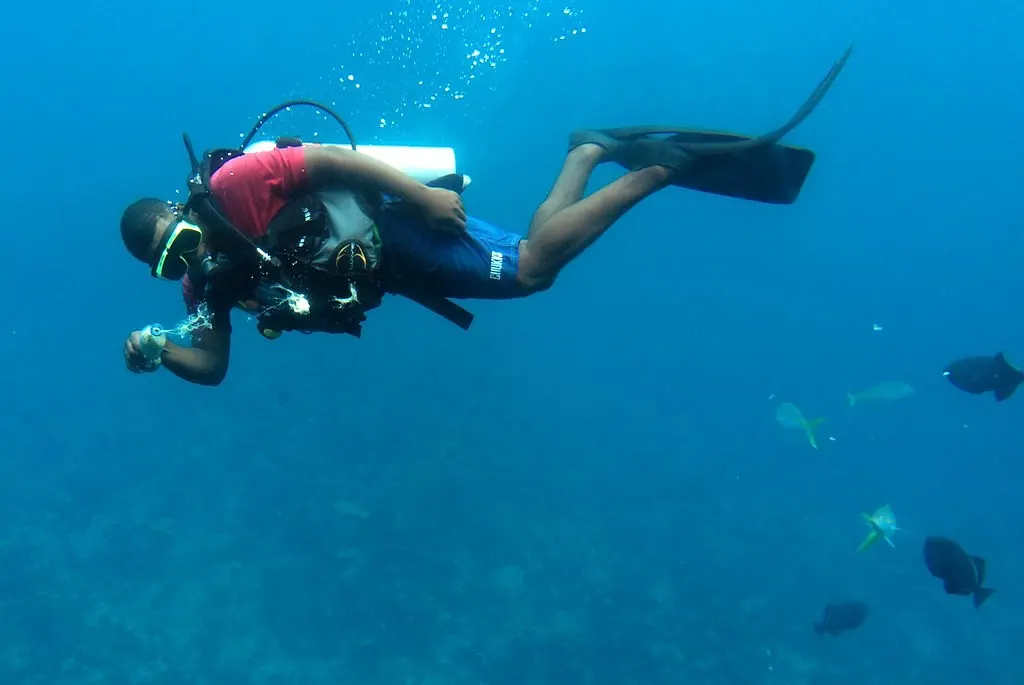
What Scuba Certification Means
A scuba certification shows you've been trained to dive safely with a buddy, without a professional. The first level is usually called Open Water Diver. Major training agencies include PADI, SSI and NAUI, and their entry-level certifications are widely recognized by dive shops around the world. Courses combine theory, pool or confined-water practice and real dives in open water. Here's how the process works, using PADI's published requirements as an example. Not ready to commit? Try snorkeling first; see how to snorkel.
The Process at a Glance
| Step | What Happens |
|---|---|
| 1. Choose an agency and dive shop | PADI, SSI, NAUI and others; pick a reputable local shop or resort |
| 2. Medical screening | Answer a diver medical questionnaire; some conditions need a doctor's sign-off |
| 3. Knowledge development | Learn theory online (eLearning) or in a classroom |
| 4. Confined water training | Practice skills in a pool or calm, shallow water |
| 5. Open water dives | Complete training dives in the ocean, a lake or a quarry |
| 6. Get certified | Receive your certification card |
Age Requirements and Depth Limits (PADI)
| Certification | Minimum Age | Maximum Depth |
|---|---|---|
| Junior Open Water (ages 10–11) | 10 | 40 ft / 12 m, with a PADI Professional or certified parent or guardian |
| Junior Open Water (ages 12–14) | 12 | 60 ft / 18 m, with a certified adult |
| Open Water Diver | 15 | 60 ft / 18 m |
| Advanced Open Water Diver | 15 (Junior from 12) | 100 ft / 30 m (Junior 70 ft / 21 m) |
Source: PADI's published diving restrictions. Other agencies have similar but not identical rules.
The Swim Test
PADI requires students to float or tread water for 10 minutes without aids, and swim 200 meters or yards without aids, or 300 meters or yards with mask, fins and snorkel. There's no time limit; it's about comfort in the water.
Medical Fitness
You'll complete a diver medical questionnaire before in-water training. Certain conditions, such as some heart, lung or ear issues, require a physician's approval. Be honest; it's for your safety.
What You'll Learn
- How pressure affects your body and equipment.
- Equalizing your ears and mask.
- Setting up and checking your gear.
- Buoyancy control.
- Clearing your mask and recovering your regulator.
- Sharing air with a buddy in an emergency.
- Dive planning and the buddy system.
How Long It Takes
PADI says you can learn to dive in as little as 2 to 4 days. Many people complete the theory online at home, then do the pool and open water dives over a few days or weekends.
Choosing a Dive School
- Check the shop's agency affiliation and instructor credentials.
- Ask about class sizes and student-to-instructor ratios.
- Find out what's included: eLearning, gear rental, boat fees, certification card.
- Read recent reviews.
- Consider certifying at home and doing your open water dives on vacation ("referral").
Gear You'll Need
Most courses include rental of the major equipment. Many students buy their own mask, snorkel and fins for comfort. See the scuba diving equipment list and dive fins.
After Certification
- Log your dives and dive regularly to build skills.
- Consider Advanced Open Water for deeper dives and new skills.
- Take a refresher if it's been a while since your last dive.
Plan your first trip with the best places to snorkel, many of which also offer great diving, and capture it with underwater cameras.
Frequently Asked Questions
How long does it take to get scuba certified?
Many Open Water courses take about 3 to 4 days, and PADI says you can learn in as little as 2 to 4 days. You can also spread it over several weekends.
How old do you have to be to get scuba certified?
With PADI, the Junior Open Water course starts at age 10, and the adult Open Water Diver certification is for ages 15 and up.
How deep can you dive with an Open Water certification?
PADI Open Water Divers can dive to 60 feet (18 meters). Junior divers aged 10 and 11 are limited to 40 feet (12 meters).
Do I need to be a strong swimmer?
You need basic water skills. PADI requires a 10-minute float or tread and a 200-meter swim, or 300 meters with mask, fins and snorkel, with no time limit.
Does scuba certification expire?
Entry-level certifications generally don't expire, but if you haven't dived in a while, a refresher course is recommended.