Scuba Diving Instructor: From First Dive to Teaching Pro (2026)
The certification ladder, the prerequisites each agency sets, how long it takes, what instructors actually do and where the jobs are.
What a Scuba Instructor Does
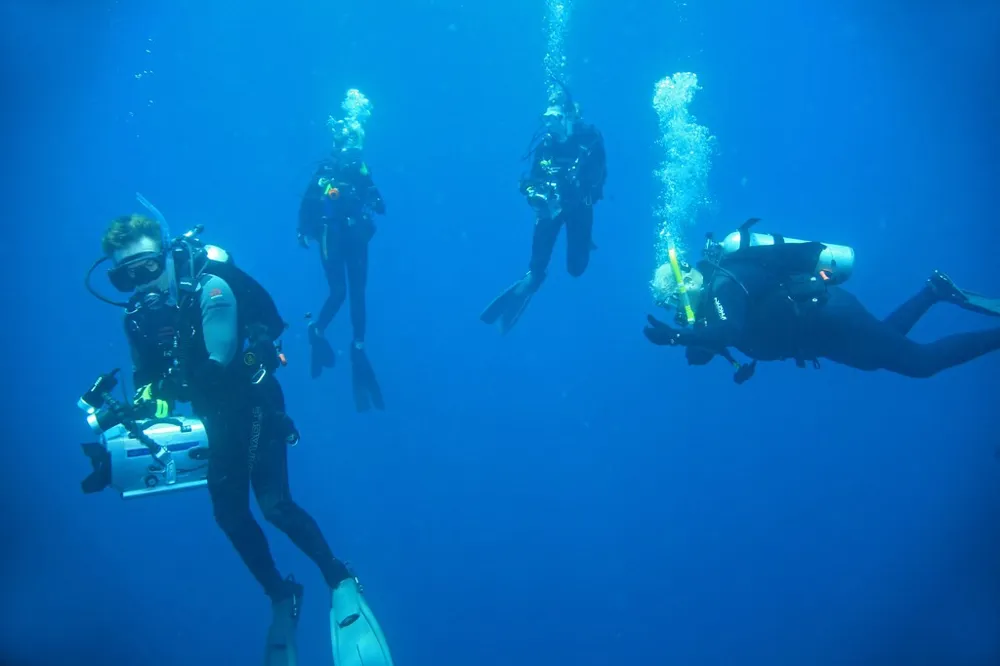
A scuba instructor is a diver who is certified by a training agency to teach and certify other divers. The job is part teacher, part safety officer and part guide: instructors run classroom or online theory sessions, teach skills in a pool or confined water, supervise open water training dives, assess students and issue certifications. Many also lead fun dives, fill tanks, sell or service gear and help run the boat.
Searches for "teach scuba diving" or "scuba diving teacher" all lead to the same ladder. Every major agency uses a similar progression: entry-level diver, advanced diver, rescue diver, divemaster (the first professional level), then an instructor course and an exam. This guide walks through each rung using the published standards of PADI, SSI and NAUI, then covers time, costs, renewals and jobs. If you haven't taken your first course yet, start with how to get scuba certified. For the recreational levels in more detail, see our guide to scuba certification levels.
The Path at a Glance
| Step | Level | What It Adds |
|---|---|---|
| 1 | Open Water Diver | Your first certification: dive with a buddy without a professional |
| 2 | Advanced Open Water Diver | Deep and navigation dives plus electives; PADI's limit becomes 100 ft / 30 m |
| 3 | Rescue Diver + first aid and CPR | Self-rescue, helping others, emergency management |
| 4 | Divemaster (or equivalent) | First professional rating: guide certified divers, assist instructors |
| 5 | Instructor course | PADI IDC, SSI ITC or NAUI ITC: learn how to teach |
| 6 | Instructor exam | PADI Instructor Examination (IE) or SSI Instructor Evaluation (IE) |
| 7 | Specialty and higher ratings | Extra courses you can teach, then staff and trainer levels |
Names differ slightly by agency. SSI, for example, has a Dive Guide level before Divemaster, and most agencies accept "equivalent" certifications from other recognized agencies for the earlier steps.
Step 1: Open Water and Advanced Open Water
Everything starts with an entry-level course. PADI's adult Open Water Diver certification is for ages 15 and up and allows dives to 60 ft (18 m). The next level, Advanced Open Water, is a set of five adventure dives: navigation and deep are mandatory and the other three are your choice. PADI's depth limit at that level is 100 ft (30 m); see how deep you can scuba dive for the limits at each level.
This is also the time to start logging every dive properly, since dive counts become hard prerequisites later. Varied conditions (boat dives, shore dives, night dives, currents, cold water) make the later professional courses easier. Our scuba diving tips for beginners cover the buoyancy and air-consumption habits instructors are expected to model.
Step 2: Rescue Diver and First Aid Training
Rescue Diver shifts the focus from your own diving to preventing and handling problems with other divers. With PADI, the minimum age is 12 (12- to 14-year-olds earn a Junior Rescue Diver card), and you need Adventure Diver with the Underwater Navigation dive or Advanced Open Water. You also need CPR and first aid training completed within the past 24 months, which PADI delivers through its Emergency First Response (EFR) Primary Care and Secondary Care course. PADI's blog says the Rescue course typically runs about four to seven days, including roughly 8 to 12 hours of eLearning.
That 24-month first aid window matters throughout the professional path: PADI asks for it again at divemaster and instructor level. Our guide to whether scuba diving is dangerous explains the accident patterns this training is designed to prevent.
Step 3: Divemaster, the First Professional Level
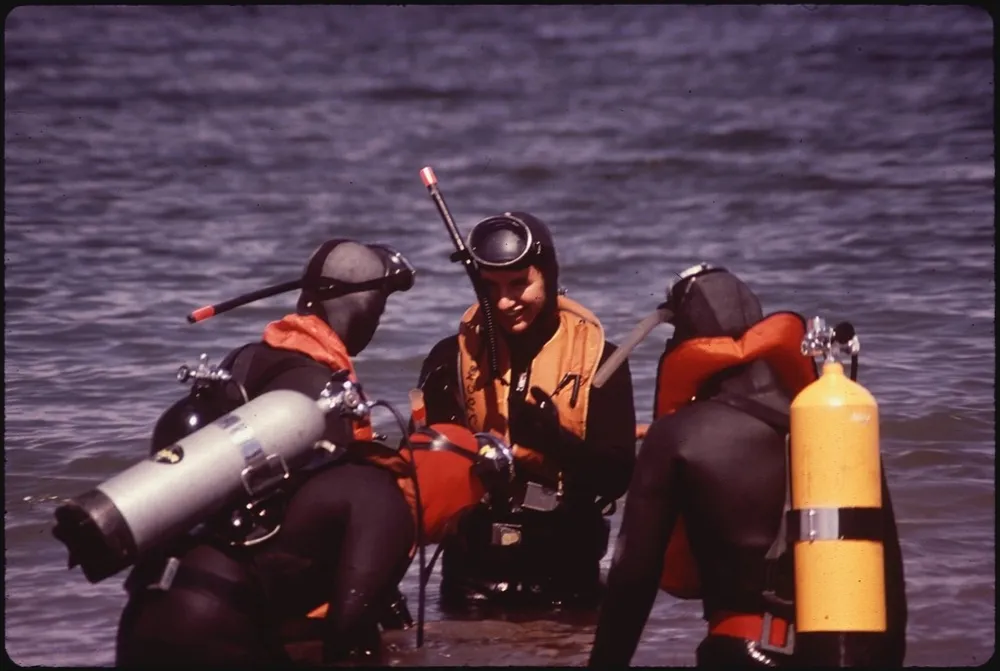
Divemaster is where you stop being a customer and start working. PADI calls it the first rung on its professional ladder. Its published requirements are:
- Minimum age of 18.
- Open Water, Advanced Open Water and Rescue Diver, or equivalents.
- CPR and first aid training within the past 24 months.
- 40 logged dives to start the course and 60 to be certified.
- A physician's evaluation clearing you for diving within the past 12 months.
The course also includes water-skills tests: a 400 m/yd nonstop swim without aids, an 800 m/yd face-down swim with mask, snorkel and fins, a 100 m/yd tow of a diver in full scuba gear, and a 15-minute tread or float, with hands out of the water for the last two minutes. PADI offers accommodations for candidates with physical impairments. There are also deep diving and search and recovery workshops.
PADI says a candidate who meets the prerequisites can finish in about two intense weeks, but most take three weeks to six months, depending on the location and format. Some centers run it as an internship where you train alongside working staff. Once certified, PADI divemasters can guide certified divers, assist instructors on courses and Discover Scuba Diving programs, and teach a few programs such as ReActivate, Discover Snorkeling and Emergency Oxygen Provider. They cannot teach scuba courses on their own.
Step 4: The Instructor Course and Exam
The instructor stage is about learning to teach, not perfecting your own diving. Each agency structures it a little differently:
- PADI Instructor Development Course (IDC): two parts, Assistant Instructor (AI) and Open Water Scuba Instructor (OWSI), which can be taken separately or together. Topics include classroom presentations, confined and open water teaching, PADI's teaching philosophy, risk management and marketing yourself. PADI says the IDC is a minimum of 6 days and the full OWSI program generally takes 10 to 14 days. Some centers run it over several weekends.
- PADI Instructor Examination (IE): taken after the IDC and run by PADI Examiners who follow standardized criteria. Typical IE components include written exams and evaluated teaching presentations in the classroom, confined water and open water.
- SSI Instructor Training Course (ITC): SSI's standards recommend 72 to 85 hours, followed by an Instructor Evaluation (IE) that must take place within six months of finishing the ITC. The Assistant Instructor step can be completed first, so you can assist on real courses before the IE.
- NAUI Instructor Training Course (ITC): candidates must pass a prequalification exam before the course, which qualifies graduates to apply for NAUI Instructor membership.
Other agencies, such as RAID, SDI, BSAC and CMAS-affiliated federations, also train instructors. Their prerequisites and course names differ, so read the current standards on the agency's own site before enrolling.
Instructor Prerequisites by Agency
| Requirement | PADI (IDC/IE) | SSI (ITC/IE) | NAUI (ITC) |
|---|---|---|---|
| Minimum age | 18 | 18 | 18 by the water phase |
| Leadership certification | Divemaster or qualifying equivalent | Divemaster plus Enriched Air Nitrox, or equivalents | Assistant Instructor, Divemaster or another agency's leader rating |
| Other certifications | Current CPR and first aid (EFR within 24 months) | Check current standards | Rescue, Nitrox, Master Scuba Diver and First Aid for the Diving Professional, or equivalents |
| Time certified | At least 6 months | Open Water or higher for at least 6 months before the IE | Not listed on the course page |
| Logged dives to start | 60 | 60 dives totaling at least 40 hours | 60 dives with at least 30 hours of bottom time |
| Logged dives for the exam | 100 | 100 dives totaling at least 65 hours | Not listed on the course page |
| Medical | In-date medical approval to dive | Signed medical questionnaire; check standards | Physician's exam within 12 months with unconditional approval |
Sources: PADI's instructor and divemaster pages, SSI's published training standards and NAUI's Instructor course page, last checked November 2026. SSI's public course page lists 75 dives and 50 hours, which matches its Assistant Instructor requirement, so confirm the current figure with your Instructor Trainer. PADI also requires an EFR Instructor rating before you start teaching, and it is often bundled with the IDC.
How Long It Takes
There is no single answer, because most of the time goes into logging dives, not sitting in courses. The fixed points are:
- Six months minimum: PADI requires you to be a certified diver for at least six months before the IDC, and SSI requires six months before its IE.
- Divemaster: about two intense weeks at the fastest, more commonly three weeks to six months, according to PADI.
- Instructor course: PADI says 10 to 14 days for the full OWSI program; SSI's ITC is described as about ten days.
- Dive count: getting from your first dive to 100 logged dives is the variable part. Someone diving several times a week at a resort gets there much faster than a weekend diver in a cold, seasonal climate.
Some dive centers sell full "beginner to pro" or internship programs that take a new diver from Open Water through instructor in one package. These still have to respect the six-month rule. If it's been a year or two since your divemaster course, PADI suggests telling your Course Director, who may recommend an IDC prep course first.
What It Costs
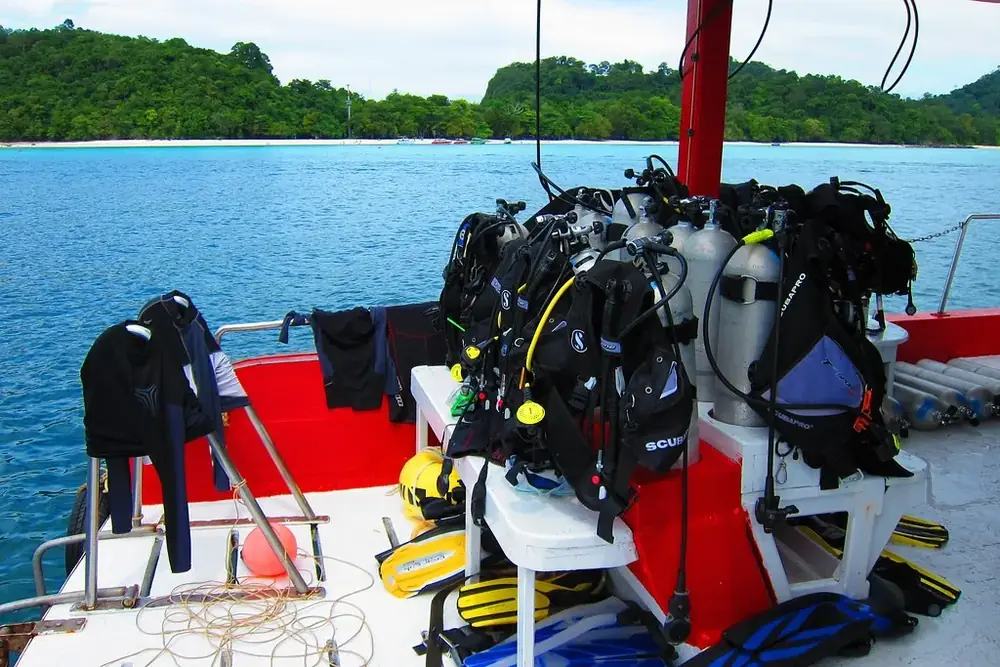
Costs vary widely by country, agency and dive center, so compare complete quotes rather than headline course fees. Expect to pay for some or all of the following:
- Each course on the ladder (Advanced, Rescue, first aid, Divemaster, IDC or ITC), including eLearning or manuals.
- Instructor exam and application fees charged by the agency.
- The dives needed to reach the required log count, including boat fees.
- Your own professional-grade gear: most candidates own a full set, including a dive computer, regulator, BCD and exposure protection. See the scuba diving equipment list.
- A dive medical from a physician.
- First aid instructor training, if not bundled.
- Travel and accommodation if you train abroad.
- Ongoing costs once certified: annual agency membership, professional liability insurance where required and continuing education.
Ask every center what is included and whether exam fees are paid to the agency separately.
Staying Current: Membership, Insurance and Renewal
Earning the instructor rating is not the end of the paperwork. To keep teaching you need to stay in good standing with your agency:
- Annual membership: PADI professional membership must be renewed every calendar year, including for brand-new divemasters and instructors. If it lapses, PADI says retraining requirements vary and you may need to contact its customer relations team to regain teaching status.
- Active or teaching status: NAUI says active-status instructors can teach NAUI courses and authorize certifications independently. Each agency defines its own status categories, so check what yours requires to stay active.
- Professional liability insurance: requirements depend on the region and agency. PADI notes that members in Europe, the Middle East and Africa may need professional liability insurance for teaching status. Many dive centers and resorts also set their own insurance requirements for staff and freelancers.
- Medical and first aid: keep your own dive medical and first aid credentials current, since standards tie several prerequisites to 12- and 24-month windows.
Rules change, so check your agency's current membership terms each year. This is general information, not legal or insurance advice.
Specialty Ratings and Higher Levels
A new instructor can teach the core courses: PADI OWSIs can teach Open Water, Advanced Open Water, Rescue Diver and Divemaster, plus several other programs. SSI Open Water Instructors can teach Open Water Diver, Advanced Open Water Diver, Enriched Air Nitrox, Diver Stress and Rescue, and Dive Guide. Specialty instructor ratings add courses such as wreck, drysuit, drift, night or deep diving, and they are the main way instructors become more employable.
| PADI Level | Published Requirement |
|---|---|
| Master Scuba Diver Trainer (MSDT) | OWSI with at least 25 PADI certifications issued and five Specialty Instructor ratings |
| IDC Staff Instructor | Additional training to assist on IDCs |
| Master Instructor | IDC Staff Instructor and a PADI Instructor for at least two years, with 150 certifications, two IDCs assisted, 10 EFR certifications and three PADI seminars |
| Course Director | Selection for the competitive Course Director Training Course; teaches IDCs |
SSI has a parallel route through Specialty Instructor, Divemaster Instructor, Assistant Instructor Trainer and Instructor Trainer. Beyond recreational teaching, agencies offer technical diving (including cave diving), public safety and freediving instructor tracks with their own prerequisites.
Scuba Diving Jobs and Career Paths
"Scuba diving occupations" covers far more than teaching. These are the main routes, and not all of them run through a recreational instructor rating:
| Role | What It Involves | Training Route |
|---|---|---|
| Dive shop or resort instructor | Teaching courses, guiding dives, retail, gear servicing | Recreational instructor rating |
| Freelance instructor | Hired per course or per season by shops and resorts | Instructor rating plus your own insurance where required |
| Liveaboard crew | Guiding and teaching on multi-day dive boats; PADI notes meals and housing may be included | Divemaster or instructor |
| Divemaster or dive guide | Leading certified divers, briefings, assisting classes | Divemaster or Dive Guide |
| Yacht or private instructor | Teaching guests on private boats and superyachts | Instructor, often with a boat captain's license |
| Commercial diver | Inspection, construction, welding and salvage, often on surface-supplied air | Separate commercial diver school (see below) |
| Scientific diver | Research diving for universities and institutes | Institution's scientific diving program |
| Public safety diver | Police, fire and rescue search and recovery | Agency or department training |
| Underwater photo and media work | Photography, video, safety diving for film and TV | Diving skills plus a media portfolio |
| Dive center manager or owner | Running the business, staff and boats | Industry experience plus business skills |
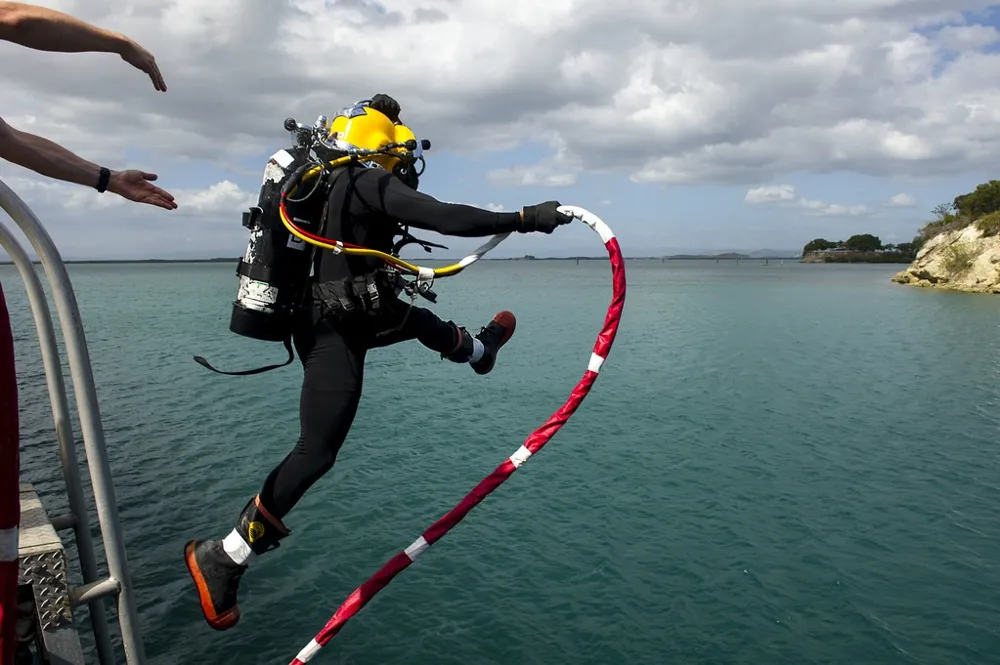
Commercial diving is a separate profession. DAN notes that recreational certifications don't qualify anyone for commercial work, and that commercial divers mostly use surface-supplied air rather than scuba. Entry requires commercial diver training leading to entry-level tender certification, which DAN puts at about six months, followed by years of hands-on experience. In the US, the Association of Diving Contractors International (ADCI) issues an Entry Level Tender Diver certification under its consensus standards.
Scientific diving is defined by OSHA as diving performed solely as a necessary part of a scientific, research or educational activity. In the US it runs through institutional programs overseen by a diving control board, and many follow standards developed by the American Academy of Underwater Sciences (AAUS). A recreational instructor background helps, but the qualification comes from the institution.
Pay depends heavily on country, role, commissions, tips and whether housing is included, so treat any single salary figure you see online with caution.
Where and When Scuba Instructors Work
Instructors work wherever people learn to dive: tropical resorts, liveaboards, city dive shops with pool programs, quarries and lakes, and dive clubs that teach on evenings and weekends. Agencies run job boards; PADI's lists jobs worldwide for its members, and SSI's lists jobs and internships.
A lot of dive work is seasonal. Demand follows tourist seasons and water conditions, so many instructors move between destinations, working one region's high season and then another's. In colder or landlocked areas, teaching tends to be part-time and concentrated in summer, with pool sessions in the off-season. If you plan to work abroad, check work-permit rules for that country before committing, and look at where the diving is busiest in our guides to the best scuba diving destinations, the best scuba diving in the Caribbean and scuba diving in Florida.
How to Choose Where to Do Your Instructor Training
- Local dive shop: train where you already dive, keep your job and build relationships with a shop that may hire you. Courses may run over weekends.
- Destination center: train somewhere with daily diving, which makes it easier to log dives quickly and see how a busy operation runs.
- Career institute or internship: longer, structured programs that bundle several levels, sometimes with extra specialties or job placement help.
Whichever format you choose, ask who the Course Director or Instructor Trainer is, how often IEs run nearby, what the pass and retake process is, how many candidates share each course, and which specialty instructor ratings are included. Talk to recent graduates if you can.
Pros and Cons of Becoming a Scuba Instructor
| Pros | Cons |
|---|---|
| Work in and around the water, often outdoors | Significant upfront training and gear costs |
| Skills recognized internationally through agency networks | Pay is often modest and varies widely by location |
| Freedom to work seasons in different countries | Seasonal, sometimes unstable work, especially freelance |
| Helping new divers gain confidence | Physically demanding: lifting tanks, long days, repetitive dives |
| Stronger rescue, first aid and leadership skills | Ongoing membership, insurance and medical requirements |
| Routes into specialties, management or media | Repeated pressure exposure and responsibility for others' safety |
Plenty of instructors teach part-time alongside another career, which keeps the rewards while limiting the financial risk. If you plan to dive several times a day, know the basics of decompression sickness, equalizing your ears and flying after diving.
What to Do Next
If you're still at the start, book an Open Water course and begin logging every dive. If you're already certified, map your gap to the instructor prerequisites in the table above: certification time, dive count, Rescue, first aid and Divemaster. Then talk to two or three instructor training centers about schedules and IE dates. For background, read what scuba diving is, browse the scuba diving terms glossary and explore more guides in our snorkeling and diving hub.
Frequently Asked Questions
How many dives do you need to become a scuba instructor?
PADI requires 60 logged dives to start the Instructor Development Course and 100 to sit the Instructor Examination. SSI's standards require 100 open water dives totaling at least 65 hours before the Instructor Evaluation, and NAUI asks for at least 60 logged dives with 30 hours of bottom time before its course.
How long does it take to become a scuba instructor?
There is a hard floor: PADI and SSI require you to have been a certified diver for at least six months before the instructor stage. PADI says the instructor course itself generally takes 10 to 14 days, so logging enough dives is usually what sets the overall pace.
What is the minimum age to be a scuba instructor?
PADI, SSI and NAUI all set 18 as the minimum age for instructor training. Divemaster, the first professional level, also starts at 18 with PADI.
Can a divemaster teach scuba courses?
No. PADI says divemasters are not qualified to teach scuba courses, though they can guide certified divers, assist instructors and run some non-diving or snorkeling programs.
Do scuba instructors have to renew every year?
With PADI, professional membership is renewed every calendar year, and a lapse can mean retraining before you regain teaching status. Other agencies have their own active-status rules, so check yours.
Can a recreational scuba instructor work as a commercial diver?
Not on that certification alone. Commercial diving needs separate commercial diver training, which DAN describes as about six months to reach entry-level tender, plus years of field experience.
Do you need to be a great swimmer to become an instructor?
You need solid water skills. PADI's divemaster stage includes a 400-meter swim, an 800-meter snorkel swim, a 100-meter tow of a diver in full gear and a 15-minute float, with accommodations for physical impairments.