The Bends in Scuba Diving: Causes, Symptoms and Prevention (2026)
The bends, or decompression sickness, happens when nitrogen absorbed on a dive forms bubbles in the body. Here's how it works, the warning signs and how divers reduce the risk.
What Is the Bends?
The bends is the common name for decompression sickness (DCS), also called caisson disease. The MSD Manual defines it as "a disorder in which nitrogen dissolved in the blood and tissues by high pressure forms gas bubbles as pressure decreases." Those bubbles can block blood vessels, damage tissue and trigger inflammation.
Doctors group DCS with a related injury, arterial gas embolism (AGE), under the umbrella term decompression illness (DCI). AGE happens when air from overexpanded lungs enters the arteries, usually after a fast or breath-held ascent. The CDC notes that first aid is the same for both, so you don't need to tell them apart in the field.
The risk is low on well-planned recreational dives. StatPearls estimates about 3 cases per 10,000 sport dives. But it's serious when it happens, which is why every scuba course teaches how to avoid it.
This guide is general information, not medical advice. If you suspect the bends or any diving injury, call emergency services (911 in the US) first, then the Divers Alert Network (DAN) Emergency Hotline at +1-919-684-9111, available 24 hours a day.
What Causes the Bends?
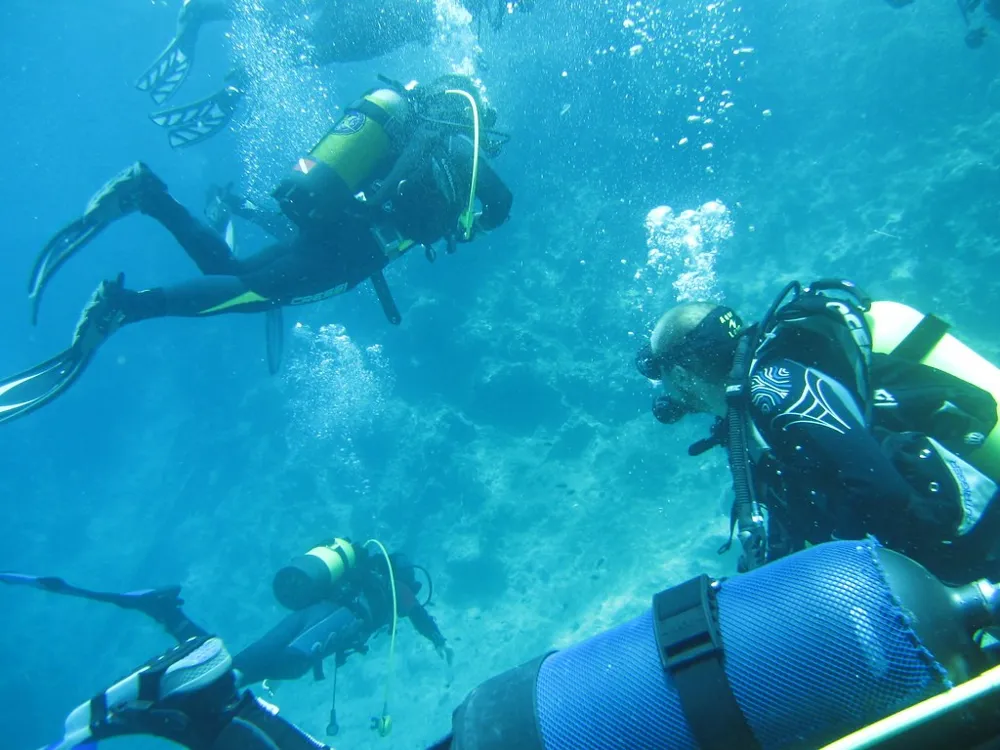
Air is mostly nitrogen and oxygen. Your body uses the oxygen, but the extra nitrogen you breathe under pressure dissolves into your blood and tissues and builds up the longer and deeper you dive. Nitrogen dissolves readily in fat, which is one reason fatty tissue such as the brain and spinal cord can be affected.
When you ascend, the pressure around you drops and the nitrogen comes back out of solution. A slow ascent lets it leave through your lungs as you breathe. If pressure drops too fast, the gas forms bubbles, like the fizz when you open a bottle of soda.
| Factor | Why It Matters |
|---|---|
| Depth | More pressure means more nitrogen absorbed |
| Time underwater | Longer dives load more nitrogen |
| Ascent rate | Fast ascents give gas no time to leave; the biggest pressure change is in the last 10 m (33 ft) |
| Repetitive dives | Nitrogen stays in your tissues for at least 12 hours after each dive (MSD Manual) |
| Altitude after diving | Flying or driving up a mountain lowers pressure again |
Why Is It Called the Bends?
The name comes from the joint pain: Britannica notes that people with the condition often couldn't straighten their joints. The illness was first widely seen in caisson workers, laborers who dug bridge foundations inside pressurized chambers in the 1800s, which is where the name "caisson disease" comes from. PADI links the nickname to workers on the Brooklyn Bridge, whose stooped posture resembled a fashionable stance of the day called the "Grecian bend."
It isn't only a diving problem. Caisson and tunnel workers and pilots of unpressurized aircraft can also get decompression sickness, because all of them move between different pressures.
Symptoms of the Bends
Symptoms range from mild aches to paralysis. Doctors often describe two types:
| Type | Main Areas | Common Symptoms |
|---|---|---|
| Type I (milder) | Joints, muscles, skin, lymph | Aching joint or limb pain, often worse with movement; itching; blotchy or mottled skin; swelling |
| Type II (serious) | Brain, spinal cord, inner ear, lungs | Numbness, tingling, weakness or paralysis; dizziness or vertigo; ringing in the ears; confusion; trouble urinating or loss of bowel or bladder control; shortness of breath ("the chokes") |
DAN also lists unusual fatigue as a symptom, and early on some people feel only tiredness, headache, loss of appetite or a vague sense of being unwell. Signs that others may notice include a blotchy rash, staggering, personality changes, coughing up bloody froth and collapse.
Vision and the bends: blurred vision is listed by the CDC among the symptoms of arterial gas embolism, and the MSD Manual includes brain symptoms under serious DCS. Any vision change after a dive should be treated as an emergency.
The CDC advises suspecting a gas embolism in any diver who surfaces unconscious or loses consciousness within 10 minutes of surfacing.
How Soon Do Symptoms Appear?
- DAN says symptoms usually appear between 15 minutes and 12 hours after a dive, and can start up to 24 hours later.
- Sources differ on how fast: the MSD Manual says about half of people have symptoms within 1 hour and 90% within 6 hours, while StatPearls puts it at about 75% within the first hour.
- Symptoms can come back or get worse over the first 24 hours, and flying after diving can bring them on.
DAN calls denial "the worst symptom." Divers often blame joint pain on lifting tanks, or tingling and tiredness on sunburn, dehydration or seasickness. If symptoms appear after a dive, take them seriously and get checked, even if they seem to fade.
What to Do If You Suspect the Bends
These are the first-aid steps published by DAN and the CDC. They don't replace medical care.
- Stop diving for the day, and don't fly.
- Call emergency services first for a serious case (911 in the US, or the local emergency number), then call the DAN Emergency Hotline at +1-919-684-9111. DAN says its medics are on call 24 hours a day to help manage diving emergencies.
- Give 100% oxygen as soon as possible if someone trained and equipped is there. Oxygen is first aid, not a substitute for a medical evaluation.
- Fluids: the CDC notes that oral fluids can help if the diver is conscious and able to protect their airway.
- Don't give pain relievers unless medical personnel advise it, according to DAN.
- Note the dive details: depths, times, ascent and when symptoms started. Doctors use these, and DAN asks callers for their location and a callback number.
Learning emergency oxygen use and dive first aid on a course means you're ready before you need it.
How Is the Bends Treated?
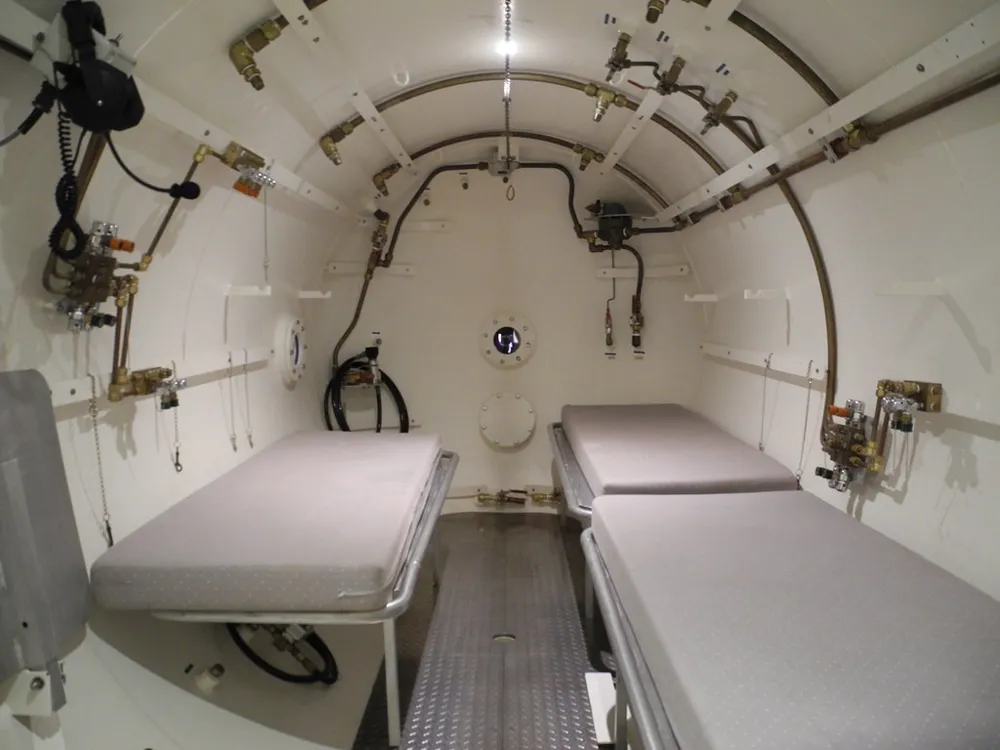
The definitive treatment is recompression in a hyperbaric chamber while breathing oxygen. The extra pressure shrinks the bubbles and restores blood flow and oxygen to damaged tissue; pressure is then reduced slowly, in stages, so the gas can leave. StatPearls names US Navy Treatment Table 6 as the standard schedule. Divers are usually stabilized at the nearest medical facility first, then transferred to a chamber.
- Diagnosis is based mainly on symptoms and their timing after a dive; the MSD Manual notes that CT and MRI scans are not reliable for diagnosing DCS.
- Timing matters: long delays raise the risk of permanent injury, though recompression may still help 48 hours or more after a dive.
- Outlook: the MSD Manual says most people recover completely. Delayed or inadequate treatment of spinal cord DCS can leave lasting problems such as weakness or partial paralysis.
- Getting to a chamber: if a diver has to be flown, experts recommend a pressurized aircraft or a low-altitude flight.
Treatment decisions belong to dive medicine physicians. The CDC notes that a doctor may decide some mild, stable cases in remote areas don't need recompression, but that is a medical call, not one for the diver or dive boat.
Risk Factors
The CDC says the main risk factors are dive depth, dive time and ascent rate. Others that can raise the risk include:
- Repetitive dives and multi-day diving, and dives deeper than 18 m (60 ft)
- Flying or going to altitude too soon after diving
- Cold water, strong currents and hard exercise during or after a dive
- Dehydration, fatigue and recent alcohol
- Overhead environments such as caves and wrecks
- Older age and higher body fat
- A patent foramen ovale (PFO) or other heart defect that lets bubbles cross from the veins to the arteries
- Skipping decompression procedures or safety stops
Even a perfect dive profile doesn't remove all risk; the MSD Manual notes some people get DCS despite following the tables.
Flying and Altitude After Diving
Airliner cabins are pressurized to the equivalent of about 6,000–8,000 feet, so flying soon after diving acts like a further ascent. DAN's guidelines recommend a minimum surface interval before flying of:
| Diving You Did | Minimum Wait Before Flying |
|---|---|
| A single no-decompression dive | 12 hours |
| Multiple dives in a day, or multiple days of diving | 18 hours |
| Dives needing decompression stops | Substantially longer than 18 hours (the CDC suggests 24–48 hours) |
The CDC adds that divers should wait before any trip above about 2,000 feet, including mountain drives, and that these intervals reduce but don't eliminate the risk. See our guide to flying after scuba diving for more.
How to Prevent the Bends
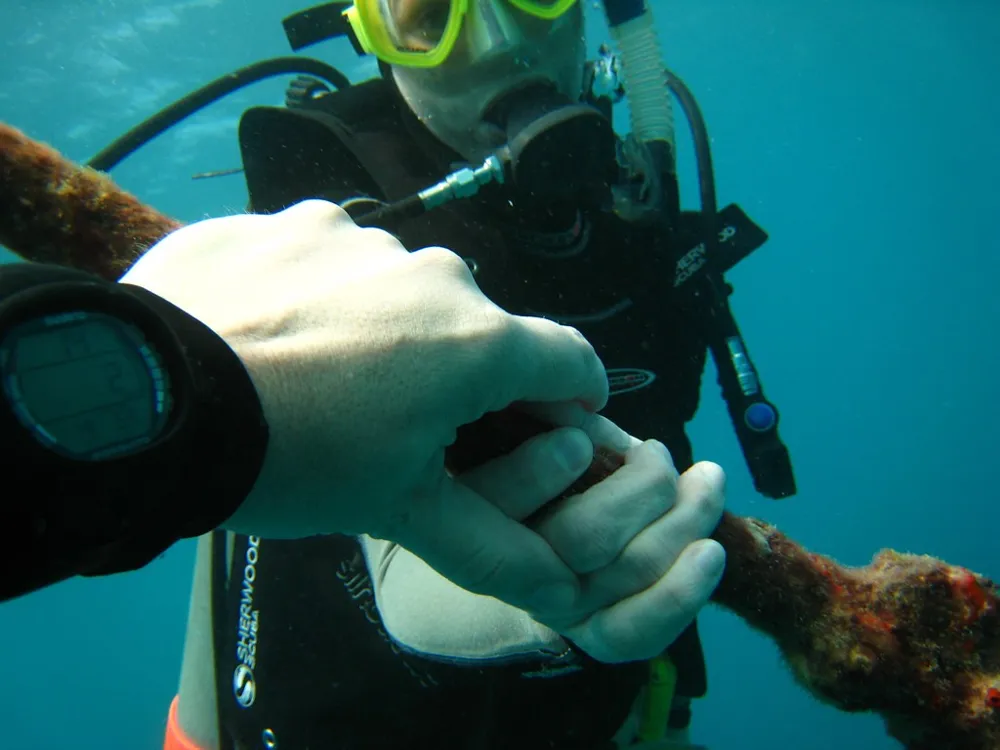
Prevention is mostly about controlling how much nitrogen you take on and letting it out slowly:
- Stay well within no-decompression limits using a dive computer or tables, and dive conservatively rather than to the edge of the limit.
- Ascend slowly and make a safety stop of a few minutes at about 15 feet (4.5 m) at the end of every dive.
- Take proper surface intervals between dives so dissolved nitrogen can fall before the next one.
- Stay hydrated and rested, and avoid alcohol before diving.
- Take it easy after diving: PADI advises avoiding hard exercise and hot showers right after a dive.
- Consider enriched air nitrox if you're trained to use it, which PADI lists as a way to reduce nitrogen loading.
- Stay within your training and dive with a trained buddy. If you're new, start with getting certified and our beginner scuba tips.
- Get a dive medical if you have heart or lung risk factors; many dive operators require a signed medical form.
Can Snorkelers and Freedivers Get the Bends?
Snorkeling at the surface doesn't cause the bends, because you're breathing air at surface pressure. Breath-hold divers take only one lungful of air down, so the bends is rare, but PADI notes it can happen after repeated deep freedives with short surface times. The bigger breath-hold danger is blackout; see scuba diving vs freediving and how to freedive.
The rule that matters most for snorkelers is the reverse: if you've been scuba diving, don't fly too soon, even if you spend the next day snorkeling. Learn more in snorkeling vs scuba diving.
Can You Dive Again After the Bends?
Don't plan another dive until you've had a medical evaluation. The MSD Manual advises not diving until a physician has assessed you. If you got the bends on a dive within normal limits, doctors may check for underlying causes such as a PFO. Ask a doctor trained in dive medicine.
For more on the risks of the sport, see is scuba diving dangerous? and how deep you can scuba dive. Sources for this guide include the Divers Alert Network, the CDC Yellow Book, the MSD Manual and StatPearls (NIH National Library of Medicine).
Frequently Asked Questions
What does the bends feel like?
The most common form causes aching pain in the joints, limbs or back that is often worse with movement. Some people feel unusual fatigue, itching or a blotchy rash, and more serious cases cause numbness, weakness, dizziness or trouble breathing.
Can you die from the bends?
Severe decompression sickness can cause permanent nerve damage or death, especially if treatment is delayed. Most people who are treated promptly recover completely.
How long after diving can you get the bends?
According to DAN, symptoms usually appear between 15 minutes and 12 hours after a dive but can start up to 24 hours later. Flying or driving to altitude after diving can trigger them.
What depth can you get the bends at?
There is no single safe depth. Risk depends on depth, time underwater and ascent speed, and PADI notes that the biggest change in pressure is in the last 10 meters (33 feet) to the surface.
Can snorkelers get the bends?
Ordinary snorkeling at the surface does not cause the bends. Breath-hold divers rarely get it, but PADI says it can happen after many repeated deep freedives.
How is the bends treated?
With 100% oxygen as first aid, then recompression in a hyperbaric chamber under medical supervision. Anyone with suspected symptoms should contact emergency services and DAN.
Can you dive again after the bends?
Only after a medical evaluation. The MSD Manual advises not diving until a physician has assessed you, and checking for underlying risk factors if you were bent on a normal dive profile.