Cave Diving: What It Is, Why It Is Risky and How Divers Train (2026)
Cave diving takes scuba into flooded passages where there is no direct way up to the surface. Here's how it differs from cavern diving, what goes wrong, the rules that keep trained divers alive and where people dive caves.
What Is Cave Diving? The Short Answer
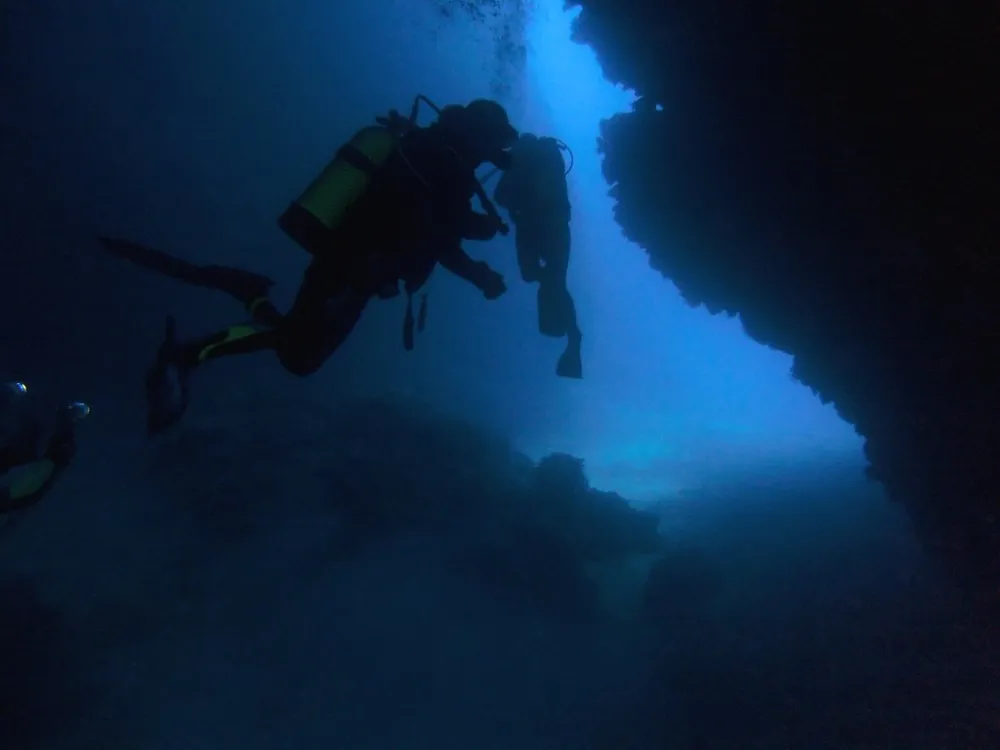
Cave diving is scuba diving inside flooded caves, beyond the reach of daylight, where there is no direct way to swim up to the surface. Divers follow a continuous guideline from open water into the cave and back out, carry spare breathing gas and several lights, and plan every dive around getting out if something fails.
It is one of the most demanding forms of scuba diving. Florida's springs and Mexico's cenotes draw divers for clear water and dramatic limestone tunnels, but the same environment that makes caves beautiful makes mistakes deadly. If you search for "scuba diving in a cave," the honest first answer is that it needs its own training.
This guide explains the sport. It is not a substitute for training. Never enter a cave or the overhead part of a cavern without completing the right course with a qualified cave instructor.
Cavern Diving vs Cave Diving
Divers use the two words very differently. A cavern is the first part of a cave, where daylight from the entrance still reaches you and you can see the way out. Once you swim around a bend and can no longer see daylight in any direction, you are in the cave.
Both are overhead environments: rock blocks a straight swim to the surface. In open water, a diver with a problem can ascend. In a cavern or cave, the diver has to swim out first.
| Cavern Diving | Cave Diving | |
|---|---|---|
| Light | Inside the daylight zone; the entrance stays in sight | Total darkness beyond the daylight zone |
| Typical limits | Shallow, short penetration; NSS-CDS cavern standards cap depth at 100 feet and distance from the surface at 200 feet | Set by the diver's level of training, gas supply and team plan |
| Restrictions | No tight squeezes or decompression | Can include restrictions, deep sections and decompression at higher levels |
| Gear | Single cylinder, a primary light and backups, a reel | Redundant gas (doubles or sidemount), at least three lights, reels and line markers |
| Training | Cavern course (first step) | Intro or basic cave, then full cave courses |
Cavern limits differ by agency and course, so learn the exact ones your instructor teaches. A cavern card is not a cave card: cavern divers stay in the daylight zone.
Why People Cave Dive
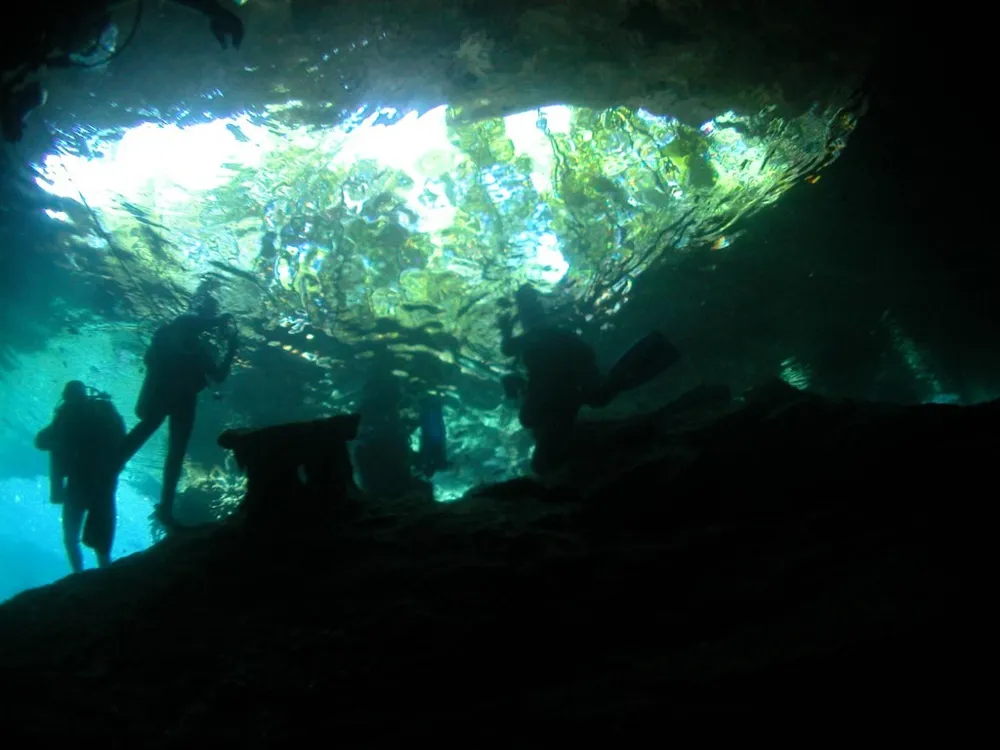
Cave divers talk about exploration, quiet and water clarity. Many freshwater springs filter out particles, and DAN's Alert Diver describes visibility of up to 200 feet in some caves. Passages can open into large rooms with rock formations and fossils.
Cave diving also has a real exploration side. Volunteer teams still lay new line and survey passages in Florida, Mexico and elsewhere, and some systems run for many kilometers. For most divers, though, the appeal is simpler: precise buoyancy, careful planning and a place few people ever see.
Caves form in several ways. Most diveable systems are solution caves, carved when slightly acidic water dissolves limestone. Divers also explore sea caves cut by waves, lava tubes left by volcanic flows and caves inside coral reefs.
Why Cave Diving Is So Dangerous
Cave diving has a long fatality record, especially among divers without cave training. The main dangers come from the overhead itself:
- No direct ascent. Any problem, whether an empty tank, a failed regulator or a lost buddy, has to be solved underwater while you swim to the exit.
- Silt-outs. A careless fin kick can stir fine silt or clay and drop visibility to zero in seconds. Without a guideline, divers can lose the way out within arm's reach of it.
- Darkness. Past the cavern, your lights are the only light. A dead light without backups means a blind exit.
- Gas supply. The way out can take as long as the way in, or longer if you are swimming against flow, so running short far from the exit is often fatal.
- Depth and narcosis. Deeper caves cut your gas time and add nitrogen narcosis and decompression obligations. See how deep you can scuba dive and what the bends are for the open water side of this.
- Restrictions and flow. Tight passages can trap gear, and strong outflow at spring vents can push divers around.
- Panic. Stress, entanglement or a lost line can quickly become panic, and panicked divers breathe hard and make poor choices.
Research backs this up. A 2016 study in Diving and Hyperbaric Medicine (Potts, Buzzacott and Denoble) reviewed 161 American cave diving deaths from mid-1985 to mid-2015. Most of the victims overall had no cave training, but the share who were trained rose from about 31% in the first 15 years to about 62% in the second. Among trained divers who died, breaking the thirds rule was the violation most often judged relevant to the death, followed by guideline errors. DAN's Alert Diver also reports research on more than 300 American cave diving deaths over a 40-year period.
For risk in ordinary recreational diving, see our separate guide, is scuba diving dangerous.
The Five Rules of Cave Diving Accident Analysis
In the 1970s, Sheck Exley studied cave diving accident reports and found that the same few mistakes kept recurring. His NSS-CDS book Basic Cave Diving: A Blueprint for Survival (1979) built a chapter around each accident type. Cave instructors now teach a short list of rules, usually five, drawn from that accident analysis:
| Rule | What It Means | Why It Matters |
|---|---|---|
| Training | Get cave training and stay within it | Lack of training, or diving beyond it, is described as the leading cause of cave accidents |
| Guideline | Keep a continuous line from open water to the farthest point of the dive | In a silt-out or light failure, the line is the only reliable way out |
| Gas management | Use the rule of thirds (or a more conservative plan) | Reserves gas for the exit and for sharing with a buddy |
| Lights | Carry at least three independent lights | One failure means turning the dive, not a blind exit |
| Depth | Respect depth limits for your gas and training | Depth increases narcosis, gas use and decompression, leaving less margin for error |
Some agencies add rules about equipment, team diving or staying within your comfort level. The core idea doesn't change: most cave deaths follow a known pattern, and the rules exist to break that pattern.
A Short History of Cave Diving
People explored flooded caves long before scuba, but organized cave diving grew alongside modern diving gear. The milestones below are the ones most often cited:
| Year | Milestone |
|---|---|
| 1946 | The Cave Diving Group (CDG) forms in Britain, where divers explore sumps, the flooded sections of dry caves |
| 1960s | UK divers push through successive sumps in caves such as Swildon's Hole |
| 1974 | The National Speleological Society forms its Cave Diving Section (NSS-CDS), with Sheck Exley as first chairman |
| 1979 | The NSS-CDS publishes Exley's Basic Cave Diving: A Blueprint for Survival, one of the first cave diving safety manuals |
| 1980s–2000s | Formal cave training spreads, and divers survey huge underwater systems in Mexico's Yucatán |
| 1994 | Exley dies during a very deep dive at Zacatón, a cenote in Mexico |
| 2018 | The Tham Luang rescue in Thailand brings cave diving to worldwide attention |
Exley is the best-known figure in American cave diving. He was reportedly the first person to log more than 1,000 cave dives, and the NSS-CDS still gives an award in his name to divers who complete 1,000 safe cave dives after full cave training. Florida's Peacock Springs park is named for Wes Skiles, another well-known cave explorer and filmmaker.
How to Become a Cave Diver: Training Levels and Agencies
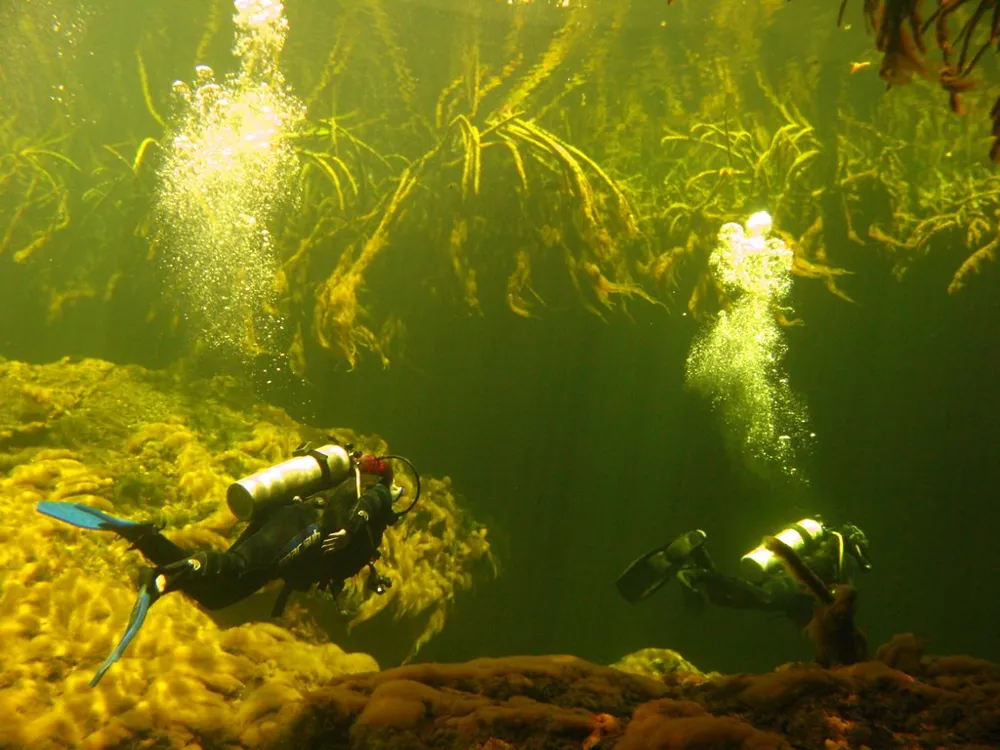
Cave training is staged. Each level adds distance, darkness and complexity, and you are expected to practice between levels. Start with open water certification (see how to get scuba certified), then build experience before you sign up for cavern.
| Level | What You Learn | Typical Limits |
|---|---|---|
| Cavern | Line laying and following, lights, anti-silt kicks, gas planning, out-of-air and lost-line drills | Daylight zone, single cylinder, no restrictions or decompression |
| Intro or basic cave | First dives beyond daylight, usually along the main permanent line only | Limited gas use and no navigation away from the main line |
| Full cave (cave diver) | Jumps and gaps between lines, line markers, complex navigation, longer dives | Set by training, team and gas plan |
| Advanced specialties | Stage cylinders, scooters (DPVs), surveying, deep cave, rebreathers | Course-specific |
Training Agencies
Several organizations teach cave diving. Many instructors certify through more than one.
- NSS-CDS (National Speleological Society Cave Diving Section): levels run Cavern Diver, Basic/Intro to Cave Diver, Apprentice Cave Diver, Cave Diver and Advanced Cave Diver. Its cavern course normally expects divers to be 18, with some minors accepted under conditions.
- NACD (National Association for Cave Diving): a cave-focused training agency.
- IANTD, TDI and GUE: technical diving agencies with cavern and cave programs.
- PADI and SSI: offer cavern courses. PADI's Cavern Diver course requires Advanced Open Water certification and a minimum age of 18, and includes four dives.
Many cave instructors recommend arriving with solid buoyancy and trim, experience diving with two cylinders and a good number of logged dives in varied conditions. Course length, prerequisites and costs change, so check the agency's current standards and talk to the instructor first.
Skills You Practice
- Neutral buoyancy and horizontal trim, so you don't touch the floor or ceiling
- Frog kicks, modified flutter kicks, back kicks and helicopter turns that push water up and away from silt
- Laying, tying off and following a guideline
- Out-of-gas sharing while swimming out on the line
- Exiting with eyes closed or blacked out, keeping touch contact with the line and your buddy
- Light signals and hand signals for team communication
Cave Diving Equipment
Cave gear starts with ordinary scuba equipment and adds redundancy everywhere. Nothing that can fail should leave a diver without a backup.
Gas Supply: Backmount Doubles or Sidemount
- Backmount doubles: two cylinders joined on the back, usually with an isolator manifold so a failed valve or regulator can be shut off without losing all the gas.
- Sidemount: cylinders clipped along each side of the body, each with its own regulator. Sidemount suits low passages and makes it easier to see and reach the valves.
- Both setups give two independent regulators. Advanced divers may add stage cylinders for longer dives.
Lights
Cave divers carry at least three lights: a primary (often a canister light with a cord-mounted head) and two backups. If any light fails, the team turns the dive. Cavern courses also teach light use, and some cavern divers carry backups too.
Reels, Spools and Line Markers
A primary reel runs line from open water to the start of the permanent line in the cave, and spools bridge jumps and gaps between lines. Every diver should also carry a safety spool for finding a lost line. Markers clipped to the line show direction and who is in the cave:
| Marker | Shape | What It Tells Divers |
|---|---|---|
| Line arrow | Notched triangle | Points toward the nearest exit; you can feel the direction in zero visibility |
| Cookie | Round disc | Non-directional personal marker showing that a specific diver or team is beyond that point |
| REM (referencing exit marker) | Rectangle with a blank area for writing | Directional for the diver who placed it; other divers read it like a cookie |
Never move or remove another team's markers, and never cut or reroute permanent lines.
Other Gear
- Exposure protection: a good wetsuit or drysuit, since long dives in cool spring water drain body heat. Divernet describes a hood as required for cave diving.
- Fins: stiff paddle fins that work well for frog kicks; split fins are generally avoided. See our scuba diving fins guide.
- Dive computer, depth gauge and timer, plus a backup.
- Cutting tools, such as line cutters or a small knife, placed where either hand can reach them.
- Streamlined rigging with no dangling hoses or clips that can snag on line or rock. Snorkels are left behind.
Cave Diving Techniques and Etiquette
Good cave divers move slowly and deliberately. They keep a horizontal position, fin with small kicks that don't touch the floor, and pull or touch the rock only where it won't damage formations or stir silt. Teams usually stay in single file with the line within reach, and they agree in advance on turn pressures, signals and who leads.
Caves are fragile. Formations can take thousands of years to grow, and some caves hold fossils and archaeological remains, so don't touch, collect or disturb anything. Park and landowner rules often ban removing fossils or artifacts.
Access also depends on good behavior. Many springs sit on private land or in state parks, and diving there continues because divers follow the rules, park in the right places and respect neighbors.
Famous Cave Diving Locations
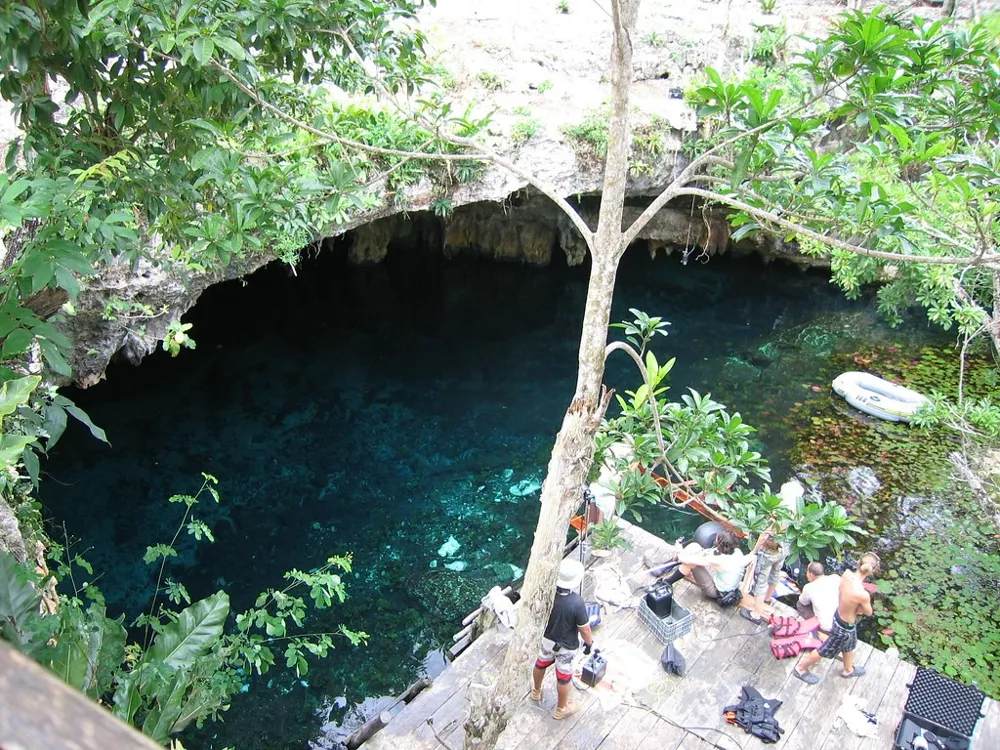
Most of the world's popular cave diving is in limestone regions with clear groundwater. These are the best-known areas, with site facts kept general because rules and conditions change.
Florida Springs
North Central Florida is one of the world's best-known cave diving regions. Well-known sites include Ginnie Springs and its Devil's Spring System, Peacock Springs (more than 30,000 feet of documented passages, according to Florida State Parks), Madison Blue Spring and Little River Spring. Divernet calls Ginnie "the western world's recreational cave-diving Mecca."
Many springs also have open basins that open water divers can enjoy, such as the Ginnie Ballroom and Devil's Den. For dive-site details, see our guide to the best scuba diving in Florida.
Mexico's Cenotes
The Yucatán Peninsula, especially Quintana Roo around Tulum and Playa del Carmen, is full of cenotes: sinkholes that open into flooded caves. Systems such as Sac Actun and Ox Bel Ha are among the longest known underwater caves, with surveys reaching well over 100 kilometers. The Quintana Roo Speleological Survey tracks current lengths.
Popular cenotes such as Dos Ojos and Chac Mool have cavern sections. PADI notes that certified open water divers can join guided cavern tours that follow a line inside the natural light zone with a qualified guide. Some cenotes also have a halocline, where fresh and salt water meet and the water looks blurred.
Other Regions
- The UK: a long tradition of sump diving, often in cold, low-visibility water, organized through the Cave Diving Group since 1946.
- Russia: Orda Cave is among the cave sites divers travel to.
- The Bahamas: blue holes and inland caves, including sites on Grand Bahama.
- Australia: flooded sinkholes in South Australia, such as Kilsby Sinkhole.
- Lava tubes and sea caves: places such as Hawaii have lava tubes, and many coasts have sea caves. Some sea caves are short swim-throughs that open water divers visit with guides, but true caves still need cave training.
For broader trip ideas, see our list of the best scuba diving destinations.
Rules and Access at Cave Diving Sites
Sites set their own rules, and many check certification cards at the gate. Examples from official site pages (last checked November 2026):
- Wes Skiles Peacock Springs State Park, Florida: cavern and cave diving is limited to certified dive teams in designated areas; divers must show proof of certification and sign in; open water divers may dive only Orange Grove Sink and may not carry lights; solo diving is banned; dives must end an hour before sundown; scooters are not allowed.
- Ginnie Springs, Florida: "absolutely no cave diving" except by certified cave divers; no solo diving; only registered cavern- and cave-certified divers may carry lights in and around the Devil's Spring System; divers must be at least 18 to check in for intro-to-cave and higher.
- Devil's Den, Florida: open water diving only, with no cave entry for recreational divers.
- Mexico cenotes: each cenote sets its own access rules. Cavern tours need a qualified guide, and cave dives need cave certification.
Rules change, so check each park or landowner's official page before you go. Florida springs often post warning signs at the limit of the cavern zone. If you are not cave trained, a sign means turn around.
Cave Diving Records
Cave diving has depth and penetration records, from the deepest scuba cave dives to the longest surveyed underwater systems. These numbers change as teams explore and are best checked with the record keepers and survey groups themselves. We cover the main diving records separately in our guide to diving world records.
Records are set by expedition teams with years of experience, custom gas mixes and support divers. They have nothing to do with recreational cave diving, and several famous record attempts ended in death.
Is Cave Diving Right for You? A Planning Checklist
If cave diving appeals to you, take it in steps:
- Get certified and log dives in varied conditions. Work on buoyancy and trim until you can hover still without moving your hands.
- Take a guided look. Dive the open basins of Florida springs, or join a guided cenote cavern tour in Mexico.
- Choose a cave instructor with a strong safety record and current agency standing. Ask about student ratios and how many training dives are included.
- Take cavern training, then dive within those limits for a while before moving on.
- Move to intro and full cave only when you're comfortable, and keep practicing drills after each course.
- Dive with trained teammates and follow the five rules on every dive.
If you have health questions, talk to a doctor who knows dive medicine before you train. Diving and cave diving carry risks that no article can remove. If you're still choosing between styles of diving, start with our overview of the types of scuba diving.
Frequently Asked Questions
Can you go cave diving without certification?
You should not. Studies of American cave diving deaths found that many victims had no cave training, and sites such as Ginnie Springs and Peacock Springs allow cave entry only for certified cave divers. Open water divers can visit open basins, and in Mexico they can join guided cavern tours.
What is the difference between cavern and cave diving?
Cavern diving stays in the daylight zone near the entrance, where you can still see the way out. Cave diving goes beyond the light into total darkness, farther and often deeper, and needs separate, more advanced training.
Why is cave diving so dangerous?
There is no direct ascent to the surface, so any problem has to be solved underwater on the way out. Silt can wipe out visibility, lines can be lost, and running low on gas far from the exit is often fatal.
What is the rule of thirds in cave diving?
It is a gas-planning rule: use one third of your gas going in, keep one third for the swim out, and hold one third in reserve for emergencies such as sharing gas with a buddy. Many divers turn the dive even sooner in some conditions.
How long does it take to become a cave diver?
Training runs in stages, usually cavern, then intro or basic cave, then full cave. Each stage takes several days of course work and dives, and instructors expect plenty of practice between levels. Check your chosen agency for current requirements.
Where is the best cave diving in the world?
Two of the best-known areas are North Central Florida's springs, such as Ginnie and Peacock, and the cenotes of Mexico's Yucatán Peninsula. Other regions include the Bahamas, Europe, the UK and southern Australia.