Ear Equalizing for Divers: Techniques, Timing and Warning Signs (2026)
Ear pressure is the most common complaint on the way down, and almost always fixable. Here's why it happens, how each equalizing technique works and what to do when your ears won't clear.
Why Your Ears Hurt When You Dive
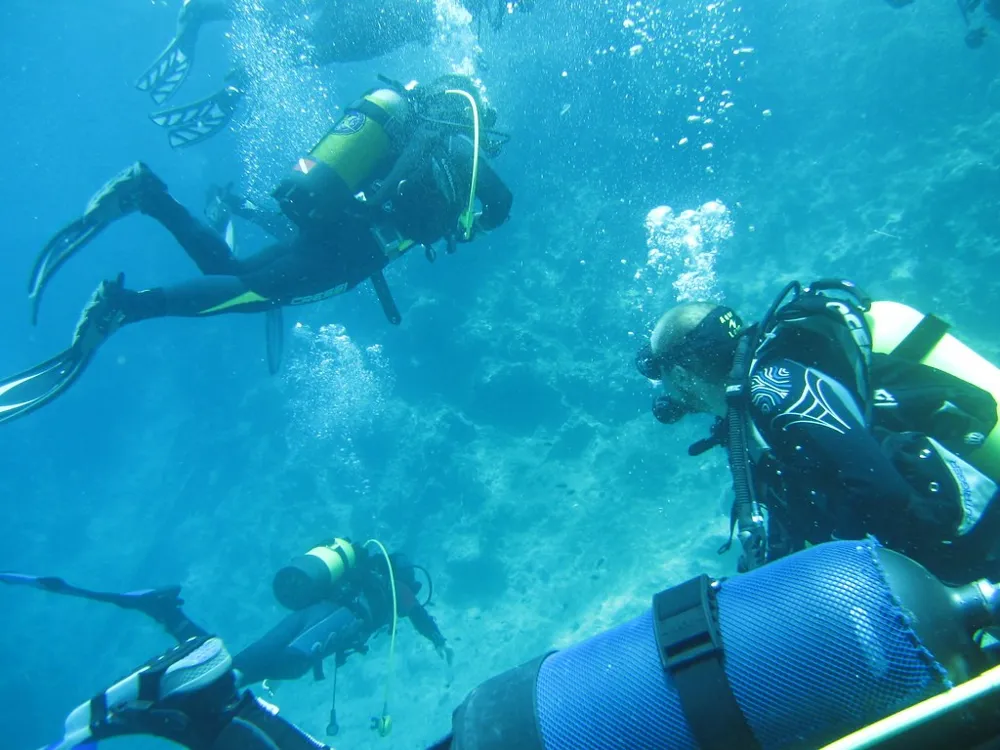
Your middle ear is a small air space behind the eardrum. As you descend, water pressure rises, by about one atmosphere for every 10 meters (33 feet) of seawater, or about 0.5 PSI per foot, according to the Divers Alert Network (DAN). Under Boyle's law, that rising pressure shrinks the air inside your middle ear. The space can't shrink much, so the eardrum bows inward. That stretching is the pressure, then pain, you feel on the way down.
To fix it, you equalize (also called clearing): you add air to the middle ear through the Eustachian tubes, the passages that run from each middle ear to the back of your throat. They normally stay closed and open briefly when you swallow or yawn. Every technique below is just a different way of opening them.
If you don't equalize, the pressure difference keeps growing. DAN notes that fluid and bleeding in the middle ear can follow even modest differences, that the eardrum can rupture at about 5 PSI (0.35 bar) of difference in some divers, and that sudden, large pressure changes can also injure the inner ear. The same problem affects your sinuses and your mask, which is why divers wear a mask with a nose pocket rather than goggles.
This page is general information drawn from DAN, PADI and SSI guidance. It isn't medical advice and doesn't replace training. If you have ear problems, talk to a doctor, ideally one familiar with diving.
How to Equalize: Techniques Step by Step
DAN describes all equalizing methods as ways to open the lower ends of the Eustachian tubes so air can reach the middle ear. The safest methods use your throat and jaw muscles to open the tubes rather than forcing air at them. Try them on land first and find the one or two that work for you.
| Technique | How It Works | Hands Needed? | Good to Know |
|---|---|---|---|
| Valsalva | Pinch your nose and blow gently through it | Yes | Easiest to learn; never blow hard |
| Toynbee | Pinch your nose and swallow | Yes | DAN notes it also works well on ascent |
| Frenzel | Pinch your nose, close the back of your throat and make a "k" sound | Yes | No chest effort; the freediver's standard |
| Lowry | Pinch your nose, blow gently and swallow at the same time | Yes | A Valsalva and Toynbee combined |
| Edmonds | Push your jaw forward, then use Valsalva or Frenzel | Yes | The jaw thrust helps open the tubes |
| Voluntary tubal opening (BTV) | Tense the soft palate and throat, push the jaw forward and down, as if starting a yawn | No | Hands-free; DAN says up to 30% of divers can master it |
| Mouthfill | Store air in your mouth and use it to equalize as the lungs compress | Yes | Advanced; for deep freediving only, learned from an instructor |
DAN also lists passive equalization, which takes no effort. It's what usually happens on ascent, when expanding air vents out of your middle ears on its own.
Valsalva Maneuver
- Pinch your nostrils closed through your mask's nose pocket.
- Keep your mouth closed (around the regulator if you're on scuba).
- Blow gently against your pinched nose, as if trying to breathe out through it, until you feel or hear your ears pop.
It's the method most divers learn first, but DAN points out three drawbacks: it doesn't use the muscles that open the tubes, it's easy to overdo, and blowing hard against a blocked nose can raise pressure in the inner ear. DAN advises keeping it light and brief, under about five seconds. Blowing hard against tubes that are already closed can lock them shut and cause barotrauma, including a ruptured eardrum, PADI warns.
Toynbee Maneuver
- Pinch your nostrils closed.
- Swallow. The throat muscles that work during a swallow help open the tubes.
DAN notes Toynbee is useful for equalizing during ascent as well.
Frenzel Maneuver
- Pinch your nostrils closed.
- Close the back of your throat (the soft palate side), so no air goes to or from your lungs.
- Press the back of your tongue up and back, like making a "k" (some instructors teach a "t" tongue position). The tongue works like a piston and pushes air from your mouth and nose into the tubes.
Because the pressure comes from your mouth and throat rather than your chest, Frenzel doesn't need you to strain or exhale. That's why it works head-down and with small lung volumes, and why freediving courses teach it. It takes practice; a mirror helps you see the throat movement.
Lowry Technique
- Pinch your nostrils closed.
- Blow gently, as in a Valsalva, and swallow at the same time.
It takes some coordination, so practice it on land before relying on it underwater.
Edmonds Technique
- Tense your soft palate and throat.
- Push your lower jaw forward and down.
- While holding that jaw position, do a gentle Valsalva or Frenzel.
Voluntary Tubal Opening (BTV)
Voluntary tubal opening, often called BTV (from the French béance tubaire volontaire), is hands-free. You tense the muscles of your soft palate and throat while pushing your jaw forward and down, as if starting a yawn, and the tubes open without any blowing. DAN says it takes a lot of practice but can let you equalize continuously, and that up to 30% of divers can master it.
Mouthfill (Deep Freediving Only)
On a single breath, your lungs compress as you go deeper, and eventually there isn't enough air left to push into your mouth for a normal Frenzel. Deep freedivers solve this with a mouthfill: they move air into the mouth earlier in the dive, then use that stored air to keep equalizing. Diving medicine literature treats it as a separate technique from Frenzel. It isn't needed for recreational scuba or shallow freediving, and it should be learned from a freediving instructor once your Frenzel is reliable.
When and How Often to Equalize
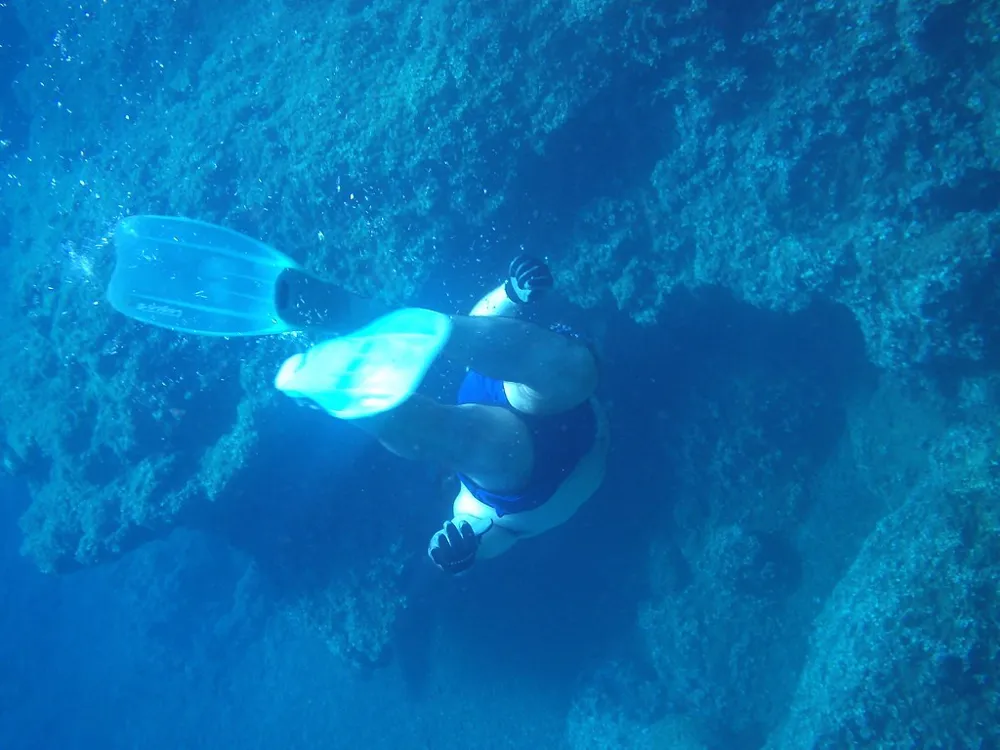
The most common mistake is equalizing too late. Once the pressure difference builds, soft tissue can press the tubes closed and no technique will open them. PADI's rule is equalize early and often. Here's the routine DAN and PADI describe:
- Check your ears before the dive. When you swallow, you should hear a pop or click in both ears.
- Start before you get in. DAN's tips suggest gently equalizing every few minutes for several hours before the dive. PADI suggests equalizing on the boat and again before your head goes under.
- Equalize once at the surface. DAN suggests a gentle equalization before descending to build a small air reserve in the middle ear and sinuses.
- Descend feet first and look up. Air rises toward the tubes more naturally when you're upright. DAN notes a Valsalva takes about 50% more force head-down than head-up, and extending your neck tends to open the tubes.
- Use a line. An anchor or descent line lets you control your speed and stop instantly.
- Equalize every few feet in the first 10 to 15 feet. DAN material notes that most authorities suggest about every 2 feet, roughly every two seconds at a descent rate of 60 feet per minute. The biggest relative pressure change is in the first 10 meters (33 feet), so this is where you need to work hardest.
- Keep going as you descend. You'll need to equalize less often as you go deeper, but don't stop.
- Equalize again at your maximum depth. DAN notes that a small negative pressure you don't notice can still cause barotrauma if it lasts for several minutes.
Some divers equalize with almost every breath on the way down. PADI also suggests practicing gentle equalizing twice a day on non-diving days. For more first-dive habits, see our scuba diving tips for beginners.
Equalizing for Freediving and Snorkeling
Breath-hold divers face the same physics with less air. You can't add air from a tank, and the air in your lungs shrinks as you go down, so efficient equalizing matters even more:
- Learn Frenzel. Valsalva relies on your chest muscles, gets harder head-down and becomes difficult as your lungs compress. Frenzel uses only the air in your mouth and throat.
- Equalize at the surface and right after your duck dive, then keep equalizing frequently, before you feel pressure. Keep a hand near your nose so you can pinch quickly.
- Use a low-volume mask. Your mask also needs air from your nose as you descend. A low-volume freediving mask takes less of your breath to equalize, and its nose pocket should be easy to pinch with one hand.
- Turn around if it won't clear. On a breath-hold you can't hover and wait, so the answer is to end the dive and try again after a rest.
- Snorkelers who dive down need to equalize too. SSI suggests equalizing at the surface to get you through the first meter or so of descent. Goggles don't cover your nose, so you can't equalize them or pinch through them; use a snorkel mask with a nose pocket.
Our how to freedive guide covers the full dive sequence, and a freediving course will coach your Frenzel in the water. Never practice breath-hold diving alone; see shallow water blackout for why.
What to Do When Your Ears Won't Clear
DAN is clear that pain is not acceptable. Pain means you've descended faster than you've equalized. If an ear won't clear:
- Stop descending and signal your buddy that you have an ear problem.
- Rise a few feet until the discomfort goes, which reduces the pressure on the tube.
- Tilt the blocked ear toward the surface and try again gently, perhaps with a different technique, such as adding a jaw thrust or a swallow.
- Don't bounce up and down repeatedly, and never force it with a hard Valsalva.
- If it still won't clear, end the dive. DAN warns that descending without equalizing can cause permanent damage and hearing loss. Missing one dive is a small price.
Common reasons ears won't clear, according to PADI, include not enough practice, congestion from a cold or infection, a blockage such as earplugs or a tight hood, and a technique that doesn't suit you. Water in your nose from a leaky mask can also irritate the lining and make it harder, so keep your mask well fitted.
Reverse Block: When Your Ears Won't Vent on Ascent
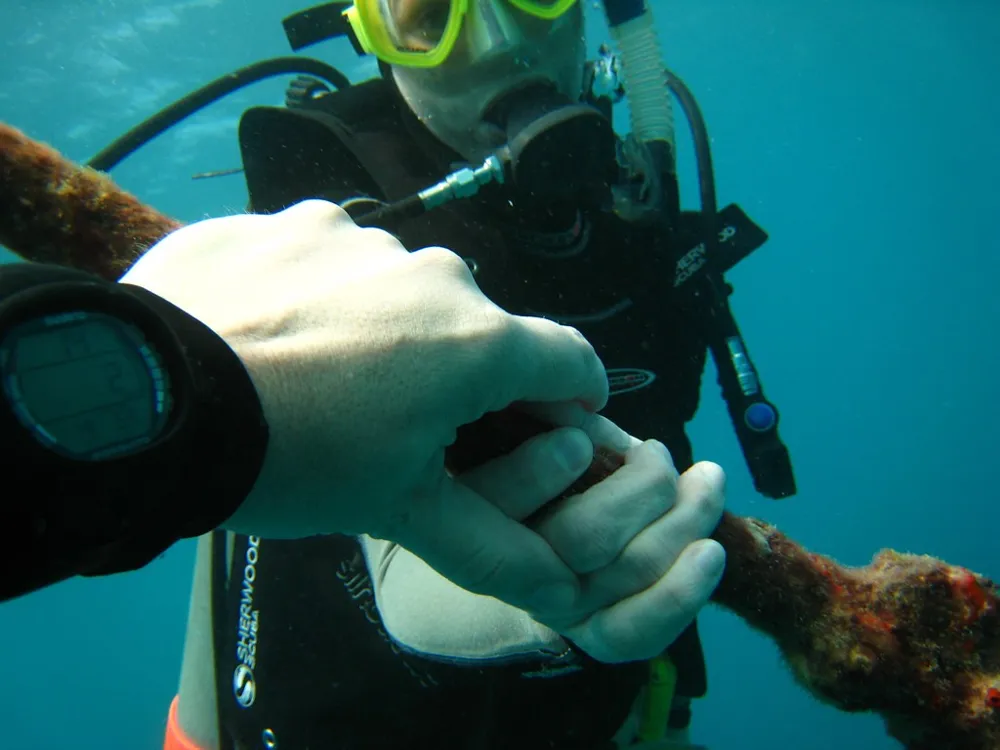
A reverse block (reverse squeeze, or middle-ear barotrauma of ascent) is the same problem in the opposite direction. As you rise, the air in your middle ear expands and normally vents out through the Eustachian tubes on its own. If a tube is blocked, the expanding air pushes the eardrum outward instead. DAN lists the usual causes as mucus in the tubes after poor equalizing on the way down, diving with a cold, and a decongestant wearing off while you're at depth.
Signs are pressure, then pain, in the ear on the way up, and sometimes vertigo. Unequal venting between the two ears can also cause alternobaric vertigo, a brief dizziness, usually on ascent. What DAN suggests if it happens:
- Try the equalizing techniques you use on descent; sometimes they work on ascent too. DAN singles out Toynbee as useful here.
- Point the affected ear toward the bottom.
- Ascend as slowly as your air supply allows. DAN notes the last 30 feet are usually the hardest.
- Don't hold your breath or rush the ascent. Stay with your buddy and keep your gas plan in mind.
The best prevention is not diving congested and equalizing early on descent. If you've had a reverse block, stay out of the water until a doctor has checked your ear.
Colds, Congestion and Decongestants
Swollen tissue around the Eustachian tubes is the main reason ears stop equalizing. DAN lists upper respiratory infections, hay fever and allergies, cigarette smoking, snorting drugs and a deviated nasal septum as conditions that impair equalizing. PADI adds that alcohol and smoking before a dive irritate the sinuses and increase mucus. The safest choice is simple: if you can't equalize easily at the surface, don't dive.
Many divers ask about decongestants. DAN says they can reduce swelling in the nasal and ear passages, but its guidance comes with clear cautions:
- Only with your doctor's agreement. Decongestants have side effects.
- Don't try one for the first time on a dive day. DAN advises against using them before diving if you have no prior experience with them.
- They can wear off at depth. If the effect fades mid-dive, the tubes can block on the way up and cause a reverse block.
- Nasal sprays can rebound. DAN warns that over-the-counter sprays can cause rebound congestion and possibly a reverse block, and advises against repeated use.
Some divers also avoid dairy for a day before diving. PADI notes there's no scientific evidence that milk increases mucus, though some divers find it helps. Nothing on this page is a recommendation to take any medication; ask a doctor or pharmacist first.
Warning Signs of Ear Barotrauma and When to See a Doctor
Ear barotrauma is injury from a pressure difference in the ear. According to DAN, middle-ear barotrauma can start as a stuffy or clogged feeling that turns into pain as you descend, with fluid or bleeding behind the eardrum. A ruptured eardrum may suddenly relieve the pain but can bring vertigo and hearing loss. Watch for:
| Sign | What It May Mean | What to Do |
|---|---|---|
| Pressure or pain on descent | You're behind on equalizing | Stop, rise a few feet, try again gently; end the dive if it won't clear |
| Fullness, crackling or muffled hearing after a dive | Possible middle-ear barotrauma | Don't dive again until it clears; get a medical check |
| Sudden pain relief followed by dizziness | Possible ruptured eardrum | End the dive; see a doctor; no ear drops |
| Vertigo, hearing loss or ringing (tinnitus) | Possible inner-ear injury | Stop diving; seek prompt evaluation, ideally by an ENT familiar with divers |
| Worsening pain, fever or discharge | Possible ear infection | Go back to your doctor |
DAN's advice is to end the dive if you feel pain, vertigo or sudden hearing loss underwater, and not to dive again until a doctor has seen you if those symptoms persist. Seek medical evaluation for any ear injury, and do not put drops in your ear if you think the eardrum may be ruptured. Inner-ear symptoms need prompt attention. If you have any symptoms after a dive and aren't sure what they mean, contact emergency services or the DAN Emergency Hotline at +1-919-684-9111. Our guide to what is the bends covers decompression sickness symptoms.
Returning to diving: DAN advises waiting until a physician confirms the injury has healed and your Eustachian tubes work, swelling has gone and you can equalize normally. Being unable to equalize is a reason not to dive. If congestion doesn't clear or you keep struggling to equalize, see a doctor; PADI notes they may refer you to an ear, nose and throat (ENT) specialist.
Practice Drills, Ear Care and Mistakes to Avoid
Practice on Land
- Practice each technique gently at home until you can make both ears click. A mirror helps you watch your throat and jaw muscles for Frenzel and BTV.
- Practice gentle equalizing twice a day in the days before a dive trip, as PADI suggests.
- In the pool or on your first dives, try a second technique so you have a backup.
Ear Care
- Skip standard earplugs. DAN warns that solid earplugs create an air space that can't be equalized, and that diving with them may cause outer-ear barotrauma. There isn't enough independent evidence to recommend vented plugs.
- Check your hood. PADI lists a tight hood as one of the blockages that can stop ears clearing. See our wetsuit guide for fit.
- Dry your ears gently after diving with a towel; don't push cotton swabs into the canal. PADI describes using a few drops of a half white vinegar, half rubbing alcohol mix after a dive day to help prevent swimmer's ear, but warns not to use any drops if you suspect a ruptured eardrum. Ask a doctor if you're prone to ear infections.
Common Mistakes
- Waiting until you feel pressure before equalizing.
- Descending head-first or too fast, with no line for control.
- Blowing hard or holding a Valsalva for more than a few seconds.
- Pushing through pain or bouncing up and down to force a clear.
- Diving with a cold, or relying on a decongestant that may wear off.
- Forgetting to equalize your mask, which causes mask squeeze.
- Ignoring ear fullness or ringing after a dive and diving again the next day.
Flying soon after diving adds another pressure change for your ears and your body; see flying after scuba diving for DAN's waiting times. For the vocabulary used here, from Eustachian tube to reverse squeeze, see our scuba diving terms glossary, and browse all our snorkeling and diving guides.
Frequently Asked Questions
How often should you equalize when diving?
Early and often. DAN advises equalizing gently every few feet during the first 10 to 15 feet of descent, and DAN material notes most authorities suggest about every 2 feet. You need to equalize less often as you go deeper, but equalize again at your maximum depth.
Why can't I equalize my left (or right) ear?
Each ear has its own Eustachian tube, so one can clear while the other stays blocked. Rise a few feet, tilt the blocked ear toward the surface and try again gently. If it still won't clear, end the dive.
Is it safe to dive with a cold?
Generally no. DAN lists colds, allergies and other causes of congestion as things that impair equalizing, and diving congested raises the risk of a squeeze on descent and a reverse block on ascent. Wait until you can equalize easily at the surface.
Can I use earplugs when scuba diving?
Not standard ones. DAN warns that solid earplugs create an air space that cannot be equalized while diving. There isn't enough independent evidence to recommend vented dive earplugs either.
What does it mean if my ear feels full after a dive?
A full, blocked or crackling feeling can be a sign of middle-ear barotrauma. DAN advises not diving again until it has cleared and you can equalize normally, and getting a medical check, especially if there is pain, hearing loss, ringing or dizziness.
Which equalizing technique is best?
There is no single best one. Valsalva is the easiest to learn, while methods that use the throat and jaw muscles, such as Frenzel, Toynbee and voluntary tubal opening, avoid forceful blowing. Many divers combine two, and freedivers usually rely on Frenzel.
Do I need to equalize when snorkeling?
Only if you dive down. Pressure starts rising as soon as you go under, so pinch your nose and equalize gently on the way down, just as a scuba diver would.