Best Freediving and Spearfishing Masks for Easy Equalizing (2026)
Eight low-volume masks for breath-hold diving and spearfishing, and what volume, lens layout, skirt color and nose pocket shape mean on a single breath.
What Makes a Freediving Mask Different
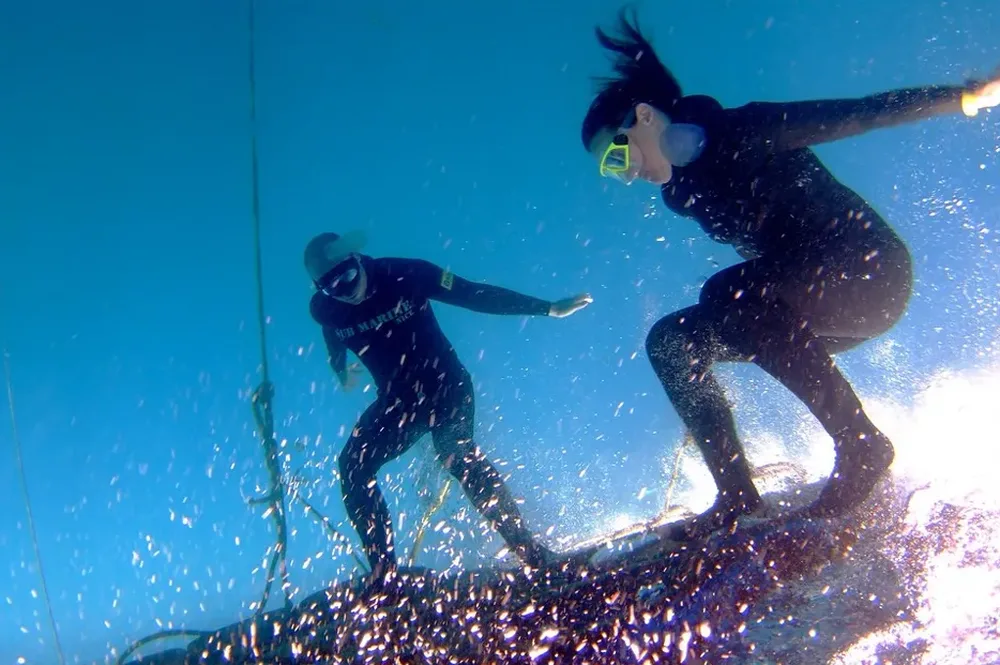
On scuba you have a tank of air to spare. On a breath-hold dive you don't, and every bit of air you puff into your mask to stop it squeezing your face is air your lungs no longer have. That's why freediving and spearfishing masks are built around low internal volume: lenses sit very close to the eyes, the frame is small or missing altogether, and the nose pocket is shaped so you can pinch and equalize quickly with one hand. A low-volume mask also adds less buoyancy and drag, and a dark skirt helps spearfishers spot fish without glare. The eight masks below come from Mares, Cressi, Aqualung and Salvimar and are all sold for freediving or spearfishing. If you mostly scuba dive, see our scuba mask guide; if you snorkel at the surface, the snorkel mask guide is the better fit.
Mares Viper
Best for spearfishing
- Reduced internal volume, lenses close to the eyes
- Anatomical skirt with no internal border
- Listed at about 0.3 lb
Cressi Nano
Best for the smallest air space
- Integrated Dual Frame design to cut volume
- Inverted teardrop lenses for a downward view
- Designed and made in Italy
Cressi Atom
Best frameless freediving mask
- Frameless, ultra-low-volume design
- Nose pocket shaped for finger equalizing
- Two tempered glass lenses, split silicone strap
Freediving Masks Compared
Details come from each mask's Amazon listing as of November 2026. "Not listed" means the listing doesn't say, so check the maker's page or the listing before you buy.
| Mask | Lens Layout | Construction | Notable Feature | Best For |
|---|---|---|---|---|
| Mares Viper | Not listed | Low-profile, anatomical skirt | Listed at about 0.3 lb | Spearfishing |
| Cressi Nano | Two inclined teardrop lenses | Integrated Dual Frame | Built to minimize volume | Depth and equalizing |
| Cressi Atom | Two tempered glass lenses | Frameless with rigid core | Finger-friendly nose shape | Dedicated freedivers |
| Aqualung Micromask X | Two lenses | One-piece lens, skirt and frame | Double-joint buckles | Compact all-rounder |
| Salvimar Hathor Anti-Fog | Two tempered glass lenses | Low-profile frame | Anti-fog in the glass, matte interior | Fog-prone divers |
| Salvimar Neo Anti-Fog | Single tempered glass lens | Low profile | Preformed 3D nose pocket | One-lens fans |
| Cressi Calibro | Wide lens | Integrated Dual Frame | Fog-Stop system, matte finish | Mixed scuba and freediving |
| Cressi F1 | Single tempered glass lens | Frameless, folds flat | Packs flat for travel | Beginners and travel |
The Best Freediving Masks
1. Mares Viper
The Viper is Mares' mask aimed squarely at freedivers and spearfishers. Its listing describes a reduced internal volume that puts the lenses closer to the eyes, which helps with both equalizing and field of view. The skirt has an anatomical shape without an internal border, meant to sit comfortably and resist leaks, and the low, hydrodynamic profile is built to cut drag as you kick down. Mares lists it at about 0.3 lb, with a silicone skirt and an ergonomic strap with easy-adjust buckles. The listed version has a black skirt, the usual choice for hunting.
Good to Know
- Low volume and a wide view for spotting fish
- Light and streamlined
- Black skirt cuts side light and reflections
Watch Out For
- The listing doesn't state the lens glass or prescription options; check before you buy
- A snug spearfishing fit may feel tight on long surface sessions
2. Cressi Nano
The Nano is Cressi's compact mask for advanced freediving and scuba. It uses Cressi's patented Integrated Dual Frame construction, which joins two rigid frames to sharply reduce internal volume, and the listing pitches it specifically at freedivers who want the smallest air space they can get. The inclined, inverted teardrop lenses are angled to improve your view downward, toward the line, your gear or the bottom. The listing describes the mask as flexible and very durable, and says it is designed and made in Italy.
Good to Know
- Built for minimum volume
- Better downward visibility
- Suits freediving, spearfishing and scuba
Watch Out For
- Very compact masks don't fit every face; check the fit carefully
- The listing's volume figure is given in unusual units, so compare it with Cressi's own spec sheet
3. Cressi Atom
The Atom is a frameless mask that Cressi describes as ultra-low-volume and designed for passionate freedivers and spearfishers. Dropping the frame lowers the volume and lets the skirt flex to the face, while a rigid core co-molded with the silicone skirt holds two tempered glass lenses shaped to widen the view. The nose pocket has an ergonomic shape for equalizing with your fingers, which matters when you're pinching on every few meters of descent. A double-injection split strap in pure silicone spreads the hold across the back of the head. It is made in Italy.
Good to Know
- Frameless and ultra-low volume
- Nose pocket designed for quick finger equalizing
- Tempered glass lenses and split strap
Watch Out For
- Frameless skirts suit some faces better than others
- No prescription option mentioned on the listing
4. Aqualung Micromask X
Aqualung's Micromask X uses a patented construction where the lens, skirt and frame are a single piece, so the lenses sit close to the face for a wider view. It is a low-volume, two-lens design that the listing says is quick to clear, with a high-grade silicone skirt that flexes to the shape of your face. Its double-joint (cardanic) buckles rotate up and down and in and out, so the strap can follow the shape of your head.
Good to Know
- Compact, low-volume two-lens design
- Buckles pivot in two directions for a better strap angle
- Sold in several colors
Watch Out For
- The listing doesn't state the lens glass type
- Listings for different colors are separate; check that you're buying the X model
5. Salvimar Hathor Anti-Fog
Salvimar makes spearfishing and freediving gear, and the Hathor is one of its anti-fog masks. Its tempered glass lenses carry an anti-fog treatment built into the glass, which the listing says is activated by wetting the lenses before use. The mask has a low internal volume for easier equalizing, lens positioning that widens the side view, and a low-profile frame. A buckle with a finely adjustable strap attachment lets you tweak the fit, the skirt is soft hypoallergenic silicone, and a matte inner surface cuts reflections inside the mask.
Good to Know
- Anti-fog treatment in the glass
- Matte interior reduces reflections
- Fine strap adjustment
Watch Out For
- Follow Salvimar's care instructions; abrasive cleaning could damage a treated lens
- Newer model, so fewer reviews to read
6. Salvimar Neo Anti-Fog
The Neo is Salvimar's single-lens option, with a monocular tempered glass lens for an unbroken field of view. Like the Hathor, it has an anti-fog treatment built into the lens. The skirt is 100% hypoallergenic silicone, the profile is low to reduce drag, and a preformed 3D nose pocket is designed to seal across different face shapes. The listed version is aquamarine.
Good to Know
- One clear lens with no center bar
- Anti-fog lens treatment
- Shaped nose pocket for pinching
Watch Out For
- The listing doesn't give a volume figure; single-lens masks often hold a little more air than two-lens designs
- Colored skirts let in more side light than black ones
7. Cressi Calibro
The Calibro is a crossover mask that Cressi lists for scuba, freediving and spearfishing. Its headline feature is the Fog-Stop System, which the listing says sharply reduces fogging on the lenses. It also uses Cressi's Integrated Dual Frame construction, with a particularly wide lens held close to the face in a compact, hydrodynamic shape. The buckles are integrated into the frame through a flexible rubber attachment, and a matte coating is designed to prevent reflections underwater. It is made in Italy.
Good to Know
- Built-in fog reduction
- Wide lens kept close to the face
- Works for scuba as well as breath-hold diving
Watch Out For
- Less specialized than the Nano or Atom for deep freediving
- Check the listing for lens glass and color options
8. Cressi F1
The F1 is a simple frameless, single-lens mask sold for snorkeling, scuba and freediving. It has a tempered glass lens, a high-grade silicone skirt and quick-adjust strap buckles, and it folds flat for packing. The listing says it is designed by Cressi in Italy and made in Taiwan. It isn't as specialized as the masks above, but it is low-profile and a sensible first mask if you are not yet sure how far into freediving you will go. We also mention it in how to freedive.
Good to Know
- Frameless and folds flat
- Tempered glass lens
- Versatile across snorkeling, scuba and freediving
Watch Out For
- Not designed around minimum volume like dedicated freediving masks
- No prescription option listed
How to Choose a Freediving Mask
Fit decides everything, so treat the features below as a shortlist and then try masks on (see the fit test further down). Here is what matters most for breath-hold diving.
Low Internal Volume
Volume is the air space between your face and the lenses. On descent, rising water pressure compresses that air, and you have to breathe a little air from your nose into the mask to balance it. A low-volume mask needs less of that air, adds less buoyancy and sits closer to your eyes, which also widens your view. For freediving, volume is the first spec to compare. Makers measure and report it differently, so compare masks from the same maker or check the spec sheets carefully.
Two Lenses or One
| Two Lenses | Single Lens | |
|---|---|---|
| Volume | Usually lower; lenses sit close to each eye | Often a little higher, though low-profile models exist |
| View | Slightly divided by the nose bridge | Open and continuous |
| Prescription | Often easier to fit corrective lenses | Usually needs custom lenses |
| Examples here | Cressi Nano, Cressi Atom, Micromask X, Hathor | Salvimar Neo, Cressi F1 |
Frameless or Framed
Frameless masks bond the skirt straight to the lenses or a small core. They are lighter, flexible and very low-profile, like the Cressi Atom and Cressi F1. Framed masks use a rigid frame to hold the lenses, which can feel sturdier and make it easier to mount buckles; Cressi's Integrated Dual Frame masks join the frame tightly to the lenses to keep volume down. Neither is safer; pick the one that seals on your face.
Tempered Glass Lenses
Choose tempered glass. It resists scratches and pressure far better than plastic, and if it does break it crumbles into blunt pieces rather than shards. Plastic lenses are lighter and cheaper but scratch and cloud, so they suit casual surface snorkeling rather than diving down.
Skirt Color
- Black or dark skirts block light from the sides, which cuts glare and reflections inside the mask. Spearfishers usually choose them.
- Clear skirts let in more light and feel less closed-in, which some divers like in darker water or if they feel claustrophobic. The side view can be a little distorted, and stray light can cause reflections.
Nose Pocket
You will pinch your nose to equalize your ears many times on each dive, so the nose pocket needs to be easy to grip with one hand, ideally in the gloves you will wear. Cressi's Atom and Salvimar's Neo both have pockets shaped for this. Try the pinch before you buy.
Lens Tints, Mirrors and Coatings
Clear lenses show natural colors and work best in low light or murky water. Tinted or mirrored lenses cut surface glare and can add contrast. Darker lenses reduce light, though, which matters in deep or cloudy water. Matte finishes, like those on the Calibro and Hathor, reduce reflections.
Strap and Buckles
A split silicone strap (as on the Cressi Atom) spreads pressure over the back of the head. Neoprene strap covers slide on easily and don't pull long hair. Buckles that adjust quickly, or pivot like the Micromask X's double-joint buckles, help you set a comfortable angle. Remember that the strap only holds the mask in place; the seal comes from the skirt.
Prescription Options
None of the listings above mentions drop-in corrective lenses, so if you need vision correction, check the maker's lens range or ask about custom bonded lenses. Our prescription mask guide explains the options.
Freediving Mask vs Scuba Mask vs Snorkel Mask
| Freediving Mask | Scuba Mask | Full-Face Snorkel Mask | |
|---|---|---|---|
| Internal volume | Very low | Low to medium | High |
| Nose pocket for equalizing | Yes, shaped for quick pinching | Yes | No |
| Side windows | Rare | Sometimes | Wraparound |
| Typical skirt | Often black | Clear or black | Clear |
| Diving below the surface | Yes | Yes | No, surface only |
A freediving mask works fine for scuba and snorkeling, and many divers use one for everything. Going the other way is less ideal: a scuba mask with side windows or a large single lens holds more air, so it costs you more breath to equalize as you descend. Full-face snorkel masks can't be equalized at all and should never be used for diving down; see full-face snorkel masks for why.
Masks for Spearfishing
Spearfishing masks are freediving masks with a hunter's priorities. Most spearfishers want:
- Low volume, for the same equalizing reasons, plus less drag on long days of repeated dives.
- No side windows, which keeps the view focused straight ahead and avoids reflections that can spook fish.
- A dark skirt to cut internal reflections.
- A snug, stable fit that stays put when you turn your head quickly.
- Camera mounts on some models, if you film your dives.
The Mares Viper, Cressi Nano, Cressi Atom and both Salvimar masks are all sold for spearfishing. Pair your mask with the gear in best spearguns and read how to spearfish for local rules and safety.
Mask Squeeze and Equalizing on a Breath-Hold
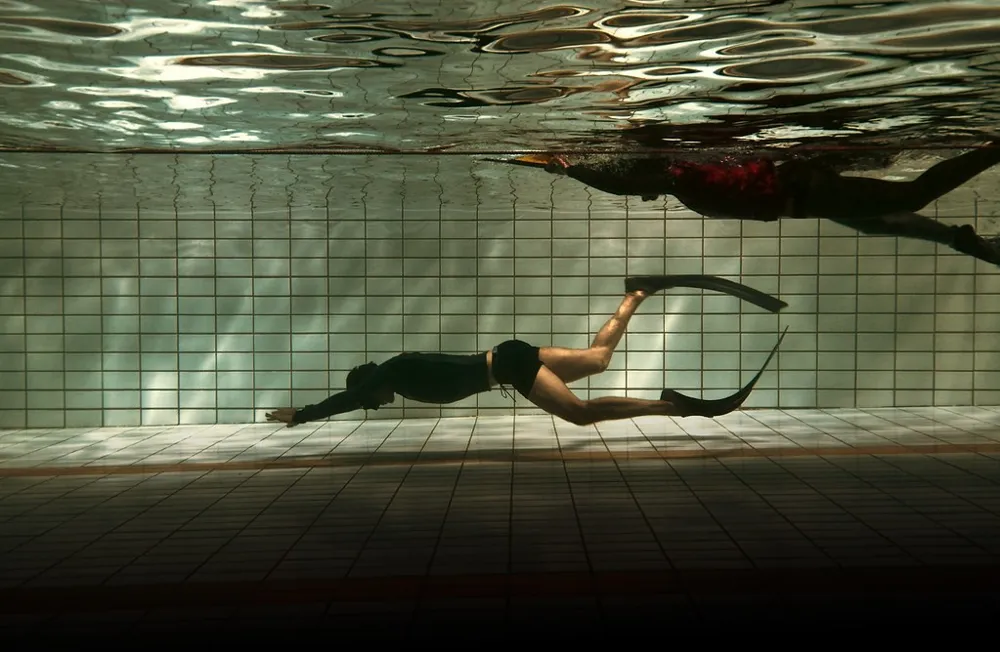
As you descend, the air in your mask is compressed. If you don't add air, the mask is pulled tighter against your face, a pressure injury called mask squeeze that can leave red eyes or bruising. You prevent it by breathing a little air out of your nose into the mask, which is only possible because a diving mask encloses the nose. On the way up, extra air simply escapes past the skirt.
- Equalize the mask little and often on the way down, along with your ears.
- A lower-volume mask needs less air each time, which leaves more in your lungs.
- Ear equalizing is a separate skill done by pinching the nose pocket; see how to equalize your ears.
- Never freedive alone. Shallow water blackout can happen without warning, so dive with a trained buddy who watches every dive. Learn the basics in how to freedive and from a certified course.
How to Fit Test a Freediving Mask
The fit test is the same as for any mask, and our scuba mask guide walks through it step by step. In short:
- Move your hair away and flip the strap off the back of the lens.
- Hold the mask to your face and breathe in gently through your nose. A good fit stays on without your hand and doesn't leak air.
- Repeat with a snorkel mouthpiece in your mouth, since this changes the shape of your upper lip.
- Pinch the nose pocket and check for pressure points on the bridge of your nose or forehead.
- If you wear a hood, try the mask with the hood on.
Wear the strap high on the back of the head and only just snug. Pressure seals the mask at depth, and overtightening distorts the skirt and causes leaks. Facial hair can break the seal; a thin layer of silicone-based grease on a mustache can help.
Fluid Goggles and Other Alternatives
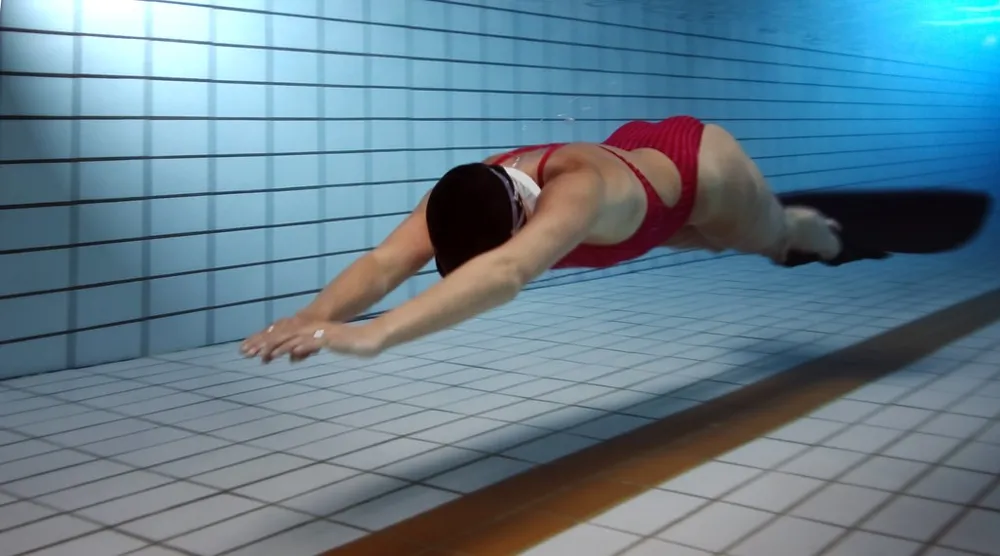
Swim goggles don't work for diving. They don't cover the nose, so you can't equalize them, and the pressure on descent pulls them hard against your eyes.
Some experienced depth divers use fluid goggles instead of a mask. They are filled with water or saline and use very strong corrective lenses, so there is no air space to equalize. They are worn with a nose clip, which keeps water out of the nose while you equalize your ears. Fluid goggles are a specialist tool; start with a low-volume mask and get proper training before trying them.
Fog, Care and Common Problems
A new mask often fogs because the lens has a thin factory residue. Clean it off as the maker recommends before your first dive, then use defog (or diluted baby shampoo) every time. Masks with built-in anti-fog treatments, like the Salvimar Hathor and Neo or Cressi Calibro, need different care, so read their instructions and avoid harsh scrubbing. Our scuba mask guide covers the full process.
| Problem | Likely Cause | Fix |
|---|---|---|
| Fogging | Factory residue, no defog | Clean the lens, defog before each dive |
| Leaks at depth | Strap too tight, hair under the skirt, wrong fit | Loosen the strap, clear hair, recheck the fit |
| Red eyes or bruising | Mask squeeze | Equalize the mask more often; consider a lower-volume mask |
| Stiff or cracked skirt | Sun, heat or age | Replace the mask or skirt |
| Broken buckle or strap | Wear | Replace the part; carry a spare strap |
- Rinse in fresh water after every dive, including the buckles.
- Dry it out of direct sun and store it in a hard case so the lens isn't scratched and the skirt isn't crushed.
- Keep clear skirts away from colored neoprene, which can stain them.
More Freediving Gear
A mask is usually the first purchase, then long-blade fins and a snorkel. Compare freediving fins and freediving wetsuits, and read scuba diving vs freediving if you are deciding between the two. For snorkel types, see dry vs semi-dry snorkels, and find every guide in our snorkeling and diving hub.
Frequently Asked Questions
What makes a mask good for freediving?
Low internal volume, a soft silicone skirt that seals without a tight strap, tempered glass lenses close to the eyes and a nose pocket you can pinch easily. Less air inside the mask means less breath spent equalizing it on the way down.
Can I use my scuba mask for freediving?
Yes, if it seals and you can pinch your nose, it will work for shallow breath-hold dives. As you go deeper, a higher-volume scuba mask takes more of your limited air to equalize, which is why freedivers move to low-volume masks.
Are two-lens or single-lens masks better for freediving?
Two-lens masks usually sit closer to the face and hold less air, so they are the more common choice. Single-lens masks give an unbroken view, and some low-profile models keep volume small too; fit matters more than the lens layout.
Why do spearfishers prefer black skirts?
A dark skirt blocks light from the sides, which cuts reflections inside the mask and keeps your attention forward. Clear skirts feel brighter and more open, which some divers prefer in darker water.
Can I freedive in swim goggles?
No. Goggles do not cover the nose, so you cannot breathe air into them to equalize, and the pressure on descent pulls them hard against your eyes. Use a mask with a nose pocket.
What are fluid goggles?
Fluid goggles are filled with water or saline and use strong corrective lenses, so there is no air space to equalize. They are paired with a nose clip and are an advanced option, mostly for experienced depth divers.
Do anti-fog lenses mean I never need defog?
Not always. Lenses with built-in anti-fog treatments reduce fogging, but makers still describe how to activate or maintain them, so follow the care instructions and keep the lens clean.