Best Scuba Diving Masks and How to Pick One That Seals (2026)
Seven dive masks from Mares, Scubapro, Aqua Lung and Hollis, and a plain guide to lenses, volume, skirts, straps and getting a seal that holds at depth.
What Sets a Scuba Mask Apart
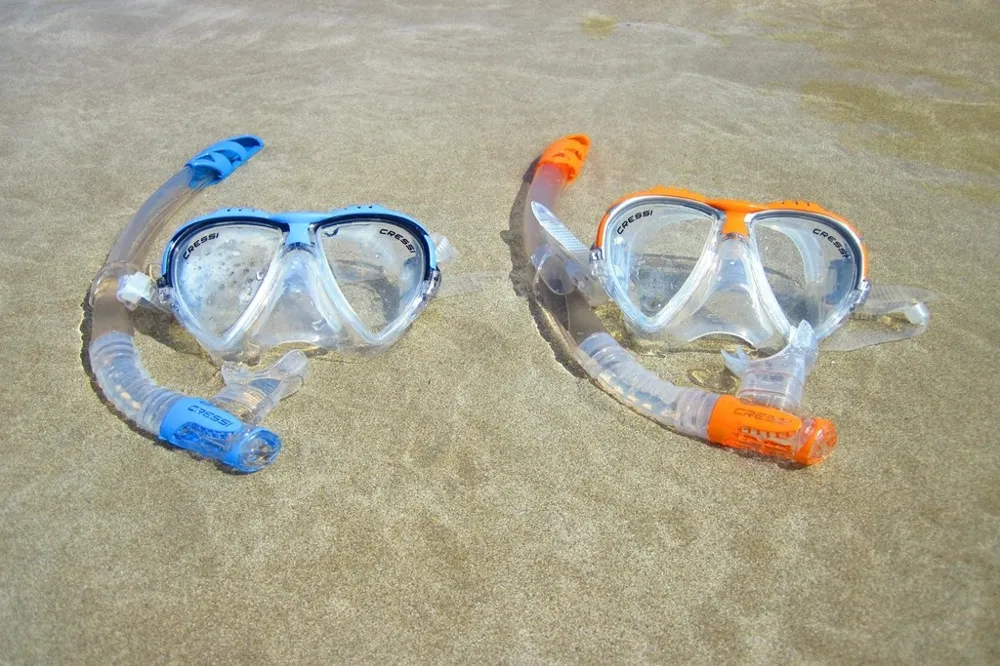
A scuba mask does the same job as any swim mask, letting your eyes focus underwater, but it has to keep doing it at depth. That means a tempered glass lens, an enclosed nose pocket you can pinch to equalize, a silicone skirt that seals with a regulator in your mouth, and a frame or body that holds up to boat decks, gear bags and years of salt water. Most divers buy their mask before any other gear, because a mask that leaks or fogs spoils every dive. The picks below favor low-volume designs from established dive brands; if you only snorkel at the surface, our snorkel mask guide is the better fit.
Mares X-Vision Ultra Liquidskin
Best all-round two-lens dive mask
- Low-volume bi-lens design
- Liquidskin dual-silicone skirt
- Optical lenses available
Scubapro D-Mask
Best for corrective lenses and wider faces
- Interchangeable optical and bifocal lenses
- Trufit dual-density skirt in three sizes
- HUD computer mount included
Aqua Lung Plazma
Best frameless dive mask
- Frameless, low-profile panoramic design
- Clear or amber lens options
- One-touch buckles work with gloves
Scuba Mask vs Snorkel Mask

Many masks are sold for both, and a good dive mask makes an excellent snorkel mask. The reverse isn't always true. Cheap snorkel sets sometimes use plastic lenses or softer, less durable skirts, and full-face snorkel masks can't be used for scuba at all because you can't equalize or breathe from a regulator in them.
| Scuba (Dive) Mask | Typical Snorkel Mask | Full-Face Snorkel Mask | |
|---|---|---|---|
| Lens | Tempered glass | Tempered glass or plastic | Usually plastic (polycarbonate) |
| Nose pocket for equalizing | Yes | Usually | No |
| Internal volume | Low to medium | Varies | High |
| Works with a regulator | Yes | If it has a nose pocket and seals | No |
| Diving below the surface | Yes | Shallow breath-hold dives | Surface only |
Shopping for a mask and snorkel together? Combo kits are covered in snorkel sets, and snorkel types in dry vs semi-dry snorkels. For breath-hold diving and spearfishing, see the freediving mask guide, where ultra-low volume matters even more. The safety concerns with full-face models are covered in full-face snorkel masks.
Scuba Masks Compared
Specs come from each maker's product page as of November 2026. "Not listed" means the maker doesn't state it.
| Mask | Lens Layout | Frame | Prescription Lenses | Notable Feature |
|---|---|---|---|---|
| Mares X-Vision Ultra Liquidskin | Two lenses | Not listed | Optical lenses available | Two silicones in one skirt |
| Scubapro D-Mask | Two lenses | Framed | Yes, incl. bifocal | Three skirt sizes, HUD mount |
| Aqua Lung Plazma | Panoramic | Frameless | Not listed | Clear or amber lens |
| Scubapro Frameless | Single lens | Frameless | No | Folds flat for travel |
| Scubapro Spectra | Two lenses | Framed | No | Folds flat, tempered glass |
| Scubapro Crystal Vu Plus With Purge | Front lens + side windows | Framed | No | Purge valve |
| Hollis M1 | Single lens | Frameless | Not listed | Saint-Gobain Diamant glass |
The Best Scuba Masks
1. Mares X-Vision Ultra Liquidskin
The X-Vision is one of Mares' long-running dive masks. Mares describes the Ultra Liquidskin as a low-volume bi-lens design with a generous field of view, and its Liquidskin construction combines two types of silicone in the mask body. The strap is silicone and adjustable, and Mares lists optical lenses as an option for this model, so you can add correction later. Mares offers it in several colors, including mirrored versions, and notes a Red Dot design award.
Good to Know
- Low volume for easy clearing and equalizing
- Optical lenses available
- Wide choice of skirt and frame colors
Watch Out For
- Maker page doesn't list the lens glass type; check the listing
- Mirrored lenses cut light in dim water
2. Scubapro D-Mask
The D-Mask is Scubapro's mask for divers who need vision correction or have larger, wider faces. It uses Scubapro's second-generation Trufit skirt, which pairs firmer silicone near the frame with softer silicone at the face and comes in Small, Medium and Wide sizes. Its lenses are interchangeable: Scubapro lists optical lenses from -1.5 to -5.0 and +1.5 to +4.0, plus bifocal lenses from +1.0 to +3.0. The lenses are UV-protective without changing underwater color, a Comfort Strap is designed not to pull hair, and a mount for a HUD-style dive computer is included.
Good to Know
- The widest range of corrective options here
- Three skirt sizes for a better fit
- Swivel buckles and a comfort strap
Watch Out For
- Designed for larger faces; try the Small size if yours is narrow
- Corrective lenses are sold separately
3. Aqua Lung Plazma
The Plazma is a frameless, panoramic mask, which Aqua Lung says gives lower volume, more flexibility and less weight than a framed design. The skirt is surgical-grade silicone with pressure-reduction and stability zones, and one-touch buckles adjust quickly even with thick gloves. The strap is preformed to the shape of the head. Aqua Lung offers clear and amber lenses; amber cuts glare in shallow water and brings back reds deeper down. It comes with a protective case and is made in Italy.
Good to Know
- Low-profile frameless design
- Amber option for glare and color
- Glove-friendly buckles
Watch Out For
- Maker page doesn't list prescription options
- Frameless skirts suit some face shapes better than others; fit-test first
4. Scubapro Frameless
A long-standing single-lens frameless mask with a large teardrop-shaped Ultra Clear lens and a soft black silicone skirt with a double-seal edge. The buckles sit on flexible skirt tabs with a wide headband, and the mask folds flat for packing. Scubapro lists it under technical diving and states that it does not take prescription lenses.
Good to Know
- Simple, rugged single-lens design
- Black skirt cuts side glare
- Folds flat in a gear bag
Watch Out For
- No prescription lens option
5. Scubapro Spectra
A low-volume two-lens mask with tempered glass lenses and a double-sealed silicone skirt in a universal shape meant to suit average faces. Push-button buckles attached to the skirt adjust the strap angle and let the mask fold flat, and the EZ Equalize nose pocket is shaped for easy pinching. Scubapro says it is compatible with its Galileo HUD computer. It does not accept prescription lenses.
Good to Know
- Tempered glass and low volume
- Easy-pinch nose pocket
- Packs flat
Watch Out For
- No prescription lens option
- Painted frame finish can be damaged by abrasive cleaners
Not available on Amazon when we checked (November 2026); check dive shops and Scubapro dealers.
6. Scubapro Crystal Vu Plus With Purge
A framed mask with a large front lens and side windows for a panoramic view, plus a one-way purge valve under the nose for clearing water by exhaling. Scubapro describes it as low volume with a double-sealed clear silicone skirt, swivel push-button buckles and an easy-grab nose pocket. It also comes without the purge valve, and it isn't prescription compatible.
Good to Know
- Wide view from the side windows
- Purge valve for hands-free clearing
- Version without purge also available
Watch Out For
- A purge valve is one more part to keep clean and check
- No prescription lens option
Not available on Amazon when we checked (November 2026); check dive shops and Scubapro dealers.
7. Hollis M1
A frameless mask with a 100% silicone skirt, a Saint-Gobain Diamant crystal-clear glass lens and a wide, low-volume shape. It's a common choice for divers who want a minimal frameless mask with very clear glass. Check the listing to see whether a snorkel is bundled.
Check Price on AmazonHow to Choose a Dive Mask
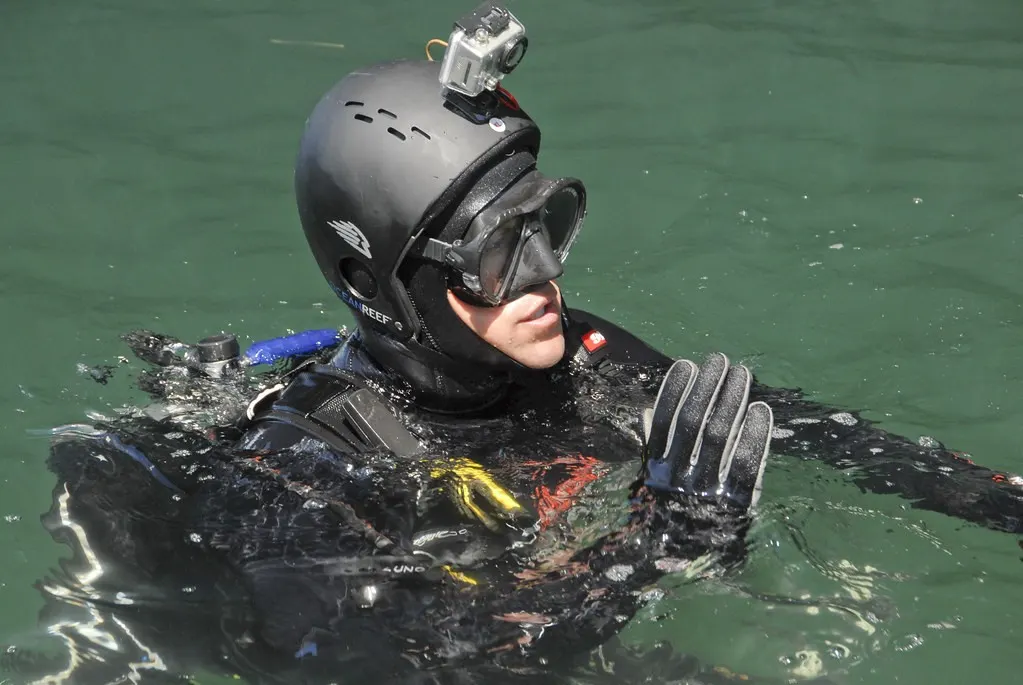
Fit comes first, then the features below. Try several masks if you can, and judge each one with the fit test in the next sections.
Tempered Glass Lenses
Dive masks should have tempered glass lenses. Tempered glass is far stronger than ordinary glass and, if it does break, shatters into small blunt pieces rather than sharp shards. Lenses are often marked "tempered." Low-iron or "ultra-clear" glass (such as Saint-Gobain Diamant on the Hollis M1) removes the faint green tint of standard glass for a brighter view. Avoid plastic-lens masks for scuba; they scratch easily and are more common on budget snorkel kits.
Low Volume and Field of View
The less air inside a mask, the less breath it takes to clear water and to equalize as pressure rises on descent. Low-volume masks sit the lenses close to your eyes, which also widens the view. Masks with side windows add peripheral vision but usually hold more air. For most recreational divers, a low- to medium-volume mask is the sweet spot.
Single Lens vs Two Lenses
| Single Lens | Two Lenses | |
|---|---|---|
| View | Open, no center bar | Lenses sit close to each eye |
| Volume | Often low (frameless models) | Often low |
| Prescription | Usually custom bonded lenses | Often drop-in optical lenses per eye |
| Examples here | Scubapro Frameless, Hollis M1 | Mares X-Vision, Scubapro D-Mask, Spectra |
Frameless vs Framed
Frameless masks bond the skirt directly to the glass. They're lighter, lower in volume and often fold flat, which makes them popular as backup masks in a BCD pocket. Framed masks use a rigid frame to hold the lenses, which makes swapping lenses easier and can feel sturdier. Neither is safer; pick by fit and features.
Skirt Silicone and Color
Look for a 100% silicone skirt; it's soft, seals well and lasts far longer than cheaper rubbers. Dual-density skirts, like Scubapro's Trufit or Mares' Liquidskin, use firmer silicone for structure and softer silicone where it touches your face.
- Clear skirts let in side light, so the mask feels brighter and less enclosed. Some new divers find this calming.
- Black skirts block stray light and reflections. Underwater photographers and divers who want to focus on what's in front of them often prefer them.
- Clear silicone can discolor over time, especially if stored in sunlight or against colored neoprene; black silicone hides this.
Strap Types and Buckles
- Silicone straps are standard. Split or wide straps spread pressure over the back of the head.
- Neoprene or comfort straps slide on easily, don't pull long hair and stay put with a hood. Many divers swap one on; Scubapro's D-Mask ships with a Comfort Strap.
- Buckles mounted on the skirt (Spectra, Frameless) let the mask fold flat; frame-mounted swivel buckles (D-Mask, Crystal Vu) pivot to set the strap angle. Look for buckles you can operate with gloves if you dive cold water.
Purge Valves
A purge valve is a one-way valve below the nose. Exhale through your nose and water is pushed out without lifting the mask. Fans like the hands-free clearing; critics point out that the valve adds volume, can leak if sand gets in and can make the nose pocket harder to pinch. Either way, you still need to learn standard mask clearing in training.
Lens Coatings and Tints
Some masks add UV protection, anti-reflective coatings, mirrored outer surfaces or amber tints. Amber can improve contrast and warm up colors in blue water; mirrored lenses look striking but reduce light, which matters on dark dives and in murky water. Coated lenses usually need gentler cleaning, so follow the maker's instructions.
Prescription and Corrective Lens Options
You can't wear glasses under a dive mask, because the arms break the seal. There are three main ways to see clearly:
- Drop-in optical lenses: Many two-lens masks accept ready-made corrective lenses, chosen separately for each eye. The Scubapro D-Mask lists negative lenses from -1.5 to -5.0, positive lenses from +1.5 to +4.0 and bifocal lenses from +1.0 to +3.0, and Mares offers optical lenses for the X-Vision.
- Custom bonded lenses: Optical labs and some dive shops can bond a prescription to the lens or replace it. This handles astigmatism and stronger prescriptions but takes time.
- Contact lenses: Many divers wear soft lenses under a standard mask. Ask your eye doctor first, and keep your eyes closed when clearing or removing the mask.
Divers who need reading help for gauges and computers can look for bifocal or reader lenses at the bottom of the mask. More detail is in our prescription mask guide.
How to Fit Test a Dive Mask
- Pull your hair back, away from where the skirt will sit.
- Flip the strap forward over the lens so it doesn't help hold the mask.
- Place the mask on your face, then breathe in gently through your nose. A good fit stays on without your hand and doesn't hiss.
- Repeat with your mouth relaxed around a regulator mouthpiece or snorkel, because biting down changes the shape of your upper lip and can open gaps.
- Check that you can pinch the nose pocket easily, ideally with the gloves you'll dive in.
- Look for pressure points on the bridge of the nose or the forehead, and make sure the skirt doesn't touch your eyelashes.
- If you dive cold water, test it with your hood on, since the hood edge can lift the skirt.
Set the strap high on the crown of your head and only snug enough to hold the mask in place. Water pressure does most of the sealing at depth, and an overtight strap causes leaks and headaches. Mustaches often break the seal; a softer, wider skirt or a thin smear of silicone-based grease on the mustache can help.
Prepare a New Mask and Stop Fogging

Fogging is the most common mask complaint, and a brand-new mask often fogs straight away. Lenses can come from the factory with a thin residue on the inside that makes condensation bead up.
- Remove the factory film: Scrub the inside of the lens with a dedicated mask cleaner or a non-gel, non-whitening toothpaste and your fingertip, rinse and repeat a few times. Check the maker's instructions first; coated, mirrored or UV-treated lenses may need a non-abrasive cleaner only.
- Skip the flame trick unless the maker allows it: Some divers burn off the film with a lighter, but heat can damage the skirt and many manufacturers warn against it.
- Defog before every dive: Apply a commercial defog gel or spray (or diluted baby shampoo), spread it, then rinse lightly just before you put the mask on.
- Keep it on your face: Pushing the mask up onto your forehead lets it fog and makes it easier to lose.
Breathing out through your nose into the mask also adds warm, moist air, so cold water and nose exhales both make fogging worse.
Mask Skills: Clearing, Equalizing and Avoiding Squeeze
- Clearing: Press the top of the frame against your forehead, tilt your head back slightly and exhale steadily through your nose. Water is pushed out of the bottom of the skirt. Entry-level courses also teach removing and replacing the mask underwater.
- Equalizing the mask: As you descend, breathe a little air out through your nose into the mask to balance the pressure.
- Avoiding mask squeeze: If you forget, the mask presses harder on your face and can cause bruising or red eyes. That's why swim goggles, which don't cover the nose, aren't used for scuba.
- Ears: Equalizing your ears is a separate skill done through the nose pocket; see how to equalize your ears when diving.
New divers learn these skills during certification; see how to get scuba certified and our scuba tips for beginners.
Care, Storage and When to Replace
- Rinse in fresh water after every dive, including the buckles and any purge valve.
- Dry it out of direct sun and store it in its hard case so the lens doesn't get scratched and the skirt doesn't get crushed.
- Keep clear skirts away from colored neoprene and rubber, which can stain them.
- Check the strap, buckles and skirt for nicks and cracks before every trip, and carry a spare strap or a backup mask on dive holidays.
- Replace the mask, or a replaceable part, if the skirt tears, the silicone hardens, the seal no longer holds or the lens is chipped or cracked.
More Dive Gear
Building a kit? Start with the scuba diving equipment list, then compare dive fins, dive computers, regulators, BCDs and dive lights. Shooting photos? See underwater cameras for scuba. Snorkeling only? Our snorkel mask and snorkel set guides cover surface swimming, and the snorkeling and scuba hub has every guide in one place.
Frequently Asked Questions
Can I use a snorkel mask for scuba diving?
A traditional snorkel mask with a tempered glass lens, a silicone skirt and a nose pocket works for scuba if it fits well. Full-face snorkel masks are made for surface snorkeling only and should never be used for scuba or for diving down.
Is a single-lens or two-lens mask better for scuba?
Neither is better for everyone. Single-lens masks give an open view with no center bar, while two-lens masks often sit closer to the eyes and are the usual route to drop-in prescription lenses.
Do purge valves on dive masks work?
A one-way purge valve lets you clear water by exhaling through your nose without tilting the mask. Some divers like it; others prefer a simpler mask, and every diver still needs to learn standard mask clearing.
What does low volume mean on a dive mask?
It means less air space inside the mask. A low-volume mask takes less breath to clear and to equalize on descent, and it usually sits closer to the face.
Why does my new dive mask fog straight away?
New lenses often carry a residue from manufacturing that makes fog bead up. Clean it off as the maker recommends before your first dive, then use defog before every dive.
How long does a scuba mask last?
With fresh-water rinsing and shaded storage, a mask can last many years. Replace it, or its strap or skirt, if the silicone tears, stiffens or no longer seals, or if the lens is cracked.
Should I buy or rent a dive mask?
Most divers buy their own mask first, because fit is personal and rental masks vary. A mask that seals on your face makes every dive easier.