Scuba Diving Tips for Beginners: Dive Calmer and Safer (2026)
You have your card. Now the real learning starts. These practical tips cover the skills that make new divers more comfortable underwater, from the buddy check on the boat to the safety stop at the end.
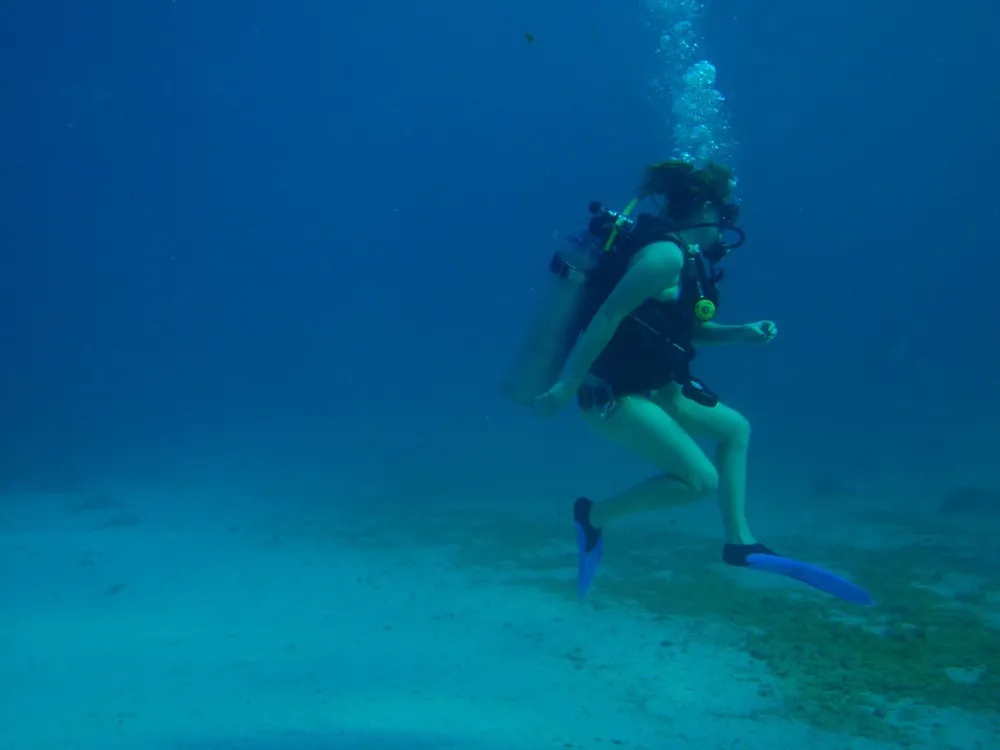
Scuba Diving Tips for Beginners: Where to Start
An Open Water course teaches the core skills, but most new divers only get comfortable once they dive more. The tips below cover the habits that make the biggest difference in your first dozens of dives: checking your gear, getting your weight right, controlling buoyancy, breathing slowly, equalizing early, watching your air and ascending slowly. They follow published guidance from PADI and the Divers Alert Network (DAN).
This page assumes you're already certified or in training. If you're not there yet, start with how to get scuba certified; for the words you'll hear on the boat, see our scuba diving terms glossary. This is general information, not medical advice or a substitute for training. Dive within your certification and follow your instructor and dive guide.
Beginner Scuba Tips at a Glance
| Skill | The Tip |
|---|---|
| Buddy check | Do BWRAF before every dive, even short shore dives |
| Weighting | Float at eye level with an empty BCD and a normal breath; log what worked |
| Buoyancy | Small bursts of air, then wait; use your lungs to fine-tune |
| Breathing | Slow, deep and continuous; never hold your breath |
| Equalizing | Start before you feel pressure and keep going; stop and rise a little if it hurts |
| Air | Check your gauge often and signal your buddy at your agreed pressures |
| Finning and trim | Stay horizontal, kick slowly and move your fins only when needed |
| Ascent | Rise slowly and make a safety stop of about 3 minutes at around 5 meters (15 feet) |
| Reef manners | Look, don't touch; keep fins and gauges off the reef |
| After the dive | Log it, rehydrate and respect no-fly times |
Before the Dive: Plan, Listen and Speak Up
Good dives start on land. A few habits remove most of the stress from a dive day:
- Listen to the briefing. PADI's beginner tips stress paying attention to boat and site briefings and asking about anything you're unsure of: entry and exit points, depth, expected currents and what to do if you lose your buddy.
- Dive within your training. PADI Open Water Divers are certified to 60 feet (18 meters). Deeper or more demanding dives need more training; our guide to how deep you can scuba dive lists the limits by level.
- Don't give in to peer pressure. If a dive makes you uncomfortable, say so and sit it out. A good dive center would rather you skip one than push past your limits.
- Tell the dive center your level. Share your certification and how many dives you have so they can match you with a suitable guide, group and site.
- Pack with a checklist. Certification card, logbook, swimwear, towel and dry clothes. A dry bag keeps your phone and wallet safe from boat spray. Our scuba diving equipment list covers what to own and what to rent.
- Drink water. PADI calls dehydration one of the factors that contribute to decompression sickness, so bring a refillable bottle and sip through the day, especially in hot climates.
- Arrive rested. After a long flight, plan an easy first dive. Our flying after scuba diving guide covers both ends of a dive trip.
Do a Buddy Check Before Every Dive (BWRAF)
The pre-dive buddy check catches the small mistakes that cause big problems: an air valve left closed, a weight belt that won't release, a BCD that won't inflate. PADI teaches it as BWRAF, with the memory aid "Begin With Review And Friend." You check your buddy's gear and they check yours.
| Step | What to Check |
|---|---|
| B: BCD | The BCD inflates with the low-pressure inflator and vents through the deflate and dump valves; straps lie flat and snug |
| W: Weights | The weight belt or integrated pockets are secure, and you both know how to release them |
| R: Releases | Touch and name each buckle and clip so none is missed; lift the cylinder to check the tank strap |
| A: Air | The tank valve is fully open; breathe from both the primary and alternate air source while watching the gauge; the gas tastes and smells normal; the octopus is easy to reach |
| F: Final OK | Hoses are tucked and clipped, and mask, fins and any accessories are on or ready |
A useful detail from the "Air" step: if the gauge needle dips each time you inhale, the valve may be only partly open. Fix it at the surface, not at depth. Agree on hand signals during the check too; remember that a thumbs up means ascend, and the circle sign means OK.
Entering the Water and Descending: Equalize Early and Often
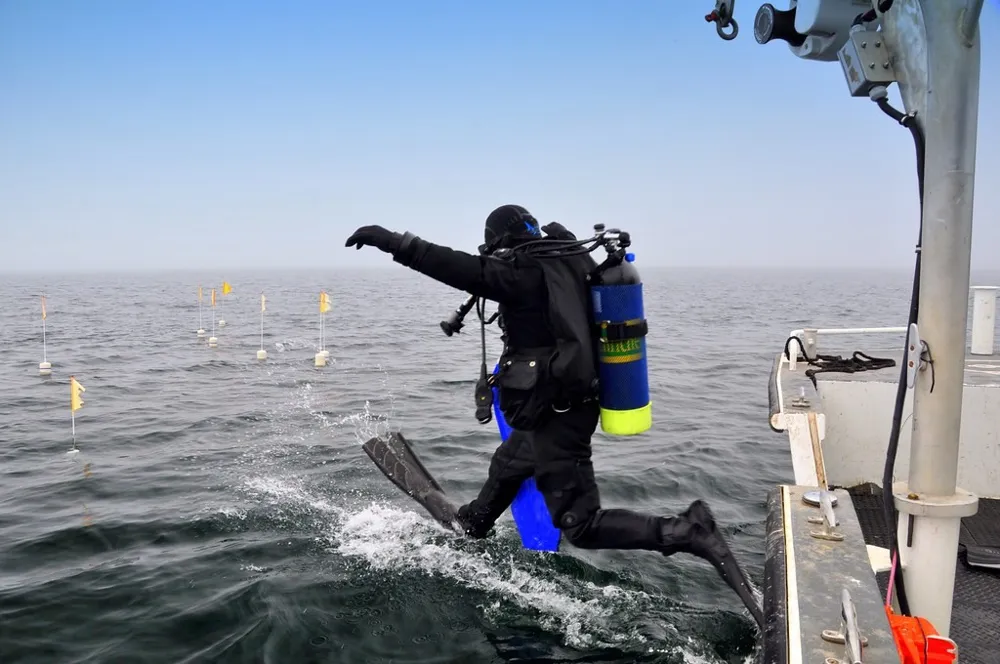
Ear trouble on the way down is one of the most common new-diver problems, and most of it comes from equalizing too late. DAN's equalizing tips, republished by PADI, include:
- Check your ears before the dive. When you swallow, you should hear a pop or click in both ears.
- Start early. Gently equalize every few minutes for several hours before the dive, and gently at the surface if that helps you.
- Descend feet first and look up. DAN notes the Valsalva maneuver takes about 50% more force head-down than head-up, and extending your neck tends to open the Eustachian tubes.
- Use a line. Pulling yourself down an anchor or mooring line gives finer control of your descent rate and lets you stop quickly.
- Stay ahead of the pressure. Equalize often, keeping a slight positive pressure in your middle ears.
- Never force it. If it hurts, stop, rise a few feet and try again. If you still can't equalize, end the descent.
- Keep your mask clear. Water in your nose can irritate it and make equalizing harder. Equalize your mask too, by exhaling a little through your nose as you go down.
Tobacco and alcohol irritate the lining of the nose and can block the Eustachian tubes, so skip them before a dive day. Our guide on how to equalize your ears when diving covers the techniques step by step. If ear pain or hearing changes persist after a dive, see a doctor.
Get Your Weighting Right
Many new divers carry too much lead. Extra weight means more air in the BCD to compensate, a head-up, feet-down position and higher air use. PADI's tips suggest two simple checks:
- At the surface: with no air in your BCD and a normal breath held, you should float at about eye level, and exhaling should start a slow descent.
- At the end of the dive: at your safety stop, with roughly 50 bar (500 psi) left, you should be able to hold the same depth for the full three minutes. If you can't, your weighting probably needs adjusting.
Weight for the end of the dive, when your tank is lighter, not the start. PADI notes that aluminum tanks in particular get noticeably more buoyant as you breathe them down. Log your weight after every dive, along with your wetsuit thickness, tank type and whether you were in salt or fresh water, because each one changes what you need. Then remove a little at a time with your instructor or guide until you reach the lightest amount that still lets you hold your stop.
Master Buoyancy Control
Neutral buoyancy, hovering without rising or sinking, is the skill that separates relaxed divers from tired ones. It also protects the reef and keeps you off the bottom. To build it:
- Add or release air in small bursts, then wait a few seconds for the change to take effect before adjusting again. One adjustment at a time.
- Use your lungs for fine control. A slightly deeper breath raises you a little; a fuller exhale lowers you.
- Anticipate changes. Air in your BCD and wetsuit compresses as you descend and expands as you rise, so you add small amounts of air going down and vent going up.
- Don't kick to hold depth. Use your fins to move, not to stay up. If you're constantly kicking upward, you need a little more air or less lead.
- Practice hovering in a safe open area away from the reef, holding still without hands or fins.
- Know your gear. Learn exactly where your inflator and dump valves are. If you rent, try to use the same setup on each dive of a trip.
PADI's Peak Performance Buoyancy specialty is aimed squarely at this skill if you want structured practice. Our BCD guide explains how jacket, back-inflate and wing styles affect the feel in the water.
Breathe Slowly and Never Hold Your Breath
The single most important scuba rule is to breathe continuously and never hold your breath, especially while ascending. Air in your lungs expands as the pressure drops, and holding it in can injure them; is scuba diving dangerous covers lung overexpansion and the other main risks.
Beyond that rule, slow breathing makes everything easier. PADI suggests breathing slowly and deeply on both the inhale and the exhale, and practicing the pattern on land. Slow breaths keep your buoyancy steady, use less air and calm nerves. If you feel anxious underwater, stop moving, hold onto your buddy or a safe spot (not the reef), and take several slow breaths before you carry on or signal to end the dive.
Fin Less and Work on Your Trim
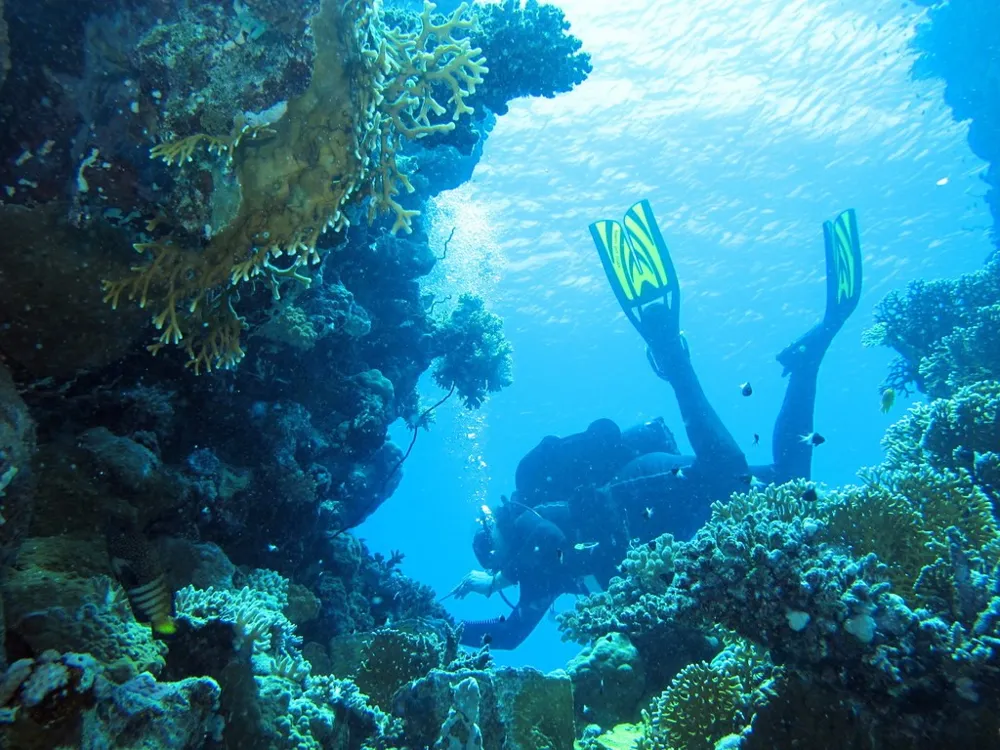
Trim is your body position in the water. Aim to be horizontal, like you're lying flat on a bed, rather than upright. A flat position directs your kicks backward instead of downward, reduces drag and saves air.
- Kick slowly and with long strokes. Move your fins only when you need to, and pause to look around instead of swimming the whole dive.
- Keep your hands still. Moving with your fins alone, not your arms, saves energy; if you keep reaching out with your hands to balance, look at your buoyancy and trim.
- Fix your trim with your gear. If your feet keep sinking, check that you're not overweighted, then try moving weight, your tank position or BCD fit.
- Streamline. Clip gauges, the octopus and accessories close so nothing dangles, drags or snags on the reef.
- Use the reef in a current. Stay close to the reef or bottom, where the current is weaker, without touching it, and rest behind larger coral heads.
The right fins help. Our scuba fin guide compares open-heel, full-foot and split designs.
Manage Your Air Supply
Running low on air is avoidable with a few habits:
- Check your gauge often, not just when you remember. Make it a routine, for example whenever you change depth or direction.
- Agree on pressures before the dive. Decide on a turn pressure, when you start heading back, and the pressure at which you begin your ascent. Your guide will usually set these in the briefing.
- Surface with a reserve. Plan to finish with gas left over, not with an empty tank.
- Communicate. Show your buddy your pressure when asked, and use the low-on-air signal, a fist held to your chest, when you reach your reserve.
- Know your alternate air source. Every diver practices sharing air in training; during the buddy check, confirm where your buddy's octopus is.
Air consumption improves with practice. PADI's list of tips includes diving regularly, relaxing, slowing down, staying slightly shallower than the group where the plan allows (tell your buddy and guide first), and keeping your equipment free of leaks. Don't feel bad about being the first to surface; it's far better than stretching your air.
Clear Your Mask Calmly
A little water in the mask is normal, and clearing it is a core Open Water skill. To clear it, exhale steadily through your nose while tilting the mask so the air pushes the water out. Keep breathing from your regulator through your mouth the whole time; there's no rush.
Practice in shallow water until it's automatic, including the full mask removal and replacement from your course, so a flooded or kicked mask is a minor event rather than a reason to bolt for the surface. Remember to add a little air to your mask through your nose as you descend to avoid a mask squeeze. A well-fitting mask leaks less in the first place; see our scuba mask guide for low-volume options.
Ascend Slowly and Make a Safety Stop
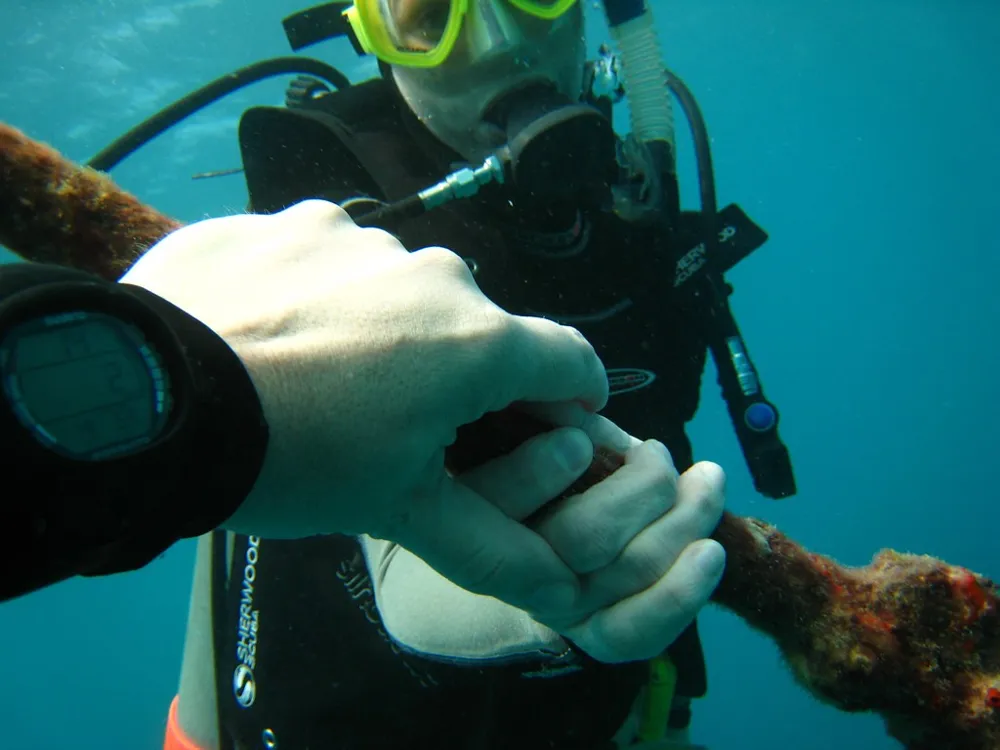
The end of the dive is where slow, controlled habits matter most. Your body absorbs extra nitrogen at depth, and a slow ascent gives it time to leave through your lungs.
- Ascend slowly. DAN notes agency recommendations range from 30 to 60 feet (about 9 to 18 meters) per minute, and that the US Navy and NOAA use 30 feet per minute. Your dive computer warns you if you go too fast; treat that alarm seriously.
- Make a safety stop near the end of every dive, usually 3 minutes at about 5 meters (15 feet), to give nitrogen more time to leave your body.
- Vent as you rise. Air in your BCD expands on the way up, so release it gradually to avoid an uncontrolled ascent.
- Stay well inside no-decompression limits. On PADI's Recreational Dive Planner, the no-decompression limit is 56 minutes at 18 meters and 20 minutes at 30 meters; follow your own computer or tables and don't dive to the edge of the limit.
- Look up and listen before surfacing, and raise a surface marker buoy where the site calls for it so boats can see you.
A dive computer tracks depth, time, ascent rate and no-decompression time for you. Learn to read it before your trip. For why these rules matter, see what is the bends.
Protect the Reef and Marine Life
Good buoyancy is also good reef etiquette. Poor buoyancy is how coral gets damaged and silt gets stirred up, so:
- Look, don't touch. Don't hold, chase, feed or ride marine life. DAN's hotline sees many stings and spine injuries from contact with marine animals, often during entries and exits.
- Keep your distance from the reef, and watch where your fins are when you stop or turn. If you need to steady yourself, choose bare rock or sand, never coral or animals.
- Secure your gear so hoses and gauges don't drag across coral.
- Take nothing from the reef but photos. If you're new to underwater photography, get your buoyancy solid first; see underwater cameras.
- Use reef-friendly sun protection. Some destinations restrict certain sunscreen ingredients; check local rules and see our reef-safe sunscreen guide.
Stay Warm, Comfortable and Seasick-Free
Being cold or queasy shortens dives and wears down your focus.
- Dress for the water, not the air. Wetsuits come in thicknesses such as 3mm, 5mm and 7mm; add a hood in cooler water, and consider a drysuit for cold-water diving. Our wetsuit vs drysuit guide explains the difference.
- Stay warm between dives. Use the surface interval to dry off, cover up and get out of the wind.
- Use the sock trick. PADI suggests pulling on a pair of wet socks before your wetsuit so it slides over your feet more easily.
- Plan for the boat. If you get motion sick, PADI's tips suggest taking a seasickness tablet about 30 minutes before boarding; read the packet and check for drowsiness warnings, and ask a pharmacist or doctor if you're unsure. Ginger tea or biscuits are a common alternative. Tell the crew if you feel unwell.
After the Dive: Log It and Plan Your Next Steps
Logging dives is more useful than it looks. Record the date, site, maximum depth, dive time, weight used, exposure suit, tank type and anything you learned. Your log shows dive shops your experience, helps you fine-tune your weighting and makes it easy to see your progress.
- Respect your surface intervals between dives, and use the same dive computer for every dive of a trip so it tracks your full nitrogen history.
- Plan your flight home. DAN's minimum wait is 12 hours after a single no-decompression dive and 18 hours after multiple dives in a day or multiple days of diving. See flying after scuba diving.
- Rinse and dry your gear, especially your regulator and BCD, and keep up with servicing; see the servicing schedule in our equipment list.
- Watch for symptoms. Unusual fatigue, joint pain, numbness or dizziness after a dive needs prompt medical attention. Call emergency services for a serious case (911 in the US), then the DAN Emergency Hotline at +1-919-684-9111.
Keep Learning: Refreshers and Next Courses
Skills fade quickly early on. A PADI article notes that some dive shops suggest a refresher if you haven't dived in six months, especially if you have fewer than 20 logged dives, while divers with a long history may not need one unless it has been a year or more. PADI's refresher program is called ReActivate, and most dive centers offer a similar skills session.
When you're ready for more, Advanced Open Water adds deeper dives and new skills, and specialties such as Peak Performance Buoyancy, Nitrox, Night or Wreck build specific skills. Our guide to types of scuba diving lists the course for each style. For your next trip, pick calm, shallow, warm sites from our beginner dive destinations guide, and browse the rest of our snorkeling and scuba guides.
Frequently Asked Questions
How can I stop using my air so fast?
Breathe slowly and deeply, move less, use your fins only when you need to and stay horizontal. Correct weighting and a streamlined setup also help, and PADI notes that air use usually improves as you dive more often.
What is the BWRAF buddy check?
It is PADI's pre-dive safety check: BCD, Weights, Releases, Air and Final OK. You check your buddy's gear and they check yours before every dive, using the memory aid "Begin With Review And Friend."
How do I know if I'm wearing the right amount of weight?
PADI's surface check: with no air in your BCD and a normal breath held, you should float at eye level, and exhaling should make you sink slowly. If you can't hold your safety stop depth near the end of a dive, your weighting probably needs adjusting.
How fast should I ascend when scuba diving?
DAN notes that training agency recommendations range from 30 to 60 feet (about 9 to 18 meters) per minute, and the US Navy and NOAA use 30 feet per minute. Follow your dive computer, which warns you if you rise too fast, and make a safety stop.
Do I need a refresher if I haven't dived in a while?
A PADI article says some dive shops suggest a refresher if you haven't dived in six months, especially with fewer than 20 logged dives. Divers with a long history may not need one unless it has been a year or more.
Is it normal to feel nervous before a dive?
Yes, many new divers do. Tell your guide or buddy, slow down at the surface, breathe slowly and don't let anyone push you into a dive you're not comfortable with. Sitting a dive out is always an option.