Best Dive Lights: Primary, Backup and Video Picks (2026)
Eight handheld dive lights from Bigblue, OrcaTorch, Kraken and Scubapro, with a plain guide to beams, batteries, mounts, light etiquette and care.
What Makes a Good Dive Light
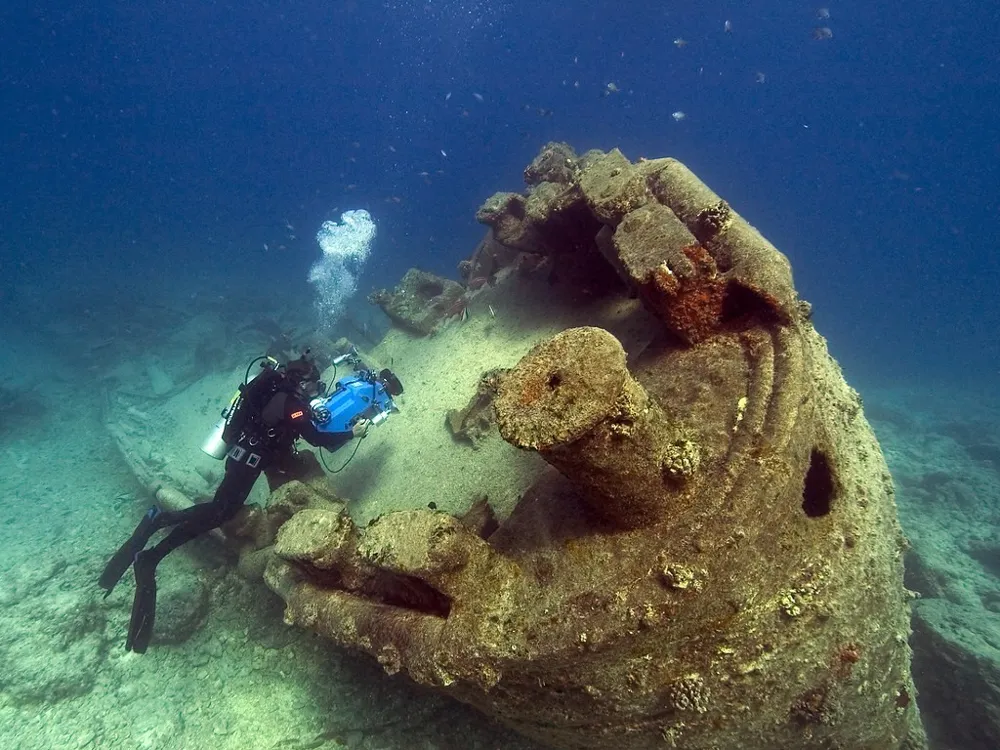
A dive light isn't only for night dives. Water swallows color and light fast, so even on a sunny reef a torch brings back the reds and oranges, shows the shrimp hiding under a ledge and gives you a way to signal your buddy. After dark, or inside a wreck or cavern, it becomes essential safety gear, and you'll want a backup as well.
A good dive light has a beam that suits how you dive, enough burn time for your longest dive with a margin, a depth rating well beyond your limits, a switch you can work with gloves, and seals you can trust. Our picks cover a primary light for most recreational divers, compact backups, brighter lights for murky water and a video light. All specs are from the maker's page, a retailer's spec sheet or the Amazon listing, as noted; versions change, so check the current listing before you buy.
Bigblue AL1300NP Narrow Beam
Best primary light for most divers
- 1,300 lumens, 10-degree beam
- Four power levels plus SOS
- About 2 hours on full power (retailer spec)
OrcaTorch D530
Best compact primary or backup
- Listed at 1,500 lumens
- 7-degree spot beam
- Listed for use to 150 m
Kraken Sports NR-1000
Best rechargeable backup light
- 1,000 lumens, 15-degree beam
- 90 minutes at full power
- Battery and USB cable included
Dive Lights Compared
| Light | Best Role | Max Output | Beam Angle | Depth Rating | Notable Detail |
|---|---|---|---|---|---|
| Bigblue AL1300NP | Primary | 1,300 lumens | 10° | 100 m (330 ft) in spec table | 4 levels + SOS, 18650 battery |
| OrcaTorch D530 | Primary or backup | 1,500 lumens | 7° | 150 m | 6500K white, safety lock |
| Kraken NR-1000 | Backup | 1,000 lumens | 15° | 100 m (330 ft) | 90 min at full power, SOS mode |
| Scubapro Nova 1000R | Primary | 1,000 lumens | 8° | 150 m (490 ft) | 21700 battery, up to 2.5 hr full power |
| OrcaTorch D710 | Bright primary | 3,000 lumens (turbo) | 6° | Check listing | 4 modes, up to 7 hr on low |
| Kraken NR-1800 | Primary | 1,800 lumens | 15° | 100 m (330 ft) | Single push-button, 4 colors |
| OrcaTorch D580 | Backup | 530 lumens | 6° | 150 m | Twist switch, 4.4 oz |
| Bigblue VTL 4200 | Video and photo | 4,200 lumens (wide) | 120° wide / 10° spot | Check listing | Switches between wide and spot beams |
Burn times are the maker's or retailer's figures at full power unless noted. Real burn time drops with cold water, older batteries and higher settings.
The Best Dive Lights
1. Bigblue AL1300NP Narrow Beam
The Bigblue AL1300NP is described on its Amazon listing as a primary recreational dive light, and its specs back that up. A retailer spec sheet lists 1,300 lumens through a 10-degree beam, with lower settings of 650, 325 and 130 lumens and an SOS flash mode. Burn time is listed at about 2 hours on full power, 4 hours at 650 lumens and much longer on the lowest setting, which gives you a lot of flexibility on a dive trip.
It runs on a single rechargeable 18650 lithium-ion cell, has a color-coded battery indicator, and the same retailer lists a battery, charger, wrist lanyard and roll-top dry bag in the box. The retailer's spec table gives a 100 m (330 ft) depth rating, which is far deeper than recreational limits.
Good to Know
- Four brightness levels to stretch burn time
- Narrow beam suits reef holes, wrecks and signaling
- Retailer lists battery and charger included
Watch Out For
- Specs vary between sellers; confirm the box contents on the listing
- Several color and switch variants are sold under similar names
2. OrcaTorch D530
The D530 is a small aluminum light that its listing says is compact enough for a backup and bright enough for a primary. It's listed at up to 1,500 lumens through a tight 7-degree spot beam with a 6500K cold white color, which is good for peering into holes, cracks and wreck interiors.
A titanium-alloy side switch handles one-handed on/off and its three modes, and holding the switch for 5 seconds engages a safety lock so it can't switch on in your bag. The listing rates it for use to 150 meters.
Good to Know
- Very narrow, focused beam
- Lockout prevents accidental switch-on
- Small enough for a BCD pocket
Watch Out For
- A 7-degree beam lights only a small area; not ideal for video
- Check whether a battery and charger are included with your listing
3. Kraken Sports NR-1000
Kraken sells the NR-1000 as a backup light, but at 1,000 lumens it's brighter than many older primary lights. The listing gives a 15-degree beam, a 100 m (330 ft) depth rating and 90 minutes of burn time at full power, with three power levels and an SOS mode.
A push-button switch has a battery level indicator, and the box is listed with a lanyard, battery, USB cable and spare O-rings, so it charges from the same cables as your phone. The listing's dimensions are about 5.3 by 1.1 inches.
Good to Know
- USB charging, battery included
- Battery indicator on the switch
- Spare O-rings in the box
Watch Out For
- Shorter burn time at full power than larger primaries
- Use lower settings to save battery for when you need it
4. Scubapro Nova 1000R
Scubapro's Nova line is a long-running choice in dive shops, and the rechargeable Nova 1000R is the current 1,000-lumen version. Scubapro lists an 8-degree beam (21,000 lux at 1 m), a single 21700 lithium-ion battery, up to 2.5 hours on full power with a 50% mode to stretch it, and a 150 m (490 ft) depth rating.
An extended head shroud helps keep the beam out of other divers' eyes, double O-ring seals protect against flooding, and the push-button switch is designed to work with gloves. Note that Scubapro's US page lists the battery and charger as sold separately, while some regions sell a kit with the battery.
Good to Know
- Beam shroud reduces glare for buddies
- Double O-ring seals
- A wide-beam version is also sold
Watch Out For
- Battery and charger may be extra, depending on the version
- No strobe mode
5. OrcaTorch D710
For murky water, big wrecks or leading a group, the D710 adds more punch. It's listed with four modes: Low (400 lumens), Medium (800), High (1,700) and a Turbo of 3,000 lumens that you trigger by pressing and holding the switch; releasing it drops back to your previous setting. The beam is a very narrow 6 degrees.
The listing gives up to 7 hours on low, a color-coded battery status light on the side switch (green above 30%, red at 10–30%, flashing red when low) and the same 5-second lockout as other OrcaTorch lights. The listing we read did not state a depth rating, so check it before buying.
Good to Know
- Turbo burst without leaving your normal setting
- Clear battery warnings
- Travel lock
Watch Out For
- High outputs can dazzle buddies; use turbo sparingly
- Confirm depth rating and battery inclusion on the listing
6. Kraken Sports NR-1800
The NR-1800 is the brighter sibling of Kraken's lineup, listed at 1,800 lumens (300 more than the NR-1500) with a 15-degree beam and a 100 m (330 ft) depth rating. One push-button handles on/off and brightness adjustment, and it comes in four colors, which helps you tell your light from your buddy's on a busy boat.
Good to Know
- Simple single-button control
- Slightly wider beam than spot-style lights
Watch Out For
- The listing doesn't state burn time; check the maker's specs
7. OrcaTorch D580
The D580 is a dedicated backup: listed at 530 lumens and 4.4 oz, with a 6-degree beam, a tempered glass lens and a 150 m depth rating. It uses a twist switch in the head rather than a button, which the listing says helps prevent accidental activation, and it comes with a lanyard to clip it to your harness.
Good to Know
- Small and light enough to forget it's there
- Twist switch has no button to snag
Watch Out For
- Too dim to be a main night light
- Twist switches take two hands
8. Bigblue VTL 4200
Video and close-up photography need an even, wide flood of light rather than a spot. The VTL 4200 is listed with a 120-degree wide beam of up to 4,200 lumens plus a separate 10-degree narrow beam, and you can switch between them, so the same light can film a reef and then help you find your way back. The listing gives the spot output as about 1,000 to 1,200 lumens in different places.
Good to Know
- Wide flood for video, spot for navigation
- One light covers both jobs on a camera tray
Watch Out For
- Bigger than a handheld torch
- Check mounting hardware and depth rating on the listing
Types of Dive Lights
Most divers end up owning more than one light because each type does a different job.
| Type | What It's For | Typical Features |
|---|---|---|
| Primary handheld | Your main light on night, wreck and reef dives | About 1,000–2,000 lumens, narrow beam, rechargeable battery |
| Backup | Carried in a pocket or clipped off in case the primary fails | Small, simple switch, enough burn time to end the dive |
| Canister | Technical, cave and long wreck dives | Light head on a cord to a battery canister on the harness; long burn times |
| Video or photo | Filming and lighting close subjects | Wide beam, often 90–120 degrees, mounts to a camera tray |
| Marker or strobe | Helping others see where you are | Small blinking or steady light on the tank or BCD |
| UV or blue (fluoro) | Fluorescence night dives | Special wavelength light, used with a yellow mask filter |
DAN notes that recreational divers usually prefer cordless handheld lights, while technical divers often choose canister lights for longer burn times, although newer cordless lights now offer similar specs. For a typical recreational night dive, the standard kit is a primary, a backup and a marker light, as our guide to types of scuba diving explains.
How to Choose a Dive Light
Lumens and Lux
Lumens measure a light's total output; lux measures how much light lands on an area at a set distance, so a narrow beam with fewer lumens can look brighter on a target than a wide one with more. More lumens isn't always better: very bright lights drain batteries faster, can light up particles in murky water like headlights in fog and are harder on your buddy's eyes. For most recreational divers, a primary around 1,000 to 1,500 lumens is a comfortable middle ground, and lower settings are useful for most of the dive.
Beam Angle
Narrow beams (roughly 6–15 degrees) throw light farther, cut through suspended particles better and are easier to see when you signal. Wide beams (60–120 degrees) give even coverage for video and macro subjects. DAN notes that a tighter beam makes light signals easier to read. Some lights, like the VTL 4200, offer both.
Color Temperature and Color Rendering
Color temperature, measured in Kelvin, describes how warm or cool the light looks: lower numbers look warmer and yellower, higher numbers look cooler and bluer. Many dive lights sit around a neutral-to-cool white (the D530 is listed at 6500K). CRI (color rendering index) describes how accurately a light shows colors. Few handheld listings publish CRI, but if you care about photos or seeing true reef colors, look for a high CRI on video lights.
Battery Type and Burn Time
Most modern lights use rechargeable lithium-ion cells such as the 18650 or 21700, sometimes charged by USB. Some lights still take disposable batteries such as C cells or CR123A, which are easy to find on remote trips. Pick a light whose burn time on the setting you'll use covers your longest dive with a margin, and look for a battery indicator so you aren't surprised mid-dive.
Depth Rating
Recreational limits are around 40 m (130 ft), and most lights here are rated to 100 m or more. A deeper rating mostly signals sturdier construction; just make sure it comfortably exceeds the deepest you'll go. See how deep you can scuba dive for certification limits.
Switch, Size and Build
- Switch: push-buttons and side switches work one-handed with gloves; twist switches have no button to snag but need two hands. A lockout mode stops the light switching on in your bag.
- Size: a backup should fit a BCD pocket or clip neatly to a D-ring.
- Materials and seals: aluminum bodies are common; double O-rings add a second layer of protection against flooding.
- Extras: SOS or strobe modes, a beam shroud, spare O-rings and a lanyard in the box.
Mounting Options: Lanyards, Goodman Handles and More
How you carry a light matters almost as much as the light itself. DAN lists a Goodman handle, a hand strap, a mask strap or a helmet as common mounting options.
- Wrist lanyard: the simplest setup and standard on most handheld lights. It keeps the light from sinking if you let go.
- Goodman handle: a rigid handle that holds the light on the back of your hand, leaving your fingers free to work a camera, reel or inflator while the beam points where your hand points. It's common with technical and cave divers.
- Clips and bungees: backups are usually clipped to a chest D-ring or stowed in a pocket so they're always in the same place.
- Camera tray arms: video lights mount on arms either side of the housing; see our underwater cameras for scuba diving guide.
Whatever you choose, practice reaching your backup with your eyes closed before your first night dive.
Using Your Light Underwater
Daytime Diving and Color
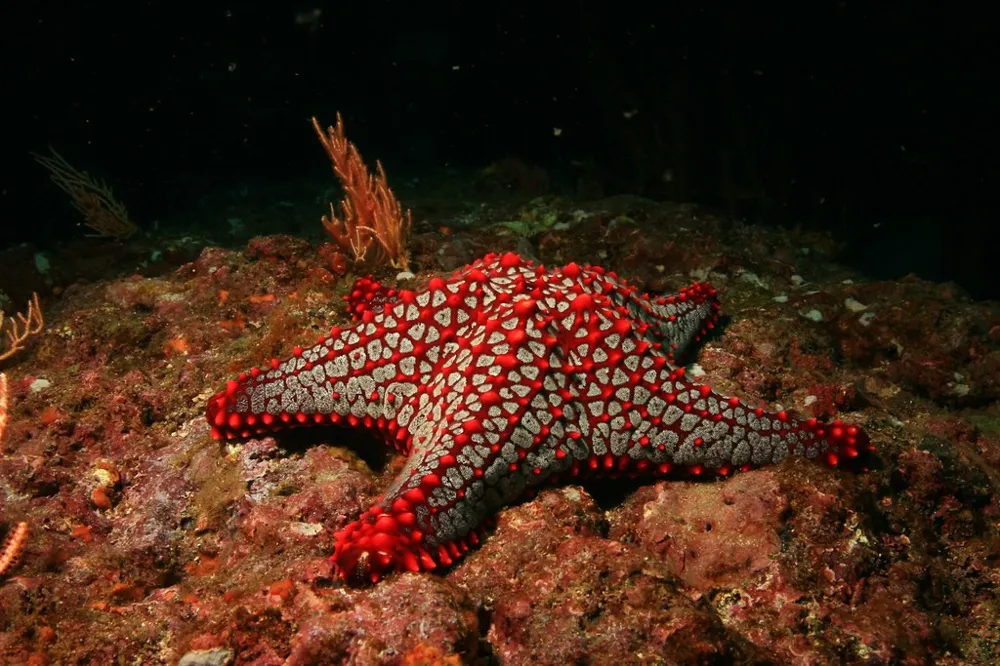
Water absorbs red light first, which is why reefs look blue-green at depth. DAN points out that a light restores those lost colors, helps with photos and reveals small creatures under ledges and in crevices. A narrow, modest-power light is often all you need for this.
Light Etiquette
- Never shine your light in another diver's eyes. Point it at the reef or at your own hand when signaling.
- Keep the beam forward and steady, and move it slowly. DAN warns that jerky movements can be mistaken for emergency signals.
- If you're leading, DAN suggests dimming your light so the group's lights stay visible.
- Avoid holding your beam on animals at night for long, and don't use lights to chase or herd marine life.
Light Signals
Agree on light signals with your buddy and guide before every night dive, since they vary between agencies and operators. According to DAN, a rapid back-and-forth movement of a light underwater means a diver is in distress. At the surface, a bright light can help a dive boat find you if conditions allow. In daylight, light signals are much harder to see, so get your buddy's attention first.
Night Dive Kit
Carry a primary, a backup and a marker light, check batteries before the boat leaves, and dive sites you know from daylight where possible. A PADI Night Diver or SSI Night Diving and Limited Visibility course covers the skills. For the rest of your gear, see our scuba diving equipment list.
Dive Light Care and Battery Maintenance
- Before every trip: remove, clean and inspect the O-rings for nicks, sand or hair, lightly lubricate them if the maker recommends it, and fit spares if needed.
- Before every dive: charge fully, switch the light on briefly to check it works, and close it carefully. Some lights shouldn't run for long out of water because they can overheat, so check the manual.
- After diving: soak and rinse in fresh water with the light closed, dry it, then open it to let it air out.
- Burn test: DAN recommends a burn test every six to 12 months: charge the light, submerge it in a bucket of water and time how long it runs. Tracking the results shows when the battery is wearing out.
- Storage: for long storage, follow the maker's guidance on battery charge level and store lithium-ion batteries out of the light, somewhere cool and dry.
Flying With Dive Lights and Lithium Batteries
Most dive lights travel fine, but lithium batteries have rules. As of November 2026, the FAA's PackSafe guidance says:
- Spare (uninstalled) lithium-ion batteries must go in carry-on baggage only. If your carry-on is checked at the gate, take spare batteries out and keep them with you.
- Lithium-ion batteries are allowed up to 100 watt-hours each. With airline approval, you can carry up to two spares of 101–160 Wh.
- Battery terminals must be protected from short circuits: keep them in retail packaging or a battery case, tape the terminals or put each in its own plastic bag or pouch.
- Damaged or recalled batteries can't be carried unless the battery has been removed or made safe.
The watt-hour rating is usually printed on the battery. For lights with batteries installed, use the lockout mode or remove the battery so the light can't switch on in your bag. Rules for devices with installed batteries and airline limits can be stricter, so check your airline and the FAA's current rules before you fly. Planning a dive trip? Don't forget the wait time before flying after diving.
Frequently Asked Questions
How many lumens do you need for a dive light?
For most recreational reef and night dives, a handheld light around 1,000 to 1,500 lumens with a narrow beam is plenty. Very bright lights help in murky water and big wrecks, but they drain batteries faster and can dazzle your buddy.
Do I need a backup dive light?
Yes for night, wreck and cavern diving, where a failed light leaves you in the dark. Night divers usually carry a primary light, a smaller backup and a marker light, and technical divers often carry two backups.
Is a narrow or wide beam better for diving?
A narrow beam of roughly 6 to 15 degrees is better for looking into crevices, cutting through particles and signaling. Wide beams of 90 degrees or more spread light evenly for video and close-up photos.
Should I use a dive light during the day?
It helps. Water absorbs red light first, so a light brings back natural colors, and it shows animals hiding under ledges and in holes. Daytime signals are harder to see, so get your buddy's attention first.
Can I take a dive light on a plane?
Usually, but spare lithium-ion batteries must go in carry-on bags only, with terminals protected, under FAA rules. Batteries over 100 watt-hours need airline approval. Check your airline and the FAA's current rules before you fly.
How do I stop my dive light from flooding?
Check, clean and lightly lubricate the O-rings before each trip, keep sand and hair off the sealing surfaces, close the light fully, and rinse it in fresh water after diving. Replace worn or nicked O-rings.