Where to Scuba Dive in California, From Kelp Forests to Wreck Alley (2026)
California diving means cold, green water, towering kelp forests, curious sea lions and some of the easiest shore dives in the country. Here's where to dive, region by region, how to dress for it and the rules to know before you go.
California Scuba Diving at a Glance
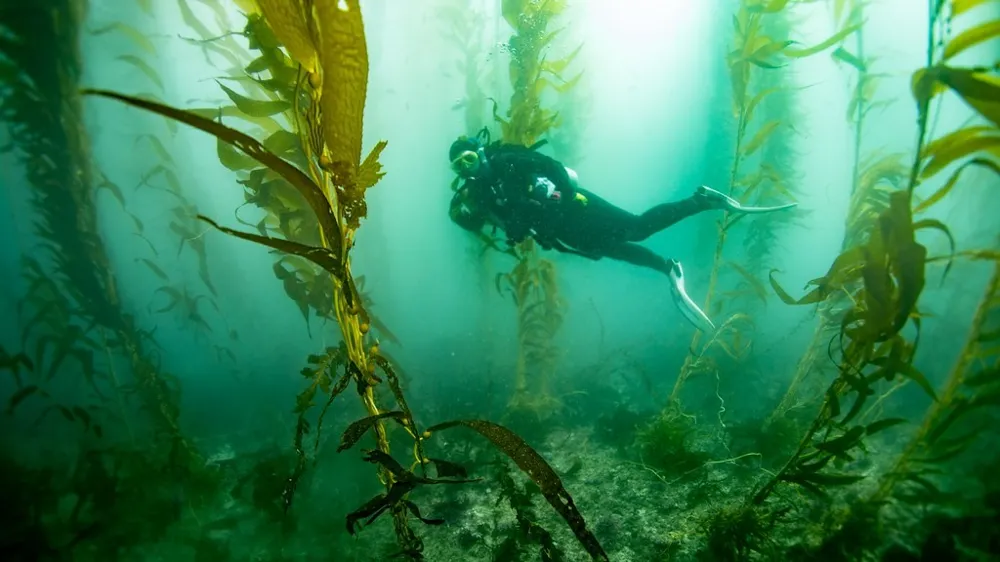
California's diving is built around kelp. Giant kelp forests grow from the rocky reefs of the Central Coast down to San Diego, and they shelter everything from orange garibaldi to sea lions, harbor seals, wolf eels and giant sea bass. Add offshore islands, deep submarine canyons and a handful of purpose-sunk wrecks, and you get one of the most varied cold-water dive coasts anywhere.
Most divers split the state into five areas: Monterey and the Central Coast, Northern California, the Channel Islands, Catalina, and the mainland coast from Los Angeles to San Diego. This page covers scuba sites, with a short section on snorkeling. For warm-water trips, see our guides to the best scuba diving in Florida and the Caribbean. Depths below come from official agencies or dive publications; treat them as approximate.
| Site | Region | Type | Notes | Level |
|---|---|---|---|---|
| Monterey Breakwater (San Carlos Beach) | Monterey | Shore dive | Monterey Bay's most visited dive site | Beginner |
| Lovers Point | Pacific Grove | Shore dive | Sheltered cove, popular for night dives | Beginner |
| Monastery Beach | Carmel | Shore dive | Steep beach, dangerous when surf is up | Experienced |
| Whalers Cove and Bluefish Cove | Point Lobos | Shore or small boat | Reservation required, 10 teams a day | All levels |
| Anacapa and Santa Cruz Islands | Channel Islands | Boat dive | Sea lions, kelp, sea caves | All levels |
| Casino Point Dive Park | Catalina (Avalon) | Shore dive | No-take reserve, 0 to 73 ft | All levels |
| Farnsworth Banks | Catalina (back side) | Boat dive | Deep pinnacle, exposed | Advanced |
| Offshore oil platforms | Long Beach and Huntington Beach | Boat dive | Live-boat drops, currents | Advanced |
| Shaw's Cove | Laguna Beach | Shore dive | Training and macro site | Beginner |
| La Jolla Cove and La Jolla Shores | San Diego | Shore dive | Underwater park, canyon nearby | Beginner to advanced |
| HMCS Yukon | Wreck Alley, San Diego | Wreck | Bottom about 100 ft (30 m) | Advanced |
| Coronado Islands | Mexico, south of San Diego | Boat dive | Clear water, sea lions | Intermediate |
How Scuba Diving in California Works
California dives fall into a few kinds of trips, and each one shapes your plan:
- Shore dives: much of the best diving starts from a beach or ramp, from the Monterey Breakwater to Casino Point and La Jolla Shores. That means walking in gear, timing the surf and finding your exit before you go in.
- Day boats: boats run to the Channel Islands, Catalina's back side, the oil rigs and Wreck Alley.
- Liveaboards and multi-day trips: PADI notes that Channel Islands trips range from day boats to liveaboards and trips that mix diving with kayaking or camping.
- Kayak diving: popular in Monterey and Carmel, and Point Lobos allows a few hand-launched craft each day.
The common thread is cold water. You'll wear more neoprene, carry more weight and use more gas than on a tropical dive, so plan conservatively. If you're newly certified, remember that an open water card limits you to 18 m (60 ft); see how deep you can scuba dive, and start with how to get scuba certified if you're not there yet. Plenty of divers learn in California, and the cold-water skills transfer well everywhere.
Monterey Bay Scuba Diving
Monterey is California's best-known dive town. The bay sits inside the Monterey Bay National Marine Sanctuary, which PADI says is home to 34 species of marine mammals and more than 525 species of fish. The water is green, cold and rich in plankton, which feeds dense kelp forests and very colorful invertebrates.
The Breakwater and Lovers Point
The Breakwater at San Carlos Beach is, according to NOAA's sanctuary program, the most visited dive site in Monterey Bay. It's a sheltered beach entry with a sandy slope beside the rock jetty, which makes it the default training site for local classes. Expect sea lions, octopuses and nudibranchs such as Spanish shawls. Nearby Lovers Point in Pacific Grove is another sheltered cove that PADI recommends for beginners and night dives.
Monastery Beach and Carmel Bay
Monastery Beach in Carmel drops steeply into deep water, with kelp close to shore and a canyon offshore. On flat days it's an excellent dive; when surf is up, PADI warns that entries and exits are dangerous. Many Monterey divers rate it as a site to do with a local who knows how to read the beach.
What You'll See
Monterey's highlights are harbor seals, sea lions, sea otters near shore, wolf eels, lingcod, rockfish, anemones and large, bright nudibranchs. Whales and dolphins pass through in season. Visibility and swell change quickly, so check a local dive report, and consider a guide for unfamiliar sites, as PADI suggests. The deep Monterey Canyon lies just offshore, but it's far beyond recreational limits; you'll see its life in the aquarium rather than on a dive.
Point Lobos: Reservations and Rules
Point Lobos State Natural Reserve, just south of Carmel, is one of California's most protected dive sites. PADI notes that Whalers Cove and Bluefish Cove have been protected since 1960, and the marine reserve stretches from the north end of Monastery Beach to the mouth of Malpaso Creek. The result is thick kelp, small caves, big fish and animals that are used to divers.
Diving here works differently from anywhere else in the state. As of November 2026, California State Parks lists these rules:
- Reservations are required and can be made as far ahead as the current month plus one month. State Parks takes dive reservations by phone (831-624-8413) and links online booking from its Whalers Cove page.
- Ten dive teams per day. Each permit covers a team of two; a team of three needs two reservations.
- Proof of certification from a recognized agency is required on arrival, plus photo ID if your card has no photo. All team members must be present to register.
- No solo diving. Every diver, and every snorkeler, needs a buddy.
- Only Whalers Cove and Bluefish Cove are open to diving. All other parts of the reserve are closed to aquatic activity, and divers enter and exit at the Whalers Cove ramp.
- Nothing may be taken. No fishing gear or collecting tools are allowed, and every scuba diver needs a device that can provide positive buoyancy.
- Small craft: hand-launched kayaks and boats are limited to four a day at the dive ramp, under 5 MPH with no wake.
- Fees apply for the dive reservation and parking, and late registration is not allowed close to closing time.
Rules and hours change, so confirm on the official California State Parks Point Lobos page before you go. Gear is not rented in the reserve; rent from a Monterey dive shop.
Channel Islands Diving
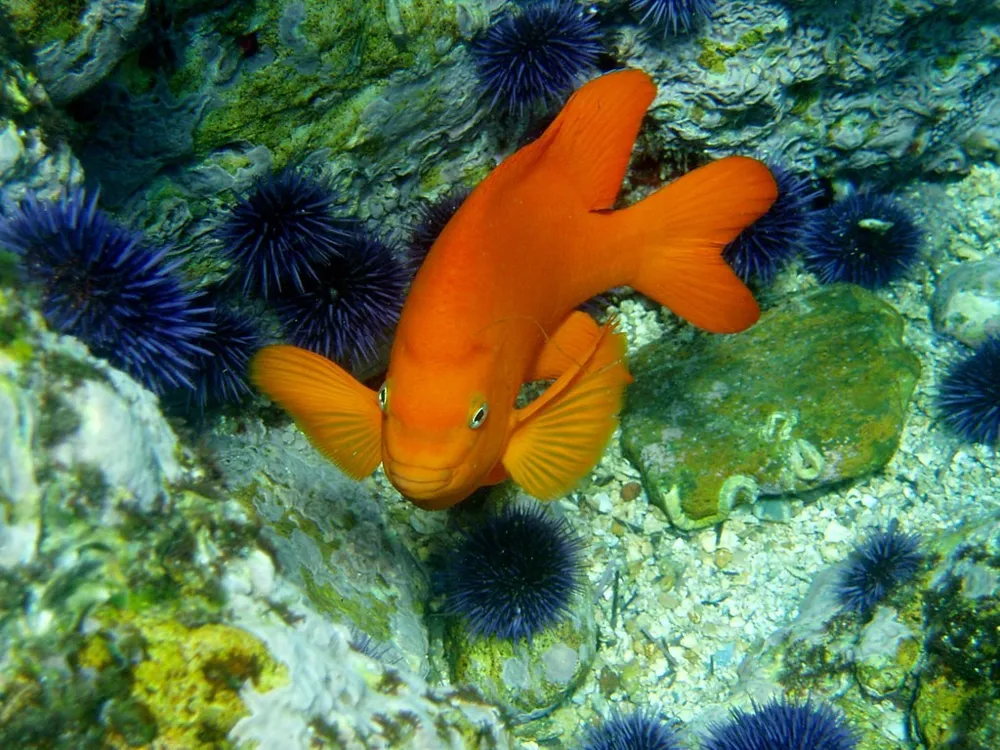
The Channel Islands run along the Southern California coast from Santa Barbara to San Diego. Five of them, Anacapa, Santa Cruz, Santa Rosa, San Miguel and Santa Barbara, make up Channel Islands National Park, surrounded by a national marine sanctuary. PADI calls their kelp forests among the most pristine in the state, and many dive boats reach them from the Ventura, Oxnard and Santa Barbara harbors.
- Anacapa Island is closest to the mainland and the most popular day trip. Divernet highlights its sea lion rookeries, harbor seals, wolf eels and year-round macro life, including many nudibranchs. Part of the island is a no-take marine reserve.
- Santa Cruz Island is the largest island, with kelp-covered reefs and sea caves, including the well-known Painted Cave.
- Santa Barbara Island is small and remote, known for sea lions.
- San Miguel and Santa Rosa sit farther out in colder, rougher water. Divernet notes that San Miguel is rarely dived because weather often stops boats from getting there.
Beyond the park, San Clemente Island is known for clear water, but PADI notes that Navy use can restrict access, and some sites need permits or coordination with authorities. Conditions at the outer islands can be colder and rougher, and PADI's advice is simple: bring extra neoprene even if you prefer warm water. Many reefs around the islands are state marine protected areas, so check the zone before you hunt.
Catalina Island and Casino Point
Santa Catalina Island is the easiest island trip from Los Angeles. Ferries run from Long Beach, San Pedro, Newport Beach and Dana Point, and gear can be rented in Avalon, so you can make it a walk-on shore-diving weekend.
Casino Point Dive Park
The Casino Point Dive Park (often called the Avalon Underwater Park) sits beside the landmark Casino building in Avalon. CDFW describes it as one of the first underwater parks in the country, created in the 1960s, with calm, clear water and "the easiest 'beach' diving in all the Channel Islands." Steps and a railing lead from the shore into the water, and kelp grows out to just beyond 70 feet. PADI reports visibility of 60 feet or more on a regular basis.
Casino Point is a no-take State Marine Conservation Area: nothing living, geological or cultural may be taken or damaged. Expect garibaldi, kelp bass, sheephead, señorita and, at the edge of the kelp, giant sea bass. It's a good place for a first California dive, a refresher or a night dive, and it's popular with instructors, so it can be busy on weekends.
Beyond Avalon
Boats from the mainland and Avalon run to sites around the island, including Blue Cavern Point near Two Harbors and Farnsworth Banks on the back side. Farnsworth is a deep, exposed pinnacle known for purple hydrocoral; PADI recommends it for experienced divers in late September or October, when conditions are often calmest. Catalina is also one of the better places in California to see giant black sea bass and electric rays (look, don't touch).
Los Angeles and Orange County Diving
You don't need a boat to dive around Los Angeles. PADI lists Point Dume, Paradise Cove and Leo Carrillo State Beach as Malibu shore dives with kelp-forest habitat, and notes that several areas along this coast are marine protected areas. Visibility near LA is often lower than at the islands, and divinglore notes that the clearest water tends to come in the second half of the year.
Laguna Beach
Laguna Beach is Orange County's dive town. Shaw's Cove is the best-known site, popular for training and for macro life on its reefs, with shore access that Divernet describes as "somewhat easy." Other local entries include Crescent Bay and, farther north, the Newport Pier and Vet's Park areas. Much of Laguna's shoreline lies inside state marine protected areas, so treat it as look-only unless you've checked the zone.
Oil Rig Diving
The offshore oil platforms Eureka, Ellen and Elly off Long Beach and Huntington Beach are a California specialty. Their legs are covered in life, and schools of fish, sea lions and sometimes sharks gather around them. The water under the rigs is far deeper than recreational limits, entries are live-boat drops, and currents can be strong, so dive them with an operator that runs regular rig trips. Divinglore and PADI both recommend advanced training and a guide.
San Diego: La Jolla, Wreck Alley and the Yukon
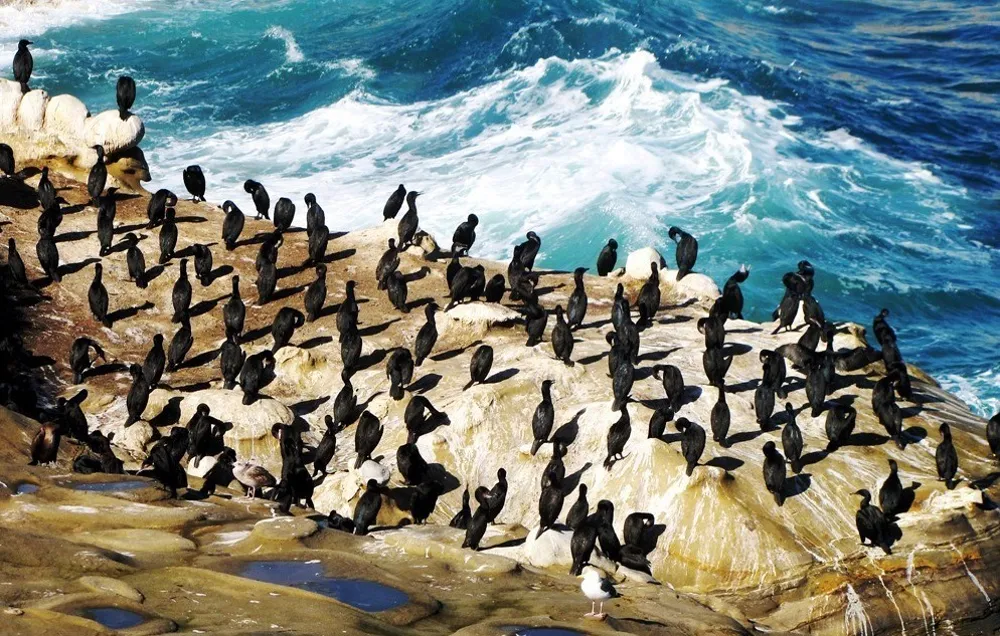
San Diego generally has the mildest water on the California mainland and the widest mix of dives, from easy beach entries to wrecks and a trip into Mexican waters.
La Jolla Cove and La Jolla Shores
La Jolla's waters form an underwater park of about 6,000 acres that PADI describes as having four habitats: kelp, seagrass, rocky reef and canyon. La Jolla Shores is a gentle sandy beach entry and a popular training site, with the head of the La Jolla Canyon within reach offshore for more experienced divers. La Jolla Cove is a small, rocky cove with kelp and reef close to shore; it sits within the no-take Matlahuayl State Marine Reserve. Wildlife includes seals, sea lions, stingrays, horn sharks, garibaldi, kelp bass and sheephead, with the occasional broadnose sevengill shark.
Wreck Alley
Off Mission Beach, Wreck Alley is a group of ships sunk as artificial reefs. The headline is the HMCS Yukon, a Canadian destroyer sunk in 2000 about two miles off San Diego. Divernet gives its depth as about 30 m (100 ft) and notes that almost all of the ship is within reach of weekend divers. Nearby is the Ruby E, a smaller vessel also sunk as an artificial reef. PADI calls Wreck Alley a good place for the Wreck Diver course. Visibility here can be low, so a dive light helps, and you should never go inside a wreck without penetration training.
Coronado Islands
The Coronado Islands are in Mexico, about 15 miles south of San Diego. PADI says the boat ride takes about 90 minutes to two hours each way and that visibility often tops 100 feet. Sea lion colonies are the draw. Because you're entering Mexican waters, follow local regulations and check document requirements with your dive operator.
Northern California: Mendocino, the Farallones and Beyond
North of San Francisco the water is colder, the swell bigger and the crowds smaller. Most diving here is for experienced cold-water divers.
- Mendocino and Sonoma coasts: rocky coves with bull kelp, fish, sea lions and seals. PADI notes they're far less crowded than Monterey or the Channel Islands. Conditions depend heavily on swell, so dive with someone who knows the coves.
- Farallon Islands: about 30 miles off the Golden Gate, and a National Wildlife Refuge. PADI says recreational diving there runs roughly from April to August, while September to November is great white shark cage-diving season. Rough water and strong currents make it unsuitable for beginners.
- Smith River: a freshwater option near the Oregon border. PADI says the Early Hole averages about 50 feet of visibility, with trout, salmon and sturgeon.
- Lake Tahoe: a high-altitude lake dive. PADI gives water temperatures of about 40°F at depth to 63°F at the surface, recommends a drysuit and says the Emerald Bay Maritime Heritage Trail has more than a dozen historic boats in 10 to 60 feet. Altitude diving needs adjusted dive tables or a computer set for altitude.
A Note on Abalone
The North Coast was once famous for recreational abalone diving, which was done on a breath-hold rather than with scuba. It's closed now. The California Fish and Game Commission closed the recreational red abalone fishery in 2018 after a steep decline, and on December 18, 2025, CDFW announced that the Commission had extended the Northern California closure to April 1, 2036. CDFW says red abalone fell by about 85% after the 2014 kelp forest collapse. Abalone fishing south of San Francisco has been closed since 1997. Taking abalone anywhere in the state is illegal. This was last checked in November 2026; see CDFW's abalone pages for updates.
Best Places to Snorkel in California
California snorkeling is cold-water snorkeling: wear a thick wetsuit, hood and boots, and pick calm days. The most popular spots overlap with the dive sites above:
- La Jolla Cove and La Jolla Shores (San Diego): the state's best-known snorkel area, with garibaldi, sea lions and kelp close to shore on calm days.
- Laguna Beach: Shaw's Cove and Crescent Bay have reefs and tide-pool life close to shore.
- Catalina: Lover's Cove and Casino Point in Avalon are calm, clear and full of garibaldi. CDFW notes these are the only two MPAs in the state where feeding fish for viewing is permitted.
- Point Lobos: snorkelers can use Whalers Cove with a reservation and a buddy, but snorkeling is not permitted at China Cove or Gibson Beach.
- Monterey: Lovers Point and the Breakwater are sheltered on calm days.
New to snorkeling? Start with how to snorkel and our snorkeling safety tips, and see the best snorkeling in the US for warmer options in Florida and Hawaii.
Water Temperature and Wetsuits for California Diving
Water temperature is the biggest planning difference between California and tropical diving. Northern and Central California are cold year-round, Southern California is cooler in winter and spring and warmest in late summer and fall. PADI's exposure-suit guidance gives a good starting point:
| Where and When | Typical Exposure Protection |
|---|---|
| Southern California, November to May | 7 mm wetsuit with hood, boots and gloves |
| Southern California, June to October | Some divers switch to 5 mm or skip the hood |
| Northern and Central California, all year | 7 mm wetsuit with a hooded vest, boots and gloves, or a drysuit |
| Lake Tahoe | Drysuit recommended |
Many local divers use a drysuit year-round because it keeps you warm on long or repeated dives. If you've never used one, take a drysuit course first; buoyancy control is different. Our wetsuit vs drysuit guide explains the trade-offs, and wetsuits and drysuits cover the gear. Thick neoprene is buoyant, so expect to need more weight than in the tropics; do a weight check at the start of the trip. Check a local dive shop or report for current water temperature before you choose a suit.
Kelp Diving Safety and Shore-Entry Tips
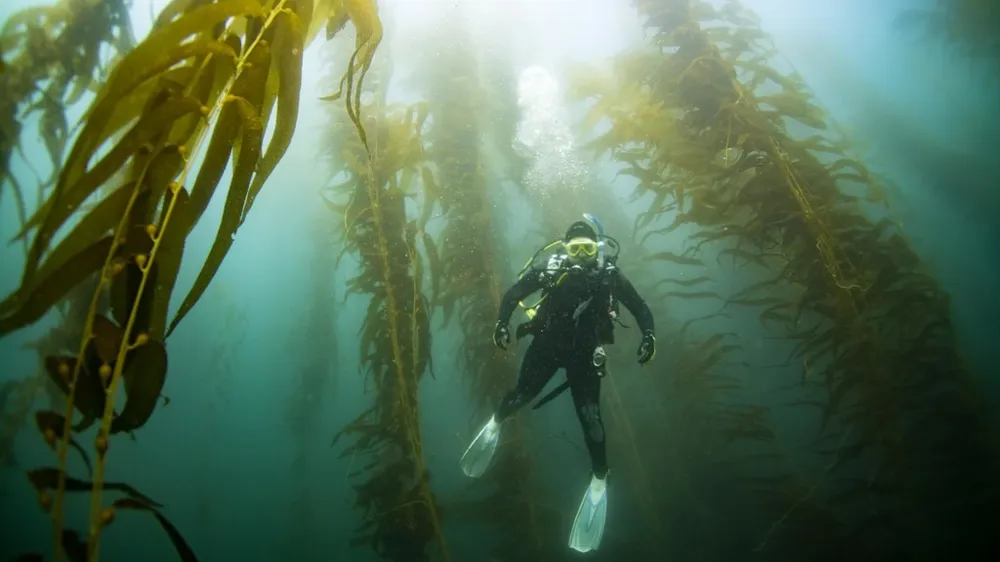
Kelp forests are the reason to dive California, and they're easy to enjoy with a few habits:
- Streamline your gear: tuck hoses and gauges close to your body, and keep fin straps and loose clips from snagging stalks.
- Move slowly in kelp: if you get caught, stop, don't twist or kick, and ask your buddy to help free you. Most snags come loose with a calm hand.
- Carry a cutting tool you can reach with either hand, such as a small knife or line cutter; see our dive knife guide.
- Ascend in open water, not in a thick canopy. On the surface, a thick kelp mat can be crossed with a slow, flat "kelp crawl" rather than a kick.
- Read the surf before shore dives: watch the sets, plan your entry and exit, and keep your mask on and regulator in your mouth until you're past the break. If it looks rough, pick another site.
- Shuffle your feet on sandy entries like La Jolla Shores so you don't step on a stingray.
- Give marine mammals space: seals, sea lions and otters are protected by federal and state law. If an animal reacts to you, back off.
- Plan for the cold: cold water raises gas use and fatigue, so turn the dive with gas to spare and end it if you start shivering.
Not sure about the risks? Our is scuba diving dangerous guide covers the main causes of accidents, and what is the bends explains the warning signs. In an emergency, call 911 and contact DAN (Divers Alert Network), which runs a 24-hour emergency hotline. Driving to altitude after diving, such as up to Tahoe or over mountain passes, raises similar concerns to flying; see flying after scuba diving for surface-interval guidance.
Marine Protected Areas, Lobster and Fishing Rules
California has a statewide network of marine protected areas (MPAs). CDFW says non-extractive uses such as diving, swimming and boating are allowed in MPAs, but state marine reserves allow no take at all, and conservation areas limit or ban specific kinds of take. It's up to you to know whether you're inside one, so check CDFW's MPA map before you hunt or collect anything. Point Lobos, Casino Point and La Jolla Cove are all no-take areas.
Spiny Lobster
Lobster diving is a big part of Southern California's fall and winter. As of November 2026, CDFW's rules include:
- The season opens at 6:00 p.m. on the Friday before the first Wednesday in October and closes at 11:59:59 p.m. on the first Wednesday after March 15.
- You need a California sport fishing license and a Spiny Lobster Report Card, plus an Ocean Enhancement Validation south of Point Arguello unless you're on a one- or two-day license.
- Divers may take lobster by hand only. Using spearfishing gear to take lobster is illegal.
- The minimum size is 3¼ inches carapace length, measured in the water; undersized lobster can't be brought out. The bag limit is seven.
Spearfishing and Other Take
Spearfishing is legal in many California waters outside MPAs, with a fishing license and species-specific seasons, size and bag limits. One rule catches many visitors: CDFW notes that north of Yankee Point in Monterey County, scuba may not be used to take most invertebrates. For technique, see how to spearfish. Rules change often and this is not legal advice; check the current CDFW ocean sport fishing regulations and emergency closures before every trip (last checked November 2026).
Best Time to Scuba Dive in California
You can dive California year-round, but the best months differ by region:
| Region | Best Months | Notes |
|---|---|---|
| Southern California and Catalina | Late summer and fall | Warmest water; fall is often calmest with the best visibility |
| Channel Islands | Late summer and fall | Outer islands depend on weather windows |
| Monterey and Carmel | Late summer and fall | Winter storms bring swell; flat days happen year-round |
| Northern California | Spring to fall | Divinglore advises avoiding November to March for storms and cold |
| Farallon Islands | About April to August | White shark cage season is September to November |
| Lobster season | October to March | Opens in early October; check CDFW dates |
Day-to-day conditions matter more than the calendar. Swell, wind and plankton blooms can change visibility from day to day, so check surf forecasts and local dive reports before you drive to a shore site.
What to Pack for a California Dive Trip
California dive shops rent tanks, weights, BCDs, regulators and thick wetsuits, but a mask, fins and computer that fit you make cold dives far more comfortable. Bring a hood, gloves and boots, a cutting tool for kelp, a dive light for low visibility and canyon dives, a surface marker buoy for boat dives, and a towel and warm layers for between dives. Our full scuba diving equipment list has the rest.
1. Dive Rite Ceramic Line Cutter
A compact cutter with a ceramic blade that Dive Rite says won't dull or rust, supplied with a sheath. Its small size makes it easy to mount on a BCD strap where you can reach it in kelp.
Check Price on Amazon2. Mares Puck Pro Ultra
A wrist dive computer that supports air and nitrox and shows depth, time, temperature and decompression information on a high-contrast screen. A simple first computer for repetitive shore dives.
Check Price on Amazon3. Scubapro Seawing Nova
Open-heel fins with an articulated blade and a bungee heel strap, designed for flutter and frog kicks. Wear them with dive boots, which you'll need anyway for cold water and rocky entries.
Check Price on AmazonCompare more gear: dive computers, scuba masks, scuba fins, dive lights and underwater cameras. Planning a warmer trip? See the best scuba diving in Florida, the Caribbean and the best scuba diving destinations worldwide.
Frequently Asked Questions
Where is the best scuba diving in California?
It depends on what you want. Monterey and Point Lobos have rich cold-water kelp forests, the Channel Islands have some of the state's least disturbed kelp, Catalina's Casino Point is an easy shore dive in a no-take reserve, and San Diego has La Jolla's underwater park and the HMCS Yukon wreck.
Do you need a reservation to dive Point Lobos?
Yes. California State Parks requires an advance reservation for each dive team, allows ten teams per day at Whalers Cove and Bluefish Cove, and asks every diver to show a certification card on arrival. Solo diving is not allowed.
What wetsuit do I need to dive in California?
Most divers wear a 7 mm wetsuit with a hood, boots and gloves for much of the year, and many locals use drysuits year-round. In Southern California some divers drop to 5 mm or skip the hood in late summer and fall. Check with a local dive shop for current water temperatures.
Can you take abalone in California?
No. The recreational red abalone fishery in Northern California has been closed since 2018, and in December 2025 the Fish and Game Commission extended the closure to April 1, 2036. Abalone fishing south of San Francisco has been closed since 1997.
Can beginners scuba dive in California?
Yes, at sheltered shore sites such as the Monterey Breakwater, Lovers Point, Casino Point on Catalina, La Jolla Shores and Shaw's Cove in Laguna Beach. Cold water, surf entries and kelp make a local guide or dive shop orientation a good idea for your first California dives.
When is the best time to scuba dive in California?
California can be dived year-round. Fall often brings the calmest seas and best visibility, especially in Southern California, while Northern and Central California are most affected by winter storms from about November to March.
Can you catch lobster while scuba diving in California?
Yes, in season and outside marine protected areas, with a sport fishing license and a spiny lobster report card. Divers may take lobster by hand only, never with spearfishing gear. Check CDFW's current rules before you go.