How to Wakesurf: From Your First Pull to Rope-Free (2026)
Wakesurfing is one of the friendliest boat sports to learn. Here's the boat, gear and setup it needs, the deep-water start, how to find the pocket and drop the rope, and the safety rules every crew should follow.
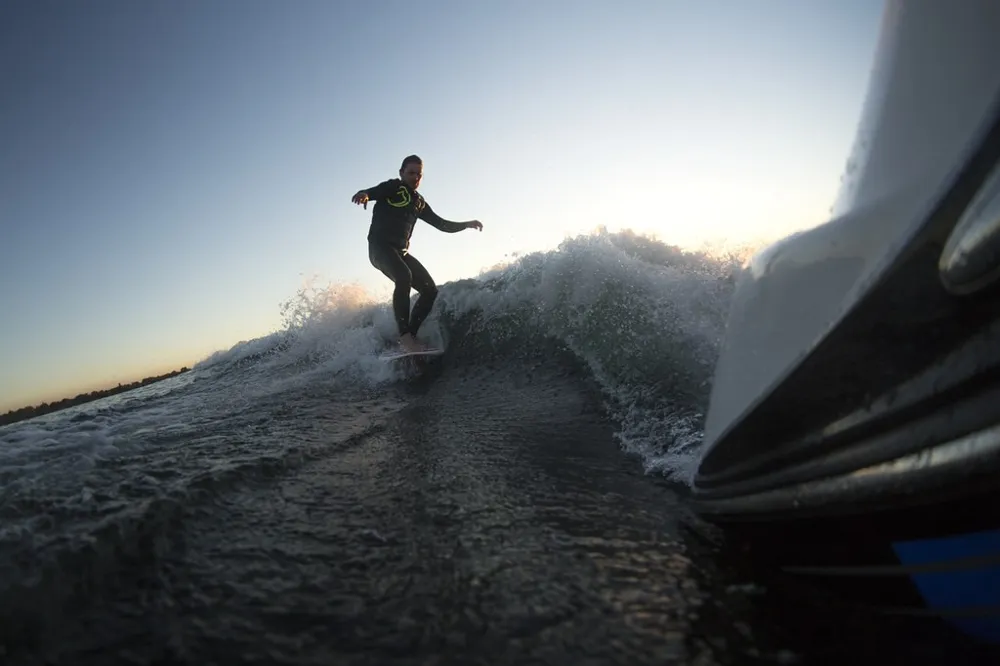
Wakesurfing in a Nutshell
Wakesurfing means riding the wave a boat makes behind it. You start in the water holding a short, thick rope, let the boat pull you up, ride into the steep part of the wave close to the boat (the pocket), then toss the rope and surf the wave's push. The boat travels slowly, usually around 10 to 12 mph, and your feet aren't strapped in, so falls are gentle.
Because you ride only a few feet off the stern, the boat matters more than in any other tow sport. Wakesurf only behind a boat whose propeller sits safely under the hull, wear a Coast Guard-approved life jacket, have a spotter on board and stay away from engine exhaust. New to boat sports? See wakeboarding vs wakesurfing for how the two compare.
Gear You Need
| Gear | What to Look For |
|---|---|
| Wakesurf board | A larger surf-style board for learning; sized by rider weight on the maker's chart |
| Wakesurf rope | Short (about 10–25 ft), thick, with a padded handle and knots or grips along the line |
| Life jacket | US Coast Guard-approved, snug, sized for your chest and weight |
| Wetsuit or rash guard | A wetsuit in cool water; a rash guard for sun and board rash |
| Suitable boat | Inboard or approved forward-facing drive, with ballast or a surf system (see below) |
Board Types: Surf, Skim and Hybrid
| Style | Feel | Fins | Best For |
|---|---|---|---|
| Surf-style | Stable, carves and drives down the wave | Usually three larger fins | Beginners, carving, big turns |
| Skim-style | Thin, loose and fast-spinning | Small single fin or none | Spins, shove-its, skate-style tricks |
| Hybrid | Between the two | Varies by model | Riders who want to carve and spin |
Start on a longer, more buoyant surf-style board; extra length and volume make the start and the first rides more forgiving. Bigger riders need bigger boards. For models and a size guide, see the best wakesurf boards.
Hyperlite Broadcast
Hyperlite describes the Broadcast as designed for comfort and control, with a fast, smooth ride that helps keep you in the wave's sweet spot, and pitches it at beginners.
Check Price on AmazonRope and Handle
Wakesurf ropes are thicker and shorter than wakeboard ropes, often listed at about 10 to 25 feet, with a padded handle and extra knots so you can "climb" the rope toward the boat. Don't use a long wakeboard or ski rope; the extra length leaves you stranded behind the wave. Many boats attach the surf rope to a tower or a pylon on the surf side so you start just outside the wake.
Life Jacket
Wear a US Coast Guard-approved life jacket. California, for example, requires anyone being towed to wear a Type I, II, III or V Coast Guard-approved life jacket, and Georgia's wakesurf law requires wakesurfers to wear one at all times. Many impact or comp vests are not Coast Guard approved. Compare wake-friendly options in the best wakeboard life vests.
O'Neill Reactor USCG Life Vest
Listed as US Coast Guard and Transport Canada approved (Level 70), with a segmented foam core that flexes when you crouch, dual quick-release buckles and a front zip.
Check Price on AmazonThe Right Boat: Inboard or Forward-Facing Drive Only
A wakesurfer rides and falls within a few feet of the transom, so the propeller must be well under the hull. Suitable boats are:
- Inboard V-drive boats, the most common surf boats, with the engine at the back and the prop well under the hull.
- Inboard direct-drive boats, which can also surf with ballast on the surf side.
- Forward-facing drive boats, such as Volvo Penta's Forward Drive, a sterndrive whose propellers face forward and sit under the hull. Surf only if the boat maker approves it for wakesurfing.
Never wakesurf behind a conventional outboard or sterndrive (I/O) boat. The exposed prop sits right where the rider surfs, and one boat-industry review put it bluntly: surfing a few feet behind an outdrive is simply too dangerous. A swim platform does not make an exposed prop safe.
Setting Up the Wave: Ballast and Surf Systems
A surfable wave comes from weight and shaping. The aim is a clean, steep face with a lip that doesn't crumble into whitewater; a thigh-high wave is a good starting size.
- Ballast on the surf side. Put most of the extra weight in the back corner on the side the rider will surf, so the boat sits lower (lists) on that side. Built-in tanks, water bags or lead bags all work.
- Front weight to lengthen. Weight at the back makes the wave taller; a little weight forward on the same side can lengthen and clean the face.
- Passengers count. Moving people to the surf side helps the wave.
- Surf systems and shapers. Many wake boats have tabs or gates at the transom that shape the wave on one side. Clip-on or suction wave shapers do a similar job on boats without them; follow the boat maker's guidance.
Pick the side: Discover Boating says left-foot-forward (regular) riders usually surf the port wave and right-foot-forward (goofy) riders the starboard wave. Find your stance on how to wakeboard (the push test).
Stay within limits. Check the boat's capacity plate and count ballast, passengers and gear toward the maximum weight. Keep the rub rail above the water, never trailer with full ballast, and drain ballast fully before moving to another lake, which some states now require to limit invasive species.
Driver and Spotter Roles
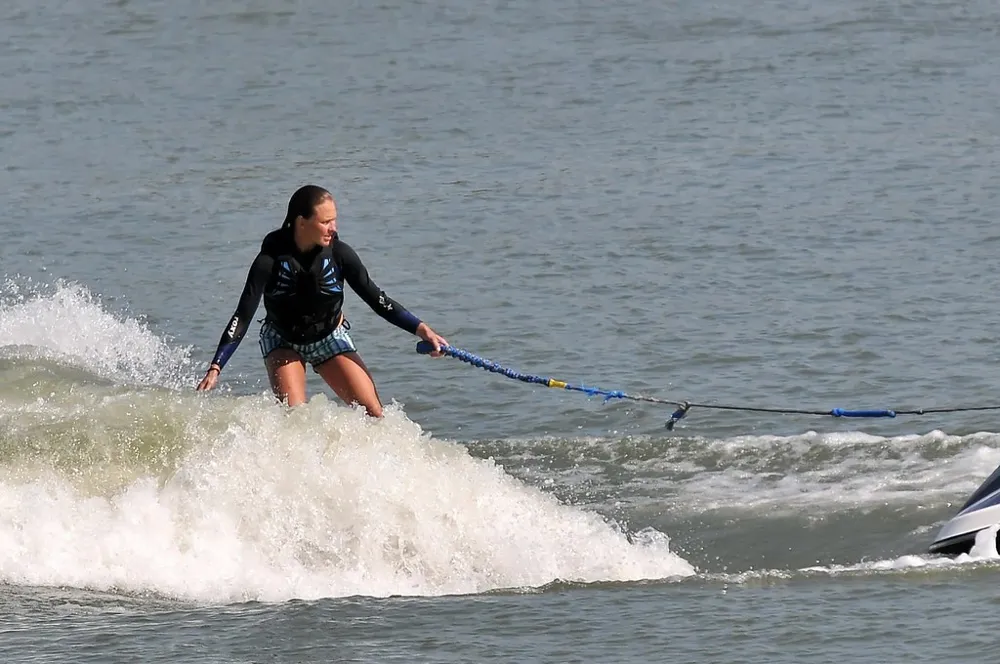
Wakesurfing is a three-person job. The driver watches ahead and holds a steady speed. The spotter (observer) watches the rider, relays signals and pulls in the rope after it's dropped. Many states require an observer; California, for example, requires one aged 12 or older besides the driver. Agree on hand signals before anyone gets in the water; the common set is on how to wakeboard.
Driver checklist:
- Engine off while the rider gets in or out near the stern; a prop can turn even in neutral.
- Idle in gear to take up slack, then accelerate gently. Evo describes a "three-speed start": tighten the rope, ease up until the board flips up, then rise to surf speed.
- Hold a steady speed in a straight line in open water; electronic speed control helps.
- After a fall, shift to neutral, let the wakes settle, then turn back slowly so the big surf wave doesn't swamp the bow, and approach with the engine off near the rider.
Step by Step: The Deep-Water Start
- Get in position. Float on your back in the water behind the boat, life jacket on, with the board in front of you and the rope handle between your legs.
- Heels on the board. Rest both heels on the board's edge, about shoulder-width apart, so the board sits sideways on its edge. Point the nose away from the wake.
- Arms straight, knees bent. Hold the handle with straight arms and pull your knees toward your chest.
- Signal the driver. The boat idles to tighten the rope, then accelerates smoothly.
- Let the boat pull you up. Press your heels into the board until your feet slide flat onto it. Don't lean back against the rope as in water-skiing and don't stand early; stay compact while the boat brings you over the board.
- Stand and turn. Rise slowly and let the nose swing toward the boat, back foot near the tail and front foot about shoulder-width ahead.
Discover Boating suggests a back foot roughly 6 to 18 inches from the tail, depending on the board. Most early falls come from standing too soon or pulling on the rope.
Finding the Pocket and Dropping the Rope
Once you're up, you sit on the face of the wave with the rope still tight. Now work toward the pocket, the steep section near the boat where the wave pushes you and the rope goes slack.
- Front foot is the gas, back foot is the brake. Shift weight onto your front foot to move up into the wave; shift back to slow down.
- Don't pull yourself in. Move into the wave by shifting weight, not by tugging the rope with your arms.
- Ride with slack. When the rope sags, let your front arm drop to your side and keep riding with the rope loose.
- Toss it. Once you can hold a slack rope consistently, stand tall and toss the handle toward the boat or off to the side, clear of the wave, so the spotter can pull it in.
Boating Magazine describes a sweet spot about 10 to 12 feet long. Too close to the platform and you run out of room; too far back and you get stuck behind the curl. Many riders choke up on the rope's knots to practice short distances before letting go.
Pumping and Staying on the Wave
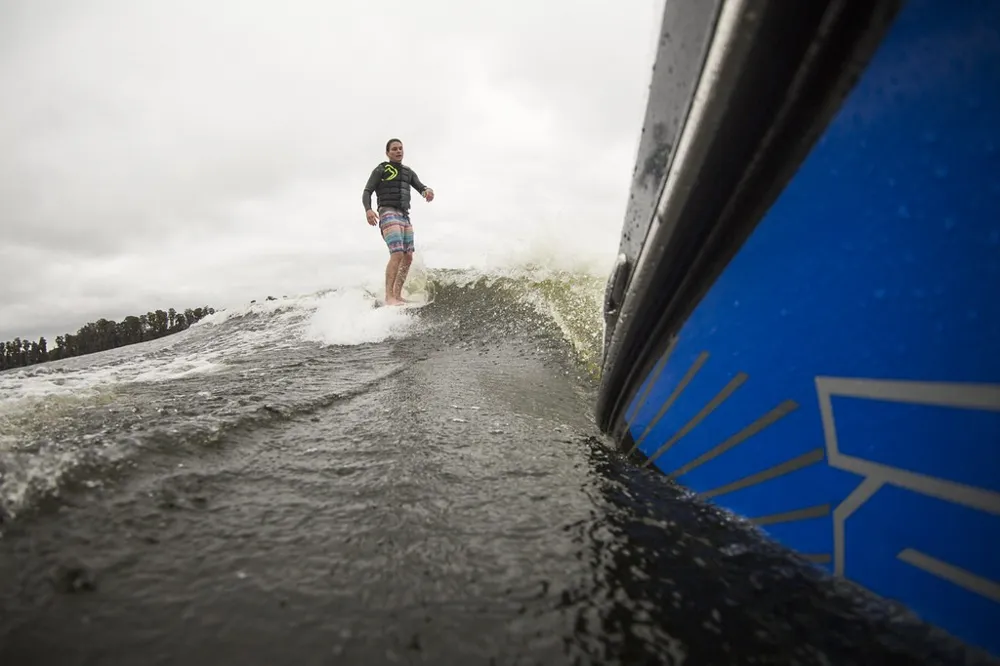
Without the rope, speed comes from the wave and from pumping: carving up the face and back down in a smooth, rhythmic motion, like a surfer generating speed. Use the top of each carve to drive forward toward the boat.
- Falling behind? Lean forward, drop down the face and pump to gain speed.
- Too close to the boat? Shift weight to your back foot or ride higher on the wave to slow down.
- Stay low and loose. Bent knees, relaxed arms, eyes on where you want to go.
- Losing the wave? Many riders keep the rope in hand longer while learning to "recover" from the back of the wave.
Falling Safely
- Fall away from the boat and away from the board; fall back or to the side rather than forward toward the transom.
- Let go and toss the handle clear so the rope can't wrap around you.
- Surface with an arm up to protect your head from the board, then signal "I'm okay".
- Keep the board with you so the driver can spot you, and wait for the boat to return with the engine off near you.
- Never swim toward the stern while the engine is running.
Common Mistakes and Fixes
| Mistake | Likely Cause | Fix |
|---|---|---|
| Pulled over the nose on the start | Standing too early, bent arms | Stay compact with straight arms; let the boat pull you up |
| Board sinks or slides away | Feet too far apart or flat too soon | Heels on the edge, shoulder-width; press gradually |
| Can't reach the pocket | Pulling with arms, too little front-foot weight | Shift weight forward; choke up on the rope |
| Falling off the back | Too much back-foot weight, rope tossed too early | Pump down the face; keep the rope until it's slack |
| Sliding into the boat | Too much speed in the pocket | Shift to the back foot or carve up the face |
| Messy, crumbly wave | Too little ballast or uneven weight | Add weight on the surf side; adjust the surf system |
Carbon Monoxide and Propeller Safety
Boat engines produce carbon monoxide (CO), a colorless, odorless gas. The CDC warns that CO can build up beneath the stern deck and on and near the swim deck, where it can kill in seconds. California's Division of Boating and Waterways warns that "teak surfing", hanging onto a moving boat's swim platform or body surfing right behind it, has caused deaths from CO.
- Never teak surf or hold onto the swim platform while the boat moves.
- Keep riders and swimmers away from the stern and exhaust while the engine runs; switch it off when someone boards.
- Watch for headache, dizziness, nausea, weakness or confusion and move the person to fresh air right away.
- Fit and maintain a marine CO detector on boats with enclosed spaces.
- Keep children close and supervised on the swim platform.
Wake Etiquette and Local Rules
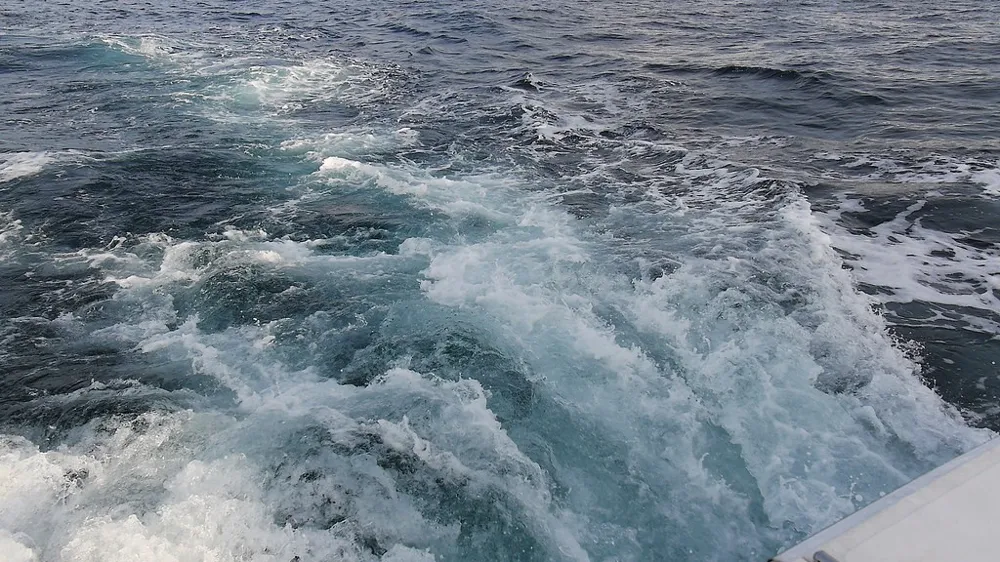
Ballasted surf waves carry a lot of energy. They can rock docks, swamp small boats, disturb swimmers and erode shorelines, and wake complaints have pushed several states to regulate the sport. The boating industry's Wake Responsibly guidelines, also promoted by state agencies such as North Carolina Wildlife, include:
- Surf at least 200 feet from shore, docks and other structures, and farther when space allows.
- Avoid repetitive passes along the same stretch of shoreline.
- Keep music at a reasonable volume.
Examples of state rules (last checked November 2026):
- Georgia: since July 1, 2023, no wakesurfing or wakeboarding within 200 feet of moored vessels, docks, piers and bridges, or of shorelines next to homes, parks, beaches, swimming areas, marinas and other public-use areas; no wake sports between sunset and sunrise.
- Vermont: under rules that took effect June 11, 2026, wake sports are allowed only in defined zones on listed lakes, at least 500 feet from shore and at least 20 feet deep, with ballast decontamination rules for boats moving between waterbodies.
- Minnesota: the DNR recommends staying at least 200 feet from shore, other boats and structures and treats wake damage like collision damage.
Many lakes also have local no-wake zones, hours or wake-boat limits. Rules change, so check your state boating agency and any lake ordinances before you ride. This is general information, not legal advice.
Where to Learn
The easiest first session is with an experienced crew on a proper surf boat. Many lakes have wake schools or boat rentals with a driver; a lesson gets you a dialed-in wave, coaching on the start and a crew that knows the safety routine. Pick calm, open, deep water away from shore, swimmers and traffic, and consider early or late sessions, when many lakes are calmer. Cool water calls for a wetsuit.
Progression and First Tricks
Once you can ride rope-free for a full pass, build skills in roughly this order:
| Stage | Skill | Tip |
|---|---|---|
| 1 | Riding with a slack rope | Front foot to speed up, back foot to slow down |
| 2 | Rope-free riding and pumping | Smooth up-and-down carves to hold your spot |
| 3 | Carving and floating up the face | Pivot off your back foot to change direction |
| 4 | Switching sides | Ride the wave the other way, or switch stance |
| 5 | Rail grab | Crouch low and grab the edge as you carve |
| 6 | Surface 180 and shove-it | Easier on a skim or hybrid board |
| 7 | Surface 360 | Dip your back hand, look over your shoulder, pivot on the back foot |
| 8 | Ollie and first airs | Practice the pop with the rope, then off the lip |
Spins and skate-style tricks are easier on a skim-style board; surf-style boards reward carving and airs. If you want to keep progressing on land, surfskating trains the same pumping motion, and how to surf carries those skills to the ocean.
Related Guides
See the best wakesurf boards, wakeboard life vests, wakeboarding vs wakesurfing and how to wakeboard, or browse all water sports guides.
Frequently Asked Questions
Is wakesurfing hard to learn?
It's often considered one of the easier boat sports to start because the boat moves slowly, there are no bindings and falls are gentle. Many beginners stand up within a few tries; staying in the pocket without the rope takes more practice.
What speed should the boat go for wakesurfing?
Most riders surf at roughly 10 to 12 mph, and some guides give a range up to about 14 mph. Skim-style boards often work best a little slower than surf-style boards.
How long is a wakesurf rope?
Wakesurf ropes are short and thick, typically about 10 to 25 feet, with a padded handle and extra knots or grips so the rider can choke up on the line.
Can you wakesurf behind an outboard or sterndrive boat?
No. Conventional outboards and sterndrives put an exposed propeller right where a wakesurfer rides and falls. Wakesurf only behind inboard (direct-drive or V-drive) boats, or forward-facing drive boats built and approved by the maker for surfing.
Which side of the boat should I surf?
Discover Boating says left-foot-forward (regular) riders usually surf the port-side wave and right-foot-forward (goofy) riders the starboard side. Set the ballast and surf system to the side the rider prefers.
Do I need a life jacket to wakesurf?
Yes. Wear a US Coast Guard-approved life jacket. Many states require one for anyone being towed, and impact or comp vests are often not Coast Guard approved.
Why do I keep falling off the back of the wave?
Usually you're too far back with too little weight on your front foot, or the rope went slack too soon. Shift weight forward, use the rope to pull back into the steep part of the wave and try again.
Can kids wakesurf?
Many children learn on smaller, more buoyant boards at slower speeds, wearing a properly sized Coast Guard-approved life jacket. Keep them well clear of the swim platform and exhaust while the engine runs.