Wakeboarding vs Wakesurfing: Key Differences (2026)
Wakeboarders hold the rope and ride fast; wakesurfers drop the rope and surf the boat's wave. Here's how they compare and which to try first.
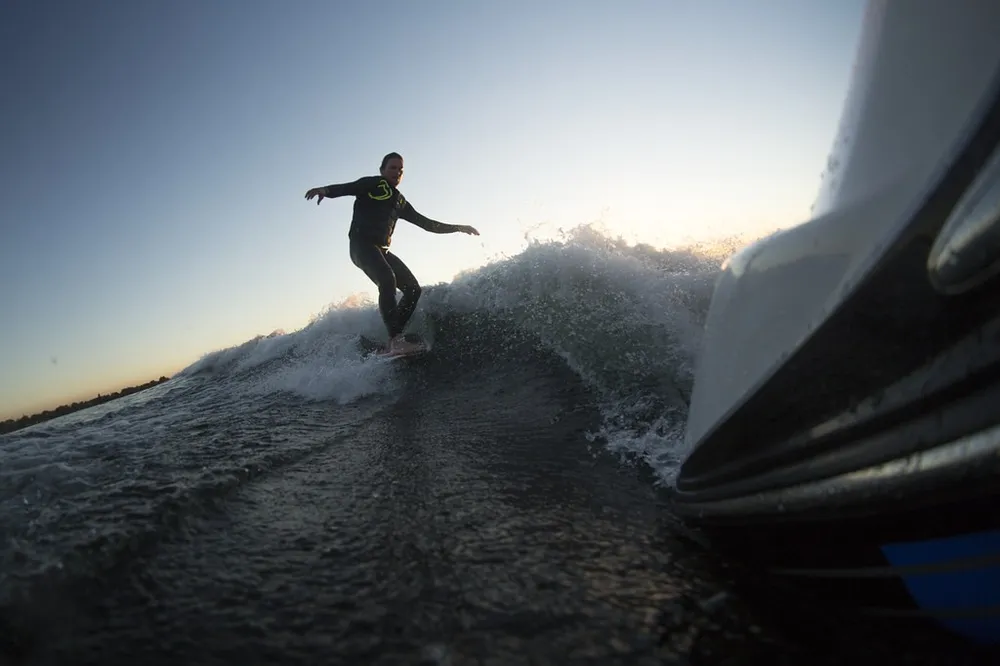
The Short Answer
Wakeboarding means riding a board with bindings while holding a long rope, crossing and jumping the boat's wake at around 18–24 mph. Wakesurfing means riding a bigger, binding-free board on the boat's wave without a rope, usually around 10–14 mph, just a few feet behind the boat. Wakesurfing is often considered easier to start and lower impact; wakeboarding offers bigger air and works behind more boats and at cable parks.
Side-by-Side Comparison
| Wakeboarding | Wakesurfing | |
|---|---|---|
| Rope | Held the whole ride; long (about 55–85 ft) | Used to get up, then dropped; short (about 25 ft) |
| Typical speed | About 18–24 mph | About 10–14 mph |
| Board | Shorter, with bindings and fins | Larger and buoyant, no bindings; surf, skim or hybrid styles |
| Boat | Many boat types; wake boats with ballast make bigger wakes | Inboard only, propeller under the hull; ballast and often a surf system |
| Where | Behind boats or at cable parks | Behind suitable boats only |
| Learning curve | Getting up is the main hurdle | Often easier to start; dropping the rope takes practice |
| Falls | Faster, harder; bindings can strain knees and ankles | Slower, gentler |
| Tricks | Big wake jumps, flips, spins, cable features | Carves, airs, spins on the wave |
| Fitness | More upper-body strength | More balance and finesse |
Speeds and rope lengths vary by source, rider weight and boat; these are typical ranges.
Rope and Riding Style
A wakeboarder holds the handle for the entire ride, using the pull to carve across the wake and launch off it. A wakesurfer uses a short, thick surf rope to get up, then moves into the "pocket" of the wave and tosses the rope back into the boat, riding the wave's push like a small surf break.
Boards
Wakeboards are shorter, with bindings that lock your feet in and fins for tracking. Wakesurf boards are bigger and more buoyant, ridden barefoot without bindings. Wakesurf boards come in surf styles (for carving), skim styles (for spins and tricks) and hybrids. See wakeboards and wakesurf boards.
Boats
Wakeboarding works behind many boats, though wake boats with ballast and wake plates make a bigger, better wake. Wakesurfing needs a large, clean wave and a safe propeller position: an inboard boat with the propeller under the hull, typically with stern ballast and often a surf system that shapes the wave on one side.
Safety Differences
Propellers
Wakesurfers ride just a few feet behind the boat. Never wakesurf behind an outboard or stern-drive boat, where the propeller is exposed at the back. Always turn the engine off when someone is near the stern or in the water close behind.
Carbon Monoxide
Boat engines produce carbon monoxide (CO), an invisible, odorless gas. The CDC has noted that dangerous concentrations can build up near exhaust vents within seconds, and has identified hundreds of boating-related CO poisonings, including deaths. California warns that "teak surfing" (holding onto the swim platform) has caused deaths from CO. Wakesurfers spend time close to the stern, so:
- Keep riders and swimmers away from exhaust vents while engines run.
- Don't idle with people on or near the swim platform.
- Install and maintain CO detectors on boats with enclosed spaces.
- Watch for headaches, dizziness or nausea, and move to fresh air immediately.
For Both Sports
- Wear a US Coast Guard-approved life jacket.
- Have an observer watch the rider; many states require one.
- Use agreed hand signals and a ski flag where required.
- Ride in open water away from docks, swimmers and shallows.
Which Is Easier to Learn?
Many first-timers find wakesurfing easier: the boat moves slower, falls are softer and there are no bindings to twist your knees and ankles. Dropping the rope and staying in the pocket takes practice. Wakeboarding asks more of your upper body and getting up takes a few tries, but once you're up, riding and turning come quickly. See how to wakeboard.
Cost and Access
Wakeboarding is more accessible: you can ride behind more types of boats or at a cable park without owning a boat. Wakesurfing requires a suitable inboard wake boat, which is a bigger investment, though rentals and lessons are available in many areas.
Which Should You Choose?
| Choose Wakeboarding If You... | Choose Wakesurfing If You... |
|---|---|
| Want big air and wake jumps | Want a surf-like, flowing ride |
| Have access to any tow boat or a cable park | Have access to an inboard wake boat |
| Like speed | Prefer lower speeds and softer falls |
| Want to ride rails and kickers at a cable park | Want to practice surfing skills |
Can't decide? Many wake boats are set up for both, so you can try each in the same afternoon.
What About Wake Foiling?
Wake foiling uses a board mounted on a hydrofoil that lifts above the water. Like wakesurfing, riders often drop the rope and ride the boat's wake at slower speeds. It's a newer, related sport with its own learning curve.
Related Guides
See wakeboards, the wakeboard size chart, wakesurf boards and how to surf in the ocean.
Frequently Asked Questions
Which is easier, wakeboarding or wakesurfing?
Many riders find wakesurfing easier to start because the boat goes slower, falls are gentler and there are no bindings. Wakeboarding is also learnable quickly, but getting up and falls can be harder.
Can you wakesurf behind any boat?
No. Wakesurfing should only be done behind an inboard boat with the propeller under the hull, never behind an outboard or stern-drive, because you ride close to the back of the boat.
How fast do you go wakesurfing vs wakeboarding?
Wakesurfing is typically around 10–14 mph, and wakeboarding around 18–24 mph, depending on the rider and boat.
Can you use a wakeboard to wakesurf?
Not really. Wakesurf boards are larger, more buoyant and ridden without bindings so you can surf the wave without the rope.
Is wakesurfing safer than wakeboarding?
Wakesurfing is slower with softer falls, but riders are much closer to the boat, so propeller placement and exhaust safety are critical. Both are safe with the right boat, gear and crew.
Do you need a special boat for wakesurfing?
Yes. You need an inboard boat that makes a large, clean wave, usually with ballast and often a surf system that shapes the wave.
Which is better exercise?
Both work your legs and core. Wakeboarding uses more upper-body strength to hold the rope, while wakesurfing emphasizes balance.
Can I do both behind the same boat?
Yes, many inboard wake boats are set up for both, adjusting ballast and speed for each sport.