Wakeboard Life Vests That Float You and Still Let You Ride (2026)
Coast Guard-approved wake vests for riders, kids and budget backups, plus how the new Level labels, impact vests, towing laws and fit checks work.
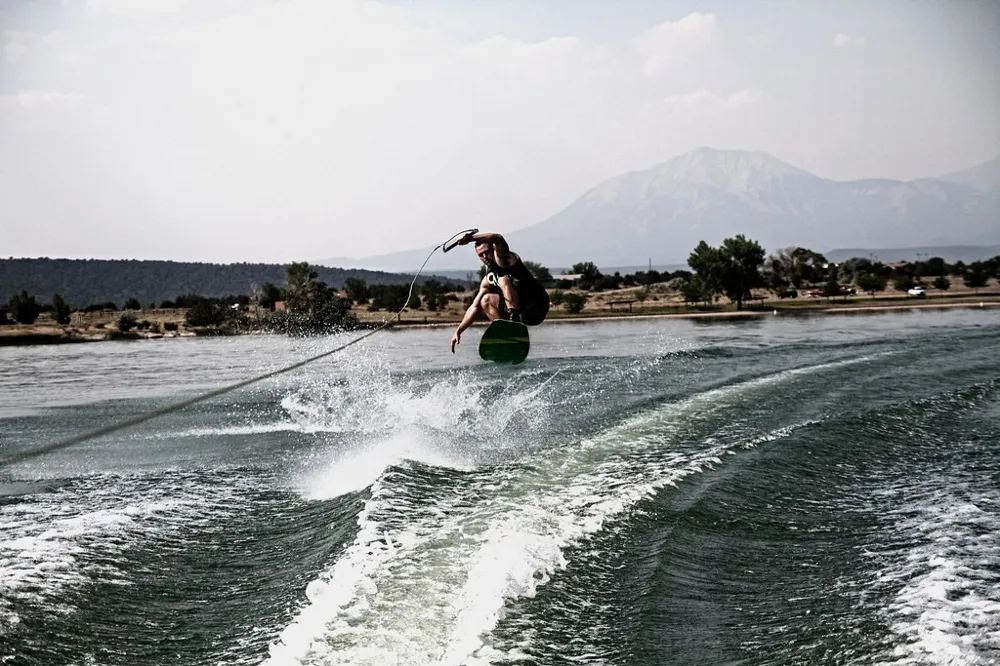
How to Pick a Wakeboard Life Vest
A wakeboard life jacket has two jobs: keep your head above water after a hard fall and stay comfortable enough that you forget you're wearing it. Wake vests are cut differently from paddling PFDs, with no bulky pockets, a close neoprene or stretch-fabric shell, segmented foam that bends when you crouch, and a shape that doesn't ride up when you hit the water at speed.
Three decisions narrow the field quickly:
- Approved or not. Coast Guard-approved (CGA) vests count as life jackets and meet towing laws in most states. Competition (comp) or impact vests are lighter but usually aren't approved.
- Material. Neoprene vests are soft and form-fitting. Nylon vests are simpler, tougher and often the budget choice for a boat's spare jackets.
- Fit. Wake vests are sized by chest measurement and come in men's, women's and kids' cuts. Fit matters more than any feature.
Every vest below except one (an impact vest, flagged clearly) is listed by its maker or seller as US Coast Guard approved. Always check the label on the vest you receive, because models and labels change between seasons.
O'Neill Reactor USCG Life Vest
Best for most riders
- USCG and Transport Canada approved, Level 70 (listed)
- Segmented foam core with flex points
- Dual quick-release buckles and front zip
Ronix Koal Capella 3.0 CGA
Best premium wake vest
- Coast Guard approved (listed)
- Tapered foam for a low-profile fit
- Lumbar and back support
Stearns Adult Classic Series
Best budget boat vest
- USCG approved Type III (listed)
- Nylon shell, three buckles
- Universal and oversized fits
Wakeboard Life Vests Compared
| Vest | USCG Status (as Listed) | Shell | Fit Notes | Best For |
|---|---|---|---|---|
| O'Neill Reactor USCG | USCG and Transport Canada, Level 70 | Polyester-lined, PVC foam | Chest XS 32.5" to 3XL 50" | Most riders |
| Ronix Koal Capella 3.0 CGA | Coast Guard approved | Flexible shell, water-resistant liner | Low-profile cylindrical fit | Premium comfort |
| Stearns Adult Classic Series | USCG Type III | Nylon | Universal and oversized | Spare boat vests |
| O'Brien Traditional Neoprene | USCG Type III | Neoprene | Chest XS 28" to 3XL 56" | Classic neoprene fit |
| Hyperlite Indy CGA | USCG and Transport Canada (harmonized) | Segmented foam panels | Men's, women's, kids', big and tall | Value wake vest |
| Liquid Force Hinge CGA | USCG and Transport Canada | Flex-Span fabric | Chest S 32" to 3XL 56" | Quick-drying fabric |
| Jobe Neoprene | USCG approved | Neoprene | Chest S 33" to 3XL 56" | D-ring and drainage |
| Body Glove Phantom | USCG and Transport Canada | Neoprene | Men's and women's | Lumbar pad |
| O'Neill Slasher Comp | Not USCG approved | Neoprene | Snug, reversible | Cable parks where allowed |
Approval and size details come from each maker's page or the seller's listing at the time of writing. Size ranges vary by model year, so check the chart for the exact vest you're buying.
The Best Wakeboard Life Vests
1. O'Neill Reactor USCG Life Vest
The Reactor is one of the most common wake vests on lakes for good reason. O'Neill lists the current version as USCG and Transport Canada approved, Level 70, with a segmented closed-cell PVC foam core, anatomical flex points and strategically sized armholes for a low-bulk feel. It closes with a front zip with a safety tab plus dual quick-release buckles on a concealed belt system. O'Neill sizes it by chest, from XS (32.5–35 inches) to 3XL (47.5–50 inches), and there's a women's Reactor too.
Good to Know
- New-style Level 70 approval
- Men's and women's versions
- Low-bulk segmented foam
Watch Out For
- O'Neill's current listing doesn't describe a neoprene shell
- Size chart tops out at a 50-inch chest
2. Ronix Koal Capella 3.0 CGA
Ronix's Capella 3.0 vests are built for riders who want an approved vest that feels close to a comp vest. The Koal is listed as a Coast Guard-approved vest with a flexible, low-profile cylindrical fit, a water-resistant liner, 2:1 tapered foam and lumbar and back support, made for wakeboarding, wakesurfing and wakefoiling. Ronix describes the Capella 3.0 foam as thicker at the chest and thinner toward the stomach, which helps it bend when you crouch. The related One Capella 3.0 is offered in standard and longer torso lengths, which helps taller riders.
Good to Know
- Close, comp-style shape
- Back and lumbar support
- Women's Capella 3.0 models available
Watch Out For
- Premium price tier
- Snug cut may not suit broad chests; check the chart
3. Stearns Adult Classic Series Life Vest
This isn't a specialist wake vest, but it's the vest many boats carry as spares for guests and tubers. It's listed as USCG approved Type III, with a durable nylon shell, foam flotation, an open-sided design and three adjustable buckles. It comes in a universal size covering a wide chest range and an oversized version for larger adults.
Good to Know
- Budget tier, good for spares
- Easy to adjust for different guests
- Oversized option
Watch Out For
- Bulkier and less flexible than a neoprene wake vest
- Universal sizing won't fit everyone well
4. O'Brien Traditional Neoprene Life Jacket
A long-running neoprene vest from O'Brien. It's listed as USCG approved Type III, with a soft neoprene shell, segmented panels and wide armholes, a front zip with a front hinge, and two adjustable belts with quick-release buckles. The men's chart runs from XS (28–32 inches) to 3XL (52–56 inches), and O'Brien makes women's and youth versions as well.
Good to Know
- Wide chest-size range
- Classic neoprene comfort
- Two belts for a secure fit
Watch Out For
- Older Type III labeling rather than a Level rating
5. Hyperlite Indy CGA
The Indy is Hyperlite's mainstream approved vest. Retailers list it with harmonized US Coast Guard and Transport Canada approval, anchored, segmented foam panels, a zip closure with adjustable buckle straps, secure belt loops and good drainage. The Indy family is unusually broad, with men's, women's, girls' and Big and Tall versions, so it's an easy way to match a whole crew.
Good to Know
- Wide range of cuts and sizes
- Value tier for a wake-specific vest
Watch Out For
- Shell materials vary by year and version (Indy vs Indy Neo); check the listing
6. Liquid Force Hinge CGA
The Hinge uses a quick-drying, breathable Flex-Span fabric shell over a PVX and PVE foam hybrid rather than neoprene, which some riders prefer on hot days. It's listed as USCG and Transport Canada approved, with a five-panel flexing layout, oversized arm openings and adjustable belts with quick-release buckles. Men's chest sizes run from S (32–36 inches) to 3XL (52–56 inches).
Good to Know
- Dries faster than neoprene
- Large arm openings
- Big size range
Watch Out For
- Less warmth than a neoprene shell in cold water
7. Jobe Men's Neoprene Life Jacket
Jobe sells this neoprene vest in the US as USCG approved. It has a soft, flexible neoprene shell, a YKK front zipper, two adjustable 1.5-inch belts, a water drainage system and a safety D-ring for clipping on an emergency cord or whistle. Chest sizes run from S (33–36 inches) to 3XL (53–56 inches). Jobe also sells European "50N" impact vests, which are a different product and not Coast Guard approved, so check the label.
Good to Know
- D-ring for a whistle or cord
- Drainage to shed water
Watch Out For
- Easy to confuse with Jobe's non-approved impact vests
8. Body Glove Phantom
A lightweight neoprene vest listed as USCG and Transport Canada approved. Retailers describe a neoprene shell with segmented panels, soft beveled PVC foam, a back protection pad for lumbar support, drain panels, a front zip and two 1.5-inch belts with quick-release buckles. Men's and women's versions are available.
Good to Know
- Lumbar pad
- Men's and women's cuts
Watch Out For
- Size charts differ between sellers; confirm your chest size
9. O'Neill Slasher Comp Vest (Impact Vest, Not USCG Approved)
We include the Slasher to show what a comp vest is, not as a replacement for a life jacket. O'Neill states plainly that it is not a USCG-approved life vest: it lacks the standard for keeping an injured wearer's head above water, though it still provides buoyancy. In exchange you get an UltraFlex neoprene shell, light PVC-free foam, a segmented core, lumbar support and a reversible design. It suits experienced riders at cable parks or private spots where an approved vest isn't required, with an approved jacket still carried where the law says so.
Good to Know
- Light, flexible, low profile
- Impact protection for falls
Watch Out For
- Does not meet Coast Guard approval or most towing laws
- Not for beginners or weak swimmers
Life Jackets for Young Riders
Kids learning to ride behind the boat need a properly sized, Coast Guard-approved life jacket, not an adult vest cinched tight and not an impact vest. Federal law requires children under 13 to wear an approved life jacket while a recreational boat is underway, unless they're below deck or in an enclosed cabin, and many states set their own child-wear ages. Children's vests are sized by weight rather than chest: the Coast Guard groups them as infant (up to 33 pounds), child (33–55 pounds) and youth (55–88 pounds), and many brands use similar bands such as 30–50 and 50–90 pounds. Smaller sizes often add a leg (crotch) strap so the vest can't slide up, plus a grab handle and a head-support collar on infant vests. See our kids' wakeboards when they're ready for a board.
10. O'Neill Youth Superlite USCG Life Vest
Sized for kids between 50 and 90 pounds, this youth vest is listed as USCG approved Type III. O'Neill designs it to fit snugly, with drain holes so it doesn't hold water. Because it's made for older children, it has no leg strap, so the fit test matters. O'Neill also makes a Child Superlite for smaller kids.
Good to Know
- Youth weight range
- Drains quickly
Watch Out For
- No leg strap; check it doesn't ride up
11. Stearns Infant Classic Series Life Vest
For the smallest passengers who ride along in the boat, not on a board. This Coast Guard-approved infant vest has a float collar to support the head, a grab handle, a leg strap and a durable nylon shell with an antimicrobial treatment, according to Stearns.
Good to Know
- Head support collar
- Grab handle and leg strap
Watch Out For
- Boat-riding vest, not a vest for towed sports
USCG Approval and the New Life Jacket Labels
For decades, US life jackets carried Type I–V labels, and most wake vests were Type III flotation aids. The Coast Guard and Transport Canada have since moved to a shared, harmonized system based on performance levels, and a December 2024 final rule (effective January 2025) wrote the newer UL 12402 standards, including Level 50, 70 and 100 devices, into the federal carriage rules. Here's how the labels compare:
| Label | What It Means | Wake Sports Notes |
|---|---|---|
| Type III (older label) | Flotation aid that supports a conscious wearer upright | The classic wake-vest rating; still legal in good condition |
| Level 70 | Buoyancy aid; minimal bulk; no self-turning ability | The counterpart of the old Type III and the common rating on new wake vests |
| Level 50 | Buoyancy aid for competent swimmers near shore; counts toward carriage only when worn | New to the US; first US wake models are reported for the 2027 season |
| Level 100 and up | Higher flotation, some or full self-turning ability | Offshore and general boating, not wake riding |
The Coast Guard describes the level number as the device's minimum buoyancy in newtons, so Level 70 is about 15.7 pounds of buoyancy, while most adults need about 7–12 pounds of extra lift to keep their heads above water. New labels also use icons: a turning icon shows whether the vest will turn an unconscious wearer face up, and "not approved for" icons warn against activities such as water skiing and towed sports or personal watercraft. If a vest's label carries a "not approved for" towed-sports icon, don't ride in it.
You don't need to replace older jackets. According to the Coast Guard, approved vests that met the rules before the change still count if they're in good, serviceable condition, and some new vests still ship with Type labels until the design is resubmitted. The same label rules apply to kayak PFDs. Newer labels are approved for both the US and Canada; older labels are valid only in the country that approved them.
Impact Vests vs Coast Guard-Approved Vests
"Comp" (competition) and "impact" vests look almost identical to approved wake vests, but they're a different product:
| Feature | CGA Wake Vest | Comp or Impact Vest |
|---|---|---|
| Coast Guard approved | Yes | Usually no; check the label |
| Flotation | More foam, more buoyancy | Less buoyancy |
| Keeps an injured rider's head up | Designed to support a conscious wearer upright | Not designed to |
| Counts toward the boat's life jacket count | Yes | No |
| Feel | Bulkier, though modern ones are slim | Lighter and more flexible |
| Typical use | Boat riding, beginners, kids, anywhere the law requires one | Experienced riders at cable parks or where rules allow |
A few points that often trip people up:
- "CGA" in the name generally means Coast Guard approved, but only the label inside proves it.
- Foreign ratings aren't US approval. A "50N" European impact vest or a vest approved only in Canada under the old system isn't automatically legal on US water.
- Level 50 isn't a free pass for comp vests. Existing comp vests don't become legal because the Level 50 standard exists; only vests labeled as Coast Guard approved count.
- Beginners should use approved vests. More flotation makes it easier to float on your back in the start position, which is exactly what you need while you learn to wakeboard.
Cable parks set their own rules, and many supply or require vests. See our cable park guide for what to expect.
Neoprene vs Nylon Wake Vests
Most wake-specific vests use neoprene, while many general boating vests use nylon. Some newer approved vests use stretch fabrics or lined foam instead, such as the Liquid Force Hinge and the current O'Neill Reactor.
| Neoprene | Nylon | |
|---|---|---|
| Fit | Form-fitting; snug when dry, loosens slightly when wet | Less form-fitting |
| Feel | Soft and flexible | Less flexible |
| Warmth | Warmer in cool water | Less insulating |
| Durability | Good | Durable, but heavier when wet |
| Cost | Higher price tier | Budget tier |
| Best for | Riders, wakesurfers, all-day wear | Spare vests for guests, tubing, cruising |
Because neoprene relaxes when wet, buy a neoprene vest snug when dry. A nylon vest like the Stearns Classic is a sensible spare for passengers and tube riders, while the person on the board gets a neoprene or stretch-fabric wake vest.
How to Size a Wakeboard Life Jacket
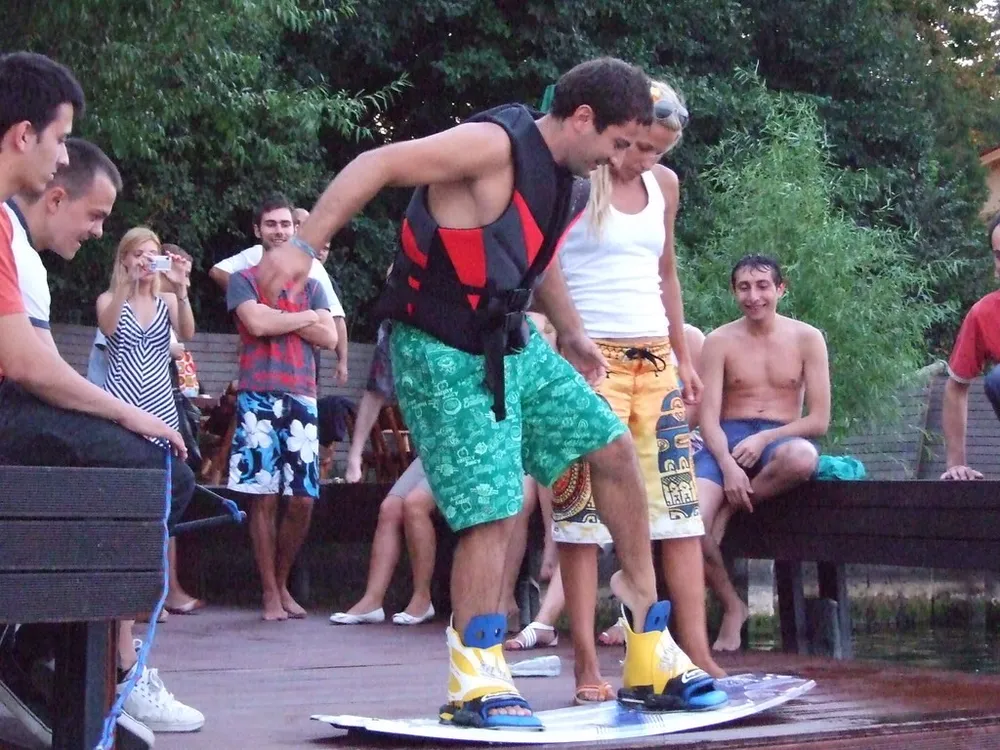
Adult wake vests are sized mainly by chest measurement, with a weight or chest range printed on the approval label too.
- Measure your chest around the fullest part with a soft tape, arms relaxed, wearing what you'll ride in.
- Use that brand's chart. Sizes aren't universal: a medium is 36–40 inches at O'Brien but 37–40 inches at Jobe.
- Check the label range on the vest itself, which is what the approval is based on.
- Between sizes? Try both if you can. Too loose and the vest can ride up or let you slip out on a hard fall; too tight and it may not zip, or may strain the buckles.
Fit also depends on the cut:
- Women's vests use a female-specific cut for better fit, comfort and range of motion than a men's or unisex vest. O'Neill, O'Brien, Hyperlite, Ronix and Body Glove all make them.
- Long-torso and big-and-tall options, like Ronix's longer-torso One Capella 3.0 and Hyperlite's Indy Big and Tall, help riders whose vest ends above the waist.
- Kids size by weight, not chest; see the section above.
Wear a rash guard or wetsuit underneath if a vest rubs. Check that it still fits over the layer you'll use most.
The Fit Test
A vest that fits on the shelf can still fail in the water. Run this check every time you get a new vest, and once a year after that:
- Loosen everything, put the vest on, zip it and fasten every buckle.
- Tighten from the bottom up, waist belt first, until it's snug but you can still take a full breath.
- Pull up on the shoulders (or have a friend do it). The vest shouldn't ride up past your chin or ears.
- Move like a rider. Drop into a deep crouch, reach your arms overhead and twist. Nothing should dig in under your arms or block your knees.
- Test it in the water. In shallow water, lean back, lift your feet and relax. Your mouth and nose should stay clear without effort, and the vest shouldn't slide up.
For kids, lift the vest by the shoulders with their arms raised. If the zipper reaches their nose or the vest slides easily, tighten it or go down a size.
Life Jacket Rules for Towed Water Sports
Federal rules require a wearable, Coast Guard-approved life jacket for each person on board a recreational boat, properly sized and in good, serviceable condition. The Coast Guard recommends wearing one whenever the boat is moving, and many states require one for anyone being towed. Here are three examples from official state sources (last checked November 2026):
| State | Rule for Towed Riders | Notes |
|---|---|---|
| California | Anyone towed must wear a Type I, II, III or V USCG-approved life jacket | Inflatables aren't approved for towing. Professional exhibitions and official events are exempt. Slalom, barefoot, jump and trick water skiers may wear a labeled water-ski wetsuit instead if an approved jacket is carried for them. |
| Florida | Must wear a noninflatable USCG-approved PFD | No towing from a half hour after sunset to a half hour before sunrise. Professional exhibitions and some sanctioned events are exempt. |
| Pennsylvania | Participants must wear a USCG-approved life jacket | Inflatable life jackets aren't acceptable for anyone towed. |
Other states have their own rules on towing, observers, flags and child-wear ages. Many also require approved vests on personal watercraft, so a comp vest won't cover a jet ski either. Level 70 is the counterpart of the old Type III, but if you plan to rely on a Level 50 vest or aren't sure how your state treats the new labels, check with your state boating agency first. This is a summary, not legal advice; check your state's boating regulations before you ride. Our wakeboarding guide covers spotters, hand signals and boat safety.
Care, Storage and When to Replace
Foam and neoprene last for years if you dry them properly and keep them out of the sun.
- Rinse with fresh water after riding. For a deeper clean, hand wash in warm, soapy water and rinse well. Foam vests can be fully submerged.
- Skip the washing machine, dryer, dry cleaning, chlorine bleach and direct heat.
- Dry completely before storing, hanging it on a plastic hanger out of direct sun.
- Store in a warm, dry, ventilated spot out of direct sunlight. Not in a plastic bag, a sealed compartment or crushed under other gear.
Retire a vest when you see any of these:
- Rips, holes or seams coming apart
- Foam that's compressed, crumbling or waterlogged
- Faded, brittle fabric from sun exposure
- Cracked or missing buckles, or a zipper that won't stay closed
- A fit test where it rides up or no longer floats you comfortably
Related Guides
Pick a board with our best wakeboards and bindings guides, size it with the wakeboard size chart, protect your head with a wakeboard helmet, or try something new with wakesurf boards, wakeboarding vs wakesurfing and how to water ski. More on the water: water sports guides.
Frequently Asked Questions
Do you have to wear a life jacket to wakeboard?
In most US states, yes: people being towed generally must wear a US Coast Guard-approved life jacket, and California, Florida and Pennsylvania all spell this out. Rules vary by state, so check your state boating agency before you ride.
Is an impact vest the same as a life jacket?
No. Most impact or comp vests are not Coast Guard approved. They float you but offer less buoyancy and aren't designed to keep an injured rider's head above water, so they usually don't meet towing or carriage rules.
What does Level 70 mean on a life jacket?
Level 70 is part of the newer US and Canadian label system. The number reflects minimum buoyancy in newtons, about 15.7 pounds, and Level 70 vests are the counterpart of the old Type III.
Are my old Type III life jackets still legal?
Yes. The Coast Guard says approved life jackets that met the rules before the label change still count as long as they're in good, serviceable condition.
How tight should a wakeboard vest be?
Snug enough that it doesn't ride above your chin or ears when someone pulls up on the shoulders, but loose enough to breathe and move your arms freely. Neoprene vests loosen a little when wet.
Can I use an inflatable life jacket for wakeboarding?
Generally no. California and Pennsylvania state that inflatable life jackets aren't acceptable for people being towed, and Florida requires a noninflatable device.
What size life jacket does my child need?
Children's life jackets are sized by weight, with infant, child and youth sizes. Check the weight range on the label and do a lift test by the shoulders to make sure it doesn't slide up.
How long does a wake vest last?
There's no fixed lifespan. Replace it when the foam is compressed or waterlogged, the fabric is faded or torn, or a buckle or zipper fails, and test the fit and flotation at least once a year.