How to Paddle a Canoe: Every Stroke a Beginner Needs (2026)
Canoeing is easy to start and satisfying to master. Here's how to hold the paddle, power and steer with the key strokes, paddle solo or tandem, and handle a capsize safely.
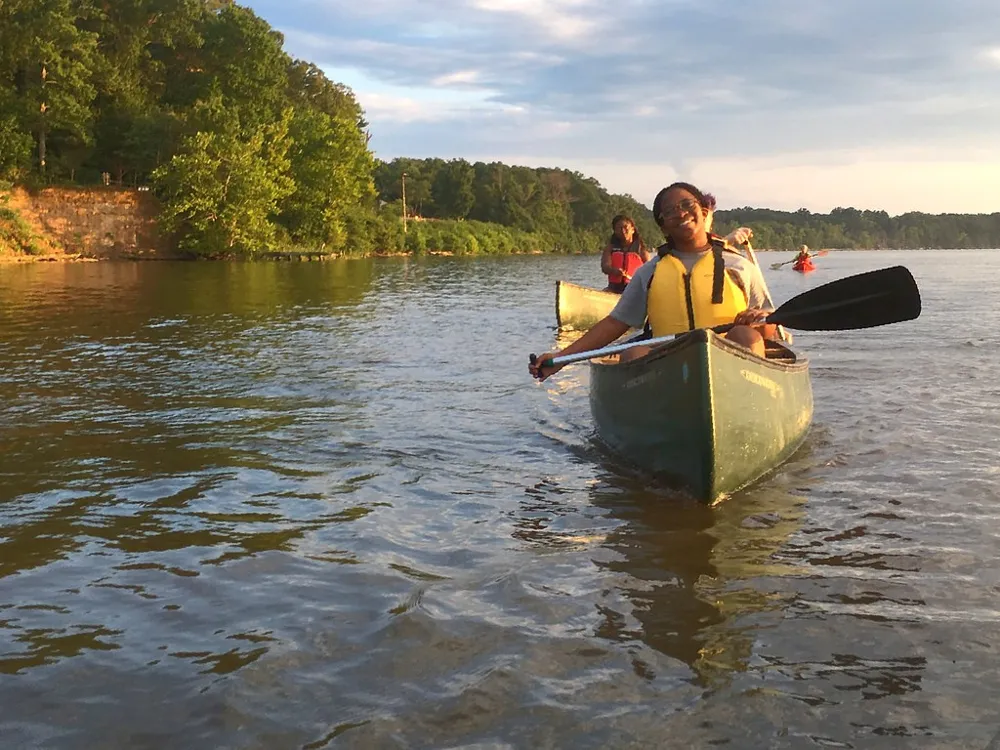
Before You Start: Gear and Setup
- Canoe and paddles: one paddle per person plus a spare. Size your paddle with our canoe paddle guide.
- Life jackets: a Coast Guard–approved wearable life jacket for each person, worn and buckled. See PFD options.
- Whistle, a bailer or sponge, and a floating rope or painter line.
- Dress for the water temperature, not the air.
- Know your canoe: bow, stern, thwarts and yoke are covered in parts of a canoe.
Bow and Stern: Who Does What
| Bow Paddler (Front) | Stern Paddler (Back) | |
|---|---|---|
| Main job | Power and spotting hazards | Steering and power |
| Key strokes | Forward, draw, cross-draw, sweep | Forward, J-stroke, sweep, pry, rudder |
| Who | Often the less experienced or lighter paddler | Usually the more experienced paddler |
In a tandem canoe, paddle on opposite sides. The bow paddler sets the pace, and the stern paddler matches it. Agree on simple calls like "switch," "stop," "back paddle" and "rock left" before you set off.
Getting In and Out
From a Beach
- Float the canoe perpendicular to shore with the bow in the water.
- The stern paddler steadies the canoe while the bow paddler walks along the centerline, holding both gunwales, and sits or kneels.
- The stern paddler pushes off and steps in, keeping low.
From a Dock
- Bring the canoe parallel to the dock.
- Sit on the dock, place one foot in the center of the canoe, and keep three points of contact as you lower yourself onto the seat.
- Keep your weight low and centered. Your partner steadies the canoe from the dock or holds the dock from the canoe.
Getting out works in reverse. Never step on the gunwales or stand up straight in the canoe.
Sitting, Kneeling and Trim
- Kneeling lowers your center of gravity, making the canoe more stable and your strokes more powerful. Kneel with your knees wide and your bottom against the seat edge in wind, waves or current.
- Sitting is more comfortable on calm lakes.
- Trim means how level the canoe sits in the water. Load heavier gear near the center and keep the canoe level side to side. A canoe that's much heavier at one end is harder to steer and handle.
- Stay loose. Paddlers say "loose hips save ships": let the canoe rock under you while your upper body stays centered.
How to Hold a Canoe Paddle
- Put your top hand on the grip.
- Put your bottom hand on the shaft a few inches above the blade, about shoulder width or a bit wider from the top hand.
- Your top hand is opposite your paddling side: paddling on the right, your left hand is on top.
The Essential Canoe Strokes
| Stroke | What It Does | Who Uses It |
|---|---|---|
| Forward stroke | Moves the canoe ahead | Both |
| Back stroke | Slows, stops or reverses | Both |
| J-stroke | Forward stroke with a steering correction | Stern, solo |
| C-stroke | Stronger correction stroke | Solo |
| Goon stroke (stern pry) | Correction that ends in a pry off the hull | Stern, whitewater |
| Draw | Pulls the canoe toward the paddle side | Both, especially bow |
| Pry | Pushes the canoe away from the paddle side | Both |
| Sweep | Turns the canoe in a wide arc | Both |
| Cross-draw | Bow paddler draws on the opposite side without switching hands | Bow |
Forward Stroke
- Rotate your torso and reach forward, planting the full blade in the water near your feet.
- Keep the shaft near vertical, with your top hand over the gunwale.
- Pull by unwinding your torso, using your core more than your arms.
- Stop when the blade reaches your hip; going further wastes energy and turns the canoe.
- Lift the blade out and return it forward, low over the water.
Back Stroke
Reverse the forward stroke: plant the blade behind your hip and push it forward to slow, stop or move backward.
J-Stroke
The J-stroke is the classic way for the stern paddler, or a solo paddler, to keep the canoe straight without switching sides. Because paddling on one side pushes the bow the other way, you add a small correction at the end of each forward stroke.
- Do a normal forward stroke.
- As the blade passes your hip, turn your top thumb down so the power face of the blade turns away from the canoe.
- Push the blade gently outward, like a rudder, tracing the hook of a "J."
- Recover and repeat.
Common mistakes: making the stroke too long, not rotating your torso, and holding the blade parallel to the hull so it doesn't correct. The J-stroke is preferred on lakes and slow water.
Goon Stroke (Stern Pry)
An easier alternative: end the forward stroke with your thumb up and pry the shaft off the gunwale to push the stern back on course. It's simpler on the wrist and popular in whitewater, but it slows you a little more than a good J-stroke.
C-Stroke
A solo correction stroke: start with a small draw toward the bow, sweep into the forward stroke and finish with a J-style push out, tracing a "C." It gives a stronger correction, useful from a standstill or in wind and current.
Draw and Pry
- Draw: reach out to the side at arm's length, plant the blade parallel to the canoe and pull it toward you. The canoe moves toward your paddle side. Stop before the blade hits the hull.
- Pry: slip the blade in close to the hull, brace the shaft against the gunwale and lever the blade outward. The canoe moves away from your paddle side.
When both paddlers draw on opposite sides, the canoe spins; when the bow draws and the stern pries on the same side, the canoe slides sideways. Done only from the stern, a draw or pry swings the stern, so the canoe turns in the opposite direction, which is why some guides describe stern draws as turning the canoe away from your paddle side.
Sweep
Plant the blade near the bow and sweep it in a wide arc out to the side and back toward the stern. A forward sweep turns the canoe away from your paddle side; a reverse sweep turns it toward. Bow paddlers do the front half of the arc and stern paddlers the back half.
Low Brace
A brace is a recovery stroke that uses the paddle to stop the canoe from tipping. For a low brace, as Paddling Magazine describes it:
- Reach the paddle out from the canoe at a right angle, with your top hand low in front of your stomach.
- Slap the water with the back of the blade, knuckles pointing down.
- Drop your head toward the shaft while your knees level the canoe.
- Once the canoe is level, bring your head back over the canoe and return to a stable paddling posture.
Braces work best from a kneeling position, where your knees can control the hull. Practice them in calm, shallow water before you need them in current.
Turning a Canoe
| To Turn Toward... | Bow Paddler | Stern Paddler |
|---|---|---|
| The bow paddler's side | Draw | Forward sweep or draw |
| The stern paddler's side | Cross-draw or forward sweep | Pry or reverse sweep |
Communicate before a turn so both paddlers work together.
Paddling Solo
- Position: sit or kneel near the center, or slightly forward of it, so the bow doesn't lift and catch the wind. In a symmetrical tandem canoe, you can sit backward on the bow seat facing the stern, or kneel just behind the center thwart.
- Strokes: use J-strokes or C-strokes to stay straight, and switch sides when you need a rest.
- Trim: place gear so the canoe sits level.
- Wind: kneel for a lower center of gravity, and shift your weight or gear forward if the bow keeps blowing off course.
Lakes, Wind and Rivers
On Lakes
- Stay close to shore, especially in wind, and cross big open water early in the day before wind builds.
- Take waves at a slight angle to the bow rather than broadside.
- Kneel for stability in chop.
On Rivers
- Read the water: a "V" pointing downstream marks the clear channel; a "V" pointing upstream marks a rock or obstacle.
- Avoid strainers, fallen trees and branches that let water through but trap people and boats.
- Watch for horizon lines across the river, which can mean a drop or dam. Get out and scout or portage.
- Paddling upstream is easier in the slower water near shore.
- In shallow sections, you can line the canoe, guiding it from shore with painter ropes.
How Not to Tip a Canoe
- Stay low and centered; never stand up.
- Don't grab the gunwales when the canoe rocks. Instead, keep your paddle in the water for support.
- Move one person at a time and tell your partner first.
- Don't get turned sideways in current.
- Keep loads low and centered.
What to Do If You Capsize
- Stay calm and check on your partner.
- Hold onto the canoe and your paddle. A swamped canoe still floats and is easier to spot than a swimmer.
- Near shore: swim the canoe in, keeping upstream of it in a river so it can't pin you.
- In deep water: to right it yourselves, flip the canoe upright and bail it out, then climb in from opposite sides at the same time to counterbalance, keeping low.
Canoe-Over-Canoe Rescue
With another canoe nearby, you can empty a swamped canoe on the water:
- The rescue canoe pulls alongside, and the swimmers hold the far side of the rescue canoe near its ends.
- The swamped canoe is turned perpendicular to the rescue canoe, and one end is lifted and flipped upside down to break the water seal.
- The rescuers slide it across their gunwales until it balances and drains.
- They roll it upright and slide it back into the water alongside.
- The rescuers steady it while the swimmers climb back in.
People come first, gear second. Practice rescues in warm, shallow water with experienced paddlers before you need them.
Safety and the Law
Under US Coast Guard rules, every canoe must carry a properly sized, Coast Guard–approved wearable life jacket in good condition for each person on board; a throwable device isn't required for canoes and kayaks. Children under 13 must wear a life jacket while under way under federal rules, but states can set their own child-wearing rules that apply on their waters. The Coast Guard recommends wearing a life jacket at all times.
Cold Water
Cold water is one of the biggest dangers in canoeing. According to the National Weather Service, survival time drops sharply in water below 70°F, and the first shock of cold water can cause an immediate loss of breathing control. A common memory aid is the "1-10-1" rule: about 1 minute to control your breathing, about 10 minutes of useful movement and about 1 hour before hypothermia makes you unconscious. The National Center for Cold Water Safety warns that this rule can understate the danger, because many people can't swim effectively long before hypothermia sets in. Wear your life jacket, dress for the water temperature and stay close to shore when the water is cold.
More Safety Tips
- Tell someone your route and return time.
- Check the weather and wind forecast.
- Carry a whistle, a light if you might be out after dark, and a way to call for help.
- Paddle within your ability and turn back if conditions worsen.
Where to Learn and Practice
- Start on calm, sheltered water: a small lake or pond, close to shore, in light wind and with no thunderstorms in the forecast.
- Take a course: paddling clubs, outfitters and certified instructors teach strokes and rescues; in the US, the American Canoe Association certifies instructors, and Paddle Canada runs courses in Canada.
- Practice one stroke at a time: get the forward stroke and J-stroke solid on flat water, then add draws, sweeps and braces.
- Next steps: once you're comfortable, try easy moving water with an experienced group, learn rescues, and plan an overnight trip with portages.
Related Guides
Ready for a trip? Learn how to portage a canoe, choose a boat from the best canoes, and compare canoes and kayaks. Prefer a kayak? See how to paddle a kayak.
Frequently Asked Questions
Who steers a canoe, the front or the back?
The stern (back) paddler does most of the steering, using strokes like the J-stroke and sweeps. The bow (front) paddler provides power and watches for obstacles, and can help turn with draws and cross-draws.
How do you keep a canoe going straight?
Paddle on opposite sides from your partner, and have the stern paddler use a J-stroke, which ends each forward stroke with a small outward correction. Solo paddlers use the J-stroke or C-stroke.
Do canoes tip over easily?
Not if you stay low and centered. Most capsizes come from standing up, leaning over the side, grabbing the gunwales or getting turned sideways in current.
Is it better to kneel or sit in a canoe?
Kneeling lowers your center of gravity and is more stable and powerful, so it's best in wind, waves and moving water. Sitting is more comfortable for calm lakes.
How do you paddle a canoe by yourself?
Sit or kneel near the center, or slightly forward of it, so the bow doesn't ride high and catch the wind. In a symmetrical tandem canoe, you can sit backward on the bow seat. Use J-strokes or C-strokes to stay straight.
Do you have to wear a life jacket in a canoe?
Under US Coast Guard rules, you must have a properly sized, Coast Guard–approved wearable life jacket for each person, and children under 13 must wear one while under way unless state rules differ. The Coast Guard recommends wearing one at all times.
What do you do if your canoe capsizes?
Stay calm, hold onto the canoe and your paddle, and check on your partner. Swim the canoe to shore if it's close, or right it, empty it with help from another canoe, and climb back in from opposite sides.
Which side should each paddler paddle on?
Opposite sides. Choose sides before you start, and call out before switching so you both change together.