Parts of a Canoe: A Complete Guide to Canoe Anatomy (2026)
Know your gunwales from your thwarts. Here's every part of a canoe, what it does, and how hull shape, rocker and materials change the way a canoe paddles.
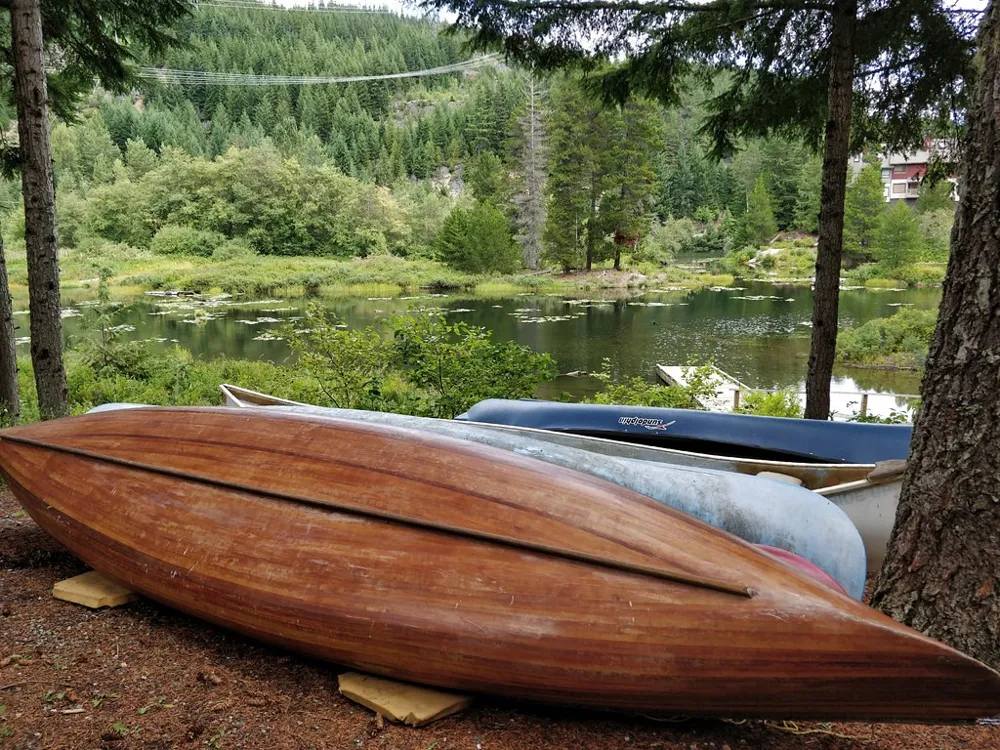
Canoe Parts at a Glance
| Part | Where It Is | What It Does |
|---|---|---|
| Bow | Front end | Leads; the bow paddler provides power and spots hazards |
| Stern | Back end | The stern paddler steers |
| Hull | The whole body below the gunwales | Its shape sets stability, speed and handling |
| Gunwales (inwale and outwale) | Top edge of each side | Stiffen the hull; anchor seats, thwarts and yoke |
| Thwarts | Crosspieces between the gunwales | Brace the hull to hold its shape |
| Yoke | Center crosspiece at the balance point | Rests on your shoulders for carrying |
| Seats | Near bow and stern (one in a solo canoe) | Where paddlers sit |
| Deck plates | Triangular pieces at each end | Join the gunwales; often hold carry handles |
| Carry handles / grab loops | Bow and stern | Lifting, carrying and holding onto in the water |
| Stem | The very ends of the hull | The leading and trailing edges |
| Keel | Ridge along the bottom centerline (if present) | Helps tracking on flatwater |
| Skid plates | Bottom of the bow and stern | Protect the ends from abrasion |
| Flotation tanks or bags | Bow and stern | Keep a swamped canoe floating |
| Painter lines | Ropes at the bow and stern | Tying up, lining and rescues |
Bow and Stern
The bow is the front of the canoe and the stern is the back. On many canoes the two ends look alike, so look at the seats: the bow seat is set farther from its end than the stern seat, giving the bow paddler more legroom. In a tandem canoe, the bow paddler provides power and watches for rocks and hazards, while the stern paddler, often the more experienced paddler, steers.
The stem is the very end of the hull at each end. Some canoes are symmetrical, the same shape at both ends, while asymmetrical canoes have a different shape fore and aft for efficiency.
The Hull
The hull is the main body of the canoe. Its shape, length and width decide how stable, fast and maneuverable the canoe is.
Hull Shapes
| Hull Shape | Initial Stability | Secondary Stability | Handling |
|---|---|---|---|
| Flat bottom | Excellent | Lower | Turns easily; slower, especially loaded |
| Shallow arch | Good | Good | A compromise; tracks better than flat |
| Shallow V | Balanced | Good | Pronounced centerline; tracks and handles well |
| Rounded | Low | Excellent | Efficient, high-performance; feels tippy at first |
Initial stability is how steady a canoe feels sitting flat on calm water. Secondary stability is how well it resists tipping once it's leaned on its side. Beginners usually like strong initial stability; experienced paddlers often prefer the efficiency and secondary stability of rounder hulls. Hull shape descriptions follow REI's canoe buying guide.
Chine
The chine is where the bottom of the hull curves up into the sides. A hard chine is an angular transition; a soft chine is a gradual curve.
Rocker
Rocker is the upward curve of the keel line toward the bow and stern, like the bottom of a rocking chair. More rocker lets a canoe turn quickly, which suits rivers and whitewater; less rocker helps it track straight and cruise efficiently on lakes.
Keel
A keel is a ridge running along the outside bottom of the hull. It can help a canoe go straight on open lakes, but it can catch on rocks and resist turning in rivers, so river canoes usually skip it. A shoe keel is a flatter, wider version.
Sides: Flare, Tumblehome and Straight
| Side Shape | What It Looks Like | Effect |
|---|---|---|
| Flare | Sides angle outward above the waterline | Sheds waves and helps stability with heavy loads |
| Tumblehome | Sides curve inward toward the gunwales | Easier reach to the water for paddling |
| Straight | Vertical sides | A middle ground |
Sources disagree on how tumblehome affects stability: Paddling Magazine says it can make a canoe more stable, while REI notes it gives less secondary stability and can let water in more easily in rough conditions.
Freeboard, Draft and Beam
- Freeboard: the height from the waterline to the gunwale. More freeboard keeps you drier in waves but catches more wind.
- Draft: how deep the hull sits below the waterline.
- Beam: the canoe's width at its widest point. Wider canoes feel more stable; narrower ones are faster.
Gunwales
The gunwales (pronounced "gunnels") are the rails running along the top edge of each side. They stiffen the hull and provide mounting points for the seats, thwarts and yoke. The inner rail is the inwale and the outer rail is the outwale.
| Gunwale Material | Pros | Cons |
|---|---|---|
| Wood | Attractive, quiet against the paddle | Needs oiling and maintenance |
| Vinyl | Inexpensive, low maintenance | Less refined look |
| Aluminum | Tough | Noisy when the paddle knocks it |
Thwarts and the Yoke
Thwarts are crosspieces between the gunwales that brace the hull and help the canoe keep its shape. Longer canoes, roughly 16 feet and up, often have an extra thwart between the yoke and stern seat. A kneeling thwart is angled to support a paddler kneeling in a solo position.
The yoke is a special thwart at the canoe's balance point, usually the center, with a curved cutout that fits over your shoulders. It's what lets one person carry a canoe overhead. Some canoes don't come with a yoke, and padded or contoured yokes are available as upgrades. Learn the lifts in how to portage a canoe.
Seats
Tandem canoes have two seats, and solo canoes have one, usually just behind center. Seats come in webbing, cane and molded plastic, and they hang from the gunwales on spacers, sometimes called seat drops or dowels, which set the seat height. A lower seat feels more stable; a higher one is easier for kneeling with your feet tucked under. A comfortable seat makes a real difference on long days; see options like the best kayak and canoe seats.
Deck Plates, Handles and Painters
- Deck plates: triangular pieces at the bow and stern where the gunwales meet. They often hold the carry handles.
- Carry handles and grab loops: for lifting and two-person carries, and something to hold onto if you capsize.
- Painter lines: ropes tied to the bow and stern for tying up, lining the canoe through shallow water and rescues. Use floating line no longer than the canoe so it can't tangle around a swimmer.
Flotation and Protection
- Flotation tanks: sealed compartments at the ends of many composite canoes that keep a swamped canoe near the surface.
- Flotation bags or foam: added in whitewater canoes to displace water if you swamp.
- Skid plates: protective patches, often Kevlar, on the bottom of the bow and stern to resist wear from landings and rocks.
- Bilge: the lowest inside part of the hull, where water collects. Keep a bailer or sponge handy.
What Canoes Are Made Of
| Material | Strengths | Trade-Offs |
|---|---|---|
| Polyethylene (plastic) | Tough, affordable; multi-layer versions add stiffness | Heavy |
| Aluminum | Very durable, low maintenance | Heavy, noisy |
| Royalex (discontinued) | Famously impact-resistant layers of ABS over a foam core | No longer made; now only used canoes |
| T-Formex and similar | Royalex-like toughness for rivers | Limited makers |
| Fiberglass | Stiff and efficient | Heavier than Kevlar |
| Kevlar (aramid) | Light; REI says about 25% lighter than fiberglass | Expensive |
| Wood (cedar strip, wood-canvas) | Beautiful, traditional | Needs more care |
The Royalex story: Royalex was the go-to material for tough river and tripping canoes for about 35 years. Production ended in 2014 after the last sheets shipped in December 2013, and canoe makers switched to alternatives, including Esquif's T-Formex, which Swift and Wenonah have also used.
Material makes a huge difference to weight: lightweight Kevlar and carbon canoes can come in under 50 pounds, while plastic and aluminum canoes are heavier but shrug off rock scrapes. Compare boats in the best canoes.
More Canoe Terms to Know
- Depth: the vertical distance from the inside bottom of the hull to the top of the gunwales.
- Waterline: where the water's surface meets the side of the hull; it rises as you add load.
- Keel line (centerline): the imaginary line along the bottom of the hull from bow to stern. A flatter keel line means less rocker.
- Scuppers: slots in scalloped wooden gunwales, often near the yoke, that let water drain out when you flip the canoe and give you spots to tie gear.
- Stem bands: brass or aluminum strips on the curved ends of some canoes that protect the stems from impacts; Kevlar skid plates do a similar job.
- Ribs: U-shaped stiffeners inside the hull of some canoes; many fiberglass and Kevlar canoes use a stiff core instead.
- Knee pads: cushions glued to the floor where you kneel.
- Spray deck (spray cover): a fabric cover that fits over the canoe to keep out waves, rain and wind, with openings for the paddlers.
- Port and starboard: the left and right sides of the canoe when facing the bow.
- Onside and offside: the side you're paddling on and the side you're not.
- Aft: toward the stern.
- Tandem and solo: canoes built for two paddlers and for one.
On an asymmetrical canoe, the widest point sits behind center, toward the stern. A symmetrical canoe can be paddled solo by sitting backward on the bow seat, because the ends are mirror images.
Parts of a Canoe Paddle
Your paddle has its own anatomy:
- Grip: the top, held by your upper hand; palm grips or T-grips.
- Shaft: the long handle; straight or bent.
- Throat: where the shaft widens into the blade.
- Blade: the flat part that pushes water.
- Tip: the end of the blade, often protected by an edge guard.
See the best canoe paddles for sizing and picks.
Related Guides
Put the parts to work with how to paddle a canoe, compare boats in canoe vs. kayak, and get your boat to the water with our car-top transport guide.
Frequently Asked Questions
How do you tell the bow from the stern of a canoe?
Look at the seats. The bow seat sits farther from its end of the canoe than the stern seat does, so the bow paddler has more legroom. The stern paddler sits closer to the back and steers.
What is the yoke on a canoe for?
The yoke is a crosspiece at the canoe's balance point, usually the center, with a curved cutout that rests on your shoulders so you can carry the canoe overhead on portages.
What is the difference between a thwart and a yoke?
Both are crosspieces that brace the hull. A thwart is a straight brace that helps the canoe keep its shape; a yoke is a thwart shaped to sit on your shoulders for carrying.
What are the gunwales on a canoe?
The gunwales, pronounced 'gunnels,' are the rails along the top edges of the canoe's sides. The inner part is the inwale and the outer part is the outwale; seats, thwarts and the yoke attach to them.
What is rocker on a canoe?
Rocker is the upward curve of the hull from the middle toward the bow and stern. More rocker makes a canoe turn more easily; less rocker helps it track straight.
What is tumblehome on a canoe?
Tumblehome is when the sides curve inward so the canoe is narrower at the gunwales than at its widest point. It makes it easier to reach the water with your paddle.
Does a canoe need a keel?
Not necessarily. A keel helps a canoe track straight on lakes, but it can catch on rocks and make turning harder in rivers, so river canoes usually don't have one.
What is a painter line on a canoe?
A painter is a rope tied to the bow or stern used for tying up, lining the canoe through shallow water and rescues. It should float and be no longer than the canoe.
What replaced Royalex canoes?
Royalex, a popular tough canoe material, went out of production in 2014. Materials like Esquif's T-Formex, polyethylene, and composites such as fiberglass and Kevlar have filled the gap.