How to Portage a Canoe: Lifts, Carries and Trail Tips (2026)
Portaging is what opens up wilderness lakes. Here's how to lift a canoe onto your shoulders, carry it with a partner, pack for the trail and read portage distances.
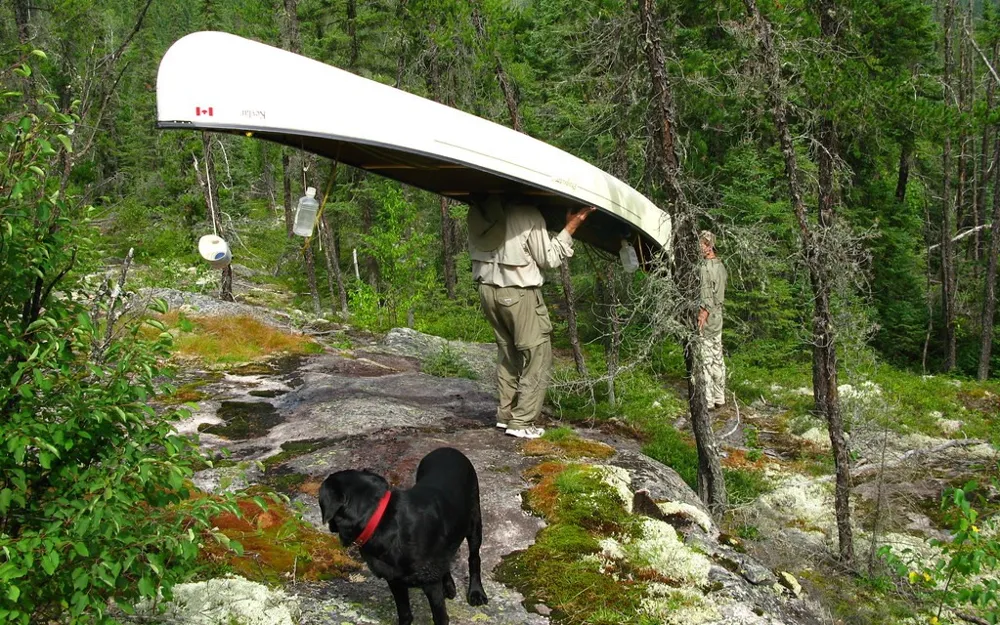
What Is a Portage?
A portage, from the French for "to carry," is a trail where you carry your canoe and gear over land between two bodies of water or around rapids, falls and other obstacles. Portages make wilderness areas like Minnesota's Boundary Waters Canoe Area Wilderness, Ontario's Quetico and Algonquin parks possible to explore by canoe. The Boundary Waters alone has about 1,500 miles of canoe routes, with portages from a few feet to a mile or two.
Portage Distances: Rods and Metres
| Unit | Where You'll See It | Conversion |
|---|---|---|
| Rod | Boundary Waters and Quetico maps | 1 rod = 16.5 ft; 320 rods = 1 mile |
| Metre | Algonquin Park portage signs and maps | 1,000 m = about 0.62 mile |
A rod is roughly the length of a canoe, which makes it a handy mental unit. A 225-rod portage, for example, is just under three-quarters of a mile. Algonquin's portages range from under 50 metres to more than 5 kilometres.
| Rods | Feet | Approximate Distance |
|---|---|---|
| 40 | 660 | 1/8 mile |
| 80 | 1,320 | 1/4 mile |
| 160 | 2,640 | 1/2 mile |
| 320 | 5,280 | 1 mile |
Before You Lift: Prepare the Canoe
- Know your canoe's weight. Old Town's Discovery 119 weighs 50 pounds and the Discovery 158 weighs 87. Lightweight Kevlar and carbon canoes can be under 50 pounds.
- Check the yoke. A center yoke at the balance point is essential. Contoured or padded yokes are much more comfortable; choose one that fits your shoulders. Old Town also suggests adding padding to the yoke if yours is bare.
- Empty the canoe. Take out packs and loose items. Leave only paddles strapped in if you've secured them, or carry them in your hands.
- Don't clip gear to the canoe. Loose items swing and shift the balance.
- Bring it ashore gently. Unload in the water at the landing, then lift the canoe out rather than dragging it over rocks.
How to Lift a Canoe Solo
The solo overhead lift is mostly technique and momentum, not raw strength. Practice at home with a light canoe before your trip.
- Stand at the center of the canoe, beside the yoke, with the canoe upright on flat ground.
- Tip it onto its side so the bottom faces your legs, and lift it onto your thighs, with your knees bent.
- Get your grip. Grab the center of the yoke with one hand, then reach across with the other to grab the far gunwale near the yoke.
- Rock and swing. Rock the canoe on your thighs a couple of times for rhythm, then on "three," push up with your knee and legs and swing the canoe up and over your head, turning it upside down.
- Settle the yoke on your shoulders, not your neck, with your hands forward on the gunwales.
- Adjust the balance so the bow sits slightly higher than the stern, giving you a view of the trail.
Setting it down: reverse the steps. Lower the canoe back onto your thighs, then to the ground. Don't drop it, and don't twist your back.
Alternative: The Bow-Up Lift
If the swing lift is too much, lift the bow end overhead so the canoe rests at an angle like a lean-to, with the stern on the ground. Walk your hands along the gunwales toward the center until you reach the yoke, then let it settle onto your shoulders and lift the stern off the ground.
Get a Hand
For heavy canoes, have a partner lift or steady one end while you get under the yoke, and again when you set it down. It saves your back and reduces the risk of dropping the canoe.
Carrying the Canoe
- Keep your arms forward on the gunwales to keep the nose from dropping, and lean slightly forward on climbs.
- Rest one arm at a time by balancing with the other.
- Use a bow line trick: tie a rope to the bow and hold it from below to keep the canoe balanced when your arms tire.
- Watch your feet. Roots and rocks are hard to see under a canoe. Take short, careful steps.
- Never walk backward with a canoe on your shoulders.
- Rest before you're exhausted. Set the canoe down carefully rather than letting it drop.
Two-Person Carries
| Carry | How | Best For |
|---|---|---|
| Suitcase carry | One person at each end holds the carry handle, both facing forward, lifting with their legs | Short distances, launches, carrying with some gear inside |
| Two-person overhead | Both lift the canoe overhead and rest it on their shoulders, using thwarts, seats or the yoke; taller paddler in front | Longer portages with heavy canoes |
Communication is critical: agree on "lift," "walk" and "down" before you start, and move together.
Packing for Portages
Efficient packing means fewer trips. Aim for gear that fits into a few large packs with no loose items.
| Option | Pros | Cons |
|---|---|---|
| Canoe packs (large portage packs) | Fit the canoe well; carry lots of gear | Heavy when full; wear with a hip belt if possible |
| Barrels with harnesses | Waterproof and crush-proof; good for food | Bulky and rigid |
| Dry bags inside packs | Keep gear dry | Need a pack or harness to carry |
- Stack packs: some trippers carry a second pack on top of the first rather than on their front, which blocks their view of their feet.
- Carry paddles in your hands on the gear trip.
- Count your packs at both ends, and mark lookalike packs with bright tape.
- Protect your food. Wildlife, including bears, can learn to look for food packs at portages, so never leave food unattended.
Our paddle camping gear list covers what to bring.
Single vs. Double Portaging
Single portaging means carrying everything in one trip, usually with one person taking the canoe and a pack and the other taking the remaining packs. Double portaging means two trips: you walk the trail three times, twice loaded and once empty. Bending Branches notes that a half-mile portage with lots of gear can add up to about two miles of hiking. Packing light enough to single portage saves a lot of time.
Canoe Carts and Wheels
A portage cart or canoe wheels can make long, smooth trails much easier, especially with heavy canoes. But they're not allowed everywhere. In the Boundary Waters Canoe Area Wilderness, federal rules allow portage wheels only on specific listed routes, including International Boundary portages, Four Mile Portage, Back Bay to Pipestone Bay, Fall Lake to Newton Lake to Pipestone Bay, and Vermilion Lake to Trout Lake. Rocky, rooty trails are often too rough for wheels anyway. Always check the current rules for the park or wilderness area you're visiting. See our kayak and canoe cart guide.
Portage Safety
- Build strength first. Core and lower-back fitness help you lift and carry safely.
- Wear proper footwear: closed-toe, ankle-high boots with good grip that can get wet.
- Take breaks. On long portages, one tripping guide suggests about 5 minutes of rest for every 15 minutes of carrying.
- Regroup on long trails. One tripping guide suggests the person leading the group not carry the canoe, and setting regroup points so no one gets lost.
- Scout unfamiliar trails. Old Town suggests walking the path first without the canoe to check terrain and cross trails. Portages can fork or cross other trails and logging roads, so have the group wait at junctions while someone confirms the route.
- Plan who carries what before anyone sets off, and pair the canoe carrier with someone carrying a lighter load who can swap or help on long, uneven trails.
- Deal with bugs before you lift. Your hands are busy under a canoe, so apply repellent first or wear a bug jacket with the hood zipped.
- Keep a snack handy on long carries; quick-energy food helps if someone starts to fade.
- Beware of frequent short portages: they mean more lifting and twisting, which raises injury risk.
- Take care in wind at open landings, where gusts can catch an overturned canoe.
- Your life jacket: some paddlers use it as shoulder padding, others find the yoke slides on it. Clip it to a pack if you don't wear it, and put it on before you launch.
Portage Etiquette
- Clear the landing quickly so other groups can land and launch. Keep your gear in one pile, out of the way, so nothing gets left behind.
- Leave room for others on narrow trails and step aside for someone carrying a canoe.
- Leave nothing behind: pack out all trash and gear.
- Stay on the trail to protect vegetation.
Where to Portage
- Boundary Waters Canoe Area Wilderness (Minnesota): about 1,100 lakes and roughly 250,000 visitors a year. Permits are required.
- Quetico Provincial Park (Ontario): adjoining the Boundary Waters; together they cover about 2 million acres.
- Algonquin Provincial Park (Ontario): a classic canoe-tripping destination with portages measured in metres.
Related Guides
Learn the strokes in how to paddle a canoe, understand your yoke and thwarts in parts of a canoe, choose a light tripping canoe from the best canoes, and pick a paddle from the best canoe paddles.
Frequently Asked Questions
How do you lift a canoe onto your shoulders alone?
Stand at the center facing the canoe, roll it onto your thighs with the bottom against you, grab the yoke and the far gunwale, then rock and swing it up overhead in one smooth motion so the yoke settles on your shoulders. Practice with a light canoe first.
What is a rod on a portage map?
A rod is an old unit of distance used on Boundary Waters and Quetico maps. One rod is 16.5 feet, and 320 rods make a mile, roughly the length of a canoe for each rod.
What is double portaging?
Carrying your gear across a portage in two trips: you walk the trail three times, twice loaded and once empty. A half-mile portage can mean about two miles of walking.
How do two people carry a canoe?
For short distances, use a suitcase carry, each person holding a handle at one end. For longer carries, both people can carry the canoe overhead, with the taller person usually in front.
Should you wear your life jacket while portaging?
Some paddlers wear it as shoulder padding under the yoke, while others find the yoke slides on it. Many carry it clipped to a pack instead. Either way, put it back on before you paddle.
Can you use a canoe cart in the Boundary Waters?
Only on a few specific portages. Federal rules for the Boundary Waters Canoe Area Wilderness allow portage wheels on listed routes, such as International Boundary portages and Four Mile Portage. Check current Forest Service guidance before your trip.
What shoes are best for portaging?
Sturdy closed-toe footwear with good grip. Many trippers prefer ankle-high boots that can get wet, since portage landings are often muddy or rocky.
How heavy a canoe can one person portage?
It depends on fitness and distance. Lightweight Kevlar and carbon canoes can weigh under 50 pounds, which most fit adults can carry with practice, while heavy plastic canoes of 80 pounds or more are much harder.