The Canoe Through Time: 10,000 Years of Paddling History (2026)
The canoe is one of the oldest boats people have ever built, and Indigenous peoples on several continents refined it long before it became a summer-camp staple. Here's how it developed, from hollowed logs to birchbark, wood-canvas, aluminum and plastic.
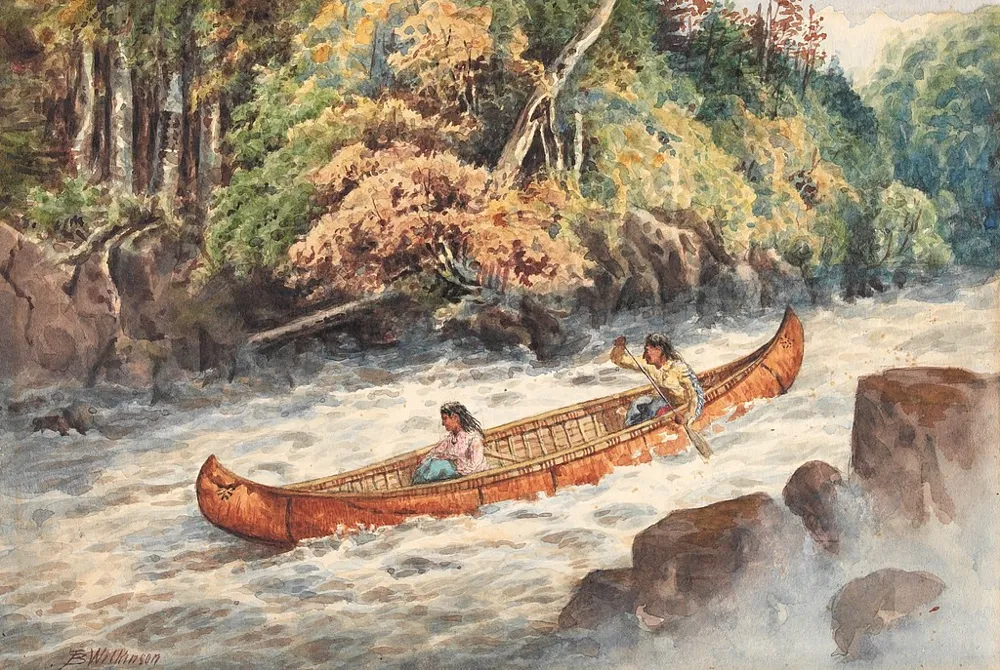
Canoe History at a Glance
The canoe's story runs from hollowed logs in the Stone Age to Kevlar boats on car roofs. Early dates come from radiocarbon testing and are approximate; later dates come from company and museum records. Here are the milestones most sources agree on.
| Date | Milestone |
|---|---|
| 8040–7510 BC | The Pesse canoe, the oldest known boat, is carved from a pine log in what is now the Netherlands |
| About 8,000 years ago | Dugouts are made at Dufuna (Nigeria) and Kuahuqiao (China) |
| About 3500 BC | Amerindian groups settle the first Caribbean islands by canoe |
| Thousands of years before European contact | Indigenous peoples of North America develop dugout, birchbark and other canoe traditions |
| 1493 | Columbus's writings carry the word canoa to Europe |
| Early 1600s to mid-1800s | Birchbark freight canoes carry the North American fur trade |
| 1866 | John MacGregor publishes A Thousand Miles in the Rob Roy Canoe and the Royal Canoe Club is founded in London |
| 1875–1882 | E.H. Gerrish of Bangor, Maine, experiments with and begins selling wood-canvas canoes |
| 1880 | The American Canoe Association is founded |
| 1898–1901 | Old Town builds its first canoe and incorporates in Old Town, Maine |
| 1924 / 1936 | Canoe and kayak racing is an Olympic demonstration event in Paris, then a medal sport in Berlin |
| 1944 | Grumman develops the aluminum canoe |
| 1946 | The International Canoe Federation (ICF) is formed |
| 1960s–early 1970s | Fiberglass, then Royalex plastic, enter mainstream canoe building |
| 1976 | The voyaging canoe Hōkūleʻa sails from Hawaii to Tahiti without instruments |
| 1980s–1990s | Pacific Northwest canoe journeys spark a revival of Indigenous canoe culture |
| 2014 | Royalex production ends |
| 2024 | The Canadian Canoe Museum opens its new home on the Trent-Severn Waterway in Peterborough, Ontario |
What Does "Canoe" Mean?
A canoe is a light, narrow boat, usually open on top and pointed at both ends, that paddlers kneel or sit in and propel with a single-bladed paddle while facing forward. That single blade and the open hull are what separate it from a kayak; our canoe vs kayak guide covers the differences in detail.
The word itself crossed the Atlantic with Columbus. According to most etymologies, English took "canoe" from the Spanish canoa, which appears in Columbus's 1493 account to describe a Caribbean dugout. Canoa probably comes from a Taino word, often given as kanawa. French adopted canoë and canot, possibly influenced by a Saint Lawrence Iroquoian word recorded by Jacques Cartier in 1535.
- Spelling and plural: canoe, canoes. The person is a canoeist, and the activity is canoeing.
- British usage: in the UK and some other countries, "canoe" often covers kayaks too, which is why the governing bodies are called canoe federations.
- Olympic usage: race codes use C for canoe and K for kayak, so C1 is a solo canoe. See our Olympic canoeing and kayaking guide.
The First Canoes: Dugouts and the Oldest Known Boats
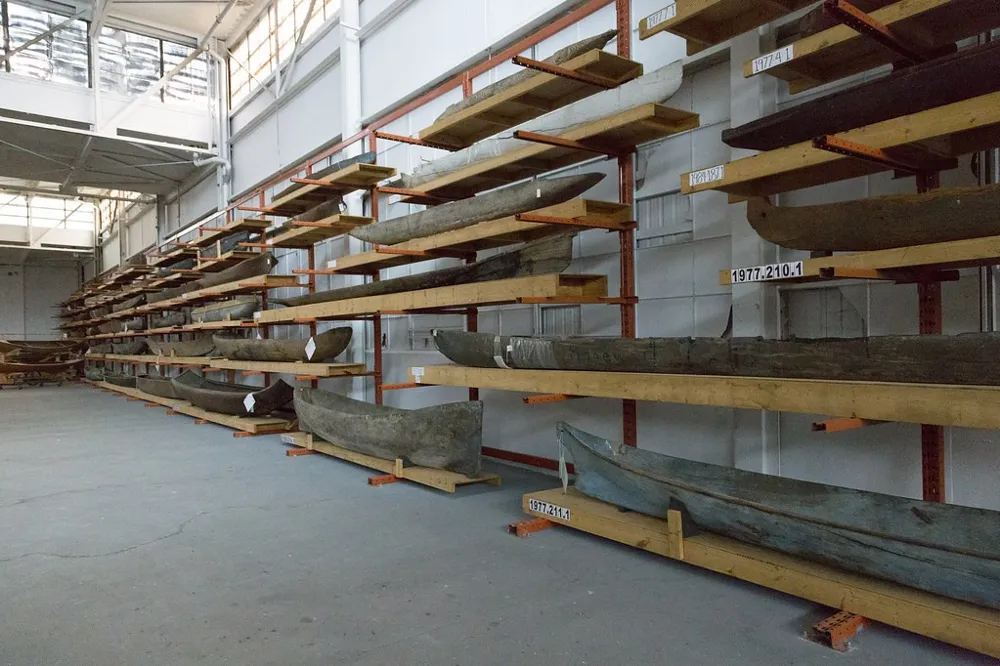
The earliest canoes were dugouts: a single log hollowed into a hull. Before metal tools, builders usually burned the inside with controlled fires and scraped out the charred wood with an adze, then shaped the ends to cut through the water. Some traditions steamed the hollowed hull so its sides could be spread wider for stability.
The oldest dugout ever found, and the oldest known boat of any kind, is the Pesse canoe. A crane operator spotted it in 1955 while building the A28 motorway through a former peat bog near the village of Pesse in the Netherlands. It is carved from Scots pine, about 298 cm (just under 10 feet) long and 44 cm wide, and carbon dated to between 8040 and 7510 BC, roughly 10,000 years ago. It is displayed at the Drents Museum in Assen.
Other very old canoes show that people on several continents had the same idea:
| Canoe | Where Found | Approximate Age | Notes |
|---|---|---|---|
| Pesse canoe | Netherlands | About 10,000 years (8040–7510 BC) | Oldest known boat; Drents Museum, Assen |
| Dufuna canoe | Yobe State, Nigeria | About 8,000 years | Found by a herdsman digging a well in 1987; about 8.4 m long; oldest boat found in Africa |
| Kuahuqiao canoe | Zhejiang, China | About 8,000 years | Earliest canoe found in Asia |
| Dugouts near Rome | Italy | About 7,000 years | Five canoes, some up to about 32 ft long, described in a 2024 study |
| Egådalen dugouts | Denmark | 5210–4910 BC | Carved from linden (lime) wood |
Because wood rots, these finds are rare survivors. Canoes were almost certainly in use earlier and in many more places than the archaeological record shows.
Indigenous Canoe Traditions of North America
As a Canada's History feature on the Canadian Canoe Museum puts it, the canoe is "first and foremost an Indigenous technology." Long before Europeans arrived, peoples across North America built canoes suited to their waters and materials, and many traditions continue today.
- Pacific Northwest: Haida, Heiltsuk, Nuu-chah-nulth, Tlingit and other coastal nations carved large dugouts, often from cedar or spruce, for coastal and ocean travel. Many were painted with bold designs.
- Northeast and Eastern Woodlands: where paper birch grew, Northern Algonquian peoples, including the Innu, Ojibwe (Anishinaabe), Algonquin and Wolastoqiyik (Maliseet), built birchbark canoes light enough to carry between lakes. Coastal peoples such as the Mi'kmaq built rough-water canoes with humped gunwales to hunt whales and porpoises.
- Southern New England and the Southeast: dugouts such as the mishoon were burned and scraped out of large logs.
- Subarctic: Dene peoples used light birchbark canoes to follow caribou. West of the Rockies, where birch was scarce, builders used spruce bark instead, and the Ktunaxa (Kootenay) built a distinctive canoe for fast rivers.
- California coast: the Chumash built the tomol, a plank canoe sewn together and sealed with natural tar.
In the Arctic, Inuit, Yupik and Unangan (Aleut) peoples developed a different craft: the covered, skin-on-frame kayak, paddled with a double blade. Its story is told in our history of kayaking.
How Birchbark Canoes Were Built
The birchbark canoe is the design most people picture when they think of a traditional North American canoe. According to The Canadian Encyclopedia, birchbark is smooth, hard, light, resilient and waterproof, which made it ideal for a boat that had to be carried as often as it was paddled.
- Harvest the bark: large sheets were stripped from paper birch.
- Shape the hull: the bark was laid inside a frame of stakes that set the canoe's outline.
- Sew it together: seams and gunwales were stitched with split spruce or white pine roots. Women commonly gathered, split and boiled the roots.
- Add the frame: cedar ribs and planking, soaked and bent, were fitted inside to hold the bark taut.
- Seal the seams: hot spruce or pine resin waterproofed the seams. Paddlers reapplied it almost daily on long trips.
A typical birchbark canoe was about 14 feet long and weighed around 50 pounds, according to Wikipedia's figures, light enough for one person to carry over a portage. Many were decorated, and fur-trade canoes often carried painted designs or company insignia on the bow. Artist and author Edwin Tappan Adney spent much of his life recording traditional building methods, and Indigenous builders continue to teach them today.
Canoes of the Pacific and the Caribbean
The canoe was just as important in the tropics. Around 3500 BC, Amerindian groups used canoes to settle the first Caribbean islands, and one early chronicler described a single Carib canoe carrying 40 to 50 people out to trade with an English ship.
In the Pacific, Polynesian navigators crossed vast distances in outrigger and voyaging canoes. They are generally thought to have reached Hawaii around the seventh century, and when Captain James Cook arrived at Kealakekua Bay in 1779 he was reportedly met by about 1,500 canoes. Canoe racing was already part of Hawaiian life. Māori arrived in New Zealand in several waves of waka voyages, and in Australia, Aboriginal peoples built bark canoes that typically lasted only about two years because bark absorbs water.
Ocean canoes were also central to the modern Pacific revival. The Polynesian Voyaging Society launched the voyaging canoe Hōkūleʻa in 1975, and in 1976 Micronesian master navigator Mau Piailug guided it from Hawaii to Tahiti without instruments. Its Malama Honua voyage from 2014 to 2017 covered about 47,000 nautical miles. Outrigger racing is now popular worldwide, and the same Hawaiian waters gave rise to surfing and stand up paddle boarding.
The Fur Trade: Voyageurs and Freight Canoes
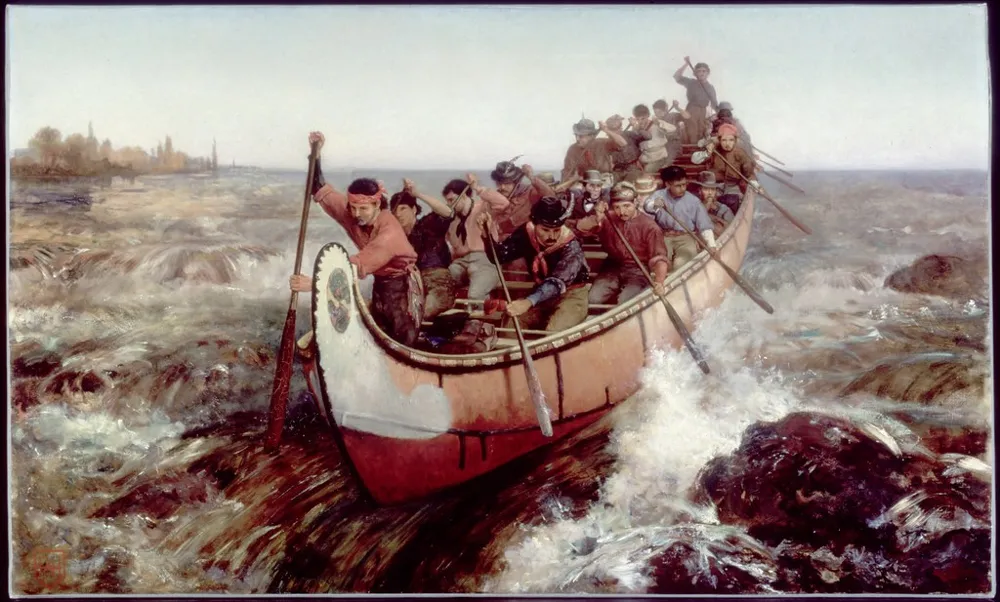
When French explorers reached the Saint Lawrence, they quickly adopted the birchbark canoe. Samuel de Champlain canoed as far as Georgian Bay in 1615 and called the canoe "the only craft suitable" for travel in that country. For more than two centuries, from the early 1600s to the mid-1800s, the fur trade dominated the colonial economy of what became Canada, and it ran on canoes.
Fur traders relied on voyageurs, hired paddlers who moved trade goods inland and furs out to central posts such as Montreal. They used two main sizes of birchbark freight canoe, plus a fast express canoe:
| Canoe | Length | Crew | Cargo | Route |
|---|---|---|---|---|
| Canot du maître (Montreal canoe) | Up to about 11–12 m (35–40 ft) | About 6 to 12 | About 2,300 kg (roughly 60 packs of 90 lb, plus provisions) | Montreal to Lake Superior via the Great Lakes |
| Canot du nord (north canoe) | About half the size | About 4 to 8 | About 1,360 kg (about 35 packs) | Beyond Lake Superior on smaller lakes and rivers |
| Express canoe (canot léger) | About 4.6 m (15 ft) | Small crew | Light loads | Fast long-distance travel, often on 18-hour days |
Crews paddled at about 40 to 45 strokes a minute and made about 7 to 9 km per hour, according to The Canadian Encyclopedia. The network eventually stretched about 6,500 km (4,000 miles) from Montreal toward the Pacific and the Mackenzie River. Demand grew so large that Indigenous builders could not supply every canoe, and around 1750 the French set up a canoe factory at Trois-Rivières.
The canoe was also a tool of colonization. Canada's History notes that the same routes later carried Indigenous children away from home: in 1900, eight children from Nisichawayasihk traveled more than 1,000 km by birchbark canoe, steamer and train to a residential industrial school, and only three returned home. As the fur trade declined and railways and steamships took over transport in the 19th century, the canoe increasingly became a recreation craft.
Canoeing Becomes a Sport
Recreational canoeing took off in the 1860s. John MacGregor had a series of boats built in London that he called the Rob Roy: a 15-foot, 80-pound decked canoe of oak and cedar, modeled partly on North American kayaks and paddled with a double-bladed paddle. His 1866 book A Thousand Miles in the Rob Roy Canoe helped popularize canoeing in Europe and the US, and the Royal Canoe Club was founded in London the same year with MacGregor as its first captain. Because the Rob Roy was decked and used a double paddle, it also explains why British "canoeing" has always included kayak-like boats.
Clubs spread quickly. The American Canoe Association was founded in 1880, the Canadian Canoe Association in 1900 and the British Canoe Union in 1936.
At the Olympics, canoe and kayak racing was a demonstration event at Paris 1924 and became a medal sport at Berlin 1936. Women's kayaking joined in 1948, whitewater slalom debuted at Munich in 1972 and returned for good in 1992, and women raced canoes at the Games for the first time at Tokyo 2020 (held in 2021). The sport's international body, the International Canoe Federation, was formed in 1946. Our Olympic canoe and kayak guide covers today's events.
Wood-Canvas Canoes and the First Canoe Factories
Birchbark was hard to source in quantity, and builders in Maine and Ontario found new ways to make canoes in series during the second half of the 1800s.
In Peterborough, Ontario, boat builders including John Stephenson and Harry Strickland were refining the design and production of wooden canoes in the 1850s and 1860s. The Peterborough Canoe Company, founded in 1892, built wide-board, cedar-strip and cedar-rib canoes, many of them canvas covered, until it ceased production in 1961.
In Maine, the wood-canvas canoe took shape. Builders stretched waterproofed canvas over a frame of cedar ribs and planking instead of bark. E.H. Gerrish began experimenting with wood-canvas construction after moving to Bangor in 1875 and is credited as the first to sell them; he was building 18 canoes a year by 1878. Other Maine makers followed, including B.N. Morris and E.M. White, whose company was founded in 1889.
Old Town Canoe built its first canoe in 1898 behind the Gray family's hardware store in Old Town, Maine, and incorporated in 1901, later buying the Carleton Canoe Company in 1910 and White Canoe in 1984. In New Brunswick, the Chestnut Canoe Company became a leading Canadian wood-canvas builder. Wood-canvas canoes are still built by hand today; Old Town's classic wood-canvas models are built under contract by a Maine shop, according to Wikipedia.
Aluminum, Fiberglass and Plastic
World War II changed canoe building. In 1944, Grumman executive William Hoffman used the aircraft maker's aluminum to replace the traditional wood design, and the company described the result as sturdier, lighter and stronger than wooden canoes. Grumman moved its boat division to Marathon, New York, in 1952. Competition from aluminum and fiberglass after the war hurt the old wooden builders, and the Peterborough Canoe Company stopped production in 1961.
The plastics era followed:
- Fiberglass (by the 1960s): molded hulls made it easy to repeat a good design. Old Town moved into fiberglass and plastic in the 1960s.
- Royalex (early 1970s to 2014): a layered ABS-and-foam sheet that bent and bounced off rocks. Old Town started using it in the early 1970s, and it became the standard for river and tripping canoes until production ended in 2014. See parts of a canoe for what replaced it.
- Kevlar and carbon: lightweight composites let builders make tripping canoes far lighter than aluminum or plastic, at a higher cost.
- Polyethylene: rotomolded and multi-layer plastic canoes are heavy but tough and affordable, and they are common at the budget end of the market.
The Grumman story kept going too. Outboard Marine Corporation bought the canoe division in 1990 and built the last Grumman-brand canoe in 1996; former Grumman staff then formed the Marathon Boat Group, which has sold canoes under the Grumman name since 2000. For how today's materials compare on weight, durability and price tier, see how to choose a canoe and our canoe picks.
Canoe Traditions Today
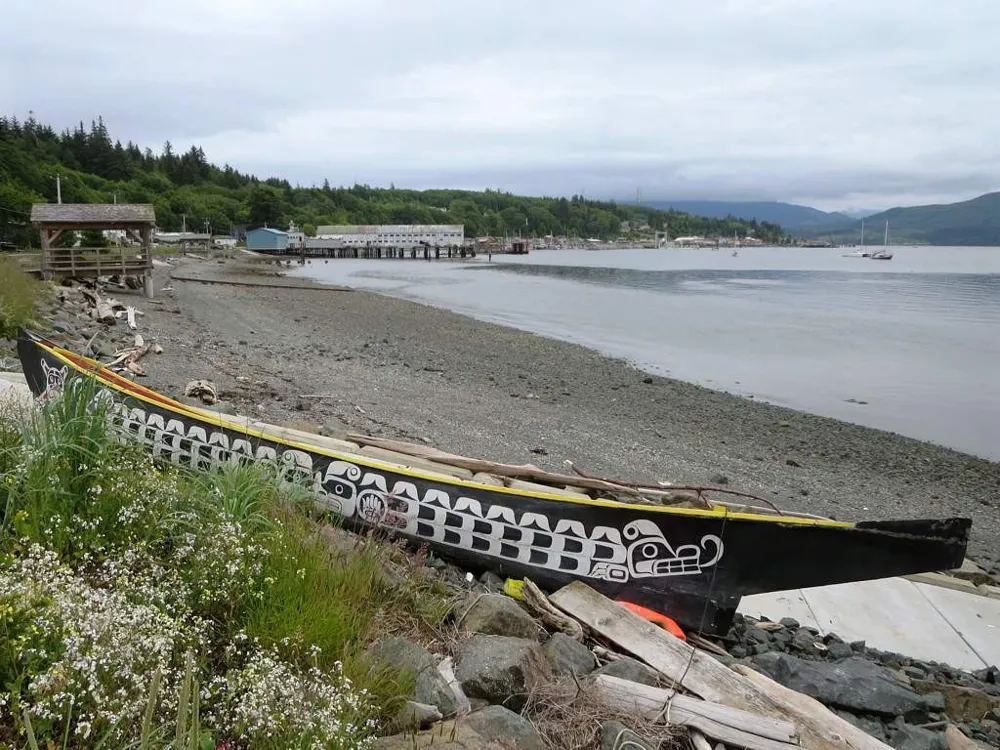
Indigenous canoe culture is very much alive. On the Pacific Northwest coast, the Heiltsuk and Haida led a revival in the 1980s. The Heiltsuk paddled to Vancouver for Expo 86, the 1989 Paddle to Seattle marked Washington's centennial, and the first Qatuwas canoe festival was held in Bella Bella in 1993. These gatherings grew into Tribal Journeys, canoe trips held in most years since.
Elsewhere, the Tłı̨chǫ Nation began its Trails of Our Ancestors canoe journeys in 1995, and builder Rose Meuse completed a traditional birchbark canoe at L'sitkuk in 2023, the first person to do so there in a century, according to Canada's History. Across the Pacific, voyaging canoes like Hōkūleʻa continue to train new navigators.
Recreational canoeing still follows the routes and skills of the past: tripping and portaging through lake country, solo and tandem paddling, whitewater and marathon racing. To try it yourself, start with how to paddle a canoe and the right canoe paddle.
Where to See Historic Canoes
Museums are the best way to see how canoes have changed. Check each museum's website before visiting, since exhibits rotate and many boats are kept in storage (as of November 2026):
- Canadian Canoe Museum, Peterborough, Ontario: holds more than 650 canoes and kayaks and opened a new building on the Trent-Severn Waterway in 2024, according to Canada's History.
- Drents Museum, Assen, Netherlands: home of the Pesse canoe, the oldest known boat.
- Damaturu, Yobe State, Nigeria: where the Dufuna canoe is kept.
- Maine: the state where wood-canvas canoes began; Old Town Canoe is still based in Old Town.
Keep Exploring
Head back to our kayaking and canoeing guide, learn the parts of a canoe, compare canoes and kayaks, or read the history of kayaking, history of paddle boarding and history of surfing.
Frequently Asked Questions
Who invented the canoe?
No single person or culture invented it. People in Europe, Africa, Asia, the Americas and the Pacific built canoes independently, and the oldest known example, the Pesse canoe from the Netherlands, was made roughly 10,000 years ago.
How old is the oldest canoe?
The Pesse canoe, a Scots pine dugout found in 1955, is carbon dated to between 8040 and 7510 BC, which makes it the oldest known boat. The Dufuna canoe from Nigeria, about 8,000 years old, is usually listed as the second oldest.
Where does the word canoe come from?
English took it from the Spanish canoa, a word Columbus recorded in 1493 for a Caribbean dugout. Canoa probably comes from a Taino word, often given as kanawa.
What were the first canoes made of?
The earliest surviving canoes are dugouts carved from a single log, usually hollowed with fire and stone or bone tools. Later traditions used bark, sewn planks, or skins over a frame, depending on local materials.
What is a voyageur canoe?
It's a large birchbark freight canoe used in the North American fur trade. The biggest type, the canot du maître, was up to about 12 meters long, carried a crew of roughly six to twelve and tonnes of cargo between Montreal and Lake Superior.
When were aluminum canoes first made?
Grumman developed its aluminum canoe in 1944, using aircraft-grade aluminum as World War II was ending. Aluminum canoes became common after the war and pushed many wooden canoe makers out of business.
When did canoeing become an Olympic sport?
Canoe and kayak racing was a demonstration event at the 1924 Paris Olympics and became a medal sport at Berlin in 1936. Women's kayaking followed in 1948 and canoe slalom in 1972.
What is the difference between a canoe and a kayak historically?
Canoes are generally open boats paddled with a single-bladed paddle, a design shared by many Indigenous traditions worldwide. Kayaks are decked boats with double-bladed paddles that come from the Arctic, where Inuit, Yupik and Unangan hunters developed them.