The History of Stand Up Paddle Boarding: A Timeline (2026)
Standing on a board and pushing it with a paddle sounds simple, and in one form or another people have done it for a very long time. The sport we call SUP, though, has a much shorter and better-documented story that runs from Waikiki surf instructors to world championships.
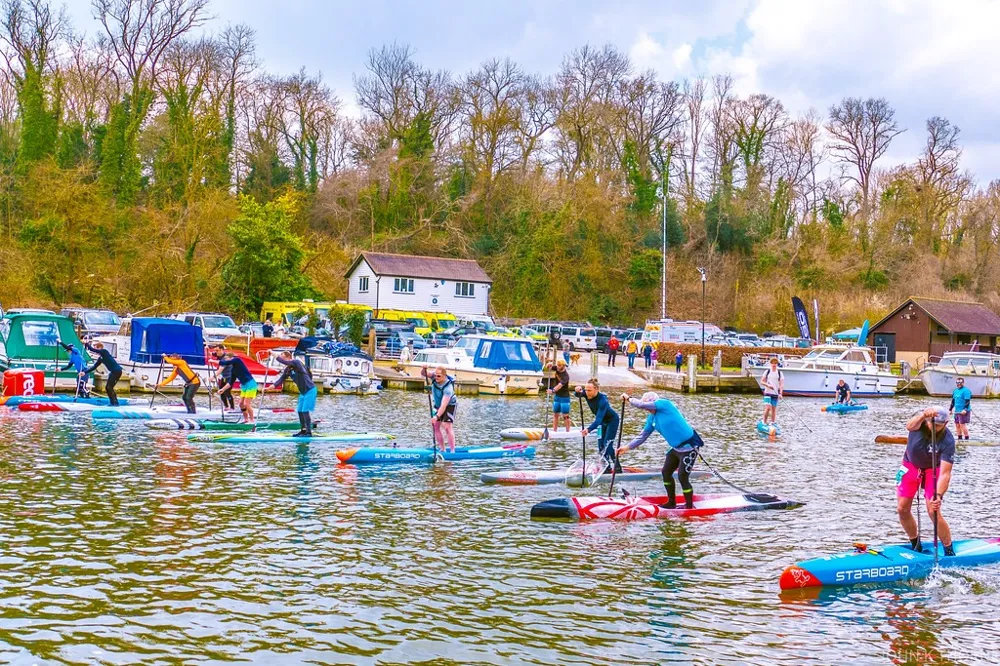
SUP History at a Glance
Stand up paddle boarding has two kinds of history. The first is a long, loosely documented record of people standing on rafts, boats and boards. The second is the modern sport, which grew out of Waikiki and took off worldwide in the 2000s. Early dates below are approximate, and where sources disagree we say so.
| Date | Milestone |
|---|---|
| Ancient times (dates vary) | Fishermen and boatmen in Peru, the Mediterranean and elsewhere stand on reed rafts, boards and boats and push them with paddles or poles |
| 1926–1932 | Tom Blake builds hollow boards and wins the first mainland-to-Catalina paddleboard race (1932), shaping prone paddleboarding |
| Around the 1940s | Waikiki beach boys, including the Ah Choy family, stand on surfboards with canoe paddles while teaching tourists |
| 1982 | The Catalina Classic prone paddleboard race is revived in California |
| 1990s | Hawaiian watermen, notably Laird Hamilton and Dave Kalama, bring stand up paddling back into the spotlight |
| 1997 | The Molokai-to-Oahu paddleboard race is founded |
| 2003 (some sources say 2004) | The Buffalo Big Board Contest at Makaha adds a stand up division |
| 2006 | Molokai-to-Oahu adds an SUP division |
| 2007 | Standup Journal, the first magazine devoted to SUP, launches; among the first production SUP boards go on sale |
| 2008 | First touring boards; the Battle of the Paddle race; flatwater SUP grows inland |
| 2012 | First ISA SUP world championship, in Peru |
| 2013 | A US survey ranks SUP as the most popular outdoor activity among first-time participants |
| 2019 | First ICF Stand Up Paddling World Championships, in Qingdao, China |
| August 2020 | Court of Arbitration for Sport names the ISA as SUP's governing body at Olympic level |
| 2020–2021 | Pandemic-era surge in paddling, helped by cheap, packable inflatable boards |
Ancient Precursors: Standing and Paddling
People have stood on floating platforms and pushed them along with a paddle or pole for thousands of years, on rafts and punts across many continents. Histories of SUP often point to a few examples:
- Peru and Ecuador: fishermen on reed rafts and reed craft (the caballitos de totora also mentioned in our history of surfing), sometimes said to have ridden waves home after fishing.
- Israel: the hasake, a wide board paddled with a double-ended paddle, which lifeguards on the Mediterranean coast have used for rescues since the 1900s, according to The Inertia.
- Venice: gondoliers, who have propelled their boats standing up with a single oar for centuries.
- Elsewhere: people standing in dugout canoes and on log rafts, from river tribes to California loggers riding logs downstream.
Be careful with exact dates. You'll see "1000 BC" and even "3000 BC" quoted online, but these refer loosely to standing on boats and rafts, and even individual articles contradict themselves. None of these traditions is a direct ancestor of the modern sport in the way Waikiki is.
Waikiki Beach Boys and "Beach Boy Surfing"
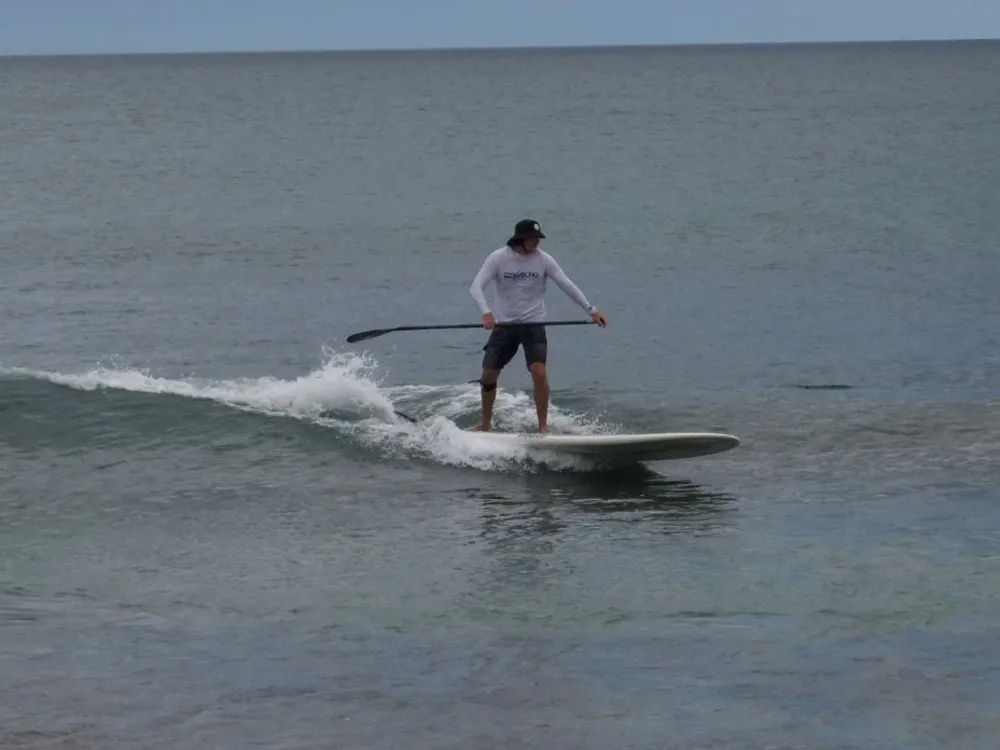
Modern SUP begins on Waikiki Beach in Honolulu. After the surfing revival of the early 1900s, a group of local surf instructors known as the Waikiki Beach Boys made a living teaching visitors to surf. (For that earlier revival and Duke Kahanamoku's role in spreading surfing, see our history of surfing.)
The usual story centers on the Ah Choy family. John "Pops" Ah Choy is said to have started standing on his board and paddling with a canoe paddle, which made catching waves easier. His sons Bobby and Leroy Ah Choy, along with other beach boys, adopted the style while teaching. Standing up let them watch their students and the incoming swell at the same time, and some carried cameras to photograph tourists from the water. The style became known as "Beach Boy Surfing."
Dates and details vary between accounts. Most histories place the Waikiki origins around the 1940s and 1950s, and Paddling.com reports that Duke Kahanamoku himself stood up with a paddle as early as the 1930s. Bobby Ah Choy kept paddling at Waikiki into the 1960s, and another Waikiki regular, John "Zap" Zapotocky, reportedly began standing and paddling in the 1940s and lived to see the sport boom before his death in 2013.
Some historians also credit Hawaiian outrigger canoeing: the paddle stroke came from canoes, the board from surfing, and SUP combined the two.
Prone Paddleboarding: SUP's Lying-Down Cousin
Before "paddleboarding" meant standing up, it meant prone paddleboarding: lying or kneeling on a long board and paddling with your arms. This is a separate sport with its own history, and it still exists.
Its key figure is Tom Blake, the same innovator credited with the first surfboard fin. In 1926, while restoring old Hawaiian boards for Honolulu's Bishop Museum, he built a replica of a long olo board and drilled it out to make it lighter, an early hollow board. Lighter, chambered paddleboards followed, and in 1932 Blake won the first mainland-to-Catalina Island paddleboard race, about 29 miles, in just under six hours.
Prone paddling stayed a niche pursuit of lifeguards and watermen through the 1950s and 1960s. The Catalina Classic was revived in 1982, and in 1997 the race now known as the Molokai-to-Oahu paddleboard championship was founded across the roughly 32-mile Ka'iwi Channel. Prone boards race in classes such as 12-foot "stock" boards and longer "unlimited" boards of around 17 to 18 feet.
When SUP took off, it borrowed from this world. Molokai-to-Oahu added a stand up division in 2006, and Paddling.com reports Travis Grant's 2017 solo SUP crossing, in just under four hours, as the course record. Today prone and stand up paddlers often compete at the same events.
The Modern Revival: 1990s to Mid-2000s
In the 1990s, big-wave surfers Laird Hamilton and Dave Kalama began standing on long boards with paddles, an image that spread after the pair were photographed doing it during a surf-brand photo shoot, according to Paddling.com. Hamilton's profile as a big-wave surfer helped give the sport its first wide audience.
Competition followed. Brian Keaulana added a "Beach Boy Surfing" stand up division to the Buffalo Big Board Contest at Makaha, Oahu. The Inertia and Paddling.com date this to 2003, with 49 stand up competitors, while other sources give 2004. Either way, it gave SUP its first big stage.
Early boards were mostly oversized longboards. Around 2007, purpose-built SUPs started reaching buyers; Paddling.com names C4 Waterman, founded by Dave Parmenter, Todd Bradley and Brian Keaulana, among the first brands selling them.
SUP Leaves the Surf: The Flatwater Boom
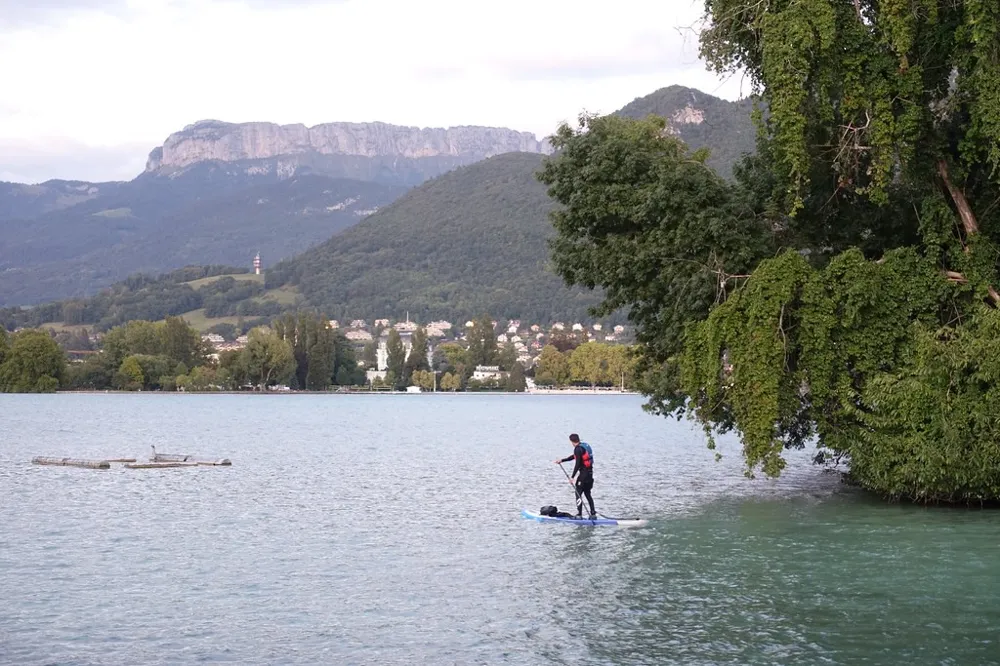
SUP's big break came when it stopped needing waves. Around 2007 and 2008, paddlers started taking boards onto lakes, bays and rivers:
- June 2007: Standup Journal, the first magazine devoted to the sport, was founded.
- 2008: the first touring boards, with displacement hulls that track like a canoe and deck bungees for gear, reached the market.
- 2008: SUP ATX opened in Austin, Texas, partly to promote flatwater paddling for everyone, not just surfers.
Flatwater paddling turned SUP from a Hawaiian and Californian surf offshoot into something anyone near water could try. By the 2013 Outdoor Foundation participation report, SUP ranked as the most popular outdoor activity among first-time participants in the US, and the foundation's 2015 report counted about 2.8 million American participants in 2014, up from about 2.0 million the year before.
New uses followed: SUP yoga on wide, stable boards, fishing from paddle boards, river and whitewater SUP, and touring. The fitness side has its own research now; see the benefits of paddle boarding.
Racing and the ISA vs ICF Dispute
Racing grew alongside recreational paddling. The Battle of the Paddle, first held in California in 2008 and organized with surf pioneer Gerry Lopez, set a maximum board length of 12'6", according to Paddling.com. Racing boards became a category of their own, typically longer than 12 feet.
Two Federations, Two World Championships
As SUP grew, two international federations claimed it:
| Federation | Background | SUP World Championships |
|---|---|---|
| International Surfing Association (ISA) | World governing body for surfing | First held in Peru in 2012; later editions in Nicaragua, Mexico, Fiji, Denmark, China and El Salvador through 2019 |
| International Canoe Federation (ICF) | World governing body for canoe and kayak racing | First held in Qingdao, China, in 2019; 2020 cancelled; later editions in Hungary, Poland, Thailand, the US and the UAE (2021–2025) |
The ISA saw SUP as a form of surfing; the ICF saw it as a form of paddling. Each ran events it called world championships, which meant SUP had rival world titles. After roughly five years of conflict, the dispute went to the Court of Arbitration for Sport (CAS).
The 2020 CAS Ruling
In August 2020, CAS ruled that the ISA is the federation governing SUP at Olympic level, but it rejected the ISA's bid to be the sole governing body worldwide. In the ruling's words, quoted by Paddling Magazine, the ICF "remains entitled to conduct all types of SUP activities outside of the Olympic movement." In practice, both federations still run SUP events and world championships.
SUP has not yet appeared at the Olympics (as of November 2026). Surfing debuted at Tokyo 2020 in shortboard only; see Olympic surfing. Canoe and kayak events, governed by the ICF, have a much longer Olympic history, covered in our history of kayaking and our guide to Olympic canoeing and kayaking. Check the official Olympic and LA28 sites for any change to future programs.
Inflatable Boards Change Who Can Paddle
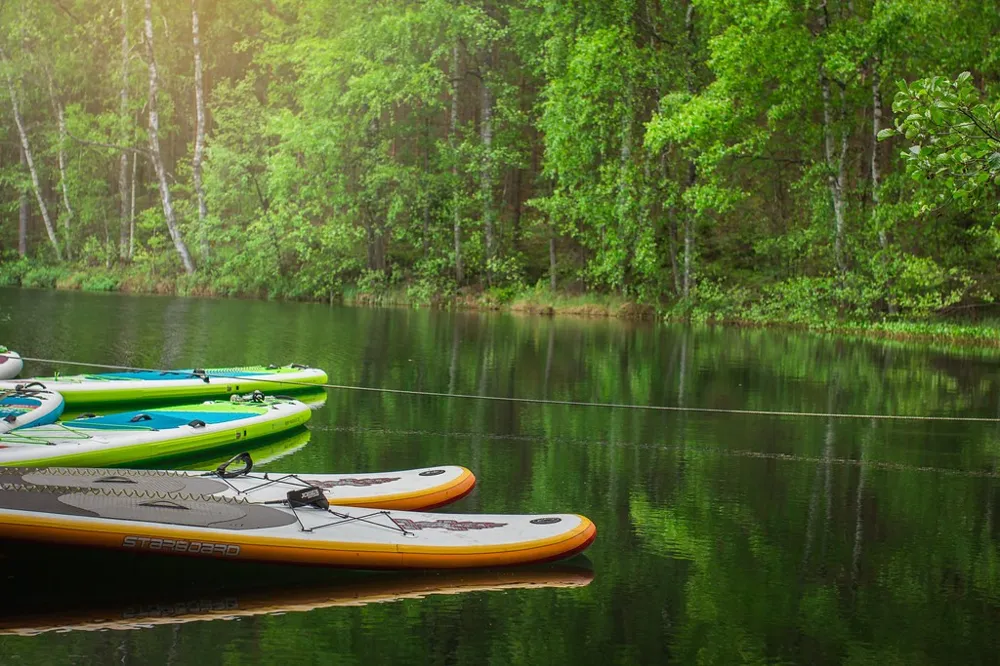
Hard boards made of foam and fiberglass, epoxy, wood or carbon are fast and stiff, but they need roof racks and storage space. The inflatable SUP (iSUP) solved that. It uses drop-stitch construction: two layers of fabric joined by many internal threads, covered in PVC layers and pumped to high pressure so the board stays rigid. Deflated, it rolls into a backpack.
Drop-stitch itself is not new. Goodyear developed it in the 1950s, originally under the name "Airmat," and it was used in an experimental inflatable airplane in the early 1960s and later in gymnastics mats. No single date marks the first inflatable paddle board, and the sources we checked don't agree on one, but inflatables became a mainstream choice for recreational paddlers. By 2018, The Inertia was noting that paddle boards were sold at Costco and ALDI.
That accessibility mattered during the COVID-19 pandemic, when interest in paddling surged as a way to exercise outdoors at a distance. In the UK, Paddle UK's membership is reported to have grown from about 32,000 to 90,000 over 18 months. To weigh up the two board types today, read inflatable vs hard paddle boards.
SUP Today: Disciplines and Milestones
Modern SUP has split into several disciplines, each with its own boards:
| Discipline | Typical Board | Where It Came From |
|---|---|---|
| Surf SUP | Shorter, narrower boards, often under 10 feet | The original Waikiki style |
| All-around and flatwater | Most boards are about 10 to 12 feet | The late-2000s inland boom |
| Touring | Displacement hull, deck rigging | First touring boards in 2008 |
| Racing | Typically over 12 feet | Ocean races and events like the Battle of the Paddle |
| River and whitewater | Tough, often inflatable; quick-release leash belt | Paddlers taking SUP downriver |
| Yoga and fitness | Wide, stable boards with a large deck pad | Flatwater classes |
| Fishing | Wide, stable boards with mounts; some take motors | Shallow-water anglers |
Long-distance paddles keep pushing the limits. In 2018, Cal Major became the first person to paddle the length of Britain from Land's End to John o' Groats, taking 59 days, and in 2021 Dave Chant and Sophie Witter became the first pair to complete the route, covering about 1,703 km.
Safety has developed with the sport too. In the US, the Coast Guard treats paddle boards used outside swimming, surfing or bathing areas as vessels, which brings life jacket and whistle requirements; check local rules. Leashes became standard kit, with quick-release leashes recommended on rivers. Our beginner's guide to paddle boarding covers the basics, and the paddle board size chart helps you pick a board.
What Historians Still Debate
SUP's history is recent, but it was mostly passed on by word of mouth, so several points are still argued over:
- "Who invented SUP?" There's no single inventor. The Ah Choys, other Waikiki beach boys, Duke Kahanamoku and, decades later, Laird Hamilton and Dave Kalama are all credited at different stages.
- Ancient origins. Claims that SUP dates to 1000 BC or 3000 BC describe standing on boats and rafts, not the sport, and the dates aren't well sourced.
- Exact dates. Sources disagree on details such as the year of the first Makaha stand up contest (2003 or 2004) and the ages and dates in the Ah Choy story.
- Surfing or paddling? The ISA vs ICF dispute was partly an argument over this question. CAS settled the Olympic side, but both federations still claim a role.
Keep Exploring
Head back to our paddle boarding guide, compare kayaks and paddle boards, or browse paddle boards for beginners and inflatable paddle boards. For more sports history, read the history of surfing and history of kayaking.
Frequently Asked Questions
Who invented stand up paddle boarding?
No single person invented it. Modern SUP is usually traced to Waikiki surf instructors from around the 1940s, especially the Ah Choy family and their fellow beach boys, and it was revived as a sport by Hawaiian watermen in the 1990s and early 2000s.
Where did paddle boarding originate?
The modern sport began at Waikiki Beach on Oahu, Hawaii. People in Peru, Israel, Venice and elsewhere stood on rafts, boards or boats and pushed them with paddles or poles long before that, but those are usually treated as precursors rather than the start of SUP.
How old is stand up paddle boarding?
As a recognized sport, SUP is only a few decades old: it took off in the early 2000s. Its Waikiki roots go back to around the 1940s, and some histories cite precursors from 1000 BC or earlier, though those dates are loose.
What is the difference between paddleboarding and stand up paddleboarding?
Traditional, or prone, paddleboarding means lying or kneeling on a long board and paddling with your arms. Stand up paddleboarding (SUP) means standing and using a long single-bladed paddle. Both race in some of the same events.
When did paddle boarding become popular?
SUP spread quickly from Hawaii in the mid-2000s, reached flatwater lakes and rivers around 2007 to 2008, and saw another surge during the COVID-19 pandemic, when many people looked for outdoor exercise they could do at a distance.
Is stand up paddle boarding an Olympic sport?
Not as of November 2026. In 2020 the Court of Arbitration for Sport named the International Surfing Association as SUP's governing body at Olympic level, but SUP has not yet been on an Olympic program.
What does SUP stand for?
SUP stands for stand up paddle or stand up paddleboarding. Paddlers sometimes call the activity supping.