Inflatable vs Hard Paddle Board: Which Is Right for You? (2026)
Inflatables win on storage and travel. Hard boards win on glide and instant readiness. Here's how to choose.

The Short Answer
Choose an inflatable paddle board if you need to store it in a small space, travel with it or don't have a roof rack. Choose a hard paddle board if you have storage space, want to jump straight on the water without pumping, or want the best glide for surfing or racing. For most recreational paddlers, a good inflatable is the practical choice.
Side-by-Side Comparison
| Inflatable | Hard | |
|---|---|---|
| Storage | Rolls into a backpack | Needs garage or wall space |
| Transport | Car trunk, plane, train | Roof rack or truck |
| Setup | Inflate first | Ready to go |
| Durability | Bounces off rocks; puncture risk is low with drop-stitch | Can ding and crack |
| Performance | Very good for flat water | Better glide, tracking and surf feel |
| Comfort | Softer to stand and fall on | Firmer |
| Weight | Often light | Varies; can be heavy |
Why Choose an Inflatable?
- Fits in a closet, apartment or car trunk.
- Easy to take on trips.
- Forgiving when you fall.
- Great for yoga, kids and dogs.
- Handles rocky rivers well.
Why Choose a Hard Board?

- No pumping; just grab and go.
- Better glide and tracking.
- Better for surfing waves and racing.
- Feels more connected to the water.
For epoxy, soft-top, plastic and wood-veneer picks, see our best hard paddle boards.
How Inflatables Get Stiff
Inflatable paddle boards use drop-stitch construction: thousands of threads connect the top and bottom layers inside the board, so it holds a flat, rigid shape when pumped to its recommended pressure. Under-inflating is the most common reason an iSUP feels bendy, so use a gauge and follow the maker's PSI. See paddle board pumps.
Setup and Drying
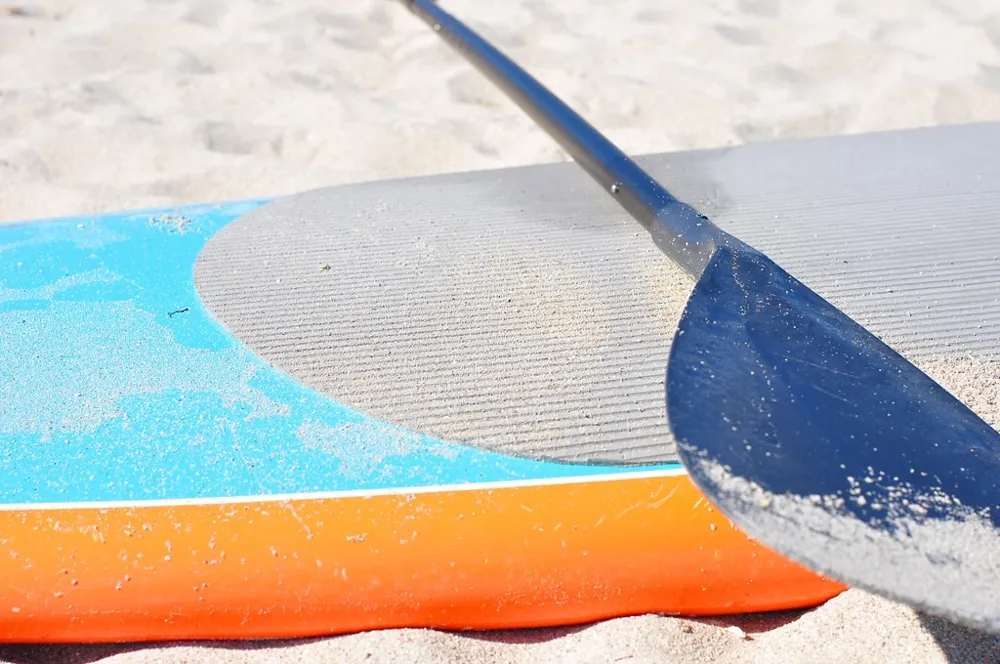
An inflatable takes several minutes to pump up (often around 10–15 minutes by hand) and needs to dry before rolling it for storage to prevent mildew. A hard board is ready to go, but you'll need a rack and room to store it. Our guide to transporting a paddle board covers roof racks, soft racks, truck beds and trunks.
Thickness and Feel
Inflatables are usually thicker (often around 6 inches) than hard boards so they stay stiff, which puts you a little higher above the water. Hard boards feel more connected and glide better, which matters most for racing, touring and surfing.
Durability

Quality inflatables handle bumps against rocks and docks well and are soft to fall on. Hard boards can ding or crack on impact and need repairs, but they don't risk punctures or valve leaks.
Example Boards
iRocker All Around 11 (Inflatable)
A stable, versatile inflatable that beginners can grow with.
Check Price on AmazonIsle Explorer 3.0 (Inflatable)
Isle's touring-style inflatable with room for cargo, pets and fishing gear.
Check Price on AmazonPelican Flow 106 (Hard)
A hard-shell board made from Pelican's impact-resistant Ram-X material, with a cushioned EVA deck pad. No pumping required.
Check Price on AmazonWavestorm 9'6" (Soft-Top Hard Board)
A soft-top foam board with an EPS core and three stringers, forgiving to fall on.
Check Price on AmazonQuick Decision Guide
| If You… | Choose |
|---|---|
| Live in an apartment | Inflatable |
| Travel to paddle | Inflatable |
| Paddle rocky rivers | Inflatable |
| Live on the water with storage | Hard |
| Want to surf or race | Hard |
Shopping? See inflatable paddle boards, paddle boards for beginners, paddle board pumps and the size chart.
Frequently Asked Questions
Are inflatable paddle boards as good as hard boards?
For most recreational paddling, quality inflatables perform very well. Hard boards glide a bit better and are preferred for racing and surfing.
Are inflatable paddle boards durable?
Quality inflatables are made from tough drop-stitch material and handle bumps against rocks and docks well.
Which is better for beginners?
Many beginners choose inflatables because they're easier to store and transport and are forgiving to fall on.
Do I need a roof rack for a hard paddle board?
Usually, yes, unless you have a truck or trailer. Inflatables fit in a car trunk.
How long does an inflatable SUP take to set up?
Usually several minutes to inflate, faster with an electric pump.