Best Hard Paddle Boards for Glide, Grip and Tough Launches (2026)
Solid paddle boards from Surftech, Lifetime, Wavestorm, TAHE, Boardworks, Pelican, Pau Hana and NSP, with a guide to constructions, shapes, transport, storage and repairs.

Why Choose a Hard Paddle Board?
A hard paddle board (also called a rigid, solid or non-inflatable SUP) is built around a stiff core or shell instead of air. That stiffness is the whole point: a rigid board glides further per stroke, tracks straighter and feels more connected underfoot, and there is no pump to work before you launch. Surf, race and serious touring boards are still mostly hard boards for that reason.
The trade-offs are size and care. A rigid board needs a garage wall or shed, a roof rack or truck bed, and a little attention to dings. If that sounds like a deal-breaker, see our best inflatable paddle boards or the full inflatable vs hard paddle board comparison. If you have the space, the picks below cover every common hard-board build: epoxy and fiberglass, soft-top foam, rotomolded plastic and wood or bamboo veneer.
Surftech Generator V-Tech 10'6"
Best epoxy all-around board
- 10'6" x 32" x 4.4", 167 L
- Tuflite V-Tech construction
- Also made in 11'6" (188 L)
Lifetime Horizon 100
Best tough plastic board
- 10' x 34", HDPE shell
- Retractable fin, paddle included
- 5-year limited warranty
Wavestorm 10'6" SUP
Best soft-top foam board
- About 34" wide, 5.6" thick
- EPS foam core, soft deck
- Listed at 300 lb capacity
Hard Paddle Boards Compared
| Board | Construction | Size (L x W) | Listed Weight | Listed Capacity | Best For |
|---|---|---|---|---|---|
| Surftech Generator V-Tech 10'6" | Tuflite V-Tech composite | 10'6" x 32" (167 L) | Not listed | Not listed | All-around, small surf |
| Lifetime Horizon 100 | HDPE plastic | 10' x 34" | 45 lb | 230 lb | Families, rocky launches |
| Wavestorm 10'6" SUP | Soft-top foam, EPS core | 10'6" x about 34" | Not listed by maker | 300 lb | Beginners, beach days |
| TAHE Breeze Performer 10'6" | ACE-TEC epoxy and fiberglass | 10'6" x 31.5" (185 L) | 26 lb | 200 lb | Light all-around paddling |
| Boardworks Kraken 11' | Epoxy sandwich with bamboo | 11' x 32" | 29 lb | 290 lb | Lakes, chop and small waves |
| Pelican Flow 106 | Ram-X plastic | 10'6" x 32" | 46 lb | 230 lb | Budget durability |
| Pau Hana Oahu 10'0" | Bamboo sandwich, EPX or wood veneer | 10' x 32" (187 L) | 29 lb | 200 lb | SUP surfing, noseriding |
| NSP CocoFlax Touring 12'6" | CocoFlax composite | 12'6" x 32" (316.8 L) | About 14.9 kg (33 lb) | Not listed | Touring with gear |
Specs are from each maker's or retailer's listing and can change between model years, so confirm the current version before buying. Boards like the Kraken, Oahu and NSP touring board are usually sold through paddle shops and may ship by freight; inspect any board for damage when it arrives.
The Best Hard Paddle Boards
1. Surftech Generator V-Tech 10'6"
The Generator is Surftech's long-running all-around shape in its Tuflite V-Tech construction, which Surftech describes as durable and lightweight with a bamboo-like texture. Surftech lists the 10'6" at 32" wide, 4.4" thick and 167 L, with an 11'6" x 32.5" version at 188 L for heavier paddlers. Features include a 3/4 deck pad, deck tie-downs and a ledge-style carry handle. At 167 L the 10'6" sits just under the roughly 170–190 L typical of hard beginner boards, so it suits lighter and mid-weight paddlers best; heavier riders should look at the 11'6".
Good to Know
- Classic all-around shape in two lengths
- Tough composite skin
- Published volume makes sizing easy
Watch Out For
- Check whether a fin is included
- Weight and capacity not published
- Premium price tier
The Amazon listing covers the Generator line, so confirm you have the 10'6" size selected.
Check Price on Amazon2. Lifetime Horizon 100
The Horizon 100 is a 10' x 34" board molded from UV-protected high-density polyethylene (HDPE). Retailer specs list it at 45 lb with a 230 lb maximum capacity. Lifetime's patented retractable fin tucks into the tail so it is less likely to snap off in shallow water or during storage. It comes with a paddle and has an EVA deck pad, front bungee, molded center and rear handles, a 1/4"-20 accessory mount and a 5-year limited warranty. Plastic boards like this give up some glide, but they handle gravel beaches and docks that would chip an epoxy board.
Good to Know
- Very durable plastic shell
- Fin retracts instead of breaking
- Paddle included
Watch Out For
- Heavy for one person to load
- Slower than epoxy boards
- 230 lb capacity limits bigger riders
3. Wavestorm 10'6" SUP
Wavestorm's soft-tops use an expanded polystyrene (EPS) foam core with a soft, grippy top deck and a slick polyethylene bottom. Paddling Magazine lists the 10'6" at about 34" wide and 5.6" thick with a 300 lb capacity. Amazon sells it as a SUP and kayak hybrid. The soft deck is forgiving on knees and falls, which suits first-timers. The smaller 9'6" version (about 33" wide, with three stringers and an HDPE slick bottom) suits lighter paddlers and is also in our best paddle boards for beginners.
Good to Know
- Soft, forgiving deck
- Generous listed capacity
- Two sizes
Watch Out For
- Store out of the sun
- Less glide than epoxy boards
4. TAHE Breeze Performer 10'6" ACE-TEC
The Breeze Performer uses TAHE's ACE-TEC build: epoxy and fiberglass over a foam core with a protective polymer outer skin that resists scuffs. Specs list it at 10'6" x 31.5", 185 L and 26 lb, with a recommended rider weight of up to 200 lb. It has a surf-inspired longboard outline with moderate rocker, a tool-free removable FCS II center fin, an EVA deck pad, an Ergo-Grip handle and a bungee for gear. It is one of the lightest boards here, which matters if you load it alone.
Good to Know
- Light for a full-size board
- Tough outer skin
- Tool-free fin
Watch Out For
- 200 lb rider weight suits light to mid-weight paddlers
- Narrower than beginner-focused boards
5. Boardworks Kraken 11'
The Kraken is the wood-look pick here. Boardworks describes a hand-finished epoxy sandwich construction with bamboo, and lists the 11' at 32" wide, 29 lb and a 290 lb maximum capacity. A sharp nose helps in rough water, while the wide stance and fin boxes let you run it as a single, tri-fin or quad: a center fin for cruising, side bites for small waves. It also comes in 9'9" and 10'3" lengths. Boardworks lists a 2-year limited warranty.
Good to Know
- Light and stiff with a bamboo finish
- Flexible fin setups
- Three lengths
Watch Out For
- Sold mainly through paddle shops
- Veneer finish needs ding care
6. Pelican Flow 106
Pelican's Flow 106 is a 10'6" x 32" plastic board made from Ram-X, Pelican's impact-resistant material. The maker lists it at 46 lb with a 230 lb maximum, a 5" rubber fin, bottom grooves for tracking, integrated rail ramps, a cushioned deck pad and a front bungee. Pelican backs it with a lifetime limited warranty. Like the Horizon, it trades speed for toughness, and its weight makes a cart or a second person useful.
Good to Know
- Impact-resistant build
- Lifetime limited warranty
- No inflation or setup
Watch Out For
- Heaviest board here
- Short 5" fin
7. Pau Hana Oahu 10'0"
For SUP surfing, the Oahu is a classic noserider shape with a planing hull. Pau Hana lists it at 10' x 32" x 4.25", 187 L and 29 lb, with a 200 lb maximum rider weight. Its Bamboo Sandwich construction is a vacuum-compressed EPS core with epoxy and bamboo reinforcement. You can choose a light EPX finish or a Cherry Burl wood veneer "Woody" finish over the same build. A 5-box fin system, an integrated foil mount, flush SeaMount accessory points and a self-regulating Gore-Tex vent plug round it out.
Good to Know
- Real wood veneer option
- Surf and foil ready
- Vent plug for heat changes
Watch Out For
- Surf shape is less stable on flat water
- Dealer and direct sales only
8. NSP CocoFlax Performance Touring 12'6"
A touring board for longer days, overnight trips and paddling with gear. It has a displacement hull, extra nose volume to ride over chop and flattened nose and tail decks for loading bags. NSP lists the 12'6" at 32" wide and 316.8 L, weighing about 14.9 kg. A 14' x 30" version is also made. It has nose and tail bungees, several insert points, FCS inserts for a camera or GPS and an included race fin. It uses NSP's eco-focused CocoFlax construction.
Good to Know
- High volume for gear
- Designed for tracking in crosswinds
- Two lengths
Watch Out For
- Long boards need a long rack and storage
- Rider capacity not published
Hard Paddle Board Construction Types
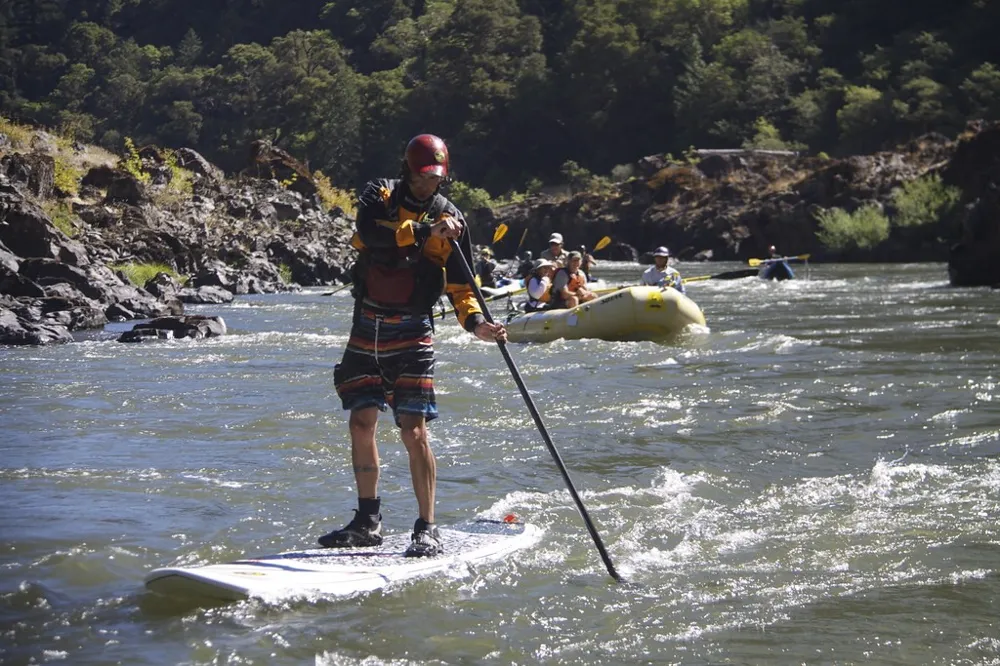
The build decides most of a board's weight, durability and feel. Paddling Magazine describes most rigid boards as a foam core sealed in epoxy and fiberglass or other high-strength materials, with thermoformed plastic on many entry-level boards and bamboo or wood on others.
| Construction | How It's Built | Strengths | Trade-Offs | Examples |
|---|---|---|---|---|
| Epoxy / fiberglass over EPS | EPS foam core, fiberglass cloth, epoxy resin | Light, stiff, fast glide | Chips and dings on rocks | TAHE Breeze Performer |
| Soft-top foam | EPS core, stringers, soft foam deck, plastic slick bottom | Forgiving, grippy, beginner friendly | Slower; deck dents over time | Wavestorm 9'6" and 10'6" |
| Rotomolded / thermoformed plastic | Molded polyethylene shell (HDPE, Ram-X) | Very tough, low maintenance | Heavy; less glide | Lifetime Horizon 100, Pelican Flow 106 |
| Carbon | Carbon fiber layers over a foam core | Lightest and stiffest | Premium price tier; needs careful handling | Race and high-end touring boards |
| Wood or bamboo veneer | Thin wood or bamboo layer in an epoxy sandwich | Stiff, attractive finish | Needs ding and UV care | Boardworks Kraken, Pau Hana Oahu Woody |
Epoxy and Fiberglass
This is the standard performance build: an EPS foam core wrapped in fiberglass and epoxy. OutdoorGearLab notes that higher-performance boards add carbon fiber and cost more. Epoxy boards are the lightest full-size options short of carbon, often in the mid-20s to low-30s of pounds for a 10'6" to 11' board. The catch is impact resistance: OutdoorGearLab points out that rigid fiberglass boards chip and ding easily and need careful handling. Rail tape and a padded bag help.
Soft-Top Foam
Soft-tops pair an EPS core and stringers with a padded foam deck and a slick plastic bottom. The soft deck is forgiving to fall on and grippy underfoot, which suits beginners. They are generally slower and less stiff than epoxy boards; like any board, keep them out of direct sun when stored.
Rotomolded and Thermoformed Plastic
Plastic boards from Lifetime (HDPE) and Pelican (Ram-X) are the toughest option for rocky shores, docks and family use. They are also the heaviest, often around 45 lb or more, and OutdoorGearLab notes that plastic tends to cost some performance. Pick one if durability matters more than speed.
Carbon
Carbon layups cut weight and add stiffness, so you'll mostly see them on race and premium touring boards. Expect a premium price tier and treat them with the same care as any glass board.
Wood and Bamboo Veneer
Most "wooden paddle boards" today are epoxy sandwich boards with a thin bamboo or wood veneer under the glass, such as the Kraken's bamboo build or the Pau Hana Oahu's Cherry Burl finish. The veneer adds a wood finish over the same foam-and-epoxy structure, so care is the same as for any epoxy board.
How to Choose a Hard Paddle Board
Start With Where You Paddle
- Calm lakes and bays: an all-around or touring board. Longer boards track and glide better.
- Rocky shores, rivers and docks: a plastic board, or an inflatable if you need to carry it far. OutdoorGearLab notes inflatables are often more practical where rock strikes are common.
- Small waves: a shorter, rockered board with a planing hull and a tri-fin or 2+1 setup.
- Fitness and yoga: a wide, flat-decked board with a long deck pad. See paddle board yoga.
- Fishing: a wide, high-capacity board with mounts. See best fishing paddle boards.
Check Capacity and Volume
Add your body weight to anything you carry, such as a dog, a cooler or a child, and stay comfortably under the listed capacity. Hard boards are thinner than inflatables (often 4 to 5 inches), so volume in liters is the better guide to float. Our paddle board size chart explains the common volume-per-kilogram rule of thumb.
Weigh the Board Itself
Plastic boards often run about 45 lb or more, while epoxy boards of a similar size can be 26 to 30 lb. If you'll load a roof rack alone, the lighter board makes the most difference.
Look at Fins and Fittings
A standard US box or FCS II center fin lets you swap fins. Side fin boxes add grip in waves. A retractable or rubber fin, like the Horizon's and Flow's, survives shallow launches. Bungees, D-rings and accessory mounts matter if you carry gear.
Factor In Warranty and Delivery
Warranties range from 2 years (Boardworks) to 5 years (Lifetime) and lifetime limited (Pelican). Rigid boards are bulky to ship, so check delivery terms and inspect the board on arrival.
Hard Paddle Board Sizing Summary
Length, width and volume work together. These are typical ranges for all-around boards; heavier paddlers and anyone carrying gear should move up a size.
| Rider Weight | Typical Length | Typical Width |
|---|---|---|
| Kids and riders under about 120 lb | About 8'–9'6" | About 28–30" |
| About 120–175 lb | About 10'–10'6" | About 30–32" |
| About 175–225 lb | About 10'6"–11'6" | About 32–34" |
| Over about 225 lb | About 11'6"–12'6" | About 33–35" |
OutdoorGearLab suggests beginners look for 31 inches or more of width. Typical hard beginner boards run about 170 to 190 L. For style-by-style ranges and the volume rule of thumb, use the full paddle board size chart, and see best kids' paddle boards for younger riders.
Hard Paddle Board Shapes
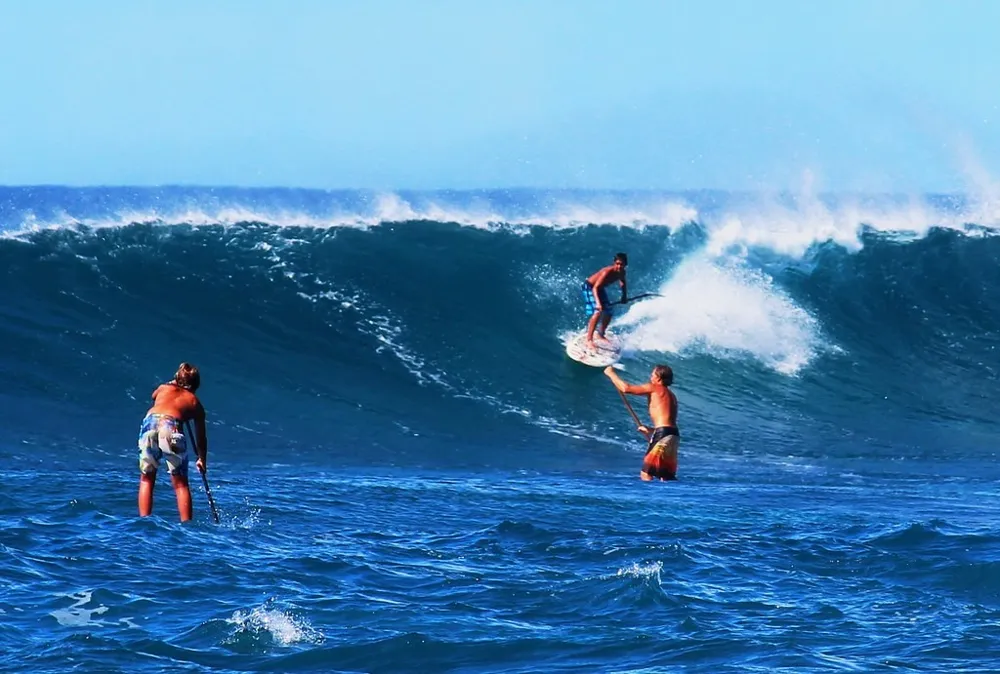
The outline and hull matter as much as the material. Most boards fall into one of two hull types: a flat, planing hull with a rounder nose that is stable and easy to turn, or a displacement hull with a pointed, V-shaped nose that slices through water for speed and distance.
| Shape | Typical Length | Typical Width | Hull | Best For |
|---|---|---|---|---|
| All-around | About 10'–11'6" | About 31–34" | Planing | Beginners, mixed use |
| Touring | About 12'6"–14' | About 28–32" | Displacement | Distance, gear, fitness |
| Race | About 12'–16' | Under about 28" | Displacement | Speed and racing |
| Surf | About 8'–10' | About 28–32" | Planing, more rocker | Waves |
| Yoga and fitness | About 10'6"–11'6" | About 33–36" | Planing, flat deck | Stability, poses |
- All-around: the default. Wide, stable and versatile, and able to catch small waves. The Generator, Breeze Performer, Kraken and Horizon fit here.
- Touring: longer and narrower with a pointed nose and tie-downs for gear, like the NSP CocoFlax. Ideal for long flat-water days.
- Race: long, narrow and often carbon. Fast but tippy, and best left until you're steady on a touring board.
- Surf: shorter, with more nose rocker and multiple fins, like the Pau Hana Oahu. Less stable on flat water.
- Yoga and fitness: extra width and full-length padding for poses and floor-style workouts.
Hard vs Inflatable: The Quick Take
Hard boards generally win on glide, tracking, stiffness and ready-to-go convenience. Inflatables win on storage, travel and forgiveness on rocks. OutdoorGearLab notes that deflated inflatables pack to about the size of a large duffel and fit in most cars without a roof rack, while rigid boards usually need a rack and tie-downs. Rigid boards are also harder to fly with, so check your airline's oversize rules before a trip. Our inflatable vs hard paddle board guide covers the full comparison, and kayak vs paddle board helps if you're still deciding on the craft.
What Else You Need
- Paddle: sized to your height and style. A light paddle often matters more than a slightly lighter board. See best SUP paddles.
- Leash: a coiled leash for flat water and a straight leash for surf. Use a quick-release waist leash in moving water.
- Life jacket and whistle: see the rules below and our best kayak PFDs, which also suit SUP.
- Fins: some boards ship without one. Confirm the box type (US box, FCS II, Futures).
- Rack, pads and straps: see transport below. Wall racks help at home.
- Board bag and rail tape: to prevent dings on epoxy boards.
Our paddle board accessories checklist and what to wear paddle boarding cover the rest.
Transporting a Hard Paddle Board
A rigid board needs a roof rack, a SUP-specific rack or a truck bed. REI's transport advice boils down to a few steps:
- Pad the bars. Use rack pads or foam blocks, and pad between stacked boards.
- Load deck down, fins forward. Place the board with the deck against the pads and the fin toward the front of the car. Center the widest part of the board between the crossbars.
- Strap it snug, not crushing. Use two cam straps (about 12 feet or longer), one per bar. REI warns that too much tension can deform a SUP. Put a twist in each strap to stop humming, and tie off the loose ends.
- Add bow and stern lines for long boards or high winds, tied to secure points, never plastic car trim.
- Check after about 15 minutes of driving, since straps can loosen.
In a truck bed, lay the board deck down with a padded tailgate, and flag the nose if it overhangs. To carry a board, stand it on its rail, grab the center handle and keep the nose into the wind. A wheeled cart helps with heavy plastic boards. Our how to transport a paddle board guide goes step by step.
Storing a Hard Paddle Board
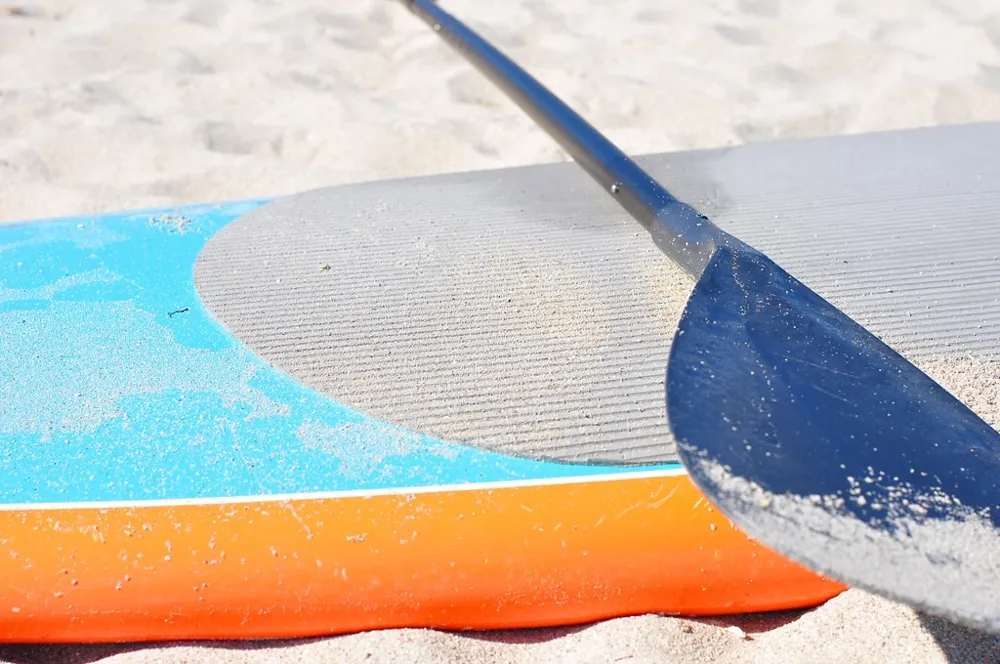
Heat and sun are what ruin hard boards. REI notes that UV can discolor and damage the shell and that high heat can damage the core and cause delamination. Store it this way:
- Indoors is best: a garage, shed or wall rack. Outdoors works only in shade and dry, with any tarp raised so it doesn't trap moisture against the hull.
- Support it evenly: use padded racks or wide straps at several points. On wall racks, rest the deck on the arms with the hull facing up.
- Lean it on a rail or tail, never the nose, with padding underneath and a strap or peg so it can't fall.
- Rinse and dry after salt or muddy water, and never leave a board in a hot car or on hot pavement.
- Lock it with a cable through the leash plug or a SUP lock if it's stored where others can reach it.
Some epoxy boards have a vent plug to let air pressure equalize as the core heats and cools; follow the maker's instructions for opening or leaving it alone. A padded board bag adds UV and ding protection for storage and travel.
Ding Repair Basics
Small dings are part of owning an epoxy or veneer board. What matters is keeping water out of the core. Paddling.com advises checking the board after each session for dings deep enough to reach the foam.
- Get out of the water. If air hisses or bubbles come from a ding, the skin is breached. Stop paddling and dry the board.
- Dry the core completely. Paddling.com suggests pressing a rolled paper towel into the damage. If it comes out damp, keep drying in a cool, dry place.
- Clean and sand. Trim loose glass, sand around the ding so the resin can bond, and wipe clean (NSP recommends acetone for larger repairs).
- Fill with epoxy. Use a two-part epoxy or an epoxy-safe UV-cure resin, shaped under a clear plastic sheet. UV resin cures in sunlight or under a UV lamp, so prep it in the shade.
- Cure, then sand smooth. Allow at least an hour, ideally a full day, then wet-sand from coarse to fine grit.
Never use polyester resin on an epoxy or EPS board. Repair guides warn that it bonds poorly to epoxy and can melt the foam core. If you're unsure of the build, use epoxy. Take fin box damage, delamination, broken stringers, cracks through the core or a snapped board to a repair shop. For plastic and soft-top boards, check the manufacturer's repair advice before using any filler, since methods differ from epoxy repairs.
Buying a Used Hard Paddle Board
Hard boards hold up for years, so used boards can be good value. Paddling Magazine suggests deciding on the board type first, asking how and where the board was used, and meeting in person rather than shipping. Inspect the board in good light:
- Cracks, punctures and deep gouges, especially on the rails and nose.
- Soft spots or bubbles in the deck (possible delamination).
- Yellowing or UV fading.
- Fin box condition and whether the fin is included.
- Any previous repairs, and whether they were done with epoxy.
Private sales usually come without a warranty, so price in any repairs.
Safety and Coast Guard Rules
Outside the narrow limits of a swimming, surfing or bathing area, the US Coast Guard considers a stand-up paddle board a vessel. That brings federal carriage rules:
- A wearable, Coast Guard–approved life jacket for each person on board, in good condition and the right size.
- Children under 13 must wear a life jacket while under way under federal rules, though a state's own child rule may apply instead.
- A sound-signaling device, such as a whistle.
- A white light, such as a flashlight or lantern, if you're out between sunset and sunrise.
States can add their own rules. Florida, for example, requires children under 6 to wear a life jacket on paddle boards. Check your state boating agency before you go. This is general information, not legal advice. Last checked November 2026.
Beyond the law, wear a leash suited to the water, avoid offshore winds, tell someone your plan and start in calm, sheltered water. New paddlers should read how to paddle board before the first launch.
Frequently Asked Questions
Are hard paddle boards better than inflatables?
Neither is better for everyone. Rigid boards generally glide and track better and need no pumping, while inflatables are easier to store, travel with and take down rocky rivers. Choose a hard board if you have storage space and a way to carry it.
What is the most durable type of hard paddle board?
Rotomolded or thermoformed plastic boards, such as Lifetime's HDPE boards and Pelican's Ram-X boards, handle scrapes and rocky launches best. They are also the heaviest, about 45 to 46 lb for the boards here.
How much does a hard paddle board weigh?
Paddling Magazine puts paddle boards at about 15 to over 40 lb depending on size and build. Epoxy boards like the TAHE Breeze Performer (26 lb) and Boardworks Kraken 11' (29 lb) are lighter, while plastic boards like the Pelican Flow 106 (46 lb) are heavier.
Can you leave a hard paddle board outside?
Only in shade and kept dry. UV light can discolor and weaken the shell, and high heat can damage the core and cause delamination, so a garage, shed or covered rack is best.
How do you fix a ding in an epoxy paddle board?
Get the board out of the water, let the core dry fully, sand around the damage and fill it with an epoxy or epoxy-safe UV-cure resin. Never use polyester resin on an EPS epoxy board, and take cracks through the core or fin box damage to a repair shop.
Do I need a life jacket on a hard paddle board?
In the US, yes outside swimming, surfing and bathing areas, because the Coast Guard treats a paddle board as a vessel there. You need a wearable Coast Guard-approved life jacket for each person and a whistle or other sound device, and state rules may add more.
What size hard paddle board should I get?
Most adults start on an all-around board about 10 to 11'6" long and 31 to 34 inches wide. Heavier paddlers and anyone carrying gear should size up and check the listed capacity.