Paddle Board Accessories: The Complete SUP Gear Checklist (2026)
Every stand up paddle board accessory worth owning, from leashes and life jackets to deck bags, anchors and repair kits, with the gear US rules require and the order to buy it in.
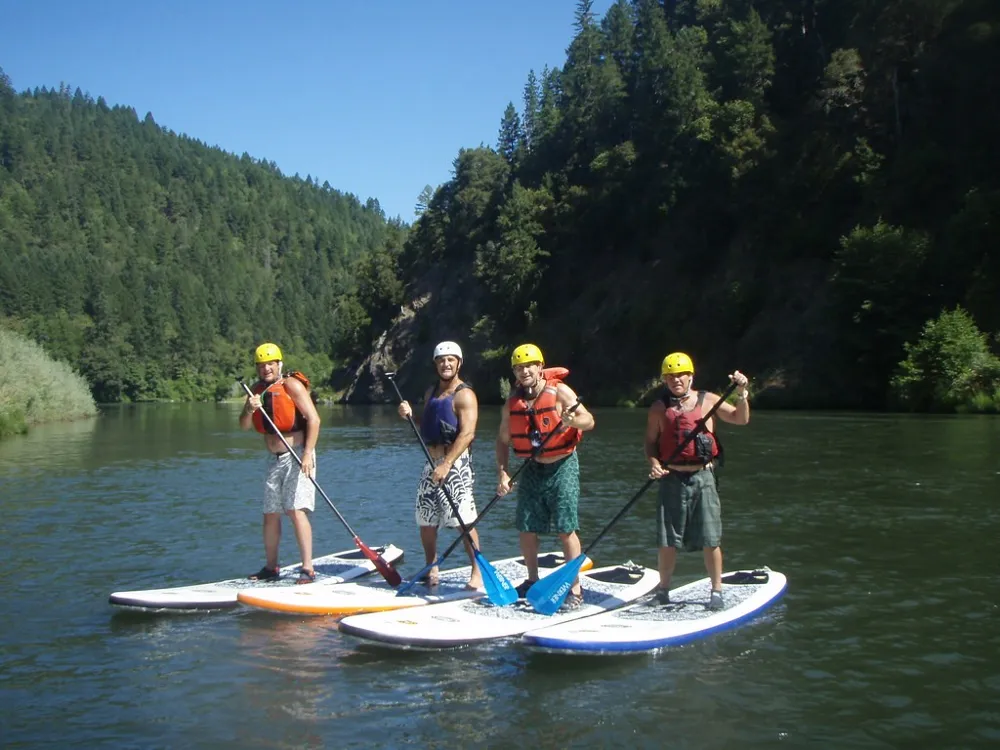
What Paddle Board Accessories Do You Really Need?
A board and a paddle are enough to stand up on flat water, but they won't keep you safe if you fall, keep your phone dry or get the board to the lake. The paddle board accessories worth buying depend on your board (inflatable or hard), where you paddle (a pond, the coast or a river), the water temperature and what you plan to do on it, whether that's touring, fishing, yoga or paddling with a dog.
This guide is a checklist hub. It sorts every common SUP accessory into groups, shows which items US rules require, and links to our full buying guides where an item has one. Items without their own guide get a product pick here. If you only buy three things after the board, make them the right leash for your water and a life jacket you'll actually wear.
SBS Coiled Paddle Board Leash
Best for lakes and flat water
- 10 ft coiled urethane cord, listed at 7 mm
- Dual stainless steel swivels
- Padded neoprene ankle cuff with key pocket
NRS Quick-Release SUP Leash
Best for rivers and moving water
- Clips to your life jacket, not your ankle
- Pull the red ball to release from the board
- Floating coiled line stretches to 9 ft
Onyx M-16 Inflatable Belt Pack
Best low-profile life jacket
- Worn around the waist, inflates by pull cord
- 17 lb of buoyancy from a 16-gram CO2 charge
- Approved for ages 16 and up and over 80 lb
The Complete Paddle Board Accessories Checklist
Use this table to see what you have and what you still need. "Must have" means required by US federal rules or essential on most trips. "Recommended" covers gear most paddlers end up wanting. "Situational" depends on your board or your plans.
| Accessory | Group | Priority | Full Guide or Pick |
|---|---|---|---|
| Life jacket (PFD) | Safety | Must have (law, outside swim and surf areas) | Best PFDs, belt pack pick below |
| Whistle | Safety | Must have (law) | Pick below |
| White light for low light and night | Safety | Must have after sunset (law) | Advice below |
| Leash (coiled, straight or quick-release) | Safety | Must have | Picks below |
| Paddle | Essential | Must have | Best SUP paddles |
| Pump (inflatables) | Essential | Must have for inflatables | Best paddle board pumps |
| Dry bag | Storage | Must have | Best dry bags |
| Waterproof phone case | Storage | Recommended | Pick below |
| Deck bag or cooler | Storage | Recommended | Pick below |
| Anchor | Fishing and yoga | Situational | Pick below |
| Spare or upgraded fin | Board | Situational | Pick below |
| Seat or kayak conversion kit | Comfort | Situational | Paddle boards with seats |
| Carry strap, roof pads and straps | Transport | Recommended | How to transport a paddle board |
| Board bag and wall rack | Storage at home | Recommended for hard boards | Advice below |
| Repair kit and UV protectant | Maintenance | Recommended | Picks below |
| Sun protection, water shoes, wetsuit | Comfort | Recommended | What to wear paddle boarding |
What the Law Requires on a Paddle Board
The US Coast Guard treats a stand up paddle board as a vessel when it's used outside the narrow limits of a swimming, surfing or bathing area. That brings the same basic carriage rules that apply to kayaks and canoes:
| Requirement | What It Means on a SUP |
|---|---|
| Life jacket | One wearable, Coast Guard approved life jacket for each person, in good condition and the right size. Adults don't have to wear it under federal rules, though it's the safest choice. Federal rules require children under 13 to wear one while underway unless a state sets its own age. |
| Inflatable life jackets | Belt-pack inflatables count only when worn. The Coast Guard says inflatables are for people over 16 and generally over 80 pounds, and are not appropriate for weak or non-swimmers. Read the label for any other conditions. |
| Sound-producing device | A whistle or other device that can warn other boaters. Your voice doesn't count. Florida, for example, specifies a device audible for about half a nautical mile. |
| Light | Between sunset and sunrise and in restricted visibility, a flashlight or lantern showing a white light, ready in time to prevent a collision. |
| Navigation rules | As a vessel operator you follow the same rules of the road as other boats, so keep clear of channels and larger traffic. |
States add their own rules. Florida requires children under 6 to wear a life jacket on a paddle board, and New York requires children under 12 to wear one at all times in a boat. Some states and local parks also require launch permits or have their own wear rules for cold months. Check your state boating agency before you go. This is a summary, not legal advice. Last checked November 2026.
A leash is not a legal requirement under these rules, and it doesn't replace a life jacket. For cold water, weather and rescue skills that apply to all paddlers, see paddling safety.
Leashes: Coiled, Straight and Quick-Release
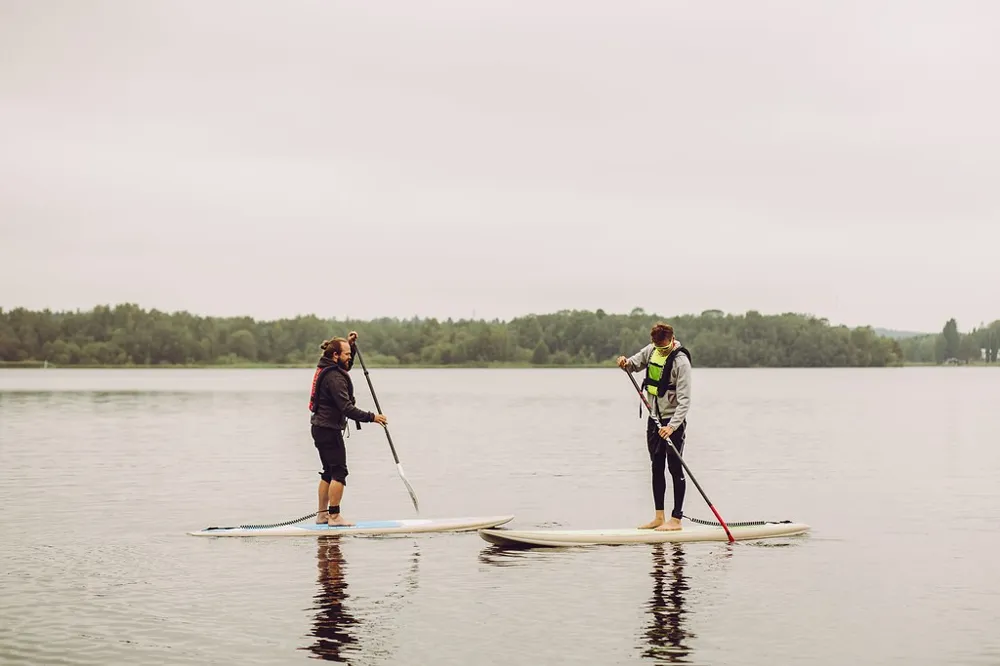
A paddle board is the biggest float near you after a fall, and even a light breeze can push it away faster than you can swim. A leash keeps it within reach. The type you need depends on the water:
| Leash Type | Best For | Trade-Offs |
|---|---|---|
| Coiled, ankle or calf | Lakes, bays, touring and racing on flat water | Coil sits on the deck and doesn't drag, but can tangle and spring back toward you in a fall |
| Straight | SUP surfing in waves | Tangles less, but drags in the water and slows you on flat water |
| Quick-release waist or PFD leash | Rivers and any moving water | Lets you free yourself if the board or leash snags; needs practice and a PFD to clip to |
Never wear an ankle or calf leash on a river. If the board or leash catches on a rock or fallen tree in current, a leash fixed to your leg can hold you underwater. Paddlers on moving water attach a quick-release leash at the waist or to the front of a life jacket so one pull frees them. River paddlers also wear a helmet.
Pick a leash about as long as your board or slightly longer; 10 feet suits most all-around boards. Buy a SUP-specific leash rather than a short surf leash. Inflatables usually take the leash on a D-ring near the tail, and hard boards use a leash plug. Wear it on your back foot when you're in a surf stance. Rinse it after salt water, and replace it if the cord cracks or the swivels stop turning. Surfing a SUP in waves? Our surfboard leash guide covers straight leashes in detail.
1. SBS Coiled Paddle Board Leash
A 10-foot coiled leash for flat-water paddling from Santa Barbara Surfing. The listing describes a 7 mm urethane cord, dual stainless steel swivels to limit tangling, and a padded neoprene ankle cuff with a hidden key pocket. The coil stays compact on the deck and stretches when you fall.
Good to Know
- Thick cord suits heavier boards and windy days
- Swivels at both ends
- Key pocket in the cuff
Watch Out For
- Ankle cuff only: not for rivers or moving water
- Coils can snag when you step back to turn
2. NRS Quick-Release SUP Leash
A river leash that clips to your life jacket instead of your leg. NRS lists a floating polyurethane coil that stretches to 9 feet, two in-line swivels and a quick-release shackle with a red pull ball: pull it and the shackle separates from the carabiner, freeing you while the leash stays on the board. It attaches to an inflatable's D-ring with hook-and-loop or to a hard board's leash plug with a lanyard. A twist-lock carabiner is included.
Good to Know
- Built for moving water
- Works with rescue and recreational PFDs
- One-pull release
Watch Out For
- Practice the release on land before you need it
- Needs a PFD or belt to attach to
Life Jackets, Whistles and Lights
Most paddle boarders choose between a foam vest and an inflatable belt pack. A foam vest floats you the moment you hit the water and needs no upkeep, which makes it the safer choice for weaker swimmers, kids, cold water and rivers. A belt pack is a deflated life jacket in a waist pouch: you pull a cord, a CO2 cartridge inflates it, and you slip it over your head. It's light and doesn't restrict your stroke, but it only counts toward the legal requirement when worn, it doesn't work for anyone 16 or younger, and the cartridge must be replaced after each use. Our PFD guide covers foam vests, fit and kids' life jackets, and the same paddling cuts work well on a SUP.
Clip a whistle to your life jacket or belt so it's always within reach. For light, a waterproof headlamp or flashlight meets the federal minimum. Paddle boards sit low and are hard for boaters to see, so in fog or near sunset also wear bright colors and add reflective tape to your paddle. If you want to be seen from every direction, an all-round white light on a small suction or clip mount sits higher than a headlamp. Stay away from boat traffic at night whatever light you carry.
3. Onyx M-16 Inflatable Belt Pack
A manual inflatable life jacket worn as a waist belt. Retailers list it as a Coast Guard approved Type V with Type III performance, with 17 pounds of buoyancy from a 16-gram CO2 charge and up to 26.5 pounds when topped up through the oral tube. It is approved for ages 16 and older and for people over 80 pounds, and it fits chests from 30 to 52 inches. Pull the cord, then slip the bladder over your head. A rearming kit replaces the cartridge after use.
Good to Know
- Low profile, doesn't block your stroke
- Oral tube for extra buoyancy
- Belt has a D-ring for a whistle
Watch Out For
- Must be worn to count as your life jacket
- Not for kids, weak swimmers or whitewater
4. Fox 40 Classic Safety Whistle
A pealess whistle, so there's no ball inside to stick or swell when wet. Fox 40 rates it at 115 dB, and the three-chamber design clears itself of water. This listing comes with a breakaway lanyard. Tie it to your life jacket or belt pack rather than keeping it in a pocket.
Good to Know
- Meets the sound-device requirement
- Works wet
- Small enough to forget it's there
Watch Out For
- Easy to lose if it isn't tied on
- Colors vary by listing
Storage: Deck Bags, Dry Bags and Phone Cases
Most boards have a bungee net on the nose and D-rings around the deck, which is where storage goes. Small dry bags strapped under the bungee keep keys, snacks and a spare layer dry; roll-top closures need three folds to seal. Our dry bag guide covers sizes and materials. For drinks on long days, a small soft cooler fits under the bungee, and some paddlers tow a floating cooler behind them; see kayak coolers for compact options.
A deck bag keeps the small things within reach without stopping to open a dry bag, and a clear phone case lets you take photos and check a map without exposing your phone. Phones don't float, so tether the case to you or the board.
5. Seattle Sports Deluxe Deck Bag
A deck bag sold for kayaks and paddle boards that straps to the nose of the board. Seattle Sports lists it at 15.7 liters and 14.5 by 13 by 6 inches, with a reflective silver 500D vinyl body, welded seams, a zippered opening under a storm flap and a clear window at one end. Quick-release buckle tie-downs, daisy-chain lashing and an external bungee attach it to deck rigging.
Good to Know
- Reflective body is easy to spot
- Several ways to strap it down
- Bungee on top for a jacket
Watch Out For
- Splash-resistant, not submersible: bag your phone inside
- Needs D-rings or a bungee net on the board
6. Sea to Summit TPU Accessory Case
A clear waterproof case for a phone, keys or a small GPS. Sea to Summit rates it IPX8, to 10 meters for one hour when closed correctly, and sells it in three sizes. A double-fold roll-top with hook-and-loop seals it, the TPU window works with touchscreens, and a neck strap and corner anchor points let you clip it to yourself or the board.
Good to Know
- Use the touchscreen through the case
- Three sizes
- PVC-free window
Watch Out For
- Not designed for deliberate diving
- Measure your phone before picking a size
Anchors: Staying Put for Fishing and Yoga
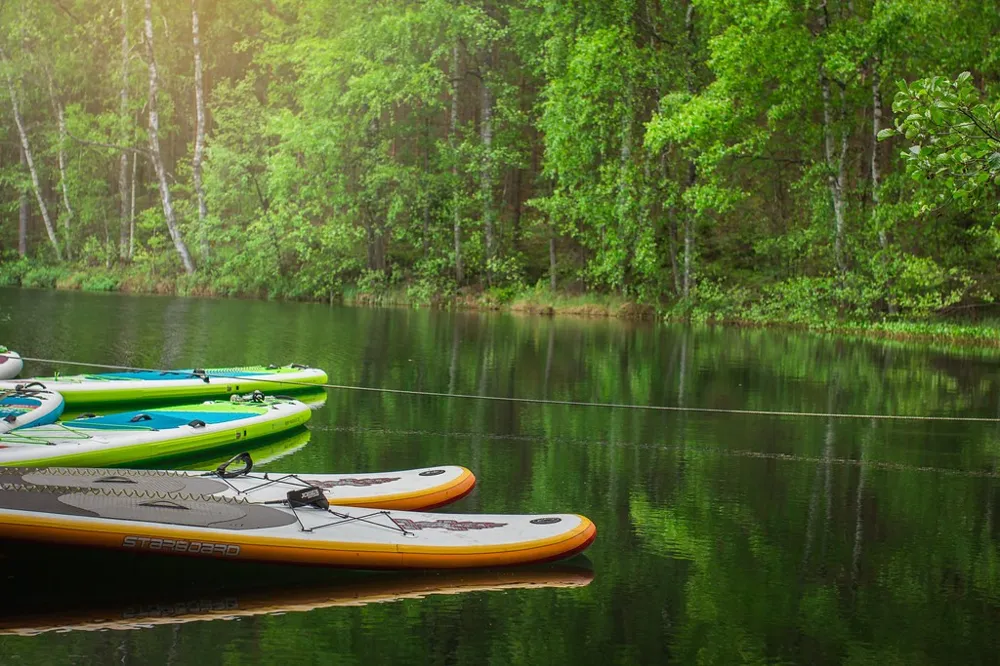
An anchor holds a board in place while you fish, practice yoga or take a break in wind. Paddle boards need far less anchor than a boat: a small folding grapnel or a mushroom anchor of a few pounds on floating line is the usual setup. Tie the line to the leash plug or a D-ring at the nose or tail, never the side, so the board turns to face the wind or current instead of sitting broadside to it. Carry a line long enough to reach bottom with some slack, and pile the extra line where you won't trip on it.
In shallow water, a stake-out pole pushed into the bottom does the same job with less to carry. Never anchor in current strong enough to pull the nose under, and keep a knife or quick-release on the line. Our paddle board yoga guide walks through anchoring step by step, the fishing SUP guide covers rigging rods and landing fish, and kayak anchors compares anchor types in depth.
7. Gradient Fitness Kayak Anchor Kit
A 3.5-pound folding grapnel anchor with a four-fluke cast-iron body and a twist lock, sized for kayaks and paddle boards. The flukes fold flat for storage in a deck bag and open to grip the bottom. Check the listing for the line length and accessories included in the kit.
Good to Know
- Light enough for a SUP
- Folds flat
- Grips sand, gravel and weeds
Watch Out For
- Metal flukes can scratch the deck; set it down on a towel or pad
- Not for strong current
Fins, Pumps and Paddle Upgrades
A few accessories change how the board itself performs:
- Paddle. The paddle that comes in a board package is often a heavy aluminum model. A lighter fiberglass or carbon paddle sized to your height is the upgrade most paddlers notice first. See best SUP paddles.
- Pump. Inflatables need a high-pressure pump, and an electric pump that runs from a car socket saves effort on every launch. See best paddle board pumps for hand and electric options.
- Fin. A longer, straighter center fin tracks better on flat water, while a smaller swept fin turns more easily and clears shallow water. Many boards use a standard US fin box, so a spare center fin is easy to find; slide-in and click-in boxes are often brand-specific. Our inflatable paddle board guide explains fin boxes, and surfboard fins covers fin shapes.
- Motor. Electric fins and small motors are a separate category with their own registration rules; see paddle board motors.
8. SBS 9" Longboard Single Fin
A 9-inch center fin for longboards and SUPs that fits standard 10.5-inch US fin boxes. It's a common replacement for a lost or broken stock fin. Measure your fin box and check how your current fin is fixed before ordering.
Good to Know
- Standard US box fitting
- Works as a single fin or the center of a 2+1 setup
- Handy spare for trips
Watch Out For
- Won't fit slide-in or click-in brand boxes
- Shallow rivers may call for a shorter fin
Repair Kit and Board Care
Inflatable boards are tough, but a sharp rock, a fishing hook or a loose valve can still cause a slow leak. Most inflatables come with a patch kit and a valve wrench, and both belong in a dry bag on longer trips. To find a leak, inflate the board and spray soapy water over the seams, valve and any scuffs, then look for bubbles. A clear vinyl patch can hold until you get home. For a lasting repair, NRS recommends a patch that extends at least three inches past the hole in every direction, thin coats of the correct adhesive, and a roller to press it down. Use the board maker's kit and instructions where you can.
Hard boards ding instead of leak: keep a small epoxy repair kit and seal any crack before the core takes on water. For both types, rinse with fresh water after salt or muddy water, dry the board before rolling or bagging it, and store it out of direct sun, because UV light fades and weakens PVC and epoxy over time. Clean, drain and dry your board and gear before moving between waterways to avoid spreading invasive species.
9. Tear-Aid Patch Kit Type B
A field repair kit for vinyl and PVC, the material used on most inflatable boards. The kit includes a 12 by 3 inch patch, two small precut patches, alcohol prep pads, reinforcement filament and instructions. The polyurethane patches are described as UV-resistant, watertight, airtight, flexible and transparent, and retailers describe them as setting almost immediately with no separate glue. Type B is for vinyl and PVC only.
Good to Know
- No separate glue to carry
- Cut the patch to size
- Also fixes dry bags and rain gear
Watch Out For
- Clean and dry the area first or it won't stick
- Use the board maker's adhesive for permanent repairs
10. 303 Aerospace Protectant
A spray-on UV protectant for plastic, rubber, PVC, vinyl, fiberglass and gelcoat, so it suits both inflatable and hard boards, plus leash cords and fins. It is sold to protect against fading and cracking from sun exposure. Spray it on a clean, dry board and wipe dry. Keep it off fabric bags and traction pads you don't want slick.
Good to Know
- Works on inflatable and hard boards
- Spray on, wipe off
- Several bottle sizes
Watch Out For
- Can make deck pads slippery; avoid overspray
- Shaded storage still matters more
Carrying, Transport and Home Storage
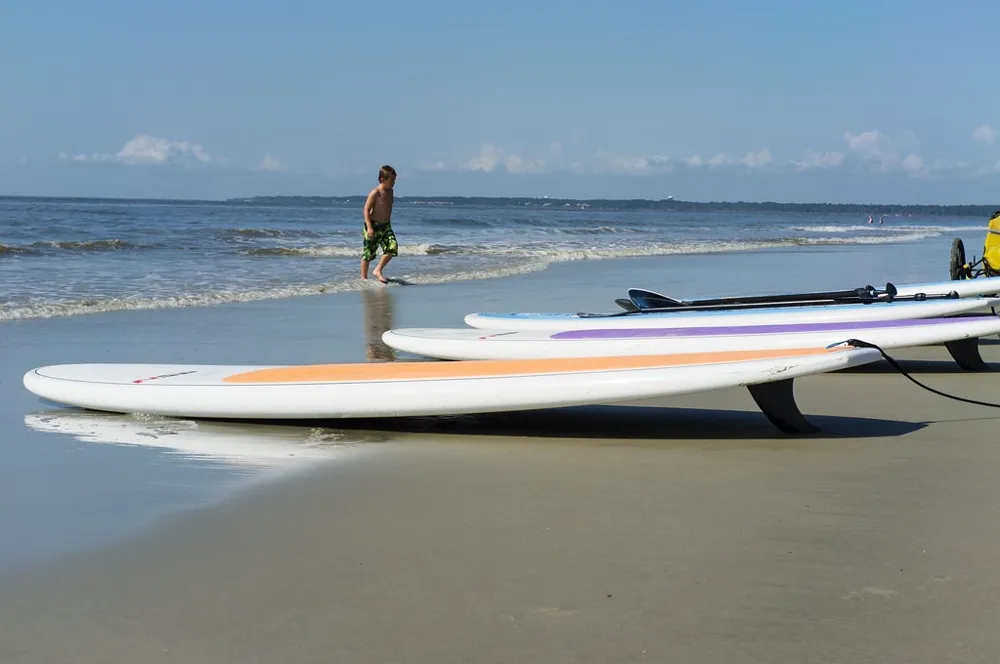
A 10- to 11-foot board is awkward to carry in wind, and getting it to the water safely matters as much as anything you use on it.
- Carry strap or sling. A padded shoulder strap loops around the board or clips to its D-rings so you can carry it under one arm or on your shoulder, leaving a hand free for the paddle. Choose one that fits your board's width and handle layout.
- Cart. For long walks from the parking lot, a SUP cart holds the tail or middle of the board. Airless wheels suit pavement and packed sand; wide air-filled tires roll better on soft sand. Several kayak carts also take paddle boards.
- Roof pads and straps. Hard boards ride on padded crossbars or foam blocks, deck side down, held by cam straps rather than bungee cords. Inflatables can be rolled and carried in their backpack. See how to transport a paddle board for loading steps and surfboard car racks for pad and rack options.
- Board bag. A padded bag protects a hard board on the car and in storage. White or silver bags reflect sun, and a stretchy board sock is a lighter option for dust and scratches indoors.
- Wall or ceiling rack. Store hard boards on padded arms or slings, on the rail or deck side down, out of direct sun and away from heat. Inflatables can be stored rolled loosely once fully dry, or partly inflated if the maker allows it; follow your board's manual. For floor and freestanding designs, see storage racks.
- Lock. A coated steel cable lock through a handle or leash plug deters theft at the launch or on the car.
Comfort, Sun and Clothing
Comfort gear decides whether you paddle for an hour or all day:
- Sun protection. Water reflects sunlight, so you can burn faster than on land. Wear a secure hat, polarized sunglasses on a floating strap and a long-sleeve sun shirt, and reapply water-resistant sunscreen after you fall in.
- Footwear. Thin water shoes or sandals protect against hot sand, rocks and shells at the launch and still let you feel the board. Neoprene booties help in cool water.
- Dress for the water. Choose clothing for the water temperature, not the air, because you will fall in. A wetsuit extends the season in cool water and a drysuit suits cold water; compare them in wetsuit vs drysuit and see best wetsuits.
- Hydration and food. A water bottle clipped to the bungee and snacks in a dry bag.
- Changing towel or poncho. Useful for changing at the launch in cool weather.
Our what to wear paddle boarding guide covers clothing by season.
Accessories by Activity and Board Type
What you add to the basics shifts with how you use the board:
| If You Plan To... | Add These |
|---|---|
| Paddle inflatables | Pump and gauge, patch kit, valve wrench, dry bag for the repair kit; see inflatable vs hard boards |
| Paddle hard boards | Board bag, roof pads and straps, wall rack, ding repair kit; see hard paddle boards |
| Fish | Anchor or stake-out pole, rod holders on mounts or a crate, cooler, fishing PFD; see fishing paddle boards |
| Do yoga | Anchor, wide stable board, optional deck pad; see paddle board yoga |
| Sit or kayak | Clip-on seat and a kayak paddle, or a convertible board; see paddle boards with seats |
| Paddle with kids | Child's life jacket sized by weight with a crotch strap and head support; see kids' paddle boards |
| Paddle with a dog | Dog life jacket with a grab handle, extra deck pad for grip; see paddle boarding with a dog |
| Paddle rivers | Quick-release leash, helmet, foam PFD, shorter fin for shallow water |
| Tour or paddle at dusk | Deck bag, spare layer, all-round light, phone case or radio, tow line |
What to Buy First: A Priority Order
- Life jacket, whistle and leash. The legal and practical minimum. Choose a quick-release leash if you'll ever paddle moving water.
- Paddle and pump. If your package came with a heavy paddle or a slow hand pump, these are the upgrades you'll feel every trip.
- Dry bag and phone case. Keep keys, phone and a spare layer dry.
- Transport. A carry strap, then roof pads and straps or a cart, depending on how far you carry the board.
- Repair kit and sun care. A patch kit for inflatables, and UV protection for you and the board.
- Light. As soon as you might be out near sunrise, sunset or in fog.
- Extras for your style. A deck bag, anchor, seat, fishing mounts or a dog life jacket.
Still choosing a board? Start with the best paddle boards for beginners and the paddle board size chart, learn the basics in our beginner's guide, then come back to this checklist. More guides are on our paddle boarding hub, and kayakers can use the kayak accessories checklist.
Frequently Asked Questions
What accessories do I need for paddle boarding?
The basics are a board, a paddle sized to your height, a leash, a Coast Guard approved life jacket, a whistle and a dry bag or phone case. Inflatable boards also need a pump. Add sun protection and water for anything longer than a short session.
Do you have to wear a life jacket on a paddle board?
In the US, a paddle board used outside a swimming, surfing or bathing area counts as a vessel, so you must carry a Coast Guard approved life jacket. Federal rules require children under 13 to wear one, many states set their own ages, and belt-pack inflatables only count when worn. Check your state's rules; this is not legal advice.
Should a paddle board leash be coiled or straight?
Coiled leashes suit flat water because the coil stays on the deck instead of dragging. Straight leashes are for surfing waves. On rivers and moving water, use a quick-release leash attached at the waist or life jacket, never at the ankle.
How long should a SUP leash be?
Choose a leash about as long as your board or slightly longer. A 10-foot leash suits most all-around boards, and longer touring and race boards can take an 11-foot coil.
Do I need a light to paddle board at night?
Yes. Between sunset and sunrise and in fog or other poor visibility, US rules require a paddler to have a white light, such as a flashlight or lantern, ready to show in time to prevent a collision.
Can you anchor a paddle board?
Yes. A small folding anchor of a few pounds on floating line holds a board in place for fishing or yoga. Tie it off at the nose or tail, not the side, so the board points into the wind or current.
What should I bring to repair an inflatable paddle board?
Carry the patch kit and valve wrench that came with the board, or a vinyl and PVC field patch, in a dry bag. Permanent repairs use the board maker's adhesive and patch material on a clean, dry, deflated board.