Kayak Accessories: The Complete Gear Checklist (2026)
Every kayak accessory worth owning, sorted into safety, comfort, storage, transport, fishing and maintenance, with the gear US law requires and the order to buy it in.
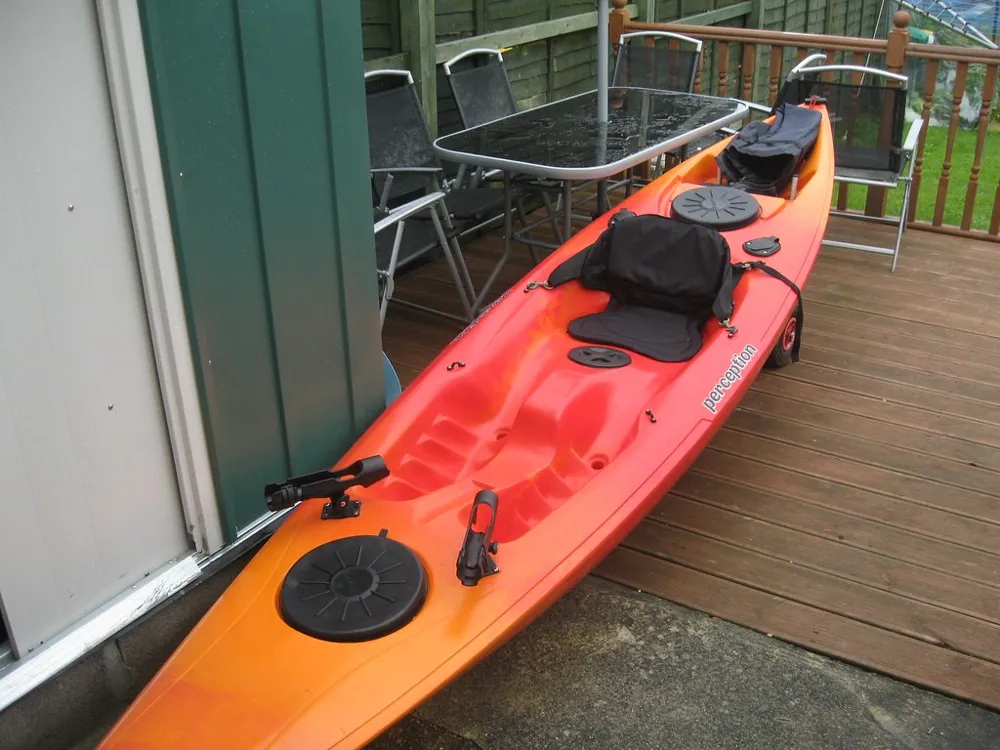
What Kayak Accessories Do You Really Need?
A kayak and a paddle will get you on the water, but they won't keep you safe, dry or comfortable for long. The accessories that matter depend on your boat (sit-on-top or sit-inside), where you paddle (a quiet pond, a river or the coast), the water temperature, how long you stay out and whether you fish. This guide is a checklist hub: it sorts every common kayak accessory into six groups, tells you which ones the law requires, and links to our full buying guides where an item has one. Items without their own guide get a product pick here.
If you only buy a few things, start with a life jacket you'll actually wear, a whistle, a dry bag and, for sit-inside kayaks, a bilge pump and paddle float. The three picks below cover the safety gear new paddlers most often skip.
NRS Kayak Bilge Pump + Float
Best for sit-inside kayaks
- Rated at 8 gallons per minute
- Foam float so it won't sink
- Sprays over the side, no hose
NRS Sea Kayak Paddle Float
Best for self-rescue
- Two separate air chambers
- Strap and buckle lock to the blade
- Reflective tape
YakAttack VISIPole II
Best for paddling in low light
- 360-degree white LED on a 54-inch mast
- About 100 hours on 3 AA batteries
- Floating base, flag included
The Complete Kayak Accessories Checklist
Use this table to check what you have and what you still need. "Must have" means required by US federal rules or essential for safety on most trips. "Recommended" covers gear most paddlers end up wanting. "Situational" depends on your boat or trip.
| Accessory | Group | Priority | Full Guide or Pick |
|---|---|---|---|
| Life jacket (PFD) | Safety | Must have (law) | Best kayak PFDs |
| Whistle or horn | Safety | Must have (law) | Pick below |
| White light for low light and night | Safety | Must have after sunset (law) | Pick below |
| Paddle (plus a spare for longer trips) | Essential | Must have | Best kayak paddles, length guide |
| Bilge pump and sponge | Safety | Must have on sit-inside kayaks | Picks below |
| Paddle float | Safety | Recommended for sit-inside kayaks | Pick below |
| Paddle leash | Safety | Recommended on flat water | Pick below |
| Dry bag | Storage | Must have | Best dry bags |
| Waterproof phone case | Storage | Recommended | Pick below |
| Deck bag | Storage | Situational | Pick below |
| Kayak seat or cushion | Comfort | Recommended | Best kayak seats |
| Water shoes, gloves, sun layers | Comfort | Recommended | What to wear kayaking |
| Spray skirt | Comfort | Situational (sit-inside) | Best spray skirts |
| Kayak cart | Transport | Recommended | Best kayak carts |
| Roof rack or foam blocks | Transport | Must have if you drive | Best kayak roof racks |
| Storage rack | Transport | Recommended | Best storage racks |
| Rod holders, crate, fish finder, anchor | Fishing | Situational | Rod holder pick below, plus linked guides |
| Scupper plugs, UV protectant, repair kit | Maintenance | Situational | Picks below |
What the Law Requires on a Kayak
In the US, kayaks and canoes are vessels, so federal Coast Guard carriage rules apply to them. For a paddled kayak, they come down to a short list:
| Requirement | What It Means for a Kayak |
|---|---|
| Life jacket | One wearable, US Coast Guard approved life jacket for each person on board, readily accessible and the right size. Inflatable life jackets count only when used as their label directs. Federal rules require children under 13 to wear one while underway unless a state sets its own age. |
| Sound-producing device | A whistle, horn or bell that can make an efficient sound signal. Florida, for example, specifies one audible for at least half a nautical mile. |
| Light | Between sunset and sunrise and in restricted visibility, a flashlight or lantern showing a white light, ready to show in time to prevent a collision. Paddle craft don't need the red, green and stern lights of powerboats. |
| Visual distress signals | Not required in daytime for kayaks and canoes. Between sunset and sunrise on coastal waters, night signals are required: for example, three pyrotechnic night flares or one Coast Guard approved electric distress light. |
States add their own rules, and they vary. A few examples: New York requires everyone in a boat under 21 feet, kayaks and canoes included, to wear a life jacket from November 1 to May 1, and requires children under 12 to wear one at all times. Texas requires passengers under 13 to wear one while underway. Florida requires children under 6 to wear one. Some states also require registration once you add a motor; see kayak registration laws. Rules change, so check your state boating agency before you go. This is a summary, not legal advice. Last checked November 2026.
Lights for Dawn, Dusk and Night

Kayaks sit low and are hard for boaters to see, even in daylight. If there's any chance you'll be on the water after sunset, in fog or before sunrise, you need a white light by law. A waterproof flashlight or headlamp meets the minimum. An all-round light on a mast is easier to see from every direction because it sits above your head and paddle. Add reflective tape to your paddle blades and wear bright colors to help even more. For anchoring away from a dock at night, some states require a white light visible all around the horizon, so check local rules.
1. YakAttack VISIPole II
A 360-degree white LED light on a 54-inch (4 ft 6 in) fiberglass mast. The maker lists about 100 hours of run time on three AA batteries (included) and says the light is waterproof to 1,000 feet. The base floats, an orange flag is included, and the MightyMount version fits GearTrac and most kayak track systems. Some kayaks need an adapter.
Good to Know
- Light sits above your head, visible all around
- Floating base if it comes loose
- Flag adds daytime visibility
Watch Out For
- Needs a track or mount on the kayak
- Sliding the flag over the light dims it; the maker advises against that near powerboats
Essential Safety and Rescue Gear
Safety gear is the core of any kayak accessories checklist, and most of it is small and inexpensive. The life jacket comes first: it only works if you wear it, so choose a paddling cut with large armholes and a high back that clears the seat. Our kayak PFD guide covers fit, types and fishing vests. Dress for the water temperature, not the air; see what to wear kayaking and, for cold water, our drysuit guide. For a broader look at cold water, weather and rescue skills, read kayak safety.
The other safety items below have no separate guide on this site, so each gets a product pick. On longer or more remote trips, also carry a first aid kit, a throw bag or tow line, a blunt-tip river knife, and a way to call for help, such as a phone in a waterproof case, a VHF radio or a satellite messenger (see kayak GPS units). Whitewater paddlers also need a helmet; see whitewater kayaks and gear.
2. Fox 40 Classic Safety Whistle
A pealess whistle, so there's no ball inside to jam or swell when wet. The maker rates it at 115 dB, uses a three-chamber design and says the chambers clear themselves after being submerged. This listing includes a breakaway lanyard. Clip it to your life jacket so it's always within reach.
Good to Know
- Meets the sound-device requirement for paddlers
- Works wet, with no pea to fail
- Tiny, so it lives on your PFD
Watch Out For
- Tie it to the PFD, not a pocket, or it may be lost
- Color options vary by listing
3. NRS Kayak Bilge Pump + Float
A hand pump for emptying a sit-inside kayak after a capsize or a wet day. NRS lists it at 8 gallons per minute and 21 inches long. Water sprays straight out over the side without a hose, a foam float keeps it from sinking if dropped, and the screws are stainless steel. Store it under deck bungees or behind the seat, where you can reach it from the water.
Good to Know
- Floats if you drop it
- No hose to tangle
- Also dries the boat on shore
Watch Out For
- Rarely needed on self-draining sit-on-tops
- A long pump may not fit inside small cockpits
4. NRS Deluxe Boat Sponge
For the last cup of water a pump can't reach, plus sand and grit. The sponge is about 8 by 4.5 by 2 inches, has an absorbent cloth cover, and retailers list it as holding up to 24 ounces of water. It works alone or with a bilge pump, including under a spray skirt.
Good to Know
- Gets water out of corners and footwells
- Helps clean the hull between waterways
- Useful on any kayak type
Watch Out For
- Not a substitute for a pump after a capsize
- Rinse and dry it to avoid odors
5. NRS Sea Kayak Paddle Float
An inflatable float that slides over one paddle blade so the paddle becomes an outrigger while you climb back into a sit-inside kayak in deep water. It has two separate air chambers of 7 liters each (only one has to be inflated), twist valves, a 1-inch strap with buckle and cord lock to hold it on the blade, reflective tape and a nylon shell.
Good to Know
- Backup chamber if one leaks
- Reflective tape for visibility
- Deflates flat for storage
Watch Out For
- Only useful if you practice the re-entry first
- Less needed on sit-on-tops, which you climb back onto
6. Scotty 130 Paddle Leash
A self-retracting coiled leash that keeps your paddle attached to the kayak when you drop it, stop to fish or capsize. Retailers list it as extending to 6 feet and fitting gear up to 1.5 inches in diameter: the strap wraps around the shaft and a hook clips to the boat. Do not use any paddle leash in whitewater, where it can become an entanglement hazard.
Good to Know
- Prevents a lost paddle in wind
- Coil stays out of the way
- Fits other gear up to 1.5 inches thick
Watch Out For
- Not for moving water or rapids
- Check the hook fits your boat's pad eye or line
Comfort Accessories
Comfort gear decides whether you paddle for an hour or a whole day. These items all have full guides, so here is the short version:
- Seat or seat cushion. Many stock seats are thin or unsupportive. An aftermarket seat with a high, adjustable back helps on longer trips. Compare options in best kayak seats.
- Footwear and gloves. Avoid going barefoot: water shoes or sandals with a protected toe handle rocky launches, and paddling gloves cut blisters and sun exposure. See what to wear kayaking.
- Sun protection. A secure hat, sunglasses on a floating retainer, a sun shirt and reef-safe sunscreen. Water reflects sun, so you burn faster than on land.
- Spray skirt. On sit-inside kayaks a skirt keeps rain, drips and waves out of the cockpit. Nylon suits warm, calm days; neoprene seals better for rough water and rolling. See best kayak spray skirts, and learn the wet exit before you use one (how to roll a kayak starts with it).
- Hydration. A water bottle or flexible pouch clipped to the deck or PFD, plus snacks in a dry bag.
- Cold-weather layers. A paddling jacket, wetsuit or drysuit, depending on water temperature. Compare them in wetsuit vs drysuit.
Storage and Dry Gear
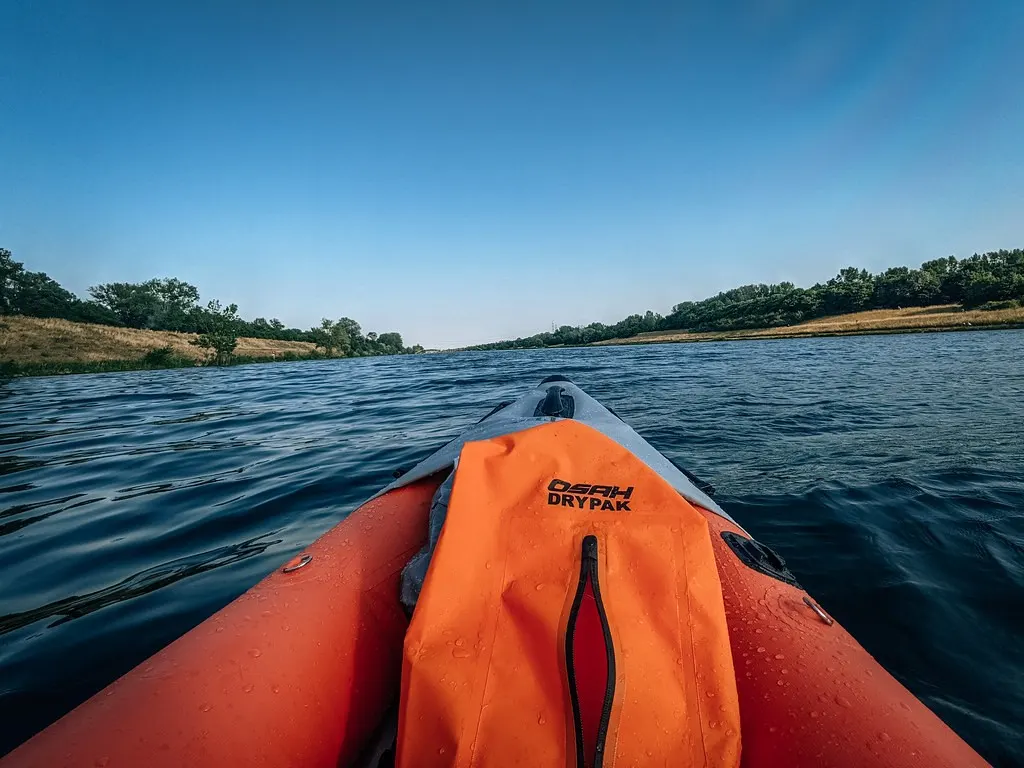
Assume everything in a kayak will get wet. Several small dry bags are easier to pack and balance than one large bag, and different colors make it easy to find things. Our dry bag guide covers sizes and roll-top closures. Hatches on most kayaks are water-resistant, not waterproof, so bag anything inside them as well. For food and drinks on longer days, see kayak coolers. On overnight trips, follow our kayak camping gear list.
Two smaller accessories make day trips easier: a deck bag for things you want within reach, and a clear case so you can use your phone without exposing it. A cockpit cover, sized to your kayak model, keeps rain, leaves and animals out while the boat is stored or on the car.
7. Seattle Sports Deluxe Deck Bag
A deck bag that straps in front of the cockpit for snacks, sunscreen and small gear. The maker lists 15.7 liters, 14.5 by 13 by 6 inches, a 500D reflective silver vinyl body with welded seams, a zippered opening under a storm flap and a clear end window. Quick-release buckle tie-downs, daisy-chain lashing and an external bungee secure it to deck rigging.
Good to Know
- Keeps small items within reach
- Reflective body is easy to spot
- Several ways to lash it down
Watch Out For
- Splash-resistant, not waterproof; bag electronics inside
- Needs deck lines or tie-down points
8. Sea to Summit TPU Accessory Case
A clear waterproof case for a phone, keys or a small GPS. Sea to Summit rates it IPX8 (to 10 meters for one hour when closed correctly) and lists three sizes: small, medium and large. A double-fold roll-top with hook-and-loop closes it, the TPU window lets you work a touchscreen through it, and a neck strap plus corner anchor points let you clip it on.
Good to Know
- Use your phone without opening it
- Three sizes for different devices
- PVC-free TPU window
Watch Out For
- The maker says it isn't designed for deliberate diving
- Measure your phone before choosing a size
Transport and Home Storage
Getting the boat to the water and storing it well matters as much as anything you use on it. Each step has its own guide:
- Car racks. Crossbars with J-cradles, saddles or stackers carry hard-shell kayaks; foam blocks work on cars without bars. Compare carriers in best kayak roof racks.
- Tie-downs and loading. Use cam straps plus bow and stern lines, and learn safe loading methods in how to transport a kayak.
- Kayak cart. A cart rolls the boat from the parking lot to the launch; choose wheel type for sand or pavement and check its weight capacity. See best kayak carts.
- Storage rack. Store kayaks on padded cradles, hull side up or on their side, out of direct sun. See kayak storage racks.
- Lock. A coated steel cable lock through a handle or scupper deters theft at the launch or on the car.
Before buying a rack or cart, check how much your kayak weighs.
Fishing Accessories
Fishing kayaks often have gear tracks and flush mounts, so rigging is mostly about choosing where things go. The big-ticket items have their own guides: kayak fish finders (and how to mount the transducer), kayak anchors and anchor trolleys, kayak trolling motors, and kayak GPS units. A fishing PFD with extra pockets is covered in our PFD guide, and kayak fishing tips covers technique and layout.
The smaller fishing pieces are rod holders, a crate in the tank well for tackle and extra rods, a landing net, a fish grip, a measuring board and leashes for rods and tools. Rod holders are where most anglers start.
9. YakAttack Omega Pro Rod Holder
A track-mounted rod holder that takes spinning and casting rods, larger conventional reels and fly rods. A multi-position mount and a 360-degree rotating collar capture the reel, and an extension holds the reel higher off the water. The LockNLoad base fixes to most kayak tracks with a single bolt. The maker lists stainless hardware, UV-resistant construction, 15.7 ounces, and manufacture in the USA.
Good to Know
- Fits most rod and reel types
- Rotates and locks at many angles
- Moves along the track as needed
Watch Out For
- Needs a gear track; check your kayak first
- Listings vary in which base is included
Accessories by Kayak Type
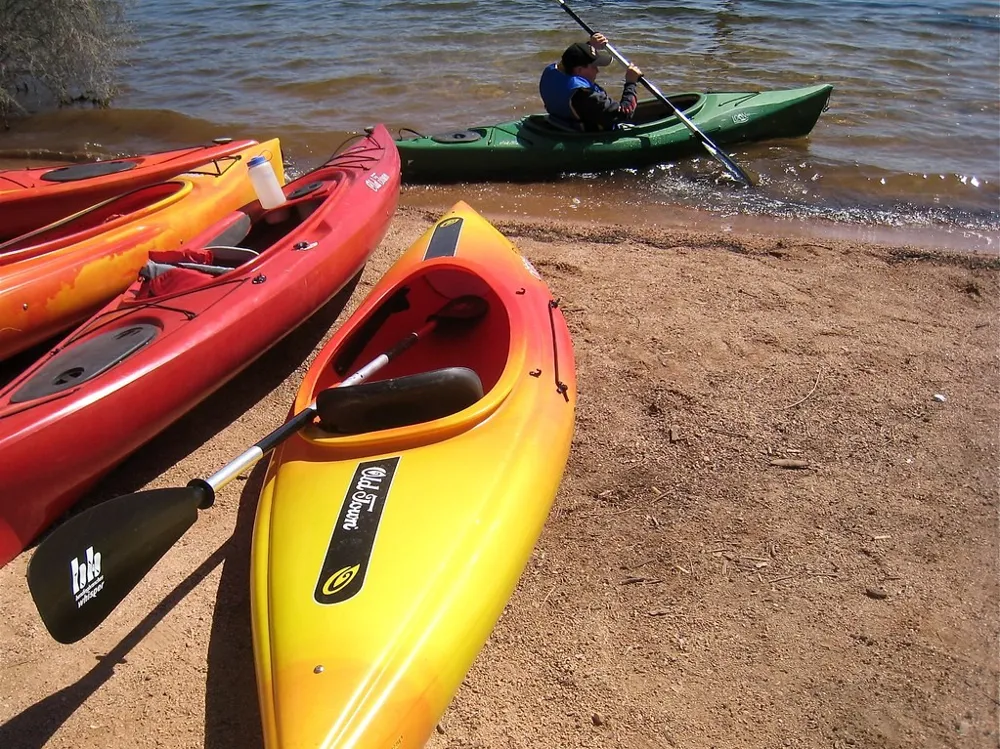
Your kayak type shifts the priorities. Not sure which you have? See types of kayaks and sit-in vs sit-on-top.
| Kayak Type | Add These to the Basics |
|---|---|
| Recreational sit-inside | Bilge pump, sponge, paddle float, spray skirt for cool or wet days, float bags in small boats |
| Recreational sit-on-top | Better seat, scupper plugs for calm days, deck bag, sun protection, cooler |
| Touring and sea kayaks | Pump, paddle float, spray skirt, paddle leash, deck compass or GPS, all-round light, tow line, VHF radio |
| Whitewater | Helmet, neoprene spray skirt, throw bag, river knife, float bags; no paddle leash |
| Fishing | Fishing PFD, rod holders, crate, anchor and trolley, fish finder, scupper plugs |
| Inflatable | Pump and gauge, patch kit, dry bags; see inflatable kayaks |
| Tandem | Two PFDs and two whistles, a spare paddle; see tandem kayaks |
Maintenance, Repair and Hull Protection
A few small items keep a kayak in good shape for years. Rinse it with fresh water after salt or muddy water, and clean, drain and dry it before moving between waterways to avoid spreading invasive species. Store it out of direct sun, because UV light fades and weakens plastic. Avoid dragging the hull over pavement and rocks; a cart prevents most of that wear, and a stick-on keel guard strip protects the bow and keel of boats that get beached often. Inflatables need a patch kit and the right adhesive for their material, and hard shells benefit from a basic kit of spare bungee, hatch gaskets and screws.
10. Seattle Sports Scupper Plugs
Plugs for the drain holes of a sit-on-top kayak, to stop water welling up into the seat area, which happens most when the boat is heavily loaded. They are made of tiered silicone that fits most scupper holes, glow in the dark, have lanyard holes so you can tether them, and come in pairs. The maker lists them at 2.75 inches tall and 1.875 inches in diameter.
Good to Know
- Drier seat on flat water
- Tiered shape fits many hole sizes
- Easy to spot if dropped
Watch Out For
- A plugged deck no longer drains itself
- Check your hole size; some kayaks need specific plugs
11. 303 Aerospace Protectant
A spray-on UV protectant for plastics, rubber, PVC, vinyl, fiberglass and gelcoat, so it suits polyethylene and composite hulls, inflatable kayaks and the latex gaskets on drysuits. NRS lists it as protecting against fading, cracking and chalking from sun exposure. Spray on and wipe dry. Do not use it on fabrics, flooring or suede.
Good to Know
- Works on hulls, inflatables and gaskets
- Spray on, wipe off
- Comes in several bottle sizes
Watch Out For
- Keep overspray off fabric seat covers and bags
- Not a replacement for shaded storage
How to Mount and Rig Accessories
Before drilling anything, look at what your kayak already has. Most offer one or more of these options:
- Deck lines and bungees. Free storage for a pump, paddle float, water bottle or deck bag. You can add pad eyes and bungee to boats that lack them.
- Gear tracks. Slotted rails that take rod holders, lights, phone mounts and transducer arms with a T-bolt. You can move or remove accessories without new holes.
- Flush and screw-on mounts. Low-profile bases that take matching accessories. They're permanent, so place them where your hands naturally rest.
- Adhesive pads. Glue-on bases for inflatable kayaks, which can't be drilled. Use the adhesive the maker specifies for PVC or Hypalon.
Keep the deck clear around the cockpit so you can re-enter after a capsize, put heavy items low and near the center to keep the boat trimmed, and check your kayak weight limit once everything is loaded.
What to Buy First: A Priority Order
- Life jacket, whistle and paddle. The legal and practical minimum for every trip.
- Dry bag and phone case. To keep your keys, phone and a spare layer dry.
- Bilge pump, sponge and paddle float for sit-inside kayaks, and practice using them.
- Light. As soon as you might paddle near sunrise, sunset or in fog.
- Transport. A rack or foam blocks and straps, then a cart if the launch is a walk from the car.
- Comfort. A better seat, paddling gloves and the right clothing for the water temperature.
- Extras for your style. Fishing rigging, a spray skirt, a deck bag, navigation gear or camping kit.
Still choosing a boat? Start with the best kayaks for beginners, then come back to this checklist. More guides are on our kayaking hub, and paddle boarders can use the paddle board accessories checklist.
Frequently Asked Questions
What accessories do I need for kayaking?
At minimum: a paddle, a Coast Guard approved life jacket you actually wear, a whistle, a dry bag for your phone and keys, and a light if you could be out near dark. Sit-inside kayaks should add a bilge pump and paddle float. Comfort, transport and fishing gear can come later.
What safety equipment is required on a kayak in the US?
Federal rules call for a wearable Coast Guard approved life jacket for each person, a sound-producing device such as a whistle, and a white light (a flashlight or lantern) between sunset and sunrise or in poor visibility. Night signals are also required on coastal waters after dark. States add their own rules, so check your state boating agency. This is not legal advice.
Do I need a bilge pump on a sit-on-top kayak?
Usually not, because sit-on-tops drain through scupper holes. A bilge pump matters most on sit-inside kayaks, which can take on a lot of water after a capsize or in waves. A sponge is still handy for either type.
What is a paddle float used for?
A paddle float slips over one blade and inflates, turning the paddle into an outrigger that steadies the kayak while you climb back in from deep water. It only helps if you practice the re-entry in calm, shallow water first.
Should I use a paddle leash?
A leash keeps your paddle attached to the kayak if you drop it, capsize or stop to fish, which is useful on lakes, the sea and in wind. Do not use one in whitewater, where it can become an entanglement hazard.
Do I need a light to kayak at night?
Yes. US rules require paddlers to have a white light, such as a flashlight or lantern, ready to show in time to prevent a collision between sunset and sunrise and in restricted visibility. Many paddlers use an all-round mast light so they are visible from every direction.
Should I use scupper plugs?
Plugs stop water from welling up through the scupper holes of a sit-on-top, which helps most when the kayak is heavily loaded or you want a drier seat. With the holes plugged the deck can no longer drain itself, so sponge out any water that comes over the side.