Kayak Fishing Tips Every Beginner Should Know (2026)
Kayak fishing gets you to quiet water that boats can't reach. Here's how to set up your kayak, fish efficiently and stay safe.
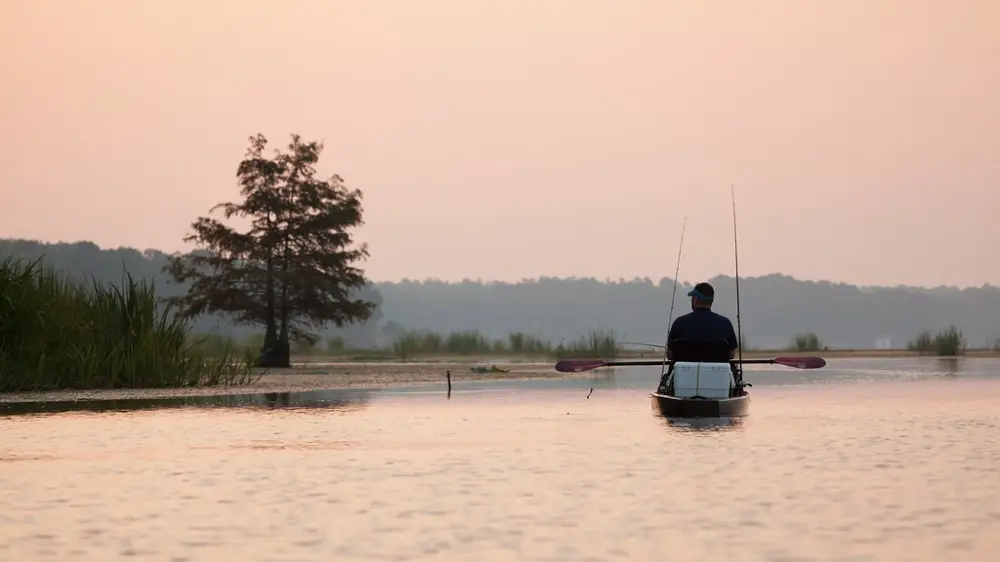
Why Fish From a Kayak?
Kayaks are quiet, affordable and can reach shallow coves, creeks and weed lines that boats can't. The trade-off is limited space and stability, so setup and safety matter.
Top Tips at a Glance
| Tip | Why |
|---|---|
| Choose a stable sit-on-top | Easier casting and landing fish |
| Rig simply | Less clutter, fewer tangles |
| Leash your paddle and gear | Nothing lost overboard |
| Use a crate behind your seat | Organized tackle and rods |
| Learn to anchor safely | Hold position without tipping |
| Wear a PFD always | Your most important gear |
1. Choose the Right Kayak
Wide sit-on-tops are stable and roomy; pedal kayaks keep your hands free for fishing. See fishing kayaks and pedal kayaks.
Perception Pescador Pro 12
A popular 12-foot fishing sit-on-top with an adjustable lawn-chair-style seat and large storage.
Check Price on Amazon2. Rig It Simply
- Rod holders within reach behind and beside the seat.
- A crate for tackle boxes and extra rods.
- A fish finder if you want depth and structure info; see kayak fish finders.
- Keep the cockpit clear for paddling and landing fish.
Dress to Swim, Rig to Flip
Two long-standing kayak fishing rules: dress for the water temperature, not the air, because you might end up in it, and rig as if you'll capsize. Leash rods and paddles, clip down crates, and keep phones and keys in dry bags. Skip cotton, which gets heavy and cold when wet.
3. Fish Efficiently
- Paddle quietly; fish spook easily in shallow water.
- Drift with wind or current and cast ahead.
- Use shorter rods for easier handling in a kayak.
- Bring fish alongside, not over your lap; a net helps.
- Keep pliers and a towel handy.
Launching and Landing
- Boat ramps and gentle beaches make the easiest launches.
- Avoid dragging the hull over concrete or rocks; use a kayak cart.
- Get in with the kayak afloat, sit down first, then swing your legs in.
- Keep your head over the kayak's centerline when shifting your weight.
Landing a Fish
- Point the bow toward a big fish so it tows you rather than pulling you sideways.
- Reel until you have about a rod length of line out.
- Hold the rod in one hand and lip, net or grip the fish with the other.
- Unhook it beside the kayak where possible.
Keep Tackle Simple
| Season | Common Bass Choices |
|---|---|
| Warm water | Topwaters, soft plastics, worms, frogs |
| Cold water | Jigs, crankbaits, jerkbaits |
| Year-round | Bladed jigs, Texas-rigged plastics |
One or two rods and a small box of proven baits beat a cluttered deck. In wind, a drift sock slows your drift so you can work a spot longer.
4. Anchor Safely
Use an anchor trolley so the anchor line runs from the bow or stern, not the side, which can tip you. Avoid anchoring in strong current, and keep a knife handy to cut the line in an emergency.
5. Stay Safe
- Always wear a PFD; fishing vests fit high-back seats.
- Check weather, wind and tides.
- Stay visible with bright colors and a flag.
- Dress for the water temperature.
- Tell someone your plan.
6. Know the Rules
- Buy a fishing license for the state or waters you're fishing and check size and bag limits.
- US Coast Guard rules require a wearable life jacket for each person and a sound-producing device such as a whistle, plus a light if you're out between sunset and sunrise. Some states add their own rules.
- Leave a float plan: where you're launching, where you're going and when you'll be back.
- On big or coastal waters, a handheld VHF radio is a good idea.
Stohlquist Fisherman PFD
A fishing PFD with graded sizing and a higher mesh back that clears tall kayak seat backs.
Check Price on AmazonBending Branches Angler Classic
A kayak fishing paddle with a fiberglass shaft and snap-button two-piece design.
Check Price on AmazonGetting there: see kayak transport and kayak carts. Prefer standing? Try a fishing paddle board.
Frequently Asked Questions
What kind of kayak is best for fishing?
Wide, stable sit-on-top kayaks with rod holders and storage are most popular. Pedal kayaks free your hands.
Do I need a PFD for kayak fishing?
Yes. Wear a PFD; fishing-specific vests have high backs that fit kayak seats and pockets for gear.
Can you stand up in a fishing kayak?
Some wide fishing kayaks are designed for standing. Practice in calm, shallow water first.
How do I anchor a fishing kayak?
Use a small anchor with an anchor trolley so you can position the anchor line at the bow or stern. Never anchor from the side, and avoid anchoring in current.
What should I bring kayak fishing?
PFD, whistle, paddle leash, rods in holders, tackle crate, pliers, net, water, sun protection and a phone in a dry bag.
Do I need a fishing license to fish from a kayak?
Yes. The same fishing license rules apply whether you fish from shore, a boat or a kayak.
Is kayak fishing safe for beginners?
It can be, if you start on calm water, wear a PFD, dress for the water temperature and leash your gear.