Kayak Paddle Length Guide: Find Your Size by Height and Boat Width (2026)
Use your height and your kayak's width to pick the right paddle length, then fine-tune for paddling style and blade shape.
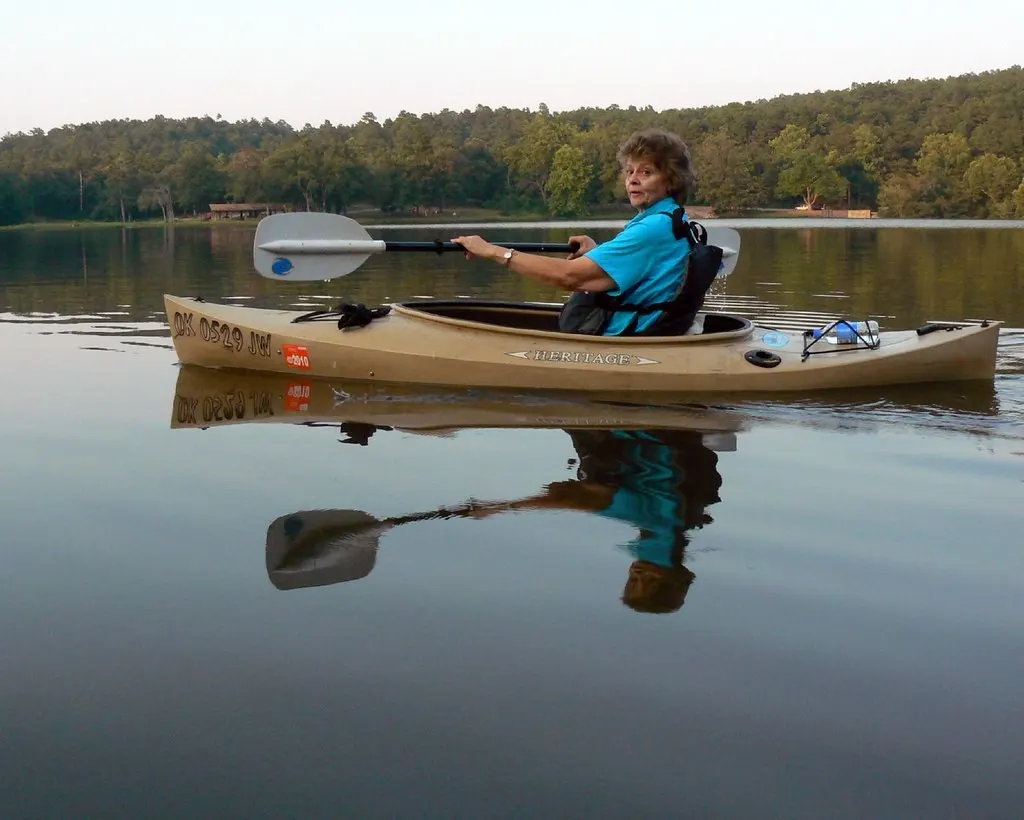
How Kayak Paddle Sizing Works
The right paddle length depends mostly on two things: your kayak's width and your height (more precisely, torso length). Wider boats need longer paddles to reach the water comfortably. Your paddling style matters too: relaxed low-angle paddlers use longer paddles, while high-angle paddlers use shorter ones. Paddles are measured in centimeters, and most recreational paddlers land between 220 and 240cm.
Kayak Paddle Length Chart (Low-Angle)
| Paddler Height | Kayak Under 23" | 23"–28" | 28"–32" | Over 32" |
|---|---|---|---|---|
| Under 5' | 210cm | 220cm | 230cm | 240cm |
| 5'–5'6" | 215cm | 220cm | 230cm | 240cm |
| 5'6"–6' | 220cm | 220cm | 230cm | 250cm |
| Over 6' | 220cm | 230cm | 240cm | 250cm |
This chart reflects a widely used low-angle sizing chart from paddle maker Werner. Brands vary slightly, so check the maker's guide. If you're between sizes, choose the shorter paddle unless you have a short torso for your height.
Find Your Kayak's Width
Check the maker's spec sheet, or measure the widest part of the hull. Typical ranges:
| Kayak Type | Typical Width |
|---|---|
| Sea / touring | About 21"–24" |
| Recreational | About 26"–30" |
| Fishing / sit-on-top | About 30"–36" |
Low-Angle vs High-Angle Paddling
| Low-Angle | High-Angle | |
|---|---|---|
| Shaft angle | Flatter, top hand below shoulder | More vertical |
| Paddle length | Longer | Shorter |
| Blade shape | Long and narrow | Short and wide |
| Feel | Relaxed, efficient for touring | Powerful, faster, more tiring |
The chart above is for low-angle paddling. High-angle paddlers typically choose about 5 to 10cm shorter.
Paddles for Fishing and Wide Kayaks
Wide fishing kayaks and high seats need longer paddles, often 240 to 260cm, so you can reach the water without leaning.
Blade and Shaft Materials
| Material | Pros | Cons |
|---|---|---|
| Plastic / nylon blades | Affordable | Heavier, flexes, degrades in sun |
| Fiberglass blades | Good balance of weight and price | Can chip |
| Carbon blades | Lightest and stiffest | Most expensive |
| Aluminum shaft | Durable, low cost | Cold or hot to hold |
| Fiberglass or carbon shaft | Light and warm to hold | Costs more |
A lighter paddle makes a big difference over thousands of strokes.
Feathering
Feathered paddles have blades offset at an angle so the blade in the air slices through wind. Unfeathered (matched) blades are simpler to learn. Most modern paddles let you adjust the angle, often in 15-degree steps.
Quick Fit Check
- Sit in your kayak holding the paddle with hands a bit wider than shoulder-width.
- Take a stroke; the blade should fully submerge without you leaning far.
- Your knuckles shouldn't hit the boat.
Ready to buy? See kayak paddles. New to kayaking? Start with kayaks for beginners and types of kayaks.
Frequently Asked Questions
How do I know what size kayak paddle I need?
Use your height and your kayak's width. Wider kayaks and taller paddlers need longer paddles. Most recreational paddlers use about 220 to 240cm.
What happens if my kayak paddle is too long?
A paddle that's too long is heavier to swing, can make the kayak turn with each stroke and tires you faster.
What happens if my paddle is too short?
You may bang your knuckles or the boat's sides, and have to lean to reach the water.
What's the difference between low-angle and high-angle paddling?
Low-angle paddling keeps your top hand below shoulder height for relaxed touring with longer paddles. High-angle paddling is more vertical and powerful, using shorter paddles with wider blades.
Should my paddle be feathered?
Feathering offsets the blades to reduce wind resistance on the blade in the air. Many paddlers use a small angle or none. Adjustable ferrules let you experiment.