Paddle Boards With Seats: Sit Down and Paddle Longer (2026)
SUP-kayak hybrid boards, add-on paddle board seats and convertible paddles, with how to fit a seat, how to paddle sitting down and who a seated SUP suits.
Why Put a Seat on a Paddle Board?
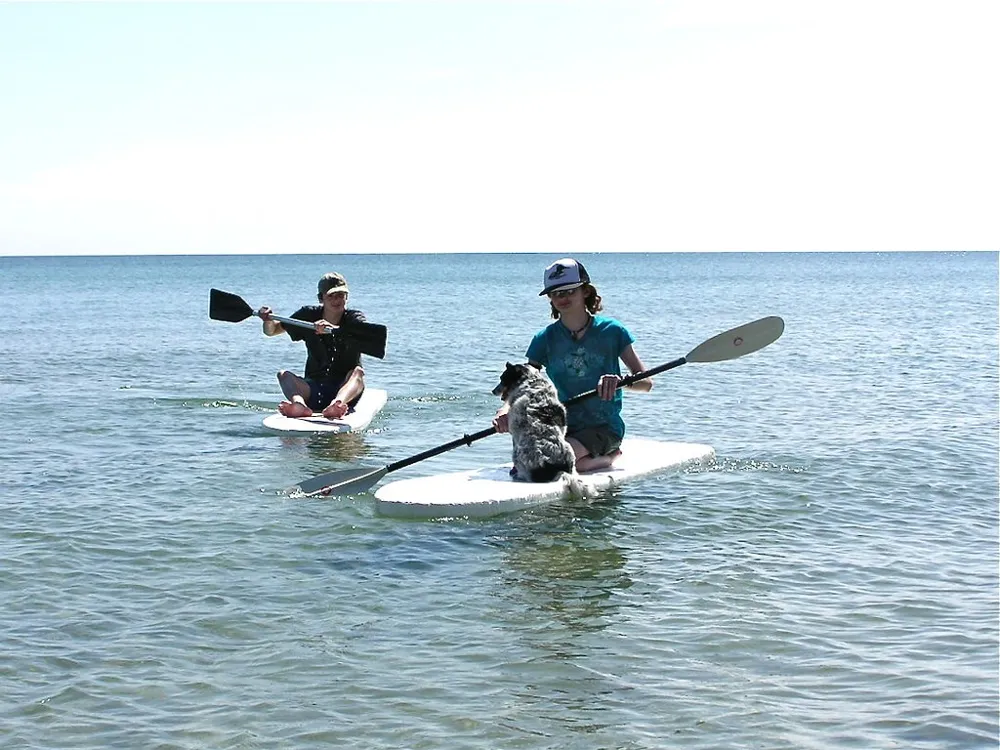
A paddle board with a seat lets you stand when you want and sit when your legs, back or balance need a break. Clip in a seat, swap to a double-bladed paddle and your SUP behaves like a sit-on-top kayak. Sitting lowers your center of gravity, so the board feels steadier in wind and chop. It also makes fishing, long tours and paddling with a child or dog easier.
There are two ways to get there. You can buy a SUP-kayak hybrid, which ships with a seat, a footrest or brace and a convertible paddle. Or you can add a paddle board seat to a board you already own, as long as it has the right D-rings. We cover both below, plus how to fit a seat and how to paddle sitting down. Still choosing between the two craft? See kayak vs paddle board.
ISLE Switch Compact
Best compact SUP-kayak hybrid
- 10'6" x 34", center-fold hinge
- Cloud kayak seat and foot brace
- Carbon SUP-kayak paddle included
BOTE LowRider Aero 10'6"
Best for stability
- 36" wide, 300 lb max rider weight
- Removable inflatable paddle seat
- 4-piece SUP+kayak hybrid paddle
Thurso Surf Inflatable SUP Kayak Seat
Best add-on seat for your board
- 4" inflatable base cushion
- Fits SUPs with 4 or more D-rings
- Mesh rear storage pocket
Paddle Boards With Seats Compared
| Product | Type | Size or Fit | Seat | Kayak Paddle |
|---|---|---|---|---|
| ISLE Switch Compact | Inflatable hybrid | 10'6" x 34"; 220 lb capacity | Cloud kayak seat + foot brace | Yes, carbon SUP-kayak paddle |
| BOTE LowRider Aero 10'6" | Inflatable hybrid | 10'6" x 36" x 6"; 300 lb max | Removable inflatable Aero seat | Yes, 4-piece hybrid paddle |
| Wavestorm 9'6" SUP-Yak | Soft-top foam hybrid | 9'6"; EPS foam core | Built-in seat, adjustable footrests | Yes, swap-in kayak blade |
| Retrospec Weekender Plus 2 | Inflatable hybrid | 10'6" x 33" x 6"; 300 lb max | AerComfort inflatable seat + footrest | Yes, extra blade included |
| Thurso Surf SUP Kayak Seat | Add-on seat | SUPs with 4+ D-rings | Inflatable, 4" base | Not included |
| Leader Accessories Kayak Seat | Add-on seat | Boards with 4 attachment points | EVA foam, high padded back | Not included |
| BOTE Aero SUP Seat | Add-on seat (BOTE) | BOTE boards with Travelink or KULA tie-downs | Inflatable, reclining straps | Not included |
The Best Paddle Boards With Seats
These hybrids come with a seat in the box. Check the included paddle: a true kayak conversion needs a second blade, not just a seat.
1. ISLE Switch Compact
A folding version of ISLE's Switch hybrid. The listing gives 10'6" x 34", 320 liters, a listed weight of 34 lb and a 220 lb capacity. A full-length center-fold hinge lets it pack to about 25 x 20 x 15 inches, which ISLE says is around 40% smaller than the standard Switch. The package includes a Cloud kayak seat and foot brace, a Remix Compact Carbon SUP-kayak paddle, a backpack, a hand pump, a fin and a leash. The ISLE-LINK track runs the length of the board for the seat and accessories, and there are 6-point front and 4-point rear bungees.
Good to Know
- Packs small for car trunks and closets
- Seat, brace and convertible paddle included
- Valve rated to 17 PSI
Watch Out For
- 220 lb capacity is lower than most all-around boards
- Seat clips to ISLE-LINK, not a ring of D-rings
2. BOTE LowRider Aero 10'6"
BOTE's sit-or-stand inflatable is 10'6" x 36" x 6", the widest board here, with a 300 lb maximum rider weight. BOTE suggests a bigger board if you're within 50 lb of that limit. The board weighs about 30 lb and the removable inflatable Aero paddle seat about 5.6 lb. The board takes 10–15 PSI and the seat 7–10 PSI. You also get a 4-piece carbon/fiberglass SUP+kayak hybrid paddle, slide-in rac receivers, a 10" click-in center fin, MAGNEPod magnetic points and tie-downs for a BOTE KULA cooler, plus a pump, a repair kit and a rolling bag.
Good to Know
- 36" width for a steady seated or standing platform
- Rac receivers for adding gear racks
- Hybrid paddle included
Watch Out For
- Loaded travel bag is about 42 lb
- No footrest in the box
3. Wavestorm 9'6" SUP-Yak
A hard soft-top foam hybrid with an EPS foam core and three stringers, a textured deck and a slick bottom skin. The kayak hardware is built in: a flip-up seat and adjustable footrests that fold away when you stand. The paddle ships with a SUP handle and a separate kayak blade you swap in for sitting. Bungees at the front and back hold a bag or the paddle.
Good to Know
- Nothing to inflate
- Seat and footrests built into the deck
- Forgiving foam top
Watch Out For
- Needs storage space and a roof rack
- Heavier than an inflatable of similar size
4. Retrospec Weekender Plus 2
An inflatable hybrid at 10'6" x 33" x 6", listed at 23 lb with fins and a 300 lb recommended maximum (12–15 PSI). It includes an inflatable drop-stitch AerComfort kayak seat, a removable footrest and a 3-piece adjustable paddle with an extra blade for kayaking. The board has 11 D-rings, 6 EasyLink connection points, front and rear bungee nets and an action-camera mount. It's sold through Retrospec and outdoor retailers.
Good to Know
- Light for a hybrid package
- Plenty of D-rings for a seat and gear
- Three removable fins
Watch Out For
- Paddle shaft material isn't listed
- Check that you're buying the Plus (with seat), not the standard Weekender
The Best Paddle Board Seats
Already own a board? These seats and paddles turn it into a sit-down craft.
5. Thurso Surf Inflatable SUP Kayak Seat
An inflatable seat with a 4-inch base cushion in TPU and a backrest with rigid bars inside. It fits any SUP with at least four D-rings, using adjustable straps with clips. A mesh rear pocket holds a water bottle or snacks, the seat pad detaches with hook-and-loop, and the seat folds in half to pack. Thurso lists it at about 3.3 lb.
Good to Know
- Thick inflatable base lifts you off a wet deck
- Works with most D-ring boards
- Packs small
Watch Out For
- Raised seat is a little less stable than sitting on the deck
6. Leader Accessories Kayak Seat
A universal clip-in seat in molded EVA foam with a 210D polyester cover and a high, padded back. Two front and two rear adjustable straps with hooks fix it to kayaks, canoes and paddle boards. It's a simple, low-profile option that keeps you close to the deck. More kayak seat options are in our kayak seat guide.
Good to Know
- Low seat height
- Also works on sit-on-top kayaks
Watch Out For
- Foam pad gets wet on a splashy deck
7. BOTE Aero SUP Seat
An inflatable AeroULTRA seat for BOTE boards. It measures about 24.8 x 18 x 9.1 inches and weighs about 7 lb. Included tie-down straps attach it to Travelink attachment points or KULA cooler tie-down points, and reclining straps set the backrest angle.
Good to Know
- Made for compatible BOTE boards
- Adjustable recline
Watch Out For
- Not a universal D-ring seat
- Heavier than foam clip-in seats
8. BOTE 4-Piece Hybrid Paddle
If your board came with a SUP-only paddle, a convertible paddle completes the setup. This one works as a 67.75"–78.75" SUP paddle or converts to a 96-inch kayak paddle with its second blade. It has a fiberglass/carbon blend shaft and packs into four pieces. See more in our SUP paddle guide.
Good to Know
- SUP and kayak modes in one paddle
- Packs small
Watch Out For
- Heavier than a one-piece carbon paddle
Who a Seated SUP Suits

- Anglers: a seat lets you rest between casts, troll and sit low in wind. Look for a wide board with rigging points, like the boards in our fishing paddle board guide.
- Long tours: switching between standing and sitting uses different muscles, so you can stay out longer. A kayak paddle also covers distance faster than a SUP paddle when you're sitting.
- Older paddlers and anyone working on balance: starting seated takes the pressure off. You can learn the board, then stand when you feel ready.
- Sore knees or back: a seat with back support avoids long spells of kneeling. If you have an injury or condition, check with a doctor or physical therapist first.
- Kids and dogs: an adult can sit with a small child or a dog on a wide, high-capacity board. A lower center of gravity helps when a passenger moves. See kids' paddle boards and paddle boarding with a dog.
- Beginners: a seat is a confidence builder, though standing is still the core skill. Our beginner paddle boards guide covers stable first boards.
Hybrid Board or Add-On Seat?
A SUP-kayak hybrid is designed around the seat. The seat and footrest or brace sit where the board is set up for them, and the package includes a convertible paddle. Some hybrids, like the LowRider, are also wider than a typical all-around board. Buy one if you expect to sit for a large share of your time on the water.
An add-on seat is the cheaper route if you already own a board with D-rings. You lose the dedicated footrest on most boards, and you'll need a kayak paddle or a convertible SUP paddle to paddle well seated. It suits paddlers who mainly stand and want a seat for rests, fishing or a passenger.
| Factor | SUP-Kayak Hybrid | Add-On Seat |
|---|---|---|
| What you get | Board, seat, brace or footrest, convertible paddle | Seat only |
| Fit | Designed for that board | Depends on your D-ring layout |
| Foot support | Usually included | Rarely included |
| Best for | Paddlers who sit often | Paddlers who mostly stand |
Types of Paddle Board Seats
- Clip-in padded seats: foam seats with a fabric cover and four strap-and-hook points, like most universal kayak seats. They're light, low and simple, but the foam can soak up water.
- Inflatable seats: made from PVC, TPU or drop-stitch, they inflate to a thick cushion that keeps you off a wet deck. Some take a standard SUP pump valve.
- High-back seats: taller backrests, sometimes with rigid stays, give more lumbar support on long days. Some add a rear storage pocket.
- Frame seats: raised seats on a metal or plastic frame, common on fishing kayaks and some fishing SUPs. They're airy and comfortable but raise your center of gravity, so they suit wide, high-capacity boards.
- Brand-specific seats: seats like BOTE's Aero or Retrospec's AerComfort use the maker's own attachment system and may only fit that brand's boards.
- Improvised seats: some paddlers strap a hard cooler or a camp chair to the deck. If you do, strap it down at every point and keep it low and centered.
D-Rings and Seat Compatibility

Most universal seats need four attachment points: two behind the seat for the backrest straps and two in front for the base straps. On many boards these are D-rings around the center handle or in front of the rear bungee. Before you buy:
- Count and map your D-rings. You want two points behind and two in front of the spot where you'll sit, roughly at the center carry handle.
- Check the spacing. Rear points too far back let the backrest flop; front points too close leave the seat loose.
- Check the system. ISLE-LINK tracks, BOTE tie-downs and Retrospec EasyLink points may need the brand's own seat or adapters.
- Don't glue on new D-rings yourself unless the maker approves a patch kit for your board, since a bad bond can fail or damage the board skin.
Some seat reviews note that a firmly tensioned seat pulls hard on the rings. Snug the straps so the backrest stands upright without cranking them tight.
Kayak Paddles and Convertible Paddles
You can sit and use a SUP paddle by gripping lower on the shaft, but it's slow and awkward. A double-bladed kayak paddle is far more efficient when seated. Most hybrids include a convertible paddle: a SUP paddle with a second blade (or a swap-in T-handle and blade) that turns it into a kayak paddle. Paddle boards are wider than most kayaks, so you'll usually need a longer kayak paddle to reach the water without bashing the rails. Our kayak paddle length guide covers sizing by boat width.
Stability, Width and Seat Height
Sitting makes any board more stable, but the board still matters:
- Width: around 33 to 36 inches is typical for hybrids here. Wider boards feel steadier but are slower.
- Capacity: add your weight, a passenger and gear, and stay well under the listed limit. Our paddle board size chart shows how size relates to rider weight.
- Seat height: a low seat is the most stable. Thick inflatable and frame seats are comfier and easier to stand up from, but they lift your center of gravity.
- Inflatable or hard: inflatables pack small and are soft to sit on; foam and hard hybrids are ready to go. Compare them in inflatable vs hard paddle boards and our best inflatable paddle boards.
How to Sit and Paddle a SUP
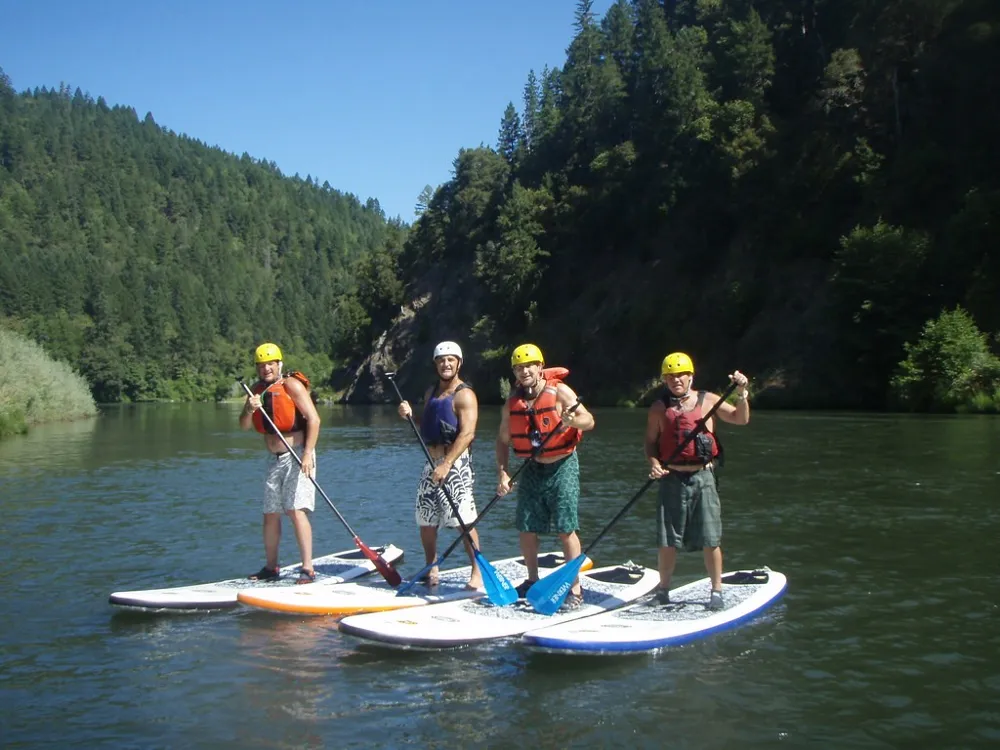
- Fit the seat on land. Center it at the carry handle, clip the rear straps behind it and the front straps ahead, then tension them evenly so the backrest is upright.
- Set the footrest or brace so your knees are slightly bent. You should push gently with your feet as you stroke.
- Launch in knee-deep water. Kneel behind the seat, then swing your legs forward and sit. Keep your weight low and centered.
- Paddle with your torso. Rotate from the core and dip each blade near your feet, as in a kayak. Arms alone tire quickly.
- Steer with sweep strokes. A wide arc on one side turns the board the other way. The single fin helps it track.
- Stand up from the seat by moving to your knees first, unclipping or sliding the seat back if needed, then standing as usual. Our beginner's guide covers the stand-up step.
Safety and USCG Rules
In the US, the Coast Guard treats paddle boards used outside swimming, surfing or bathing areas as vessels, whether you stand or sit. Florida's FWC, for example, lists these requirements:
- A USCG-approved wearable life jacket for each person on board. Child-wear rules vary by state (Florida requires children under 6 to wear one).
- A sound-producing device, such as a whistle.
- A white light (lantern or flashlight) between sunset and sunrise or in restricted visibility.
Wear a leash so the board can't blow away from you, and don't clip it to the seat. On cold water, dress for immersion, not the air temperature. A seated paddler catches less wind than a standing one, but an offshore breeze can still push you out, so start upwind. Rules vary by state and waterway (last checked November 2026). This isn't legal advice, so check your state boating agency before you go.
Care for Seats and Clips
Rinse the seat, straps and metal clips with fresh water after each trip, especially after salt water, which can corrode clips. Let foam seats dry fully before storing them to avoid mildew. Store inflatable seats partly deflated, out of direct sun, and pack the seat separately so the clips don't scuff the board. Check strap stitching and clip springs at the start of each season, and replace worn clips before they let go on the water.
Frequently Asked Questions
Can you put a seat on any paddle board?
Most clip-in seats need four D-rings or tie-down points in roughly the right places around the middle of the deck. Count your board's attachment points before you buy, and check whether a brand-specific seat uses its own system, such as BOTE's tie-down points or Retrospec's EasyLink.
Is a paddle board with a seat as good as a kayak?
For calm water, short trips and switching between standing and sitting, a hybrid works well. A purpose-built kayak usually tracks straighter, sits you in a more supported position and handles wind and longer distances better.
What paddle do I use sitting on a paddle board?
A double-bladed kayak paddle is the most efficient choice. Many hybrid packages include a convertible paddle that takes a second blade, and a wide board usually needs a longer kayak paddle than a narrow kayak.
Is sitting on a paddle board more stable than standing?
Yes. Sitting lowers your center of gravity, which makes the board feel steadier in wind and chop. A raised seat gives some of that back, so the lowest seat that's comfortable is the most stable.
How many D-rings do I need for a paddle board seat?
Most universal seats use four straps, so you need four attachment points: two behind the seat and two in front of it. Some seats add extra straps for a firmer fit.
Do I need a life jacket on a paddle board with a seat?
In the US, yes when you're outside swimming, surfing or bathing areas, because the Coast Guard treats the board as a vessel. Sitting doesn't change that. State rules on children and lights vary, so check yours.
Can two people sit on one paddle board?
Some boards are sold as tandem hybrids with two seats and extra capacity. Never exceed the board's listed weight limit, and add up both riders plus gear.