How to Put a Trolling Motor on a Canoe (2026)
Square sterns and side-mount brackets, how much thrust and shaft length a canoe needs, lead-acid vs lithium batteries, and the rules that change once your canoe has a motor.

Can You Put a Trolling Motor on a Canoe?
Yes. A small electric trolling motor turns a canoe into a quiet, low-effort fishing and touring boat, and it's one of the most common upgrades for anglers and hunters who paddle. The motor clamps either to a flat square stern (also called a transom) or to a side-mount bracket that clamps across the gunwales of a regular double-ended canoe. You power it with a 12V deep-cycle battery, steer with a tiller handle, and still carry paddles for the shallows and for getting home if the battery runs flat.
Getting it right comes down to five choices: the mount, the motor's thrust, its shaft length, the battery, and the rules that apply once your canoe has a motor. In many states, a canoe with any motor, electric included, has to be registered. This guide walks through each step. If you're still shopping for the boat itself, start with how to choose a canoe, where square-stern models are one of the hull types, or our best canoes list.
What You Need
| Item | Why You Need It | Notes |
|---|---|---|
| Motor mount or bracket | Gives the motor a solid, flat clamping surface | Not needed on a square-stern canoe with a built-in transom |
| Transom-mount electric trolling motor | Pushes and steers the canoe | 12V, hand-steer tiller, around 30 to 55 lb of thrust |
| 12V deep-cycle battery | Powers the motor | Lead-acid, AGM or lithium (LiFePO4); not a cranking battery |
| Battery box and strap | Holds the battery in place and covers the terminals | Keeps acid and sparks away from wet feet and fishing gear |
| Circuit breaker or fuse | Protects the wiring if something shorts | Size it to the motor maker's instructions |
| Charger | Recharges between trips | Match the charger to the battery chemistry |
| Safety line | Tethers the motor to the canoe | So a loose clamp doesn't send the motor to the bottom |
| Paddles and life jackets | Backup power and the legal minimum | See canoe paddles and life jackets |
Three examples show what a typical canoe setup looks like. These are reference points rather than a ranked list; for complete motor roundups see our kayak trolling motor guide, which covers many of the same motors.
Old Town Standard Motor Mount
A side-mount bracket made by the canoe maker Old Town. Old Town describes it as a heavy-duty aluminum bracket that hand-tightens onto the gunwales with no tools, holds gas or electric motors up to 3 HP, and fits any Old Town canoe. Old Town's similar Sidesaddle mount, a cast-aluminum clamp with a hardwood block that could be set up for right- or left-hand use, was listed as discontinued when we checked (November 2026). Check the fit with your canoe's gunwales before buying any third-party bracket.
Good to Know
- No drilling or tools to fit
- Rated for small gas or electric motors
- Made by a canoe maker for its own hulls
Watch Out For
- Fit notes are written for Old Town canoes
- Sold through Old Town and dealers; check availability
- Clamps need rechecking during the day
Minn Kota Endura 30 (30-Inch Shaft)
A small, hand-steer, transom-mount trolling motor that's a common match for canoes. Minn Kota lists 30 lb of maximum thrust on 12 volts, a 30-inch shaft, five forward and three reverse speeds, a six-inch telescoping tiller, a push-to-test battery meter, a composite shaft that Minn Kota guarantees for life, a 10-position lever-lock bracket and a two-year warranty. It is listed for freshwater use.
Good to Know
- Lightweight class of motor for a canoe
- Battery meter on the head
- Several speeds forward and reverse
Watch Out For
- Freshwater only
- 30 lb of thrust is the low end for wind and current
- 30-inch shaft only; measure your mount height
LiTime 12V 50Ah LiFePO4 Battery
A lithium iron phosphate battery sized for small trolling motors. LiTime lists 640 Wh of energy, a weight of 11.57 lb, a 50A continuous battery management system (BMS), an IP65 housing and 4,000 cycles at 100% depth of discharge. It stops accepting charge below 32°F (0°C) to protect the cells. At that weight it is much easier to carry down to the water than a lead-acid deep-cycle battery.
Good to Know
- Light enough to carry with one hand
- Long rated cycle life
- Built-in BMS protection
Watch Out For
- Half the capacity of a 100Ah battery
- Check your motor's maximum amp draw against the 50A BMS
- Needs a lithium-compatible charger
Square-Stern Canoes vs Side-Mount Brackets
The biggest decision is where the motor attaches. A canoe either has a flat back built for a motor or it needs a bracket.
| Factor | Square-Stern Canoe | Side-Mount Bracket | Bow Mount |
|---|---|---|---|
| How it attaches | Motor clamps straight onto the built-in transom | Crossbar clamps across the gunwales near the stern seat; motor clamps to a wooden block on one side | Bracket at the front; often a foot-controlled motor |
| Steering | Tiller behind you, like a small boat | Tiller beside you; the offset pushes the canoe slightly off line | Pulls from the front, which tracks well but needs a longer shaft |
| Paddling | Squared stern paddles less efficiently than a pointed one | Normal canoe; remove the bracket to paddle unloaded | Clutters the bow paddler's space |
| Motor size | Check the canoe maker's horsepower rating | Check the bracket's rating (Old Town's: up to 3 HP) | Usually electric only |
| Best for | Anglers and hunters who motor most trips | Paddlers who want a motor sometimes | Experienced anglers with a fishing-rigged canoe |
Square-Stern Canoes
A square-stern (or square-back, sport) canoe has a pointed bow and a flat transom at the back, so you clamp a transom-mount motor directly to it like a small jon boat. The motor sits on the centerline, steering is straightforward and there's nothing to bolt on. The trade-off is paddling: a flat stern drags more and doesn't track as cleanly as a pointed one, so these boats suit people who will run a motor most of the time. Our parts of a canoe guide shows where the transom sits in relation to the stern seat and thwarts.
Side-Mount Brackets
On a regular double-ended canoe, a side mount is the usual answer. A crossbar, usually aluminum, clamps or bolts across both gunwales just behind the stern seat, and a hardwood block on one end gives the motor's clamp a flat surface outside the hull. You sit on the stern seat and steer the tiller beside you. Most brackets come off when you don't need them, which keeps the canoe light for portages and car-topping.
Check three things before you buy a bracket: that it fits your gunwale shape (some brackets don't fit wood-trimmed gunwales), that it fits your canoe's width at the mounting point, and its rated motor size. Fixed-length crossbars need a canoe of matching width.
Bow Mounts and DIY Crossbars
Bow mounts pull the canoe from the front and suit foot-controlled fishing motors, but they need more shaft length and take the bow paddler's room, so they're less common on canoes. Many paddlers also build a crossbar from hardwood lumber bolted across the gunwales behind the stern seat, with a block on one side for the motor. A homemade mount works if it's stiff, sits square to the water and is bolted through solid gunwales; avoid drilling a composite hull or Royalex-style gunwales without the canoe maker's advice.
Electric Trolling Motor or Small Gas Outboard?
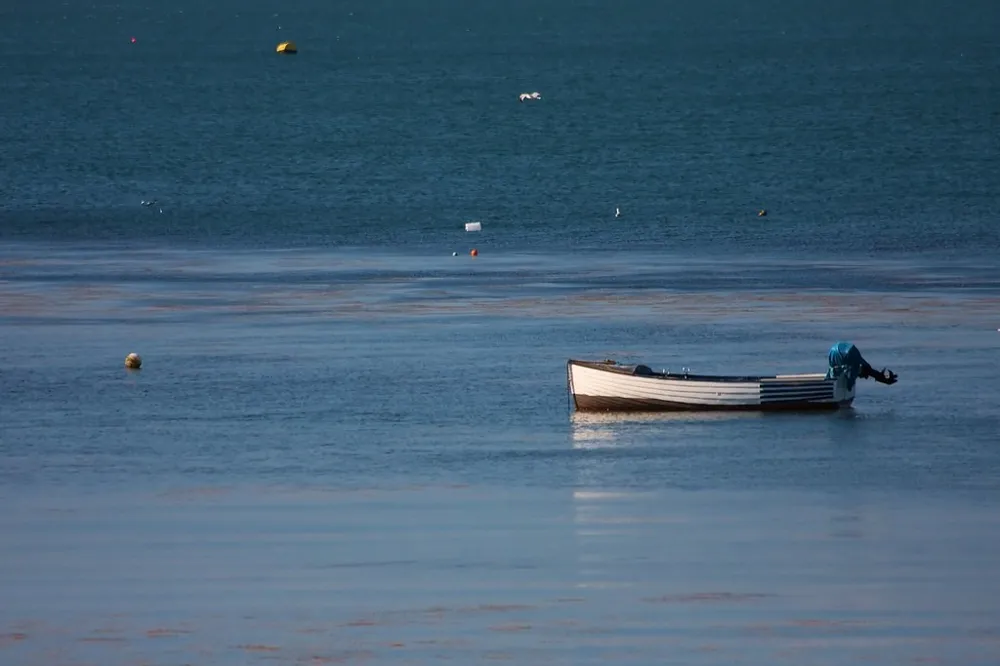
Most canoe motors are electric trolling motors, and for good reason, but small gas outboards are also used on canoes rated for them.
| Factor | Electric Trolling Motor | Small Gas Outboard |
|---|---|---|
| Noise | Very quiet; good for fishing and wildlife | Louder |
| Range | Limited by battery capacity | Limited by fuel; easy to refill |
| Weight | Light motor, heavy battery (unless lithium) | Heavier motor plus fuel |
| Upkeep | Charging and rinsing | Fuel, oil, spark plugs, winter storage |
| Where allowed | Many electric-only lakes and reservoirs | Banned on some waters |
| Rating | Measured in pounds of thrust | Measured in horsepower; must stay within the canoe or mount rating |
Electric motors are rated in pounds of thrust rather than horsepower. Canoe guides commonly put about 75 lb of electric thrust at roughly 1 HP, so a 30 to 55 lb trolling motor is well under a horsepower. That's plenty for a canoe and well within a bracket rated for 3 HP. If you go gas, stay within the lower of the canoe's and the mount's ratings, never more.
Saltwater matters too. A motor sold for freshwater can corrode in salt water, so buy a saltwater model if you'll use it on the coast or in brackish water.
How Much Thrust Does a Canoe Need?
Thrust is the push the motor produces. Minn Kota sizes motors by total boat weight (boat, people and gear) and length. Its smallest category, boats up to 14 feet and up to 1,599 lb all-in, calls for at least 30 to 40 lb of thrust on a 12V system. A loaded tandem canoe weighs far less than that, so the bottom of the range already moves it.
| Canoe Setup | Suggested Thrust | Why |
|---|---|---|
| Solo paddler, light canoe, calm lake | About 30 lb | The low end of common 12V motors is enough |
| Two adults and gear, 15 to 17 ft canoe | About 30 to 40 lb | Matches Minn Kota's smallest category |
| Heavy loads, wind, current or tidal water | About 40 to 55 lb | Extra thrust for headwinds and holding position |
Some canoe guides use a rule of thumb of roughly 2 to 4 lb of thrust per 100 lb of loaded weight. That gives smaller numbers than most motors offer, which is why 30 lb is the practical floor. Minn Kota adds that wind or current may call for more thrust than the chart suggests. Two cautions on going big: 12V trolling motors commonly top out around 55 lb of thrust, and higher thrust draws more current from the same battery, so you trade runtime for push. A canoe is a displacement hull, so extra thrust buys control in wind more than speed.
Choosing the Right Shaft Length
The propeller has to sit deep enough that it doesn't suck air and churn the surface, but not so deep that it drags in the weeds or hits rocks. Minn Kota's guidance is to keep the motor submerged about 12 inches below the waterline.
To choose a length, measure from the top of the transom or the mounting block down to the waterline with the canoe loaded as you'll use it. Minn Kota's transom-mount chart pairs:
| Transom or Mount to Waterline | Recommended Shaft |
|---|---|
| 0 to 10 inches | 30 inches |
| 10 to 16 inches | 36 inches |
| 16 to 22 inches | 42 inches |
Most canoes and side mounts sit low, so a 30-inch shaft is the common pick, with 36 inches for a tall bracket or choppy water. Minn Kota suggests adding about 5 inches for rough water. Too long a shaft is a real problem in a canoe: it hits bottom in the shallows you paddle into, so use the bracket's tilt to raise the motor in skinny water.
12V Batteries: Lead-Acid, AGM or LiFePO4
A trolling motor needs a deep-cycle battery, built to deliver steady power for hours. Cranking batteries are made for starting engines and don't suit a trolling motor. Dual-purpose batteries can work if their amp-hour rating is high enough. Minn Kota recommends a 12V deep-cycle battery of at least 110 amp-hours, usually Group 27 or larger, for its motors in general; on a canoe many people choose a smaller, lighter battery and accept shorter runtimes.
| Battery Type | Weight | Usable Capacity | Upkeep and Life |
|---|---|---|---|
| Flooded lead-acid | Heavy | Avoid regular deep discharges | Cheapest; Minn Kota cites about 2 to 3 years; top up with distilled water |
| AGM | About as heavy as flooded, or slightly heavier | About half the rating (West Marine: don't regularly go below 50%) | Sealed and maintenance-free; complete discharge can damage it |
| Lithium (LiFePO4) | About 50 to 70% lighter than an equivalent AGM (West Marine) | About 80 to 100% of the rating | Costs the most; West Marine says it lasts four to six times longer than AGM |
Weight is the big deal in a canoe. A lead-acid deep-cycle battery is usually the heaviest single item in the boat, and you have to carry it to the water and lift it over the gunwale. A 50Ah lithium pack such as the LiTime above is listed at 11.57 lb, which makes a real difference on a portage or a steep launch.
Group sizes (24, 27 and 31) describe the battery's physical case size, not its chemistry. Group 24 suits smaller motors and tight spaces, Group 27 balances size and capacity, and Group 31 holds the most in a standard case.
Lithium compatibility. Use a charger with a lithium profile. Minn Kota says its motors and Precision chargers made from 2021 have a lithium profile; with any other gear, confirm with the battery maker. Check that the battery's BMS continuous rating is higher than the motor's maximum amp draw, listed in the motor manual. Some lithium packs, including the LiTime above, won't charge below freezing, so plan cold-weather charging indoors.
Lithium cell care and travel rules work the same way as on other gear; see our e-bike battery guide for the basics.
How Long Will the Battery Last?
Runtime depends on battery capacity and how hard you run the motor. The simple estimate is amp-hours ÷ amp draw = hours. Minn Kota's example: a 100Ah battery powering a motor drawing 20 amps runs about 5 hours. Real numbers are lower, because you can't use all of a lead-acid battery's rating without shortening its life.
West Marine gives a worked example for a 55 lb thrust motor averaging 25 amps: a 100Ah AGM gives about 2 hours, because only about half is usable, while a 100Ah lithium gives about 3.2 hours, because 80% or more is usable. A canoe at a slow trolling speed draws far less than full power, so you'll often get much longer, but plan around the conservative figure.
- Run slower. Speed settings below maximum use much less current.
- Plan for the trip home. Turn back with at least half your charge left, especially if you'll head into the wind.
- Check the battery meter. Many motors and lithium batteries have one; use it before you commit to a long crossing.
- Keep paddles aboard. A canoe with a flat battery is still a canoe.
How to Mount a Trolling Motor on a Canoe
- Fit the bracket on land. On a double-ended canoe, place the crossbar across the gunwales just behind the stern seat, square to the centerline, and tighten the clamps as the instructions say. On a square-stern canoe, skip to step 2.
- Choose the side. Put the motor block on the side where you can hold the tiller comfortably from the stern seat. Brackets such as Old Town's Sidesaddle could be set up for either hand, so go with what's comfortable.
- Clamp the motor. Set the motor's bracket over the transom or block and hand-tighten both clamp screws firmly. Tie a safety line from the motor head to a thwart or the bracket.
- Set the shaft angle. With the canoe floating and loaded, adjust the tilt so the shaft is vertical. The propeller should sit well below the surface at roughly the depth covered above.
- Place and strap the battery. Put the battery in a box on the floor, low and toward the middle, not in the stern, and strap it down.
- Wire it. Fit the circuit breaker or fuse the motor maker recommends, then connect red to positive and black to negative with the motor switched off. Route the cable where you won't step on it or catch a paddle.
- Test in shallow water. Run the motor briefly at low speed in water deep enough for the propeller, forward and reverse, before heading out.
Recheck the clamps after the first few minutes and again during the day. Vibration loosens them, and the safety line is what saves the motor if one slips.
Balance, Trim and Steering

A motor and its operator put a lot of weight at one end of the canoe. If the stern sits low, the bow rises, catches the wind and makes the canoe hard to steer. Keep the canoe level:
- Move the battery forward. The battery is the easiest weight to shift. Set it ahead of the stern seat, nearer the middle, until the canoe floats level.
- Load gear in the bow. Coolers, tackle and dry bags help balance a solo motorist.
- Stay seated and low. Standing in a moving canoe is the quickest way to swim. Kneeling or sitting keeps your center of gravity down.
- Expect a little pull. A side-mounted motor pushes slightly off-center, so you'll hold a small correction on the tiller. Small steering movements work best.
- Slow down for turns and wakes. Take boat wakes at an angle, not side-on, and ease off the throttle in waves.
The same paddling basics still apply when the motor is off; our how to paddle a canoe guide covers the strokes. Many anglers add an anchor and fish finder next, which we cover in kayak and canoe anchors and kayak fish finders.
Registration and Rules Once a Motor Is Fitted
Adding a motor often changes a canoe's legal status. Many states exempt unpowered canoes from registration but require it as soon as any motor is attached, including a small electric trolling motor.
- Florida. The Florida Fish and Wildlife Conservation Commission says non-motorized vessels under 16 feet don't need a Florida registration, but all motorized vessels, including canoes, kayaks and paddleboards, must be registered unless used only on private ponds and lakes. It also says motorized paddlecraft follow the same lighting rules as all power-driven vessels.
- Texas. Texas Parks and Wildlife says all motorized vessels must be registered regardless of length, and that adding an outboard or trolling motor to an otherwise exempt canoe or kayak removes the exemption.
- Other states. Many follow the same pattern; a few also require registration or a launch permit for unpowered canoes. Some require a boater education card to operate a motorized vessel, often tied to age or horsepower.
| What Can Change With a Motor | What to Check |
|---|---|
| Registration and decals | Whether your state counts electric trolling motors, and where numbers go on the bow |
| Title | Some states title motorized vessels above a set length or value |
| Navigation lights | At night, a motorized canoe may need power-driven vessel lights, not just a handheld white light |
| Boater education | Age or horsepower thresholds for an education card |
| Where you can go | Some lakes, reservoirs and parks ban motors or allow electric only |
Federal life jacket rules apply either way: one wearable, properly sized, US Coast Guard approved life jacket per person, readily accessible, and under federal rules children under 13 must wear one while underway unless a state sets its own age. Our kayak accessories checklist lists the full carriage rules for paddle craft.
Check your state. Rules vary by state and change over time. Before your first motorized trip, read your state boating agency's registration page or call them, and check local rules for the lake or park. Last checked November 2026; this is a summary, not legal advice. Our kayak and canoe registration guide covers paddle craft rules state by state, and the same registration note applies to paddle board motors.
Safety on a Motorized Canoe
- Wear your life jacket. A motor gets you farther from shore faster, and a capsized canoe with a heavy battery is no place to find a jacket. Pick a comfortable one from our PFD guide.
- Stay within capacity. Add the motor and battery to your people and gear, and keep the total within the canoe's rated capacity, with plenty of freeboard.
- Respect the propeller. Switch off and lift the motor before anyone swims near the stern, before clearing weeds, and when landing.
- Secure the battery. Use a battery box with a strap and covered terminals, keep it away from fishing hooks and metal gear, and never let it slide loose in a capsize.
- Tether the motor. A safety line saves the motor if a clamp slips.
- Watch weather and water. Wind builds waves faster than a canoe likes, even with a motor. Stay near shore on big lakes and avoid running rivers above your skill. Cold water is dangerous even on warm days; see our paddling safety guide.
- Follow the rules of the road. As a motor vessel, keep clear of channels and larger boats, and watch your speed near other paddlers.
Care, Charging and Storage
- Charge after every trip. West Marine advises charging after each outing and not leaving a depleted battery sitting overnight. Leave only a smart charger with a float mode connected long-term.
- Rinse the motor. Rinse the shaft, propeller and bracket in fresh water, especially after salt or brackish water, and let them dry.
- Check the propeller. Clear fishing line and weeds from behind the prop, where line can damage seals.
- Inspect the mount. Look for cracks in the wooden block, loose bolts and worn clamp pads at the start of each season.
- Store the battery right. Keep it in a cool, dry place over winter, charged as the maker recommends, and don't charge lithium below freezing.
- Remove the motor for transport. Take the motor and battery out before you lift the canoe onto the car; our car-top transport guide covers tie-downs that work for canoes too.
Still deciding between boats? See canoe vs kayak, or browse the kayaking and canoeing hub for more guides.
Frequently Asked Questions
Can you put a trolling motor on any canoe?
Most canoes can take one. A square-stern canoe has a flat transom the motor clamps to directly, while a double-ended canoe needs a side-mount bracket that clamps across the gunwales. Check the bracket's fit notes and the canoe maker's guidance on motors first.
How much thrust do I need for a canoe?
Minn Kota's chart puts boats up to 14 feet and 1,599 lb of total weight at 30 to 40 lb of thrust on 12 volts, which covers a loaded canoe. Go toward the higher end for wind, current or a heavy load.
What size battery do I need for a canoe trolling motor?
A 12V deep-cycle battery. Minn Kota recommends at least 110 amp-hours for its motors in general, but a lighter lithium pack of around 50 amp-hours can suit shorter canoe trips. Runtime roughly equals amp-hours divided by the motor's amp draw.
Do I need to register a canoe with a trolling motor?
In many states, yes. Florida, for example, requires registration for all motorized vessels including canoes, and Texas says adding a trolling motor removes the exemption for canoes. Rules vary, so check your state boating agency. Last checked November 2026; this is not legal advice.
Which side of the canoe should the motor go on?
Most people mount it on the side that lets them steer the tiller comfortably from the stern seat. Side-mount brackets such as Old Town's Sidesaddle can be set up for right- or left-hand use.
Can I use a gas outboard on a canoe?
Yes, if the canoe or bracket is rated for it. Old Town's canoe motor mounts are rated for motors up to 3 HP. Gas motors add noise, fuel handling and weight, and some lakes allow electric motors only.
How fast does a canoe go with a trolling motor?
Expect a modest cruising pace rather than real speed. A canoe is a displacement hull, so extra thrust mostly helps against wind and current rather than raising top speed much. Load, hull length and battery charge all change the result.