Types of Skiing: Every Style Explained (2026)
From resort groomers to backcountry summits and Olympic halfpipes, skiing comes in many forms. Here's what each type involves, the gear it uses and which suits you.
Two Big Families: Alpine and Nordic
Almost every type of skiing fits into one of two families. Alpine skiing uses bindings that lock your heel down, and you mostly ride lifts and ski downhill. Nordic skiing uses a free heel, so you can stride, climb and glide under your own power. Many modern styles, such as alpine touring, borrow from both: a free heel for the climb and a locked heel for the descent.
Types of Skiing at a Glance
| Type | Heel | Where | Uphill By | Good For |
|---|---|---|---|---|
| Alpine (downhill) | Fixed | Resorts | Lifts | Beginners to experts |
| Cross-country (classic) | Free | Groomed tracks, trails | Your legs | Fitness, beginners |
| Skate skiing | Free | Groomed lanes | Your legs | Fitness, speed |
| Telemark | Free | Resorts, backcountry | Lifts or skins | Experienced skiers wanting a new challenge |
| Alpine touring | Free to climb, fixed to descend | Backcountry, resort uphill routes | Skins | Fit, avalanche-trained skiers |
| Backcountry | Usually touring setup | Outside resort boundaries | Skins, snowmobile or helicopter | Experienced, trained skiers |
| Ski mountaineering | Touring setup | Mountain peaks, races | Skins and bootpacking | Experts |
| Freestyle and park | Fixed | Terrain parks, halfpipes | Lifts | Intermediate and up |
| Freeride | Fixed or touring | Off-piste, big mountain terrain | Lifts or skins | Advanced and expert |
| Racing | Fixed | Gated courses | Lifts | Competitive skiers |
| Adaptive | Varies | Resorts, races | Lifts | Skiers with disabilities |
Alpine (Downhill) Skiing
This is what most people picture: riding chairlifts at a resort and skiing down groomed, patrolled runs. Boots are stiff and bindings lock the heel, which gives precise control for turning at speed. It's the easiest way into skiing because resorts have lessons, rentals and beginner terrain. See how to ski.
Alpine racing is the competitive version. Its Olympic disciplines are downhill, super-G, giant slalom, slalom and a combined event; alpine skiing has been on the Olympic program since 1936.
Nordic Skiing
Cross-Country: Classic
Classic cross-country skiing uses long, narrow skis in parallel grooved tracks with a kick-and-glide stride, a bit like walking or running on skis. It's a superb low-impact workout and easy to start on flat groomed trails. Skis use wax or a textured "waxless" grip zone underfoot. See best cross-country skis.
Cross-Country: Skate
Skate skiing uses shorter skis and a side-to-side pushing motion like ice skating, on wide groomed lanes. It's faster and more demanding than classic and takes longer to learn.
Telemark
Telemark is downhill skiing with a free heel. To turn, you drop your back knee into a lunge, which takes strength and balance. Telemarkers ride resorts and the backcountry, and many love the flowing, graceful feel of the turn.
Ski Jumping and Nordic Combined
Ski jumpers glide down a steep in-run, launch from the take-off and are scored on distance and style. Nordic combined pairs ski jumping with a cross-country race; the jump results set the starting gaps for the race. Both are Olympic sports.
Biathlon
Biathlon combines cross-country skate skiing with rifle shooting at ranges along the course. Missed targets add penalty loops or time. It's governed by the International Biathlon Union and is an Olympic sport.
Alpine Touring (Randonnée)
Alpine touring, also called AT or randonnée, uses bindings that free the heel for climbing and lock it for the descent. Skiers stick climbing skins to the bases of their skis for grip going uphill, then remove them to ski down. Many resorts now allow "uphill" skiing on set routes, which is a good place to learn. Touring boots have a walk mode and are often lighter; see how to choose ski boots.
Backcountry Skiing
Backcountry skiing means skiing outside a resort's patrolled, avalanche-controlled boundaries. Most backcountry skiers tour on skins, though some use snowmobiles (sled-skiing) or helicopters (heli-skiing) or cat-skiing operations. It offers untracked snow and solitude, but you are responsible for your own safety: take an avalanche course, check the local avalanche forecast, travel with partners and carry a beacon, shovel and probe.
Ski Mountaineering
Ski mountaineering combines climbing and skiing to reach and descend mountain peaks, often using crampons, ice axes and ropes on steep or glaciated terrain. Its racing form, skimo, involves skinning uphill, bootpacking sections on foot with skis on a pack, and fast descents. Skimo made its Olympic debut at Milano Cortina 2026 with men's and women's sprints and a mixed relay, held in Bormio.
Freestyle and Park Skiing
Freestyle skiers ride terrain parks and halfpipes, usually on twin-tip skis that can ride backward. The Olympic freestyle program covers:
| Event | What Happens |
|---|---|
| Moguls | Fast turns through bumps with two jumps, judged on turns, air and speed |
| Dual moguls | Head-to-head mogul runs; added to the Olympics in 2026 |
| Aerials | Big flips off a kicker onto a steep landing |
| Ski cross | Four skiers race head to head over jumps, rollers and banked turns; the only freestyle event decided by who finishes first |
| Slopestyle | A course of rails and jumps, judged on difficulty, variety and execution |
| Halfpipe | Tricks on the walls of a half-cylinder |
| Big air | One big jump, one big trick |
Freestyle skiing builds on solid alpine skills. Start with small park features and a helmet.
Freeride and Big Mountain
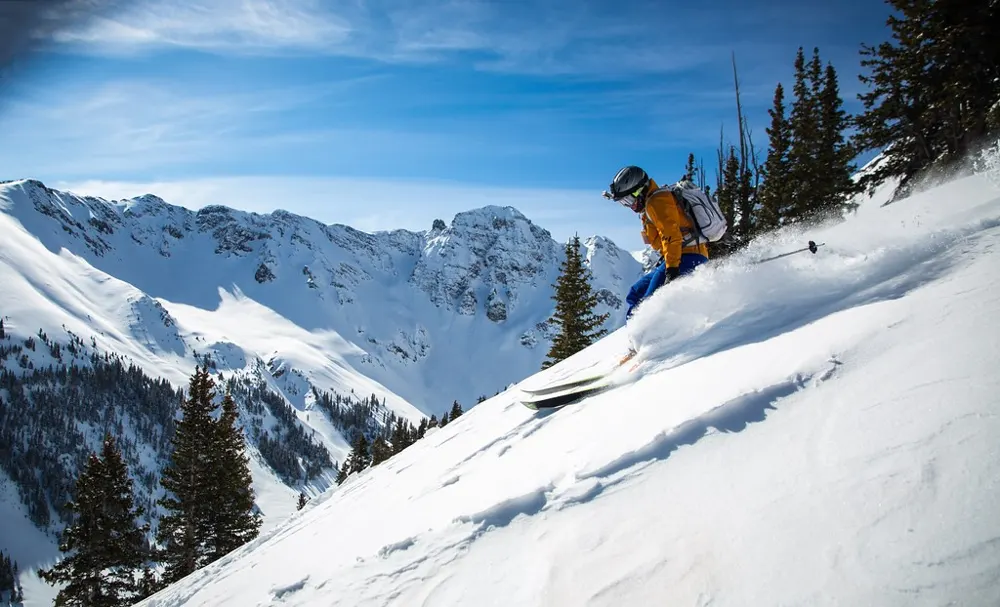
Freeride generally means skiing natural, ungroomed terrain: powder, trees, cliffs, chutes and big open faces, often reached by lifts but outside the groomed runs. It's about choosing your own line rather than following a course. Freeride competitions judge line choice, control and style. Wider skis help in soft snow; see the ski size chart for widths.
Racing
Beyond the Olympics, many skiers race recreationally in club leagues and NASTAR-style events at resorts, typically on slalom and giant slalom courses. Junior race programs teach strong technique and are common at many ski areas.
Adaptive Skiing
Adaptive skiing uses specialized equipment, such as sit-skis, mono-skis and outriggers, and guides for skiers with visual impairments, so people with disabilities can ski. Many resorts run adaptive programs. At the Paralympics, para alpine skiers compete in standing, sitting and vision-impaired classes in downhill, super-G, super combined, giant slalom and slalom.
Skiing at the Winter Olympics
| Sport | Includes |
|---|---|
| Alpine skiing | Downhill, super-G, giant slalom, slalom, combined |
| Cross-country skiing | Classic and freestyle (skate) races, sprints, relays |
| Ski jumping | Normal hill, large hill, team events |
| Nordic combined | Ski jumping plus cross-country |
| Freestyle skiing | Moguls, dual moguls, aerials, ski cross, slopestyle, halfpipe, big air |
| Biathlon | Cross-country skiing plus rifle shooting |
| Ski mountaineering | Sprints and mixed relay (new in 2026) |
Telemark, freeride and recreational touring aren't Olympic events.
Gear by Type
| Type | Skis | Boots and Bindings |
|---|---|---|
| Alpine | Shaped, often 80–100mm wide | Stiff alpine boots, fixed-heel bindings; see ski boots |
| Classic XC | Long, narrow, grip zone underfoot | Light, flexible boots; NNN or similar bindings |
| Skate XC | Shorter, stiffer, no grip zone | Supportive skate boots |
| Telemark | Alpine-style skis | Telemark boots with a bellows; free-heel bindings |
| Alpine touring | Lighter skis with skins | Walk-mode boots; tech (pin) or frame bindings |
| Freestyle | Twin tips, softer flex | Alpine boots and bindings |
| Freeride and powder | Wide, often rockered | Alpine or hybrid touring bindings |
Which Type Should You Try?
- Brand-new to skiing: alpine at a resort, with a lesson.
- Want a workout and quiet trails: classic cross-country.
- Love the outdoors and earning your turns: alpine touring on resort uphill routes, then backcountry after avalanche training.
- Want tricks: freestyle in the terrain park once you can ski blue runs comfortably.
- Want a new challenge on familiar slopes: telemark.
Weighing your options across sports? See skiing vs snowboarding and the skiing hub.
Frequently Asked Questions
What are the main types of skiing?
The two big families are alpine (downhill) skiing, with fixed heels and lifts, and Nordic skiing, with free heels, including cross-country, telemark and ski jumping. Others include backcountry and touring, freestyle and park, freeride, ski mountaineering and adaptive skiing.
What is the difference between alpine and Nordic skiing?
Alpine skiers lock their heels into the binding and mostly ride lifts to ski downhill. Nordic skiers have a free heel, which lets them stride, climb and glide across flat and rolling terrain.
What is the easiest type of skiing for beginners?
Most beginners start with alpine skiing at a resort, where lessons, rentals and gentle groomed slopes are easy to find. Classic cross-country skiing on flat groomed trails is also beginner-friendly.
What is the difference between backcountry skiing and ski touring?
Backcountry skiing means skiing outside a resort's patrolled boundaries. Ski touring describes how you get there: climbing on skins with bindings that free the heel, then locking them to ski down. Most backcountry skiers tour.
What is randonnée?
Randonnée is another name for alpine touring: skiing with bindings that release the heel for climbing on skins and lock it for the descent.
Is ski mountaineering in the Olympics?
Yes. Ski mountaineering made its Olympic debut at the Milano Cortina 2026 Winter Games with men's and women's sprints and a mixed relay.
What is telemark skiing?
A free-heel style of downhill skiing in which you drop your back knee into a lunge to turn. It's done at resorts and in the backcountry.
Which skiing events are in the Winter Olympics?
Alpine skiing, cross-country skiing, ski jumping, Nordic combined, freestyle skiing, biathlon and, since 2026, ski mountaineering.