What Is Freestyle Skiing? Events, Scoring and Getting Started (2026)
Bumps, flips, races and park tricks: freestyle skiing covers eight Olympic disciplines. Here's how each one works, how it's judged and how to start on your own skis.
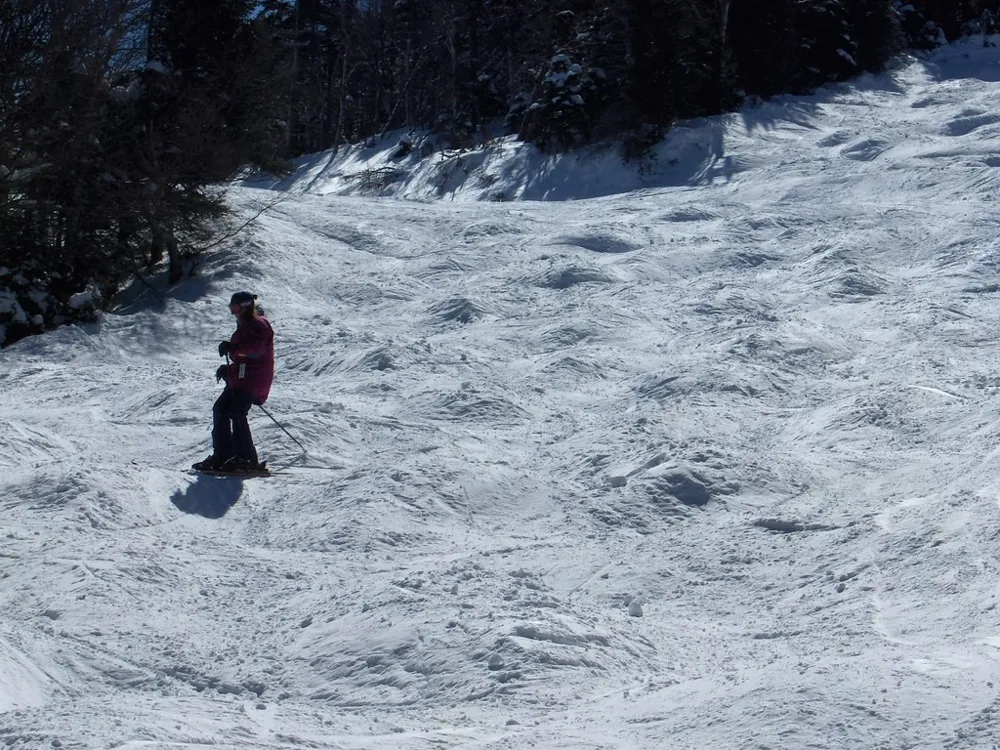
Freestyle Skiing in a Nutshell
Freestyle skiing is the creative, acrobatic side of the sport. Instead of racing the clock through gates like alpine skiing, freestyle skiers are usually judged on tricks, turns and jumps. Today it covers moguls, aerials, ski cross and the park-and-pipe events, and it's one of the biggest sports at the Winter Olympics with 15 medal events in 2026.
Freestyle Disciplines at a Glance
| Discipline | What Happens | Scored By | Olympic Since |
|---|---|---|---|
| Moguls | Fast turns through bumps with two jumps | Judges and time | 1992 |
| Dual moguls | Two skiers race side by side in knockout rounds | Judges and time | 2026 |
| Aerials | Flips and twists off steep kickers | Judges | 1994 |
| Mixed team aerials | Three-person team aerials | Judges | 2022 |
| Ski cross | Four skiers race a course of jumps and turns | First to finish | 2010 |
| Halfpipe | Tricks on a U-shaped snow wall | Judges | 2014 |
| Slopestyle | Rails, boxes and jumps on one course | Judges | 2014 |
| Big air | One huge jump, one big trick | Judges | 2022 |
Moguls and Dual Moguls
Moguls skiers race down a steep course of bumps, keeping their skis tight together and their upper body still while their legs absorb each mogul. The course has two jumps where they perform tricks. Under FIS rules, turns count for 60% of the score, air for 20% and speed for 20%.
Dual moguls puts two skiers on parallel courses at once in a knockout format. Turns count for 50%, air 25% and speed 25%, and judges split their points between the two skiers. Dual moguls made its Olympic debut in 2026.
Aerials
Aerialists launch off steep kickers, flying high enough to perform multiple flips and twists, and land on a steep hill about 30 meters long. Judges score air (20%), form (50%) and landing (30%), then multiply the total by the jump's degree of difficulty. Aerialists famously train in summer by jumping into pools from water ramps.
Ski Cross
Ski cross is the one freestyle event that's a straight race. After a timed seeding run, skiers race in heats of four down a course of banked turns, rollers and jumps, and the top finishers advance until the final. It's fast, tactical and often features contact.
Halfpipe, Slopestyle and Big Air
These park-and-pipe events, often called freeskiing, grew out of twin-tip park skiing and its culture.
- Halfpipe: skiers ride a U-shaped channel of snow, launching above the walls for spins, flips and grabs.
- Slopestyle: a course of rails, boxes and jumps, with tricks on each feature.
- Big air: a single huge jump where skiers throw their biggest tricks.
Judges score on difficulty, execution, amplitude (height), variety and progression.
A Short History of Freestyle Skiing
Acrobatic skiing goes back to the early 1930s in Europe, when skiers performed flips and ballet-style moves. Norwegian Olympic champion Stein Eriksen helped popularize aerial tricks around 1950. In the 1960s and 1970s, freestyle exploded in North America as "hot dog" skiers pushed new moves on bumps and jumps.
The International Ski Federation (FIS) recognized freestyle in 1979, according to the Olympics, and launched a World Cup in 1980. Freestyle was a demonstration sport at Calgary 1988 with moguls, aerials and ballet. Ballet (later called acro) was dropped from the Olympic program in 1994.
| Year | Olympic Milestone |
|---|---|
| 1988 | Demonstration sport at Calgary |
| 1992 | Moguls becomes a medal event |
| 1994 | Aerials added |
| 2010 | Ski cross added |
| 2014 | Halfpipe and slopestyle added |
| 2022 | Big air and mixed team aerials added |
| 2026 | Dual moguls added (15 events) |
For the bigger picture, see the history of skiing.
Freestyle at Milano Cortina 2026
Freestyle events were held at Livigno.
| Event | Men's Gold | Women's Gold |
|---|---|---|
| Moguls | Cooper Woods-Topalovic (AUS) | Elizabeth Lemley (USA) |
| Dual moguls | Mikaël Kingsbury (CAN) | Jakara Anthony (AUS) |
| Aerials | Wang Xindi (CHN) | Xu Mengtao (CHN) |
| Ski cross | Simone Deromedis (ITA) | Daniela Maier (GER) |
| Halfpipe | Alex Ferreira (USA) | Eileen Gu (CHN) |
| Slopestyle | Birk Ruud (NOR) | Mathilde Gremaud (SUI) |
| Big air | Tormod Frostad (NOR) | Megan Oldham (CAN) |
| Mixed team aerials | USA | |
Highlights included Eileen Gu's three medals (halfpipe gold and silver in slopestyle and big air), Kingsbury winning the first Olympic dual moguls title, and Italy's one-two finish in men's ski cross.
At the French Alps 2030 Games, freestyle is planned for Serre Chevalier and Montgenèvre, and freeride skiing joins the program.
Freestyle Competitions Beyond the Olympics
- FIS Freestyle World Cup: the season-long circuit, running since 1980, with crystal globes for each discipline.
- FIS Freestyle World Championships: held every two years, awarding world titles in each discipline.
- Invitational events: park-and-pipe skiers also compete at invitational contests such as the X Games.
Canada's Mikaël Kingsbury is the sport's most successful competitor. According to FIS, he won nine straight overall World Cup titles from 2011/12 to 2019/20 and holds the freestyle records for World Championship medals (15) and golds (9). He became the first freestyle skier to reach 100 World Cup wins in January 2026, then won dual moguls gold at Milano Cortina.
Freestyle vs. Freeskiing vs. Freeride
| Term | Means |
|---|---|
| Freestyle | The umbrella term for the competitive disciplines above |
| Freeskiing | The park, pipe and big air side of freestyle and its culture |
| Freeride | Skiing steep, natural terrain like cliffs and chutes; joins the Olympics in 2030 |
See types of skiing for how these fit with alpine, Nordic and backcountry skiing.
Freestyle Skiing Gear
| Discipline | Typical Skis |
|---|---|
| Park, pipe and big air | Twin-tip freestyle skis, about 85–95 mm underfoot, mounted near center |
| Moguls | Narrower, softer skis that flex through bumps |
| Aerials | Short, specialized skis |
| Ski cross | Stiff skis similar to alpine race skis |
For recreational park skiing, a twin tip is the key piece: its upturned tail lets you ski and land backward. Pair it with a helmet and goggles, and consider wrist guards and impact shorts while learning.
K2 Omen 85
A twin-tip park ski with rocker in the tip and tail, camber underfoot and an aspen wood core, built for spins, switch skiing and park laps.
Check Price on AmazonK2 Reckoner 92
A slightly wider twin-tip freeride ski with the same profile, for skiers who split time between the park and the rest of the mountain.
Check Price on AmazonSee our guide to ski helmets for head protection.
How to Start Freestyle Skiing
- Build a solid base. Be comfortable linking parallel turns on blue runs and controlling your speed. See how to ski.
- Take a freestyle lesson. Many resorts offer park and freestyle lessons.
- Learn the park rules. Follow the Park SMART safety program and start on the smallest features.
- Learn the basics in order. Pops, butters, straight airs, switch skiing and 180s come first; see ski tricks for beginners.
- Try bumps. Short mogul runs build the leg strength and absorption moguls skiing needs.
- Join a club. If you want to compete, US Ski & Snowboard clubs and camps are the usual path into freestyle competition.
Is Freestyle Skiing Safe?
Freestyle carries more risk than cruising groomers, because jumps and rails add speed, height and hard surfaces. Most risk comes from going too big too soon. Progress one size at a time, wear a helmet, take an inspection run before hitting any feature, and never stop in a landing zone. Aerial flips should only be learned with qualified coaches, often with water ramps or airbags.
Related Guides
Read about every Olympic ski event, learn how to ski powder, and browse more fun reading in skiing facts.
Frequently Asked Questions
What is freestyle skiing?
Freestyle skiing is a group of disciplines that combine skiing with jumps, tricks and terrain features: moguls, aerials, ski cross, halfpipe, slopestyle and big air. Most events are judged, while ski cross is a race.
What are the freestyle skiing events at the Olympics?
Milano Cortina 2026 had 15 freestyle events: men's and women's moguls, dual moguls, aerials, ski cross, halfpipe, slopestyle and big air, plus mixed team aerials.
How is moguls skiing scored?
In FIS moguls, turns count for 60% of the score, air (the two jumps) for 20% and speed for 20%. Dual moguls weights turns at 50%, air at 25% and speed at 25%.
How is aerials scored?
Judges score air (20%), form (50%) and landing (30%), and the total is multiplied by the jump's degree of difficulty.
What's the difference between freestyle skiing and freeskiing?
Freestyle is the umbrella name for the competitive disciplines. Freeskiing usually refers to the park and pipe side of freestyle (slopestyle, halfpipe, big air) and its culture. Freeride is different again: skiing steep, natural big-mountain terrain.
When did freestyle skiing become an Olympic sport?
Freestyle was a demonstration sport in 1988 at Calgary. Moguls became a medal event in 1992 and aerials in 1994, followed by ski cross in 2010, halfpipe and slopestyle in 2014, big air in 2022 and dual moguls in 2026.
Do you need twin tip skis for freestyle skiing?
For park and pipe, twin tips help because you can ski and land backward. Moguls skiers use narrower, softer skis, and ski cross racers use skis closer to alpine race skis.
Who is the best freestyle skier of all time?
By results, Canada's Mikaël Kingsbury. He reached 100 FIS World Cup wins in January 2026, holds the freestyle records for World Championship medals and golds, and has two Olympic golds.
Is freestyle skiing dangerous?
Like any action sport it carries injury risk, especially on jumps. Starting on small features, wearing a helmet, following terrain park safety rules and taking lessons all reduce the risk.
How do I start freestyle skiing?
Become a confident parallel skier, take a freestyle or park lesson, start on the smallest terrain park features and join a local freestyle club or camp if you want to compete.