Twin Tip Skis for Spins, Switch and Every Run in Between (2026)
Park twins, all-mountain freestyle skis and kids' twins compared, with plain advice on mount point, length, width, flex and the build details that survive rails.
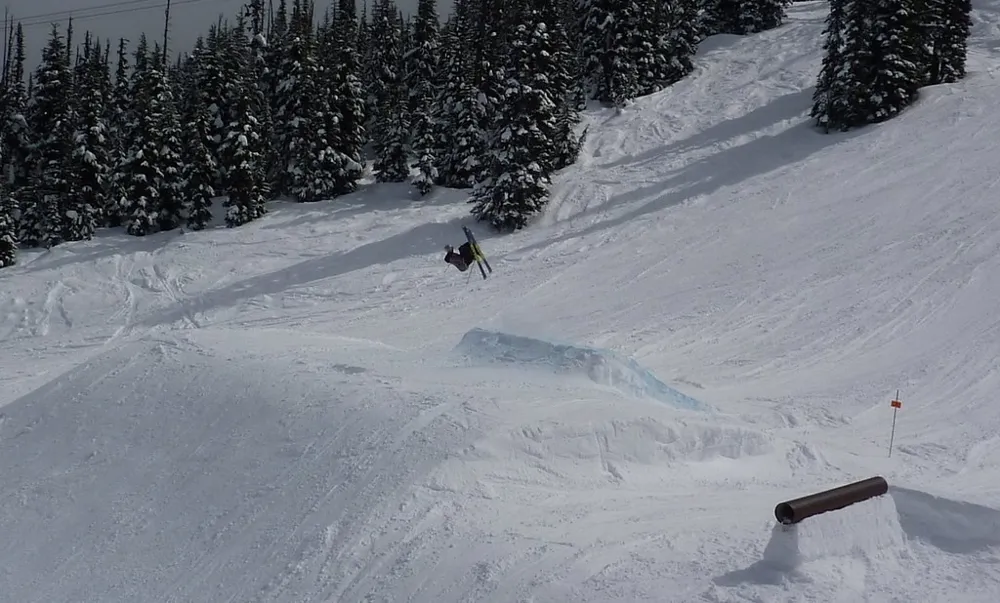
What Is a Twin Tip Ski?
A twin tip ski (sometimes called a dual-tipped ski) has a tail that turns up like the tip. That lets you ski backward, take off and land switch, and spin without the tail catching. Twin tips started as park skis, but today the shape covers three groups: park skis for rails, boxes and jumps, all-mountain freestyle skis that ski the park and the rest of the resort, and kids' twins for young skiers who want to follow their friends into the park.
Below are our picks across those groups, then a buying guide on park versus all-mountain twins, mount point, sizing, durability and kids' skis. For the bigger picture on ski types, see the best skis. If you're ready to try your first tricks, our guide to ski tricks for beginners walks through the progression.
K2 Omen 85
Best for progressing park skiers
- Full twin tip
- All-Terrain Twin Rocker profile
- DuraCap construction
Völkl Mini Revolt Jr
Best kids' twin tip
- Youth twin tip
- Forgiving flex
- Sold with 4.5 vMotion Jr bindings
K2 Reckoner 92
Best for park plus the whole mountain
- All-Terrain Twin Rocker
- Mid flex (5 of 10 per evo)
- Sintered base
Twin Tip Skis Compared
Specs come from maker pages, evo listings and FREESKIER's 2026 park ski roundup. Dimensions are tip/waist/tail in millimeters. Skis change from year to year, so confirm the current model's specs before you buy.
| Ski | Type | Dimensions or Waist | Key Build Details | Best For |
|---|---|---|---|---|
| K2 Omen 85 | Park | About 85mm waist | Aspen core, DuraCap, full twin | Beginner to intermediate park skiers |
| Line Chronic 94 | Park | About 94mm waist | Thick-Cut sidewalls, 2.5mm edges, 1.7mm sintered base | Rails, jumps and pipe |
| K2 Omen Team | Park | 125-95-119 | Top of K2's freestyle line | Experienced park skiers |
| Faction Prodigy 1 | Park | About 88mm waist (earlier model) | Poplar and ash core, 2.5mm edges | Narrow, light park setups |
| K2 Reckoner 92 | All-mountain freestyle | About 92mm waist | Aspen Micro Block core, sintered base | Park plus groomers |
| Atomic Bent 100 | All-mountain freestyle | 129-100-120 | Ash inlay, HRZN 3D tip and tail | Soft snow and side hits |
| Elan Playmaker 101 | All-mountain freestyle | 132-101-122 | Elan's dedicated freestyle twin | Playful all-mountain skiing |
| Rossignol Sender Free 100 | All-mountain freestyle | 131-100-123 | Softer, approachable flex | Intermediates going freestyle |
| Armada ARW 100 (Women's) | All-mountain freestyle | 126-100-119 | Widest ski in the women's ARW line | Women who ski park and soft snow |
| Icelantic Nomad 100 | All-mountain freestyle | 135-100-127 | Wood and carbon core, soft flex | Butters and low swing weight |
The Best Twin Tip Skis
1. K2 Omen 85
The Omen 85 is K2's entry park ski. evo lists it as a full twin tip for park and pipe plus all-mountain skiing, aimed at beginner to intermediate skiers, in lengths from 139 to 169 cm. It uses K2's All-Terrain Twin Rocker (an early rise at both tip and tail with camber underfoot), a lightweight aspen wood core, Spectral Braid reinforcement and DuraCap construction, where the top layer wraps over the core. The short 139 cm length also makes it an option for teens and smaller adults.
Good to Know
- Full twin for switch skiing
- Forgiving rocker at both ends
- Wide length range
Watch Out For
- Narrow and light, so less stable at high speed
- Sold without bindings
2. Line Chronic 94
Line pitches the Chronic 94 at skiers whose main passion is the park. evo's listing shows a rocker/camber/rocker profile (10 mm of tip and tail rocker and 2 mm of camber at the 178 cm length), Line's Symmetric Flex, an aspen veneer core, Thick-Cut sidewalls, "Fatty" 2.5 x 2.2 mm edges and a 1.7 mm sintered base. Those oversized edges and the thick base are there to stand up to rails and boxes. Line's Thin Tip design is meant to cut swing weight. evo rates it for intermediate to advanced skiers in park and pipe. It's usually sold at ski shops rather than on Amazon.
Good to Know
- Thick edges and base for rail abuse
- Same flex in front of and behind the boot
Watch Out For
- Built for the park more than the whole mountain
- Sold without bindings
3. K2 Omen Team
FREESKIER describes the Omen Team as the top of K2's freestyle line and the replacement for the long-running K2 Poacher. It measures 125-95-119 mm and comes in lengths from 163 to 188 cm. It's a step up from the Omen 85 for skiers who spend most days in the park and want a wider, longer platform for jumps.
Good to Know
- Wider platform than the Omen 85
- Long length range for bigger skiers
Watch Out For
- Check the current listing for flex and profile
4. Faction Prodigy 1
Faction's Prodigy line runs from the park-focused Prodigy 1 up to wider all-mountain versions. In evo's park ski roundup, an earlier Prodigy 1 was listed at 88 mm underfoot with a poplar and ash wood core, Microcap sidewalls and XL 2.5 mm edges. Faction updates the line regularly, so check the current year's width and construction. It's typically sold through ski retailers.
Good to Know
- Narrow, light park platform
- Thick edges on the version evo listed
Watch Out For
- Specs vary by model year
5. K2 Reckoner 92
The Reckoner 92 is K2's freestyle-leaning all-mountain ski. evo lists the current version with K2's All-Terrain Twin Rocker, a mid flex of 5 out of 10, an Aspen Micro Block core, Triaxial Braid fiberglass, a Hybritech sidewall and a sintered base, for intermediate to advanced skiers. Note that evo's newest listing labels the tail as a partial twin, so it's lower than a full park twin. The wider Reckoner 102 suits soft snow. FREESKIER notes that the women's Reckoner 102 W was refreshed for durability with an aspen veneer core, extra carbon and capped tips and tails.
Good to Know
- Versatile for park, groomers and soft snow
- Sintered base holds wax well
Watch Out For
- Tail is a partial twin on the newest version
- Sold without bindings
6. Atomic Bent 100
Atomic's Bent series is its all-mountain freestyle line. FREESKIER lists the Bent 100 at 129-100-120 mm, in lengths from 158 to 188 cm, with a 19.5 m radius at 180 cm. It uses an ash inlay, boosted tail rocker and Atomic's HRZN 3D Bent tip and tail bevel. FREESKIER notes the ski is unchanged for 2026. Narrower Bent 85 and Bent 90 models suit skiers who spend more time on firm snow and in the park.
Good to Know
- 100 mm waist for soft snow
- Narrower Bent models available
Watch Out For
- Wider than a dedicated park ski
7. Elan Playmaker 101
The Playmaker is Elan's dedicated twin tip freestyle ski, developed from its Ripstick line. FREESKIER lists the Playmaker 101 at 132-101-122 mm in lengths from 164 to 188 cm. evo's earlier listing of the narrower Playmaker 91 described a Tubelite wood core with dual carbon rods and rocker at both ends.
Good to Know
- 101 and narrower 91 widths
- Light, playful build
Watch Out For
- Shortest length is 164 cm in the 101
8. Rossignol Sender Free 100
FREESKIER describes the Sender Free 100 as a softer, approachable freestyle ski in the 100 mm class, sitting between Rossignol's wider Sender Free 110 and the Super Black Ops 98. It measures 131-100-123 mm and comes in lengths from 162 to 190 cm. It suits intermediates who want a playful twin that still handles the whole mountain.
Good to Know
- Softer, more forgiving feel
- Long length range
Watch Out For
- Soft flex gives up some stability at speed
9. Armada ARW 100 (Women's)
The ARW series is Armada's women's freestyle and all-mountain line, and the ARW 100 is its widest model. FREESKIER calls it a freestyle-oriented twin tip and lists it at 126-100-119 mm in lengths from 158 to 179 cm. Narrower ARW 84, 88 and 94 models are also sold for skiers who spend more time in the park or on groomers. See more options in women's skis.
Good to Know
- Women's twin with several widths
- Construction carried over for 2026
Watch Out For
- The 100 mm model is more soft-snow ski than park ski
10. Icelantic Nomad 100
FREESKIER describes the Nomad 100 as a soft-flexing twin with a wood and carbon core and low swing weight, measuring 135-100-127 mm in lengths from 171 to 188 cm. The same review warns that its soft build can be a drawback on edge because it lacks torsional stiffness. It suits skiers who prioritize butters and spins over hard carving.
Good to Know
- Light swing weight for spins
- Soft and buttery
Watch Out For
- Less edge hold on hard snow
- No short lengths
Other twins worth a look include the Fischer Nightstick 97, a lightweight twin FREESKIER notes for park and all-mountain jibbing, the Nordica Unleashed 98, and the Armada BDog and Line Honey Badger, which evo has featured among its park skis. Compare more makers in ski brands.
Park Twins vs All-Mountain Twins
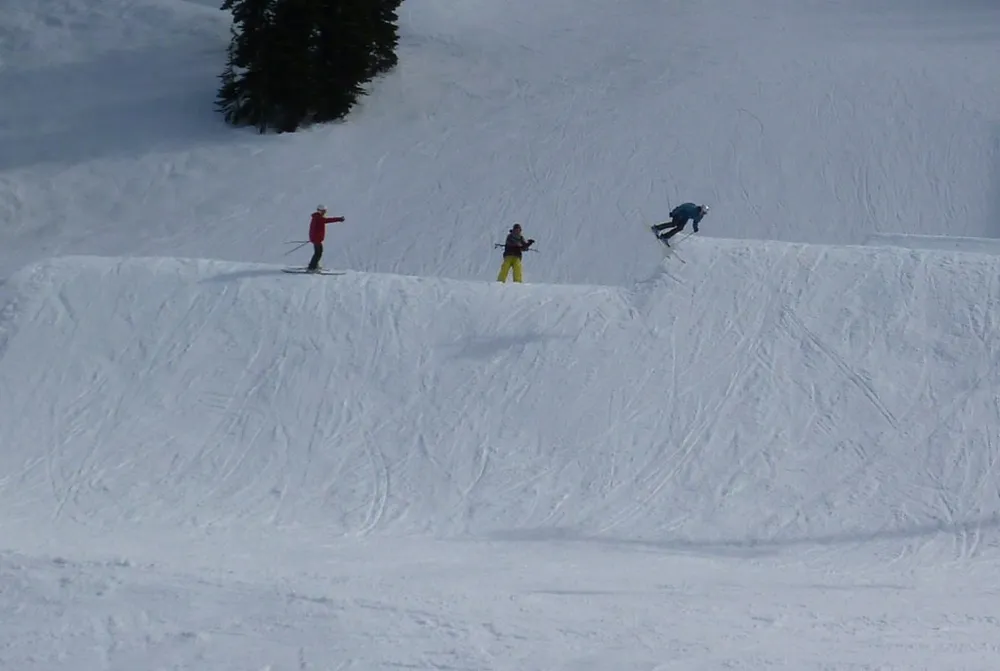
Every ski in this guide has an upturned tail, but they're built for different days. evo's park setup guide splits park skiers into three styles, and its advice lines up with the two main kinds of twin:
| Style | Flex | Profile | Width Underfoot | Length |
|---|---|---|---|---|
| Jibs (rails, boxes, butters) | Soft | Rockered tip and tail | About 85–105 mm | Slightly shorter than all-mountain |
| Jumps and halfpipe | Stiff | Full camber | About 80–95 mm | Typical all-mountain length |
| A bit of both | Moderate | Rocker/camber/rocker | About 85–105 mm | Average to shorter |
- Park twins (Omen 85, Chronic 94, Prodigy 1) are narrower and lighter, with a full twin tail, a centered stance and extra-tough edges. They spin easily and feel the same switch, but they're less stable at speed and sink in deep snow.
- All-mountain freestyle twins (Reckoner 92, Bent 100, Playmaker 101, Sender Free 100) are usually 90–105 mm wide, with more rocker for soft snow and usually a recommended mount point a little farther back. They're the better choice if you ski the park a few laps a day and spend the rest of it on groomers, trees and powder. evo notes that wider, more all-mountain park skis have been replacing narrower designs.
Most recreational skiers who want one ski for everything are best served by a twin in the low to high 90s underfoot. If you ski deep snow most days, a wider twin or a dedicated powder ski makes more sense; see how to ski powder.
Full Twin vs Partial Twin Tails
Not every "twin" is equally twin. Retailers like evo label tails as full twin or partial twin:
- Full twin: the tail rises about as much as the tip, often with a near-symmetric shape and flex. This is what you want for switch landings, rails approached both ways and spins.
- Partial twin: a lower, shorter tail kick. You can ride switch and pop off the tail, but the ski is built mostly to go forward, with a longer effective edge for grip on firm snow.
- Flat tail: no turn-up at all. Common on carving and race skis; you can't land switch on them.
Some park skis, like the Line Chronic 94, also use a symmetric flex, so the ski bends the same in front of and behind your boot. That's another sign a ski is built to ride both ways.
Mount Point: Center vs Traditional
Where your bindings sit changes how a twin tip skis as much as its width or flex. Each ski has a recommended line, the spot the maker found works best for that ski. Many skis also have marks fore and aft of that line, and as Jans notes in its mount point guide, moving the binding by about a centimeter can noticeably change how a ski feels.
| Mount Position | How It Skis | Who It Suits |
|---|---|---|
| Toward center (forward) | Playful and pivoty, easier to spin, slash and land switch; less stable at speed and less float in powder | Park and freestyle skiers with an upright, centered stance |
| Recommended (traditional) line | The maker's balance of stability and playfulness | Most skiers; always a safe starting point |
| Behind the line (back) | More ski in front of you for stability and float; harder to turn and spin | Strong, fast skiers who drive the tips |
On park skis, the recommended line usually sits closer to the middle of the ski than on most directional all-mountain skis, which is why park skis feel balanced when you ski switch. True center mounting (the binding exactly in the middle) was once standard for park skiing. Jans points out it's less common now: for skiers who ride varied terrain, its downsides usually outweigh the benefits, and a smaller move forward gives some of the playfulness without making the ski a one-trick tool.
If you're unsure, mount on the recommended line, ski it for a while and demo other positions before drilling new holes. Every remount adds holes, and a shop has to confirm there's enough room between old and new holes. Mounting and the release setting should always be done by a qualified technician.
Sizing Twin Tips for the Park
Start with your normal length on our ski size chart, then adjust for how you'll ski:
- Rails and boxes: go a little shorter. Shorter skis have less swing weight, so they spin and press more easily.
- Jumps and pipe: stay near your regular length. Shorter skis lose stability on fast landings.
- Mixed park and mountain: average to slightly short, depending on whether you value spins or stability more.
- Rocker: twins with a lot of tip and tail rocker ski shorter than their listed length, because less edge touches the snow. Many skiers size up a few centimeters on heavily rockered all-mountain twins.
- Weight: heavier skiers can stay longer; lighter skiers can go shorter. A soft ski in too short a length will feel unstable under a heavy skier.
Twin tips also lose a little effective edge to the upturned tail, so a twin can feel shorter than a flat-tailed ski of the same listed length.
Width, Flex and Rocker
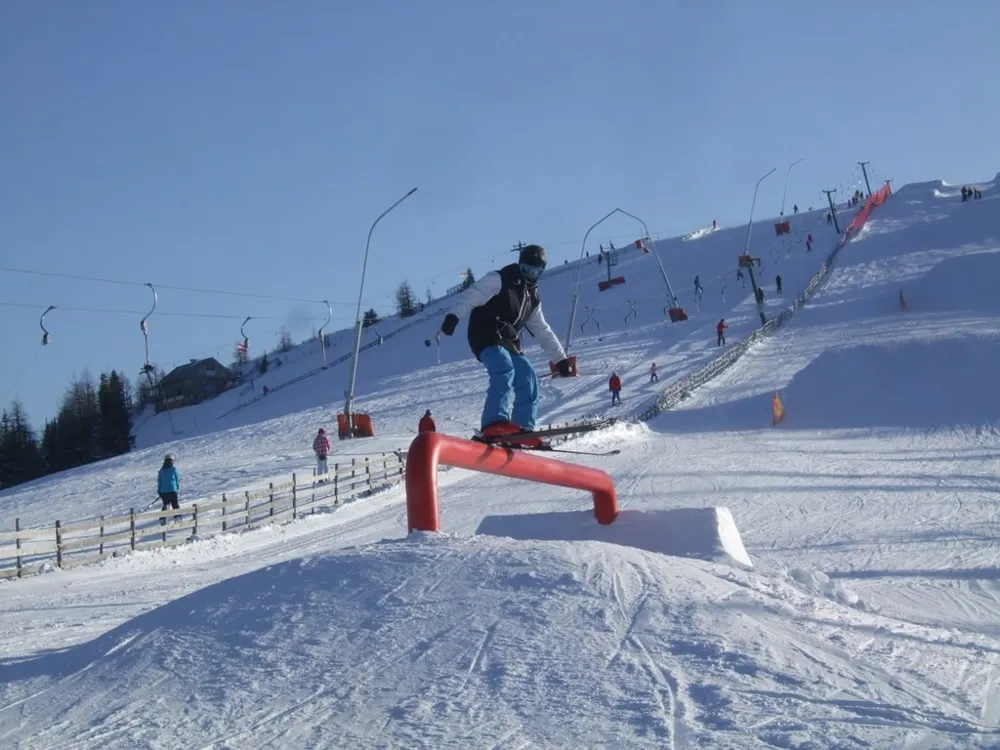
Width: narrower twins (about 80–95 mm) are quicker edge to edge and lighter for spins, and they grip better on the hard, chopped snow common in parks. Wider twins (about 95–105 mm and up) float in soft snow but take more effort on firm snow. Our best skis guide covers waist width in more detail.
Flex: soft skis are easy to press and butter and forgive imperfect landings, but they chatter at speed. Stiffer skis give more pop and stability on big jumps. Flex ratings aren't standardized between brands, so compare within a brand where you can.
Rocker: rockered tips and tails make a ski less likely to catch an edge on rails and easier to butter. Camber underfoot adds pop and edge hold. Most modern twins use rocker/camber/rocker, while some jump-focused skis use more camber.
Durability Features That Matter
Park skiing is hard on skis. Rails and boxes scrape bases and edges, and hard landings stress the core and tips. Look for:
| Feature | Why It Helps | Example |
|---|---|---|
| Thicker edges | More steel to survive rail hits and repeated tuning | Line Chronic 94 (2.5 x 2.2 mm), Faction Prodigy 1 (2.5 mm, per evo) |
| Thick sintered base | More material to grind and repair, and holds wax well | Line Chronic 94 (1.7 mm) |
| Sidewall construction | Tough sidewalls protect the core when edges take impacts | Line Thick-Cut sidewalls |
| Cap or hybrid construction | A top layer wrapped over the core resists chips and keeps weight down | K2 DuraCap, K2 Hybritech |
| Reinforced or thinner tips | Lower swing weight and fewer cracked tips | Line Thin Tip, capped tips on the Reckoner 102 W |
Some rail skiers also lightly dull (detune) the edges near the tips and tails so they're less grabby on features. That's hard to undo, so ask a shop first.
Kids' Twin Tip Skis
Many kids want to ski backward and hit small jumps as soon as they're comfortable. Most kids' twins are soft and short, and several come as system skis with bindings already fitted. Size kids' skis by height, weight and ability rather than buying much longer to "grow into"; the best kids' skis guide has a full kids' size chart. Teens and smaller adults can also look at the shortest adult park lengths, such as the 139 cm Omen 85.
Völkl Mini Revolt Jr
A youth twin tip with freestyle styling and a forgiving flex, sold with 4.5 vMotion Jr bindings. The turned-up tail lets kids ski switch and land small jumps while staying easy on groomers.
Check Price on AmazonAtomic Bent Jr
The junior version of Atomic's Bent line, sold as a system ski with bindings, with a full Dura Cap sidewall from base to topsheet. It's best for intermediate to advanced kids who ski the whole mountain and the park.
Check Price on AmazonLine Bacon Shorty
A scaled-down version of Line's freestyle all-mountain ski, with a 107 mm waist, a symmetric flex and a twin tip. It's sold without bindings, so plan to have junior or adult bindings mounted. Best for strong, bigger kids who ski powder and park.
Check Price on AmazonBindings and Boots for Twin Tips
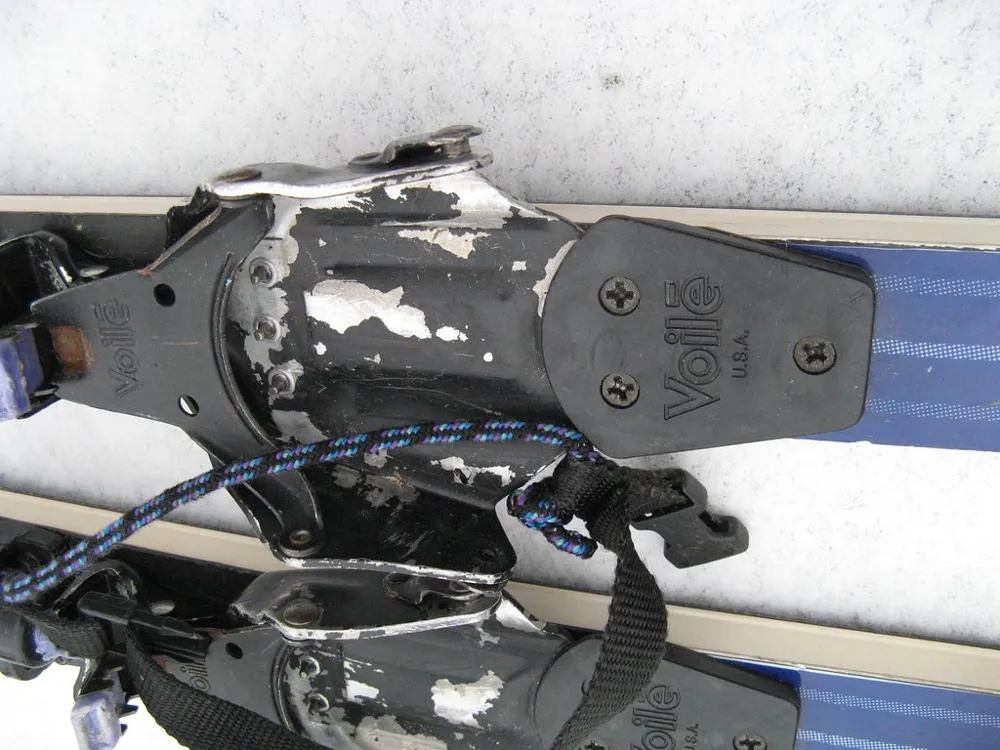
Most twin tips are sold flat, without bindings. When you choose a binding:
- Brake width: K2's listings, via evo, recommend a brake equal to the ski's waist width or no more than 15 mm wider.
- Release setting: the DIN setting is based on your weight, height, age, boot sole length and skier type. Have a technician set it; see our ski DIN chart and ski bindings guide.
- Build: park skiing means hard landings, so many park skiers choose sturdy bindings with good shock absorption.
For boots, evo notes that softer boots are more forgiving on imperfect park landings, while skiers who want quick, precise reactions may prefer stiffer ones. A softer flex still needs a snug fit. See ski boot flex explained and ski boots.
Do You Need Twin Tips?
Twin tips make sense if you want to ski switch, spin, butter, hit park features or ski a playful style around the whole mountain. They're less useful if you mostly carve groomers at speed, race or ski steep, firm terrain, where a flat or partial-twin tail gives more edge grip and a longer running length. If you're still learning to turn and stop, a forgiving all-mountain ski or rental is fine until you start trying tricks. Shopping secondhand? Our guide to buying used skis explains how to check edges, bases and old binding holes, which matters on park skis.
Care and Park Safety
- Wax often, fill base gouges from rails and keep edges tuned; see how to wax and tune skis.
- Check for cracked edges, delamination and loose binding screws after hard landings.
- Learn Park SMART and park etiquette before hitting features, start on the smallest ones and always inspect a feature first. Our ski tricks for beginners guide covers the rules and progression.
- Wear a helmet and goggles; many park skiers add impact shorts and wrist guards.
Related Guides
Learn about competitive park, pipe and big air in freestyle skiing, compare ski styles in types of skiing and check lengths on the ski size chart. Snowboarders can compare park boards in freestyle snowboards.
Frequently Asked Questions
What are twin tip skis?
Skis with a turned-up tail as well as a turned-up tip, so you can ski and land backward (switch). Most park and freestyle skis are twin tips, and many all-mountain freestyle skis use the shape too.
Are twin tip skis good for beginners?
They can be. A soft, forgiving twin like the K2 Omen 85, which evo lists for beginner to intermediate skiers, turns easily and lets you start practicing switch skiing. If you only ski groomers and have no interest in tricks, a regular all-mountain ski grips better on hard snow.
Should twin tip skis be shorter?
Park skis are often sized a little shorter than all-mountain skis because shorter skis are easier to spin and press. Skiers who hit big jumps usually stay near their normal length for stability on landings.
Where should bindings be mounted on twin tips?
Start at the maker's recommended line. Moving bindings toward center makes a ski more playful and easier to spin but less stable at speed and in powder, while moving them back does the opposite. True center mounts are now less common.
Can you ski twin tips all over the mountain?
Yes. All-mountain freestyle twins around 95 to 105 mm underfoot are built for park laps, groomers and soft snow. Narrow, soft park skis feel less stable at speed and float less in powder.
What is the difference between a full twin and a partial twin?
A full twin has a tail turned up about as much as the tip, so it rides almost the same both ways. A partial twin has a lower, shorter tail kick: you can still ski switch, but it's built mostly for skiing forward.
Do I need special bindings for twin tip skis?
No special type is required, but the brake width must suit the ski's waist, and the release (DIN) setting should be set by a qualified ski technician. Many park skiers choose bindings with a wide range of settings and a durable build.