The Best Women's Skis, From Groomers to Powder (2026)
All-mountain, carving and soft-snow skis from Nordica, Blizzard, Elan, Völkl, K2, Salomon and Atomic, with a plain guide to width, rocker, flex and length.
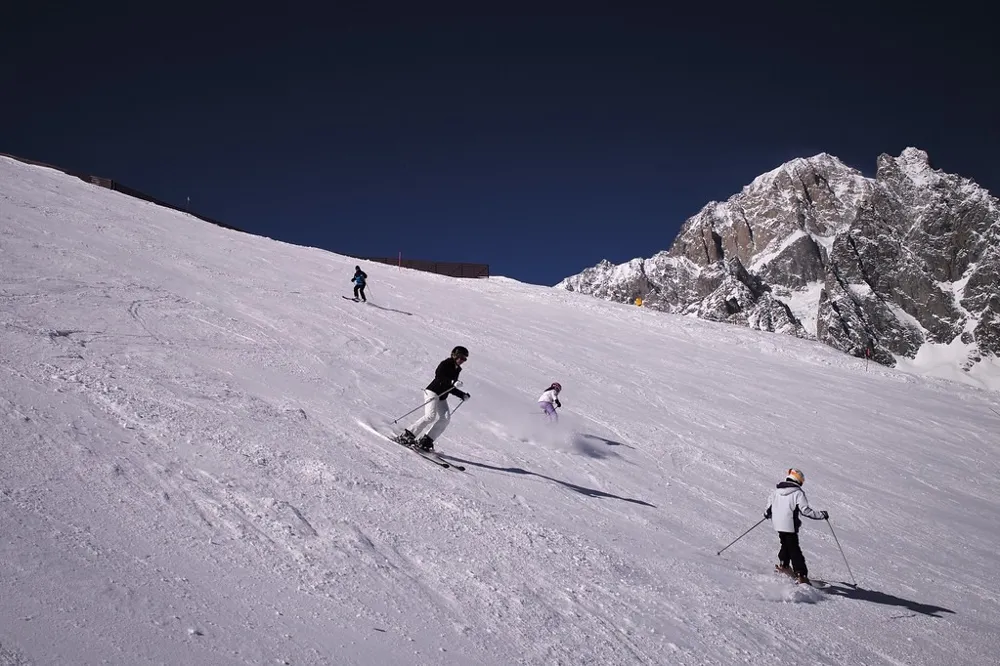
Do You Need Women's Skis?
Most ski brands sell a unisex ski and a women's version of the same idea, such as the Nordica Santa Ana alongside the Enforcer. Women's skis are usually lighter, a little softer, and made in shorter lengths, and some have a recommended mount point slightly forward. That makes them easier to bend and steer for many lighter skiers.
You don't have to ride a women's ski, though. A strong or heavier skier may prefer a unisex model, and a lighter man may like a women's one. What matters is the ski's width, profile, flex and length. Below are our picks for groomers, all-mountain and soft snow, followed by a full buying guide. Specs come from each maker's own listings.
Nordica Santa Ana 92
Best all-mountain all-rounder
- 92mm waist for groomers and soft snow
- Wood core with a sheet of metal
- Lengths from 150 to 179cm
Blizzard Black Pearl 88
Best for intermediates moving up
- Three women's-specific titanal pieces
- Early-rise tip and tail with camber
- Lengths from 146 to 176cm
Elan Ripstick 88 W
Best lightweight all-mountain ski
- Wood core with carbon tubes
- Asymmetric left and right skis
- About 1.4kg per ski at 161cm
Women's Skis Compared
| Ski | Waist | Construction | Profile | Lengths (cm) | Best For |
|---|---|---|---|---|---|
| Nordica Santa Ana 92 | 92mm | Wood core, elastomer layer, metal sheet | All-mountain rocker | 150–179 | Intermediate to expert, all terrain |
| Blizzard Black Pearl 88 | 88mm | Wood core, three titanal pieces | Early-rise tip and tail, camber | 146–176 | Progressing intermediates, firm snow |
| Elan Ripstick 88 W | 85–88mm | Wood core with carbon tubes | Asymmetric Amphibio | 147–175 | Light, nimble all-mountain skiing |
| Völkl Secret 96 | 96mm | Beech-poplar core, titanal frame, carbon tips | Rocker-camber-rocker | Several (check listing) | Strong skiers, mixed snow |
| K2 Mindbender 89Ti W | 89mm | Aspen core, titanal Y-Beam | All-Terrain Rocker | 146–176 | Carving with freeride manners |
| Blizzard Sheeva 10 | About 102mm | Three-wood core, two titanal strips | Rocker-camber-rocker | 156–174 | Soft snow and Western resorts |
| Salomon Stance W 84 + M11 GW | 84mm | Karuba-poplar core, titanal layer | All-mountain | 151–175 | Groomer carving, with bindings |
| Atomic Maven 84 + M 10 GW | 83–84.5mm | Poplar core, titanal stabilizer | All Mountain Rocker 15/75/10 | 144–171 | Ski-and-binding package |
Ski models are updated most seasons, and waist width and turn radius often change slightly with length. Check the exact model year, size and whether bindings are included before you buy.
The Best Women's Skis
1. Nordica Santa Ana 92
The Santa Ana is Nordica's long-running women's all-mountain line, and the 92 is the middle width. Nordica pairs a wood core with an elastomer "Pulse" core layer to damp vibration and a sheet of Terrain Specific Metal, whose width scales with the ski's waist. A lighter "True Tip" and an "Unlocked" tail shape are meant to make it easier to pivot at low speed. It comes in six lengths from 150 to 179cm, with a radius of about 15 to 17.5m depending on length. At 92mm underfoot, it sits right in the all-mountain sweet spot for skiers who spend most days on trails but want float when it snows.
Good to Know
- Metal adds stability and edge hold
- Wide length range, including longer sizes
- Also made in narrower and wider widths
Watch Out For
- Sold flat, so bindings are extra
- More ski than a cautious beginner needs
2. Blizzard Black Pearl 88
The Black Pearl appears on most women's ski lists. It's built through Blizzard Tecnica's Women to Women (W2W) design and testing program. The 88 uses a women's-specific Trueblend wood core with high-density wood stringers that make the middle firmer and the tip and tail softer, plus three women's-specific pieces of titanal for stability at speed. The profile is an early-rise tip and tail with 6mm of camber underfoot. Lengths run from 146 to 176cm, and the radius is short (about 11 to 16.5m), so it turns readily on groomers and firm snow.
Good to Know
- Short radius for quick, easy turns
- Metal for confidence as speed builds
- Wide size run for small and tall skiers
Watch Out For
- Less float than wider skis on deep days
3. Elan Ripstick 88 W
Elan's Ripstick line is built around light weight. The 88 W uses a Tubelite wood core with carbon tubes running its length, carbon bands along the edges and a flax fiber layer in the tip to calm vibration. It also uses Elan's asymmetric Amphibio profile, with dedicated left and right skis. Elan lists weights of about 1,160g to 1,510g per ski depending on length, with lengths from 147 to 175cm. Elan rates it for intermediate to expert skiers on groomed, variable and powder snow.
Good to Know
- Light and easy to carry and steer
- Waist grows slightly with length (85–88mm)
- Also comes in 94 and 100 widths
Watch Out For
- Lighter skis feel less planted in rough, chopped snow
- Left and right skis are not interchangeable
4. Völkl Secret 96
The Secret is Völkl's women's all-mountain line. The 96 uses a multilayer beech and poplar core, with harder wood under the binding, a Tailored Titanal Frame whose metal content grows with ski length, and Tailored Carbon Tips. Völkl gives it a multi-radius sidecut and a rocker-camber-rocker profile with full sidewalls and a sintered P-Tex 2100 base. Retail listings rate it intermediate to advanced for all-mountain and big-mountain skiing. At 96mm, it handles both firm mornings and soft afternoons for a confident skier.
Good to Know
- Powerful and stable for strong skiers
- Metal scales with length
Watch Out For
- Demanding at slow speeds
- Premium price tier
Not sold new on Amazon when we checked; see the maker's site or a local shop.
5. K2 Mindbender 89Ti W
K2 describes the Mindbender 89Ti as "an all-mountain freeride ski with a carving pedigree." It pairs a light aspen veneer core with K2's Ti Y-Beam titanal in the shovel and tail. Its All-Terrain Rocker profile has gradual tip rocker with camber underfoot. Dimensions are about 130-89-114mm with a 13.1m radius at 164cm, and lengths run from 146 to 176cm. K2 rates it for intermediate and advanced skiers.
Good to Know
- Short radius for a metal ski
- Light core with metal for damping
Watch Out For
- Less float than wider skis on deep days
6. Blizzard Sheeva 10
The Sheeva 10 is Blizzard's middle-width women's freeride ski, about 102mm underfoot. It uses a TrueBlend Freeride core of beech, poplar and paulownia, with two strips of titanal running the length of the ski and a separate composite plate underfoot. The rocker-camber-rocker profile and partial twin tail help it float and pivot in soft snow, trees and chutes. Retail listings show lengths from 156 to 174cm and rate it intermediate to advanced for all-mountain and big-mountain terrain.
Good to Know
- Floats well in fresh and soft snow
- Metal strips add stability without a full sheet
- Also made as the narrower Sheeva 9 and wider Sheeva 11
Watch Out For
- Slower edge to edge on hard groomers than an 88mm ski
7. Salomon Stance W 84 + M11 GW
The Stance W 84 is a frontside ski sold as a package with Salomon's M11 GW binding, which accepts both GripWalk and standard alpine boot soles. Salomon builds it with a full Karuba and poplar wood core, a single layer of titanal on top of the core and full sandwich sidewalls. Lengths run from 151 to 175cm with an 84mm waist and a radius of 12 to 16m. Salomon rates it for intermediate and advanced skiers on hard to mixed snow, and calls it "energetic yet stable."
Good to Know
- Bindings included and ready to adjust
- Titanal helps on icy groomers
Watch Out For
- Narrow for frequent powder days
- Package binding limits upgrades
8. Atomic Maven 84 + M 10 GW
The Maven 84 is Atomic's women's all-mountain ski in a package with its M 10 GW binding. It uses a light poplar wood core with Densolite, a titanal "TI Stabilizer" layer under the core and Atomic's Duracap sidewall. Atomic's All Mountain Rocker splits the ski into about 15% tip rocker, 75% camber and 10% tail rocker. Lengths run from 144 to 171cm, with a waist of 83 to 84.5mm and a 13 to 16m radius, and Atomic calls it "easy to maneuver and highly stable."
Good to Know
- Complete ski-and-binding setup
- Short lengths for smaller skiers
Watch Out For
- Package bindings are heavier than many flat-ski setups
How Women's Skis Differ From Unisex Skis
Women's skis began as unisex skis in shorter lengths, softer flexes and different colors. Today the differences vary by brand, and they are not always large. These are the common ones:
- Weight: women's versions are usually a bit lighter, which makes them easier to swing around and carry.
- Flex: many are softer so a lighter skier can bend the ski into a turn. Some brands have moved the other way and now make stiff, metal women's skis for hard-charging skiers.
- Length range: women's models start shorter, often in the mid-140s. Many also run well into the 170s now.
- Mount point: some brands set the recommended binding position slightly forward, on the theory that many women balance farther back. Not every brand agrees; Fischer has said the data doesn't support different skis or mount points, and moved to identical constructions with different graphics.
- Design programs: Blizzard Tecnica's W2W program and Elan's women's design studio involve women in design and testing.
The takeaway: treat "women's" as a starting point, not a rule. A lighter skier of any gender may prefer a women's ski, and a strong or heavier woman may prefer the unisex version. If you're between the two, compare the published flex, weight and length range.
Types of Women's Skis
Ski categories are the same for everyone. Pick the one that matches where you actually ski on most days, not the conditions you hope for.
| Type | Typical Waist | Best For | Examples |
|---|---|---|---|
| Beginner / system skis | About 70–84mm | Learning and early turns on groomers | Package skis with bindings |
| Frontside / carving | About 75–88mm | Groomed runs and firm snow | Salomon Stance W 84, Atomic Maven 84 |
| All-mountain | About 85–100mm | A one-ski quiver for most resorts | Santa Ana 92, Black Pearl 88, Ripstick 88 W |
| All-mountain freeride | About 95–105mm | Soft snow, trees and off-trail days | Völkl Secret 96, Blizzard Sheeva 10 |
| Powder | 105mm and up | Deep snow and storm days | Wider Sheeva, Santa Ana and Ripstick models |
| Park / twin tip | About 85–100mm | Jumps, rails and skiing switch | See twin tip skis |
| Touring | About 85–105mm | Climbing uphill on skins | See backcountry skis |
Most recreational skiers are happiest on an all-mountain ski. If you ski mostly in the East or on groomers, lean toward the narrow end. If you ski the Rockies or chase storms, lean wider. For a broader look at disciplines, see types of skiing.
Which Ski on This List Fits Your Skiing?
- Groomers and firm snow, mostly carving: Salomon Stance W 84 or Blizzard Black Pearl 88.
- Moguls and tight trees: a short-radius ski such as the Black Pearl 88 or Mindbender 89Ti W, sized on the shorter side.
- One ski for the whole mountain: Nordica Santa Ana 92 or Elan Ripstick 88 W.
- Soft snow and Western resorts: Blizzard Sheeva 10 or Völkl Secret 96.
- A complete setup with bindings: Atomic Maven 84 + M 10 GW or Salomon Stance W 84 + M11 GW.
- Budget-minded: look at last season's version of any of these, or compare system-ski packages that include bindings.
Waist Width: How Wide Should Your Skis Be?
Waist width, the width under your boot, has the biggest effect on how a ski behaves. Narrow skis tip onto edge quickly and grip firm snow; wide skis float in soft snow but are slower edge to edge.
- Mostly groomers or icy, Eastern-style snow: about 75–90mm.
- Mixed resort skiing, groomers plus some soft snow: about 85–95mm.
- Western resorts and frequent soft snow: about 95–105mm.
- Powder-focused: about 105mm and up.
Lighter skiers don't sink as far into soft snow, so many women can go a few millimeters narrower than a heavier skier would for the same conditions. If you're torn between two widths, the narrower one is usually easier to ski on most days.
Camber, Rocker and Turn Radius
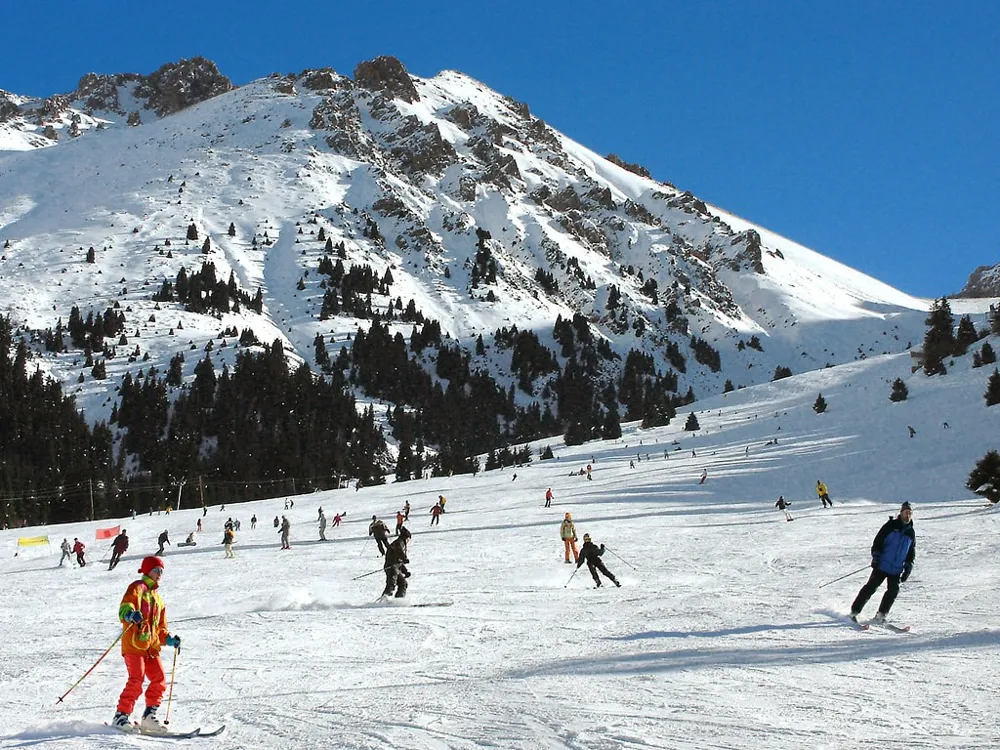
Camber is the upward arch under the foot that presses the tip and tail into the snow for grip and rebound. Rocker lifts the tip, and sometimes the tail, off the snow so the ski floats and starts turns easily. Most women's all-mountain skis now mix the two:
- Mostly camber: strong edge grip and energy on groomers, less forgiving off-trail.
- Tip rocker with camber underfoot (like the Black Pearl or Mindbender): easy turn starts and good grip, a versatile mix.
- Rocker-camber-rocker (like the Sheeva 10 or Secret 96): more float and easier pivoting in soft snow and trees.
Turn radius is the natural turn shape built into the ski's sidecut. A short radius, about 11 to 15m, makes quick, snappy turns and suits moguls and narrow trails. A longer radius, about 16m and up, makes bigger, more stable turns at speed. Radius grows with length, so the same model turns shorter in a shorter size. Rocker also makes a ski feel shorter on hard snow because less edge touches the snow.
Construction, Flex and Ability Level
What's inside a ski decides how it feels:
- Wood cores (poplar, beech, ash, aspen, paulownia or blends) are the standard for quality skis. Lighter woods save weight; denser woods add power.
- Titanal (a metal alloy) adds stability, damping and edge hold. More metal means a smoother but heavier ski that wants more input.
- Carbon and flax fibers add stiffness or damping with little weight, which is why light skis like the Ripstick use them.
- Sidewalls running the full length help transfer power to the edge.
Ski weight matters more than many skiers expect. A lighter ski is easier to carry, lift onto a chairlift, swing through moguls and, for touring, push uphill. The trade-off is that light skis can feel deflected in rough, chopped-up snow at speed, where heavier, metal skis stay calmer. Makers publish weights per ski or per pair for a given length, so compare like with like.
| Ability | Flex and Build | What to Look For |
|---|---|---|
| Beginner | Soft, light, little or no metal | Narrower waist, tip rocker, short radius, often a system ski |
| Intermediate | Soft to medium, some metal or carbon | All-mountain width, forgiving tail, easy turn initiation |
| Advanced to expert | Medium to stiff, often metal | Stability at speed, edge hold on firm snow, longer lengths |
Don't buy a ski you have to grow into by several levels. A ski that's too stiff is tiring and harder to control, while a ski that's slightly soft is still fun. If you're improving quickly, an intermediate-to-advanced ski like the Black Pearl 88 covers that range.
What Length Women's Skis Do You Need?
Ski length starts with your height and then shifts with ability, weight and style. Stand the ski on its tail next to you:
| Ability | Starting Point | Example for a 5'5" (165cm) Skier |
|---|---|---|
| Beginner | About chin height | Roughly 145–150cm |
| Intermediate | Chin to nose | Roughly 150–158cm |
| Advanced / expert | Eyebrows to top of head | Roughly 158–168cm |
- Go longer if you're heavier for your height, ski fast, prefer big turns, ski powder, or choose a ski with lots of rocker.
- Go shorter if you're lighter, cautious, still learning, or love moguls and tight trees.
Some experienced women skiers and coaches argue that shops often steer women into skis that are too short, and that a slightly longer ski is more stable without being much harder to turn once you're past the beginner stage. If you can, demo two lengths of the same ski. For full charts, see our ski size chart.
Bindings, Boots and Ski Packages
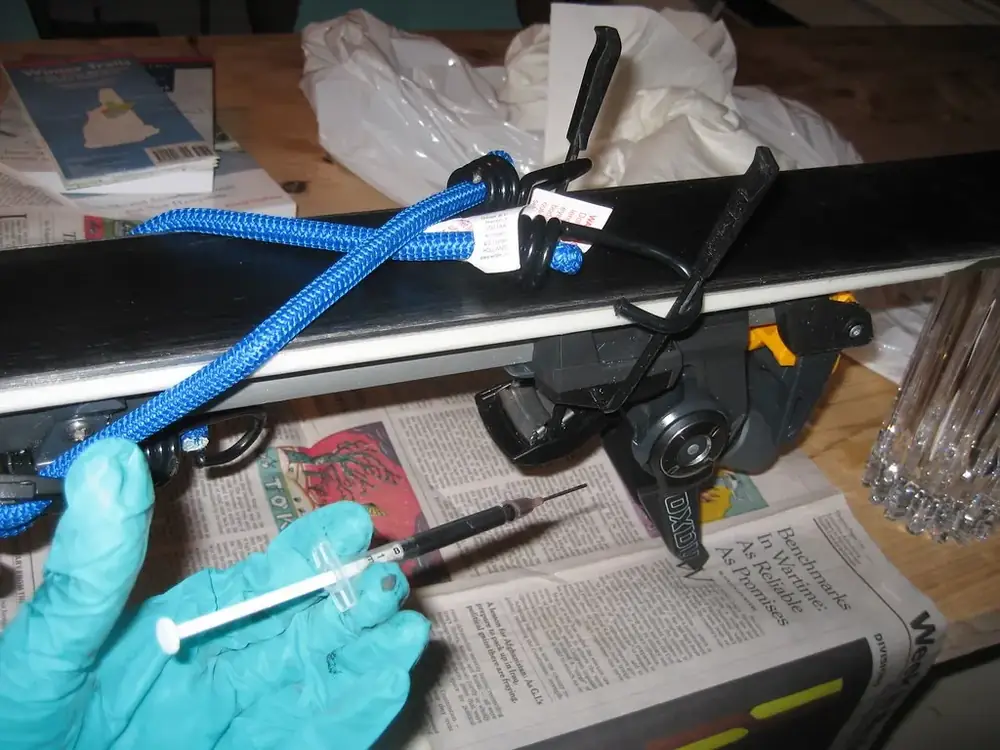
Skis come two ways:
- System or package skis (like the Stance W 84 and Maven 84 here) come with a matching binding on a track that adjusts to your boot size. They're convenient for beginners and intermediates.
- Flat skis (like the Santa Ana 92 and Sheeva 10) come without bindings, so you choose and mount your own. This is common for advanced skis.
Either way, a qualified ski technician should mount the bindings and set the release value (DIN) from your height, weight, age, ability and boot sole length. Make sure the binding accepts your boot sole: standard alpine, GripWalk or a touring sole. See ski bindings for more.
Boots matter more than skis. A well-fitted boot gives you control; a sloppy one makes any ski feel vague. Start with women's ski boots, read how to choose ski boots, and check ski boot flex so your boot matches your skis. Add ski poles sized to your height.
Demo, Rent or Buy?
- First few days: rent. Learning happens on soft, short rental skis, and you'll learn what you like. See how to ski.
- Skiing a handful of days a season: buy boots first, then rent or demo skis until you know your preferred width and length.
- Skiing regularly: buy. Your own skis are tuned the way you like and fit your boots.
- Demo days at resorts and shops let you try several models back to back; some shops put demo fees toward a purchase.
- Buying online works well if you know the model and length. Budget time for a shop to mount and adjust the bindings.
- Last season's model is often identical underneath with new graphics, so check what changed before paying for the newest version.
Not sure which brand fits your style? Our ski brands guide explains what each major maker is known for.
Caring for Your Skis
- Tune the edges and repair the base once or twice a season, more often on icy snow. See how to wax and tune skis.
- Wax regularly so the skis glide and the bases don't dry out.
- Dry skis after each day to stop edges rusting.
- Store them somewhere cool and dry over summer with a coat of storage wax.
- Travel with a padded ski bag or a roof rack.
Finish Your Setup
Skis are part of a system. Round out your kit with women's ski jackets, ski pants and bibs, a helmet and goggles, and see what to wear skiing for layering. For more ski options, including unisex models, see the best skis; for younger skiers, see kids' skis. Ready to improve? Try turning and stopping and how to ski powder.
Frequently Asked Questions
Do women need women's skis?
No. Women's skis are usually lighter and softer and come in shorter lengths, which suits many lighter skiers, but any skier can ride a unisex ski. Choose by width, flex and length rather than by label.
What is the difference between women's and men's skis?
Most brands make one unisex ski and a women's version. The women's model is often lighter, softer flexing and offered in shorter sizes, and some brands move the recommended mount point slightly forward. Some recent women's skis are as stiff and metal-laden as the unisex model.
What length skis should a woman get?
Start between chin and nose height for an intermediate, closer to the chin for a beginner and near the top of the head for an advanced skier. Go longer if you are heavier for your height, ski fast or ski a lot of soft snow, and shorter if you prefer tight turns and moguls.
What width ski is best for women?
The same rules apply to everyone. About 80 to 90mm underfoot suits mostly groomed and firm snow, about 88 to 100mm suits mixed all-mountain skiing, and over 100mm suits frequent powder days.
What are the best skis for a beginner woman?
A soft, light, fairly narrow ski in the high 70s to mid 80s, often sold as a system ski with bindings, is easiest to learn on. Many beginners rent for their first few days and buy boots before skis.
Can a woman ski on men's skis?
Yes. Unisex skis often come in longer lengths and stiffer builds that suit strong or heavier skiers of any gender. Some women prefer them for stability at speed.
Are women's skis worse than unisex skis?
Not necessarily. Many women's skis share the shape and core of the unisex model and differ mainly in flex, weight and length range. Brands such as Blizzard and Elan run women's design programs to tune them.