How to Wax Skis and Sharpen Edges at Home (2026)
A home tune keeps skis fast and grippy. Here's how to repair the base, sharpen and detune the edges, and hot wax your skis, in the right order.
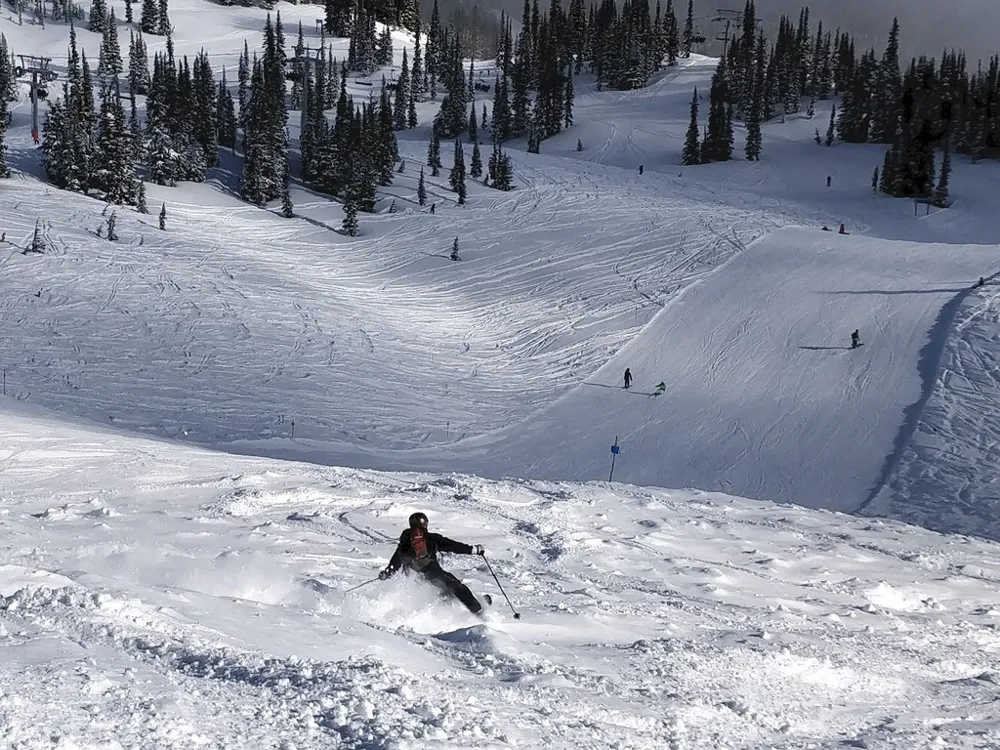
Why Wax and Tune Your Skis?
Wax makes skis glide faster, turn more smoothly and protects the base from abrasion and drying out. Sharp edges give you grip on hard snow and ice. A home tune covers both, plus small base repairs, and it's easy once you have a few tools. Your skis probably need attention if:
- The base looks white, gray or chalky, especially along the edges.
- The skis feel slow on flats or sticky in spring snow.
- They skid or chatter on firm snow instead of holding an edge.
- You can feel burrs when you run a fingernail gently along the edge.
- There are scratches or gouges in the base from rocks.
Work in this order: repair the base, tune the edges, then wax. Wax goes last so filing and stone dust don't end up in a fresh coat. Snowboarders can follow our separate guide on how to wax a snowboard; this page covers what's different on skis: brakes, two narrow bases and side and base edge bevels.
Tools You Need
| Tool | Used For | Need It? |
|---|---|---|
| Ski vise (or wood blocks) | Holds the ski steady, base up or on its side | Strongly recommended |
| Brake retainers or strong rubber bands | Holds the brake arms up out of the way | Yes |
| Wax iron | Melts wax at a steady temperature | Yes, for hot waxing |
| Glide wax | Universal or temperature-specific | Yes |
| Plastic scraper | Removes excess wax without damaging the base | Yes |
| Brushes (brass, nylon, horsehair) | Opens the base structure after scraping | Yes; a stiff nylon brush covers most needs |
| Base cleaner or rubbing alcohol and a rag | Removes dirt and old wax | When the base is dirty |
| P-Tex candles or sticks, lighter, metal scraper | Fills scratches in the base | For base repair |
| Side edge guide with file | Sharpens the side edge at a set angle | For edge tuning |
| Diamond stones (medium and fine) | Removes burrs and polishes edges | For edge tuning |
| Gummy stone | Detunes tips and tails, removes light rust | For edge tuning |
A tuning kit is the easiest way to start, then add a vise and a better iron as you go.
Dakine Super Tune Kit
A complete kit in a zippered case. Dakine lists an adjustable-temperature iron, an edge tuning tool, a 10-inch file, a pocket stone and a gummy stone, metal and wax scrapers, a file-cleaning brush, two P-Tex sticks, an all-temperature wax bar, a scuff pad and a tuning manual. It doesn't include a vise or a finishing brush.
Check Price on AmazonOneBallJay Basic Tuning Kit
A budget starter kit with all-temperature wax, a plastic scraper, P-Tex repair sticks, a ceramic stone, an edge sharpener, a file brush and instructions. There's no iron, so add a wax iron for hot waxing.
Check Price on AmazonOutdoorMaster Tuning and Waxing Kit
A complete kit with a 110V adjustable-temperature waxing iron, fluorine-free wax and cleaning and tuning tools.
Check Price on AmazonSwix T77 Wax Iron
A waxing iron with a large base plate and adjustable temperature dial for universal and temperature-specific waxes.
Check Price on AmazonSwix Universal Wax
An everyday universal glide wax for all temperatures, for skis and snowboards.
Check Price on AmazonFor a vise, ski-specific models such as the Swix Jaw Economy vise set hold the ski flat, on its side or at an angle; REI's listing gives a jaw opening of 60 to 90 mm, so check it fits your skis' binding area. Handheld edge tools like the Swix Pocket Edger combine a file and guide with 88° or 89° side and 0.5° or 1° base settings.
Set Up: Vise, Brakes and Workspace
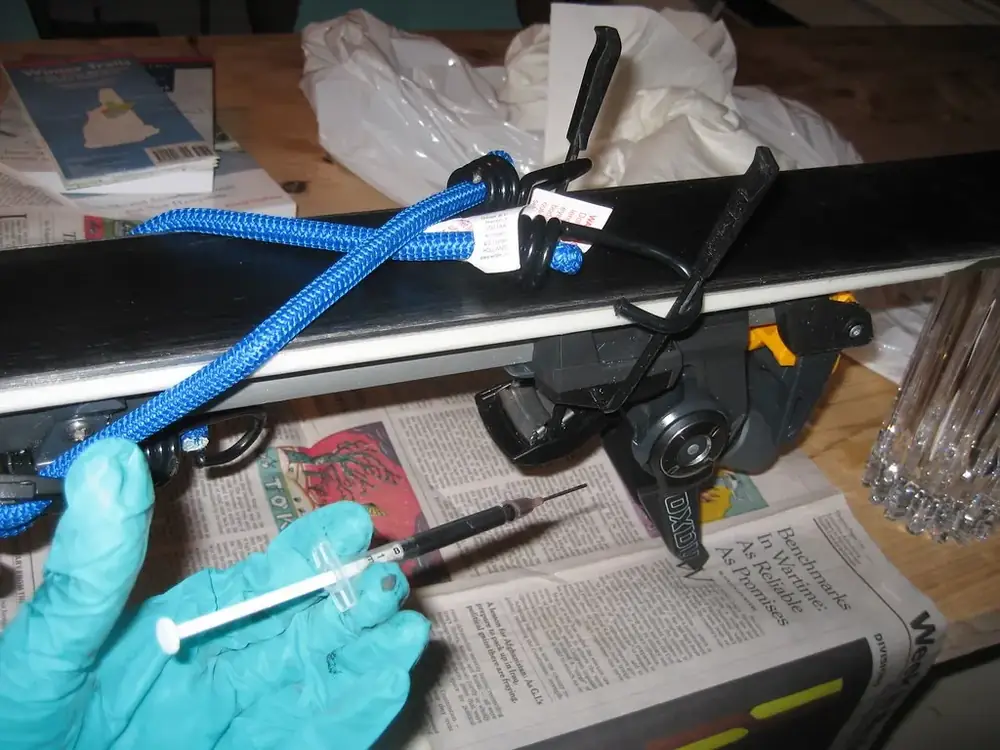
- Pick a warm, ventilated space. A cold garage is one of the most common waxing mistakes because the wax cools before it soaks in. Always wax with fresh air moving.
- Retract the brakes. Push the brake arms up and loop a strong rubber band or brake retainer around them and over the heel piece so they stay out of the way.
- Clamp the ski in the vise, base up and level, with the tip and tail supported. Most vises can also hold the ski on its side for side edge work.
- Protect the floor with an old sheet or cardboard; wax shavings get everywhere.
Skis have sharp edges, so handle them with care, and gloves help during edge work.
Step 1: Clean and Inspect the Base
Wipe the base with a clean rag. If it's dirty, brush it with a stiff brush first, then use a little base cleaner or rubbing alcohol on a rag, and let it dry completely, about 20 minutes. Use cleaner sparingly; it also strips wax, so skip it if the base already looks clean.
Now look along the base under good light. Note scratches, gouges and anywhere the base looks burned or glazed. Hold a straight edge or true bar across the base: if it's badly concave or convex, or the structure has worn smooth, the skis need a shop stone grind rather than a home tune.
Step 2: Repair Base Scratches With P-Tex
P-Tex is the same polyethylene family as your base, sold as candles or sticks. Salomon's guide covers scratches less than about 3 mm wide:
- Clean out the damage. Pick out stones and dirt and trim any loose base hairs with a metal scraper or razor blade.
- Light the P-Tex with a lighter, working over a metal scraper or a fire-safe surface.
- Drip the melted P-Tex into the scratch until it fills it completely.
- Let it cool for about five minutes.
- Scrape it flush with a sharp metal scraper, working in thin passes until it's level with the base.
Core shots, holes that go through the base into the wood or foam core, let water in and can ruin the ski. REI says these usually need a shop, which welds in new base material.
Step 3: Tune the Edges
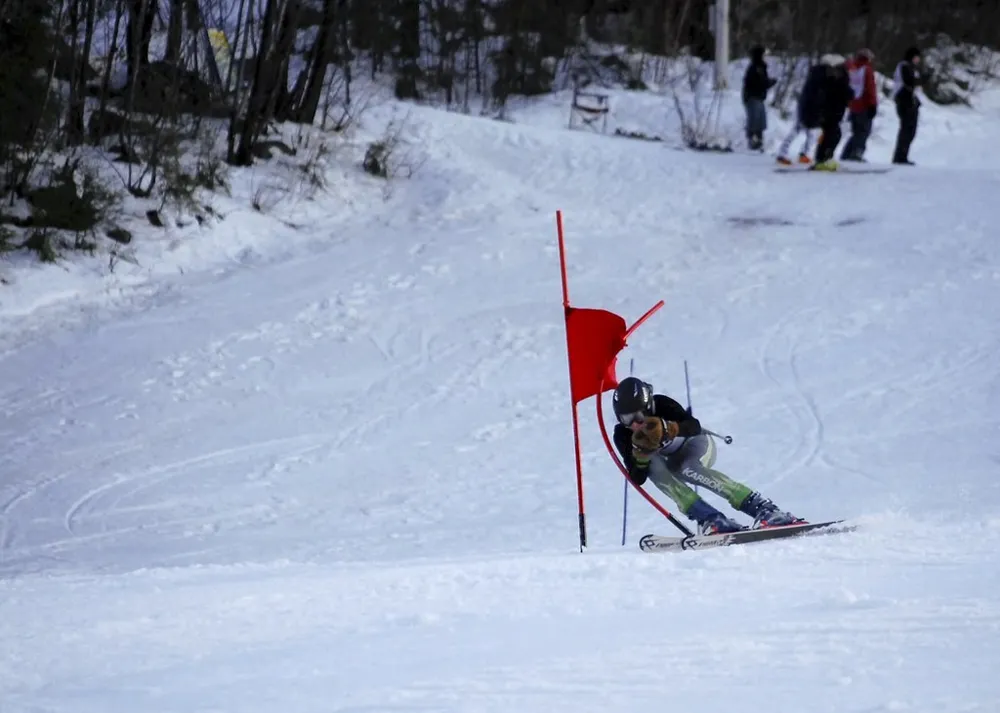
Ski edges have two angles. The base bevel lifts the edge slightly off the snow so the ski is easier to roll onto edge. The side bevel makes the edge sharper than 90° for more grip. Typical settings, from evo's tuning guide and Ski Mag:
| Ski Type | Base Bevel | Side Bevel | Side Guide |
|---|---|---|---|
| Most recreational skis | About 1° | About 2° | 88° |
| Race skis | About 0.75° | About 3° | 87° |
| Park and freestyle (some riders) | More bevel for less grip and easier slides | Varies | |
Check your ski maker's factory bevel and match it. Changing angles removes edge material you can't put back.
Side Edge
- Put the ski on its side in the vise.
- Remove any burrs or hardened spots first with a coarse or medium diamond stone. Edges damaged by rock hits are harder than the rest of the edge, so knock those spots down with a stone before filing.
- Set the file in an 88° guide (or your ski's angle) and push it from tip to tail with light pressure. Files cut in one direction only.
- Stop when the edge feels sharp along its length, then follow with a medium and fine diamond stone, kept wet with water and a little rubbing alcohol.
- Repeat on all four edges.
Base Edge
Leave the base edge alone unless it has burrs or damage. When it does, use a base bevel guide at your ski's angle with a diamond stone, just a few light passes. Ski Mag's tuning advice warns against sharpening base edges on a base that isn't flat, because it can over-bevel the edge; get a stone grind first.
Deburr and Polish
Finish with a few light passes of a gummy stone along the side edge to knock off the tiny burr the file leaves. Clean filings off the base with a rag before you wax.
Step 4: Detune Tips and Tails
The edges on the upturned tip and tail don't touch the snow in a normal turn, but sharp ones can "hook" and catch. Dull them lightly with a gummy stone, or a file held at about 45°, from the very tip back to the contact point (where the base meets the snow when the ski lies flat), and the same at the tail. If the skis still feel hooky, detune about an inch past the contact point and re-test. Go gradually: an over-detuned edge is much harder to sharpen back. Don't round off the edge along the running length.
Step 5: Hot Wax the Bases
- Heat the iron to the temperature on the wax packaging: lower for soft, warm-weather wax and higher for hard, cold-weather wax. If it smokes, it's too hot.
- Drip the wax by holding the bar against the iron over the base, in a zigzag or two lines from tip to tail. Get a little on the full width of the base, including near the edges.
- Iron it in with slow, steady passes from tip to tail. Keep the iron moving and let it ride on a layer of molten wax, never on a dry base. The topsheet should feel warm, not hot. Holding the iron in one place can blister or burn the base.
- Repeat on the second ski while the first one cools.
For a deeper wax, some skiers repeat the melt, cool and scrape cycle two or three times.
Step 6: Cool, Scrape and Brush
Cool: let the skis cool at room temperature for at least 30 minutes, and up to an hour. Don't speed it up outside in the cold; REI notes this pushes wax back out of the base.
Scrape: with a sharp plastic scraper (metal can damage the base), pull from tip to tail in overlapping strokes until almost no more wax comes off. Use the notch on the scraper, or its corner, to clear wax off the edges and sidewalls. The wax that matters is the wax inside the base, not on top of it.
Brush: brush tip to tail to open the base structure. REI suggests about 15 to 20 strokes with a stiff nylon brush as an all-purpose choice; evo's sequence goes from a stiff brass brush to nylon and then horsehair. Wipe with a clean, lint-free cloth to finish.
Choosing Ski Wax by Temperature
| Wax Type | Use When | Notes |
|---|---|---|
| Universal or all-temperature | Most resort days | The simplest choice for recreational skiers |
| Cold (hard) wax | Cold, dry snow | Harder wax resists sharp, cold snow crystals |
| Warm (soft) wax | Spring, wet or slushy snow | Softer wax repels water |
| Rub-on, paste or liquid | Quick touch-ups on the hill | Doesn't replace hot waxing |
| Storage wax | End of season | Thick coat left unscraped |
Temperature waxes list a snow-temperature range on the package. For example, evo lists Swix's pink 8 Series for about 1°C to −4°C and violet 7 Series for about −2°C to −8°C; when you're between two, choose the colder one. You can also blend two waxes. Modern waxes are fluorocarbon-free: FIS banned fluorinated waxes from its competitions from the 2023–24 season, and evo reports fluorinated ski wax is no longer produced.
One MFG 4WD Wax (Cool/Universal)
A 165g fluoro-free hydrocarbon wax bar formulated for versatility in most conditions, around 28°F to 21°F.
Check Price on AmazonHow Often to Wax and Tune
| Job | How Often |
|---|---|
| Hot wax | About every 3 to 6 ski days (evo suggests 3 to 5; REI 3 to 4 outings), or whenever the base looks dry |
| Fine diamond stone on side edges | Ideally after each ski day, to remove burrs (Ski Mag) |
| File the side edges | Only when edges feel dull |
| P-Tex repairs | As soon as you find a deep scratch or gouge |
| Shop stone grind and full tune | About once a season for regular skiers, or after big base damage |
| Storage wax | End of every season |
evo also suggests waxing sooner when the bases look dry or when snow temperatures change, so you can match the wax to the new conditions.
Storage Wax for the Off-Season
Ski bases slowly oxidize and dry out in storage. A storage coat seals them:
- Clean the base and touch up the edges so they're smooth and dry.
- Iron on a generous layer of wax and don't scrape it.
- Store the skis somewhere dry and at a steady room temperature, such as an indoor closet. Damp basements and garages can rust edges, and hot attics can damage plastic parts.
- Before your first day, scrape off the storage wax, brush, and apply a fresh coat for the conditions; skiing on leftover storage wax is slow.
Consider a shop binding check before the new season. Carry skis in a ski bag to protect the bases and edges when you travel.
Common Mistakes
- Iron too hot or held still: smoke means stop, and a burned base won't hold wax.
- Using a clothes iron you also use for clothes; steam holes clog with wax and the temperature is hard to control.
- Waxing in the cold, or cooling skis outside before scraping.
- Not scraping enough: wax left on top of the base slows you down.
- Metal scraper on wax: keep metal scrapers for P-Tex.
- Filing the base edge by habit, or on a base that isn't flat.
- Filing back and forth instead of one direction, tip to tail.
- Over-detuning so the ski won't hold on ice.
- Forgetting the brakes, which then get in the way of the iron, scraper and file.
DIY Tune or Shop Tune?
Waxing and light edge maintenance are easy at home and keep skis performing between shop visits. A shop is better for:
- Stone grinding to flatten the base and restore its structure.
- Core shots and edge damage, including cracked or ripped-out edges.
- Changing bevel angles accurately.
- Binding checks and adjustments. Release settings are a safety item; have a certified technician set and test them. Our ski bindings guide explains how DIN works.
Skis vs Snowboards: What's Different?
The wax steps are the same for skis and snowboards, but skis add brakes to retract, two narrow bases to clamp, and side and base edge angles to maintain on four edges. Snowboards have one wide base, no brakes and a different vise setup; see how to wax a snowboard for the board version. Once your skis are tuned, check that you have the right skis, boots and poles, and practice your edging with our guide to turning and stopping on skis. Skiing powder this season? Read how to ski powder.
Frequently Asked Questions
How often should you wax your skis?
Common guidance ranges from every 3 to 5 days of skiing (evo) to every half dozen days at minimum (Ski Mag). Wax sooner if the bases look white or dry, or if the skis feel slow on flats.
Can I use a clothes iron to wax skis?
A dedicated wax iron is better because it holds a steady temperature and has a flat plate without steam holes. If you use an old clothes iron, never use it for clothes again, and keep it on a low setting so it doesn't smoke.
What angle should I sharpen my ski edges?
Most recreational skis use about a 1 degree base bevel and a 2 degree side bevel, which needs an 88 degree side guide. Race skis often use less base bevel and about 3 degrees on the side. Check your ski maker's spec before filing.
How often should I sharpen my ski edges?
Ski Mag suggests a fine diamond stone on the side edges after each ski day to remove burrs, with a file used only when the edges are dull. Many recreational skiers also get a full shop tune once a season.
Is rub-on wax as good as hot wax?
No. Rub-on and liquid waxes are handy on the hill, but REI notes rub-on wax is not a substitute for regular hot waxing.
Should I wax my skis before storing them for summer?
Yes. A thick storage coat left unscraped helps keep the base from drying out over the off-season. Scrape it off and apply fresh wax before your first day back.
Can I fix a core shot myself?
Small scratches can be filled with P-Tex at home. A hole that exposes the wood or foam core usually needs a shop, which can weld in new base material.